
Reviewed · MARANGU ROUTE CLIMBS
Kilimanjaro Summit Challenge: 6 Days via Marangu Route
The appeal of this Kilimanjaro climb is simple: you reach Africa’s highest point by a classic route with hut accommodation instead of tents. The six-day Marangu itinerary moves from rainforest to moorland, alpine desert, and the volcanic slopes below Uhuru Peak, with a demanding midnight summit push at the center.
I like the extra acclimatization day at Horombo, which includes a hike toward Mawenzi Ridge. I also like the practical setup: guides, porters, a cook, meals, hot water for washing, airport transfers, and emergency oxygen are included.
The main caution is the schedule. Summit day can last 10 to 14 hours, followed by a long descent, and the final night is spent at high altitude. Marangu is often called the easier route because of its huts and direct trail, but reaching 5,895 meters is still a serious physical challenge.
Key points to know before booking
- Six days with hut accommodation: You sleep at Mandara, Horombo, and Kibo huts rather than camping.
- A useful acclimatization day: The Mawenzi Ridge hike gives you extra time at altitude before moving to Kibo.
- Midnight summit attempt: The route to Uhuru Peak begins around midnight and includes Gilman’s Point.
- Private group format: Only your own group takes part in the activity.
- Strong practical support: Porters, assistant guides, a cook, meals, drinking water, hot washing water, and airport transfers are included.
- Price and exclusions: The listed cost is $2,213 per person, but flights, visas, insurance, gear, snacks, and some optional items are extra.
What the Marangu Route feels like
Marangu is Kilimanjaro’s most established route, and it is often called the Coca-Cola Route. That nickname reflects its popularity and relatively direct trail, not a soft or easy walk. You still climb from 1,870 meters at Marangu Gate to 5,895 meters at Uhuru Peak.
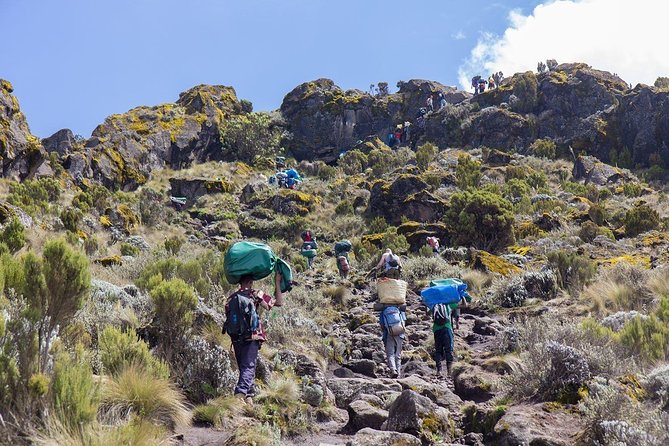
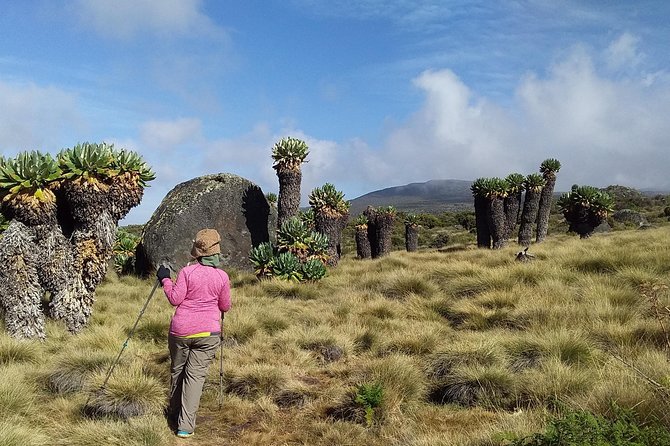
The route gives you a quick change of scenery. On the first day, the trail runs beneath thick rainforest. By the second day, the trees thin out and the path reaches open moorland. Later, you cross an alpine desert with little shelter and far less vegetation.
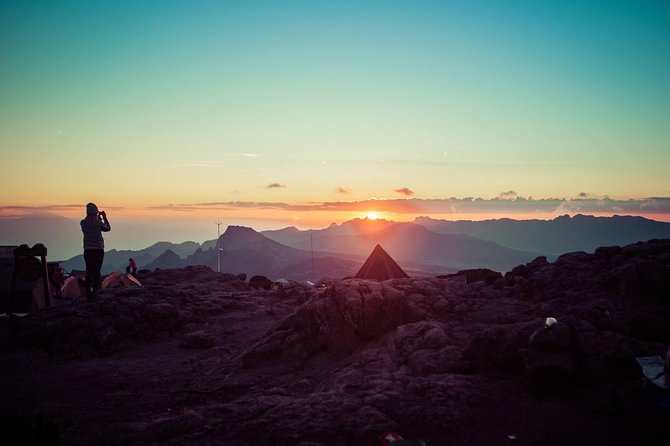
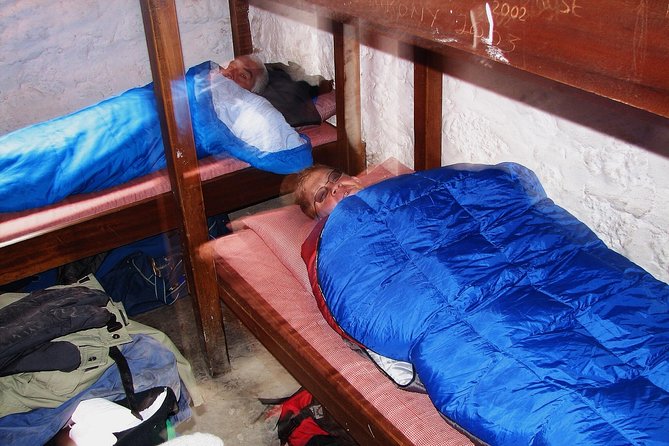
The huts are a major selling point. They remove the need to sleep in a tent, though you should not confuse a hut with a hotel. The tour information confirms hut accommodation but does not specify room layout, bedding, bathroom arrangements, or heating. Ask the operator about those details before paying your balance.
This is a private activity, so your own group participates rather than joining a mixed public departure. That can make the pace and communication easier to manage, but the size of your party is not stated. Ask how many climbers will share the guides and porters.
More Kilimanjaro Climbs in Kilimanjaro
- Kilimanjaro climb by Lemosho Route (7-day)
★ 5.0 · 651 reviews - Kilimanjaro climb, Machame Route (7-day)
★ 5.0 · 262 reviews - Kilimanjaro Climbing Lemosho Route 8 Days.
★ 5.0 · 186 reviews
Day 1: Marangu Gate to Mandara Huts
Your first morning begins with breakfast and a drive to Marangu Gate. Registration takes place there before you set off at 1,870 meters.
The route climbs through dense rainforest for about 8 kilometers. The listed hiking time is three to four hours, though the day is described as roughly five hours overall once mountain procedures and breaks are considered. You finish at Mandara Huts, at 2,720 meters.
The forest is the most enclosed part of the climb. You might spot Colobus monkeys, and the shade is welcome on the uphill trail. This is a good day to settle into the walking rhythm, check that your boots and pack feel right, and learn how your guide wants you to pace yourself.
Do not race through this first section. A slow, steady pace helps you save strength for the higher ground. The staff includes a qualified mountain guide, assistant guides, porters, and a cook, so you have a full support team from the start.
Dinner and overnight accommodation are included. The plan lists breakfast, lunch, and dinner during the climb, along with fresh drinking water and hot water for a daily wash.
Day 2: Mandara Huts to Horombo and the Mawenzi views
The second day covers about 12 kilometers and takes six to seven hours. You leave the last section of rainforest behind and enter broad moorland, with more open views toward Kilimanjaro’s two major peaks, Kibo and Mawenzi.
Horombo Hut sits at 3,720 meters. The change in altitude is substantial, rising 1,000 meters from Mandara. You may feel the thinner air here, even if the trail itself is not technically difficult.
The scenery becomes more exposed and spacious. You can see why this middle section matters: it gives you a gradual transition before the barren upper slopes. The hut provides a fixed place to eat and sleep, which is useful when your body is already working harder at altitude.
This day is long enough to test your legs without being the hardest part of the trip. Keep your water close, follow the guide’s pace, and avoid treating the open views as an invitation to walk faster.
Day 3: Mawenzi Ridge for acclimatization
Day three is the smartest feature of this six-day plan. You stay at Horombo instead of climbing higher immediately, allowing your body more time to adjust to 3,720 meters.
After breakfast, you take a day hike toward Mawenzi Ridge, reaching about 4,600 meters before returning to Horombo. The hike lasts around four hours and includes lunch at the ridge. You then descend to the hut for dinner and another night.
This is not a summit attempt on Mawenzi Peak. It is an acclimatization walk, and that distinction matters. The goal is to spend controlled time at a higher elevation, then sleep lower than your highest point of the day.
I would treat this as a real workday, not a free afternoon. The extra altitude exposure may help you prepare for Kibo, but it also gives you a chance to notice how your body reacts. Tell the guide about symptoms such as headache, nausea, unusual weakness, or dizziness.
The itinerary uses both Mawenzi Peak and Mawenzi Ridge in its description. The practical expectation is a guided hike toward the ridge at about 4,600 meters, followed by a return to Horombo. It does not promise a climb to Mawenzi’s summit.
More Marangu Route Climbs in Kilimanjaro
- Kilimanjaro climb, Marangu route (6-day)
★ 5.0 · 72 reviews - Climbing Kilimanjaro – Marangu Route
★ 5.0 · 65 reviews - Best Kilimanjaro Adventures 6 Days Marangu Route Experience
★ 5.0 · 18 reviews - Kilimanjaro Private Climbing in 6 Days Marangu Route
★ 5.0 · 16 reviews
Day 4: Horombo to Kibo Hut
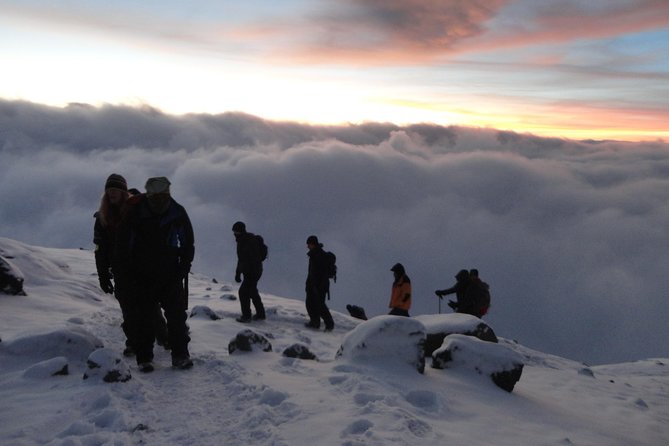
You now climb from 3,720 meters to Kibo Hut at 4,703 meters. The distance is about 10 kilometers, and the walking time is listed as five to six hours.
The vegetation fades as you cross alpine desert. The ground becomes more rugged, the air colder, and the final summit cone seems much closer. Kibo Hut is the last overnight stop before the main push.
This is a day for restraint. You may feel eager because Uhuru Peak is near, but the next section is the hardest. Eat what you can, drink regularly, and organize your summit clothing before resting. You do not want to search through your bag at midnight.
The listed package includes dinner and breakfast during the climb, but snacks and meals not specified are excluded. Bring or buy suitable personal snacks before this point. The tour also excludes personal hiking gear, though some equipment can be rented from trekking shops in Tanzania.
Ask ahead about the exact rental options. The supplied details do not confirm what sizes, brands, or items are available.
Day 5: Gilman’s Point, Uhuru Peak, and the long return
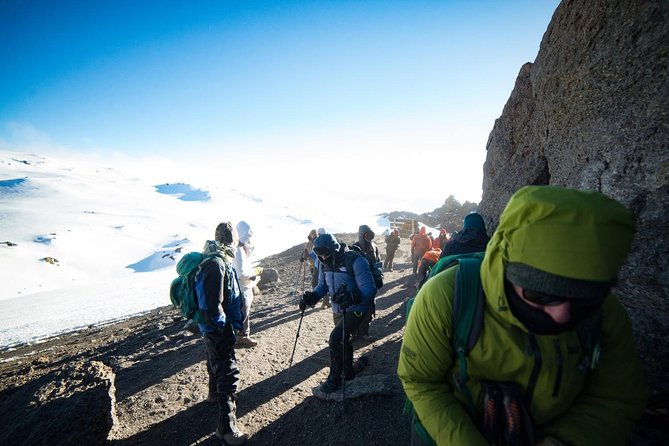
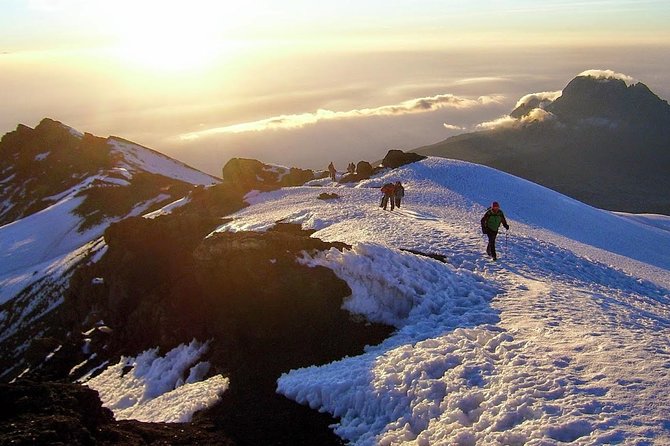
Summit day begins around midnight. You climb over scree and volcanic rock toward Gilman’s Point at 5,685 meters, then continue to Uhuru Peak at 5,895 meters.
The full day covers about 16 kilometers and may take 10 to 14 hours. The route description allows a short rest at Kibo Hut before you continue down to Horombo Hut, so this is not simply a climb up and a quick return. It is a long day of ascent, descent, and limited rest.
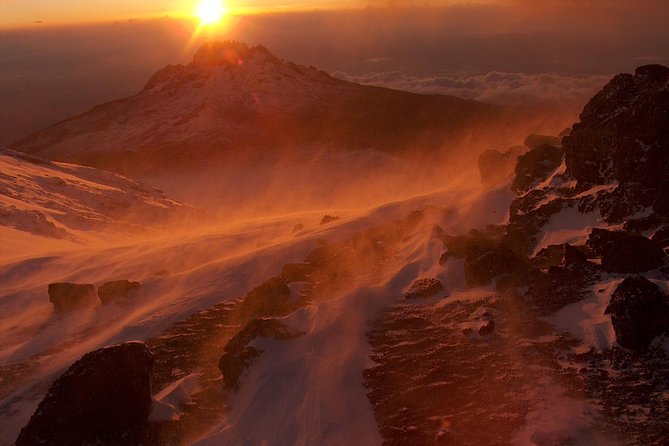
The sunrise from the Roof of Africa is the emotional high point of the trip. The final approach is demanding because of the steep slope, loose rock, cold, darkness, and thin air. Your guide controls the pace, and the included assistant guides add support for the group.
The package includes emergency oxygen and a basic first aid kit. The oxygen is specified for emergencies only, not as a way to help you reach the summit. That is an important distinction. Good guides monitor your condition and make safety decisions rather than treating oxygen as routine summit equipment.
The tour team’s medical attention is one of its praised features. The available feedback describes health checks twice a day, help with gear, and assistance with bags when needed. The names Sele and Abdul are associated with especially positive guide experiences on Kilimanjaro and safari trips, but you should confirm who will lead your own departure.
You descend to Horombo after the summit effort. At this point, your legs may be tired and your appetite uncertain. Keep moving at a controlled pace and use the support team when you need help with equipment or bags.
Day 6: Horombo to Marangu Gate and Moshi
The final day is a long downhill walk of about 20 kilometers. You descend from Horombo through the moorland and rainforest, passing Mandara Huts before reaching Marangu Gate.
The listed hiking time is six to seven hours. Descending can feel easier on your lungs, but it can be rough on knees and feet after summit day. Trekking poles, if part of your personal gear, can be especially useful here.
At the gate, you receive summit certificates before returning to Moshi. The activity ends back at the meeting point in Moshi Urban.
Airport transfers are included both ways between Kilimanjaro Airport and Moshi. That is helpful if your arrival and departure plans fit the operator’s schedule. The information does not state the transfer times, vehicle type, or airport waiting procedure, so confirm those details in advance.
What the $2,213 price covers
At $2,213 per person, this is not a budget walk, but the price includes many of the costly parts of a Kilimanjaro climb. You are paying for the mountain guide, assistant guides, porters, cook, staff wages, park and tour fees, meals, water, hut stays listed in the itinerary, emergency oxygen, first aid supplies, and airport transfers.
The food provision is substantial: six lunches, six dinners, and five breakfasts are included. Fresh drinking water and hot water for washing are also provided daily. Those details matter more than they might at lower altitude, where you can easily carry extra supplies or clean up without much effort.
You still need to budget for:
- International flights and visas
- Health and travel insurance
- Personal hiking and trekking gear
- Snacks and drinks not specified
- Personal medicine and water-purifying tablets
- An optional portable toilet
A portable toilet is described as optional but highly recommended. The information does not explain the hut toilet arrangements, so this is worth discussing with the operator before you decide.
Group discounts are available. Since the activity is private, ask how the discount works for your party size and exactly what services remain included.
The staff support is a major part of the value
A Kilimanjaro climb depends on more than a trail map. You need people who manage food, water, luggage, pacing, camp or hut routines, and safety decisions while you focus on walking.
This package includes porters and a cook, with their wages covered. The feedback supplied for the operator gives special attention to the mountain team’s help with gear, bags, meals, and twice-daily health checks. Those are not decorative extras. They can make a hard trip more manageable.
One account also credits guides Sele and Abdul with helping a family reach the summit. That does not guarantee they will lead your group, but it gives you useful names to ask about when confirming your booking.
I would ask these questions before departure:
- Who is the lead guide for your dates?
- How many climbers are in your private group?
- How many assistant guides and porters are assigned?
- What is the luggage limit?
- What hut bedding and washing facilities are supplied?
- What gear can be rented locally?
- How are health checks handled during the climb?
Fitness, altitude, and personal gear
The itinerary says most travelers can participate, but the elevation profile calls for honest preparation. You climb to 4,703 meters before the summit day and reach 5,895 meters at Uhuru Peak.
You do not need to be an expert climber based on the information provided, and the route is presented as suitable for seasoned climbers and first-time adventurers. Still, the distance, altitude, and summit-day hours are serious. You should be comfortable walking uphill for several hours and then descending when tired.
Insurance is not included. Health and travel insurance should be arranged separately, and the supplied information states that yellow fever vaccination is compulsory. Confirm current health and entry requirements with the relevant authorities before your trip, since those rules can change.
Personal gear is also your responsibility. The operator may help you rent items in Tanzania, but the package does not provide your boots, warm clothing, rain gear, pack, or other personal equipment. Ask for a current packing list rather than guessing.
Who should choose this six-day climb?
This itinerary suits you if you want the classic Marangu trail, prefer huts to tents, and value a private group with a full support crew. It is also a sensible fit if you want an acclimatization day rather than trying to rush directly from Horombo to Kibo.
It may suit first-time high-altitude trekkers, provided you understand that friendly guides and a direct trail do not remove altitude risk. The Mawenzi Ridge day is a real advantage, but it does not guarantee that everyone will summit.
You may want a different plan if you dislike very long summit days, want a slower ascent, or prefer a route known for camping and more varied trail scenery. This six-day schedule is efficient and classic, but it is not leisurely.
Cancellation and booking details
You can cancel at least three full days before the local start time for a full refund. Cancellations made less than three full days in advance are not refunded, and late changes are not accepted.
Confirmation is provided at booking. The stated operating period runs through June 18, 2026, with availability listed Monday through Sunday from midnight to 11:30 p.m. Those hours indicate booking or operating availability, not the time you will hike each day.
Should you book the Marangu Route?
Book this climb if you want a private six-day Kilimanjaro attempt with huts, meals, porters, airport transfers, and an added Mawenzi acclimatization day. The $2,213 price has solid value because it includes the staff and mountain costs that can otherwise add up quickly.
Before committing, confirm the guide names, hut conditions, gear rentals, private group size, portable toilet arrangements, and airport transfer times. Also make sure your insurance, yellow fever vaccination, personal equipment, and summit-day fitness are in order.
The Marangu Route gives you a direct and well-supported path to Uhuru Peak. It is popular for good reasons, but the summit remains the hard part. If you are ready for the altitude and the 10 to 14-hour summit day, this is a practical way to take on Kilimanjaro.
FAQ
How long is the Kilimanjaro Summit Challenge?
The climb lasts approximately six days, beginning and ending in Moshi.
Which route does the climb use?
It uses the Marangu Route, also known as the Coca-Cola Route.
Where does the activity start?
The meeting point is in Moshi Urban, Tanzania.
Where does the activity end?
The activity ends back at the meeting point in Moshi.
Do I sleep in tents?
The itinerary provides hut accommodation at Mandara Huts, Horombo Hut, and Kibo Hut. It does not list tent accommodation.
Is there an acclimatization day?
Yes. Day three is spent at Horombo with a guided hike toward Mawenzi Ridge at about 4,600 meters, followed by a return to Horombo.
How high is Uhuru Peak?
Uhuru Peak is at 5,895 meters, or 19,341 feet.
How long is summit day?
The summit day takes approximately 10 to 14 hours and includes the ascent to Uhuru Peak and the descent toward Horombo Hut.
Are meals included?
Six lunches, six dinners, and five breakfasts are included. Meals and drinks not specified, along with snacks, are not included.
Are airport transfers included?
Yes. Return transfers between Kilimanjaro Airport and Moshi are included.
Is personal trekking equipment included?
No. Personal hiking and trekking gear is not included, though some equipment may be available for rent from trekking equipment stores in Tanzania.
Is emergency oxygen provided?
Yes. Emergency oxygen and a basic first aid kit are included. The oxygen is for emergencies only and is not intended as summit assistance.
More Marangu Route Climbs in Moshi
- 6 Days Climb Kilimanjaro Through Marangu Route
★ 4.5 · 15 reviews - Top 6 Days Mt. Kilimanjaro Bike trek Tour by Marangu-Kilema Route
★ 5.0 · 15 reviews - 6 Days Mount Kilimanjaro Trek Marangu Route
★ 5.0 · 15 reviews - 5 Days Marangu Route Kilimanjaro hiking
★ 5.0 · 13 reviews
More Kilimanjaro Climbs in Moshi
- Kilimanjaro climb, Lemosho Route (8-day)
★ 5.0 · 148 reviews - Kilimanjaro climb, Lemosho Route (6-day)
★ 5.0 · 129 reviews - Private Kilimanjaro Hike 7 Day Lemosho Route
★ 5.0 · 60 reviews - Best Kilimanjaro hiking day trip tour with Kilinge Adventures
★ 4.5 · 54 reviews
Just added around Moshi
- Mt Kilimanjaro 6 days Marangu route hike★ 5.0 · 3 reviews
- Wildlife Extravaganza: Manyara, Tarangire & Ngorongoro in 3 Days★ 5.0 · 3 reviews
- Private Cycle to Kilimanjaro Bike Park Safari★ 5.0 · 6 reviews
- 3 Days Private E-Bike Tour in West Kilimanjaro★ 5.0 · 3 reviews
- West Kilimanjaro cycling Adventures★ 4.5 · 8 reviews
- machame route★ 5.0 · 16 reviews
- Kilimanjaro Climb & Safari – Lemosho Route – 13 Day★ 5.0 · 10 reviews
- Kilimanjaro Climbing Umbwe Route★ 5.0 · 3 reviews
Marangu Route Climbs, compared.



Private Full Day Hiking Experience to Marangu Route
Read our review →
From Arusha/Moshi: Kilimanjaro Hike Marangu Route Day Trip
Read our review →
Mount Kilimanjaro Day Hike Through Marangu Route to Mandara Hut
Read our review →

Best Kilimanjaro Adventures 6 Days Marangu Route Experience
Read our review →
Kilimanjaro Private Climbing in 6 Days Marangu Route
Read our review →Browse the lists this tour appears in