
Reviewed · LEMOSHO ROUTE CLIMBS
Kilimanjaro climb by Lemosho Route (7-day)
Kilimanjaro’s Lemosho Route gives you the mountain in broad chapters: rainforest, high moorland, volcanic rock, and the stark Arctic desert around Uhuru Peak. The route also uses the valuable climb-high, sleep-lower pattern, including lunch at Lava Tower before dropping to Barranco Camp. I especially like the strong acclimatization plan and the fact that a personal guide accompanies each pair during the summit push.
I also like the practical support: airport transfers, two hotel nights, hot meals, medical checks, oxygen, oximeters, and a crew of guides, porters, cooks, and camp staff. The main catch is the price, $3,476 per person, plus gear, visa, insurance, and tips. It is also a demanding nine-day commitment, not a simple weeklong walk.
Key points before you book
- A gradual western approach: You begin at Londorossi Gate and reach the Shira Plateau by vehicle before walking higher.
- Useful altitude practice: The route includes an acclimatization hike toward Lava Tower, then a second hike near Karanga and Barafu.
- A serious summit day: Expect a night departure, Uhuru Peak at 5,895 meters, and a long descent lasting roughly 12 hours.
- Full mountain support: Tents, sleeping pads, dining equipment, cooks, porters, meals, drinks, medical kits, and oxygen are included.
- Comfort before and after the climb: Two nights at Aishi Machame Hotel provide a bed, hot water, Internet, a pool, and time to recover.
- A safety-minded setup: Guides hold Wilderness First Responder certification, with regular medical checks and oximeter readings.
Why the Lemosho Route is worth your time
I would choose Lemosho for its combination of scenery and acclimatization. Instead of beginning with a long slog from the lower forest, you drive through Kilimanjaro National Park toward the western side and start walking high on the Shira Plateau. That gives you a striking first day, though it also means you reach altitude quickly.
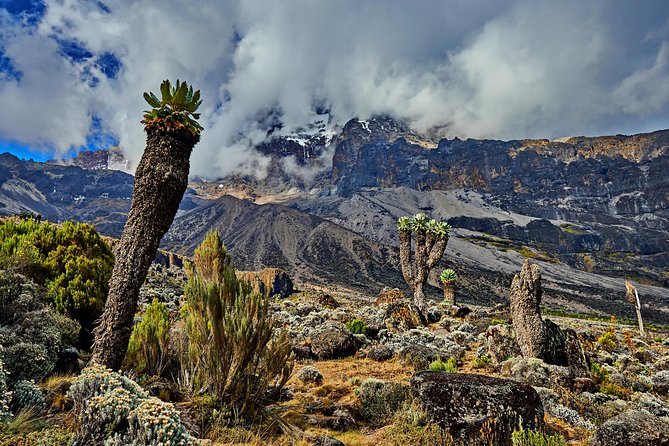
The route crosses several climate zones. You may begin among tropical forest, continue through open heather and high moorland, and then reach the bare volcanic world near the summit. The Arctic desert section is spare and cold, with little plant life and a much harsher feel than the lower slopes.
Lemosho is often described here as suitable for beginners and experienced hikers. I would read that carefully. You do not need technical climbing skills, but you do need steady fitness, patience, and the ability to walk for many hours at altitude. The summit challenge is mostly height and endurance, not ropes or difficult rock climbing.
The trip is listed as a seven-day mountain climb, but the full program takes about nine days. Day 1 is arrival and hotel preparation. Day 9 is rest and airport transfer. That extra time is useful, and you should plan flights around it rather than treating the route as seven calendar days from airport to airport.
More Kilimanjaro Climbs in Kilimanjaro
- Kilimanjaro climb, Machame Route (7-day)
★ 5.0 · 262 reviews - Kilimanjaro Climbing Lemosho Route 8 Days.
★ 5.0 · 186 reviews - Kilimanjaro climb, Lemosho Route (8-day)
★ 5.0 · 148 reviews
Arrival in Moshi and the first gear check
Your experience begins at Kilimanjaro International Airport, where an Altezza Travel representative meets you and takes you to Aishi Machame Hotel. The hotel stay is more than a place to sleep. You get hot water, Internet access, a swimming pool, and a pre-climb briefing.
Check-in begins at 2:00 PM. In the evening, managers go through the plan and make sure you have what you need. A second briefing takes place the next morning before departure. That repeat check is helpful because Kilimanjaro gear needs to match several conditions, from warm rain in the forest to freezing wind near the summit.
Two people share a hotel room under the standard arrangement. Solo climbers pay extra for single accommodation, both at the hotel and in a tent. Personal items such as hiking clothes, boots, and a sleeping bag are not included, though gear rental is available.
The hotel includes breakfast. You should budget about $15 per person for each lunch or dinner there if you need meals beyond the included arrangements. Airport pickup and drop-off, plus all ground transportation, are included in the package.
Day 2: Londorossi Gate and Shira 1 Camp
The second day begins with a three to four-hour drive to Londorossi Gate, at about 2,200 meters. Your crew handles permits and registration with the park’s search and rescue service. From there, an off-road vehicle takes you farther up, to around 3,500 meters.
This is a notable feature of the route. You gain altitude fast by vehicle, then walk a relatively easy distance to Shira 1 Camp. The first mountain views include the Shira Plateau, and the walking time is about five hours according to the schedule.
The benefit is a gentler first hiking day. The drawback is that your body has less time to adjust before reaching a high camp. Take the day seriously even if the trail feels easy. Walk slowly, drink regularly, eat your meals, and tell your guide about headaches, nausea, unusual fatigue, or other symptoms.
Shira 1 sits at roughly 3,505 meters. The camp’s height makes the first night a real altitude test, even though the route itself is not technically difficult.
Day 3: Shira 2 and the first acclimatization walk
From Shira 1, you walk to Shira 2 Camp at about 3,900 meters. The scheduled trek lasts around six hours and is described as light, giving you time to notice Kilimanjaro’s unusual plant life and the views across northern Tanzania.
Weather permitting, Shira 2 is a good place to see Mount Meru, Africa’s fifth-highest summit. That view adds scale to the trip. Kilimanjaro can feel like an isolated world, but Mount Meru reminds you that this is part of a much larger volcanic region.
After lunch and a two-hour rest, you take an acclimatization walk toward Lava Tower Camp, gaining about 200 meters before returning. This is one of the smartest parts of the plan. You briefly reach a higher elevation, then sleep lower at Shira 2. That gives your body a useful rehearsal without forcing you to spend the night at the higher point.
Your meals are cooked for the group, with three energy-rich servings each day and choices at every meal. Vegetarian, vegan, lactose-free, gluten-free, halal, and other meal plans are available. Drinks include tea, coffee, juices, and soda. At altitude, warm food and regular meals matter more than gourmet variety, and this arrangement removes the need to carry your own cooking setup.
More Kilimanjaro Climbs in Moshi:
- Kilimanjaro climb, Lemosho Route (6-day)
★ 5.0 · 129 reviews - Kilimanjaro climb, Marangu route (6-day)
★ 5.0 · 72 reviews - Private Kilimanjaro Hike 7 Day Lemosho Route
★ 5.0 · 60 reviews - Best Kilimanjaro hiking day trip tour with Kilinge Adventures
★ 4.5 · 54 reviews
Day 4: Lava Tower and Barranco Wall
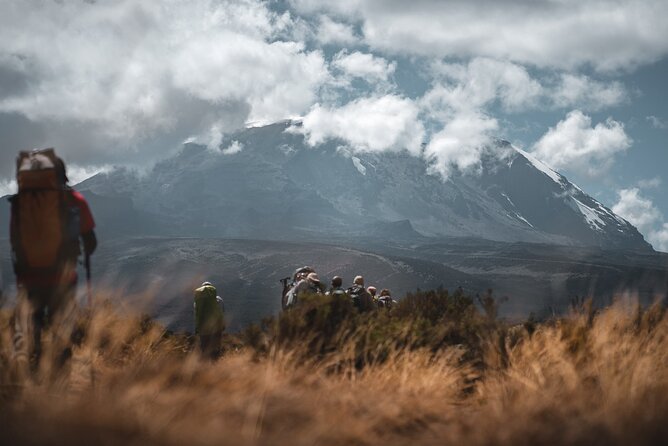
Day 4 is the route’s key acclimatization day. You leave Shira 2 and climb toward Lava Tower at 4,630 meters. There are repeated ascents and descents, and the hiking day lasts about eight hours.
You may feel uncomfortable at Lava Tower. That is not a sign that the plan has gone wrong. The point is to spend one to two hours at high elevation, eat lunch, and then descend to Barranco Camp at about 3,960 meters.
This climb-high, sleep-lower pattern is valuable, but the day can still be tiring. Keep your pace slow and even. You should not race the stronger members of the group, and your guide’s choice of pace matters here.
Barranco Camp gives you one of the route’s most memorable sights: the Barranco Wall. It looks steep and imposing from camp, but the trail up it is described as straightforward. The wall is not a technical rock climb. Still, you need to use your hands at points and move carefully, especially if you are tired or the trail is crowded.
Day 5: Barranco Wall, Karanga, and another altitude check
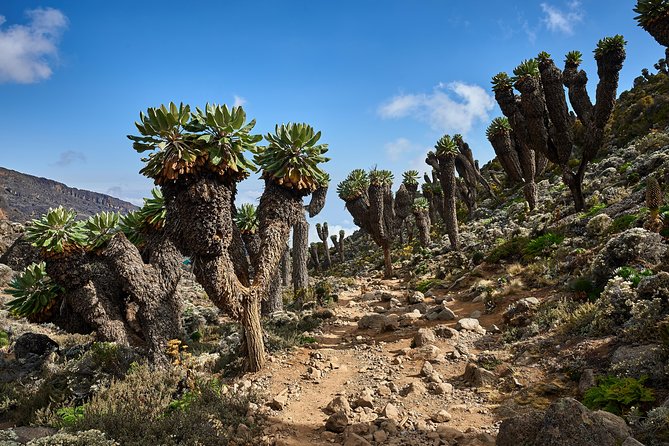
You start early to climb Barranco Wall before larger groups arrive. The ascent takes about an hour. The early start is practical, not just scenic. It can reduce congestion on a narrow route and leaves more time for the long walk to Karanga Camp.
After the wall, you walk toward Karanga through a series of ascents and descents. The route is harder than the short Barranco Wall climb, and the entire day lasts around seven hours. Your guides adjust the pace to the group, which is important when fitness levels differ.
At Karanga, you receive a warm lunch. Later, you take another acclimatization hike in the direction of Barafu Camp before returning. This extra movement at elevation can help prepare you for the next day, when you move to the summit camp.
The repeated short hikes may feel like extra work when you are already tired. I see them as a good trade. A route that simply marches higher every day gives your body less help. Here, the itinerary builds in time to reach high points and then retreat.
Day 6: Barafu Camp and preparation for the summit
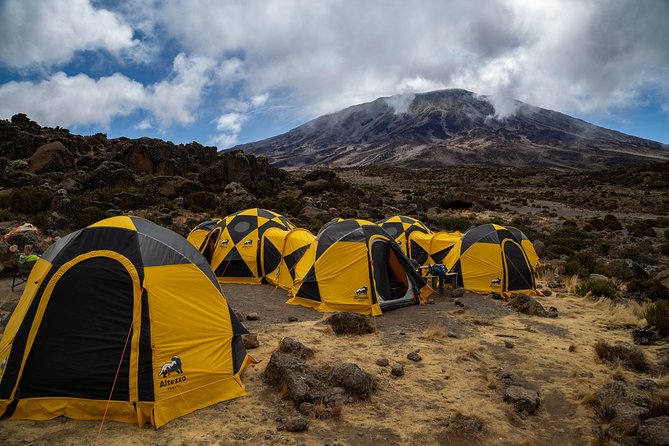
From Karanga, you climb to Barafu Summit Camp at about 4,640 meters. The scheduled day includes another acclimatization walk toward Kosovo Summit Camp, at around 4,800 meters, before returning to Barafu.
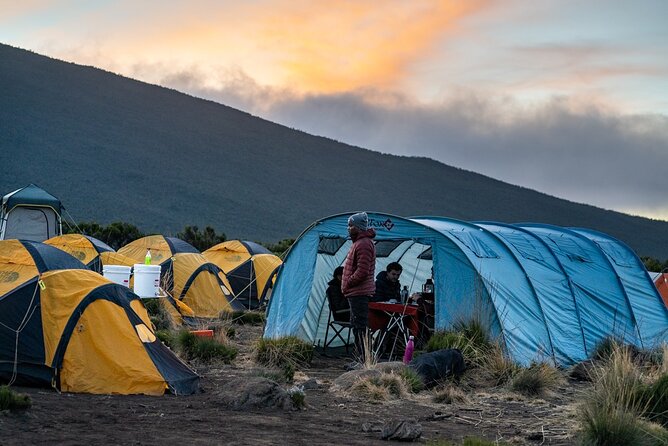
Barafu is the staging point for the summit attempt. The crew sets up the North Face VE-25 tents and sleeping bags, so you can focus on eating, drinking, checking clothing, and resting. A hot dinner is served before you try to sleep.
This is not an ordinary camp night. You will wake for the nighttime ascent, so use the afternoon wisely. Organize your headlamp, gloves, water, snacks, layers, and trekking poles before lying down. You may sleep poorly because of altitude, cold, nerves, or the early wake-up. That is normal, but you should report serious symptoms to the guide.
The schedule describes the combined movement from Karanga through the summit and down to Millennium Camp as an especially long section. The summit day itself lasts roughly 14 hours in the itinerary. Build mental space for a slow process. The goal is steady progress, not speed.
Day 7: Uhuru Peak and the long descent
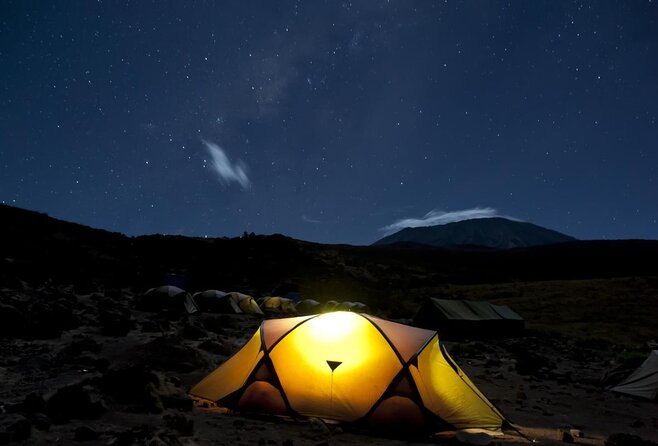
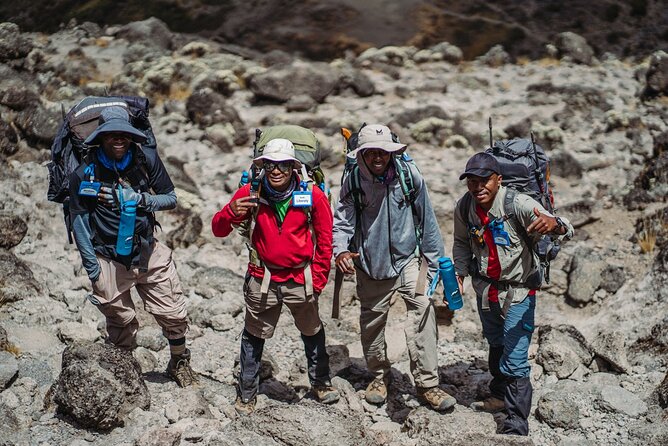
You leave Barafu at night for Uhuru Peak, the summit of Kilimanjaro, at 5,895 meters. The route is technically simple, but the altitude makes it hard. Each pair of climbers receives a personal guide for the ascent, allowing close attention to physical and mental condition.
The final climb is where fitness, patience, and acclimatization come together. You may take very small steps and pause often. The guide’s job is not merely to point out the trail. It is to watch how you are coping and help make sensible decisions.
After reaching Uhuru Peak, you can descend toward the nearest glacier if you wish. That optional stop should not distract you from the main priority, getting down safely. The descent from the summit is long, loose, and tiring. Pay close attention to your feet and knees. The itinerary specifically warns that many accidents happen on the way down, including broken arms and legs.
You return to Barafu Camp for about two hours of rest, then continue to Millennium Camp at roughly 3,820 meters. Reaching lower ground brings relief, but you are not finished walking. This is a demanding day, and it is the biggest reason I would not recommend the climb to anyone seeking a relaxed holiday.
Day 8: Forest descent and the Mweka Gate finish
Millennium Camp sits in tropical rainforest, a sharp change from the bare upper mountain. After breakfast, you descend to Mweka Gate at about 1,640 meters. The listed walking time is around five hours.
The forest section gives you a welcome change in temperature and scenery. It also marks the end of the mountain portion. At the gate, the group gathers to celebrate, and you can write in the guestbook. Altezza then provides commemorative certificates and transfers you back to the hotel.
That hotel return is a useful comfort. You can shower, sleep in a bed, and recover without having to organize transport yourself. Two hotel nights are included in the full program, with the final night leading into airport departure.
Day 9: A quiet final day in Moshi
The final day is set aside for rest and transfer to the airport. Hotel check-out is at 11:00 AM. If your flight leaves later, a late check-out is possible for an extra fee.
Keep this day flexible. After a summit push and a full descent, you may appreciate a slow breakfast and time by the pool more than another scheduled activity. The airport transfer is included, which makes the final logistics simple.
What the $3,476 price covers
At $3,476 per person, this is not a budget trek. The value comes from the amount of infrastructure included. You are paying for park fees, transport, two hotel nights, mountain tents, sleeping pads, dining gear, three meals a day, drinks, porters, cooks, camp staff, certified guides, medical supplies, and regular medical checks.
The package also includes unlimited oxygen tanks and oximeters. That does not remove the risks of altitude, and it is not a substitute for turning around when necessary. It does mean the crew has tools for monitoring and responding to problems.
The cost does not include your flight to Tanzania, visa, personal clothing, boots, sleeping bag, mountaineering insurance, or tips. Most nationals pay a $50 visa fee at JRO, while US passport holders pay $100. Insurance should cover trekking up to 6,000 meters, and that point matters because Uhuru Peak is nearly 5,900 meters high.
Single rooms and single tents cost extra. Group discounts are available, so the price may work better for a family or private group than for a solo climber. The activity is private, meaning only your party participates, though the size of the support crew depends on the group.
Safety, food, and the human support team
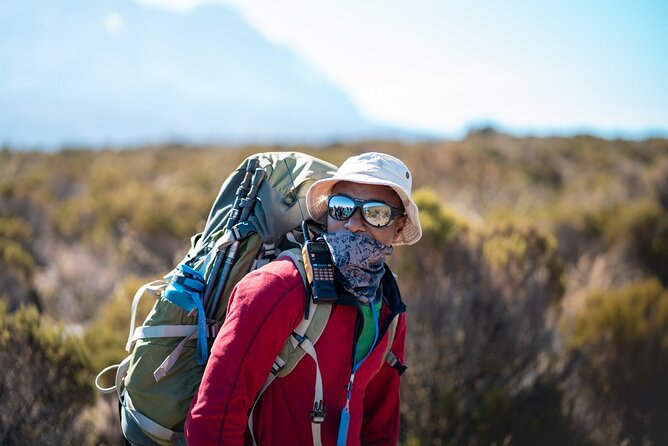
The strongest part of this arrangement is the support system. Wilderness First Response certified guides lead the climb, and the crew includes porters, cooks, and camp masters. Medical check-ups, medical kits, oximeters, and oxygen are included.
Specific guides named in the supplied material include Kombe, Elia, Joshua, Bosco, George, Hamza, Simon, Shiraz, Musa, Justin, Ayubu, Adrian, and others. Staffing can change, so you should not book on the assumption that a particular person will lead your climb. Still, these names help show that the service is built around a sizeable team rather than one guide doing everything.
The food plan is another practical plus. Three meals a day, warm drinks, and special diets are included. On a high-altitude trek, appetite can fade, so having food prepared and brought to you is a real advantage. Afternoon popcorn is also mentioned as a small morale boost.
The ethical side of porter support deserves attention. You should ask Altezza for its current porter welfare practices and tipping guidance before departure. Tips are optional and based on your satisfaction, but they are an important part of the mountain economy, so budget for them rather than treating them as an afterthought.
Who should book this climb?
I would recommend this route to you if you have moderate physical fitness, enjoy long walking days, and want a supported first high-altitude climb. You do not need technical mountaineering experience, but you should be comfortable with cold, basic tent camping, early starts, and a difficult summit day.
It can suit a private group of friends, couples, families with fit older children, or solo climbers who want a dedicated support team. The supplied experiences include successful climbs by groups of friends, couples, parents and children, and solo participants who joined a broader mountain community.
I would hesitate to recommend it if you dislike camping, struggle with long descents, or want a flexible holiday with short daily activities. The 14-hour summit schedule is serious. You should also avoid treating the 100 percent recommendation figure as a guarantee that you will reach the top. Altitude affects people unpredictably, even when the route and crew are well organized.
Should you book the 7-day Lemosho climb?
I would book it if you want a well-supported Kilimanjaro attempt with a thoughtful acclimatization schedule and clear logistics from airport to hotel and back again. The Lemosho Route gives you a strong variety of scenery, while the Lava Tower and Kosovo acclimatization walks help prepare you for the height.
Before paying, confirm the exact group size, guide assignment, gear rental prices, porter tipping guidance, insurance requirements, and current hotel details. Also allow the full nine days, not just the seven mountain days.
For a first Kilimanjaro climb, $3,476 buys a lot of support and removes many chores. You still have to supply the effort. If you are ready for slow walking, cold nights, and one very long summit day, this is a serious and appealing way to reach Africa’s highest point.
FAQ
How long does the full Kilimanjaro experience last?
The complete program lasts approximately nine days. The mountain climb takes seven days, with an arrival and hotel day before the trek and a rest and airport transfer day afterward.
What route does the climb use?
The climb uses the Lemosho Route. It begins near Londorossi Gate on Kilimanjaro’s western side and continues through Shira 1, Shira 2, Lava Tower, Barranco, Karanga, Barafu, Uhuru Peak, Millennium Camp, and Mweka Gate.
What is the highest point reached?
The summit is Uhuru Peak, at 5,895 meters. The trip also reaches Lava Tower at about 4,630 meters and Barafu Summit Camp at about 4,640 meters.
Are airport transfers included?
Yes. Pickup and drop-off at Kilimanjaro International Airport are included, along with all ground transportation during the program.
Are meals included?
Three meals a day are included on the mountain. The package provides six lunches, eight breakfasts, and six dinners, along with drinks such as tea, coffee, juice, and soda. Several special diets are available.
Is camping equipment provided?
North Face VE-25 tents, sleeping pads, sleeping bags, and group equipment are provided on Kilimanjaro. Personal gear such as hiking clothing and footwear is not included, but rental is available.
What is not included in the $3,476 price?
International flights, the Tanzanian visa, personal gear, mountaineering insurance, tips, and extra charges for single hotel or tent accommodation are not included. Hotel lunches and dinners outside the included mountain meals also cost extra.
More 7-Day Experiences in Moshi
- Climbing Kilimanjaro through 7 days Machame Route
★ 5.0 · 151 reviews - 7-Day Magical Tanzania Safari -Premium High End Package
★ 5.0 · 53 reviews - 7 Days Machame route – Kilimanjaro
★ 5.0 · 45 reviews - Best Kilimanjaro Adventure 7 days Machame route Trekking
★ 5.0 · 42 reviews
More Lemosho Route Climbs in Moshi
- Kilimanjaro Lemosho Route
★ 5.0 · 71 reviews - Climbing Kilimanjaro through 8 days Lemosho Route
★ 5.0 · 52 reviews - 8 Days Climbing Mt.Kilimanjaro (Lemosho Route)
★ 4.5 · 37 reviews - 7 days Lemosho route Climbing Mt.Kilimanjaro
★ 5.0 · 31 reviews
Just added around Moshi
- Mt Kilimanjaro 6 days Marangu route hike★ 5.0 · 3 reviews
- Wildlife Extravaganza: Manyara, Tarangire & Ngorongoro in 3 Days★ 5.0 · 3 reviews
- Private Cycle to Kilimanjaro Bike Park Safari★ 5.0 · 6 reviews
- 3 Days Private E-Bike Tour in West Kilimanjaro★ 5.0 · 3 reviews
- West Kilimanjaro cycling Adventures★ 4.5 · 8 reviews
- machame route★ 5.0 · 16 reviews
- Kilimanjaro Climb & Safari – Lemosho Route – 13 Day★ 5.0 · 10 reviews
- Kilimanjaro Climbing Umbwe Route★ 5.0 · 3 reviews
Lemosho Route Climbs, compared.

8-Day Small-group Lemosho Kilimanjaro Summit Trekking
Read our review →





Climbing Kilimanjaro through 8 days Lemosho Route
Read our review →
Browse the lists this tour appears in