
Reviewed · LEMOSHO ROUTE CLIMBS
8 Days Kilimanjaro Hike via Lemosho Route
The best feature of this 8-day Kilimanjaro climb is its patient route around the mountain. You begin in western rainforest, cross the open Shira Plateau, pass beneath glaciers, and approach the summit from the south. That longer shape gives you changing scenery and useful time to adjust to altitude, rather than rushing straight uphill.
I like the low-crowd feel of Lemosho and the careful rhythm of the itinerary. I also like that Nafika includes tents, sleeping gear, meals, treated water, transport, oxygen, first aid, and two hotel nights, so you are not piecing together the basics yourself. The catch is summit day: up to 13 hours of walking, cold, darkness, and thin air. This is a serious physical challenge, not a sightseeing stroll.
Key points to know before booking
- Lemosho begins in rainforest at 2,360 meters, then crosses several of Kilimanjaro’s major climate zones.
- Day four reaches Lava Tower at 4,640 meters, followed by a descent to Barranco Camp, an important acclimatization pattern.
- Summit morning starts around midnight, with Stella Point at 5,756 meters and Uhuru Peak at 5,895 meters.
- Nafika provides camping equipment, food, treated water, emergency oxygen, first aid, and private transportation.
- The listed price is $2,350 per person, with a $50 visa charge listed separately.
- The maximum group size is 20, though some past climbs have been much smaller, including groups of four, five, and six.
Why the Lemosho Route is worth eight days
Kilimanjaro is not a technical climb in the usual mountaineering sense, but altitude makes it demanding. You do not need ropes or rock-climbing experience for this route. You do need steady fitness, patience, and the ability to keep walking when your body would rather stop.
Lemosho is a strong choice because it gives you time. The first days are not just filler before the summit push. They let you move gradually from forest to moorland, then to high desert and glacier country. That slower progression can help your body adjust.
The route also gives you more visual variety than a shorter approach. You start among trees and finish on bare volcanic ground, with Kibo and Mawenzi frequently framing the views. The Shira Plateau is especially impressive, with broad open views and Kibo Peak appearing to float above the clouds.
At $2,350 per person, the cost is not small. But the package includes the parts that can otherwise add up quickly: private transport, two nights in a Moshi hotel, all camping equipment, meals during the trek, treated water, guides, porters, emergency oxygen, and a first aid kit. It also states that mountain crews receive a good salary, which matters if you want your booking to support a properly organized local operation.
The description does not list international flights, personal clothing, or the visa as included. The visa is specifically shown as an extra $50. Check the final booking terms for any personal gear or other charges before you pay.
More Kilimanjaro Climbs in Kilimanjaro
- Kilimanjaro climb by Lemosho Route (7-day)
★ 5.0 · 651 reviews - Kilimanjaro climb, Machame Route (7-day)
★ 5.0 · 262 reviews - Kilimanjaro Climbing Lemosho Route 8 Days.
★ 5.0 · 186 reviews
Day 1: Londorossi Gate to Big Tree Camp
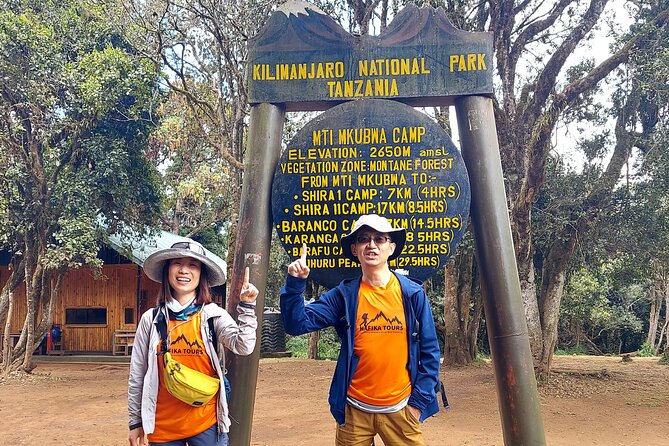
Your morning begins with hotel pickup at about 8:00. Nafika handles the formalities at Lemosho Gate before you start walking from the western side of Kilimanjaro.
The first four-hour hike passes through the Lemosho glades and montane forest. This is a gentle way to meet the mountain. The trees provide shade, and the route feels more like a forest trek than a high-altitude expedition.
Big Tree Camp is your first overnight stop. It is a useful opening day because you gain altitude without being asked to cover a huge distance. You will still need to settle into tent life, manage your clothing, and learn the daily routine.
Do not treat this as an easy warm-up that needs no preparation. The forest can be damp, and the trail may feel uneven. Keep your rain protection and a warm layer close by rather than buried in your main bag.
Day 2: Shira 1 and the first open views
Day two changes character. The forest gives way to grassy moorland and heather, with volcanic rocks scattered across the plateau. You walk about 8.5 kilometers in roughly five hours to reach Shira 1 Camp.
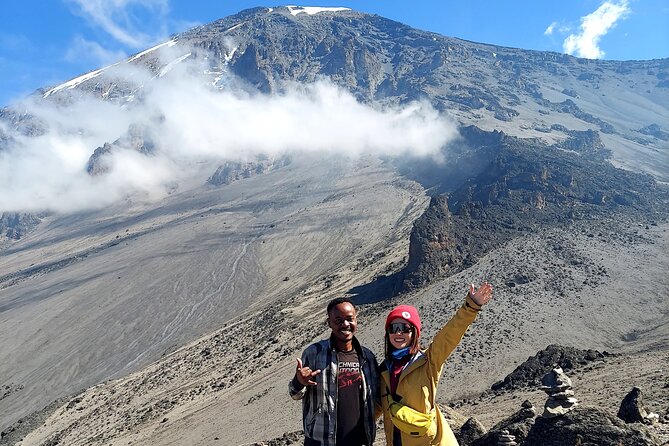
The route includes some steeper sections, but the main challenge is the first clear gain in altitude. Kibo Peak comes into view, often framed by clouds. This is one of the moments when Kilimanjaro begins to feel like a high mountain rather than a long hike.
I would keep your pace deliberately slow here. The guides use the Swahili principle of walking slowly, and you should follow that rhythm even if you feel strong. Going too fast on day two can make later days harder.
The open terrain also brings more exposure to sun and wind. Sunglasses, sunscreen, lip balm, and a brimmed hat are practical items, not optional extras.
Day 3: Shira Plateau and acclimatization
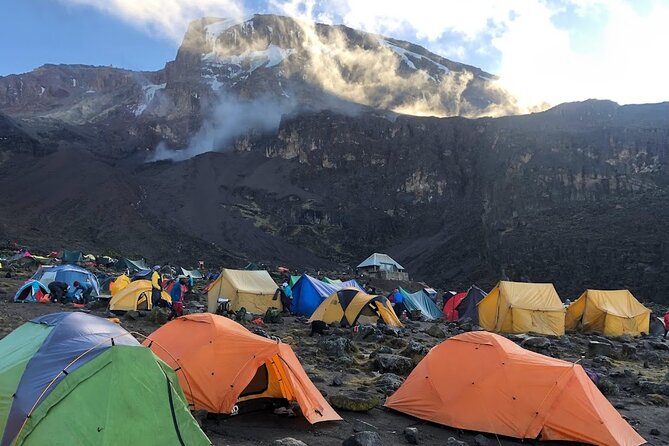
The third day covers about eight kilometers and takes around four hours. You continue across the Shira Plateau toward Shira 2 Camp, with views toward the Northern Icefields and unusual angles on Kibo.
This is one of the scenic high points of the route. The plateau feels broad and quiet, with volcanic ground underfoot and huge views in several directions. You can also see how quickly the vegetation thins as you move higher.
The most useful part of the day comes after reaching camp. Nafika schedules a short acclimatization walk before dinner, then returns you to camp to rest. That extra walk is not about covering distance. It gives your body a controlled taste of higher elevation before you sleep.
You may feel fine at this stage. That does not guarantee an easy summit night. Altitude symptoms can appear later, so tell your guide about headache, nausea, unusual tiredness, dizziness, or breathing trouble. The company says guides perform regular health checks and carry emergency oxygen and a first aid kit.
Same country, a completely different kind of safari:
- Safari Serengeti And Ngorongoro
★ 5.0 · 288 reviews - Climbing Kilimanjaro – Machame Route
★ 5.0 · 170 reviews - Climbing Kilimanjaro through 7 days Machame Route
★ 5.0 · 151 reviews - Kilimanjaro climb, Lemosho Route (8-day)
★ 5.0 · 148 reviews
Day 4: Lava Tower at 4,640 meters
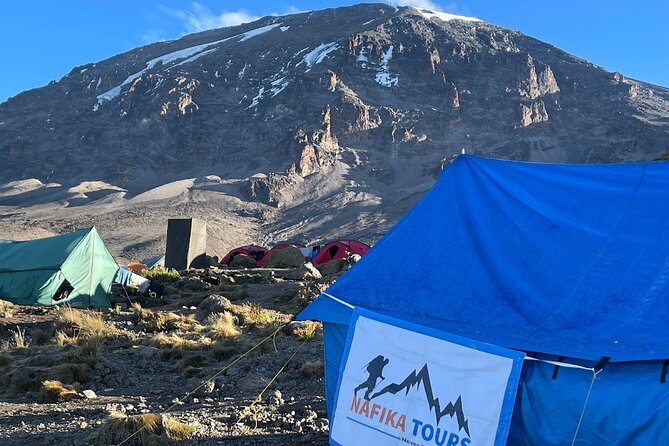
Day four is the route’s big acclimatization day. You climb toward Lava Tower, reaching 4,640 meters, then descend to Barranco Camp at about 3,960 meters. The walk covers roughly 10 kilometers and takes around seven hours.
This climb-high, sleep-lower pattern is valuable. You spend time at a higher elevation without making it your overnight altitude. It is also the day when the mountain’s upper zones become especially stark, with lava ridges and the glaciers of the Western Breach above you.
Lava Tower is a natural place for lunch and a pause. The route can feel steep and tiring, and altitude may slow even fit climbers. Take your time and drink regularly.
The descent to Barranco is part of the reward. The camp sits beneath tall cliffs, with wide views toward the plains. It is a dramatic setting, but do not expect a relaxed afternoon. Seven hours on the trail can leave you ready for food and sleep.
Day 5: Barranco Wall and Karanga Valley
Day five is shorter, around five hours. It begins with the Barranco Wall, which looks more intimidating from below than it feels once you are moving across it.
You should expect hands-on walking in places, but the supplied information does not present it as a technical climbing section. The guides support the group over the steeper parts, and a calm pace helps if heights make you uneasy. One past climber specifically needed help with a fear of heights, so mention any concern before you set out.
After the wall, the route passes beneath the Heim and Kersten glaciers and continues toward Karanga Valley. Mawenzi’s jagged peaks appear to the east, while Kibo’s glaciers remain overhead.
Lunch comes at camp, followed by a quiet afternoon. That rest is important. You are not wasting time by napping. You are saving energy for the summit push.
If you feel strong, the guides may offer an afternoon acclimatization walk to around 4,200 meters, followed by a descent to camp. This should be treated as optional. Feeling ambitious on day five is not the same as being ready for a 13-hour summit day.
Day 6: Barafu Camp and an early night
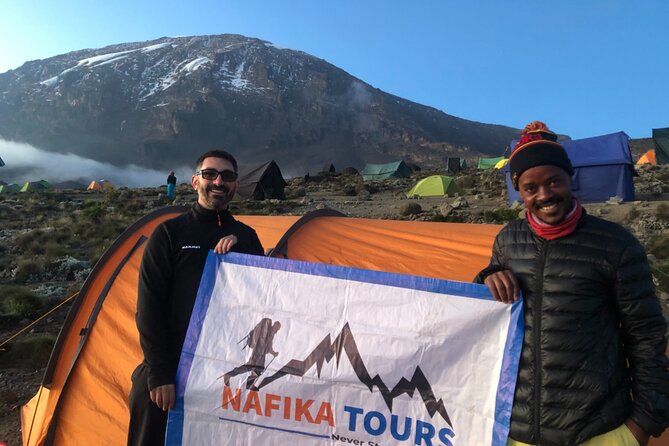
The trail to Barafu Camp covers only about four kilometers and takes around four hours, but the short distance does not make the day unimportant. Barafu sits at 4,640 meters in the alpine desert zone, and it is the launching point for your summit attempt.
You will see both Kibo and Mawenzi from this section. The setting is bare, cold, and exposed compared with the lower forest. There is little reason to linger after lunch. The sensible plan is to organize your summit clothing, refill water, and sleep.
Dinner is early. Alarms are set around midnight. That means your night is broken before the hardest day begins, so use the afternoon well. Keep your headlamp, gloves, warm layers, water, and snacks ready before you lie down.
The company provides sleeping tents, sleeping pads, and sleeping bags. Even with that equipment, camp comfort will be basic. This is the point where good organization matters most.
Day 7: Stella Point, Uhuru Peak, and the long descent
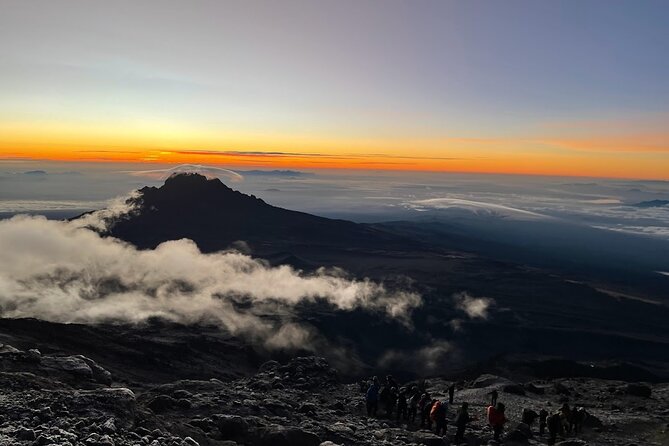
Summit day begins around midnight with tea and breakfast. You then start the four-to-five-hour climb toward the crater rim, gaining a remarkable amount of elevation over a short horizontal distance.
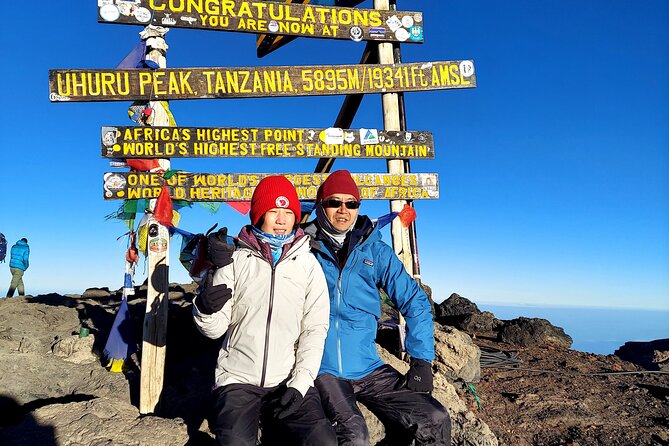
The route is normally taken slowly, often in darkness. The aim is to reach Stella Point at 5,756 meters around sunrise. From there, Uhuru Peak is about one more hour away at 5,895 meters.
This is the emotional center of the trip, but it is also the hardest physical section. Cold, fatigue, and altitude can make every step feel slow. Do not measure success by how quickly others move. Stay with the guide’s pace and report symptoms early.
At Uhuru Peak, you have time for photographs and a brief celebration before descending. The information says the group returns to Barafu Camp for lunch and rest, but the day continues after that. The total schedule is about 13 hours.
That long descent is easy to underestimate. Your legs have already worked hard, and loose volcanic ground can make the return tiring. Keep enough water and snacks for the full day, not just the climb up.
Day 8: Millennium Camp to Mweka Gate
After breakfast, you make the final descent through montane forest. The stated distance is about 14 kilometers, with roughly five hours of walking from the Millennium Campsite to Mweka Gate.
The return through the forest feels very different from summit morning. Trees replace the open alpine desert, air feels warmer, and the mountain gradually releases you. Still, tired legs and downhill walking can make this a real hiking day.
At Mweka Gate, you collect your certificates and return by private car to your hotel. The cold drink and warm shower waiting at the end are simple pleasures, but after eight days on the mountain, they will feel well earned.
The package includes breakfast on the eighth day, while lunch and dinner are listed for the earlier trekking schedule. Confirm the exact meal arrangement for your final transfer if that matters to you.
Guides, safety, and the daily camp routine
Safety is the strongest practical reason to choose an organized climb. Nafika says its guides conduct regular health checks and are prepared to identify and treat altitude sickness. Emergency oxygen and a first aid kit are included.
The company’s teams have included guides named Eli, Meshakii, Inocent, Musa, Abdala, and Diklan. Ask who will lead your departure, how many guides will accompany your group, and how health checks are handled. The guide’s judgment matters more than a polished sales pitch once you are above 4,000 meters.
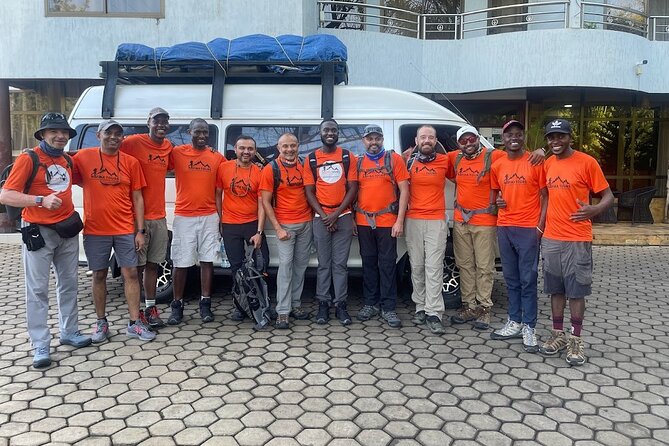
Past groups have praised the guides for adjusting the pace, checking equipment before the hike, helping with gear rentals, and answering questions. That makes a difference on a route where one person may feel fine while another needs more time.
The food service also receives unusually strong praise. The crew has been described as providing proper tea breaks with a table, food, and sometimes chairs rather than simply handing over a thermos. The chef is credited with preparing varied meals and occasional surprises.
You should still expect camping, not hotel service. The equipment list includes tents, sleeping pads, sleeping bags, tables, and chairs, but the mountain remains cold, dusty, and basic. Pack for changing conditions and keep personal essentials accessible.
The listed group limit is 20 people. That is a reasonable maximum for a mountain operation, but a group of 20 will feel different from a family group of four or six. Ask about your expected group size before booking if quiet pacing or personal attention is important to you.
What the $2,350 price really covers
The price looks competitive for an eight-day guided Kilimanjaro climb because many high-cost basics are already bundled. You receive:
- Private transportation, including pickup and the return transfer
- Two nights in a Moshi hotel
- Camping tents and mountain sleeping equipment
- Tables and chairs for camp use
- Professional guides and porters
- Breakfast for eight days
- Lunch for eight days
- Dinner for seven days
- Treated water throughout the trek
- Emergency oxygen and a first aid kit
- Park and parking fees
The stated fee also includes good salaries for the mountain crew. That is worth noting because porters do much of the behind-the-scenes work that makes a climb possible.
The $50 visa is not included. Flights and personal hiking equipment are not listed among the inclusions, so check those details before comparing the total price with another operator.
Who should book this climb
This route suits you if you want Kilimanjaro’s most varied scenery and prefer an eight-day schedule with several acclimatization opportunities. It is also a good fit if you value a local company, organized transfers, full camping support, and regular guide contact.
You should have a moderate level of physical fitness. You do not need to be an elite athlete, but you must be ready for repeated hiking days, high altitude, cold nights, and the final 13-hour summit day.
This may not suit you if you dislike camping, need a short itinerary, or want a predictable outcome at the summit. No operator can remove altitude risk, and the route’s high summit prospects do not guarantee that you will reach Uhuru Peak.
The experience has been used by families and mixed-age groups, including one family with climbers from age 20 to 58 and a 69-year-old father who reached the summit. That is encouraging, but personal health, preparation, and altitude response vary widely.
You can cancel for a full refund if you do so at least 24 hours before the experience start time. Cancellations inside 24 hours are not refunded, and late changes are not accepted.
Should you book the Nafika Lemosho climb?
I would choose this trip if your priority is a scenic route, a full eight-day schedule, and strong support on the mountain. The mix of rainforest, Shira Plateau, Lava Tower, Barranco Wall, glacier views, and a southern summit approach gives you a fuller Kilimanjaro experience than a rushed climb.
The main decision is not the scenery. It is your readiness for summit night. If you can train for long uphill and downhill walks, accept a basic tent routine, and follow a slow pace, the $2,350 package offers solid value.
Before paying, confirm your guide team, group size, personal equipment needs, hotel details, and the exact pickup point. If those answers suit you, Nafika’s eight-day Lemosho plan is a sensible choice for reaching Kilimanjaro with time, support, and a memorable route.
FAQ
How long is the Kilimanjaro hike?
The experience lasts approximately eight days, including the final descent from the mountain and the return transfer to the hotel.
Which route does the climb use?
The climb uses the Lemosho Route, beginning at Londorossi Gate on the western side of Kilimanjaro and later circling toward the mountain’s southern side.
What is the highest point reached?
The summit is Uhuru Peak at 5,895 meters. The route also reaches Stella Point at 5,756 meters and Lava Tower at 4,640 meters.
What time does summit day begin?
Summit morning begins around midnight with tea and breakfast. The climb to the crater rim takes about four to five hours, followed by roughly one hour from Stella Point to Uhuru Peak.
Is transportation included?
Yes. Private transportation is included, with pickup offered and a private car returning you to the hotel after the final descent.
Are camping supplies provided?
Yes. The package includes camping equipment, mountain sleeping tents, sleeping pads, sleeping bags, tables, and chairs.
Are meals and drinking water included?
Yes. The package lists eight breakfasts, eight lunches, seven dinners, and treated water throughout the trek.
Is a visa included in the price?
No. The visa is listed separately at $50.
How fit do I need to be?
You should have a moderate level of physical fitness. The longest day is summit day, which takes about 13 hours and includes the climb to Uhuru Peak followed by a descent to Barafu Camp.
More Hiking & Trekking in Kilimanjaro
- Best Kilimanjaro hiking day trip tour with Kilinge Adventures
★ 4.5 · 54 reviews - #1. Best Kilimanjaro Day hike Tour-Machame Route-ISMANI
★ 4.2 · 47 reviews - Best Kilimanjaro Adventure 7 days Machame route Trekking
★ 5.0 · 42 reviews - Kilimanjaro 7 Day Private Trekking Experience
★ 5.0 · 40 reviews
More Lemosho Route Climbs in Kilimanjaro
- Kilimanjaro climb, Lemosho Route (6-day)
★ 5.0 · 129 reviews - Kilimanjaro Lemosho Route
★ 5.0 · 71 reviews - Private Kilimanjaro Hike 7 Day Lemosho Route
★ 5.0 · 60 reviews - Climbing Kilimanjaro through 8 days Lemosho Route
★ 5.0 · 52 reviews
Just added around Kilimanjaro
- Mt Kilimanjaro 6 days Marangu route hike★ 5.0 · 3 reviews
- Wildlife Extravaganza: Manyara, Tarangire & Ngorongoro in 3 Days★ 5.0 · 3 reviews
- Private Cycle to Kilimanjaro Bike Park Safari★ 5.0 · 6 reviews
- 3 Days Private E-Bike Tour in West Kilimanjaro★ 5.0 · 3 reviews
- West Kilimanjaro cycling Adventures★ 4.5 · 8 reviews
- machame route★ 5.0 · 16 reviews
- Kilimanjaro Climb & Safari – Lemosho Route – 13 Day★ 5.0 · 10 reviews
- Kilimanjaro Climbing Umbwe Route★ 5.0 · 3 reviews
Lemosho Route Climbs, compared.


8-Day Small-group Lemosho Kilimanjaro Summit Trekking
Read our review →





Climbing Kilimanjaro through 8 days Lemosho Route
Read our review →Browse the lists this tour appears in