
Reviewed · LEMOSHO ROUTE CLIMBS
8-Day Small-group Lemosho Kilimanjaro Summit Trekking
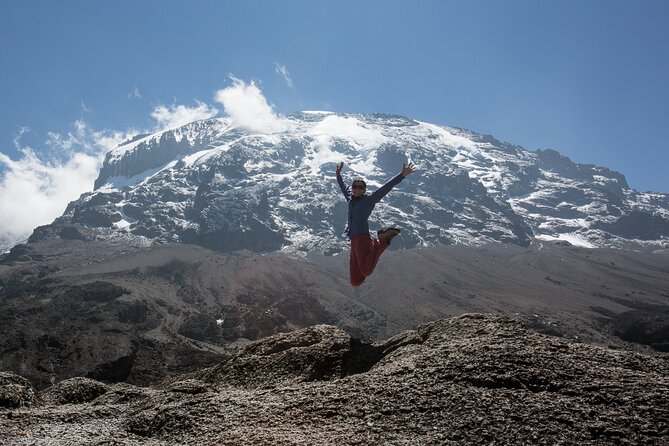
At midnight, you leave camp for the hardest stretch of the climb: a slow, steep push through scree toward Stella Point, followed by the final hour to Uhuru Peak at 19,340 feet. That sunrise over Africa is the prize, but the real story is the careful eight-day pace that gets you there.
I like the Lemosho route’s gradual acclimatization, including a high climb to Lava Tower followed by a descent to Barranco Camp. I also like the small-group format, which gives guides such as Amani, Raymond, Goodluck, Herment Mosha, and others more room to check on your energy, meals, breaks, and altitude symptoms.
The main drawback is simple: this is a serious high-altitude trek, not an extended walk in the hills. Summit day can take up to 11 hours, the weather changes quickly, and the advertised maximum of 15 people is larger than the intimate groups some climbers have experienced.
Key points to know before you book
- Eight days gives your body time to adjust: The route includes several high camps and a deliberate climb-high, sleep-lower pattern.
- Lemosho crosses several climate zones: You move from rainforest to heather, high desert, giant senecio plants, and the Arctic summit zone.
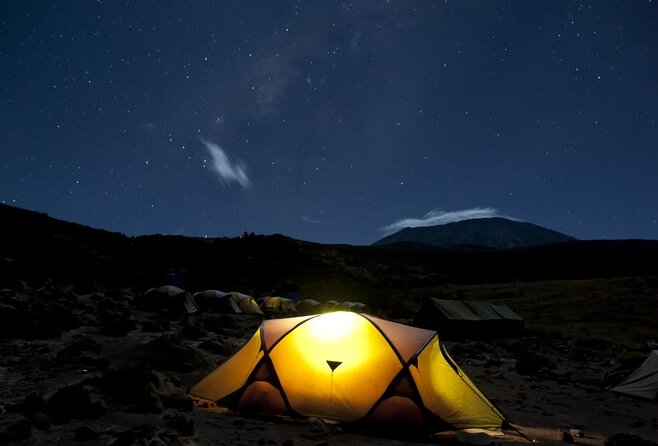
- Summit night starts around midnight: Plan for a cold, dark, mentally demanding ascent before sunrise.
- The package covers major costs: Camping equipment, park fees, meals, and round-trip transfers from your Arusha hotel are included.
- Small groups are a real advantage: A guide can pay closer attention to your pace, comfort, food, and safety.
- You need strong physical fitness: The final ascent and long descent are the toughest parts, even for experienced hikers.
Why the 8-day Lemosho route works well
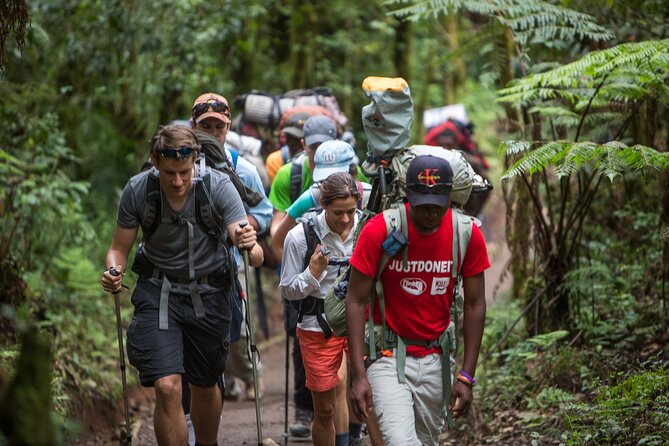
Kilimanjaro is a single mountain, but it feels like several hikes stitched together. You start in wet tropical forest, climb through open heather and volcanic rock, cross a stark high-altitude plateau, then finish among glaciers, scree, and snow or ice near the summit.
That variety is one of the route’s pleasures. The extra day also matters. You are not simply gaining height as fast as possible. You spend time at altitude, then descend or hold your level before climbing again. That can give your body a better chance to adjust to thin air.
The route is suitable for beginners and experienced climbers, but that does not make it easy. You do not need technical climbing skills on the described trail, yet you do need stamina, patience, and the ability to keep moving when the air feels thin.
I would choose this route for someone who values a measured pace and changing scenery more than a quick, cheaper ascent. If your main aim is to spend the fewest days on the mountain, another itinerary may appeal more. For a first Kilimanjaro attempt, eight days is the more sensible target.
More Kilimanjaro Climbs in Arusha
- 7-Day Machame Kilimanjaro Summit Tour from Arusha
★ 5.0 · 125 reviews - 4 days Best experience Kilimanjaro Hike, Serengeti &Ngorongoro
★ 5.0 · 54 reviews - From Arusha/Moshi: Kilimanjaro Hike Marangu Route Day Trip
★ 4.5 · 54 reviews
Day 1: Londorossi Gate to Mti Mkubwa
Your morning begins with a transfer from your Arusha hotel, with the listed start time at 8:00 am. The climb starts on Kilimanjaro’s western side at Londorossi Gate, where the group checks in before entering the mountain park.
The first walking section covers about 3 miles and takes roughly three to four hours. The trail rises gently through montane forest, a friendly introduction after your hotel night and vehicle transfer.
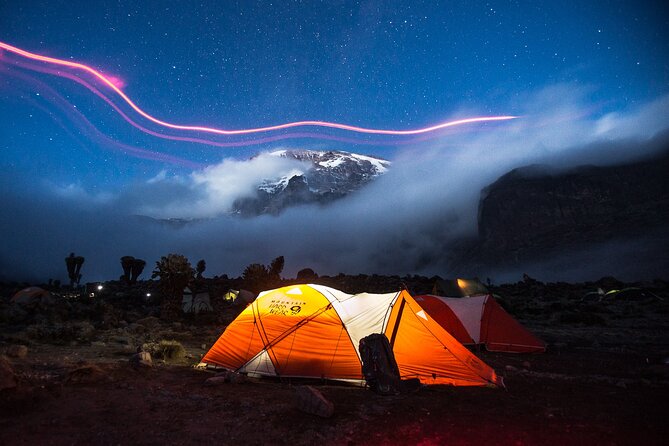
Mti Mkubwa means Big Tree in Swahili. Camp sits in the rainforest, and the crew sets up the tents before you arrive, with your personal belongings placed inside. That small service matters after a travel day. You can focus on eating, organizing your sleeping kit, and resting rather than putting up camp.
This is not the most dramatic day, and that is fine. The short distance lets you settle into the group and learn how the guides manage walking speed and breaks. The forest can also be damp, so keep rain protection easy to reach rather than buried at the bottom of your bag.
Day 2: Leaving the forest for Shira Ridge
The route changes quickly on day two. You leave the trees behind and enter a more open zone of tall grasses, heather, volcanic rock, and lichen.
The hike is about 4.9 miles, with roughly five to six hours on foot, reaching an elevation of about 11,500 feet. For many people, this is when Kilimanjaro begins to feel like a high mountain rather than a forest hike.
The Shira Ridge leads toward the broad Shira plateau, a high desert area where Kibo, Kilimanjaro’s highest cone, begins to appear across the horizon. The views are a sharp contrast to the rainforest of day one.
At this point, do not judge the climb by how strong you feel. You may still be fresh, but the altitude is beginning to matter. Walk slowly, drink as directed by your guide, and tell the guide early if you develop a headache, nausea, dizziness, or unusual fatigue.
Day 3: A full day on the Shira Plateau
Day three covers about 8.7 miles and takes five to seven hours. It is a longer day, but its value is not only the scenery. You are spending more time at high elevation before moving toward the summit zone.
The path heads east toward Kibo’s glaciated peak. There is also an option to visit the ancient collapsed Shira cone, the oldest of Kilimanjaro’s three volcanoes. If you have the energy, this adds geological interest and gives the day a sense of exploration rather than simple forward progress.
The route finishes at Moir Camp, set in a large gorge at the end of a dormant lava flow. This is a stark setting, with fewer trees and a stronger feeling of exposure.
Moir Camp can be a useful test of your sleep and appetite at altitude. You might find that meals become less appealing or that sleep is broken. That is not unusual on a high trek, but it is important to report symptoms instead of trying to hide them to keep up with the group.
More Lemosho Route Climbs in Arusha
- 8 Days Mountain Kilimanjaro Lemosho Route
★ 5.0 · 22 reviews - 7 Day Kilimanjaro Climb Lemosho Route & 2 Day Safari
★ 5.0 · 16 reviews - 8-Day Private Kilimanjaro Trekking via Lemosho Route from Arusha
★ 5.0 · 11 reviews - Kilimanjaro Climb- Lemosho Route
★ 5.0 · 9 reviews
Day 4: Lava Tower and Barranco Camp
Day four is the key acclimatization day. You climb toward Lava Tower, described at about 15,000 feet, then descend to Barranco Camp at around 13,000 feet. The day covers about 4.3 miles and takes four to six hours, with the acclimatization section listed at roughly six hours.
This climb-high, descend-lower pattern is one of the strongest features of the itinerary. You expose your body to a higher altitude during the day, then sleep at a lower camp. It is tiring, but it helps prepare you for the final ascent.
After Lava Tower, the route passes a junction toward Arrow Glacier before descending through a giant senecio forest. A waterfall appears before Barranco Camp, which sits beneath the huge Barranco Wall.
This is also the point where you may feel the mountain’s physical cost. The distance is short on paper, but altitude makes every slope harder. The wall and surrounding valley create a memorable camp setting, though clouds and wind can make it feel cold and exposed.
Day 5: Up the Barranco Wall to Karanga
Day five is short by distance, only about 2.2 miles, but it includes one of the route’s most adventurous sections. You climb the Barranco Wall, then continue along the South Circuit toward Karanga Valley.
The itinerary gives four to five hours for the day and places camp at about 13,100 feet. The wall is not described as a technical climbing section, but it is a steep, hands-on mountain path. You will want to take your time and follow the guide’s line rather than rush.
The climb leads into the Arctic zone of Kilimanjaro, where the plant life becomes sparse and the mountain feels more severe. From there, the Karanga Valley offers a change of pace before the route moves higher.
This is a good day for letting the guides set the rhythm. Several climbers praised guides for patience, humor, and close attention to breaks and meals. That support becomes more valuable as the group reaches the upper mountain.
Day 6: Karanga to Kosovo Camp
Day six is another short-distance day, about 2.6 miles and five to six hours. The group moves slowly toward Kosovo Camp, passing Barafu Camp on the way.
The high point is listed at about 16,000 feet. You get views of both Kibo and Mawenzi, Kilimanjaro’s two most prominent peaks, before reaching the exposed ridge where Kosovo Camp is located.
The camp’s exposed position is important. You need to learn the immediate terrain before darkness arrives, especially because the summit departure comes around midnight. Use this afternoon to prepare clothing, headlamp, water, snacks, and any other summit items you need close at hand.
There is not much walking left before the summit attempt, but do not treat this as a free afternoon. Rest, eat, and conserve your energy. The guides use the time for further acclimatization and final preparation.
Day 7: Stella Point, Uhuru Peak, and Mweka Camp
This is the day that defines the trek. You begin around midnight for the ascent to Stella Point on the crater rim, at roughly 19,340 feet, then continue to Uhuru Peak.
The listed summit day includes about 13 miles total, with approximately 5 miles of ascent and 12 kilometers of descent. The ascent takes six to seven hours, and the descent four to six hours, for about 11 hours overall. Those numbers vary slightly in the schedule, but the message is clear: this is a long day.
The route is steep and covered in heavy scree. You walk in darkness, often in freezing conditions, with the goal of reaching Stella Point near sunrise. This is where a slow pace matters. Guides such as Raymond and Amani have been praised for checking energy levels, adjusting breaks, and keeping morale steady. That is exactly the sort of leadership you want here.
From Stella Point, Uhuru Peak is about another hour. The final section runs between the Rebmann and Ratzel glaciers, heading northwest toward the highest point in Africa.
The summit moment may be brief. Thin air, cold, fatigue, and the need to descend all limit your time at the top. Still, sunrise from the crater rim and the view toward Kibo’s glaciers are powerful rewards for the effort.
Afterward, you descend to Mweka Camp for dinner and a proper celebration. The descent can be rough on tired knees, so use trekking poles if you have them and do not let the excitement of summiting make you careless.
Day 8: Mweka Gate and the return to Arusha
The final morning is a three to four hour walk of about 6.4 miles to Mweka Gate, at roughly 5,400 feet. After a week above the forest, the descent brings you back into lower, warmer surroundings.
A Climb Kili vehicle waits at the gate to take you back to your hotel. That transfer is more than a convenience. After the summit day and long descent, a reliable ride and a shower are exactly what you want.
The final day is also a chance to reflect on how quickly the mountain changes. In a week, you have moved from rainforest to volcanic desert and back again. The route gives you a full mountain story, not just a summit photograph.
Guides, crew, and the small-group experience
The provider advertises a maximum group size of 15, but the actual groups described in the supplied experiences range from four climbers to larger groups with more than 10 crew members supporting them. That distinction matters. A small number of climbers can create a more relaxed pace and easier communication, while the support crew may still be substantial.
Named guides connected with these climbs include Amani, Raymond, Goodluck, Herment Mosha, John, Manny, Cinga, Veda, Steve, Isaya, Emanuel, and Jackson. You should not assume a particular guide will lead your departure, but the repeated praise for patient, professional, encouraging guiding is relevant to the way the company presents its service.
Food and camp support also receive strong emphasis. Chefs such as Simon are named in the supplied experiences, and crew members are praised for comfortable tents, coffee wake-up calls, and keeping meals organized. I would value those details more than flashy extras. On a high mountain, warm food, a dry tent, and a calm guide can decide how well you handle the next day.
The group format also works well for solo climbers. You join a shared departure rather than needing to bring a private party, and the described small groups have included solo participants and friends traveling together.
What the $2,895 price includes
At $2,895 per person, this is not a budget hike. The value comes from what is bundled: round-trip transfers from your Arusha hotel, park and admission fees, camping equipment, meals, and the guiding operation.
That package reduces the number of costly details you must arrange separately. You are paying for an organized eight-day mountain program rather than simply buying a guide for the trail.
Still, check the final booking terms carefully before paying. The supplied information does not spell out every possible extra cost, so you should confirm what personal gear, hotel nights, transfers outside the stated service, and other incidentals are included.
The cancellation terms are favorable if your plans change early. You can cancel at least 24 hours before the local start time for a full refund. Cancellations or changes made inside that 24-hour window are not accepted for a refund.
Who should book this Kilimanjaro trek
I would recommend it to a fit beginner who wants a structured first climb, a solo climber who likes joining a group, or an experienced hiker who prefers a slower altitude schedule. The route offers enough time for acclimatization and gives you several distinct mountain environments.
It also suits people who want practical support. You do not have to arrange camping equipment, meals, fees, or hotel transfers on your own.
I would be cautious if you dislike camping, struggle with long uphill days, or want a relaxed sightseeing holiday. The summit attempt begins at midnight, and the hardest section comes after several days of walking. Strong physical fitness is specifically required.
The most important mindset is patience. Kilimanjaro rewards the person who walks slowly, eats when possible, listens to the guide, and accepts that the mountain sets the schedule.
Should you book the 8-day Lemosho trek?
I would book this trek if your priorities are a high-quality route, a careful acclimatization plan, and a well-supported camping experience. The combination of Lemosho scenery, Lava Tower acclimatization, the Barranco Wall, and a midnight summit attempt gives you the classic Kilimanjaro experience in a sensible eight-day format.
Before committing, make sure you are ready for the physical demand and confirm the exact group size and included services. If you can handle the altitude and long summit day, the $2,895 price offers solid value for an all-inclusive climb with transfers, meals, fees, equipment, and guide support.
FAQ
How long is the Kilimanjaro trek?
The trek lasts eight days, including the arrival route from Londorossi Gate, the summit attempt, the descent to Mweka Camp, and the final walk to Mweka Gate.
What route does the trek use?
The climb uses the Lemosho route on Kilimanjaro’s western side. It crosses rainforest, heather, the Shira plateau, high desert, the Barranco area, and the summit zone.
Is hotel pickup included?
Yes. Round-trip transfers from your Arusha hotel are included, and the tour offers pickup. The listed start time is 8:00 am.
What is included in the price?
The $2,895 per-person price includes camping equipment, park and admission fees, meals, and round-trip transfers from your Arusha hotel.
How large can the group be?
The activity has a maximum of 15 participants. Actual group arrangements can vary, and the small-group format is intended to provide closer guide attention.
Can I cancel for a full refund?
Yes. You can cancel at least 24 hours before the experience start time for a full refund. Cancellations and changes made less than 24 hours before the local start time are not accepted for a refund.
More Hiking & Trekking in Arusha
- Mountain Kilimanjaro Day Hike
★ 5.0 · 102 reviews - Private Full Day Hiking Experience to Marangu Route
★ 5.0 · 61 reviews - 4 Days Mount Meru Trekking
★ 5.0 · 55 reviews - 6 Days Serengeti Safari(hiking waterfalls &coffee tour)
★ 5.0 · 48 reviews
Just added around Arusha
- 8 Days Serengeti Migration safari★ 5.0 · 11 reviews
- tarangire, ngorongoro & lake manyara park 3 days private tour★ 5.0 · 11 reviews
- tarangire & ngorongoro 2 days tour★ 5.0 · 14 reviews
- serengeti & ngorongoro 3 days private tour★ 5.0 · 15 reviews
- Mt. Kilimanjaro: Shira plateau to Cathedral point 3872m Day hike★ 5.0 · 7 reviews
- serengeti, ngorongoro & tarangire 4 days private tour★ 5.0 · 18 reviews
- 2 Days Tanzania Midrange Group Join Safari★ 5.0 · 7 reviews
- climb the KILIMANJARO via Lemosho route★ 5.0 · 4 reviews
Lemosho Route Climbs, compared.







Climbing Kilimanjaro through 8 days Lemosho Route
Read our review →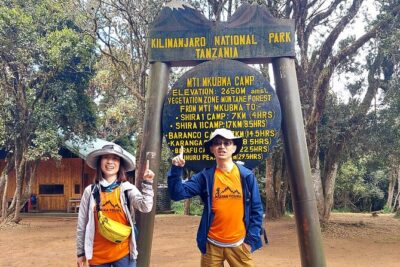
Browse the lists this tour appears in