
Reviewed · MARANGU ROUTE CLIMBS
Mt Kilimanjaro 6 days Marangu route hike
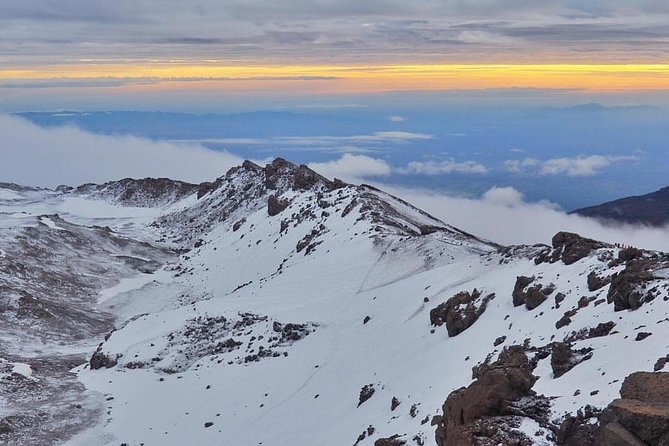
Kilimanjaro’s Marangu Route gives you a clear, gradual path to Uhuru Peak, Africa’s highest point. Over six days, you move from banana-country forest to open moorland, giant lobelias, alpine desert, and the cold crater rim. The route uses huts rather than tents, which makes it the practical choice for hikers who prefer a bed and roof.
I like the extra acclimatization day at Horombo and the direct return to Moshi or the airport after the final descent. I also like the small private-group format, plus the company’s record of careful planning, good food, and guides such as Gasto and Lucas. The main caution is simple: Marangu is gradual, but the summit day is still long, cold, steep, and physically demanding.
Key points to know before booking
- Six days with one acclimatization day: You spend an additional night at Horombo instead of rushing straight toward the summit.
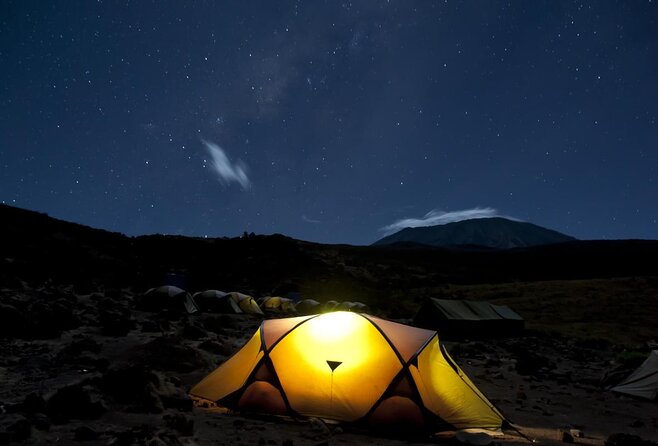
- Hut-based mountain stay: The Marangu Route uses encampment huts, a useful choice if you would rather not sleep in a tent.
- Summit night starts around midnight to 2:00 AM: Expect darkness, freezing conditions, scree, headlamps, and a long descent afterward.
- Private group experience: Only your own party takes part, with pickup offered and group discounts available.
- A striking range of habitats: The route passes through rainforest, heathland, alpine desert, and high moorland.
- Price of $2,269.24 per person: The value depends on what matters most to you, especially included park access, meals, guides, porters, huts, and transport.
Why the Marangu Route appeals to first-time climbers
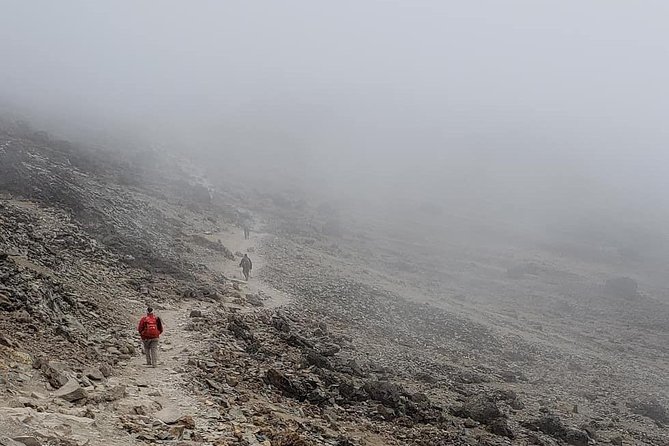
The Marangu Route is often called the easiest Kilimanjaro route because its slope is relatively gradual and its path is direct. That description helps, but it can also mislead you. The mountain does not become easy simply because the trail rises at a gentler angle.
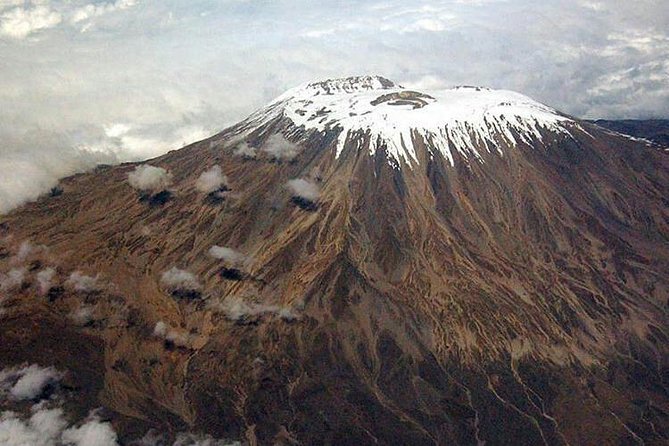
What makes Marangu appealing is the steady progression. You begin at about 1,860 meters and gain height in manageable stages before reaching Kibo, the volcanic cone that leads to Uhuru Peak. The route also gives you a full day at Horombo for acclimatization, which is one of the most useful parts of this six-day schedule.
You sleep in huts at Mandara, Horombo, and Kibo rather than camping. That means you avoid carrying a tent and have a more sheltered base at night. The accommodation is still basic mountain lodging, so you should not expect hotel comforts, but a hut can feel welcome after several hours on your feet.
The private format is another plus. Your group is not combined with strangers, and the guide can keep the walking pace suited to your party. One particularly useful point from the company’s approach is its emphasis on walking slowly. On Kilimanjaro, a steady pace matters far more than trying to prove your fitness on the first morning.
More Marangu Route Climbs in Kilimanjaro
- Kilimanjaro climb, Marangu route (6-day)
★ 5.0 · 72 reviews - Climbing Kilimanjaro – Marangu Route
★ 5.0 · 65 reviews - Best Kilimanjaro Adventures 6 Days Marangu Route Experience
★ 5.0 · 18 reviews
Day 1: rainforest, Mandara Hut, and Maundi Crater
The day begins after breakfast and a briefing, followed by a drive of roughly two hours to the Kilimanjaro National Park Gate. Registration takes place there before you start walking. The opening route leads through rainforest to Mandara encampment at about 2,700 meters.
The first day covers around 8 kilometers and usually takes three to four hours. That distance may sound modest, but the change in elevation is noticeable. Your surroundings are thick and green, with tall eucalyptus trees, bird life, and the possibility of seeing black-and-white colobus monkeys.
If conditions and energy allow, the side trip to Maundi Crater is worth considering. It gives you a wider view toward northern Tanzania and Kenya, adding a short scenic outing to a day that otherwise stays within the forest zone. Ask your guide how the timing looks before committing, especially if you are still adjusting to the altitude.
Mandara is your first hut stop. Meals listed for the day are breakfast, lunch, and dinner, so you begin the climb with a supported schedule rather than needing to arrange food along the way. A good first-day habit is to keep your pace slow from the gate. The goal is not to arrive first. It is to arrive with energy for the days ahead.
Day 2: open heathland and the Horombo approach
On the second morning, the forest thins and the route enters open heathland. The walk to Horombo covers about 12 kilometers and takes five to six hours, with the elevation rising from 2,700 to roughly 3,700 meters.
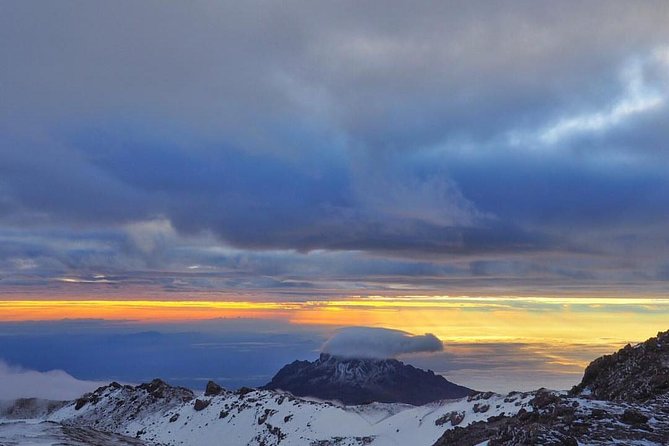
This is one of the most visually rewarding sections. You can see Mawenzi and the summit cone of Kibo, while the vegetation changes to giant lobelias and groundsels. The trail feels more exposed than the first day, and the open views make the height gain easier to appreciate.
This is also the point when altitude symptoms may begin. Headache, tiredness, nausea, or shortness of breath can appear even in fit people. Tell your guide promptly if you feel unwell. Do not treat discomfort as a test of willpower. The company’s guides, including the head guide named Gasto in the provided details, are part of the support structure that makes honest communication important.
Horombo is at about 3,700 meters, high enough for your body to begin adapting before summit night. Breakfast, lunch, and dinner are included. Drink regularly, keep warm after sunset, and avoid using the afternoon to push yourself unnecessarily.
Day 3: the Horombo acclimatization day
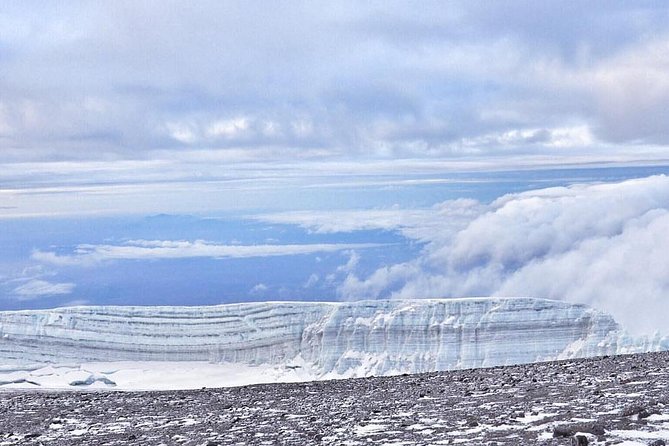
The third day is not a rest day in the lazy sense. It is an acclimatization day, and it may be the most important reason to choose this six-day plan rather than a faster schedule.
You stay at Horombo and have the option of walking toward Mawenzi Hut at roughly 4,600 meters with your guide. This follows the useful high-walk, low-sleep principle: you gain some height during the day, then return to sleep at the lower Horombo camp.
The Mawenzi option is not mandatory. Your guide can help you judge whether it makes sense based on your condition. If you have a headache or feel poorly, a shorter outing or rest may be wiser. The point is to prepare your body, not to collect another achievement.
Breakfast and dinner are served at the hut. Lunch can be packed or taken at the hut, depending on your preference. That small choice gives the day some flexibility. Use the time to organize your clothing, check your headlamp, refill what you need, and make sure your warm layers are easy to reach.
More Marangu Route Climbs in Moshi:
- Kilimanjaro Private Climbing in 6 Days Marangu Route
★ 5.0 · 16 reviews - 6 Days Climb Kilimanjaro Through Marangu Route
★ 4.5 · 15 reviews - Top 6 Days Mt. Kilimanjaro Bike trek Tour by Marangu-Kilema Route
★ 5.0 · 15 reviews - 6 Days Mount Kilimanjaro Trek Marangu Route
★ 5.0 · 15 reviews
Day 4: the saddle and Kibo’s alpine desert
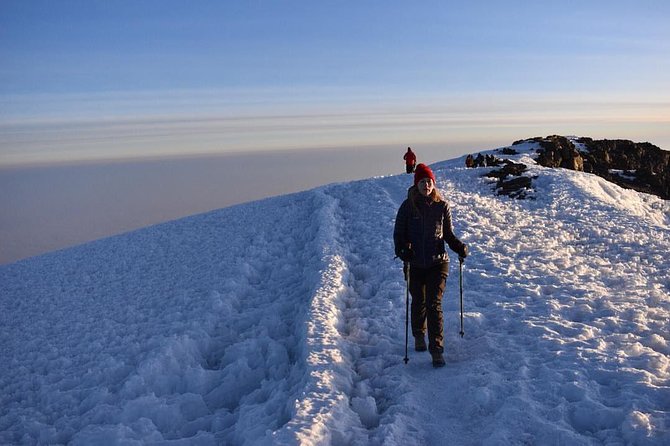
From Horombo, you leave behind most plant life and cross the broad saddle between Mawenzi and Kibo. The route rises from about 3,700 to 4,700 meters, covering approximately 9 kilometers in five to six hours.
The upper heathland soon gives way to what is described as a moonscape. The open, bare ground feels stark after the rainforest and moorland below. There is no shelter from the elements, so keep your rain gear and warm clothing accessible even if the morning begins pleasantly.
This section passes the last watering point. That detail matters because you should listen carefully to your guide about water needs before leaving it. The day ends at Kibo, where dinner and rest come before the summit attempt.
Kibo is not the place to spend the evening wondering if you packed the right layers. Set out your hat, gloves, warm jacket, and headlamp before sleeping. The summit departure is usually between midnight and 2:00 AM, so preparation saves energy when you are tired and it is dark.
Day 5: Gilman’s Point, Uhuru Peak, and the long descent
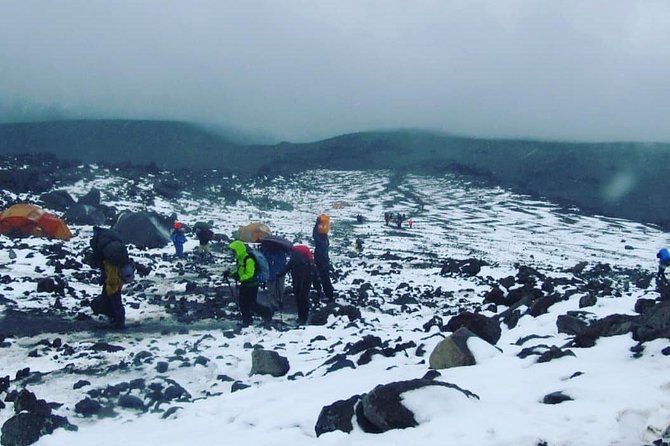
Summit day is the hardest part of the climb by a wide margin. You start in darkness, using a headlamp or flashlight, and climb over steep scree or snow toward Gilman’s Point on the crater rim.
The cold can be severe before sunrise. You will want every warm layer you brought, but you should also be able to remove clothing as you descend and temperatures rise. Move slowly and keep your steps controlled on the loose ground. This is where a patient guide and a calm pace matter most.
At Gilman’s Point, the route reaches the crater rim. If your condition allows, you continue toward Uhuru Peak, the highest point in Africa. The summit section gives you broad views, but remember that altitude can make even a short distance feel enormous. Your guide will help manage the pace and judge how you are coping.
After reaching the summit, you descend to Kibo for lunch and a rest before continuing to Horombo. This is a very long day because the summit climb is followed by a major descent. Do not think only about reaching Uhuru Peak. Save enough strength for the walk back to camp.
The supplied schedule cuts off part of the day’s details, but it clearly identifies the summit attempt as the most difficult section. You should treat it as a serious high-altitude outing, not simply a long morning walk.
Day 6: forest descent and the Marangu Gate
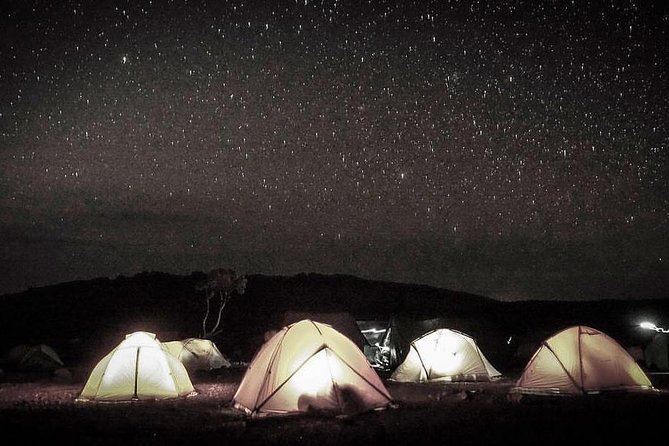
After breakfast at Horombo, you descend through moorland toward Mandara Hut and then continue through the forest to the Marangu gate. The listed distance is about 20 kilometers, with four to five hours of walking and a drop from roughly 3,700 meters to 1,700 meters.
The downhill direction sounds easy after summit day, but long descents can be tough on tired knees and feet. Trekking poles can help. Lower down, the forest trail may be wet and muddy, so gaiters are useful as well.
Clothing becomes simpler as you lose height. Shorts and a T-shirt may be comfortable near the bottom, but keep rain gear and warmer layers within reach. Mountain weather can change, and you do not want your only dry clothing buried at the bottom of your bag.
At Marangu gate, the vehicle meets you for the drive back to your hotel or the airport. The return transfer is convenient because you do not need to arrange another ride after the final walk. The day ends with a celebration and tips for guides and porters. Carry some cash for tipping, though the exact amount is not provided here and should be clarified with the operator before departure.
What the $2,269.24 price means
At $2,269.24 per person, this is not a budget walk. The value comes from the length of the program and the practical services built around a high-altitude climb: park admission, mountain meals, guide support, hut accommodation, porters, and transport after the descent are all important parts of the package as described.
I would compare this price by asking what is actually included, not just by looking for the lowest figure. A cheaper quote may not provide the same private arrangement, acclimatization schedule, food standard, or transfer support. The company has also been credited with strong organization, professional handling, and food and accommodation that reached a high standard.
The private format can be worth paying for if you want your group to set its own pace. It may be less attractive if you are a solo climber looking for the lowest possible cost and do not mind joining a larger party. Group discounts are available, so the price should be checked again if you are booking with several people.
Food, huts, guides, and the pace that matters
Meals are provided throughout the climb, with breakfast, lunch, and dinner on the first, second, and fourth days. Day three includes breakfast and dinner, with lunch either packed or taken at the hut. Day six includes breakfast before the descent.
The available information describes the food and accommodation as a high standard. That does not mean luxury. It means you can expect these basic needs to be handled while you concentrate on walking, resting, and managing altitude.
The company’s team includes Gasto as a head guide in the supplied details, and Lucas is named in connection with a separate Marangu day hike. You should confirm which guide will lead your own six-day climb. More important than a famous name is a guide who keeps the group slow, watches for altitude problems, and communicates clearly.
Bring a headlamp or flashlight, sturdy footwear, warm layers, rain protection, gaiters, and trekking poles. These are not decorative extras. They match the actual conditions described: a dark summit start, cold temperatures, possible snow or scree, and muddy forest trails.
Who should book this Kilimanjaro climb?
This route suits you if you want a direct Kilimanjaro program with hut accommodation, a private group, and a full day set aside for acclimatization. It is also a sensible fit if you prefer a gradual route and do not want to camp.
You still need reasonable fitness. The longest effort is summit day, followed by a substantial descent, and altitude affects people unpredictably. The route’s reputation as the easiest option should not be confused with a guarantee of reaching Uhuru Peak.
The six-day schedule also has a tradeoff. It includes an acclimatization day, but some climbers may prefer an even longer program for more time at altitude. This tour is best for someone who accepts a demanding schedule and understands that the summit depends on weather, health, and how the body responds.
Booking confirmation is provided at the time of booking, and most people can participate. Pickup is offered, and the start time is listed as 8:00 AM, although the first hiking day begins after the drive, park registration, and briefing. The experience can be canceled up to 24 hours in advance for a full refund. Poor weather may lead to a different date or a full refund.
Should you book the six-day Marangu Route?
I would book this climb if you want hut-based accommodation, a private group, and a route that builds height in clear stages. The Horombo acclimatization day, included meals, pickup option, and organized return transfer make the package practical.
I would pause if you are choosing it only because Marangu is called easy. Summit night remains cold, steep, dark, and exhausting. Before paying, confirm the exact inclusions, the assigned guide, porter arrangements, tipping expectations, and the clothing or equipment you need to supply yourself.
For a first Kilimanjaro attempt, this is a straightforward and well-structured choice. Its strongest qualities are the gradual route, the extra acclimatization time, and the company’s reported attention to planning and pace. Go slowly, prepare for the summit night, and treat the mountain with respect.
FAQ
Where does the Kilimanjaro climb begin?
The experience begins in Moshi, Tanzania. Pickup is offered, and the first day includes a drive of about two hours to the Kilimanjaro National Park Gate.
How long does the Marangu Route climb last?
The climb lasts approximately six days.
What time does the experience start?
The listed start time is 8:00 AM.
Is this a private tour?
Yes. Only your own group participates in the activity.
Does the route include an acclimatization day?
Yes. Day three is spent at Horombo Hut to help your body adjust to the altitude. You can also choose a day hike toward Mawenzi Hut at about 4,600 meters with your guide.
Where does the route finish?
The hike finishes at the Marangu gate of Kilimanjaro National Park. A vehicle then drives you back to your hotel or the airport.
What is the highest point reached?
The goal is Uhuru Peak, which is the highest point in Africa.
What accommodation is used on the mountain?
The schedule refers to Mandara, Horombo, and Kibo encampments or huts. The experience uses hut-based accommodation rather than a stated tent arrangement.
Is food included?
Meals are included. Breakfast, lunch, and dinner are listed on the first, second, and fourth days. Day three includes breakfast and dinner, with lunch either packed or taken at the hut. Day six includes breakfast.
What happens if the weather is poor?
The experience requires good weather. If poor weather causes cancellation, you are offered a different date or a full refund. You can also cancel up to 24 hours before the start time for a full refund.
More 6-Day Experiences in Moshi
- Kilimanjaro climb, Lemosho Route (6-day)
★ 5.0 · 129 reviews - 6 Days 5 Night Safari
★ 5.0 · 57 reviews - The Best of Machame Route in 6 Days: Your World’s Summit Guide
★ 5.0 · 44 reviews - 6 Days Machame Route Kilimanjaro Climbing
★ 5.0 · 42 reviews
More Hiking & Trekking in Moshi
- Private Kilimanjaro Hike 7 Day Lemosho Route
★ 5.0 · 60 reviews - Best Kilimanjaro hiking day trip tour with Kilinge Adventures
★ 4.5 · 54 reviews - #1. Best Kilimanjaro Day hike Tour-Machame Route-ISMANI
★ 4.2 · 47 reviews - Best Kilimanjaro Adventure 7 days Machame route Trekking
★ 5.0 · 42 reviews
Just added around Moshi
- Wildlife Extravaganza: Manyara, Tarangire & Ngorongoro in 3 Days★ 5.0 · 3 reviews
- Private Cycle to Kilimanjaro Bike Park Safari★ 5.0 · 6 reviews
- 3 Days Private E-Bike Tour in West Kilimanjaro★ 5.0 · 3 reviews
- West Kilimanjaro cycling Adventures★ 4.5 · 8 reviews
- machame route★ 5.0 · 16 reviews
- Kilimanjaro Climb & Safari – Lemosho Route – 13 Day★ 5.0 · 10 reviews
- Kilimanjaro Climbing Umbwe Route★ 5.0 · 3 reviews
- 6-Day Kilimanjaro Umbwe Route–Steep,Adventurous, Challenging Path★ 5.0 · 6 reviews
Marangu Route Climbs, compared.



Private Full Day Hiking Experience to Marangu Route
Read our review →
From Arusha/Moshi: Kilimanjaro Hike Marangu Route Day Trip
Read our review →
Mount Kilimanjaro Day Hike Through Marangu Route to Mandara Hut
Read our review →

Best Kilimanjaro Adventures 6 Days Marangu Route Experience
Read our review →
Kilimanjaro Private Climbing in 6 Days Marangu Route
Read our review →Browse the lists this tour appears in