
Reviewed · MARANGU ROUTE CLIMBS
Best Kilimanjaro Adventures 6 Days Marangu Route Experience
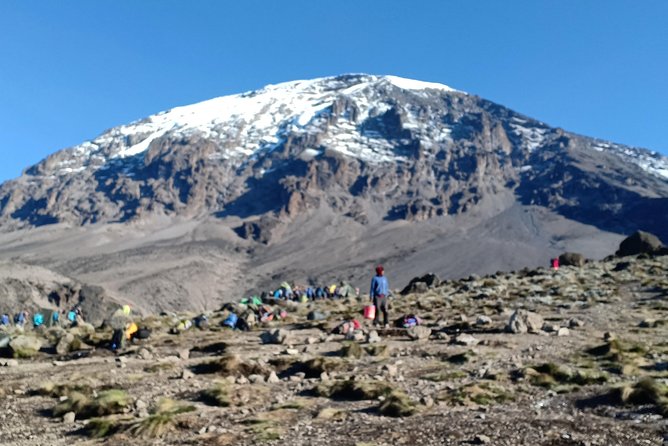
Kilimanjaro’s Marangu Route is the mountain’s hut-to-hut option, and this six-day plan gives you something many shorter climbs lack: a full acclimatization day at Horombo. You walk from Moshi or Arusha through rainforest, moorland, alpine desert, and finally the cold upper slopes before a midnight push toward Uhuru Peak.
I like the practical huts with mattresses, and I like that meals, drinking water, porters, guides, and a cook are included. The main consideration is that the $1,000 price does not include Kilimanjaro National Park fees and tax, tips, or personal expenses, so your final budget will be higher.
Key points at a glance
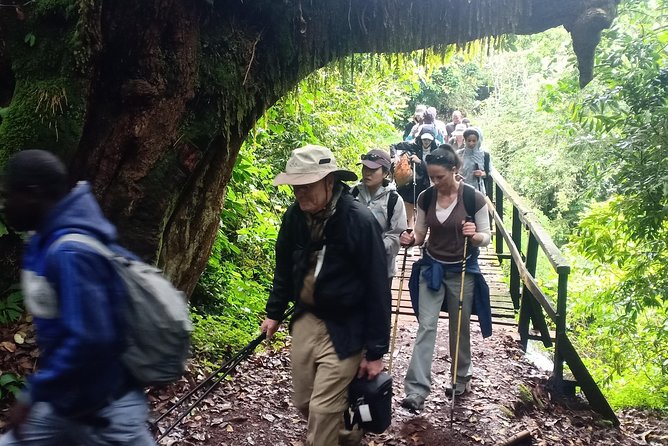
- A true six-day climb: The schedule includes five nights on the mountain and a dedicated acclimatization day at Horombo Hut.
- Hut accommodation throughout: You sleep in A-frame huts with mattresses rather than carrying camping equipment.
- A varied route: Expect rainforest, moorland, rocky alpine desert, the broad Saddle, and the crater rim.
- Midnight summit attempt: Day five includes the hardest push, first to Gillman’s Point at 5,681 meters, then onward toward Uhuru Peak.
- Food and support are covered: Six breakfasts, six lunches, five dinners, purified water, guides, porters, and cook salaries are included.
- A well-liked support team: Past trips name guides such as Gewa, Erick, Steve, Victor, Stephano, and Thomas, along with cooks and porters who helped climbers reach the summit.
What this six-day Marangu climb is really like
The Marangu Route is often called the Coca-Cola Route, partly because it is popular and partly because huts make it feel more comfortable than camping routes. Comfort is relative. You still face long walking days, cold at altitude, thin air, rocky ground, and a final ascent that begins around midnight.
This itinerary works best if you want a structured Kilimanjaro climb with fixed overnight stops and a support crew handling food, water, luggage, and camp-style duties. You do not need to carry a tent or sleep on the ground. That is a real advantage, especially after several hours of hiking.
The route is also a return-and-same-path route. You ascend and descend through the Marangu corridor, rather than climbing one side of the mountain and descending another. You lose some variety, but the familiar trail can make the descent easier to follow when your legs are tired.
The six-day schedule is more sensible than a rushed five-day version because day three is set aside for acclimatization. You climb higher toward Mawenzi Hut, then return to sleep at Horombo. That extra day adds time and effort, but it gives your body a better chance to adjust before the summit attempt.
More Marangu Route Climbs in Kilimanjaro
- Kilimanjaro climb, Marangu route (6-day)
★ 5.0 · 72 reviews - Climbing Kilimanjaro – Marangu Route
★ 5.0 · 65 reviews - Kilimanjaro Private Climbing in 6 Days Marangu Route
★ 5.0 · 16 reviews
Day one: Marangu Gate to Mandara Hut
The day begins with transport from Moshi or Arusha toward Marangu Gate. The schedule lists an 8:00 a.m. departure from Moshi or Arusha, while the meeting information gives an 8:30 a.m. start, so confirm your exact pickup time before setting out.
At the gate, your team completes registration. Then the trail enters Kilimanjaro’s rainforest, where the first hours are shaded and generally more enclosed than the higher sections of the route. Your first walking day is not simply a warm-up. You will spend much of the day on foot before reaching Mandara Hut.
Lunch comes around the halfway point. After eating, you continue through the forest toward Mandara. The itinerary gives only a short admission note for this stop, but the walking day itself is the important part: pace yourself early, drink regularly, and do not treat the cool forest air as proof that the climb will be easy.
Mandara Hut uses A-frame buildings with sleeping huts and a dining area. Mattresses are provided, which saves you from carrying a sleeping pad. The huts can accommodate up to 70 people, so privacy is limited and the sleeping setup may feel communal.
If energy and weather allow, take the short walk to Maundi Crater after arrival. The view can reach toward Taveta to the east and Mawenzi Peak to the northwest. It is a smart first-day outing because it gives you a taste of the mountain without committing to another major climb.
Day two: Moorland walking to Horombo Hut
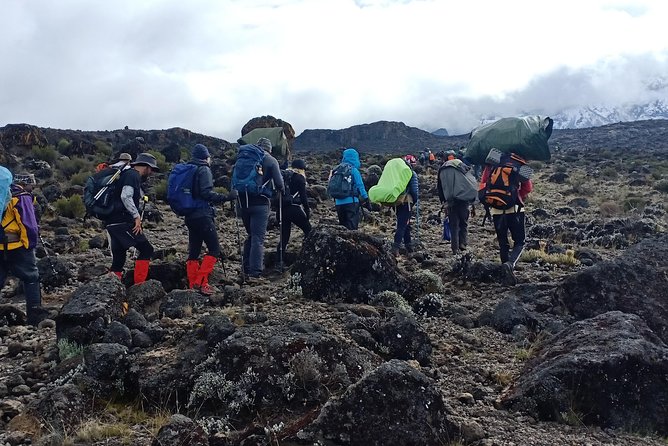
After breakfast, you leave the forest behind and enter Kilimanjaro’s moorland. The vegetation becomes more open, and the setting feels rockier and drier. Desert-like plants appear along the trail, giving this section a very different character from day one.
The walk to Horombo takes about five hours. A picnic lunch is planned at Kambi ya Taabu, followed by more walking toward the huts. On a clear day, you can see Mawenzi and Kibo, the two major peaks that define the upper mountain.
Horombo Hut is one of the larger stopping points on the route. Its small A-frame buildings hold up to eight people each, with space for around 100 hikers in total, plus the porters, cooks, and guides supporting them. That capacity means Horombo can feel busy, particularly when climbers are ascending, descending, or spending an acclimatization day.
Still, Horombo is an important place in the schedule. You arrive around 3:00 p.m., leaving the afternoon for rest, food, and preparation for the next day. I would use that time for a slow meal, dry any damp clothing, and ask your guide about the following day’s higher walk.
Day three: The Mawenzi Hut acclimatization walk
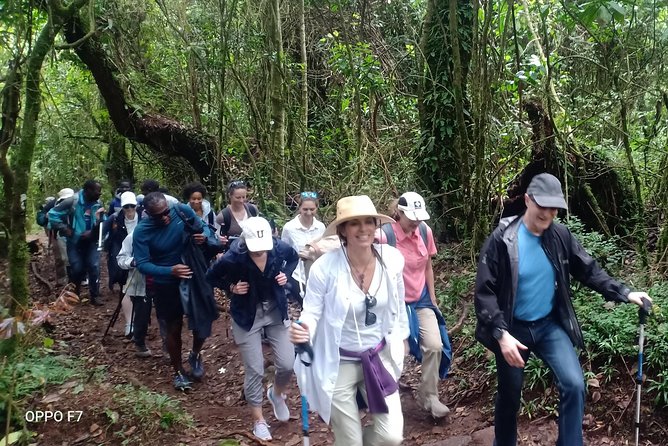
Day three is the reason I prefer this six-day version over a rushed five-day plan. You hike from Horombo toward Mawenzi Hut, gaining height during the day, then return to Horombo to sleep at the lower elevation.
The suggested walk lasts about five hours. The point is not simply to add scenery. Going higher and sleeping lower is a standard way to give your body more time to adjust before the summit attempt.
The route toward Mawenzi rewards you with views of Kibo and the rougher slopes around Mawenzi Peak. It is a more exposed and demanding day than the first forest walk, but you are not carrying on to a new overnight stop. After returning to Horombo, you have the afternoon and evening to rest.
Take this day seriously. It is tempting to think of it as optional sightseeing, but its value is tied to the next two days. Move steadily, eat well, drink the purified water provided, and tell your guide promptly if you feel unwell.
More Marangu Route Climbs in Moshi:
- 6 Days Climb Kilimanjaro Through Marangu Route
★ 4.5 · 15 reviews - Top 6 Days Mt. Kilimanjaro Bike trek Tour by Marangu-Kilema Route
★ 5.0 · 15 reviews - 6 Days Mount Kilimanjaro Trek Marangu Route
★ 5.0 · 15 reviews - 5 Days Marangu Route Kilimanjaro hiking
★ 5.0 · 13 reviews
Day four: Horombo to Kibo Hut across the Saddle
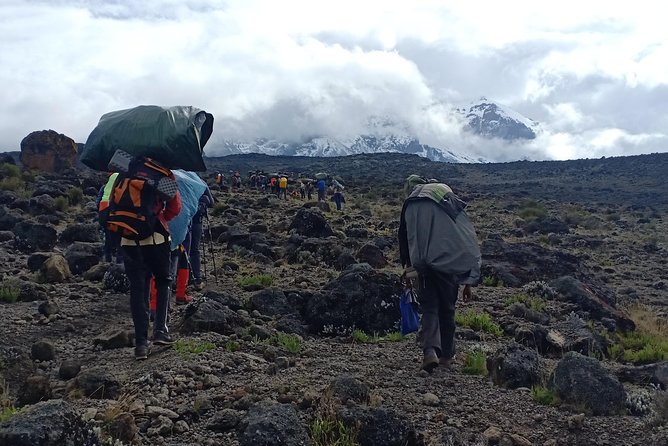
After breakfast, the route climbs out of the moorland toward Kilimanjaro’s upper zones. You pass Maua River, a small stream reached after roughly an hour, then watch the vegetation thin as the terrain becomes flatter and more barren.
Lunch is planned at Middle Red Hill. Afterward, you continue for about two hours across the Saddle, the broad, stark area between Kibo and Mawenzi. There is little vegetation here, but the views toward both peaks can be striking when clouds stay away.
This is an eight-hour walking day, so the steady pace matters. Kibo Hut is reached at roughly 3:00 p.m. The arrival is not the end of the day in practical terms. You need to eat, organize your summit clothing, fill your water, and sleep or at least lie down before the midnight wake-up.
The upper mountain can feel mentally demanding because the terrain grows plain and severe. There are fewer visual distractions, and the summit effort is close enough to occupy your thoughts. A guide who keeps the pace calm and checks on you is especially useful here. Past trips have included guides such as Erick, Steve, Gewa, and Thomas, though your assigned team may be different.
Day five: The midnight climb to Uhuru Peak
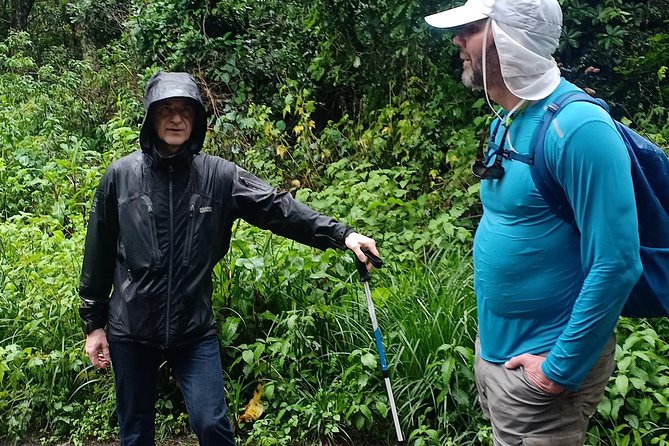
The summit day begins around midnight. You wake, eat, add your warmest clothing, and begin the steep push toward Gillman’s Point on the crater rim.
The climb to Gillman’s Point takes about five hours and is described as the easiest of the three crater ascent paths. That label can mislead you. It remains extremely difficult because you are walking at very high altitude, often while tired and in darkness.
William’s Point, at 5,000 meters, is the first major rest point and sits about two hours above Kibo Hut. After another 30 minutes, the trail reaches rocky switchbacks leading toward Gillman’s Point at 5,681 meters.
From Gillman’s Point, the route along the crater rim toward Uhuru Peak is a gradual climb. The grade may be less severe than the earlier switchbacks, but altitude makes every step slower. The summit day is listed at about 11 hours, and that figure includes the ascent, time near the top, and the return toward Kibo Hut.
This is where the guide team matters most. Climbers who completed the route with Kilinge Adventures have specifically named Gewa, Victor, Stephano, Erick, Steve, and Thomas for encouragement, patience, and close support. You should still view a summit as a goal, not a guarantee. Mountain conditions, altitude symptoms, and your own health can change the plan.
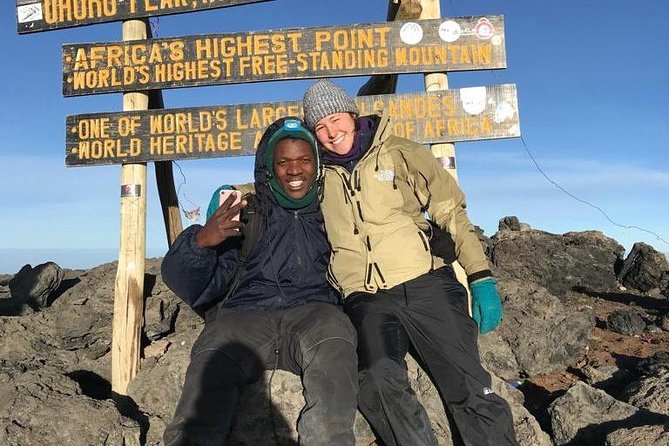
The reward is the chance to stand at Uhuru Peak, known as the roof of Africa. The crater rim provides a powerful sense of scale, but do not linger beyond what your guide considers safe. After the summit attempt, you return to Kibo Hut for rest before continuing the descent.
Day six: A final forest descent to Marangu Gate
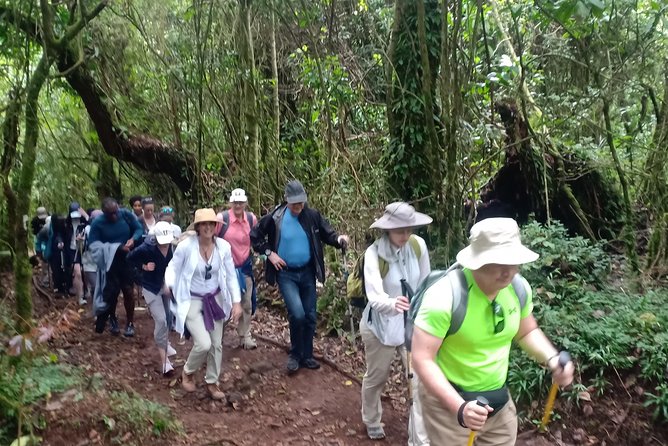
After breakfast, you leave the upper mountain and descend toward Marangu Gate. The route passes back through Kilimanjaro’s cloud forest, bringing cooler, greener surroundings after the stark upper slopes.
The descent takes about six hours. Wet ground can make the trail slippery, so watch your footing even if the downhill direction feels easier. Tired knees often make the final day less effortless than expected.
Vehicles wait at Marangu Gate for the return to Moshi or Arusha. The gate is also a practical final stop for buying T-shirts and sodas. After several days of simple mountain food and long walks, that small convenience can feel surprisingly welcome.
Huts, meals, water, and the porter team
The $1,000 package includes all nights in mountain huts, sleeping mattresses, professional mountain guides, porters, and cook salaries. It also covers six breakfasts, six lunches, and five dinners, along with clean, purified drinking water.
The food is described as fresh, healthy, and served in large portions. That matters more than it may sound. A climb of this length demands regular eating, and having a cook with the group means you do not need to depend only on snacks carried from home.
Named crew members from past climbs include chef Elia and waiter Richard, along with porters such as Fred, Julius, Edward, and Tumarini. These names are not a promise about your exact crew, but they show the type of team structure used on some departures.
The company also highlights fair and ethical treatment of porters. Ask for current details about porter welfare, luggage limits, tipping, and how responsibilities are divided before you go. Tips are not included, and they should be part of your budget.
What the $1,000 price does and does not cover
At $1,000 per person, the package offers useful value if you want a supported hut trek. Accommodation, food, water, guides, porters, mattresses, and transport back to Moshi or Arusha are covered. Those are the main working parts of a Kilimanjaro climb.
The price does not include the Kilimanjaro National Park fee and tax. It also leaves out tips, personal items, and optional tours such as a short safari after the climb. Before booking, ask for the complete final cost, not just the advertised per-person amount.
Pickup is offered, and the experience uses a mobile ticket. Confirmation is provided when you book. The listed maximum is 100 people, which is a large possible group size, although the actual departure may be smaller. Ask about your group size if quiet evenings or a more personal guide relationship matter to you.
Who should choose this route
I would point this trip toward someone who wants hut accommodation and a clearly organized schedule. It suits you if carrying camping gear is not appealing, or if you value having meals, water, porters, and a cook arranged in advance.
The extra acclimatization day makes it a stronger choice for people with limited high-altitude hiking experience than the shorter Marangu schedules. That does not make the climb easy. You still need to be ready for five to 11 hours of walking, a midnight start, and a very demanding summit day.
This may not suit you if you want a quiet route or a wilderness experience with little contact with other climbing groups. Horombo can accommodate many people, and the Marangu Route is popular. It also may not suit you if your budget cannot stretch beyond $1,000 once park fees, tax, tips, and personal costs are added.
The company’s wider experience includes Kilimanjaro climbs, safaris, and day trips around Moshi. If you want to combine the mountain with a safari or another excursion, ask for a separate quote rather than assuming it is part of this package.
Practical preparation before you book
Confirm the pickup location and start time, since the information gives both 8:00 and 8:30 a.m. as possible starting points. Also ask which guide will lead your group, how many people are expected, and what luggage the porters will carry.
Bring clothing suitable for changing conditions, including warm layers for the midnight summit attempt. The supplied information does not give a packing list, so request one before departure rather than guessing.
You should also clarify how the National Park fee and tax are handled. Since they are excluded, the company should tell you the amount and payment process before you commit.
The cancellation terms are simple: cancel at least 24 hours before the local start time for a full refund. Changes made inside that window are not accepted, and poor weather may lead to a new date or a full refund.
Should you book the six-day Marangu Route?
I would book this trip if you want the practical Marangu format, prefer huts to tents, and appreciate having an acclimatization day built into the schedule. The strongest reasons are the included support team, full meal plan, purified water, and the fifth-day chance to reach Uhuru Peak after a gradual six-day approach.
I would not book it without first confirming the extra park fees and tax, your group size, the pickup time, and the exact services included in transport. If those costs are clear and you are prepared for a serious mountain climb rather than a simple sightseeing walk, Kilinge Adventures offers a sensible, well-supported route to Kilimanjaro’s summit.
FAQ
Where does the Kilimanjaro climb start?
The experience starts in the Moshi area, with departure from Moshi or Arusha to Marangu Gate. Pickup is offered.
How long does the Marangu Route experience last?
The climb lasts approximately six days.
What time does the tour start?
The meeting information gives an 8:30 a.m. start. The first day itinerary says to leave Moshi or Arusha at 8:00 a.m., so confirm the exact time when booking.
Where do you sleep during the climb?
You sleep in mountain huts at Mandara Hut, Horombo Hut, and Kibo Hut. The huts have beds with mattresses.
Is there an acclimatization day?
Yes. Day three is an acclimatization day, with a suggested hike toward Mawenzi Hut before returning to Horombo Hut.
Are meals included?
Yes. The package includes six breakfasts, six lunches, and five dinners, with large portions of fresh food.
Is drinking water included?
Yes. Clean, purified drinking water is included.
Are Kilimanjaro National Park fees included?
No. Kilimanjaro National Park fees and tax are excluded from the listed price.
Can the experience be canceled for bad weather?
Yes. If poor weather causes cancellation, you are offered a different date or a full refund. For other cancellations, cancel at least 24 hours before the local start time for a full refund.
More 6-Day Experiences in Moshi
- Kilimanjaro climb, Lemosho Route (6-day)
★ 5.0 · 129 reviews - 6 Days 5 Night Safari
★ 5.0 · 57 reviews - The Best of Machame Route in 6 Days: Your World’s Summit Guide
★ 5.0 · 44 reviews - 6 Days Machame Route Kilimanjaro Climbing
★ 5.0 · 42 reviews
Just added around Moshi
- Mt Kilimanjaro 6 days Marangu route hike★ 5.0 · 3 reviews
- Wildlife Extravaganza: Manyara, Tarangire & Ngorongoro in 3 Days★ 5.0 · 3 reviews
- Private Cycle to Kilimanjaro Bike Park Safari★ 5.0 · 6 reviews
- 3 Days Private E-Bike Tour in West Kilimanjaro★ 5.0 · 3 reviews
- West Kilimanjaro cycling Adventures★ 4.5 · 8 reviews
- machame route★ 5.0 · 16 reviews
- Kilimanjaro Climb & Safari – Lemosho Route – 13 Day★ 5.0 · 10 reviews
- Kilimanjaro Climbing Umbwe Route★ 5.0 · 3 reviews
Marangu Route Climbs, compared.



Private Full Day Hiking Experience to Marangu Route
Read our review →
From Arusha/Moshi: Kilimanjaro Hike Marangu Route Day Trip
Read our review →
Mount Kilimanjaro Day Hike Through Marangu Route to Mandara Hut
Read our review →

Kilimanjaro Private Climbing in 6 Days Marangu Route
Read our review →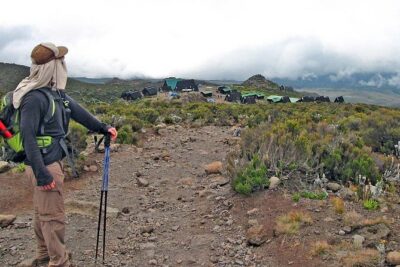
Browse the lists this tour appears in