
Reviewed · MARANGU ROUTE CLIMBS
6 Days Mount Kilimanjaro Trek Marangu Route
The big draw here is simple: you sleep in huts instead of tents while climbing Africa’s highest mountain. The 6-day Marangu Route gives you a useful acclimatization day at Horombo, a sunrise summit attempt, and a clear path from rainforest to the cold, bare saddle below Kibo.
I like the reliable structure and the human support. Meals, hot washing water, airport transfers, a Moshi hotel night before and after, guides, porters, and a cook are all included. I also like that the team has made a point of celebrating personal milestones, including a birthday cake and champagne at Horombo, with Wence Tarimo often handling the personal touch.
The catch is that Marangu is called the easiest route, but summit day is still extremely hard. The final push lasts 12 to 15 hours, and the six-day plan is not a guarantee of reaching Uhuru Peak. You need moderate fitness, proper gear, and a willingness to turn back if your body is not coping with altitude.
Key points to know before you book
- Hut sleeping is the Marangu advantage: You stay in dormitory-style huts rather than camping each night.
- Horombo gets an extra acclimatization day: The hike to Mawenzi Ridge or Zebra Rock helps prepare you for higher ground.
- Summit day is a full mountain test: Expect a midnight start, 22 kilometers of walking, cold, darkness, and thin air.
- The price covers much of the hard-to-arrange work: Airport transfers, hotels, meals, staff wages, park costs, and emergency oxygen are included.
- Food and staff care are major strengths: The cook, guides, porters, and support crew receive repeated praise for keeping meals and safety organized.
- The route returns by the same general corridor: You get the classic Marangu scenery, but less route variety than on a point-to-point climb.
Why the Marangu Route suits some climbers
At $2,350 per person, this is not a cheap walk. It is a serious mountain package with a lot of necessary pieces bundled together. You are paying for national park fees, a professional mountain crew, porters, cooking, food, water, transfers, accommodation, and two hotel nights in Moshi.
Marangu is known as the Coca-Cola route because it is the oldest and most established path on Kilimanjaro. That nickname can make it sound easy and commercial. The truth is more useful: the trail is generally straightforward to follow, and the huts remove the need to sleep in a tent, but altitude makes the climb demanding.
I would choose this route if hut sleeping matters to you, if you prefer a settled base each night, or if this is your first high-altitude trek and you want a clear daily plan. I would not choose it simply because you have heard it is easy. The route still rises from the rainforest to 5,895 meters, and the summit day is long enough to test strong walkers.
The tour is private, so only your group participates. That gives you a more personal setup than a large departure, though you should confirm the exact group size and staff arrangement before paying.
More Kilimanjaro Climbs in Kilimanjaro
- Kilimanjaro climb by Lemosho Route (7-day)
★ 5.0 · 651 reviews - Kilimanjaro climb, Machame Route (7-day)
★ 5.0 · 262 reviews - Kilimanjaro Climbing Lemosho Route 8 Days.
★ 5.0 · 186 reviews
Day 1: Marangu Gate to Mandara Hut
Your morning begins with collection from your Moshi lodge after breakfast. The transfer takes you to Marangu Gate, where park paperwork is completed before you enter Kilimanjaro National Park.
The first walking section covers about 8.3 kilometers and takes roughly five hours. The trail passes through dense rainforest, with thick vegetation and the possibility of seeing primates. This is a pleasant start because the forest provides shade and a sense of entering a different world quickly.
Mandara Hut is at about 2,700 meters. After reaching the hut, you can rest or ask your guide to take you to Maundi Crater. The crater viewpoint offers broad views toward the Kenyan interior and gives you a worthwhile extra outing without committing to a hard day.
I like this first stage because it is long enough to settle into the pace but not overloaded. Walk slowly from the beginning. Saving energy here matters more than trying to arrive first.
Day 2: Mandara to Horombo Hut
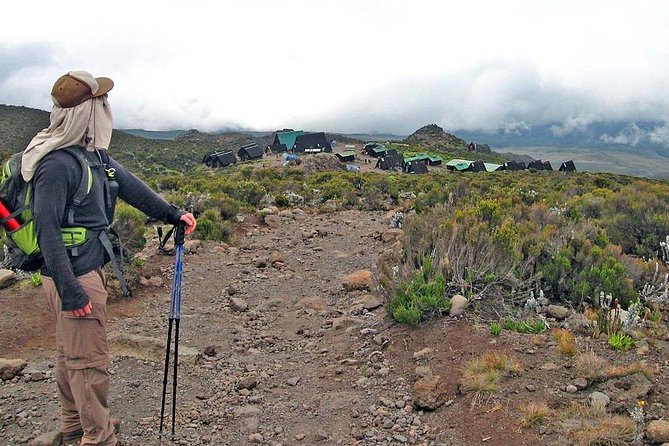
The second day takes you out of the rainforest. After leaving Mandara, the trail reaches the timberline and enters the heath and moor zone, where the vegetation becomes lower and more open.
The stated distance is 12.5 kilometers, with the walk described as taking about four to six hours in the itinerary, though another timing line gives nine hours. Treat this as a full mountain day rather than relying on the shortest estimate. Your guide controls the pace, and altitude can make a moderate distance feel slow.
Horombo Hut sits at about 3,700 meters. From here, you get views toward Mawenzi, Kibo, and the wide Masai steppe. The hut setting is one of Marangu’s main comforts, but dormitory accommodation means you should be ready for shared sleeping space rather than privacy.
This is the point where the climb begins to feel serious. Headaches, poor sleep, tired legs, or reduced appetite can appear. Tell your guide early if you feel unwell. Emergency oxygen is included for emergencies only, not as a way to push through a summit attempt.
Day 3: Acclimatization around Mawenzi
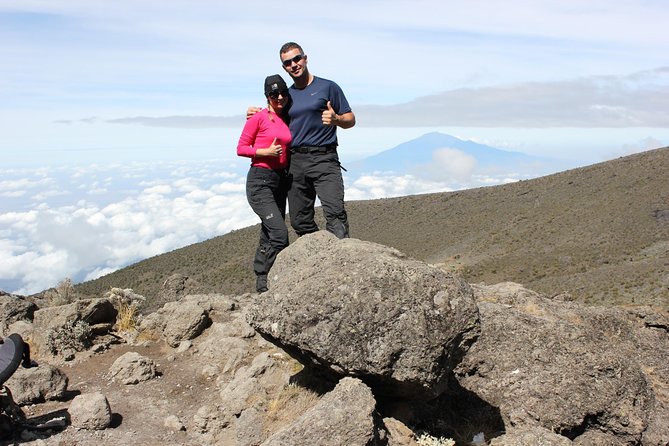
The extra day at Horombo is the most valuable feature of this six-day schedule. You hike toward Mawenzi Ridge or Zebra Rock for about four hours, then return to Horombo for lunch, rest, dinner, and another night at altitude.
This is not a wasted day. Your body gets time at 3,700 meters before you climb toward Kibo, and the shorter hike lets you gain height without carrying on to a new hut. The Mawenzi area also gives you some of the trip’s most striking mountain views.
I would take this day seriously. Keep your pace gentle, drink the fresh water provided, eat even if your appetite is low, and use the afternoon to rest. The temptation is to treat the acclimatization walk as a sightseeing hike. It is better understood as preparation for the summit.
More Marangu Route Climbs in Kilimanjaro
- Kilimanjaro climb, Marangu route (6-day)
★ 5.0 · 72 reviews - Climbing Kilimanjaro – Marangu Route
★ 5.0 · 65 reviews - Best Kilimanjaro Adventures 6 Days Marangu Route Experience
★ 5.0 · 18 reviews - Kilimanjaro Private Climbing in 6 Days Marangu Route
★ 5.0 · 16 reviews
Day 4: Horombo to Kibo Hut
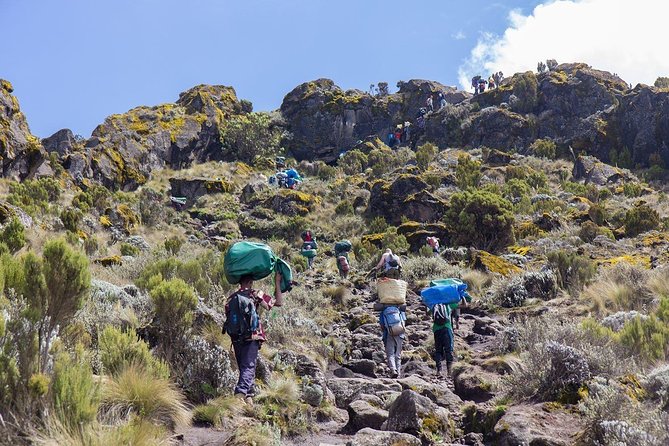
The fourth day covers about 9.5 kilometers and takes roughly six to seven hours. The route passes the Last Water point and then crosses the saddle, a broad, nearly vegetation-free plateau between Mawenzi and Kibo.
This is a visually stark part of the climb. The trail is well built, but the open ground can feel exposed and tiring. Kibo Hut is the destination, and at this stage the practical goal is not sightseeing. It is to reach the hut with enough energy for the night ascent.
You will have an early evening meal and an early bedtime because the summit attempt begins around midnight. Pack the things you need for the night climb before lying down. Keep your warm layers, headlamp, water, snacks, and personal medicine easy to reach.
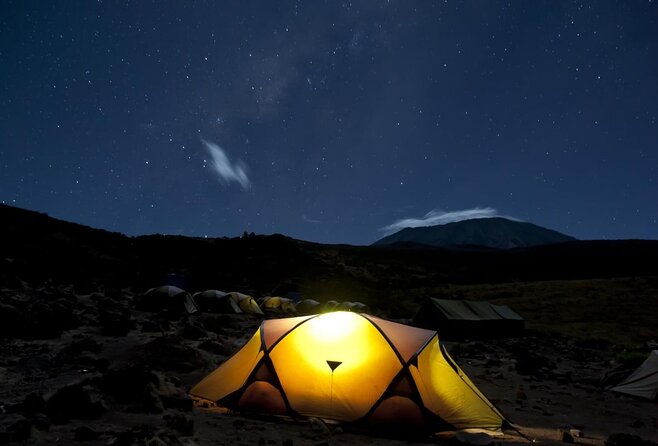
The itinerary lists camping equipment even though Marangu uses huts. That may refer to general mountain support equipment, or it may be standard package wording. Ask the operator exactly what sleeping mattress, bedding, chairs, tables, and hut arrangements are supplied for your departure.
Day 5: Kibo Hut to Uhuru Peak and Horombo
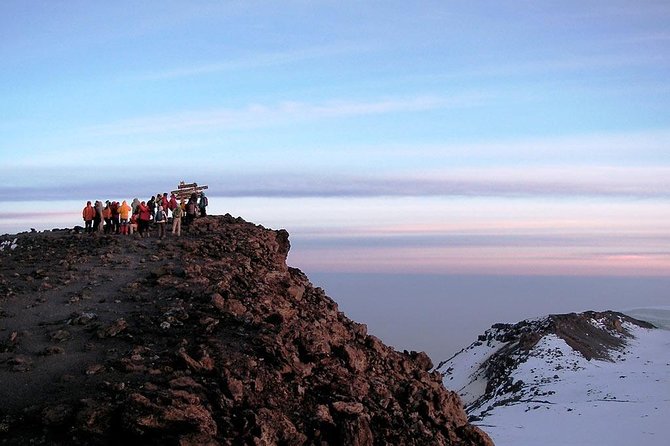
This is the day that decides the climb. You begin around midnight for a 22-kilometer stage that can take 12 to 15 hours.
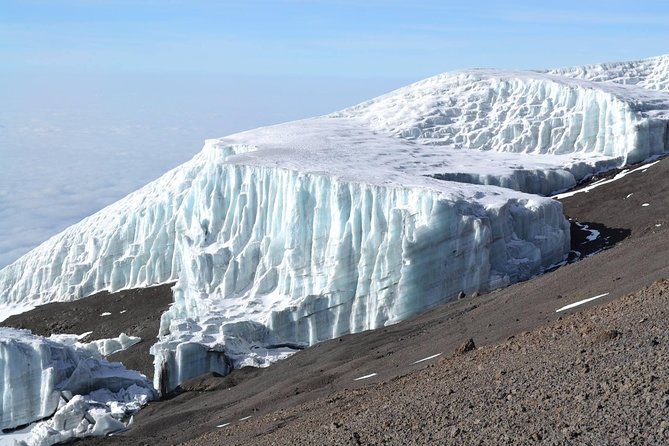
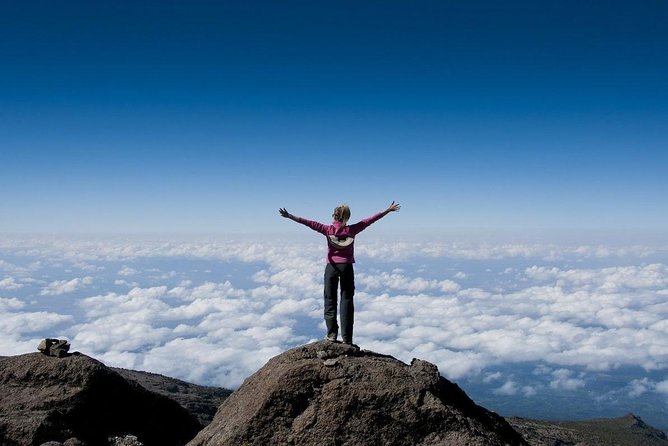
The ascent is slow and steep over loose ground. You pass Hans Meyer Cave at about 5,220 meters, then continue toward Gillman’s Point at 5,681 meters. Reaching the crater rim around sunrise can be a powerful moment, though the cold, darkness, and thin air may be all you can think about at first.
From Gillman’s Point, you still have another one to two hours to Uhuru Peak at 5,895 meters. Do not treat Gillman’s Point as the final finish. The route to Uhuru continues along the crater rim, and the altitude remains severe.
After photographs at the summit, you return to Kibo Hut for a warm meal and a one to two-hour rest. Then you continue down to Horombo Hut. This return section is why summit day feels so long. You are not finished when you reach the top.
The route description makes the summit sound certain, but no responsible mountain company can promise that outcome. One person on a similar six-day attempt did not reach the top and planned to try again with the same team. That is not a failure. Altitude affects people differently, and a safe descent is the right result when symptoms become serious.
Day 6: Horombo to Marangu Gate and Moshi
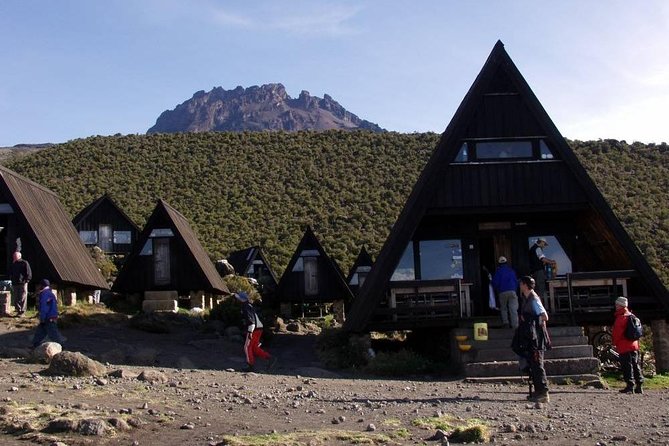
The last day covers about 20.8 kilometers and is listed as roughly eight hours, with another estimate of about six hours. You descend through the heath and moor zone to Mandara Hut, where lunch is provided, then continue through the rainforest to Marangu Gate at about 1,860 meters.
Your legs may feel heavier than expected after the summit push. The downhill route is kinder to your breathing but can be hard on tired knees, so use your trekking poles if you have them.
At the gate, you say goodbye to your mountain crew before a short transfer takes you back to your Moshi hotel. The warm shower, dinner, and bed are not small comforts after six days on the mountain.
The package includes the Moshi hotel night after the climb, with dinner and breakfast. That extra night gives you time to recover before an onward journey or airport transfer.
What the $2,350 price really covers
The cost makes more sense when you separate the mountain service from personal expenses. Included are all fees and taxes, return Kilimanjaro airport transfers, the night before and after the climb in Moshi, dinner and breakfast at those hotel stays, five breakfasts, five dinners, and six lunches.
You also receive fresh drinking water and hot water for washing each day. Food matters on a climb like this. Several comments about the experience focus on good meals, a strong cook, and staff who kept the group feeling cared for. One birthday celebration at Horombo included a baked cake and champagne, a thoughtful touch if you are marking a special occasion.
The package also pays the wages of the qualified mountain guide, assistant guides, porters, and cook. That is a major part of the price, and you should value it properly. A well-supported climb is safer and more comfortable than trying to reduce the cost by cutting staff or food.
Camping equipment is listed too, including tents, chairs, tables, and sleeping mattresses. Since this route uses huts, confirm how those items apply to your trip. You will still need to budget for flights, visas, travel and health insurance, personal gear, personal items, snacks, medicine, and water-purifying tablets.
A portable toilet is optional but highly recommended. It is listed separately, so ask about its price before departure if privacy and convenience matter to you.
Food, water, guides, and support
The strongest pattern in the supplied comments is praise for the crew. People repeatedly describe the guides as supportive and safety-focused, while the cook receives credit for keeping meals enjoyable throughout the climb.
Wence Tarimo is named in the personal responses and appears to be a key contact for the company. You should confirm who your lead guide will be before departure, since the available information does not identify the specific guide assigned to every group.
The package includes emergency oxygen, but only for emergencies. It is not a substitute for acclimatization, and it is not summit assistance. Your guide will need to judge how you are coping with altitude, so answer health questions honestly and report symptoms promptly.
The staff also handle airport transfers and the Moshi hotel stay. That reduces the number of details you must arrange after a long flight. Still, ask for the transfer schedule and the exact hotel name before you arrive.
Who should book this six-day climb
This trip suits you if you can manage several hours of walking each day and are ready for one very long summit stage. The operator asks for a moderate physical fitness level, but you should prepare beyond that minimum because the summit day lasts up to 15 hours.
It is a good fit for:
- You want huts rather than tent camping.
- You prefer a private trip for your own group.
- You value a full support crew and prepared meals.
- You want an extra acclimatization day at Horombo.
- You are comfortable with an overnight summit start.
- You want airport transfers and Moshi hotel nights included.
It may not suit you if you need private accommodation, dislike shared dormitory huts, or want a relaxed summit schedule. The 6-day plan is better than the five-day minimum, but an extra day does not remove altitude risk.
Practical questions to settle before departure
Ask for a complete gear list. Personal hiking and trekking equipment is not included, though some equipment can be rented from the operator’s Tanzania store. Confirm the rental prices, sizes, condition, and return arrangements.
You should also ask how the listed camping equipment fits a hut-based trip, what the portable toilet costs, and what snacks are best to bring. Personal medicine is your responsibility, as are visas, flights, insurance, and water-purifying tablets.
The meeting information is written as Mount Kilimanjaro National Park, Gilman’s Point, though the practical start is a pickup from your Moshi lodge followed by registration at Marangu Gate. Confirm the exact pickup point and final meeting instructions so you are not relying on a confusing location label.
Cancellation is free if you cancel at least 24 hours before the local start time. Cancellations or changes made inside that window are not refunded or accepted.
Should you book the Marangu Route?
I would book this trip if you want the classic hut-based Kilimanjaro route and prefer to have transport, meals, staff, water, and hotel nights handled in one package. The extra acclimatization day at Horombo is a sensible reason to choose six days instead of the five-day minimum.
I would book only after confirming the lead guide, gear rental details, hut arrangements, portable toilet cost, pickup instructions, and the timetable for the long summit day. If you understand that reaching Uhuru Peak is never guaranteed, have suitable insurance, and can prepare for a midnight climb, the package offers solid practical value at $2,350.
FAQ
How long is the Marangu Route trek?
The experience lasts approximately six days, beginning and ending with transport connected to Moshi. The itinerary includes five nights on the mountain route and hotel nights before and after the climb.
Where does the trek start?
You are collected from your lodge in Moshi and transferred to Marangu Gate, where park paperwork is completed before hiking begins.
Where does the trek finish?
The walking portion finishes at Marangu Gate after the descent from Horombo. A short transfer then takes you back to your hotel in Moshi.
How high is Uhuru Peak?
Uhuru Peak is at 5,895 meters. You first reach Gillman’s Point at 5,681 meters before continuing for another one to two hours toward Uhuru Peak.
Do you sleep in tents or huts?
Marangu is the only route in this itinerary described as using dormitory-style sleeping huts. Camping equipment is also listed as included, so you should confirm exactly what equipment is used or supplied for your departure.
Is an acclimatization day included?
Yes. Day 3 is an extra acclimatization day at Horombo Hut, with a hike toward Mawenzi Ridge or Zebra Rock before returning to Horombo for lunch and rest.
Are meals included?
Yes. The package includes five breakfasts, five dinners, and six lunches, along with dinner and breakfast during the included Moshi hotel stays.
Is airport transportation included?
Yes. Return transfers between Kilimanjaro Airport and Moshi are included.
What is not included in the price?
Flights, visas, travel and health insurance, personal hiking gear, personal items, snacks, personal medicine, and water-purifying tablets are not included. Some hiking gear may be available to rent in Tanzania, and a portable toilet is optional but recommended.
More Marangu Route Climbs in Moshi
- 6 Days Climb Kilimanjaro Through Marangu Route
★ 4.5 · 15 reviews - Top 6 Days Mt. Kilimanjaro Bike trek Tour by Marangu-Kilema Route
★ 5.0 · 15 reviews - 5 Days Marangu Route Kilimanjaro hiking
★ 5.0 · 13 reviews - Mt Kilimanjaro Climb – 6 days Marangu
★ 5.0 · 12 reviews
More Kilimanjaro Climbs in Moshi
- Kilimanjaro climb, Lemosho Route (8-day)
★ 5.0 · 148 reviews - Kilimanjaro climb, Lemosho Route (6-day)
★ 5.0 · 129 reviews - Private Kilimanjaro Hike 7 Day Lemosho Route
★ 5.0 · 60 reviews - Best Kilimanjaro hiking day trip tour with Kilinge Adventures
★ 4.5 · 54 reviews
Just added around Moshi
- Mt Kilimanjaro 6 days Marangu route hike★ 5.0 · 3 reviews
- Wildlife Extravaganza: Manyara, Tarangire & Ngorongoro in 3 Days★ 5.0 · 3 reviews
- Private Cycle to Kilimanjaro Bike Park Safari★ 5.0 · 6 reviews
- 3 Days Private E-Bike Tour in West Kilimanjaro★ 5.0 · 3 reviews
- West Kilimanjaro cycling Adventures★ 4.5 · 8 reviews
- machame route★ 5.0 · 16 reviews
- Kilimanjaro Climb & Safari – Lemosho Route – 13 Day★ 5.0 · 10 reviews
- Kilimanjaro Climbing Umbwe Route★ 5.0 · 3 reviews
Marangu Route Climbs, compared.



Private Full Day Hiking Experience to Marangu Route
Read our review →
From Arusha/Moshi: Kilimanjaro Hike Marangu Route Day Trip
Read our review →
Mount Kilimanjaro Day Hike Through Marangu Route to Mandara Hut
Read our review →

Best Kilimanjaro Adventures 6 Days Marangu Route Experience
Read our review →
Kilimanjaro Private Climbing in 6 Days Marangu Route
Read our review →Browse the lists this tour appears in