
Reviewed · CYCLING TOURS
Private Cycle to Kilimanjaro Bike Park Safari
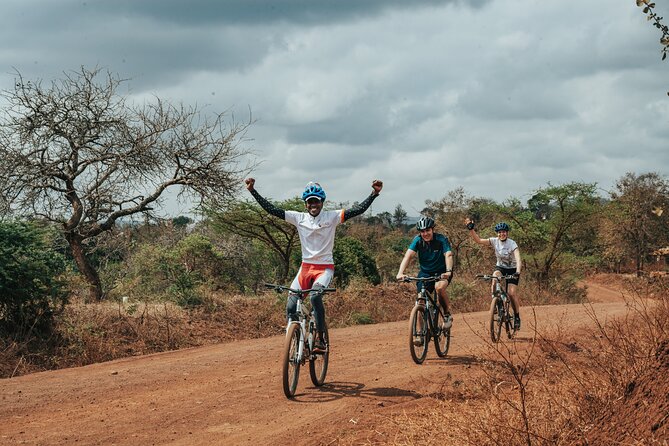
The best part of this private bike safari is the sudden change from an ordinary dirt road to open Tanzanian wilderness. You pedal across West Kilimanjaro with red earth under your tires, Mount Kilimanjaro and Mount Meru on the horizon, and the chance to spot zebra, wildebeest, impala, giraffes, or elands in the distance.
I like the close view of daily Maasai life, especially the chance to learn how people live with cattle on these dry plains. I also like the practical setup: a mountain bike, helmet, lunch, water, private transport, and an English-speaking guide are included. The main catch is physical effort. You need moderate fitness, confidence on a bicycle, and a willingness to spend most of the day outdoors.
Key points to know before booking
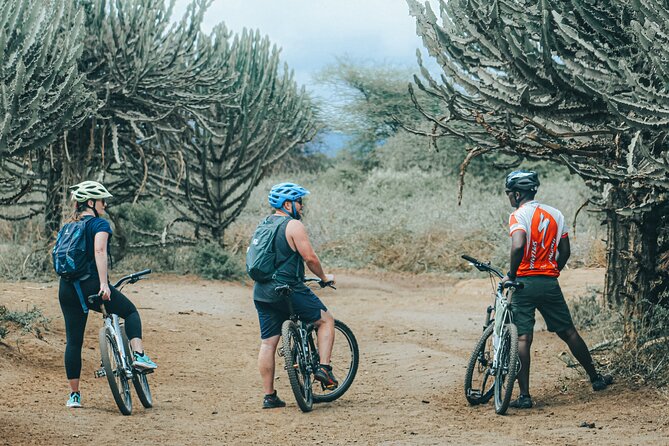
- West Kilimanjaro scenery: Ride through dry grasslands with views toward both Mount Kilimanjaro and Mount Meru.
- Wildlife from the saddle: Zebra, wildebeest, giraffes, impala, and elands may appear along the route.
- A private experience: Only your own group takes part, allowing the guide to adjust the pace.
- Maasai cultural context: The route passes through areas where Maasai families live with their cattle.
- A full day outside: The experience lasts about 8 to 9 hours, including transport and stops.
- Support is built in: You receive a mountain bike, helmet, lunch, and 2 liters of water per person.
Red dirt roads and open views near Kilimanjaro
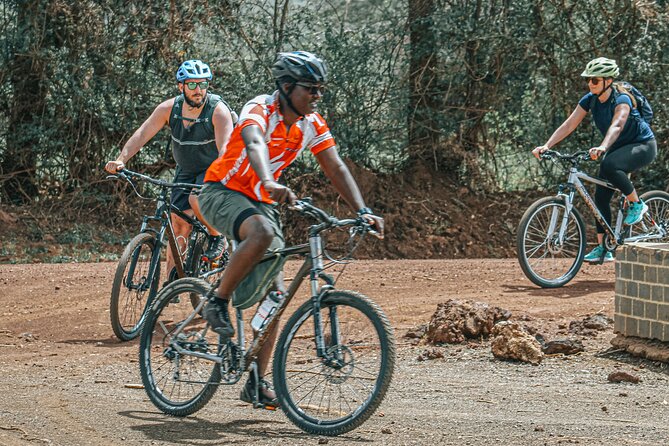
This is not a gentle city bicycle outing. It is a proper day in the open country, with long stretches of gravel and dirt riding across the West Kilimanjaro plains. You get a stronger sense of distance here than from a vehicle. The road moves at the speed of your legs, and the horizon keeps widening.
The setting also changes as the tour unfolds. The green slopes associated with Mount Kilimanjaro give way to drier, more open grasslands. That contrast is one of the day’s rewards. You are not looking at only one type of Tanzania. You are seeing the mountain country, village edges, and broad wildlife areas in one trip.
Wildlife sightings are possible, not guaranteed. That matters. You might see a herd of zebra or wildebeest grazing far off, or catch sight of giraffes and elands along the route. Even when animals keep their distance, the ride gives you time to watch the plains rather than simply passing through them in a vehicle.
A few more Moshi trips to weigh up
- 1-Day Moshi Villages bike tour
★ 5.0 · 59 reviews - Chagga Villages in Mount Kilimanjaro Cycling Day Trip
★ 5.0 · 42 reviews - Moshi city bike day trip
★ 5.0 · 17 reviews
Tingatinga begins with Kilimanjaro and Maasai culture
The first stop, Tingatinga, takes about an hour. It introduces the western plains and gives you the setting for the ride ahead. Views of Mount Kilimanjaro and Mount Meru accompany the route, creating a memorable backdrop without requiring a strenuous mountain climb.
This part is also about people, not only scenery. Your guide explains the Maasai communities living on these plains and their dependence on cattle. That context helps you read what you see: open grazing areas, dry grass, village life, and people in colorful clothing on the slopes of Kilimanjaro.
I like this beginning because it makes the cycling feel connected to the place. You are not simply renting a bike and following a track. You are moving through a lived-in area where farming, cattle, wildlife, and tourism share the same broad space.
Still, the stop is fairly short. If you want a long cultural visit or a formal Maasai village program, do not assume that this half-day ride provides it. The experience includes cultural explanation and a Maasai village experience has been arranged on some trips, but the supplied details do not promise a set performance, homestead visit, or extended workshop.
The Kilimanjaro National Park approach
The next stage lasts about two hours and involves driving toward the West Kilimanjaro plains before the cycling begins. Along the way, you may see local people in colorful dress living on the slopes of Mount Kilimanjaro.
This transfer matters because it saves your legs for the main ride. You are not asked to cycle every kilometer from Moshi. Private transportation takes you toward the starting area, and you begin pedaling where the route becomes more suitable for the bike safari.
The stop is labeled Kilimanjaro National Park, but the description focuses on the drive toward the western plains and the communities along the mountain slopes. Do not read this as a standard game drive inside a major park with guaranteed animal viewing. The attraction here is the transition from the mountain area to the open country where the ride takes place.
A private tour can be useful at this point. If your group has different cycling speeds, the guide can manage the pace more easily than on a large group departure. The experience is also more personal, since only your group participates.
Five hours toward Ngabobo Village
The longest section, at about five hours, takes you south toward Ngabobo Village. You cycle through dry, open grasslands that feel very different from the greener mountain slopes left behind.
This is where the bike safari earns its name. You may see wildebeest, giraffes, zebra, and elands along the route. The animals are part of the natural setting, not a scheduled attraction, so keep your eyes moving across the plain. A guide such as Roger, Rashid, Herman, or Octavian may help you notice movement that you would miss while concentrating on the road.
The surface is important. The final part includes a gradual ascent on a gravel road as you pass through Ngabobo Village toward Sanya Juu. A gradual climb is not the same as a mountain summit, but five hours on a bike can make even a mild rise feel serious. You should be comfortable riding on uneven surfaces and handling a longer day in the sun.
The route’s pace will depend on your group and conditions, but the private format should help. You can ask to pause for scenery, wildlife, or water. The included two liters of water per person are useful, though you should treat them as a set provision rather than proof that you can ride without planning your hydration.
The ride ends around Sanya Juu, where you transfer back to your hotel in Moshi. That return transfer is a welcome part of the package. After several hours on dirt roads, you will probably want the vehicle, not another stretch of cycling.
Same country, a completely different kind of safari:
- Kilimanjaro climb by Lemosho Route (7-day)
★ 5.0 · 651 reviews - Safari Serengeti And Ngorongoro
★ 5.0 · 288 reviews - Kilimanjaro climb, Machame Route (7-day)
★ 5.0 · 262 reviews - Kilimanjaro Climbing Lemosho Route 8 Days.
★ 5.0 · 186 reviews
Guides and the value of a private group
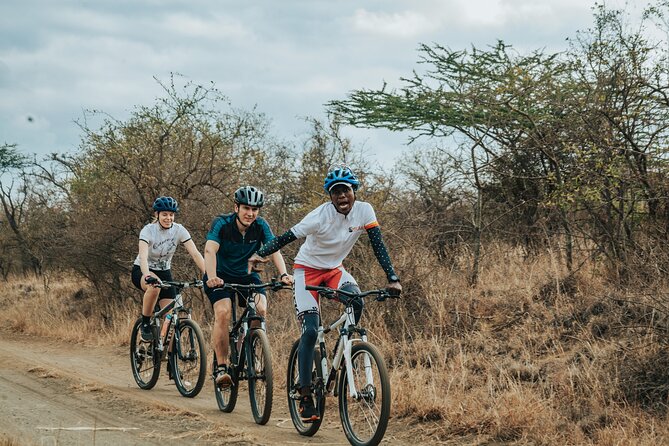
The guide is central to this experience. A bicycle guide needs to do more than lead the way. You need someone who can watch the group, explain local life, identify animals, and keep the day moving across a route that includes gravel and an uphill finish.
The company has used guides and staff including Roger, Rashid, Herman, and Octavian. Octavian is described as a guide, driver, and organizer, while Herman is noted for both biking and guiding. Those details matter because the job can involve more than pointing out the next turn.
One useful feature is the support vehicle. The supplied trip details include private transportation, and one account specifically describes a support car following behind the riders throughout the bike tour. That offers reassurance if you need help with equipment, pace, or the transition back to Moshi, although you should confirm the exact support arrangement when booking this particular one-day outing.
A private group also gives you room to speak up. Tell the guide if the pace is too fast, if you need a break, or if you want more time to watch wildlife. This is one reason I would choose a private departure over a cheaper large-group ride for a physically demanding day.
What the $250 price covers
At $250 per person, this is not a bargain bicycle rental. It is priced as a full-day private excursion with transport, guiding, gear, food, and park-related costs included in the package.
The included items are:
- Mountain bike and helmet
- Professional English-speaking guide
- Private transportation
- Lunch
- Two liters of water per person
- All fees and taxes
That package gives the price real value if you want a simple, organized day from Moshi. You do not need to arrange a separate bicycle, find your own route, hire a vehicle, or pack lunch. The guide and transport also make the logistics easier in a region where route knowledge matters.
The value is weaker if you are an experienced cyclist who already has a bike, transport, and local route plans. You are paying for coordination and access to a guided experience, not just for time in the saddle.
Admission to Osiligilai Masai Lodge is not included, and tips and personal items are extra. The supplied information does not give a separate price for the lodge admission, so ask about that cost before departure if you plan to enter or use the lodge facilities.
Fitness, equipment, and what to pack
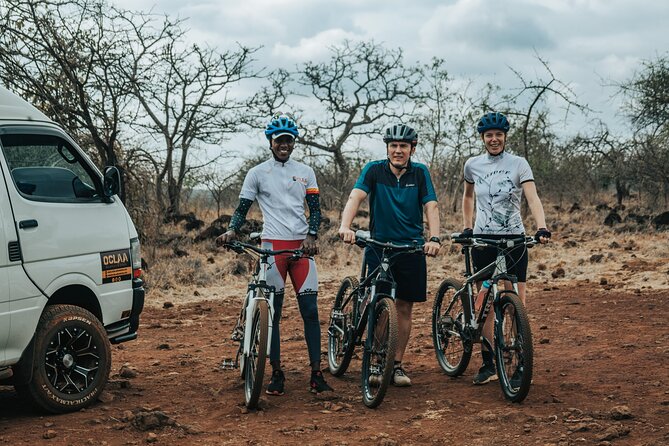
The official requirement is moderate physical fitness. That is a sensible description, but the five-hour riding section deserves attention. You should be confident on a bicycle and comfortable with dirt and gravel surfaces.
You do not need to be a competitive cyclist. One account describes the ride as suitable even for less sporty people, but that does not remove the need for basic stamina. The day still involves several hours of riding, an eventual gradual ascent, sun, and changing road surfaces.
The mountain bike and helmet are provided. Because the exact bike model and sizing are not specified, give your height and any equipment concerns when booking. A well-fitting helmet and saddle can make a major difference on a long ride.
Bring personal items that are not included, such as suitable riding clothes, sun protection, and any preferred snacks or medication. Lunch and water are supplied, but the package does not say what lunch contains or whether extra drinking water is available. If you drink heavily in hot conditions, ask the operator how replenishment works.
Wildlife watching from a bicycle
A bicycle changes the feel of a wildlife outing. You are lower to the ground and moving quietly, but you also have less separation from the surroundings than you would in a safari vehicle. That can make a distant zebra herd feel more personal.
The possible sightings include zebra, impala, wildebeest, giraffes, and elands. The descriptions also refer to monkeys in one account. Treat all of these as possible sightings rather than promises. Animals may be far away, hidden, or absent on a particular day.
Bring patience. The best moments may be brief: a group of zebra grazing beyond the road, a giraffe visible against the horizon, or movement in the grass that your guide notices first. You will get more from the day if you value the setting and the ride itself, not only a checklist of animals.
This format suits people who have already taken a conventional vehicle safari and want a more active change of pace. It can also suit a first-time safari visitor who understands that nature does not run on a timetable.
The cultural side of the route
The Maasai connection gives the day a human dimension. You hear about people who live with cattle on the plains and see local dress and village areas during the route. That is useful context for understanding the land beyond its value as a wildlife setting.
The activity description refers to a Maasai village experience arranged on some cycling trips. However, the fixed itinerary gives its clearest cultural detail at Tingatinga and along the drive toward the plains. Ask what your departure includes if a village visit is especially important to you.
I appreciate that the cultural element is tied to the route rather than presented as an isolated add-on. You see the connection between cattle, open grassland, villages, and wildlife. At the same time, you should keep expectations modest. The available details do not promise a long guided visit, a meal with a family, or a particular ceremony.
Timing, pickup, and cancellation
Plan on 8 to 9 hours from pickup to return. The stated stops total about eight hours, but transport, pauses, and the cycling pace can affect the final length. This is a full-day commitment, not an activity to squeeze between two tightly scheduled tours.
Pickup is offered, and the tour returns you to your hotel in Moshi after the ride ends near Sanya Juu. The return vehicle is particularly useful because the final cycling section finishes away from town.
Confirmation is provided at booking. You can cancel for a full refund up to 24 hours before the start time. Cancellations or changes made less than 24 hours before departure are not accepted for a refund, and the cut-off follows local time.
Who should book this ride?
I would choose this tour if you want wildlife, mountain views, and village scenery in one active day. It is especially suited to:
- Confident recreational cyclists
- Couples or families wanting a private pace
- Visitors based in Moshi
- People who prefer a quiet route over a standard vehicle-only outing
- Anyone interested in combining Maasai culture with open-country riding
I would think twice if you dislike gravel, struggle with long periods outdoors, or want guaranteed close wildlife sightings. You should also avoid booking it as a casual bicycle stroll. The route may be manageable, but it is still a long day with a gradual climb near the end.
The private format is a strong point for mixed-ability groups, though only if everyone is honest about fitness. A guide can adjust pauses and speed, but private transport cannot turn five hours of riding into a short trip.
Should you book the Kilimanjaro bike safari?
Book it if the thought of pedaling across red dirt with Kilimanjaro behind you sounds better than sitting in a vehicle all day. The combination of wildlife possibilities, Maasai cultural context, private guiding, included equipment, lunch, water, and transport makes the $250 price reasonable for an organized full-day outing.
Choose another activity if your priority is a guaranteed safari drive, a long formal cultural visit, or an easy ride. For everyone else, this is a memorable way to see West Kilimanjaro at a human pace. Bring fitness, patience, and a sense of adventure, then let the plains provide the surprises.
FAQ
Where does the bike safari start?
The experience is based in Moshi, with pickup offered. You are driven toward the West Kilimanjaro plains before beginning the cycling portion.
How long does the experience last?
The full experience lasts approximately 8 to 9 hours. The listed sections include about one hour at Tingatinga, two hours traveling toward the cycling area, and five hours for the main cycling route.
What wildlife might I see?
Possible sightings include zebra, impala, wildebeest, giraffes, and elands. Wildlife sightings are possible but are not guaranteed.
Is the bicycle provided?
Yes. A mountain bike and helmet are included in the price.
Is this a private tour?
Yes. Only your group participates in the activity.
What is the cancellation policy?
You can cancel up to 24 hours before the experience starts for a full refund. Cancellations or changes made less than 24 hours before the start time are not accepted for a refund.
Just added around Moshi
- Mt Kilimanjaro 6 days Marangu route hike★ 5.0 · 3 reviews
- Wildlife Extravaganza: Manyara, Tarangire & Ngorongoro in 3 Days★ 5.0 · 3 reviews
- 3 Days Private E-Bike Tour in West Kilimanjaro★ 5.0 · 3 reviews
- West Kilimanjaro cycling Adventures★ 4.5 · 8 reviews
- machame route★ 5.0 · 16 reviews
- Kilimanjaro Climb & Safari – Lemosho Route – 13 Day★ 5.0 · 10 reviews
- Kilimanjaro Climbing Umbwe Route★ 5.0 · 3 reviews
- Kilimanjaro Climb • Marangu Route ~ 9 Day★ 5.0 · 4 reviews
Cycling Tours, compared.
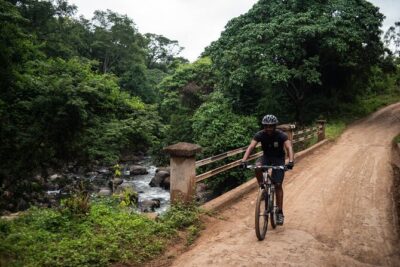
Chagga Villages in Mount Kilimanjaro Cycling Day Trip
Read our review →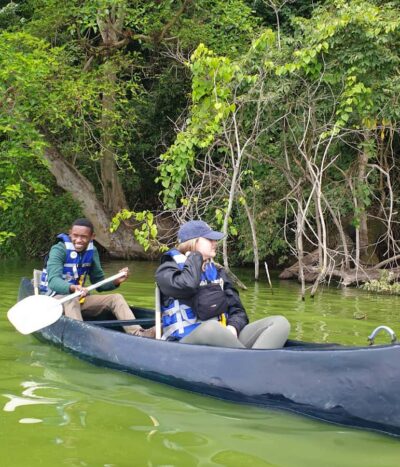
Canoeing/Kayaking &/or Cycling Adventure (with Lunch)
Read our review →
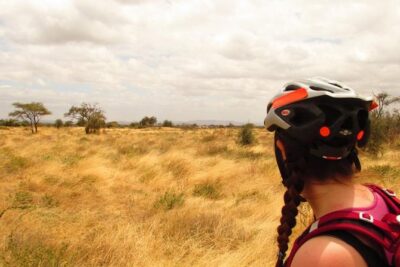
Top 6 Days Mt. Kilimanjaro Bike trek Tour by Marangu-Kilema Route
Read our review →Browse the lists this tour appears in