
Reviewed · MARANGU ROUTE CLIMBS
Kilimanjaro Climb • Marangu Route ~ 9 Day
Kilimanjaro’s Marangu Route gives you a rare combination: a high mountain climb with hut accommodation instead of camping every night. You walk from tropical forest to alpine desert, sleep at Mandara, Horombo, and Kibo, then make the midnight push to Uhuru Peak. I like the extra acclimatization night at Horombo, and I like that the operation puts medical training, food, and crew welfare at the center of the trip.
The main drawback is the price: $5,699 per person is a serious investment, and the final summit day is very demanding. The itinerary also needs careful checking, since the experience is sold as a 9-day climb while the overview refers to a 12-day trip start date.
Key points to know before booking
- Hut-based Marangu Route: Sleep in shared mountain huts at Mandara, Horombo, and Kibo rather than carrying a tent between camps.
- Two nights at Horombo: The added acclimatization day gives your body more time at altitude before the summit attempt.
- Midnight summit start: You leave Kibo Hut just before midnight, reach Gilman’s Point, then continue toward 19,340-foot Uhuru Peak.
- Small group size: The maximum is 16 people, large enough for company but still manageable on a guided climb.
- Altitude and safety focus: Tusker trains guides in altitude medicine and puts safety ahead of reaching the summit.
- Moshi preparation: You spend two nights in town for orientation, gear checks, guide introductions, and rest before hiking.
Why this Marangu climb feels different
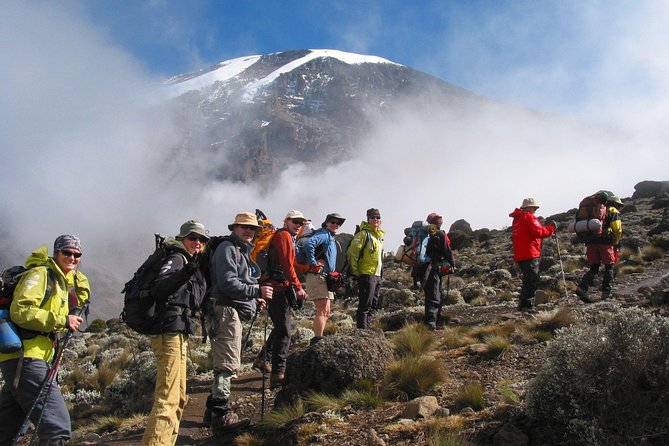
The Marangu Route is often called the Coca-Cola Route, but there is nothing soft about climbing Kilimanjaro this way. It is the mountain’s classic route, with a gradual approach through several climate zones and huts at the main overnight stops.
The huts make a real difference. You are not pitching a tent after a long day, though you do share sleeping quarters and dining areas with other climbers. That creates a more social trip, with people from different countries gathering over meals and comparing notes about the trail ahead.
I especially like the way this plan handles acclimatization. Many people focus on the summit day and forget that altitude is the real test. Spending two nights at Horombo, including a shorter acclimatization walk, gives you a better chance to adjust before heading toward Kibo.
Tusker Trail has been operating in East Africa since 1977 and has been arranging Kilimanjaro climbs for decades. Its founder, Eddie Frank, has personally climbed Kilimanjaro 52 times. That long involvement shows in the attention given to guide training, mountain food, equipment, and crew support.
The company reports a 99 percent summit success rate. That is an impressive figure, but you should still treat it as a company statistic, not a promise. Altitude affects people in unpredictable ways, and a careful guide may turn you around if your health becomes a concern.
More Kilimanjaro Climbs in Kilimanjaro
- Kilimanjaro climb by Lemosho Route (7-day)
★ 5.0 · 651 reviews - Kilimanjaro climb, Machame Route (7-day)
★ 5.0 · 262 reviews - Kilimanjaro Climbing Lemosho Route 8 Days.
★ 5.0 · 186 reviews
Two quiet days in Moshi before the trail
Your first day begins in Moshi, where you check into a family-owned hotel and settle in. This is not wasted time. You have a chance to recover from the journey, organize your bags, and begin adjusting to the rhythm of the climb.
Day two is also in Moshi. You receive a detailed climb orientation, complete a gear check, and meet the guides who will lead you into the park. I like having this preparation built into the schedule instead of rushing from the airport straight to the trailhead.
Use these days seriously. The gear check is your chance to identify missing or unsuitable equipment before you are at altitude. Equipment rental is not included, so you need to bring your own kit or arrange rentals separately.
The climb begins from a listed start time of midnight, but that refers to the summit morning rather than the first town meeting. Confirm the exact pickup and orientation times after booking, especially if you are arranging flights around the itinerary.
Day three: forest trails and Mandara Hut
From Moshi, you drive to Marangu Park Gate and begin walking through Kilimanjaro’s montane forest. The first hiking section takes roughly four to five hours according to the day plan, though the listed activity duration is three hours, so you should expect some variation based on the group and trail conditions.
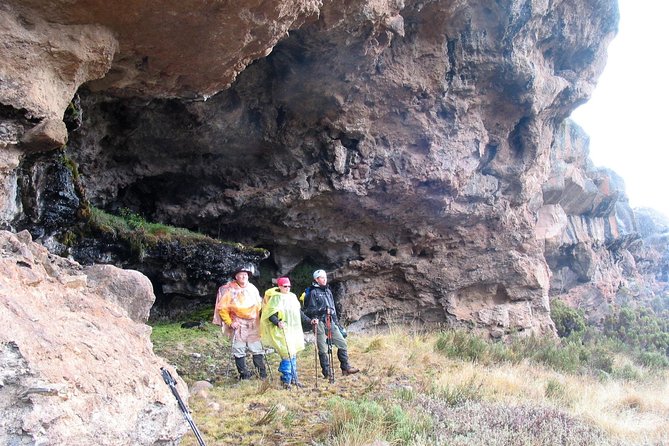
This is the coolest and most enclosed section of the climb. Tall forest surrounds the path, and you may spot black and white Colobus monkeys in the trees. The trail feels worlds away from the dry summit zone you will see later.
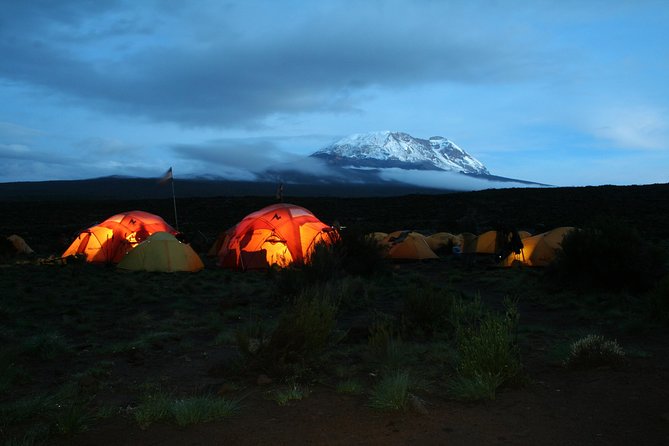
Mandara Hut is a group of mountain huts shared with other climbers. You have running water and toilets, plus a common dining room where Tusker’s cooks serve meals. The shared setup is practical, not private. If you prefer solitude, this can feel busy. If you like meeting people, it gives the first night a friendly, international feel.
The elevation gain begins here, even if the walking feels gentle. Keep your pace slow and steady. The goal is not to prove fitness on the first day. It is to arrive at camp with enough energy for the days ahead.
Day four: heath, moorland, and Horombo
The forest gives way to heath and moorland as you climb higher. The surroundings open up, and you get your first views of Mawenzi and Kibo, Kilimanjaro’s two major volcanic peaks.
This day is listed at about eight hours, so it is a longer outing than the approach to Mandara. Your pace should remain easy. The changing vegetation gives you a clear sense of how quickly conditions shift on the mountain.
Horombo Hut becomes your base for two nights. It sits at about 12,340 feet, high enough for altitude to matter but low enough to allow a useful acclimatization stop. You arrive in the afternoon, have time to rest, and eat dinner prepared by the mountain kitchen.
Horombo is one of the most important parts of the whole trip. You are not simply stopping there because the route requires it. You are giving your body time to respond before moving toward Kibo. For many climbers, this extra night is worth more than a faster itinerary.
More Marangu Route Climbs in Kilimanjaro
- Kilimanjaro climb, Marangu route (6-day)
★ 5.0 · 72 reviews - Climbing Kilimanjaro – Marangu Route
★ 5.0 · 65 reviews - Best Kilimanjaro Adventures 6 Days Marangu Route Experience
★ 5.0 · 18 reviews - Kilimanjaro Private Climbing in 6 Days Marangu Route
★ 5.0 · 16 reviews
Day five: the acclimatization day at Horombo
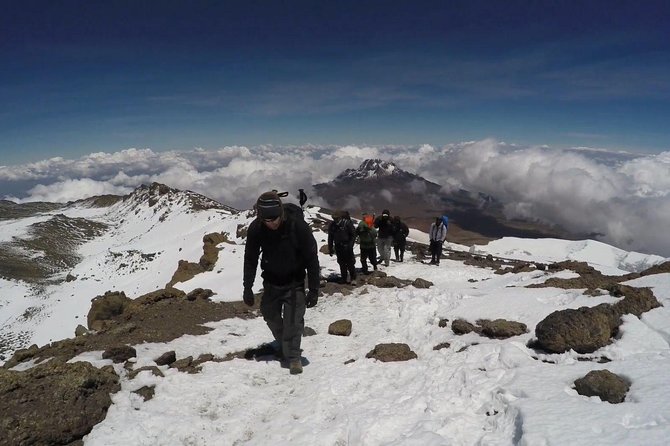
The extra day includes a short acclimatization hike, followed by a return to Horombo for lunch and a relaxed afternoon. This is a sensible design. You climb higher during the day, then sleep again at Horombo rather than moving your overnight camp higher too soon.
You may be tempted to use the afternoon for a hard workout or a long walk. Resist that urge. Rest, eat, drink, and pay attention to how you feel. Your guide’s altitude training matters most here, since headaches, nausea, unusual fatigue, or poor coordination should be taken seriously.
The day is also a useful mental break. The summit is still ahead, but you are not packing and unpacking for another camp. You can look across toward Mawenzi and Kibo, enjoy the views, and prepare for the more exposed terrain to come.
Day six: across the Kibo Saddle to Kibo Hut
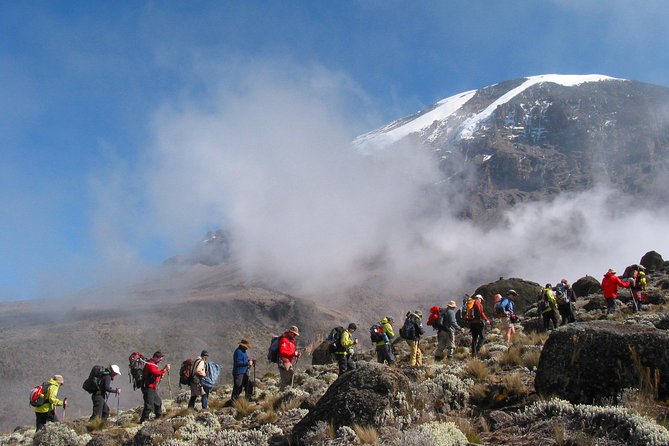
After breakfast, you leave the moorland behind and enter the alpine desert. The vegetation thins out, and the route crosses the barren Kibo Saddle between Mawenzi and Kibo Peaks.
This is a long, exposed day of about seven hours. The open terrain can make the walking feel more serious, even before the final climb begins. On a clear day, you may see Gilman’s Point on the crater rim, a landmark you will aim for during the night.
Kibo Hut sits on the slopes of Kibo at roughly 15,500 feet, based on the route profile implied by the itinerary. You arrive around mid-afternoon, eat dinner, and try to rest before the midnight summit attempt.
Sleep may be difficult. That is normal at this stage of a climb, but the early start still makes the evening important. Organize your summit clothing, headlamp, water, snacks, and trekking poles before lying down. You do not want to sort through a pack in the dark after a short night.
Day seven: the midnight climb to Uhuru Peak
This is the hardest day. Your guide wakes you shortly before midnight with hot tea and snacks, then the group begins its slow ascent over rocky scree.
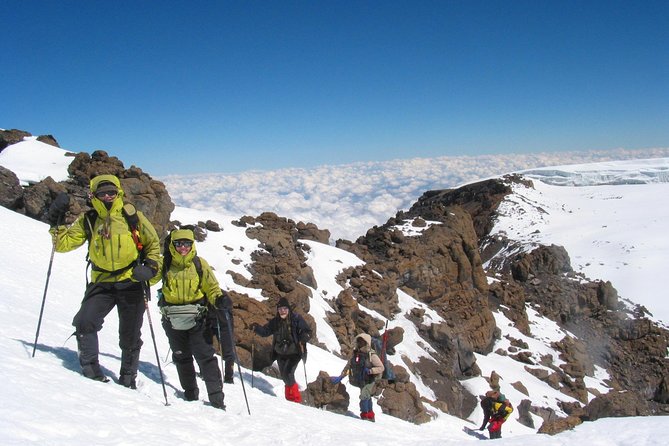
The first major goal is Gilman’s Point at the crater rim. The route is steep and tiring, and you gain altitude while walking in darkness. The sunrise views can be remarkable, with Mawenzi, the Kibo Saddle, and the plains below gradually appearing as the sky brightens.
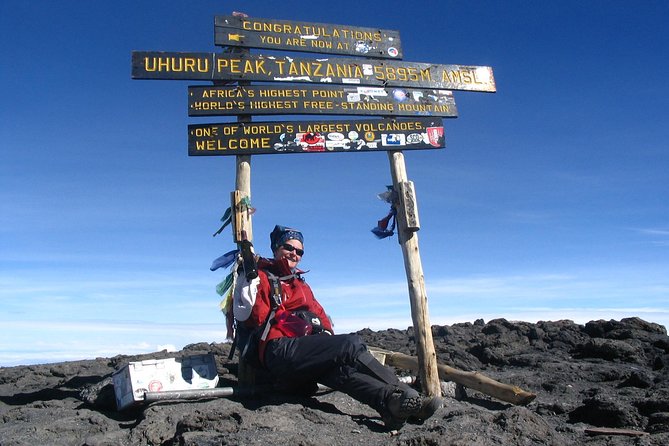
Reaching Gilman’s Point is a major achievement, but it is not yet Uhuru Peak. From the rim, the itinerary allows about two more hours to reach the summit at 19,340 feet, or 5,895 meters. Your pace will depend on weather, altitude, and how the group is coping.
At Uhuru Peak, you celebrate briefly before beginning the long descent. The summit section is listed at about 4.2 miles, or 6.7 kilometers, while the full day’s route back toward Horombo covers much more ground. That is why this day can feel punishing even after the summit photo.
You descend to Horombo for the night. The downhill section is easier on breathing but hard on tired legs. Take care with your footing, eat when food is offered, and tell your guide if you are struggling. The strongest part of this operation is its stated order of priorities: safety first, summit second.
Day eight: return through the forest to Moshi
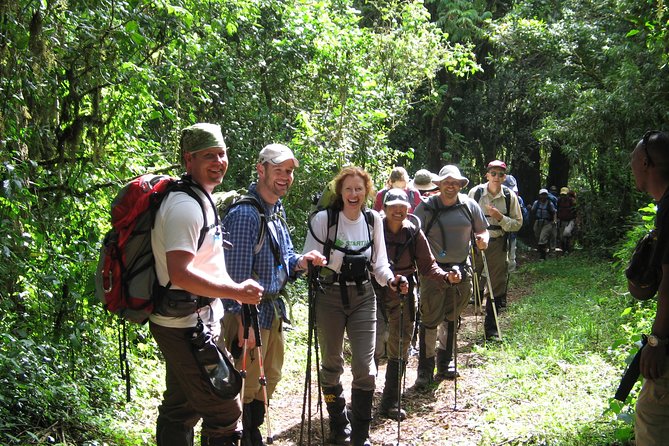
After breakfast, you walk down past Mandara Hut and continue to the national park gate. The route brings you back into the rain forest, so the final section feels cooler, greener, and more enclosed than the summit approach.
The listed walking time is about four hours, followed by a roughly 90-minute drive to Moshi. Tusker vehicles meet you at the gate and take you back to the hotel.
The reward is a proper shower, a comfortable bed, and a final climb celebration. Do not underestimate how welcome these simple comforts will feel after the summit day. This night also gives you a useful buffer before a flight or safari.
Day nine: departure or a Tanzania safari
The final day is open for departure or for continuing into Tanzania’s wildlife reserves. Tusker Trail has arranged East African safaris since 1983, so a safari extension fits naturally with this climb.
The provided plan does not name a particular park, safari length, or price. You should ask for those details separately rather than assuming they are part of the $5,699 climb.
A safari after Kilimanjaro can be a strong pairing. The climb gives you altitude, cold, and physical effort. A later wildlife trip offers a very different pace. Just leave enough recovery time before any demanding activity, since your legs may still be tired after the descent.
What the $5,699 price appears to cover
At $5,699 per person, this is not a budget Kilimanjaro climb. The value depends on how much weight you place on preparation, guide quality, food, safety systems, and ethical treatment of the mountain crew.
The package includes eight breakfasts, eight lunches, and seven dinners. It also includes park admission for the hiking days, hotel stays in Moshi, transportation to the route and back from the gate, guide support, mountain cooks, and the hut-based route structure described above.
Tusker also highlights custom walk-in tents and Culinary Institute of America-trained mountain chefs. On this Marangu itinerary, your overnight accommodation is in huts, but the broader operation’s camp equipment may support staff and meal service. Ask exactly what sleeping gear, duffel handling, and rental equipment are included for your departure.
Gear rental is not included. That can add a meaningful cost if you do not already own suitable cold-weather clothing, trekking equipment, or summit layers. Add those expenses, along with flights, visas, tips, insurance, and any safari extension, before deciding if the price fits your budget.
The company also says it pays its crew at a high level and provides pensions and medical benefits for them and their families. It supports community work through the local Lions Club, including a school for deaf children. If responsible tourism is important to you, these policies add value, though you should still ask how tipping and porter welfare are handled for your specific departure.
Guides, group size, and the human side
The maximum group size is 16 people. That is not a private climb, but it is small enough for guides to keep track of the group more easily than on a large commercial departure.
Names connected with the Tusker operation include Julian in Moshi and mountain leaders Urio and Pastorey. Katie in the United States has also been part of the company’s trip support. Your exact guide team may differ, so confirm names and guide-to-climber arrangements before departure.
The strongest practical point is the emphasis on altitude medical training. Kilimanjaro is not a technical rock climb, but altitude can make a straightforward trail dangerous. A guide who watches your symptoms and is willing to slow down or stop matters more than a guide who simply pushes for a fast summit.
The company’s history gives the operation depth, but your personal experience will still depend on the actual team assigned to your date. Ask direct questions about emergency procedures, daily pace, oxygen or medical equipment, and what happens if you need to descend early.
Who should choose this climb
I would look closely at this trip if you want the classic Marangu Route, prefer huts to tents, and value a slower acclimatization plan. The two nights at Horombo are a real advantage for anyone who wants more time before the summit.
It also suits people who like a group setting. The shared huts and dining rooms make the climb social, and a maximum of 16 provides company during long walking days.
This is less suitable if you want a private, quiet mountain experience or a short, low-cost climb. It is also not a good fit if you are unwilling to prepare physically, carry or rent proper gear, or accept that your guide may prioritize your safety over the summit.
Most people can participate according to the available booking information, but that is not the same as saying the climb is easy. You should be prepared for long days, high altitude, a midnight start, and a demanding descent.
Booking details worth checking
Pickup is offered, and the experience uses a mobile ticket. Free cancellation is available if you cancel at least 24 hours before the local start time. Changes or cancellations inside that window are not accepted for a refund.
The most important booking question is the schedule. The product is described as a 9-day climb, yet the overview asks you to check for an open 12-day trip start date. Confirm whether the 12-day reference applies to a different departure format, a longer version of the route, or a scheduling issue.
Also confirm the exact start date, hotel, gear arrangements, group size for your departure, and whether airport transfers are included. Those details can affect the true cost and the ease of your arrival.
Should you book Tusker Trail’s Marangu Route?
I would book this climb if you want a well-supported Kilimanjaro experience with hut accommodation, two nights at Horombo, serious guide preparation, and a strong food program. The plan gives you time to acclimatize instead of treating the summit as a race.
I would not book it without first resolving the 9-day and 12-day schedule difference, checking what equipment you must supply, and adding all extra costs to the $5,699 price. If those details work for you, Tusker’s long experience, altitude safety focus, crew support, and named mountain leadership make this a strong choice for a carefully organized climb.
FAQ
How long is the Kilimanjaro climb?
The experience is advertised as approximately 9 days, with the itinerary running from day one in Moshi through day nine. The overview also refers to a 12-day trip start date, so confirm the exact duration for your chosen departure.
Which Kilimanjaro route does this experience use?
It uses the Marangu Route, beginning at Marangu Park Gate and passing through Mandara Hut, Horombo Hut, and Kibo Hut before the summit attempt.
Where does the experience begin?
The climb begins in Moshi, Tanzania. You spend the first two days in Moshi before driving to Marangu Park Gate.
How many nights are spent at Horombo Hut?
You spend two nights at Horombo Hut. The second day includes a short acclimatization hike before returning to Horombo for lunch and rest.
What is the summit elevation?
Uhuru Peak is listed at 19,340 feet, or 5,895 meters.
What time does the summit climb begin?
Your guide wakes you shortly before midnight on day seven, and the summit climb begins around midnight from Kibo Hut.
Are meals included?
The package includes eight breakfasts, eight lunches, and seven dinners.
Is climbing equipment included?
No. Equipment and gear rental are not included in the price.
What is the maximum group size?
The maximum group size is 16 people.
Is cancellation free?
You can receive a full refund if you cancel at least 24 hours before the experience start time. Cancellations or changes made less than 24 hours before the local start time are not accepted.
More Marangu Route Climbs in Moshi
- 6 Days Climb Kilimanjaro Through Marangu Route
★ 4.5 · 15 reviews - Top 6 Days Mt. Kilimanjaro Bike trek Tour by Marangu-Kilema Route
★ 5.0 · 15 reviews - 6 Days Mount Kilimanjaro Trek Marangu Route
★ 5.0 · 15 reviews - 5 Days Marangu Route Kilimanjaro hiking
★ 5.0 · 13 reviews
More Kilimanjaro Climbs in Moshi
- Kilimanjaro climb, Lemosho Route (8-day)
★ 5.0 · 148 reviews - Kilimanjaro climb, Lemosho Route (6-day)
★ 5.0 · 129 reviews - Private Kilimanjaro Hike 7 Day Lemosho Route
★ 5.0 · 60 reviews - Best Kilimanjaro hiking day trip tour with Kilinge Adventures
★ 4.5 · 54 reviews
Just added around Moshi
- Mt Kilimanjaro 6 days Marangu route hike★ 5.0 · 3 reviews
- Wildlife Extravaganza: Manyara, Tarangire & Ngorongoro in 3 Days★ 5.0 · 3 reviews
- Private Cycle to Kilimanjaro Bike Park Safari★ 5.0 · 6 reviews
- 3 Days Private E-Bike Tour in West Kilimanjaro★ 5.0 · 3 reviews
- West Kilimanjaro cycling Adventures★ 4.5 · 8 reviews
- machame route★ 5.0 · 16 reviews
- Kilimanjaro Climb & Safari – Lemosho Route – 13 Day★ 5.0 · 10 reviews
- Kilimanjaro Climbing Umbwe Route★ 5.0 · 3 reviews
Marangu Route Climbs, compared.



Private Full Day Hiking Experience to Marangu Route
Read our review →
From Arusha/Moshi: Kilimanjaro Hike Marangu Route Day Trip
Read our review →
Mount Kilimanjaro Day Hike Through Marangu Route to Mandara Hut
Read our review →

Best Kilimanjaro Adventures 6 Days Marangu Route Experience
Read our review →
Kilimanjaro Private Climbing in 6 Days Marangu Route
Read our review →Browse the lists this tour appears in