
Reviewed · MARANGU ROUTE CLIMBS
Kilimanjaro Private Climbing in 6 Days Marangu Route
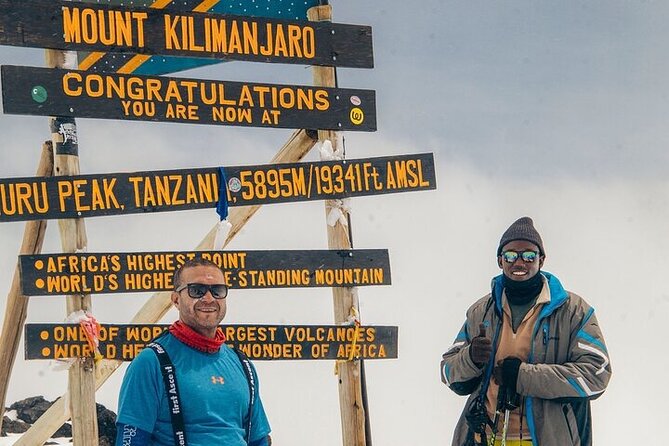
Kilimanjaro’s Marangu Route gives you a rare luxury on Africa’s highest mountain: a bed in a wooden hut each night instead of a tent. Over six days, you walk from wet rainforest to open moorland, a stark high-altitude saddle, and finally the crater rim before pushing on to Uhuru Peak.
I like the built-in acclimatization day at Horombo Huts, and I like the strong safety setup: guides with at least eight years on the mountain, Wilderness First Responder certification, daily health checks, and emergency oxygen. The private format also lets your guides adjust the pace to your group.
The main drawback is the schedule. Summit night is brutally long, with a midnight-to-2 a.m. start and up to 14 hours of walking on Day 5. Six days is workable, but it leaves less room than longer routes for your body to adjust to altitude.
Key points at a glance
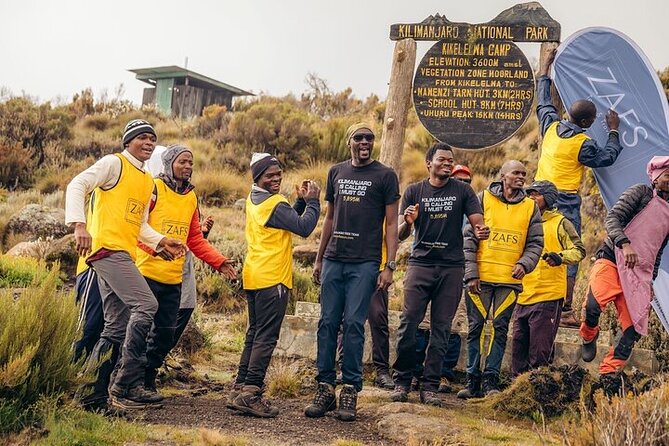
- Hut-based trekking: Sleep in A-frame wooden huts at Mandara, Horombo, and Kibo rather than camping.
- A useful acclimatization day: Spend a second night at Horombo and hike toward Mawenzi or Zebra Rocks.
- Private group format: Only your own group participates, with support from guides, cooks, and porters.
- Strong mountain support: The advertised average ratio is four support staff for each climber.
- Serious summit day: Prepare for a midnight ascent, heavy scree, possible snow, and a long descent.
- Good package value: The $2,000 price includes park fees, huts, meals, water, transfers, rescue fees, hotel accommodation, and a summit certificate.
Why the Marangu Route suits some climbers
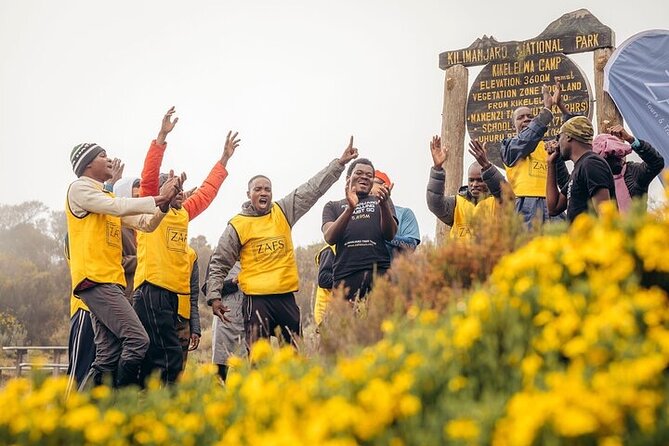
Marangu is often chosen because it uses huts and follows a fairly direct route toward Kibo. That makes it appealing if you prefer a roof, a simple sleeping setup, and fewer pieces of camping gear to manage.
You should not mistake the hut arrangement for an easy climb. Kilimanjaro still rises to 5,895 meters, and the hardest part is the altitude, not just the distance. The route climbs steadily for several days before the summit attempt, with cold, thin air and a demanding final ascent.
The six-day plan includes one full acclimatization day at Horombo. That is a real strength. You can rest there or walk higher toward Mawenzi base camp and Zebra Rocks before returning to sleep at the same elevation. This helps your body adjust and gives you a better sense of how altitude affects your breathing, sleep, appetite, and energy.
The tradeoff is that you return by the same general route. You do not get the changing scenery of a route that ascends one side of the mountain and descends another. For many climbers, the huts and extra Horombo night matter more than variety.
More Marangu Route Climbs in Kilimanjaro
- Kilimanjaro climb, Marangu route (6-day)
★ 5.0 · 72 reviews - Climbing Kilimanjaro – Marangu Route
★ 5.0 · 65 reviews - Best Kilimanjaro Adventures 6 Days Marangu Route Experience
★ 5.0 · 18 reviews
Day 1: Marangu Gate to Mandara Huts through rainforest
Your climb begins with about a 60-minute drive from Moshi to Marangu. At Kilimanjaro National Park Gate, the crew handles permits and entry formalities while you watch porters and climbing teams organize their loads.
The first walking section takes about four hours. The trail runs through rainforest, with winding paths, wet ground, and possible mud. Lower on the mountain, the route can be slippery, so rain gear and trekking poles are more than nice extras. They can make the first day safer and less tiring.
This is a pleasant way to begin. Your guide can point out local plants, wildlife, and the change in vegetation as you gain height. The forest feels enclosed and damp, a sharp contrast to the open high country you reach later.
You spend the night at Mandara Huts, a group of wooden A-frame buildings in a forest clearing. Hut accommodation removes the need to pitch a tent, but you still need a warm sleeping bag and personal trekking equipment. The package covers the hut fees, not your own gear.
Day 2: Mandara to Horombo and the first big views
After breakfast, you leave the rainforest and enter heathland. The vegetation becomes shorter and more unusual, with giant lobelias and groundsels mentioned as highlights along the route.
The walking time is about seven hours. The trail keeps climbing, then opens into moorland where small shrubs replace the thicker forest. You stop for lunch along the way, with views toward Mawenzi, one of Kilimanjaro’s distinctive volcanic peaks.
Horombo Huts sit beneath the Kibo summit area. Temperatures drop as afternoon turns toward evening, so keep your warm layers easy to reach rather than buried in your duffle bag.
This day may feel manageable at first, but the altitude begins to matter. Walk slowly, drink the provided water, and follow the guide’s instructions on pace and rest. The crew carries the main bags, but you still carry the personal items you need during the day.
Day 3: Horombo acclimatization and Zebra Rocks
Day 3 is the most important design feature of this itinerary. You remain at Horombo for a second night, giving your body extra time to adjust before the higher camps and summit push.
You can rest at the huts, but the recommended choice is a shorter hike toward Mawenzi base camp, passing Zebra Rocks. The outing takes about four hours. You climb higher during the day, then return to sleep at Horombo, which gives you useful exposure to altitude without moving your sleeping place higher.
I would treat this as an active recovery day, not a spare day to waste. The walk helps you learn how your body reacts to the elevation, and your guide can monitor your condition through the daily health checks.
This is also a good time to ask practical questions. Check your layers, gloves, headlamp, water bottles, boots, and trekking poles. Small gear problems become large problems during the summit night, when you are cold, tired, and walking in darkness.
More Marangu Route Climbs in Moshi:
- 6 Days Climb Kilimanjaro Through Marangu Route
★ 4.5 · 15 reviews - Top 6 Days Mt. Kilimanjaro Bike trek Tour by Marangu-Kilema Route
★ 5.0 · 15 reviews - 6 Days Mount Kilimanjaro Trek Marangu Route
★ 5.0 · 15 reviews - 5 Days Marangu Route Kilimanjaro hiking
★ 5.0 · 13 reviews
Day 4: Horombo to Kibo across the high saddle
After breakfast, the route crosses the open saddle between Mawenzi and Kibo. The heathland fades into a stark, almost moonlike setting, with little shelter and fewer visual distractions.
The day takes about seven hours. You stop for lunch before continuing across the broad saddle toward Kibo Hut. The final water point is at about 4,130 meters, so pay attention to your guide’s instructions and carry enough water for the section ahead.
At Kibo Hut, the summit is still about 1,195 meters higher. That figure does not sound extreme on paper, but altitude changes the meaning of every step. You arrive, eat, organize your summit clothing, and try to sleep early because the climb begins around midnight to 2 a.m.
Kibo is a basic high-altitude stop, and the conditions are colder and more exposed than at Horombo. This is when the value of a private group becomes clear. Your guide can focus on your pace, your symptoms, and your readiness rather than managing a large mixed group.
Day 5: The midnight climb to Gillman’s Point and Uhuru Peak
Day 5 is the heart of the trip and the toughest day by far. You leave between midnight and 2 a.m., usually after only a short period of rest.
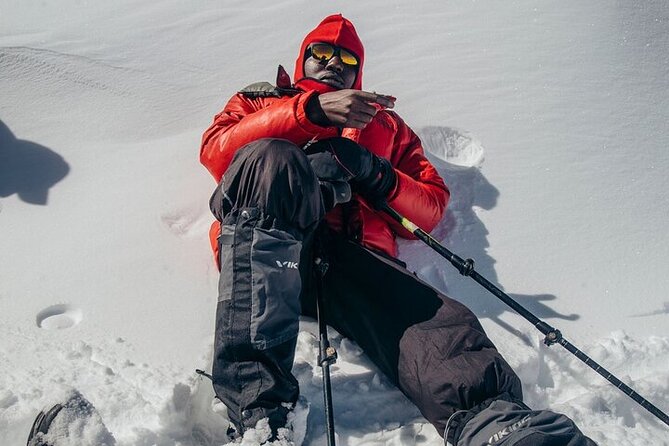
The trail rises through switchbacks over heavy scree. Snow is possible, and the darkness makes the climb feel even more serious. Your guides set a slow pace and help you stay focused, but no guide can remove the physical strain of this section.
The first major goal is Gillman’s Point on the crater rim. Reaching it brings a sunrise reward and a major psychological lift. Stronger climbers may see the sunrise from higher on the route, but you should focus on your own pace rather than racing other people.
From Gillman’s Point, you continue for roughly another hour toward Uhuru Peak, the summit of Kilimanjaro. The final section can include snow and cold conditions. Keep your gloves, hat, warm layers, and water close at hand.
After the summit, you descend toward Kibo Hut, rest briefly, collect your belongings, and continue down toward Horombo. The full day is listed at about 14 hours. That number includes the summit climb, descent, and movement toward the lower hut, so you need both physical preparation and mental patience.
The emergency oxygen cylinder and first aid kit are important safeguards, but they are not a substitute for insurance or sensible decisions. You must have insurance that covers trekking up to 6,000 meters. If you develop serious altitude symptoms, tell the guide immediately and follow the crew’s advice, even if that means stopping short of the summit.
Day 6: Descent to Marangu Gate and return to Moshi
After breakfast, you take part in a farewell ceremony with the guides, cooks, and porters. It is a fitting moment to recognize the crew, whose work includes carrying equipment, preparing meals, delivering duffle bags, and helping the climb run day by day.
The descent takes about seven hours. You stop at Mandara Huts for lunch before continuing through the rainforest to Marangu Gate.
Descending can be harder than expected. Your knees and feet have already worked through the summit day, and the lower trail may be wet, muddy, and steep. Gaiters help keep mud and water out of your boots, while trekking poles reduce strain and improve balance.
At the gate, you receive a certificate documenting your summit ascent. A vehicle then takes you back to your Moshi hotel, about an hour away. The package includes transfers to and from the mountain, along with airport pickup and drop-off.
Guides, health checks, food, and crew support
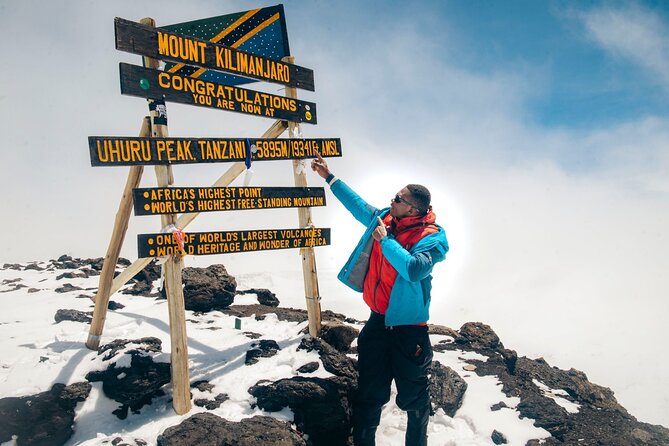
The company describes its guides as having at least eight years of mountain experience and Wilderness First Responder certification. The guiding team is also described as having climbed the mountain more than 100 times collectively, which matters most during the summit attempt, when weather, fatigue, and altitude require calm decisions.
Guides Alex and Moshi have been associated with successful six-day Marangu climbs, so you can ask in advance who will lead your particular departure. The guide is not only there to point out the trail. You rely on this person for pacing, health monitoring, route judgment, and encouragement during the long summit night.
Daily health checks are included. That is one of the details I value most because altitude problems can develop gradually. A regular check gives you a set time to report headaches, nausea, unusual fatigue, poor appetite, or other concerns.
Meals and drinking water are included on the mountain. The food has received especially strong praise, with repeated descriptions of generous, tasty meals that provide energy during the trek. Snacks are not included, so bring your own trail food for quick calories between meals.
The advertised average support ratio is four crew members for every climber. That support includes guides, cooks, and porters. You should still pack thoughtfully and respect the porters’ work by keeping your personal day pack reasonable.
Tipping is not included. Set aside money for guides, cooks, and porters, and ask the operator before departure about its preferred tipping practice and group arrangements.
What the $2,000 price covers
At $2,000 per person, this is not a bare-bones park entry and guide package. The price includes two nights of hotel accommodation on a bed-and-breakfast basis before and after the climb, airport pickup and drop-off, mountain transfers, national park entry, hut fees, climbing fees, rescue fees, meals, drinking water, first aid access, emergency oxygen, crew support, and a summit certificate.
That bundle has practical value. You are not paying separately for each park charge or arranging your own transport from Moshi to the gate. The pre-climb hotel stay also gives you a base for gear checks and final preparation, while the post-climb night lets you return to a proper bed after the long descent.
Confirm the exact hotel-night arrangement when booking, since the wording indicates accommodation before and after the climb but does not spell out each night’s placement. Also ask what is covered in airport transfers if your flight time changes.
You pay extra for international flights, visas, meals and drinks away from the mountain, snacks, personal trekking gear, insurance, and crew tips. The insurance requirement is especially important. Your policy must cover trekking to 6,000 meters, not just ordinary sightseeing or low-altitude hiking.
Preparation: what you need to bring
The operator does not provide your personal trekking gear, so plan carefully. At minimum, your packing needs to account for wet rainforest, cool moorland, freezing summit conditions, and muddy descent trails.
Useful priorities include:
- Reliable rain gear for Day 1 and the descent
- Warm summit layers, gloves, and a hat
- A suitable sleeping bag for hut nights
- Sturdy trekking boots
- Trekking poles
- Gaiters for mud and wet ground
- A headlamp for the midnight summit start
- Personal snacks
- Water bottles or a hydration system
- Personal medication and any preferred blister care
The exact gear list is not supplied, so request one before you arrive. ZAFS Tours has an outdoor shop, which may make equipment checks or rentals easier, but confirm availability and cost directly.
You should have a moderate level of physical fitness. You do not need to be an expert climber based on the information provided, but you do need to handle repeated uphill walking, long descents, cold, early starts, and a very long summit day.
Who should book this private climb
I would choose this trip if you want a private group, hut accommodation, organized transport, and a built-in acclimatization day without moving to a longer itinerary.
It suits friends, couples, and families who want the guide’s attention kept within their own group. The experience also fits first-time high-altitude climbers who want strong support, provided they prepare properly and accept that the summit is never guaranteed.
You may prefer a longer climb if you are concerned about altitude or want more gradual acclimatization. Six days is a compact schedule, and Day 5 is demanding even for fit people.
The package is also a good match if food quality matters to you. The mountain meals are a repeated strength, and a cook is part of the support team. That can make a real difference when you need steady energy but have little appetite at altitude.
Booking details and cancellation
Pickup is offered, and the stated starting point is Kilimanjaro Airport and Kilimanjaro National Park in Tanzania. The listed start time is 12 a.m., which may reflect the summit-night timing or a general system setting, so confirm your actual pickup and first-day schedule before arrival.
This is a private activity, and only your group participates. Confirmation is provided at booking. The experience offers free cancellation if you cancel at least 24 hours before the local start time. Changes or cancellations inside 24 hours are not accepted for a refund, and a minimum group size may apply.
Should you book this Kilimanjaro climb?
Book it if you want the simpler logistics of Marangu, the comfort of huts, a private group, strong crew support, and one dedicated acclimatization day at Horombo. The combination of meals, water, park charges, transfers, health checks, rescue fees, oxygen, and hotel nights gives the $2,000 price solid practical value.
Think twice if you dislike long summit days or prefer a slower altitude schedule. The midnight ascent and 14-hour Day 5 are serious. Go in with proper rain gear, warm layers, poles, snacks, insurance to 6,000 meters, and a willingness to turn back if your health requires it.
For a prepared climber who wants a well-supported six-day attempt and does not mind returning by the same route, this is a sensible Marangu choice.
FAQ
How long is the Kilimanjaro climb?
The climb lasts approximately six days. Walking times range from about four hours on the first and acclimatization days to about 14 hours on the summit day.
Where does the climb start and finish?
The route begins at Marangu Gate in Kilimanjaro National Park after transport from Moshi. It ends at Marangu Gate, followed by a vehicle transfer back to your Moshi hotel. Airport pickup and drop-off are included.
Do I sleep in tents or huts?
You sleep in wooden A-frame mountain huts at Mandara Huts, Horombo Huts, and Kibo Hut. Personal sleeping equipment is not included, so you need to bring or arrange your own gear.
Is an acclimatization day included?
Yes. Day 3 is a second night at Horombo Huts. You can rest or hike toward Mawenzi base camp and Zebra Rocks before returning to Horombo.
Are meals and water included?
All meals and drinking water on the mountain are included. Meals and drinks away from the mountain are not included, and you must bring your own snacks.
What insurance do I need?
You must have travel insurance that covers trekking up to 6,000 meters. Rescue fees are included in the climb, but personal trekking insurance is still required.
More 6-Day Experiences in Moshi
- Kilimanjaro climb, Lemosho Route (6-day)
★ 5.0 · 129 reviews - 6 Days 5 Night Safari
★ 5.0 · 57 reviews - The Best of Machame Route in 6 Days: Your World’s Summit Guide
★ 5.0 · 44 reviews - 6 Days Machame Route Kilimanjaro Climbing
★ 5.0 · 42 reviews
Just added around Moshi
- Mt Kilimanjaro 6 days Marangu route hike★ 5.0 · 3 reviews
- Wildlife Extravaganza: Manyara, Tarangire & Ngorongoro in 3 Days★ 5.0 · 3 reviews
- Private Cycle to Kilimanjaro Bike Park Safari★ 5.0 · 6 reviews
- 3 Days Private E-Bike Tour in West Kilimanjaro★ 5.0 · 3 reviews
- West Kilimanjaro cycling Adventures★ 4.5 · 8 reviews
- machame route★ 5.0 · 16 reviews
- Kilimanjaro Climb & Safari – Lemosho Route – 13 Day★ 5.0 · 10 reviews
- Kilimanjaro Climbing Umbwe Route★ 5.0 · 3 reviews
Marangu Route Climbs, compared.



Private Full Day Hiking Experience to Marangu Route
Read our review →
From Arusha/Moshi: Kilimanjaro Hike Marangu Route Day Trip
Read our review →
Mount Kilimanjaro Day Hike Through Marangu Route to Mandara Hut
Read our review →

Best Kilimanjaro Adventures 6 Days Marangu Route Experience
Read our review →
Browse the lists this tour appears in