
Reviewed · MARANGU ROUTE CLIMBS
Kilimanjaro Climb Marangu Route 6 days
Kilimanjaro’s Marangu Route gives you a classic, hut-based climb to Uhuru Peak without camping in tents. Over six days, you walk from tropical forest to heath, alpine desert, and the frozen upper slopes of Kibo, with an extra day at Horombo to help your body adjust.
I like the route’s clear rhythm: comfortable hut nights replace tent pitching, and the Mawenzi Ridge walk gives you useful acclimatization rather than leaving you idle. I also like the private format, filtered water, hot wash water, and fair-wage policy for the mountain crew. The main catch is the summit schedule. The midnight start, cold, steep scree, and long descent make this a serious mountain trip, not a casual walk.
Key points before you book
- Six days on the Marangu Route: Walk from Marangu Gate through rainforest, moorland, the Saddle, and Kibo’s arctic summit zone.
- A full acclimatization day at Horombo: Hike toward Mawenzi Ridge and return to the same hut rather than gaining sleeping altitude.
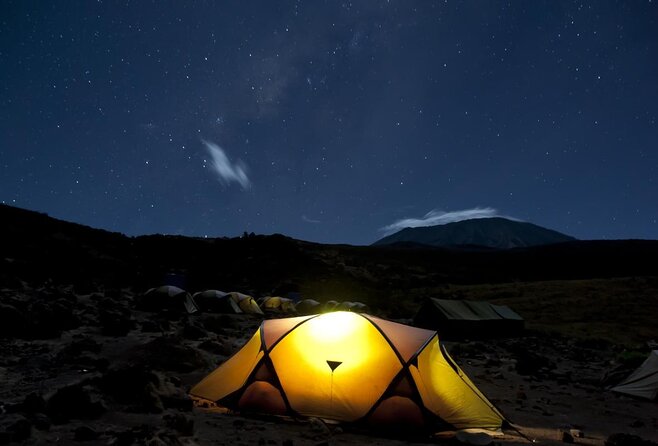
- Hut accommodation: The route uses Mandara, Horombo, and Kibo huts, which may appeal to you if carrying a tent and sleeping outdoors is not your idea of fun.
- Midnight summit attempt: Reach Gillman’s Point around dawn, then continue toward Uhuru Peak at 5,895 meters.
- Private transportation and private group: Pickup is offered from Moshi, and only your own party takes part.
- $2,290 includes the main climbing services: Meals, filtered water, hot wash water, transport, taxes, and crew wages are included, while flights, visas, insurance, drinks, and personal gear are not.
Why the Marangu Route works for some climbers
The Marangu Route is often called the hut route, and that detail matters. You sleep in huts rather than tents, which gives the climb a more settled feel at the end of each hard day. You still need to cope with cold, altitude, long walks, and basic mountain conditions, but you do not need to build a tent camp every evening.
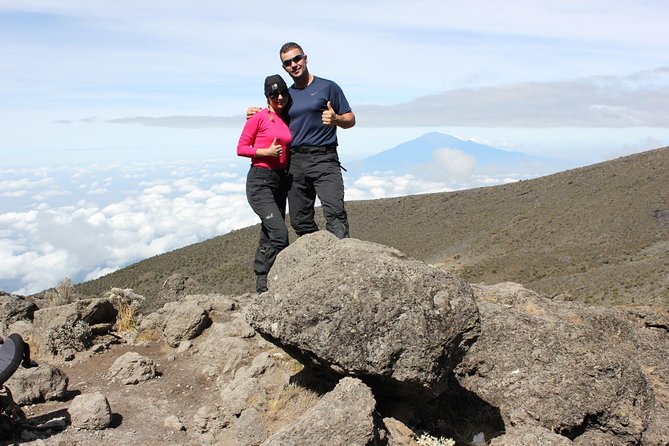
The route also gives you a striking change of scenery. The opening walk passes through tropical rainforest, where blue monkeys may appear near the upper edge of the trees. Higher up, the vegetation thins into heath and moorland. By Day 4, the trees are gone and you cross the broad, pale Saddle between Kibo and Mawenzi.
I particularly like the added day at Horombo. On a shorter climb, your body gets less time to adjust before the summit attempt. Here, you walk toward Mawenzi Ridge, gain height during the day, then return to sleep at Horombo. That pattern gives you more time at altitude without making you spend the night even higher.
Still, six days is not a guarantee of reaching the summit. The itinerary moves at a steady pace, but the summit day remains demanding. You should be comfortable with long uphill walks and have a moderate level of physical fitness. Altitude can affect even fit people, so you need to take the guide’s instructions seriously and accept that turning back can be the right choice.
More Kilimanjaro Climbs in Kilimanjaro
- Kilimanjaro climb by Lemosho Route (7-day)
★ 5.0 · 651 reviews - Kilimanjaro climb, Machame Route (7-day)
★ 5.0 · 262 reviews - Kilimanjaro Climbing Lemosho Route 8 Days.
★ 5.0 · 186 reviews
Day 1: Marangu Gate to Mandara Hut
The climb begins with a drive from Moshi to Marangu Gate. Park formalities take place before you start walking, so the first day is not simply a case of stepping out of the vehicle and heading uphill.
The trail rises through rainforest for about 8 kilometers, from roughly 6,046 feet to 8,858 feet. The planned walking time is four to five hours. This is a manageable opening day, but the damp forest and steady ascent still give you a first taste of the climb.
Near the upper edge of the forest, you may see blue monkeys. The trail then opens out, offering broader views of the hills before you reach Mandara Hut. This first night is useful because it moves you above the busy lowland setting and puts you into the mountain routine: walk, eat, wash, rest, and prepare for the next stage.
You should not treat the short distance as permission to rush. A slow pace from the start helps preserve energy for the days ahead. The included filtered water is practical here, since staying hydrated becomes even more important as you gain height.
Day 2: Mandara Hut to Horombo Hut
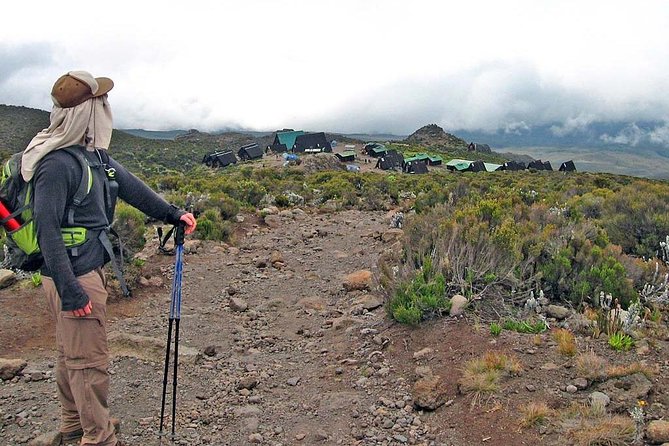
Day 2 takes you from 8,858 feet to about 12,205 feet over 12 kilometers. Plan on six to eight hours of walking as the forest gives way to open heath and high moorland.
This is the day when Kilimanjaro begins to feel properly high. The trees thin out, the air changes, and the route may give you your first clear views of Kibo and Mawenzi. These are two of the three volcanic peaks that form Kilimanjaro’s summit area.
Horombo Hut becomes your base for two nights. That extra night is one of the strongest features of this version of the route. Instead of immediately continuing toward Kibo Hut, you get a day to walk higher and return to sleep lower.
The distance is not extreme by ordinary hiking standards, but altitude changes the calculation. You may walk more slowly, take frequent pauses, and find that simple tasks require more effort than expected. The best approach is to keep a steady pace and avoid trying to prove anything during the first two days.
Day 3: Mawenzi Ridge acclimatization
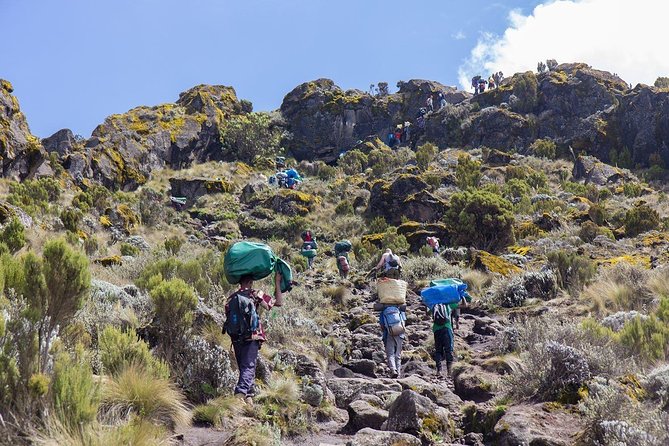
This is the day that gives the six-day schedule more breathing room. From Horombo, you walk toward Mawenzi Ridge, reaching about 14,400 feet before returning to the hut. The stated uphill walk takes two to three hours, with another one to two hours for the return.
The ridge provides views toward Kibo and Mawenzi, along with a closer look at the stark volcanic terrain. It is not just a sightseeing side trip. You spend time walking at higher altitude, then return to Horombo for the night, which is a useful way to prepare for the summit push.
The itinerary describes the habitat as heath, though the setting already feels much barer and more exposed than the lower mountain. You may find the air noticeably thinner here. Keep the day controlled. The goal is to acclimatize, not to drain your legs before the route heads across the Saddle.
This is also a good point to check your personal gear. The listed price does not cover trekking equipment, so you need to arrive with what you require for cold, wet, and high-altitude conditions. The provider supplies hot water for washing, but that is not the same as a full shower or hotel-style comfort.
More Marangu Route Climbs in Kilimanjaro
- Kilimanjaro climb, Marangu route (6-day)
★ 5.0 · 72 reviews - Climbing Kilimanjaro – Marangu Route
★ 5.0 · 65 reviews - Best Kilimanjaro Adventures 6 Days Marangu Route Experience
★ 5.0 · 18 reviews - Kilimanjaro Private Climbing in 6 Days Marangu Route
★ 5.0 · 16 reviews
Day 4: Horombo Hut to Kibo Hut across the Saddle
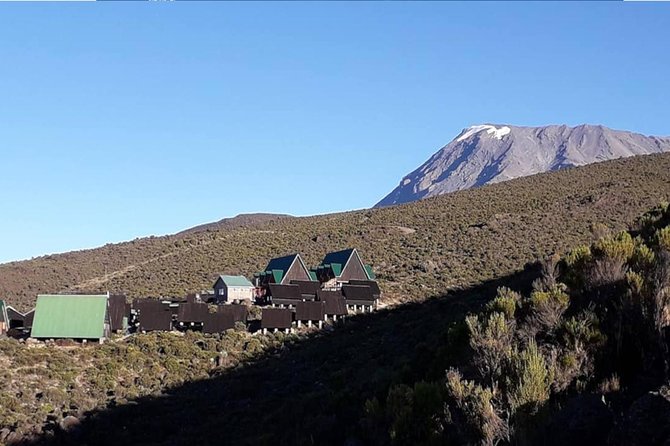
Day 4 covers about 10 kilometers and takes six to eight hours. You climb from approximately 12,205 feet to 15,430 feet, then cross the alpine desert known as the Saddle.
This broad, stark area lies between Mawenzi and Kibo. It can feel almost lunar, with little shelter and a long view toward the volcanic peaks. The route gradually gains height, but the thin air makes this a serious day. Kibo Hut sits at the foot of Kibo’s crater wall, and reaching it marks the end of the normal daytime walking portion.
Once at Kibo Hut, the plan is simple: rest and eat an early dinner. You need to use the afternoon carefully because the summit attempt begins around midnight. There is no sightseeing agenda to distract you, and that is a good thing. Eat what you can, organize your clothing and headlamp if you have one, and try to sleep.
Kibo Hut is high enough that many people find the night uncomfortable. The itinerary does not promise luxury, and the hut format should not be confused with a resort stay. You are there to rest before the hardest section of the climb.
Day 5: Gillman’s Point, Uhuru Peak, and the long return
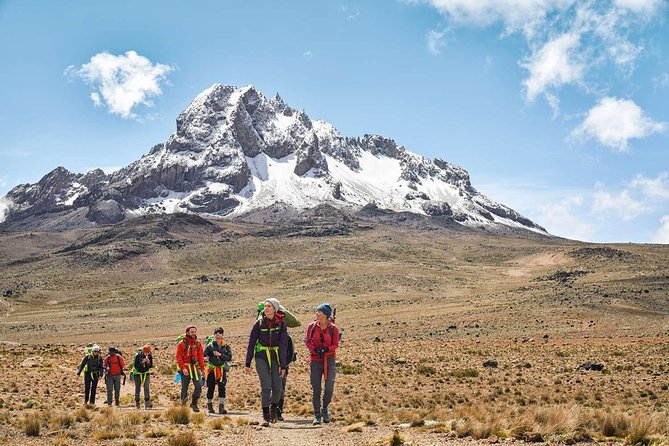
Day 5 is the main event and the hardest day by far. You leave Kibo Hut around midnight and climb in darkness toward the crater rim. The route covers about 6 kilometers from Kibo Hut to Uhuru Peak, with six to eight hours allowed for the ascent.
The steep scree is often easier when frozen, which helps explain the early departure. You climb slowly, using frequent short breaks rather than long stops that let your body cool down. At this altitude, wind and cold can be severe, and the darkness can make the effort feel even more demanding.
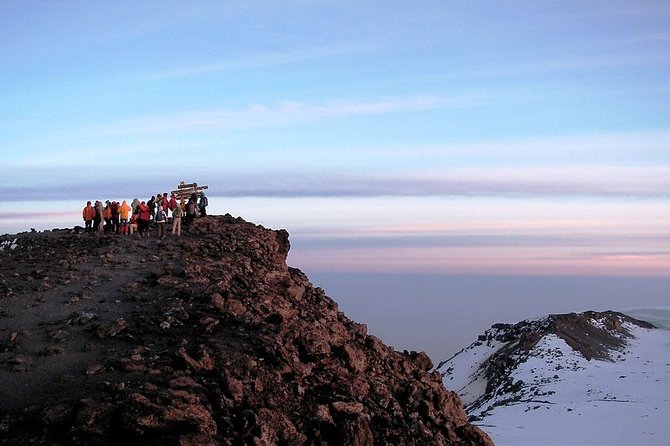
Gillman’s Point sits at roughly 18,600 feet. Reaching the crater rim around dawn can bring spectacular views as the sun comes up over the mountain. It is an important milestone, but it is not the final summit.
Uhuru Peak lies above Gillman’s Point at 19,341 feet, or 5,895 meters. You continue along the rim toward the top of Kibo. The final section is still demanding, and your pace may be slow. The peak is the reward, but so is the simple fact that you have crossed several climate zones and climbed from rainforest to the arctic summit zone.
After Uhuru Peak, you descend to Horombo Hut. The return covers about 16 kilometers and takes another four to five hours. That makes this an exceptionally long day, combining a midnight start, a high-altitude ascent, and a major descent.
This is the key practical warning for the entire trip: reaching the summit is only half of the day. You need enough energy to get back down. The descent may feel easier at first, but tired legs and loose scree can make it uncomfortable. Once at Horombo, you should expect to be ready for food and sleep rather than conversation.
Day 6: Horombo Hut to Marangu Gate
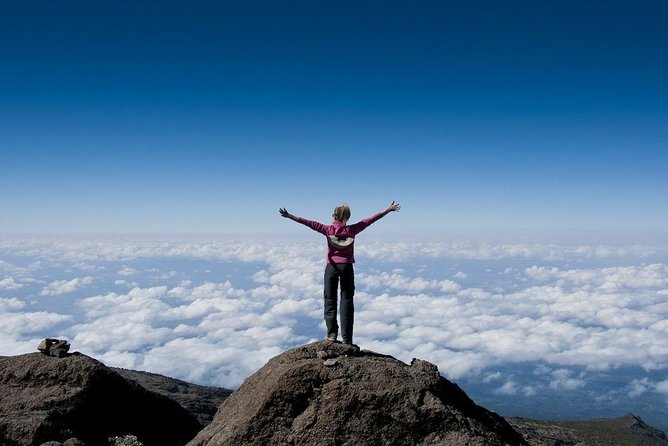
The final day is mostly downhill through the rainforest. You cover about 20 kilometers, or 12 miles, in five to seven hours, descending from approximately 12,205 feet to 6,046 feet.
After the stark upper mountain, the return to trees can feel dramatic. The forest brings shade and a warmer atmosphere, but the long descent can test your knees and feet. Trekking poles, if part of your personal equipment, can be useful on this kind of day, though personal gear is not included in the price.
At Marangu Gate, you collect summit certificates before a vehicle takes you back to your Moshi hotel. The included private transportation makes this finish easier. You do not need to arrange a separate transfer after six days of walking.
The end is practical rather than grand. The real sense of completion comes from moving through the mountain zones and returning to the gate under your own power.
What the $2,290 price covers
At $2,290 per person, this is a major travel expense, but the price includes many of the costs that can make a Kilimanjaro climb complicated. Taxes and fees, private transportation, filtered water, meals, hot wash water, and mountain crew wages are included.
You receive breakfast five times, lunch six times, and dinner six times. The meal count fits the six-day schedule, though you should remember that alcoholic and non-alcoholic drinks are not included. Personal expenses also remain your responsibility.
The fair-wage commitment for the mountain crew is important. A climb depends on porters, cooks, and guides, not just the person leading the group uphill. The provider states that wages follow standards approved by the Kilimanjaro National Park Authority. That gives you a useful point to consider when comparing a cheap package with a more responsible one.
The private format also adds value if you want your own group rather than a shared departure. You can travel with your companions alone, and pickup is offered from Moshi. The information does not state the exact vehicle schedule or group size, so confirm those details before booking if they affect your plans.
Flights, visas, travel insurance, and trekking gear are not included. Insurance deserves special attention because a high-altitude climb is not the same as a standard sightseeing excursion. Make sure your policy suits the activity before you arrive.
The human side of the climb
The strongest personal detail connected with this experience is the emphasis on the team. Shungu is named in past feedback as a leader who treated his crew with respect, with team members described as longtime friends. That matters on a mountain, where trust and cooperation affect the whole pace of the group.
You should also expect a warm, personal style from the provider. Shungu is described as helping with both the Kilimanjaro climb and a safari, and the tone suggests a small operator that values direct relationships rather than a faceless booking system.
That does not remove the need to ask sensible questions. Confirm what personal gear you must bring, how the guide handles altitude problems, and exactly what the huts provide. A friendly team is valuable, but clear safety planning is just as important.
Who should book this six-day climb
I would consider this route a good fit if you want the classic Marangu approach, prefer huts to tents, and can manage several hours of walking each day. The added Horombo acclimatization day makes it more appealing than a rushed itinerary.
It suits a private group that values direct attention and does not want to share the climb with unrelated people. It also works well if you are combining Kilimanjaro with a Moshi stay or other Tanzania plans, since transfers to and from the mountain are included.
I would hesitate if you dislike early starts, basic mountain accommodation, or long downhill walks. The summit day alone runs from a midnight departure to a return at Horombo after up to 20-plus kilometers of climbing and descending. A moderate fitness level is required, but you should prepare for more than a normal holiday hike.
The booking policy allows a full refund if you cancel at least 24 hours before the start time. Cancellations within 24 hours are not refunded, and changes within that period are not accepted.
Should you book the Marangu Route?
Book this climb if hut accommodation, a private team, an acclimatization day, and a well-defined route appeal to you. The strongest value comes from the combination of included meals, water, transfers, park fees, hot wash water, and crew wages, not from a low headline price.
Choose it with realistic expectations. The rainforest and sunrise at Gillman’s Point can be memorable, but the summit requires patience, cold-weather preparation, and the willingness to turn around if your health demands it. For a fit person who wants to climb Kilimanjaro without camping, this six-day Marangu plan is a sensible and appealing option.
FAQ
Where does the Kilimanjaro climb begin?
The experience begins in Moshi Urban, Tanzania. Pickup is offered, and the route itself starts at Marangu Gate inside Kilimanjaro National Park.
How long does the climb last?
The climb lasts approximately six days, with the final day ending back at the meeting point in Moshi after transport from Marangu Gate.
Is this a private tour?
Yes. Only your own group takes part in the activity.
Where do you sleep during the climb?
The route uses mountain huts at Mandara, Horombo, and Kibo. The provided information does not specify the exact hut facilities or sleeping arrangements.
What is the highest point reached?
The climb aims for Uhuru Peak, the summit of Kibo, at 19,341 feet, or 5,895 meters.
Is there an acclimatization day?
Yes. Day 3 is an acclimatization day based at Horombo Hut, with a hike toward Mawenzi Ridge and a return to Horombo.
What meals are included?
Breakfast is included five times, lunch six times, and dinner six times. Alcoholic and non-alcoholic beverages are not included.
Is drinking water provided?
Filtered water is provided throughout the trek.
Is trekking gear included?
No. Personal trekking gear is not included, so you must arrange your own equipment.
What happens if I need to cancel?
You can receive a full refund if you cancel at least 24 hours before the experience begins. Cancellations or changes made less than 24 hours before the start time are not accepted, and the amount paid is not refunded.
More Marangu Route Climbs in Moshi
- 6 Days Climb Kilimanjaro Through Marangu Route
★ 4.5 · 15 reviews - Top 6 Days Mt. Kilimanjaro Bike trek Tour by Marangu-Kilema Route
★ 5.0 · 15 reviews - 6 Days Mount Kilimanjaro Trek Marangu Route
★ 5.0 · 15 reviews - 5 Days Marangu Route Kilimanjaro hiking
★ 5.0 · 13 reviews
More Kilimanjaro Climbs in Moshi
- Kilimanjaro climb, Lemosho Route (8-day)
★ 5.0 · 148 reviews - Kilimanjaro climb, Lemosho Route (6-day)
★ 5.0 · 129 reviews - Private Kilimanjaro Hike 7 Day Lemosho Route
★ 5.0 · 60 reviews - Best Kilimanjaro hiking day trip tour with Kilinge Adventures
★ 4.5 · 54 reviews
Just added around Moshi
- Mt Kilimanjaro 6 days Marangu route hike★ 5.0 · 3 reviews
- Wildlife Extravaganza: Manyara, Tarangire & Ngorongoro in 3 Days★ 5.0 · 3 reviews
- Private Cycle to Kilimanjaro Bike Park Safari★ 5.0 · 6 reviews
- 3 Days Private E-Bike Tour in West Kilimanjaro★ 5.0 · 3 reviews
- West Kilimanjaro cycling Adventures★ 4.5 · 8 reviews
- machame route★ 5.0 · 16 reviews
- Kilimanjaro Climbing Umbwe Route★ 5.0 · 3 reviews
- Kilimanjaro Climb & Safari – Lemosho Route – 13 Day★ 5.0 · 10 reviews
Marangu Route Climbs, compared.



Private Full Day Hiking Experience to Marangu Route
Read our review →
From Arusha/Moshi: Kilimanjaro Hike Marangu Route Day Trip
Read our review →
Mount Kilimanjaro Day Hike Through Marangu Route to Mandara Hut
Read our review →

Best Kilimanjaro Adventures 6 Days Marangu Route Experience
Read our review →
Kilimanjaro Private Climbing in 6 Days Marangu Route
Read our review →Browse the lists this tour appears in