
Reviewed · MARANGU ROUTE CLIMBS
Kilimanjaro Climb – 6 Days Marangu Route
The Marangu Route gets you onto Kilimanjaro with hut beds instead of tents, a real advantage when you are climbing for six days and saving energy for summit night. You sleep at Mandara, Horombo, and Kibo, then make the hard pre-dawn push to Uhuru Peak.
I like the permanent huts and the full rest day at Horombo. I also like that airport transfers, park fees, meals, guides, porters, a cook, and basic emergency equipment are included. The tradeoff is clear: this is the shorter, steeper route, with less time to adjust to altitude and more chance of traffic because you use the same path up and down.
Key points at a glance
- Hut-based climbing: Sleep at Mandara, Horombo, and Kibo Huts rather than camping.
- A full acclimatization day: Horombo gives you time to rest and take short guided hikes before heading higher.
- A demanding summit night: You climb from Kibo Hut to Gilman’s Point and then Uhuru Peak, Africa’s highest point.
- A complete mountain team: Guides, porters, and a cook are included, with Alex, Rafael, and Manme named among the guiding team.
- Meals and safety equipment included: You receive three hot meals daily, portable oxygen, an oximeter, and a first-aid kit.
- Good value for a private climb: The $2,200 price includes major mountain costs and airport transfers, but not hotel meals, personal gear, insurance, or tips.
Why the Marangu Route appeals to time-conscious climbers
Kilimanjaro is not a technical climb in the mountaineering sense, but it is a serious high-altitude trek. The Marangu Route is popular because it reaches the summit in six days and uses permanent sleeping huts. That makes the trip feel more straightforward than a camping route.
You start at Marangu Gate in Kilimanjaro National Park and walk through several climate zones. The first day brings rainforest. Higher up, the trees thin into moorland, then the vegetation fades into a dry alpine desert around Kibo Hut. The scenery changes quickly, and the route gives you a clear sense of how high you are climbing.
The practical benefit of huts is comfort and simplicity. You do not need to sleep in a tent, and your porters do not need to carry the same camping setup required on other routes. Still, huts are not a private hotel room. Expect basic mountain accommodation, shared sleeping space, and an experience shaped by altitude, weather, and other climbing groups.
Marangu’s weakness is its schedule. The route gains height quickly, and the summit attempt begins from Kibo Hut at about 4,700 meters. A longer route can offer more gradual acclimatization. Here, the extra day at Horombo helps, but you still need strong fitness and a careful pace.
More Kilimanjaro Climbs in Kilimanjaro
- Kilimanjaro climb by Lemosho Route (7-day)
★ 5.0 · 651 reviews - Kilimanjaro climb, Machame Route (7-day)
★ 5.0 · 262 reviews - Kilimanjaro Climbing Lemosho Route 8 Days.
★ 5.0 · 186 reviews
Arrival in Moshi and the pre-climb briefing
The trip begins with pickup at Kilimanjaro International Airport and transport to your hotel in Moshi or Arusha. An overnight stay is provided before the mountain portion, giving you a chance to recover from your flight and organize your gear.
Your head guide meets you for a briefing about Kilimanjaro and the Marangu Route. This is also the time for a gear check and for arranging any equipment hire you need. Take this meeting seriously. A missing warm layer or poor footwear can become a major problem once you reach the cold, exposed upper slopes.
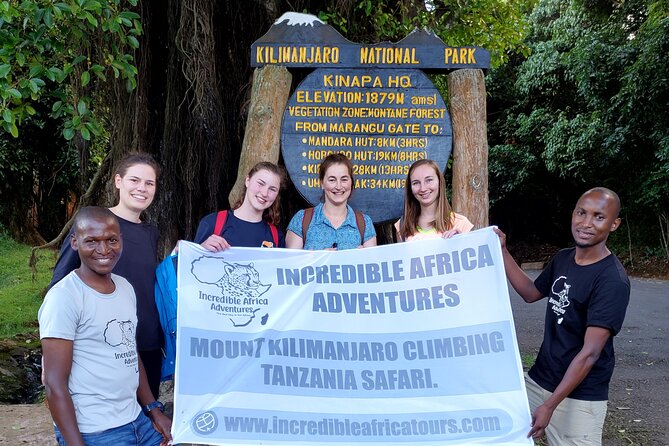
The operator is Incredible Africa Adventures. Octavian is identified as a key person in the company and has been praised for adjusting arrangements to suit individual needs. The guiding team named for the Kilimanjaro climb includes Alex, Rafael, and Manme. The support crew also includes a cook, with King receiving special praise for keeping the group well fed.
You are booking a private activity, so only your own group participates. That is useful if you want the pace, communication, and daily rhythm to fit your group rather than a large mixed party.
Day 1: Marangu Gate to Mandara Hut through rainforest
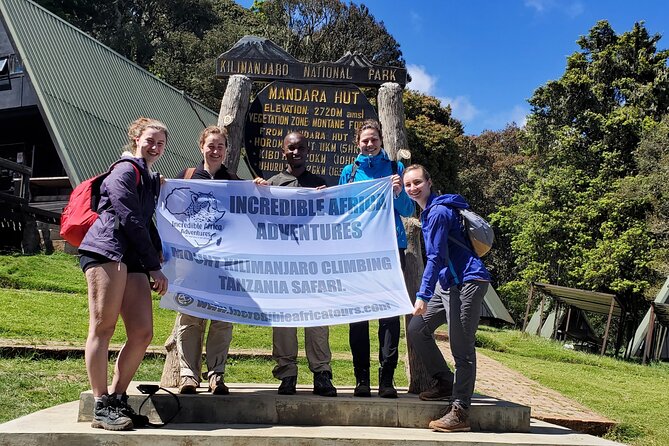
The first trek covers about 7 kilometers and takes roughly four to five hours. You gain around 950 meters, finishing at Mandara Hut at 2,750 meters.
The rainforest is the star of this stage. The path is shaded and green, and the steady climb introduces you to the rhythm of mountain walking without throwing you straight into the highest altitudes. You will likely feel the effort, but this is still the most forgiving walking day of the route.
Your main job is to start slowly. Do not race because the first day feels manageable. Save your legs, drink regularly, and listen to your guides. The guides are there not only to lead the route but also to watch how you are coping as the air gets thinner.
Mandara is your first hut stop. It marks the end of the forest section and the beginning of higher, more open country. The short distance makes this a useful first day, though the altitude gain is enough to remind you that Kilimanjaro is not an ordinary hill walk.
Day 2: Mandara Hut to Horombo Hut and the moorland
Day two is longer, with about 11 kilometers of walking over five to six hours. You gain another 1,030 meters and sleep at Horombo Hut, which sits at approximately 3,780 meters.
The forest gives way to moorland, with wider views and a more open feeling. This is where the route begins to look and feel like a high mountain trek. You are climbing steadily, so the correct pace matters more than speed.
Horombo is important because you will spend two nights here. The hut is both a stop on the way up and your base for the acclimatization day. By the time you arrive, you may feel tired, but do not treat the next day as wasted time. It is one of the most useful parts of this six-day plan.
The second day can be tougher than expected because the altitude gain is substantial. If you develop symptoms of altitude sickness, tell your guide early. A professional team can only respond properly if you describe how you feel.
More Marangu Route Climbs in Kilimanjaro
- Kilimanjaro climb, Marangu route (6-day)
★ 5.0 · 72 reviews - Climbing Kilimanjaro – Marangu Route
★ 5.0 · 65 reviews - Best Kilimanjaro Adventures 6 Days Marangu Route Experience
★ 5.0 · 18 reviews - Kilimanjaro Private Climbing in 6 Days Marangu Route
★ 5.0 · 16 reviews
Day 3: The Horombo acclimatization day
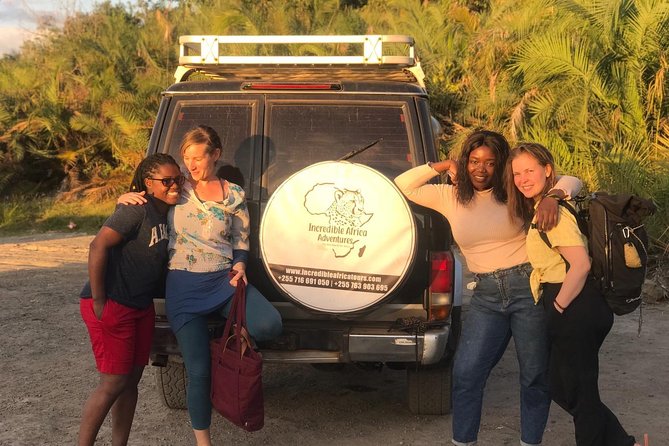
You spend a full day at Horombo Hut, resting and taking short guided hikes in the surrounding area. This break interrupts the upward push and gives your body more time to adjust before Kibo.
I like this feature of the schedule. Many people focus only on the summit day, but acclimatization is what makes summit day more realistic. The short hikes also keep your legs moving without forcing you to carry on to a new sleeping altitude.
This is a good day to check your clothing, water, snacks, and headlamp. You should also use it to ask questions. The guides can explain the next section and help you understand what to expect from the dry upper zone and the night climb.
Do not assume you must spend the whole day walking. Rest is part of the plan. The mountain is not impressed by heroic pacing, and your body needs time to catch up with the elevation.
Day 4: Horombo to Kibo Hut across the alpine desert
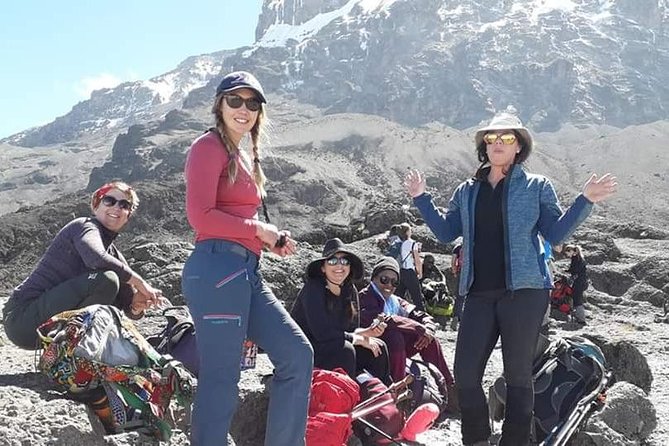
The fourth day covers approximately 12 kilometers in five to six hours. You gain about 920 meters and finish at Kibo Hut, at roughly 4,700 meters.
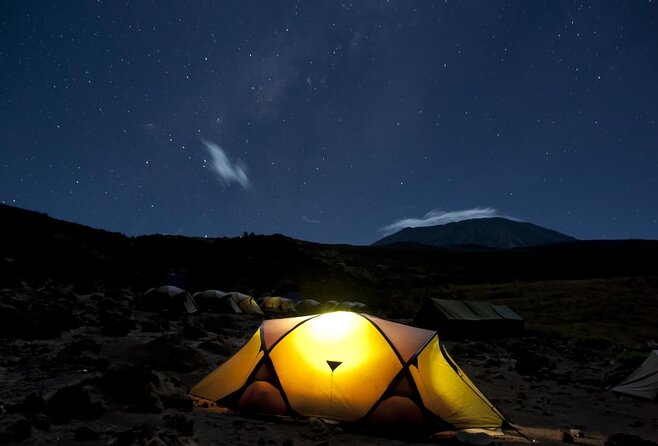
The setting changes again. The moorland fades into a dry, spare alpine desert, with little shelter and a much stronger sense of exposure. This is not the longest day by distance, but the altitude makes it demanding. You are moving toward the base of the summit attempt, and every step costs more.
Kibo Hut is the last sleeping point before Uhuru Peak. You arrive, eat, organize your summit clothing, and try to rest. The schedule does not offer much room for comfort or distraction. Your summit attempt begins after this short stay, so have your essentials ready before lying down.
The route’s short duration becomes most noticeable here. At 4,700 meters, you have had less time than on longer routes to adjust. That is the central reason the Marangu Route can have a lower summit success rate. The full day at Horombo helps, but it does not remove the altitude challenge.
Day 5: Kibo Hut to Gilman’s Point and Uhuru Peak
Summit day is the hardest part of the climb. The ascent from Kibo Hut takes about six to eight hours over 7 kilometers, with an altitude gain of approximately 1,145 meters.
You climb in the dark and tackle a steep slope toward the crater rim. The route passes Gilman’s Point before continuing toward Uhuru Peak. Reaching Gilman’s Point is a major milestone, but Uhuru is still ahead, so keep your focus and follow the guide’s pace.
The upper mountain can be cold, tiring, and mentally demanding. The supplied information does not give a precise summit departure time, so ask the operator during your briefing. You should also confirm how water, snacks, and extra clothing will be handled during this section.
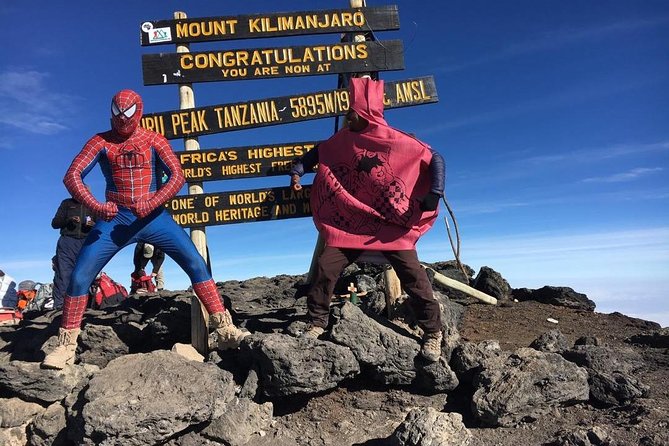
At Uhuru Peak, you have a short time on the Roof of Africa before beginning the descent. That brevity is normal at high altitude. The summit is a place to mark the achievement, take photos if conditions allow, and then start moving down before fatigue becomes a safety issue.
The descent from the summit takes another five to six hours, covering about 12 kilometers and losing roughly 2,175 meters. You return to Horombo Hut for the night. This makes the day extremely long, even though much of the descent feels easier on your breathing.
Your guides matter most here. The team named for this climb, Alex, Rafael, and Manme, is described as professional and caring, with a strong focus on anticipating group needs. That kind of support is valuable when you are tired, cold, and making decisions at altitude.
Day 6: Horombo Hut to Marangu Gate
The final day is a long downhill walk of about 18 kilometers. It takes roughly five to seven hours and loses around 1,878 meters.
You retrace the route through the moorland and rainforest. Descending is usually less demanding on your breathing, but it can be hard on knees and thighs. Trekking poles, if you use them, can be especially helpful on this day.
At Marangu Gate, you receive your Kilimanjaro summit certificate. You are then transferred back to your hotel in Moshi or Arusha. The airport transfer at the beginning and end is included, which removes one practical concern after a tiring climb.
The final day is not a gentle stroll. The distance is long, and your legs have already worked through the summit attempt. Plan to keep your pace steady and use the support of the crew rather than trying to prove you can finish quickly.
What the $2,200 price really covers
At $2,200 per person, this is not a bargain basement mountain trip, but the price covers many of the costly parts of a Kilimanjaro climb:
- Private transport to and from Kilimanjaro International Airport
- Accommodation
- Park fees and taxes
- Three hot meals daily while on the mountain
- Professional mountain guides
- Porters and a cook
- Portable oxygen tanks
- An oximeter
- An emergency first-aid kit
That list gives the package solid value, especially because park fees and staff support can make up a large share of a Kilimanjaro budget. Hot meals also matter more than they sound. At altitude, eating enough can be difficult, and a dedicated cook is a real part of the support system.
You still need to budget for hotel lunches, dinners, and drinks before and after the climb. Travel insurance, personal items, toiletries, and tips for the guides, porters, and cook are also separate.
Tips are not a minor detail. The crew does much of the work that makes a guided climb possible, so ask before departure how tipping is handled and plan accordingly. The package also does not say that personal climbing equipment is included. The gear check is the point to arrange rentals or confirm what you must bring yourself.
Food, support, and the human side of the climb
A Kilimanjaro trip depends on more than the route. You spend six days relying on a small team, and the quality of that team shapes the experience.
The guiding crew has received strong praise for being cheerful, caring, and attentive. Alex, Rafael, and Manme are the named Kilimanjaro guides, while King is singled out for the cooking. You should expect the cook and kitchen team to provide three hot meals each mountain day, though exact menus are not specified.
The reviews also describe porters as an important reason climbers reached the summit. That is worth keeping in mind when you pack. Bring what you need, but do not assume you should carry the full load yourself. Your guides can explain the porter arrangement and any baggage limits before you begin.
Octavian is described as responsive and good at adapting an adventure to individual needs. If you have dietary restrictions, a special pace requirement, or equipment concerns, raise them before arrival rather than waiting until the mountain.
Who should choose this six-day climb?
I would point this tour toward someone with limited time who wants the relative comfort of mountain huts. It suits a fit first-time climber who prefers a structured private trip and does not want to camp.
It can also work for a group that values a dedicated crew. The guides, porters, and cook are included, and the activity is private rather than shared with unrelated participants.
I would be more cautious if your main goal is the highest possible summit odds. The route is shorter and steeper, and it gives you less acclimatization time than longer Kilimanjaro routes. A full day at Horombo is helpful, but you still need to accept a demanding schedule and a very long summit day.
You should also be honest about your fitness. The program specifically requires a strong physical fitness level. The distances are manageable on paper, but altitude changes the effort. The final descent alone is about 18 kilometers, and summit day combines a long climb with a long return to Horombo.
Practical details before you commit
Confirmation is provided at booking. Pickup is offered, and the stated meeting point is Kilimanjaro International Airport, with the mountain portion beginning at Kilimanjaro National Park.
The experience is subject to weather and a minimum number of participants. If poor weather causes cancellation, you are offered another date or a full refund. The same applies if the minimum number is not reached.
You can cancel for a full refund up to 24 hours before the start time. Changes or cancellations made within 24 hours are not accepted for a refund, and the cut-off follows local time.
Ask the operator to confirm the exact hotel, sleeping arrangements in the huts, equipment rental prices, meal planning, and summit departure timing. Those details are not all specified, and they can affect what you pack and how comfortable you feel about the climb.
Should you book the Marangu Route?
Book this climb if you want six days on Kilimanjaro, hut accommodation, a private group, and a package that covers the major park and staff costs. The full acclimatization day at Horombo is a meaningful benefit, and the support setup includes guides, porters, a cook, meals, airport transport, and basic emergency equipment.
Think twice if you can afford more time and prefer a gentler altitude schedule. Marangu is the efficient choice, not the easiest choice. You use the same route up and down, so you may see more traffic, and the summit push from Kibo is steep and tiring.
For a fit climber with limited vacation time, this is a practical way to attempt Kilimanjaro. Go in prepared, pace yourself, budget for tips and personal gear, and treat the acclimatization day as essential rather than optional.
FAQ
How long is the Kilimanjaro Marangu Route climb?
The climb lasts approximately six days. The itinerary includes an arrival night at a hotel before the mountain trek, followed by six stated trekking days from Marangu Gate through the summit and back to the gate.
Where does the experience begin?
The meeting point is Kilimanjaro International Airport in Tanzania. Private airport transport to and from the airport is included.
Do I sleep in tents or huts?
You sleep in permanent mountain huts at Mandara Hut, Horombo Hut, and Kibo Hut. The Marangu Route is the only Kilimanjaro route in this program that uses hut accommodation rather than a camping setup.
Is food included?
Three hot meals daily are included while you are on the mountain. Hotel lunches, dinners, and drinks before and after the climb are not included.
What is included in the $2,200 price?
The price includes accommodation, park fees and taxes, private airport transport, mountain guides, porters, a cook, three daily mountain meals, portable oxygen tanks, an oximeter, and an emergency first-aid kit.
Can I cancel for a full refund?
Yes. You can cancel at least 24 hours before the experience start time for a full refund. Cancellations or changes made less than 24 hours before the start time are not accepted for a refund.
More Marangu Route Climbs in Moshi
- 6 Days Climb Kilimanjaro Through Marangu Route
★ 4.5 · 15 reviews - Top 6 Days Mt. Kilimanjaro Bike trek Tour by Marangu-Kilema Route
★ 5.0 · 15 reviews - 6 Days Mount Kilimanjaro Trek Marangu Route
★ 5.0 · 15 reviews - 5 Days Marangu Route Kilimanjaro hiking
★ 5.0 · 13 reviews
More Kilimanjaro Climbs in Moshi
- Kilimanjaro climb, Lemosho Route (8-day)
★ 5.0 · 148 reviews - Kilimanjaro climb, Lemosho Route (6-day)
★ 5.0 · 129 reviews - Private Kilimanjaro Hike 7 Day Lemosho Route
★ 5.0 · 60 reviews - Best Kilimanjaro hiking day trip tour with Kilinge Adventures
★ 4.5 · 54 reviews
Just added around Moshi
- Mt Kilimanjaro 6 days Marangu route hike★ 5.0 · 3 reviews
- Wildlife Extravaganza: Manyara, Tarangire & Ngorongoro in 3 Days★ 5.0 · 3 reviews
- Private Cycle to Kilimanjaro Bike Park Safari★ 5.0 · 6 reviews
- 3 Days Private E-Bike Tour in West Kilimanjaro★ 5.0 · 3 reviews
- West Kilimanjaro cycling Adventures★ 4.5 · 8 reviews
- machame route★ 5.0 · 16 reviews
- Kilimanjaro Climbing Umbwe Route★ 5.0 · 3 reviews
- Kilimanjaro Climb & Safari – Lemosho Route – 13 Day★ 5.0 · 10 reviews
Marangu Route Climbs, compared.



Private Full Day Hiking Experience to Marangu Route
Read our review →
From Arusha/Moshi: Kilimanjaro Hike Marangu Route Day Trip
Read our review →
Mount Kilimanjaro Day Hike Through Marangu Route to Mandara Hut
Read our review →

Best Kilimanjaro Adventures 6 Days Marangu Route Experience
Read our review →
Kilimanjaro Private Climbing in 6 Days Marangu Route
Read our review →Browse the lists this tour appears in