
Reviewed · MARANGU ROUTE CLIMBS
Kilimanjaro-marangu Route 6 Days Itinerary
Kilimanjaro’s Marangu Route gives you the mountain’s most direct hut-to-hut climb, with a warm start in tropical forest and a stark finish above the clouds. The six trekking days include an extra night at Horombo Hut, a useful pause before the long summit push.
I like the private airport transfers and the fact that you begin and finish at Kilimanjaro Mountain Resort. I also like the slow acclimatization plan, especially the extra Horombo day and the short walk toward Mawenzi.
The main caution is the schedule itself. It is advertised as a six-day climb but lasts about eight days with arrival and departure included, and summit day can take 13 to 15 hours. One published complaint also describes a late pickup and poor communication, so confirm all meeting details before you fly.
Key points to know before you book
- Six trekking days, eight days overall: Arrival, preparation, climbing, return, and airport departure are all part of the plan.
- Hut-based Marangu Route: You sleep at Mandara, Horombo, and Kibo huts rather than camping in tents.
- Extra acclimatization at Horombo: A short outing toward Mawenzi gives your body more time at altitude.
- Very long summit day: The climb from Kibo to the summit and back to Horombo takes about 13 to 15 hours.
- Uhuru Peak is 5,895 meters: You first reach Gillman’s Point at 5,685 meters, then continue along the crater rim if you still feel strong.
- Private group format: Only your own group takes part, with pickup available and mobile tickets provided.
What the $1,950 price really covers
At $1,950 per person, this is not a budget walk, but the price includes several expensive and useful pieces of a Kilimanjaro trip. You receive private transfers from Kilimanjaro International Airport to the resort and back again, park entry, mountain accommodation, meals during the climb, guides, and the private activity format.
That bundled setup matters. You do not have to arrange a separate airport taxi after a long international flight, and you have a base in Marangu before and after the climb. Dinner and breakfast are included at Kilimanjaro Mountain Resort on the first night, with a return stay after you come off the mountain.
The value depends on what you want. If you prefer a private departure, hut accommodation, and a ready-made route plan, the price is easier to justify. If you only need a basic mountain package and can arrange transfers yourself, you should compare the cost with other Marangu operators.
The information does not spell out every item that may affect your final budget. Ask directly about tips, drinks, personal gear, medical evacuation cover, and any accommodation or meals outside the stated package. The pre-climb briefing includes a check of mandatory medical coverage and travel insurance, so do not treat ordinary travel insurance as automatically sufficient.
More Marangu Route Climbs in Kilimanjaro
- Kilimanjaro climb, Marangu route (6-day)
★ 5.0 · 72 reviews - Climbing Kilimanjaro – Marangu Route
★ 5.0 · 65 reviews - Best Kilimanjaro Adventures 6 Days Marangu Route Experience
★ 5.0 · 18 reviews
Arrival at Kilimanjaro Mountain Resort in Marangu
You can arrive at Kilimanjaro International Airport at any time, with a private transfer arranged to take you to Kilimanjaro Mountain Resort. This is a practical first step because the resort is already in Marangu, close to the mountain gate and away from the rush of a same-day start.
The first evening is deliberately gentle. At 5:30 pm, you meet for a pre-climb briefing and equipment check. This is when you should raise any concern about boots, warm layers, rain gear, walking poles, or anything else you will rely on above the forest.
The team also confirms your medical coverage and travel insurance. That may sound like paperwork, but it is an important safety check for a high-altitude trip. You should arrive with the policy details available, not buried in an email you cannot open.
Dinner and breakfast are included at the resort. The property is described as being on the lower slopes of Kilimanjaro, so the first night gives you a calmer setting for rest and preparation rather than a hurried transfer straight into the park.
One detail needs clarification before booking: the general meeting time is listed as 8:30 am, while the first evening briefing is listed for 5:30 pm. Ask the operator which time applies to your arrival day and transfer plan.
Day 2: Marangu Gate to Mandara Hut, 2,700 meters
After breakfast, you make the short transfer from the hotel to Marangu National Park Gate. Park formalities come first, then you begin walking through tropical rain forest toward Mandara Hut.
This opening section is a good introduction to the route because the forest gives you shade and a gradual start. It is also the part where a slow rhythm matters. You may feel fresh at the gate, but using that energy too quickly can make the higher days harder.
The walk to Mandara takes about five to six hours. Once there, you have dinner and sleep at the hut. The schedule also allows time to rest and enjoy the forest around camp, which is useful if the walk takes longer than expected.
Marangu is known for hut accommodation, but do not confuse a hut with a hotel. The supplied details do not describe room arrangements or facilities at Mandara, so ask what bedding and shared amenities are provided. Carrying your own basic overnight items remains sensible unless the operator confirms otherwise.
Day 3: Mandara to Horombo through moorland
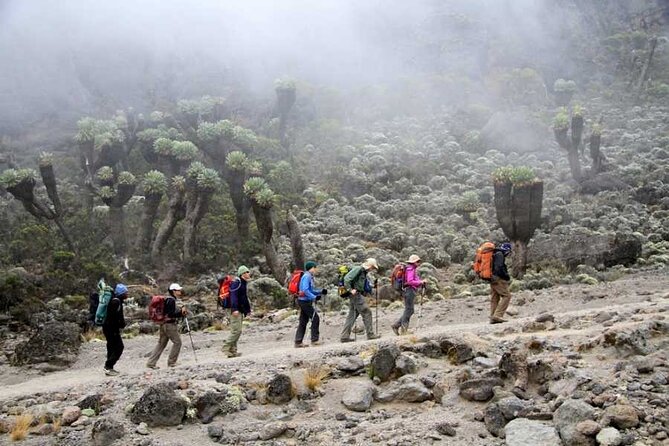
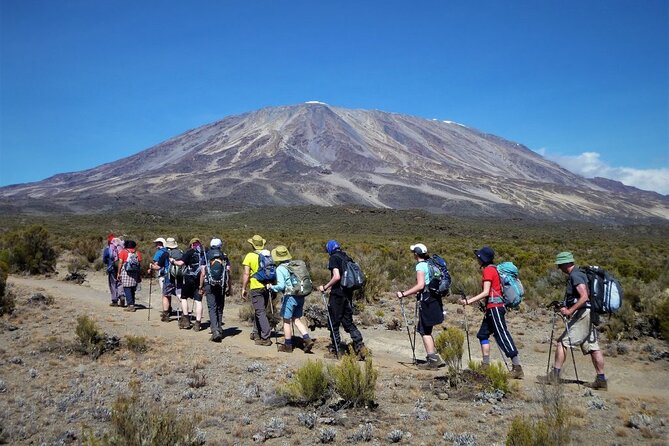
The trail begins with a steeper section through the forest, then opens onto moorland. In clear weather, you may see Kibo and Mawenzi, the two major peaks that shape the upper mountain.
The walk to Horombo Hut takes about four to six hours, and you reach camp in the middle of the afternoon. That timing is helpful. You can eat, rest, drink water, and get used to the higher altitude rather than arriving just before dark.
Horombo sits at 3,720 meters, a major jump from Mandara. You may still feel reasonably well at this point, but altitude symptoms can appear later. The plan’s advice is simple and sound: drink enough water and walk slowly.
I like this part of the schedule because it avoids treating the mountain as a race. The scenery changes quickly, from forest to open moorland, and the shorter walking day leaves some time to settle into the rhythm of mountain life.
More Marangu Route Climbs in Moshi:
- Kilimanjaro Private Climbing in 6 Days Marangu Route
★ 5.0 · 16 reviews - 6 Days Climb Kilimanjaro Through Marangu Route
★ 4.5 · 15 reviews - Top 6 Days Mt. Kilimanjaro Bike trek Tour by Marangu-Kilema Route
★ 5.0 · 15 reviews - 6 Days Mount Kilimanjaro Trek Marangu Route
★ 5.0 · 15 reviews
Day 4: The Horombo acclimatization day
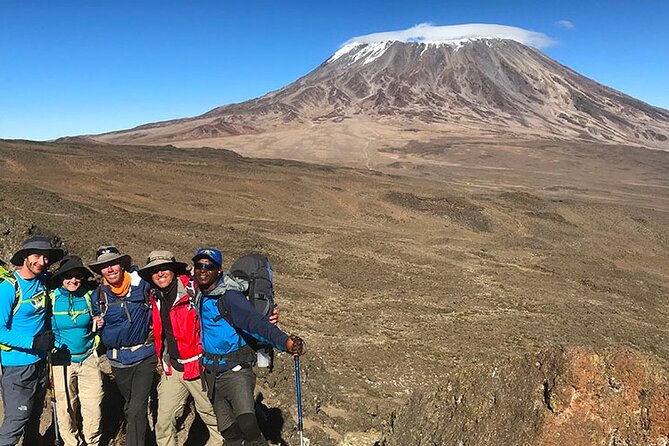
Instead of climbing onward immediately, you spend another night at Horombo. The planned outing heads toward Mawenzi and passes the Zebra Rocks, taking about three hours.
This is one of the most useful features of the itinerary. An extra acclimatization day gives you more time at 3,720 meters before sleeping near Kibo at 4,700 meters. It also lets you walk higher and return to Horombo, which is less demanding than making a full ascent with your overnight bag.
The day is not a free day in the ordinary sense. You still walk, and you still need to manage water, food, and energy. All meals are provided at Horombo Hut, and the schedule recommends moving slowly.
You should pay close attention to how your body feels here. The supplied information does not promise a summit, and no responsible itinerary can guarantee one. The extra day improves the plan, but it does not remove the effects of altitude.
Day 5: Horombo to Kibo across the Saddle
The route now moves gradually toward the lunar desert of the Saddle, the broad high area between Mawenzi and Kibo. The surroundings become more exposed and sparse as you leave the moorland behind.
The schedule gives four to six hours for the walk to Kibo Hut, though the description also refers to six to seven hours. Treat this as a long, slow day rather than a fixed appointment. Your pace, rest stops, and conditions will affect the timing.
Kibo Hut sits at 4,700 meters. There is no running water there, an important practical detail. Fill what you need before arriving and confirm how water is supplied during the climb.
The rest of the day is for eating, organizing your summit gear, and sleeping early. You wake before midnight, so this is not the time for a late meal, long conversation, or ambitious sightseeing. The comfort of a hut is welcome, but the altitude and early start still make Kibo a demanding stop.
Day 6: Gillman’s Point, Uhuru Peak, and a punishing descent
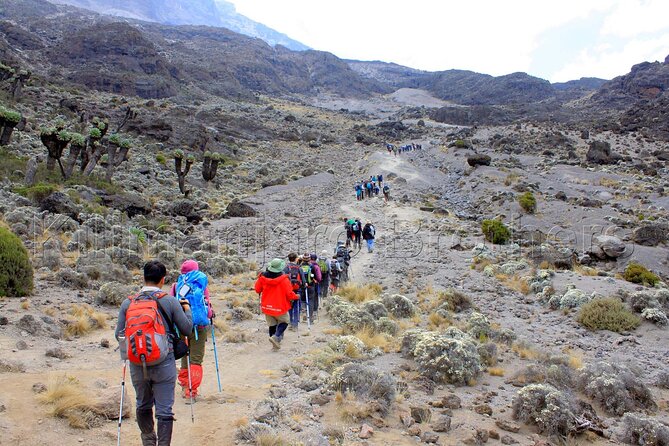
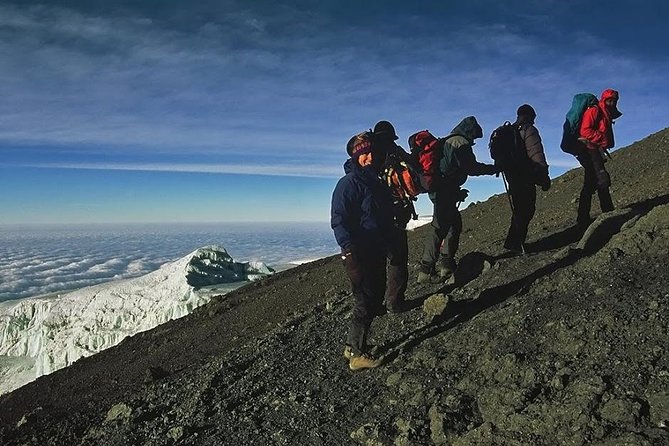
Summit day begins before midnight in darkness. From Kibo, you climb steeply over loose volcanic scree, using a slow and steady pace through sections with zigzagging trail.
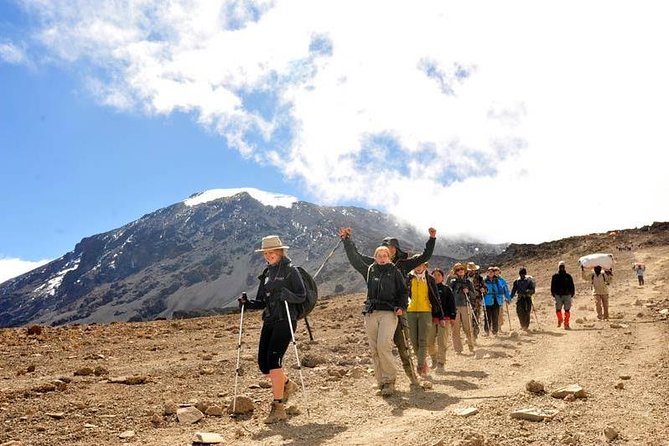
The first major target is Gillman’s Point at 5,685 meters. You can rest there and watch sunrise over Mawenzi. Reaching Gillman’s Point is a serious achievement, but it is not the highest point of Africa.
If you still feel strong, the schedule allows a roughly three-hour round trip along the crater rim to Uhuru Peak at 5,895 meters. This is the highest point in Africa. The wording is important: continuing from Gillman’s Point depends on how you are feeling, and you should not push through serious altitude symptoms just to follow the printed plan.
After the summit section, you descend to Kibo Hut for refreshments, then continue down to Horombo Hut. The full day is listed as 13 to 15 hours. One itinerary line says 13 minutes, which is clearly inconsistent with the walking description, so confirm the expected timing with the operator.
This is the trip’s toughest day by far. You need warm clothing for the night start, water, food as instructed by the crew, and enough physical reserve for the descent. The final return to Horombo is not an easy victory lap. It is still a long mountain walk.
Day 7: Horombo to Marangu Gate
The final walking day retraces the route through Mandara Hut and down to Marangu National Park Gate. The stated walking time is six to seven hours.
After the high-altitude terrain, the return through forest may feel less severe, but tired legs can make a downhill trail awkward. Take your time and use care on the descent.
Successful climbers receive summit certificates at the gate. From there, you transfer back to Kilimanjaro Mountain Resort for dinner and overnight accommodation.
This return to the same resort is convenient. You can shower, eat, and sleep without moving to another town after the climb. It also gives you a clear end point for the mountain portion of the trip.
Day 8: Airport transfer or extra time in Tanzania
After saying goodbye to the guides, a private departure transfer takes you from Moshi to Kilimanjaro International Airport. The transfer is included, unless you choose to extend the trip with a short safari or another option discussed with the operator.
The schedule does not give a departure time, so you should match your flight carefully with the transfer plan. If you have an early flight, confirm when the vehicle leaves Marangu and how long the journey is expected to take.
The option to add a safari may suit you if this climb is part of a longer Tanzania holiday. It is not included in the listed price, so treat it as a separate arrangement.
The private format and the communication question
This is a private tour, meaning only your own group participates. That gives you more control over pace and group decisions than a large shared departure, though the exact guide-to-climber ratio is not provided.
The available written feedback includes a serious complaint about a pickup arriving 30 minutes late without advance notice, followed by concerns about the operator’s professionalism. The company response apologizes and says the issue will help improve its service.
That single account does not tell you how every departure operates, but it is useful advice. Contact Africa Joy Tours before arrival and confirm the airport driver, hotel name, pickup time, emergency contact, and the day of the briefing. Keep the transfer details saved on your phone.
The overall rating is 4.3 from nine ratings, but the supplied material does not provide enough detailed positive comments to identify a clear guide or crew member by name. No guide names are given, so do not expect to select a particular guide from the information available.
Best months and weather choices
January and February are described as the warmest months, often with clearer mornings and evenings. August and September are also presented as strong months for climbing.
July can be colder. November usually brings short rains, and climbing is still possible, but conditions may be wet. March, April, and May have long rains and are best avoided according to the schedule.
Weather matters most on summit day and in the exposed upper sections. The experience requires good weather, and if poor conditions cause cancellation, you are offered another date or a full refund.
Free cancellation is available if you cancel at least 24 hours before the experience start time. Changes or cancellations inside that 24-hour window are not accepted for a refund.
Who should book this climb
I would consider this trip if you want a structured Kilimanjaro climb with huts instead of tents, private transfers, and a built-in acclimatization day. The resort stays also make the arrival and return easier.
You should have at least a moderate level of physical fitness. That phrase understates the summit day a little: 13 to 15 hours of walking at high altitude is a major test, even for fit people.
This route suits someone who values a clear plan and does not mind basic mountain conditions. It is less suitable if you want short walking days, flexible summit timing, or guaranteed access to running water at every overnight stop.
Should you book the Marangu Route 6-day climb?
Book it if you want the convenience of airport transfers, a private group, hut accommodation, and an extra acclimatization day at Horombo. The route has a sensible shape, and the resort stays simplify the first and last nights.
Before paying, get written confirmation of the exact eight-day schedule, transfer times, hut facilities, gear requirements, insurance rules, and guide arrangements. Also ask the operator to explain the conflicting walking times and the 8:30 am versus 5:30 pm meeting details.
I would choose this trip for its practical structure, not because the available feedback proves flawless service. If Africa Joy Tours answers clearly and promptly, the package can offer solid convenience for the price. If communication remains vague, compare another private Marangu operator before committing.
FAQ
How long is the Kilimanjaro Marangu Route experience?
The climb is described as a six-day trekking itinerary, while the full experience lasts about eight days including arrival, preparation, return accommodation, and departure.
Where does the tour begin and end?
The experience begins and ends at Kilimanjaro Mountain Resort in Marangu. Airport transfers connect the resort with Kilimanjaro International Airport.
Are airport transfers included?
Yes. Private transfers from Kilimanjaro International Airport to the resort and from Moshi to the airport are included in the package.
Is this a private tour?
Yes. Only your own group participates in the activity.
Where do you sleep during the climb?
You sleep at Mandara Hut, Horombo Hut, and Kibo Hut. The first and final overnight stays are at Kilimanjaro Mountain Resort.
How difficult is the climb?
A moderate level of physical fitness is required. Summit day is the hardest section and takes about 13 to 15 hours from Kibo Hut to the summit area and back to Horombo Hut.
What is the highest point reached?
Uhuru Peak is 5,895 meters and is the highest point of Africa. The route first reaches Gillman’s Point at 5,685 meters, with the continuation to Uhuru depending on how you feel.
When are the best months to climb?
January, February, August, and September are identified as the best months. March, April, and May have long rains, July can be colder, and November may be wet.
What happens if bad weather cancels the experience?
If poor weather causes cancellation, you are offered a different date or a full refund. You can also cancel at least 24 hours before the start time for a full refund.
More 6-Day Experiences in Moshi
- Kilimanjaro climb, Lemosho Route (6-day)
★ 5.0 · 129 reviews - 6 Days 5 Night Safari
★ 5.0 · 57 reviews - The Best of Machame Route in 6 Days: Your World’s Summit Guide
★ 5.0 · 44 reviews - 6 Days Machame Route Kilimanjaro Climbing
★ 5.0 · 42 reviews
Just added around Moshi
- Mt Kilimanjaro 6 days Marangu route hike★ 5.0 · 3 reviews
- Wildlife Extravaganza: Manyara, Tarangire & Ngorongoro in 3 Days★ 5.0 · 3 reviews
- Private Cycle to Kilimanjaro Bike Park Safari★ 5.0 · 6 reviews
- 3 Days Private E-Bike Tour in West Kilimanjaro★ 5.0 · 3 reviews
- West Kilimanjaro cycling Adventures★ 4.5 · 8 reviews
- machame route★ 5.0 · 16 reviews
- Kilimanjaro Climbing Umbwe Route★ 5.0 · 3 reviews
- Kilimanjaro Climb & Safari – Lemosho Route – 13 Day★ 5.0 · 10 reviews
Marangu Route Climbs, compared.



Private Full Day Hiking Experience to Marangu Route
Read our review →
From Arusha/Moshi: Kilimanjaro Hike Marangu Route Day Trip
Read our review →
Mount Kilimanjaro Day Hike Through Marangu Route to Mandara Hut
Read our review →

Best Kilimanjaro Adventures 6 Days Marangu Route Experience
Read our review →
Kilimanjaro Private Climbing in 6 Days Marangu Route
Read our review →Browse the lists this tour appears in