
Reviewed · MARANGU ROUTE CLIMBS
6 Days MARANGU ROUTE (Kilimanjaro Trekk)
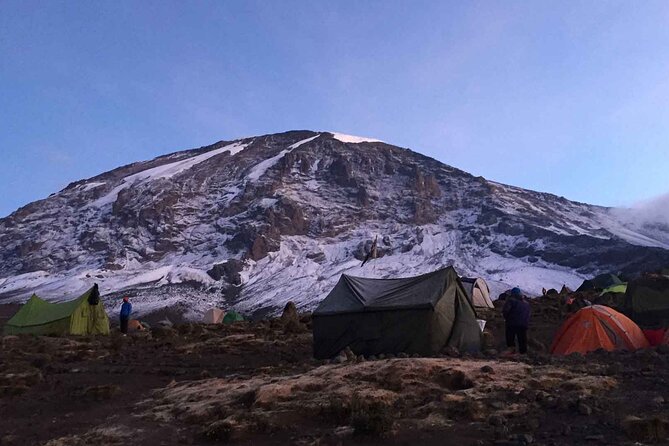
The six-day Marangu Route gives you a clear path to Uhuru Peak, Africa’s highest point, while moving through rainforest, heath, alpine desert, and the cold arctic zone. The built-in acclimatization day at Horombo is especially useful, since altitude, not trail distance, is the real challenge here.
I like the route’s simple hut-to-hut setup and the support package, which includes park fees, meals, accommodation, safety equipment, and a professional guide. I also like the steady pacing and the chance to pause at Zebra Rocks before the summit push. The main drawback is that summit day is tough, with an early start, high altitude, and a long descent afterward. Also, confirm the sleeping arrangements before booking, since the description refers to both huts and camping equipment.
Key points at a glance
- A six-day climb to Uhuru Peak: You spend five nights on the mountain and make the summit attempt on Day 5.
- A useful acclimatization day: Day 3 at Horombo gives your body time to adjust and includes an optional hike to Zebra Rocks.
- Four major ecological zones: The route moves from rainforest to heathland, alpine desert, and the stark upper mountain.
- Support from named guides: Past trips have involved guides including William, Sanke, and Rama, though your assigned team should be confirmed directly.
- A bundled price of $1,980: Park fees, meals, accommodation, safety equipment, camping equipment, taxes, and guiding are included.
- A serious summit day: You start in the early hours, aim for Uhuru Peak before sunrise, then descend to Horombo.
Why the Marangu Route works in six days
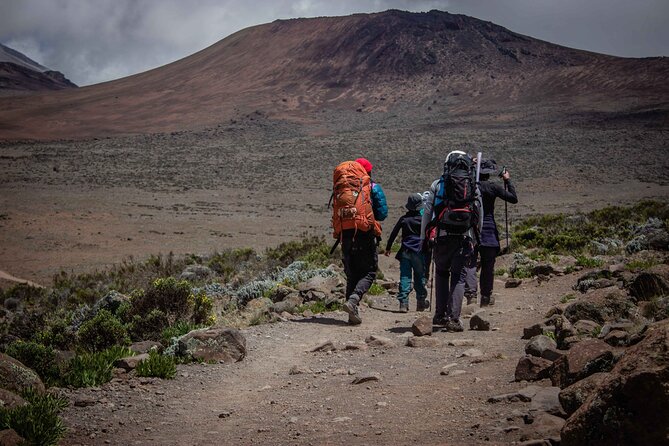
The Marangu Route is often chosen for its straightforward trail and hut-based structure. You begin at Marangu Gate and follow one main route upward, rather than camping at a new tent site each night. That can make the climb feel less complicated, especially if you prefer a fixed sleeping place and a clear daily plan.
The six-day version is more appealing than a rushed five-day schedule because it includes a full day at Horombo. You can use that day to rest or take the short walk to Zebra Rocks. I consider this one of the most useful parts of the trip, since successful Kilimanjaro climbs depend heavily on how well you handle altitude.
The mountain rises through several distinct ecological zones. You begin in thick rainforest, continue through heath and moorland, reach the alpine desert near Kibo, and finish in the freezing upper zone near the summit. The changes are not just scenic. They also signal colder air, thinner oxygen, and harder walking.
The advertised price is $1,980 per person. That is a substantial amount, but the package covers the major mountain costs: park fees, meals, accommodation, safety equipment, camping equipment, taxes, and a professional guide. You will still need to budget for a visa, travel insurance, personal gear, and tips.
One detail deserves attention before you pay. The daily plan names Mandara, Horombo, and Kibo Huts, but the inclusions also mention camping equipment. Ask Spirit of Kilimanjaro to confirm exactly where you sleep and whether any nights use tents instead of mountain huts.
More Marangu Route Climbs in Kilimanjaro
- Kilimanjaro climb, Marangu route (6-day)
★ 5.0 · 72 reviews - Climbing Kilimanjaro – Marangu Route
★ 5.0 · 65 reviews - Best Kilimanjaro Adventures 6 Days Marangu Route Experience
★ 5.0 · 18 reviews
Day 1: Marangu Gate to Mandara Hut
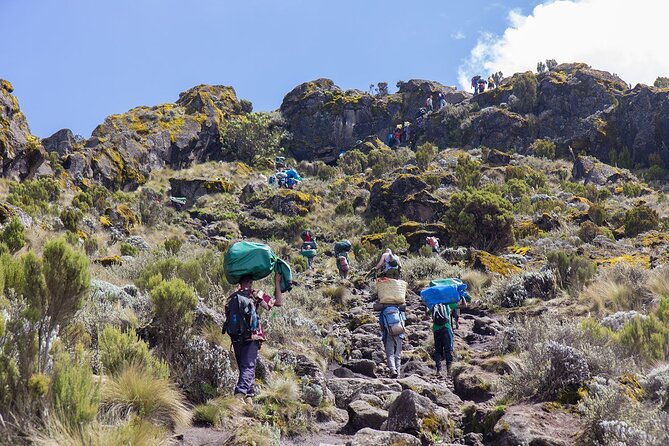
Your climb starts at Marangu Gate, where you complete park formalities and meet the guides and porters. The first section runs through rainforest, so the trail feels green, shaded, and relatively gentle compared with the days ahead.
The distance is about 8 kilometers, with roughly eight hours allocated for the stop and hiking period. Your first overnight point is Mandara Hut at about 2,700 meters.
This is a good first day because it lets you settle into the walking rhythm without an immediate altitude shock. You can expect a gradual change in temperature and vegetation as you gain height. Keep your rain protection handy, since rainforest conditions can change quickly, even though the supplied information does not promise a particular weather pattern.
The short distance does not mean you should race. Walk slowly, drink regularly, and save energy. Your guide will set the pace, and the quality of that guidance matters from the first hour.
Day 2: Heathland, Mawenzi views, and Horombo Hut
After breakfast, you leave the rainforest and enter the heathland zone. The vegetation becomes lower and more open, giving you wider views and a stronger sense that you are climbing a very high mountain.
This section covers about 12 kilometers and ends at Horombo Hut, around 3,700 meters above sea level. You may catch views of Mawenzi Peak, one of Kilimanjaro’s distinctive volcanic formations.
I like this day because it gives you a clear visual marker of progress. The forest is behind you, and the summit region begins to feel real. The tradeoff is that the gain in height is significant, so you may feel tired even if the walking itself is not technically difficult.
Horombo is also important because you return here after summit day. Try to keep your belongings organized, since you will be using the same base again after the summit push. The supplied plan does not specify room layouts or storage arrangements, so ask your guide how bags are handled.
Day 3: A full acclimatization day at Horombo
Day 3 is the smartest feature of this schedule. You remain at Horombo to give your body more time at altitude instead of climbing higher every day without a break.
You can choose a short hike to Zebra Rocks for views, or stay near the hut and rest. The day is listed at about seven hours, though the actual effort depends on whether you take the optional walk.
Do not treat this as a wasted day. Rest is part of the climb. The following day takes you to Kibo Hut at approximately 4,700 meters, so this pause can help you approach that section with more energy.
The plan does not state a medical screening process or a specific altitude protocol. Your guide is expected to monitor the group, but you should still speak up quickly if you feel unwell. A guide can adjust pace and advice, but you need to report symptoms honestly.
More Marangu Route Climbs in Moshi:
- Kilimanjaro Private Climbing in 6 Days Marangu Route
★ 5.0 · 16 reviews - 6 Days Climb Kilimanjaro Through Marangu Route
★ 4.5 · 15 reviews - Top 6 Days Mt. Kilimanjaro Bike trek Tour by Marangu-Kilema Route
★ 5.0 · 15 reviews - 6 Days Mount Kilimanjaro Trek Marangu Route
★ 5.0 · 15 reviews
Day 4: Across the alpine desert to Kibo Hut
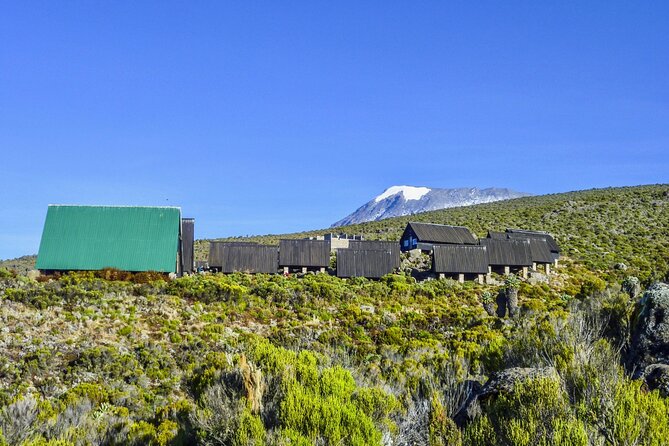
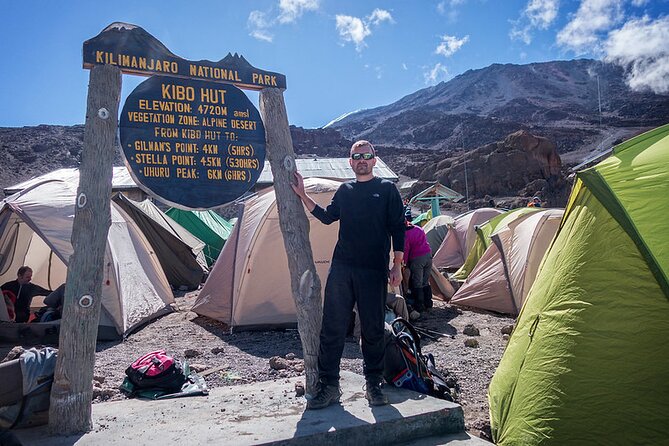
You now leave the heathland behind and cross the alpine desert toward Kibo Hut. The setting becomes drier and more exposed, with fewer plants and a broad view of the saddle between Mawenzi and Kibo.
The day covers about 8 kilometers and ends at roughly 4,700 meters. That altitude is the main issue. The trail may not look dramatic in the usual hiking sense, but each step costs more effort when the air is thin.
Pacing and hydration matter here. Keep your walking slow and steady, and follow the guide’s instructions. You are not trying to prove how fast you can reach Kibo. You are trying to arrive with enough strength for the summit attempt.
Kibo is where you prepare mentally for the hardest part. The next climb begins in the early hours, with a goal of reaching Uhuru Peak before sunrise. Get as much rest as the conditions allow and keep your summit clothing and personal gear ready.
Day 5: Uhuru Peak and the long descent
Summit day begins early. You climb toward Uhuru Peak in darkness, aiming to arrive before sunrise at 19,340 feet, the height given for the summit.
This is the most demanding part of the experience. The cold, altitude, steep effort, and early start can test your resolve. You will need patience more than speed, and the guide’s steady support becomes especially important.
The reward is the summit itself and the changing light over Kilimanjaro. After reaching Uhuru Peak, you descend to Kibo Hut and then continue down to Horombo Hut. That makes this a very long day, despite the itinerary showing about eight hours.
The descent is not an afterthought. Your legs may be tired, and the return to Horombo still takes effort. Eat, drink, and keep your pace controlled. The plan promises a well-deserved rest at Horombo, but it does not state the exact arrival time, so do not plan anything else for this day.
Guides named in past trips include Rama, Sanke, and William. Rama was specifically associated with summit support on another Kilimanjaro route, while Sanke was praised for checking a climber’s health and mood during a Marangu climb. William was credited with encouraging a group that initially felt unsure about managing six days. These names give you useful points of reference, but they do not guarantee who will lead your departure.
Day 6: Descending through forest to Marangu Gate
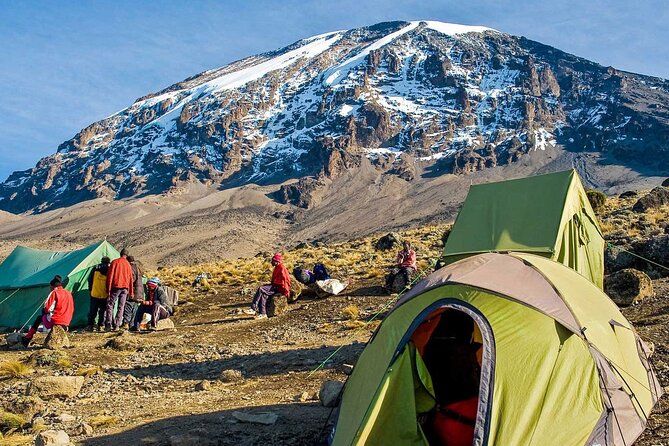
The final day takes you from Horombo back to Marangu Gate. You pass once again through heath and rainforest, with possible sightings of colobus monkeys and birds.
The listed duration is about five hours. Compared with summit day, this is a much easier finish, but you will still feel the accumulated strain in your feet and legs.
At the gate, you receive summit certificates and say goodbye to the guides and porters. That moment gives the trip a proper ending, especially after the effort involved in reaching Uhuru Peak.
Pickup is offered, and the stated start time is 9:00 am. Since the mountain schedule begins at Marangu Gate rather than necessarily at your hotel, confirm the pickup time and meeting place in Moshi before departure.
What the $1,980 price really covers
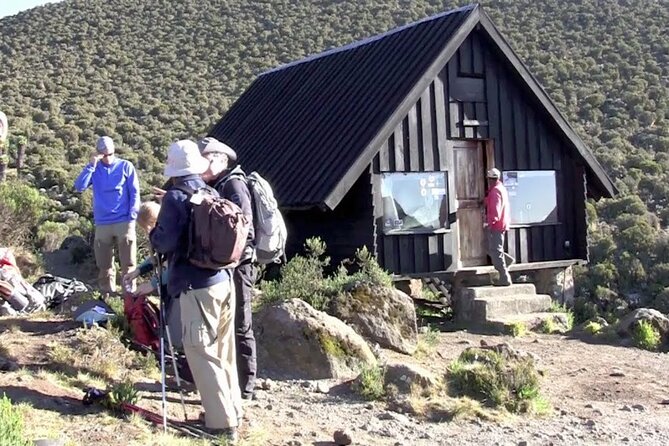
The price makes the most sense if you want one operator to arrange the major logistics. Park fees alone are a necessary part of any Kilimanjaro climb, and the package also includes meals, accommodation, safety equipment, camping equipment, guide services, and all fees and taxes.
That leaves you responsible for several important costs. You must arrange your visa, travel insurance, personal gear, and tips. Personal gear can be a major expense if you do not already own suitable cold-weather hiking equipment.
The phrase safety equipment is broad, so ask what is supplied and what you must bring yourself. The same applies to camping equipment, since the route plan names mountain huts. Do not assume that a sleeping bag, warm clothing, trekking poles, or other personal items are included unless the provider confirms it.
I see the package as a reasonable option for a first Kilimanjaro climb if you value a single point of contact and organized mountain support. It is less suitable if you want a bare-bones trek or complete control over every detail.
Guides, group size, and the human side of the climb
The experience is listed with a maximum of 100 participants. That is a large possible group, even if your actual departure is smaller. Ask how many people will be in your hiking group and whether smaller groups are divided by pace.
The strongest praise attached to this experience focuses on the guides and their care on the mountain. Sanke was noted for checking health and mood, William for building confidence around the six-day schedule, and Rama for direct summit support. Those are exactly the qualities I would want: calm pacing, close attention, and encouragement without pressure.
You should also ask how guide and porter responsibilities are divided. The package includes a professional guide and porters are part of the described team, but the exact staffing arrangement is not provided.
A Kilimanjaro climb is not just a walk through scenery. You depend on the team for pace, route decisions, meals, and help when the altitude makes ordinary tasks harder. A friendly, organized crew can make the difference between a controlled challenge and a miserable one.
Who should book this Kilimanjaro trek
This tour suits you if you want:
- A six-day schedule rather than the shortest possible climb
- A dedicated acclimatization day at Horombo
- A guided summit attempt with meals and park costs bundled
- A route with clear ecological changes from rainforest to arctic conditions
- A first major high-altitude trek with an organized support team
You should think twice if you dislike early starts, shared mountain accommodation, long walking days, or cold conditions. The summit day is physically and mentally demanding, and the price does not include personal gear or insurance.
The route is described as suitable for most participants, but that does not remove the need for preparation. You should be comfortable with long walks and ready to follow a slow, steady pace for several consecutive days.
Practical details before you reserve
Confirmation is provided at booking, and public transportation is nearby. Pickup is offered, with a stated start time of 9:00 am.
Free cancellation is available if you cancel at least 24 hours before the local start time. Cancellations or changes made less than 24 hours before the start are not accepted for a refund.
Bring your personal gear plan into the booking conversation. Ask about the exact hut or tent arrangements, what safety equipment is supplied, the expected group size, and which guide will lead your climb. Those questions are especially important because the supplied details refer to both hut accommodation and camping equipment.
Should you book the six-day Marangu Route?
I would book this trek if you want a structured Kilimanjaro climb with a useful acclimatization day and a broad package of costs included. The route gives you a strong range of scenery, and the guides’ reported attention to health, morale, and summit support is a real reason to consider it.
I would not book without first clearing up the hut and camping details. I would also confirm the guide team, group size, personal equipment requirements, and pickup plan. If those answers are clear, the $1,980 price offers solid convenience for a serious six-day attempt at Uhuru Peak.
FAQ
How long is the Marangu Route experience?
The experience lasts approximately six days.
Where does the climb begin?
The climb begins at Marangu Gate in Kilimanjaro National Park.
What time does the experience start?
The stated start time is 9:00 am.
Is pickup available?
Yes, pickup is offered.
What is the highest point reached?
The summit goal is Uhuru Peak, listed at an elevation of 19,340 feet.
Is there an acclimatization day?
Yes. Day 3 is set aside at Horombo Hut for acclimatization, rest, or an optional hike to Zebra Rocks.
What accommodation is included?
All accommodation is included. The daily plan names Mandara Hut, Horombo Hut, and Kibo Hut, while the inclusions also mention camping equipment, so you should confirm the exact sleeping arrangements with Spirit of Kilimanjaro.
What does the price include?
The $1,980 price includes park fees, safety equipment, meals, all fees and taxes, camping equipment, a professional guide, and accommodation.
What is not included?
Visa costs, travel insurance, personal gear, and tipping are not included.
More 6-Day Experiences in Moshi
- Kilimanjaro climb, Lemosho Route (6-day)
★ 5.0 · 129 reviews - 6 Days 5 Night Safari
★ 5.0 · 57 reviews - The Best of Machame Route in 6 Days: Your World’s Summit Guide
★ 5.0 · 44 reviews - 6 Days Machame Route Kilimanjaro Climbing
★ 5.0 · 42 reviews
Just added around Moshi
- Mt Kilimanjaro 6 days Marangu route hike★ 5.0 · 3 reviews
- Wildlife Extravaganza: Manyara, Tarangire & Ngorongoro in 3 Days★ 5.0 · 3 reviews
- Private Cycle to Kilimanjaro Bike Park Safari★ 5.0 · 6 reviews
- 3 Days Private E-Bike Tour in West Kilimanjaro★ 5.0 · 3 reviews
- West Kilimanjaro cycling Adventures★ 4.5 · 8 reviews
- machame route★ 5.0 · 16 reviews
- Kilimanjaro Climb & Safari – Lemosho Route – 13 Day★ 5.0 · 10 reviews
- Kilimanjaro Climbing Umbwe Route★ 5.0 · 3 reviews
Marangu Route Climbs, compared.



Private Full Day Hiking Experience to Marangu Route
Read our review →
From Arusha/Moshi: Kilimanjaro Hike Marangu Route Day Trip
Read our review →
Mount Kilimanjaro Day Hike Through Marangu Route to Mandara Hut
Read our review →

Best Kilimanjaro Adventures 6 Days Marangu Route Experience
Read our review →
Kilimanjaro Private Climbing in 6 Days Marangu Route
Read our review →Browse the lists this tour appears in