
Reviewed · MARANGU ROUTE CLIMBS
Our Top 5-Day Kilimanjaro Marangu Route: 2025 and 2026 Updates
The unusual selling point here is simple: you climb Mount Kilimanjaro while sleeping in huts, not tents. The Marangu Route is the mountain’s shortest established route to Uhuru Peak, and this five-day plan takes you from the rainforest at Marangu Gate to the 5,895-meter summit.
I like the hut accommodation and the clear progression through several climate zones. I also like that pickup from a Moshi hotel, meals, a guide, briefing, and a summit certificate are included. The catch is important: five days is a tight schedule for acclimatization, and park fees, gear, insurance, lodging in Moshi, and crew tips are extra.
Key points to know before booking
- Hut sleeping throughout: You stay at Mandara, Horombo, and Kibo huts rather than carrying a tent.
- Summit day is demanding: Day four combines the climb to Uhuru Peak with a long descent to Horombo.
- The route changes quickly: Expect rainforest, open moorland, rocky high desert, and a cold summit zone.
- The price is $1,080 per person: Hotel pickup in Moshi and mountain meals are included, but Kilimanjaro park fees are not.
- The crew matters: Previous trips have included guides such as Gabriel, Martin, Budah, Victor, Thomas, and Samson.
- You need moderate fitness: Daily walks range from about 6 to 18 kilometers, with the summit day being the hardest.
Why the Marangu Route appeals to first-time climbers
The Marangu Route is often called the Coca-Cola Route, and it is the most direct path among Kilimanjaro’s main routes. That directness makes it easy to understand: you go up one side of the mountain and return along the same trail.
The five-day version is attractive because of the huts. You do not need to sleep in a tent or carry camping equipment for yourself. The accommodation is basic dormitory-style shelter, not a mountain hotel, but having a roof and a bed platform can make a real difference after a long day.
I would not mistake comfort for ease. The route reaches high altitude quickly, and this schedule gives you only one acclimatization night before Kibo. A six-day Marangu climb adds an extra day around Horombo, giving your body more time to adjust. If you are new to high-altitude walking, that longer version deserves serious consideration.
The company has used guides including Godfrey Ngaiza in management and communication, along with mountain guides named Victor, Thomas, Noah, Gabriel, Samson, Budah, and Martin on different climbs. You should confirm your specific guide team before departure. Past feedback places strong emphasis on careful support, encouragement, and regular attention during difficult sections, including one climb where Gabriel provided major help near the summit.
More Marangu Route Climbs in Kilimanjaro
- Kilimanjaro climb, Marangu route (6-day)
★ 5.0 · 72 reviews - Climbing Kilimanjaro – Marangu Route
★ 5.0 · 65 reviews - Best Kilimanjaro Adventures 6 Days Marangu Route Experience
★ 5.0 · 18 reviews
Day one: Marangu Gate to Mandara Hut
Your morning begins at about 7:00 a.m., with pickup from the Moshi hotel you booked. The drive takes you to Marangu Gate, where registration and the start of the climb take place.
The first 7 kilometers lead from about 1,830 meters to 2,740 meters. You spend four to five hours walking through rainforest, with thick plant growth, damp air, and the sound of birds and running water around you. The first day is not technically difficult, but the steady uphill pace gives you an early lesson in walking slowly.
The day is associated with Marangu Falls, although the route details focus on the walk from Marangu Gate to Mandara Hut. Ask your guide to clarify the exact waterfall stop and timing before setting out. Admission and park-related charges are not included in the advertised price, so do not assume every named stop has a separate entrance covered.
Mandara Hut is your first overnight stop. The hut arrangement is the main comfort advantage of this route. You can remove wet layers, eat a cooked meal, and prepare your sleeping gear without setting up a tent.
Breakfast, lunch, and dinner are provided during the trek. The information does not specify menus, dietary arrangements, or dining equipment, so tell the operator about dietary needs before you arrive. A simple briefing is also included, giving you a chance to confirm the next day’s timing and ask about the pace.
Day two: Moorland views on the way to Horombo
After breakfast, you walk 11 kilometers to Horombo Hut. The day takes roughly six to eight hours, and the trail rises from 2,740 meters to 3,690 meters.
This is where Kilimanjaro begins to look less like a forest walk. Trees thin out, the path opens, and the moorland gives you wider views of the mountain and nearby slopes. The change is gradual, which helps you notice how much the climate shifts over a short distance.
Horombo is a key stop because it is both an overnight shelter and an altitude checkpoint. At 3,690 meters, you may notice that ordinary tasks require more effort. Eat, drink, and rest rather than treating the afternoon as spare sightseeing time.
The five-day plan does not provide a separate acclimatization day at Horombo. You arrive, settle in, and continue upward the next morning. That makes the second day especially important. Walk slowly from the start, keep your breathing steady, and tell your guide promptly if you feel unwell.
The company’s guides are repeatedly praised for their calm support and attention to safety. That matters most here, where the temptation is to walk too quickly while you still feel strong. A guide who controls the pace can be more valuable than a guide who simply points out scenery.
Day three: Horombo to Kibo Hut
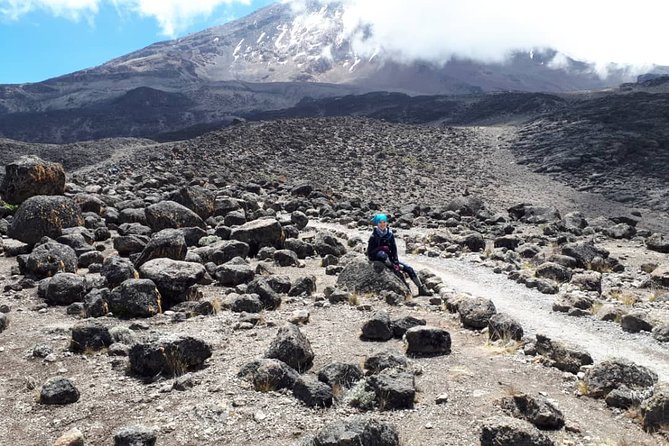
Day three covers 10 kilometers and takes about six to eight hours. You climb from 3,690 meters to 4,695 meters, leaving the moorland for a sparse, semi-desert zone.
The path becomes rockier and plant life becomes scarce. The scenery is stark rather than lush, with broad open views and a sense that you are nearing the mountain’s upper reaches. This is a memorable day because Kilimanjaro’s height becomes obvious in both the terrain and your body.
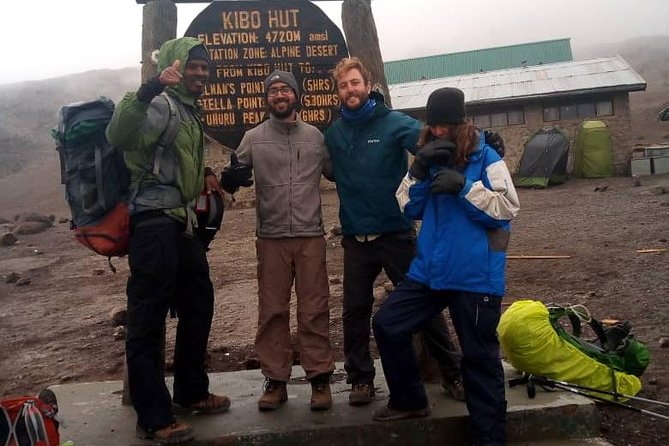
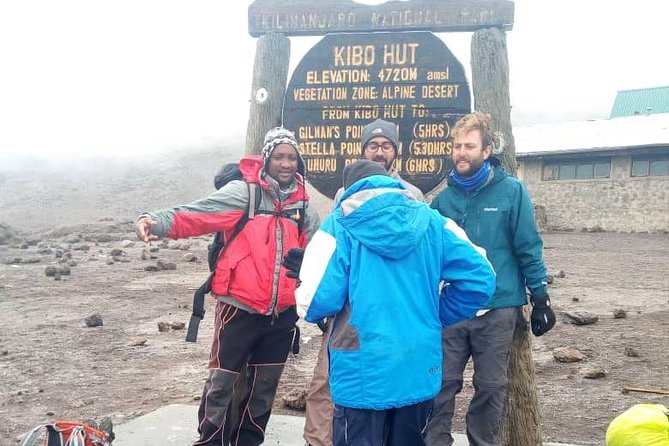
Kibo Hut is a functional staging point for the summit attempt. You arrive, eat, rest, and organize warm clothing and personal gear for an early start. There is no sightseeing agenda here. The main job is to conserve energy.
A short five-day schedule means you should arrive in Tanzania prepared. The package does not include personal hiking gear, so you are responsible for suitable clothing, footwear, rain protection, and equipment for cold conditions. It also does not include travel or medical insurance. Those omissions are normal for many mountain packages, but they affect the real cost.
At this altitude, you may sleep poorly even inside a hut. Keep the evening quiet and follow the guide’s instructions. Your summit effort starts before dawn, so a calm routine is worth more than trying to fill the evening.
More Marangu Route Climbs in Moshi:
- Kilimanjaro Private Climbing in 6 Days Marangu Route
★ 5.0 · 16 reviews - 6 Days Climb Kilimanjaro Through Marangu Route
★ 4.5 · 15 reviews - Top 6 Days Mt. Kilimanjaro Bike trek Tour by Marangu-Kilema Route
★ 5.0 · 15 reviews - 6 Days Mount Kilimanjaro Trek Marangu Route
★ 5.0 · 15 reviews
Day four: Uhuru Peak and the long return to Horombo
Summit day is the heart of the climb and the part that deserves the most honest warning. You leave Kibo Hut in the early hours and cover about 4 kilometers to Uhuru Peak at 5,895 meters.
The ascent is listed at five to seven hours. It is slow, cold, and physically demanding. The information does not give a precise departure time, but an early start is specified. You should expect the final approach to take much longer than the distance suggests because altitude, cold, and steep ground all slow your progress.
The reward is the dawn view from Africa’s highest point. If conditions are clear, you can look across the summit area as daylight spreads over the surrounding country. The summit certificate included with the package gives you a tangible memento, but the bigger reward is reaching the top after the difficult final hours.
After Uhuru Peak, you descend 14 kilometers to Horombo Hut, taking another five to six hours. The listed total for the day is about six hours, but the individual ascent and descent estimates show why you should treat this as a very long mountain day. Fatigue can become a problem after the summit, even though you are going downhill.
Past climbers have singled out guides such as Gabriel and Martin for helping people reach Uhuru Peak. One account describes Gabriel providing major physical and emotional support near the summit. That does not guarantee the same outcome for every climber, and you should never plan on being carried or pushed beyond safe limits. Still, attentive guide support is a real part of the value here.
The return to Horombo gives you a proper hut stop after the summit. You will likely be tired enough that food, water, and a place to lie down matter more than conversation.
Day five: The long descent through rainforest
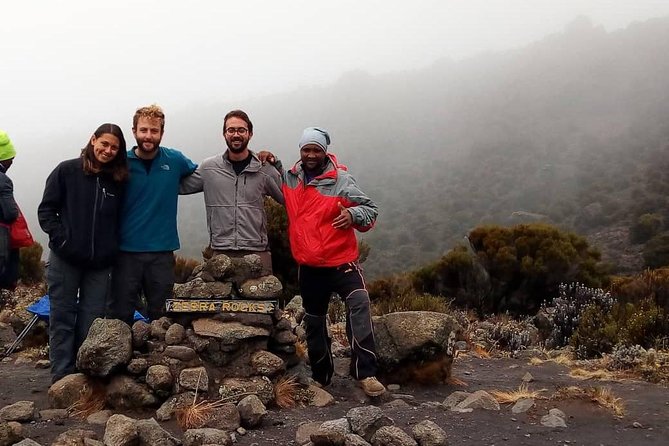
Your final day covers 18 kilometers from Horombo Hut back to Marangu Gate. The descent takes about six to seven hours, dropping from 3,690 meters to 1,830 meters.
The trail returns through the rainforest, reversing the scenery from day one. The lower altitude usually makes breathing feel easier, while tired legs make the long downhill walk harder than it looks on paper. Use trekking poles if you bring them, and take care with each step on uneven ground.
The forest provides a peaceful finish to a demanding trip. You may again have chances to spot wildlife and notice the plants you passed quickly on the way up. At Marangu Gate, the climb ends and you are transferred back to Moshi.
The package includes pickup from your Moshi hotel at the beginning, but the supplied details do not clearly state the exact arrangement for the return transfer. Confirm that point before booking, especially if you have a same-day connection or another hotel waiting.
What the $1,080 price really covers
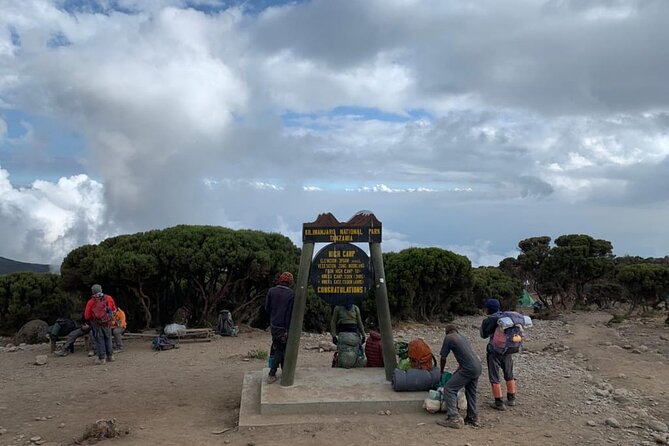
At $1,080 per person, the package offers a practical set of core services. You receive hotel pickup in Moshi, a pre-climb briefing, a professional Kilimanjaro guide, mountain meals, hut or camping-related fees listed by the operator, and a trekking certificate.
The value is strongest if you already have your own gear and hotel plans. You also avoid arranging food and mountain support yourself, which is no small task on Kilimanjaro. The guide and crew are the central service, not an optional extra.
The headline price is not the final trip budget. The following costs are excluded:
- Kilimanjaro National Park fees
- Airport pickup and drop-off
- Hotel nights before and after the climb
- International and domestic flights
- Travel and medical insurance
- Personal hiking equipment
- Tips for the mountain crew
Park fees are the biggest point to clarify. The information says they can be paid directly to the park or through the tour operator. Ask for a full written cost breakdown before paying, including taxes, park charges, transfers, and any equipment rental.
Crew tips are also separate. The price does not tell you what amount is expected, and tipping practices can vary. Ask for current guidance so you can budget fairly and avoid awkwardness at the end.
Hut life, meals, and group size
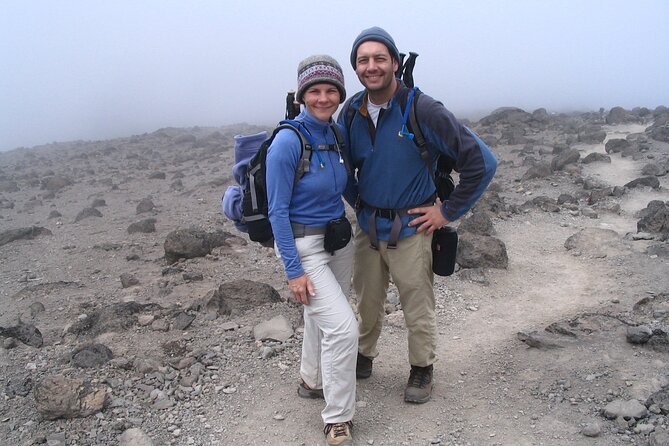
The huts make Marangu different from routes that use tents. They offer shelter throughout the climb, but the arrangement remains basic. You should expect shared sleeping areas rather than private rooms. Bring a sleeping bag and personal comfort items unless the company confirms rental or supply options.
The maximum group size is listed as 100 people. That is a large possible group, though it does not mean every departure reaches that number. Ask how your group will be organized, how many guides and support staff will accompany you, and how meals and sleeping spaces are handled.
The strongest praise connected with this operator focuses on the crew. One large group of 24 people worked with guides including Victor, Thomas, Noah, Gabriel, and Samson, supported by Jackson and other servers. That example suggests the company can staff a sizable group, but you should still ask about the ratio of guides to climbers on your departure.
Food is included three times daily. The schedule does not specify snacks, bottled water, or packed lunches for each section, so confirm what you need to carry each day. You should have enough personal snacks and water capacity for your own pace.
Fitness, altitude, and the five-day question
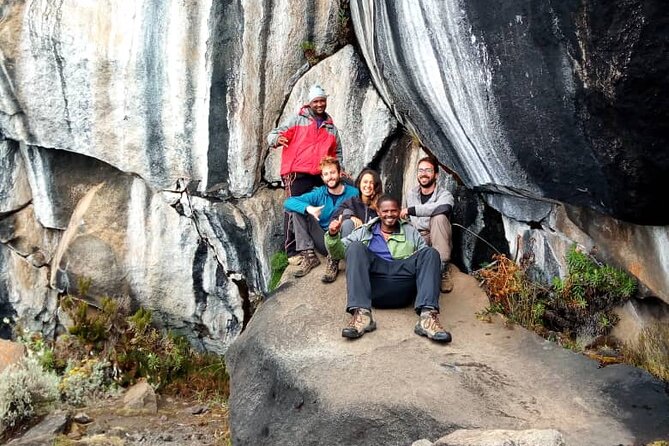
You need a moderate level of physical fitness for this climb. The distances are not extreme by ordinary hiking standards, but the elevation changes the effort. The summit day combines a high-altitude ascent with a long descent, and the previous day ends at 4,695 meters.
The key question is not simply if you can walk 18 kilometers. It is how well you handle several days of uphill movement, limited sleep, cold, and altitude. You should be comfortable with long walks before booking and should discuss medical concerns with a qualified professional.
The five-day plan suits you best if hut sleeping is a priority, you have limited time, and you accept a faster acclimatization schedule. It is less suitable if your main goal is to give yourself the best possible margin for altitude adjustment. In that case, ask about a six-day Marangu option or a longer route.
Do not treat a successful summit as guaranteed. Even fit people can struggle at altitude. Your guide should monitor your condition, and you should be ready to turn around if instructed. Reaching a lower hut safely is more important than a photograph at the top.
Practical booking advice for 2025 and 2026
The experience is offered from Moshi, with a 7:00 a.m. start and mobile ticket confirmation. Confirmation is sent at booking, and the activity ends back at the meeting point after the mountain return.
Before you commit, get written answers to these questions:
- What is the exact total after park fees?
- Is return transport to your Moshi hotel included?
- What sleeping equipment is supplied or available to rent?
- How many people will be in your group?
- Which guides will lead your departure?
- How are dietary needs handled?
- What current tip guidance does the company provide?
The cancellation terms are fairly clear. You can receive a full refund if you cancel at least 24 hours before the local start time. Changes or cancellations inside that window are not accepted for a refund, and poor weather may lead to a different date or a full refund.
The operator also offers other Kilimanjaro routes, including Machame, Lemosho, Rongai, and Umbwe. That gives you a useful comparison point. Marangu is the logical choice for huts and a direct route, but it is not automatically the best route for every climber.
Should you book this five-day climb?
I would book this trip if you want the most straightforward Kilimanjaro route, prefer hut accommodation, have five days available on the mountain, and understand that park fees and gear come extra. The included guide, meals, briefing, pickup, and certificate make the $1,080 base price reasonable, provided the added charges are explained clearly.
I would pause before booking if you are worried about altitude, dislike very long summit days, or can spare only a narrow budget beyond the advertised price. Ask about the six-day version first. An extra acclimatization day may offer better value than saving one night.
For a first Kilimanjaro climb, the Marangu Route gives you a clear path, changing scenery, and the comfort of huts. Go in prepared, walk slowly, confirm every excluded cost, and choose a longer schedule if your body or experience calls for it.
FAQ
Where does the five-day Marangu Route climb begin?
The climb begins at Marangu Gate after pickup from the Moshi hotel you booked. Registration and a guide briefing take place at the gate.
What accommodation is provided on the mountain?
The route provides hut accommodation throughout the trek, including stays at Mandara Hut, Horombo Hut, and Kibo Hut. The sleeping arrangement is described as dormitory-style rather than private lodging.
Is Mount Kilimanjaro park access included in the $1,080 price?
No. All Mount Kilimanjaro park fees are excluded. They can be paid directly to the park or through the tour operator.
Are meals included?
Yes. Breakfast, lunch, and dinner are included during the trek. The supplied information does not specify menus, snacks, or special dietary arrangements.
What is excluded from the package?
Flights, airport transfers, Moshi hotel stays before and after the climb, travel and medical insurance, personal hiking gear, Kilimanjaro park fees, and crew tips are excluded.
Can I cancel for a full refund?
Yes, if you cancel at least 24 hours before the experience start time, based on the local time. Cancellations or changes made less than 24 hours before the start are not refunded. If poor weather cancels the activity, you are offered another date or a full refund.
More 5-Day Experiences in Moshi
- 5 Days Camping Tarangire, Serengeti & Ngorongoro crater & Visiting Maasai
★ 5.0 · 58 reviews - 5-Day Majestic Tanzania Safari – High End All Inclusive
★ 5.0 · 44 reviews - 5 Day Mid range Tanzania Safari
★ 5.0 · 34 reviews - 5 days Tanzania Camping Safari
★ 5.0 · 29 reviews
Just added around Moshi
- Mt Kilimanjaro 6 days Marangu route hike★ 5.0 · 3 reviews
- Private Cycle to Kilimanjaro Bike Park Safari★ 5.0 · 6 reviews
- Wildlife Extravaganza: Manyara, Tarangire & Ngorongoro in 3 Days★ 5.0 · 3 reviews
- 3 Days Private E-Bike Tour in West Kilimanjaro★ 5.0 · 3 reviews
- West Kilimanjaro cycling Adventures★ 4.5 · 8 reviews
- machame route★ 5.0 · 16 reviews
- Kilimanjaro Climb & Safari – Lemosho Route – 13 Day★ 5.0 · 10 reviews
- Kilimanjaro Climbing Umbwe Route★ 5.0 · 3 reviews
Marangu Route Climbs, compared.



Private Full Day Hiking Experience to Marangu Route
Read our review →
From Arusha/Moshi: Kilimanjaro Hike Marangu Route Day Trip
Read our review →
Mount Kilimanjaro Day Hike Through Marangu Route to Mandara Hut
Read our review →

Best Kilimanjaro Adventures 6 Days Marangu Route Experience
Read our review →
Kilimanjaro Private Climbing in 6 Days Marangu Route
Read our review →Browse the lists this tour appears in