
Reviewed · HISTORICAL TOURS
Dar es Salaam History and Architectural Tours
Dar es Salaam’s story is written in many styles: a 1903 cathedral on the site of the city’s first mosque, a Bavarian-looking Lutheran church under palm trees, traditional homes from across Tanzania, and modern shopping centers. This private tour links those pieces into one full day, with Bernard explaining the city’s past, faiths, buildings, art, music and daily life.
I like the wide mix of stops and the fact that private transport lets you cover far more ground than you could on foot. I also like that lunch, snacks, water, entrance fees and transport are included, which keeps the day simple. The main consideration is pace: nine stops in about seven hours means some visits will be brief, especially if traffic slows the route.
Key points at a glance
- Nine sharply different stops: See churches, a museum of traditional homes, working markets, modern retail, national collections and Tanzanian art.
- Bernard leads the day: His role is not limited to pointing out buildings. He explains religion, architecture, society, music and the people connected to the city.
- Private transport matters: The route covers widely separated parts of Dar es Salaam, so you avoid arranging several rides yourself.
- Lunch and small comforts are covered: Local lunch, snacks before lunch, bottled water, entrance fees and taxes are included.
- A brisk seven-hour schedule: You get a broad picture of Dar es Salaam rather than a slow, single-neighborhood walk.
- Best for curious first-time visitors: The tour suits you if you want context and variety, not only landmark photos or shopping time.
Why this route gives you a useful first look at Dar es Salaam
Dar es Salaam can be hard to read at first. Its important places are spread across a large urban area, and its identity comes from several eras and communities rather than one compact old quarter. This tour tackles that problem by placing religious buildings, markets, museums and art spaces in the same day.
You begin at 9:00 a.m. and spend roughly seven hours on the road and at the stops. Since this is a private activity, only your group participates. That gives you room to ask Bernard to explain a detail, adjust the conversation to your interests, or spend less time at a place that does not hold your attention.
The route is ambitious. Nine stops can feel like a lot, but it also gives you a useful overview of Dar es Salaam. You will see both historic center sights and areas that show how the city shops, eats, works and changes today.
A few more Dar es Salaam trips to weigh up
- Bagamoyo Historical Tour – Everyday
★ 5.0 · 13 reviews - Bagamoyo Historical Tour – Everyday
★ 4.4 · 8 reviews - Private Tour in Historical Dar es Salaam with Lunch
★ 4.5 · 6 reviews
St. Joseph’s Cathedral and Azania Front Lutheran Church
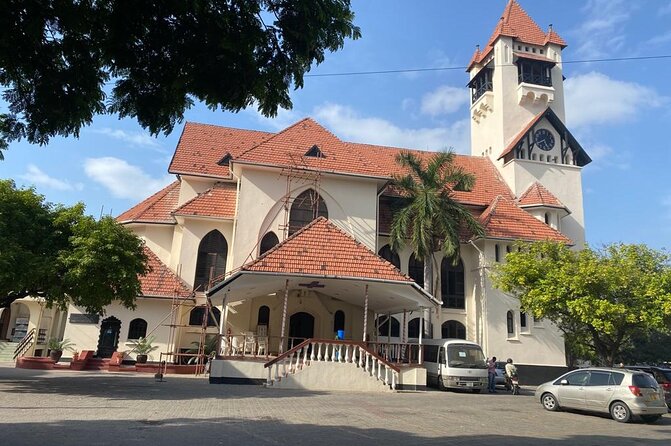
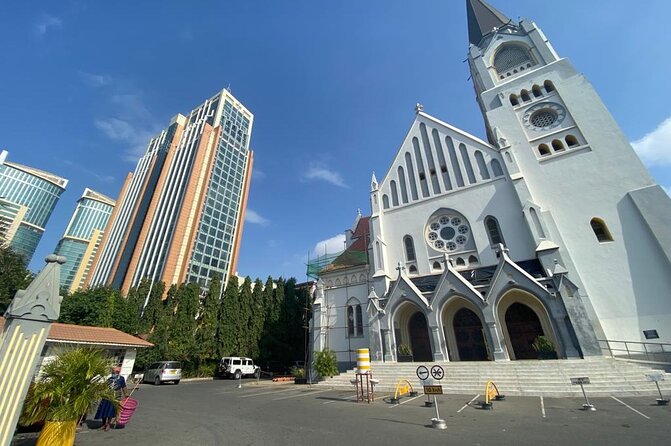
The first stop is St. Joseph’s Cathedral of the Archdiocese of Dar es Salaam, built in 1903. Its location carries an important layer of the city’s story: the cathedral occupies the same site as Dar es Salaam’s first mosque.
That single fact makes the cathedral more than a religious building. It opens a conversation about how different faiths and communities have shaped the city over time. You have about 30 minutes here, enough to take in the building and hear its background without turning the visit into a long architectural study.
Next comes Azania Front Lutheran Church, also scheduled for 30 minutes. Its Bavarian style is an unexpected sight in tropical Dar es Salaam, and the building was influenced by churches in Latin America and India. Palm trees around the church add to the contrast between imported design ideas and the local setting.
I like the pairing of these two stops. You are not simply looking at attractive buildings. You are comparing two places of worship and hearing how architecture travels across regions. The short time at each church is a limitation if you want a detailed examination of interiors, but it works well as an introduction to the city’s built heritage.
Village Museum: traditional homes from across Tanzania
The Village Museum gives the day a change of scale. Instead of one grand building, you see traditional homes and living spaces connected to several Tanzanian tribes. The museum is designed as a hands-on presentation, so the focus is on how people lived, built, and organized their homes.
This stop lasts about an hour, which is sensible. You need time to move between the different structures and connect the buildings to the wider story Bernard is telling. It also gives you a break from the road and from the formal architecture of the first two stops.
The museum helps prevent a common problem with city tours: treating Dar es Salaam as if its story begins and ends with colonial-era buildings. Tanzania’s cultural story is much wider. Here, you get a look at home design and living conditions from several communities, presented in a way that is easier to understand than a display case alone.
Mwenge Woodcarvers Market and Tinga Tinga art
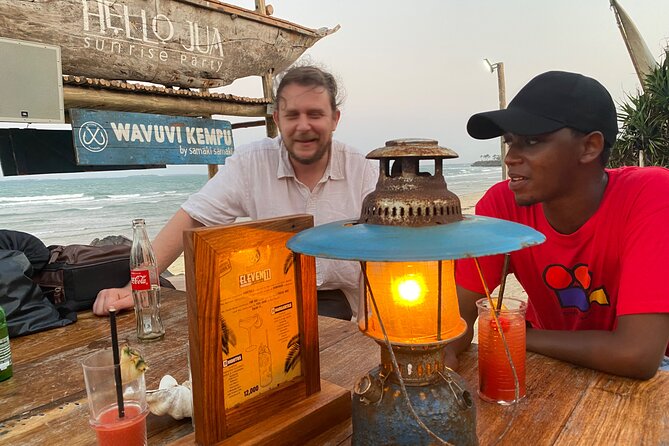
At Mwenge Woodcarvers Market, you can browse carved statues, masks and chests made from dark ebony wood. The market is scheduled for one hour, giving you time to look closely and, if you wish, shop for a piece to take home.
This is one of the stops where you should decide in advance how much shopping you want. If you are interested in carving, the hour may pass quickly. If you are not planning to buy anything, you may prefer to use the time to ask about the objects, their designs, and the role of woodcarving in local art.
The tour later visits the Tingatinga Arts Cooperative Society for about 30 minutes. Tinga Tinga painting developed in Tanzania in the second half of the 20th century. The style is known for strong colors and paintings made on masonite, a practical format for carrying art home.
The two art stops work well together, but they serve different purposes. Mwenge is a market where you can shop for carved work. The Tingatinga cooperative focuses on a distinct Tanzanian painting style. I like having both because they show that local art is not one single category. You can compare three-dimensional carving with bold, flat painting and decide what feels most meaningful to you.
Same country, a completely different kind of safari:
- Dar es Salaam: City Tour
★ 4.7 · 159 reviews - Dar es Salaam City Center: Walking Tour
★ 4.8 · 102 reviews - Dar es Salaam City Tour – Everyday
★ 5.0 · 64 reviews - MIKUMI NATIONAL PARK – 3 Days
★ 4.5 · 63 reviews
Kivukoni Fish Market and Kariakoo Market
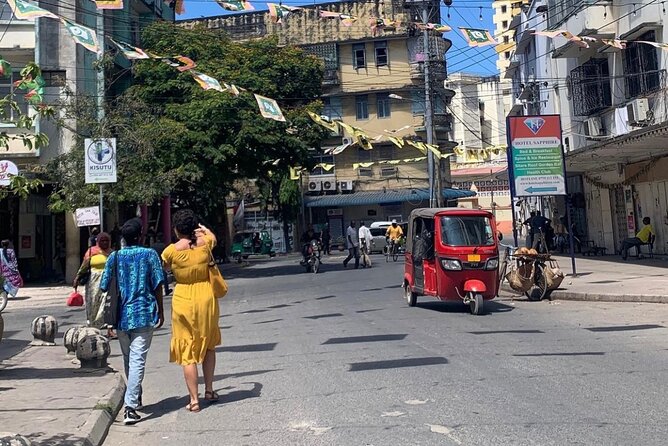
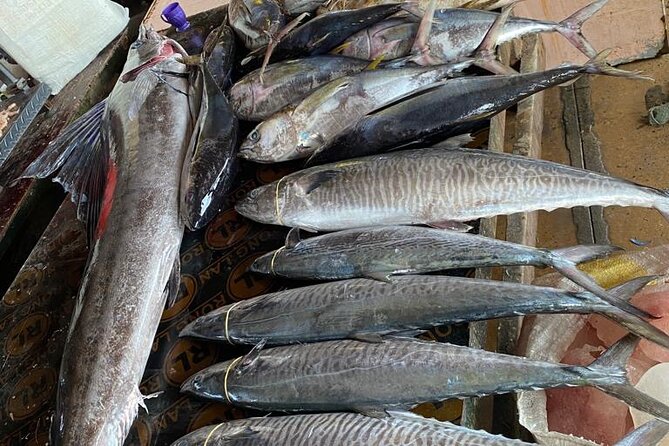
Kivukoni Fish Market offers a look at the fishing trade and the seafood economy of Dar es Salaam. You have about 30 minutes to see the market and take in the activity around freshly caught fish and other seafood.
This is a quick stop, so expect an introduction rather than a long food tour. The market is part of the city’s working life, and that makes it valuable even if you do not plan to eat there. You may also find the setting more intense than a museum, with the sights and smells that come with a real fish market.
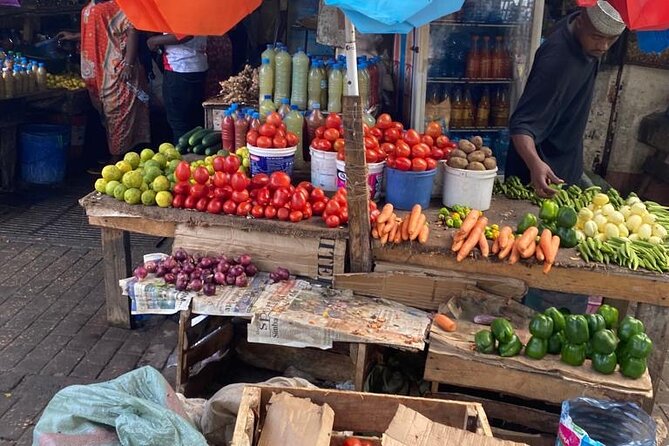
Kariakoo Market receives about an hour. Its markets stretch over many city blocks and play a major role in Dar es Salaam’s trade. This is the place to see a much larger slice of everyday commerce, rather than a single specialty such as fish or carving.
Together, the two markets show different sides of the city economy. Kivukoni connects Dar es Salaam to the coast and fishing. Kariakoo shows the scale of urban trade across many goods. Wear practical clothes and keep your belongings close in crowded public spaces. The tour supplies bottled water, which matters in Dar es Salaam’s heat, but you should still be ready for a warm, active day.
National Museum of Tanzania

The National Museum of Tanzania is scheduled for one hour. It is a consortium of five Tanzanian museums, with collections covering the country’s history and natural environment.
This is an important stop for putting the rest of the day into context. The churches show particular chapters of urban and religious history. The Village Museum presents traditional homes. The markets show present-day work and trade. The national museum connects those subjects to a much wider national story.
One hour gives you a focused visit, not enough time for every collection. I would listen closely to Bernard’s explanations and ask him which displays best match your interests. If you are drawn to history, culture, or the natural environment, this may be one of the day’s most useful stops.
Mlimani City Mall and modern Dar es Salaam

Mlimani City Mall is a large shopping center on Sam Nujoma Road in Ubungo, covering about 30,000 square meters. The scheduled visit lasts one hour.
At first, a mall may seem out of place on an architecture and culture tour. It is actually a useful contrast. After old churches, traditional houses, museums and markets, the mall shows another side of contemporary Dar es Salaam: planned retail space, modern consumer life and the city’s changing urban form.
You should not expect the same cultural depth here as at the Village Museum or National Museum. The value is comparative. It reminds you that Dar es Salaam is not a preserved historic town. It is a living city with new buildings, new habits and modern commercial centers alongside older institutions.
Lunch, snacks and the practical side of the day
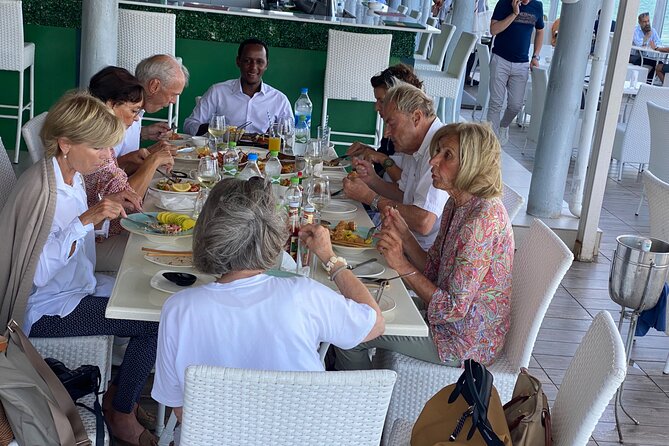
Lunch is included and described as local lunch. Snacks are provided before lunch at one of the stops, and bottled water is supplied during the tour. All entrance fees and taxes are also included.
That package improves the value of the $150 price, especially because the day uses private transportation and visits nine places. You are not paying only for a guide at a single museum. You are paying for a full route, vehicle, admissions, food and the time it takes to connect far-flung parts of Dar es Salaam.
One point is worth confirming before you book: one account of the experience mentions lunch at Akemi, a revolving restaurant with broad city views, while the formal details simply describe local lunch. Ask Bernard what lunch plan applies on your date. Dinner is not included because the tour ends later in the day. Alcohol is also excluded, with bars and sports bars available at an extra cost of about $30 to $50 per person for those aged 18 and above.
What Bernard adds to the buildings and markets
The guide is a major part of this experience. Bernard is described as enthusiastic, friendly and well spoken, with a strong command of Dar es Salaam’s history and important places. His explanations cover more than dates and construction styles. You can expect discussion of architecture, religion, society, art and music.
That matters because several stops could otherwise feel disconnected. A cathedral, a market, a shopping mall and a painting cooperative do not automatically form a clear story. A good guide links them. Bernard’s job is to explain how the city’s past and present meet in those places, and the available feedback gives particular weight to his personal approach and enthusiasm.
This is also a private tour, so you are not sharing the day with a large group. That can make the difference between a rushed explanation and a useful conversation. Still, the schedule itself remains fixed by the number of stops. Private does not mean leisurely here.
Price, pace and who should book
At $150 per person, this is not the cheapest way to see Dar es Salaam. It can be good value if you want private transport, a guide, nine admissions, lunch, snacks and water in one package. It is also a practical choice if you have limited time and want both major cultural institutions and working city areas.
The price makes less sense if you prefer to linger in one museum, spend a long afternoon shopping, or explore a single neighborhood on foot. The route covers a lot, but the tradeoff is shorter visits. Traffic may also affect how much time you have at each stop, though the tour’s private format gives you more control than a large group outing.
I would recommend it most strongly to first-time visitors who want orientation, context and variety. It also suits anyone interested in architecture, religion, markets, Tanzanian art or cultural history. Families and mixed-interest groups may appreciate the changing pace, since no single subject dominates the whole day.
I would think twice if your main goal is a slow food experience, serious art study, or extended shopping. The Kivukoni visit is only 30 minutes, the churches are also short visits, and Tinga Tinga receives half an hour. This is a survey of Dar es Salaam, not a specialist tour of one subject.
Should you book Dar es Salaam History and Architectural Tours?
Book this tour if you want one well-organized day that explains how Dar es Salaam works, from religious buildings and traditional homes to fish trade, city markets, modern retail and Tanzanian art. The strongest reason to choose it is Bernard’s guiding, combined with private transport and a route that would be difficult to arrange efficiently on your own.
Before confirming, accept the brisk pace and ask about the exact lunch location. If that suits you, the tour offers a useful first portrait of the city and a practical way to get your bearings before exploring Dar es Salaam on your own.
FAQ
How long is the tour?
The experience lasts approximately seven hours.
What time does the tour start?
The tour starts at 9:00 a.m.
Is hotel pickup offered?
Pickup is offered, though the supplied details do not specify the exact pickup locations.
Is this a private tour?
Yes. Only your group participates in this private activity.
What is included in the price?
Private transportation, lunch, snacks, bottled water, all entrance fees and taxes are included.
Are drinks included?
Bottled water is included. Alcoholic beverages are not included and may cost about $30 to $50 per person at additional venues. The stated age limit for those venues is 18 and above.
Which places are visited?
The route includes St. Joseph’s Cathedral, Azania Front Lutheran Church, Village Museum, Mwenge Woodcarvers Market, Kivukoni Fish Market, National Museum of Tanzania, Kariakoo Market, Mlimani City Mall and Tingatinga Arts Cooperative Society.
Can I cancel for a full refund?
Yes. You can cancel at least 24 hours before the start time for a full refund. Cancellations or changes made less than 24 hours before the start time are not accepted for a refund.
Is the tour accessible to most participants?
The supplied details say most people can participate, service animals are allowed, and the tour is near public transportation. Specific accessibility details for each stop are not provided.
Just added around Dar es Salaam
- Zanzibar: 3 Days to Mikumi and Chizua Waterfalls★ 3.5 · 5 reviews
- 3 Days Explore Selous Game Reserve + Boat safari + bushman walking★ 5.0 · 5 reviews
- 2 Day Wildlife Experience and Masai Culture Mikumi Park★ 5.0 · 5 reviews
- Explore Dar es Salaam: Full-Day Private City Tour★ 5.0 · 18 reviews
- Sunrise Beach Walk with Picnic Breakfast Activity★ 5.0 · 3 reviews
- 3 Days Safari to Nyerere National Park (Selous Game Reserve)★ 5.0 · 8 reviews
- Mikumi Np Mid Range Tour 3 Days★ 5.0 · 3 reviews
- Saadani National Park Day Tour★ 5.0 · 3 reviews
Historical Tours, compared.

Stone Town Historical Cultural Walking Guided Tour
Read our review →
Arusha Guided Walking City Tour, Culture, Lifestyle & History
Read our review →
Stone Town’s Hidden History: Private Guided Walking Tour
Read our review →

Zanzibar Stone Town Historical Tour and Spice Farm Tour
Read our review →
Browse the lists this tour appears in