
Reviewed · CITY TOURS
Dar es Salaam City Tour – Everyday
Dar es Salaam’s story comes in layers: early human origins, German and British rule, World War I, local art, and the traditions of Tanzania’s many ethnic groups. This six-hour private tour links those subjects in a comfortable air-conditioned vehicle, with a driver-guide handling the city traffic and transfers.
I like the National Museum and Village Museum pairing. One gives you objects, fossils, and historical displays; the other lets you walk among traditional homes and household tools. I also like the chance to adjust the day with your guide. Michael, Anna, Godfrey, and other guides have helped visitors add places such as Kariakoo Market, the fish market, churches, or shopping areas when time allowed.
The main consideration is pace. Four planned stops cover a lot, but the Askari Monument gets only about 10 minutes and the Tingatinga cooperative about 45 minutes. Traffic can also shape the day, so this is best viewed as a well-planned introduction rather than a slow, specialist tour of every corner of Dar es Salaam.
Key points before you book

- See Paranthropus boisei remains: The National Museum displays fossils linked to one of the earliest human ancestors found at Olduvai Gorge.
- Understand Tingatinga painting: At the arts cooperative, you can see Tanzania’s bright painting tradition and the unusual use of bicycle paint.
- Read the Askari Monument politically: This short stop opens a useful conversation about African soldiers, German rule, and World War I.
- Walk through 16 traditional home displays: The Village Museum presents selected ethnic traditions through houses, tools, cooking equipment, and hunting gear.
- Ride in private comfort: An air-conditioned vehicle and driver-guide make a major difference in Dar es Salaam traffic and heat.
- Ask for a flexible route: Past tours have included Kariakoo Market, the fish market, churches, and practical help with bus or ferry tickets when guides could fit them in.
Why this Dar es Salaam tour works as an introduction
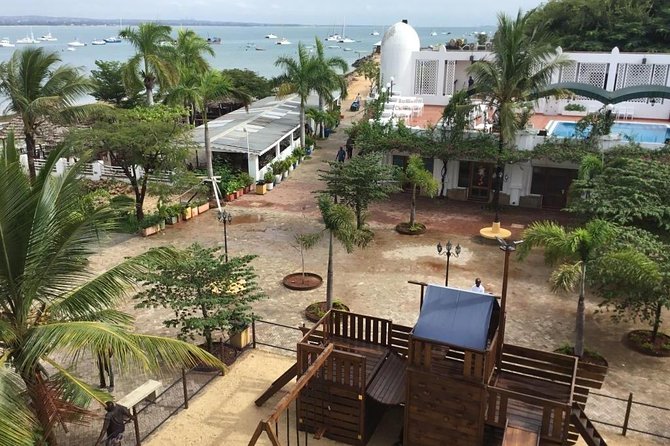
Dar es Salaam can be easy to underestimate. Many people use it as a stopping point before Zanzibar or a safari, but the city gives you a useful first look at Tanzania’s past and present. This tour helps you make sense of that story without asking you to arrange several museums and transfers on your own.
The route moves from national history to local art, colonial-era memory, and living cultural traditions. That sequence matters. You begin with major objects and dates, then see how Tanzanian artists express daily life, pause at a public monument tied to World War I, and finish with traditional homes from different parts of the country.
You meet at 8:00 am at Dar es Salaam Serena Hotel on Ohio Street. The experience ends back at the meeting point, and pickup is offered. If you are arriving by cruise ship or staying elsewhere, confirm the pickup details when booking, since the stated meeting point is the Serena Hotel.
The private format is one of the strongest reasons to choose this outing. You travel with your own party rather than following a large walking group through city streets. The information says the activity can have up to 100 participants, but the advertised experience is private for you and your party. Confirm the exact vehicle and group arrangement if that distinction matters to you.
A few more Dar es Salaam trips to weigh up
- Dar es Salaam: City Tour
★ 4.7 · 159 reviews - Dar es Salaam City Center: Walking Tour
★ 4.8 · 102 reviews - The Best/Top Rated Cultural City Tour in Dar es Salaam
★ 5.0 · 57 reviews
The National Museum puts Tanzania’s story in context
Your first major stop is the National Museum of Tanzania, with about one hour inside. The museum began in 1934 as a memorial museum for King George V, opened to the public as the National Museum in 1940, and expanded in 1963.
The most important display for many visitors is connected to Paranthropus boisei, whose remains were found at Olduvai Gorge by Dr. Louis Leakey. This gives the visit a clear link to northern Tanzania’s famous archaeological sites and to the wider story of human origins.
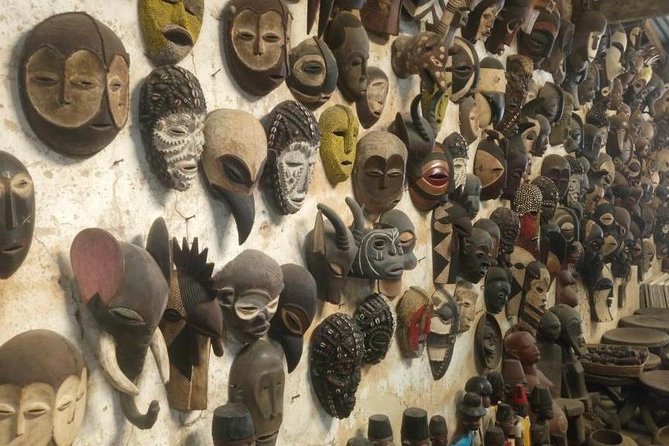
The museum also covers colonial history and traditional life. You can expect ethnographic displays showing crafts, headdresses, ornaments, musical instruments, leather and bark clothing, and other objects tied to older ways of living.
Some of the subjects are especially useful when explained by a local guide. Hunting and gathering, initiation rites, traditional healing, and witchcraft are presented as parts of cultural life rather than as isolated curiosities. A working wooden bicycle adds a memorable oddity to the collection.
I like this stop because it gives you facts that can otherwise float past during a city visit. You are not just looking at old objects. You are getting reference points for Tanzania’s archaeology, colonial period, and cultural variety.
The limitation is time. One hour is enough for a focused visit, but not for a slow reading of every display. If archaeology is your main interest, tell your guide early so the stop can receive the attention it deserves.
Tingatinga art brings color and daily life to the route
The next stop lasts about 45 minutes at the Tingatinga Arts Cooperative Society. Admission is included, and there is no separate entry charge listed for this stop.
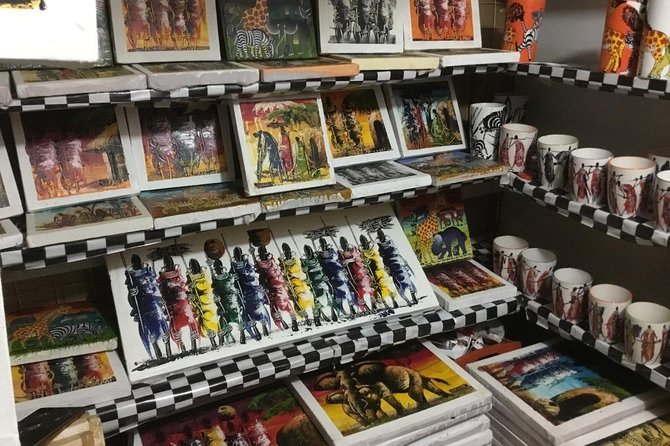
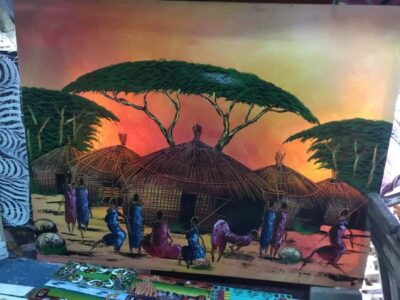
Tingatinga painting was developed in Tanzania and takes its name from its founder. The style is known for strong colors, sharp contrasts, and scenes of people, animals, activities, and local places. The paintings were first made on materials such as Masonite and ceiling boards before canvas became more common.
One unusual detail is the use of bicycle paint. Layers of glossy enamel produce the hard, bright surface associated with the style. The paint allows artists to create clear colors and strong contrast while still working across shaded areas.
This is more than a quick shopping stop. The cooperative helps you understand why the art looks the way it does and how it connects to Tanzanian life. If you are considering buying a painting, the setting also lets you see the work close up before deciding.
The time is fairly short, so do not expect a full art lesson or a long studio visit. Ask your guide to explain the painting method and the subjects that appear most often. You will get more from the stop if you approach it as a cultural visit, not only as a chance to browse.
The Askari Monument explains a difficult colonial chapter
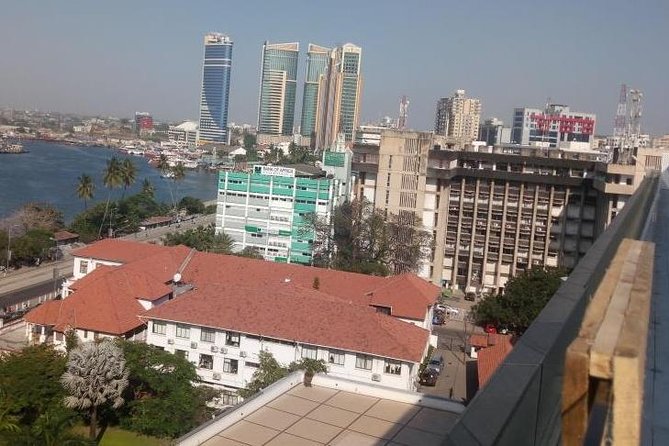
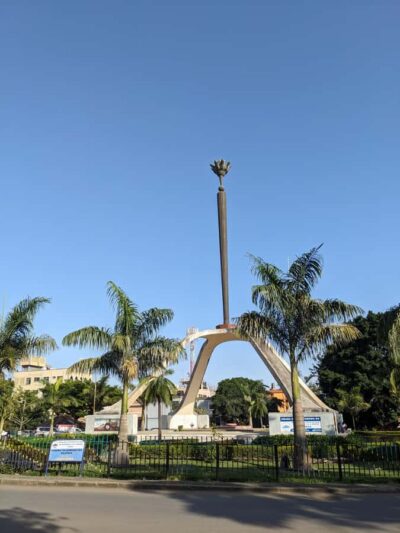
The Askari Monument takes about 10 minutes. It sits at the center of a roundabout where Samora Avenue meets Maktaba Street, so this is primarily a brief viewing and explanation rather than a long stop.
The monument was unveiled in 1927 to honor African soldiers who fought in World War I, along with the carriers who supported the army. Its inscription also refers to those who fought, served, and died for the King and country in East Africa.
The site carries an earlier German story too. A former statue unveiled in 1911 celebrated the German victory of 1888 and represented Major Herman von Wissmann, who later became governor of German East Africa. When British forces entered Dar es Salaam in 1916, that statue was removed, along with statues of Karl Peters and Otto von Bismarck.
This is one of the most useful short stops on the tour because it challenges a simple version of colonial history. You learn that Tanzanian soldiers fought in World War I for Germany, a detail that can make the period feel much more real.
Ten minutes is enough to see the monument and hear the main explanation, but not enough for an extended discussion. If this subject interests you, use the drive between stops to ask about German East Africa, British control, and the role of African soldiers and carriers.
Same country, a completely different kind of safari:
- MIKUMI NATIONAL PARK – 3 Days
★ 4.5 · 63 reviews - 2 nights 3 days safari to mikumi national park
★ 5.0 · 62 reviews - 2 Days 1 Night Mikumi National Park from Dar es salaam
★ 5.0 · 60 reviews - Private Full-Day Trip to Mikumi National Park from Dar es Salaam
★ 5.0 · 54 reviews
The Village Museum turns cultural variety into something visible
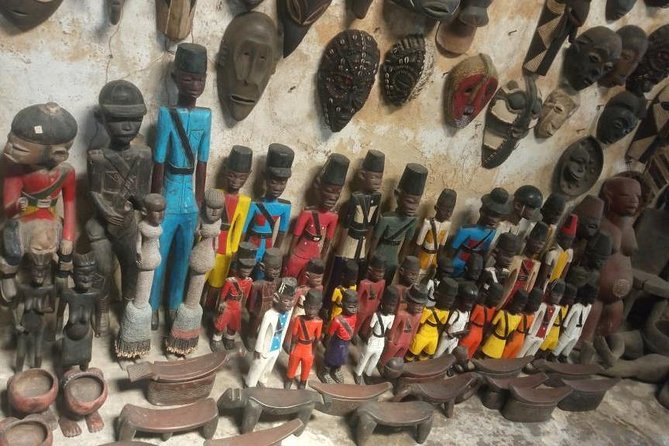
The Village Museum is the final planned stop and lasts about one hour. Tanzania has about 124 ethnic tribes, and the museum uses 16 selected groups to show different traditional ways of living before colonial and industrial change.
Each group is represented by a home built from natural materials. You can walk around the structures and look inside rooms arranged according to family roles and daily use. Displays include cooking stoves, pots, bowls, water-cooling pots, spears, arrows, and defensive tools.
The value here is physical scale. A written description of a household can be hard to picture. Seeing the shape of a home, the division of rooms, and the objects used for cooking, water, hunting, and protection gives you a clearer idea of how daily life worked.
Printed information at each house adds background, but this is also where your guide can make the visit much stronger. Godfrey, in particular, has been praised for explaining the distinct cultures represented at the museum. Guides who can compare the homes and customs help prevent the displays from becoming a row of disconnected buildings.
The museum should not be treated as a complete picture of all Tanzanian communities. Sixteen groups cannot represent every tradition in a country with about 124 ethnic groups. Still, it is a practical way to see differences in housing, tools, family space, and material culture within a limited city visit.
The best part may be the flexible time between stops
The official route lists four stops, but the experience can be shaped around your interests. Past outings have included the fish market, Kariakoo Market, churches, and shopping areas. One guide also helped visitors with bus and ferry tickets, which can be useful if Dar es Salaam is part of a longer trip.
Do not assume every extra stop is guaranteed. Traffic, museum timing, and your six-hour limit all matter. Instead, send your priorities when you book or discuss them with your guide at the start.
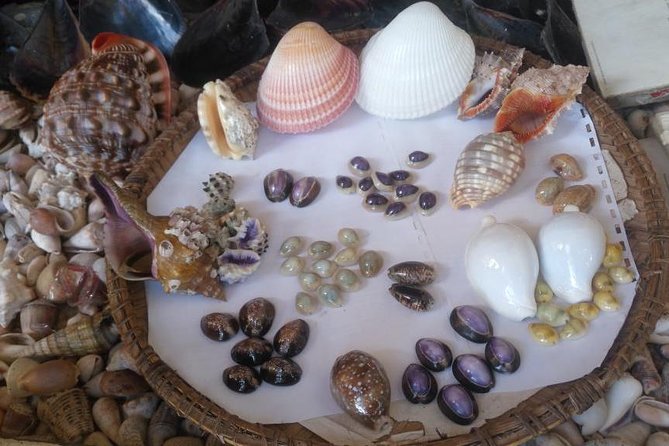
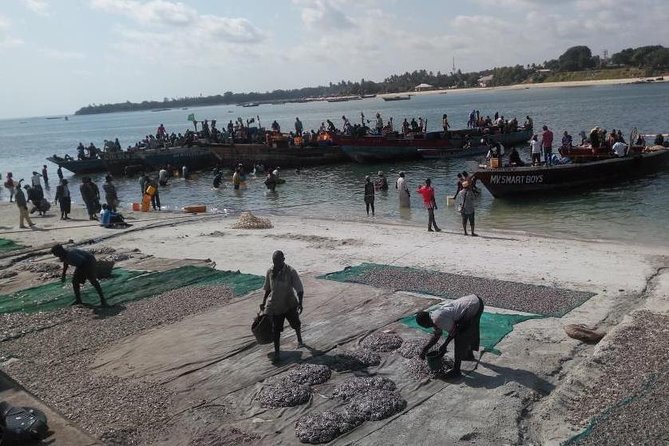
Kariakoo Market is a good example of why flexibility matters. It is a busy commercial area and gives you a different view of the city from the museums. The fish market can also add a more immediate sense of daily life, but market visits may require more time and attention than a quick photo stop.
The strongest guide experiences appear to come from people who adjust the route and explain ordinary life as well as formal history. Michael has been praised for clear background information and for helping with practical transport questions. Anna has been described as especially considerate and responsive. Godfrey has been valued for his easy-to-understand English and ability to tailor the day.
Guide assignments can change, so treat these names as examples rather than a promise that one particular person will lead your tour.
Comfort, timing, and the value of $97
The price is $97 per person, with admission fees included. You receive about six hours, private transportation, a driver-guide, and entry to the National Museum and Village Museum. Tingatinga admission is free, while the Askari Monument has no listed admission fee.
I consider that a fair price if you want a structured first look at Dar es Salaam. Paying for private transport is useful in a large city where you could lose time arranging taxis or locating each site. The air-conditioned vehicle is also more than a luxury in Tanzania’s warm climate. It gives you a cool place to reset between visits.
The value is strongest for couples, families, cruise passengers, and anyone with only one day in the city. Families have found the guides helpful with young children, including a one-year-old and a six-year-old. That does not mean the tour provides dedicated childcare, but it does suggest that a considerate guide can make family logistics easier.
The price is less compelling if you want only one museum or prefer to explore at a very slow pace. Four stops plus possible additions can make the day feel full. If you want long museum visits, extensive shopping, or a major market experience, ask how the schedule can be adjusted before you commit.
The tour is booked an average of 32 days ahead, so advance planning is sensible, especially for a cruise date or a fixed connection to Zanzibar. Confirmation is received at booking, and mobile tickets are offered.
What to know before setting out at 8:00 am
Wear comfortable clothing for getting in and out of the vehicle and walking around the Village Museum. The National Museum and the monument involve different kinds of attention, so bring patience for historical explanations as well as curiosity about objects and buildings.
Start with a short list of priorities. You might care most about archaeology, colonial history, art, markets, or everyday culture. Tell the guide. The private setup gives you a better chance of shaping the conversation than a fixed group outing.
Also keep your schedule realistic. The tour lasts about six hours, but city traffic can affect how much time remains at each stop. The listed timing totals less than the full experience, leaving room for driving and transfers. Extra markets or shopping visits may reduce time elsewhere.
Most people can participate, and the activity requires good weather. If bad weather causes cancellation, you are offered another date or a full refund. You can cancel for a full refund up to 24 hours before the start time. Changes or cancellations inside that window are not accepted, and the cut-off uses local time.
Who should book this Dar es Salaam city tour
I would choose this tour if you want a broad, guided introduction rather than a single-purpose museum visit. It suits you especially well if you are new to Dar es Salaam, arriving by cruise, traveling with family, or moving on to Zanzibar and want some context before you leave the mainland.
It also fits independent travelers who like flexibility but do not want to manage every transfer. A private guide can explain a monument, suggest a market, or adjust the balance between museums and city life.
You may want another option if you dislike vehicle-based sightseeing, need a highly specialized archaeology tour, or want to spend most of the day shopping. The short Askari Monument visit and fixed museum times make this a survey of the city, not an exhaustive study.
Should you book it?
Book it if you have one day in Dar es Salaam and want the city to make sense quickly. The combination of the National Museum, Tingatinga art, Askari Monument, and Village Museum gives you archaeology, colonial memory, local creativity, and cultural traditions in one manageable outing.
The strongest reason to book is the private guide. Ask for the subjects and extra stops that matter to you, then use the six hours wisely. At $97, the tour offers solid value when you include transportation, admissions, and the chance to avoid piecing together the day yourself.
FAQ
How long is the Dar es Salaam City Tour?
The tour lasts approximately six hours.
What time and where does the tour begin?
It begins at 8:00 am at Dar es Salaam Serena Hotel, Ohio Street, Dar es Salaam, Tanzania.
Does the tour include pickup and return transportation?
Pickup is offered, and the activity ends back at the meeting point. The tour includes transportation in an air-conditioned vehicle.
Which places are included in the planned route?
The planned stops are the National Museum of Tanzania, Tingatinga Arts Cooperative Society, Askari Monument, and Village Museum.
Are admission fees included?
Admission fees are included for the National Museum and Village Museum. The Tingatinga Arts Cooperative Society stop is listed with free admission, and no admission fee is listed for the Askari Monument.
Can I cancel the tour for a full refund?
Yes. You can cancel at least 24 hours before the experience start time for a full refund. Cancellations or changes made less than 24 hours before the start time are not accepted, and poor weather may result in a different date or a full refund.
Just added around Dar es Salaam
- Zanzibar: 3 Days to Mikumi and Chizua Waterfalls★ 3.5 · 5 reviews
- 3 Days Explore Selous Game Reserve + Boat safari + bushman walking★ 5.0 · 5 reviews
- 2 Day Wildlife Experience and Masai Culture Mikumi Park★ 5.0 · 5 reviews
- Explore Dar es Salaam: Full-Day Private City Tour★ 5.0 · 18 reviews
- Sunrise Beach Walk with Picnic Breakfast Activity★ 5.0 · 3 reviews
- 3 Days Safari to Nyerere National Park (Selous Game Reserve)★ 5.0 · 8 reviews
- Mikumi Np Mid Range Tour 3 Days★ 5.0 · 3 reviews
- Saadani National Park Day Tour★ 5.0 · 3 reviews
City Tours, compared.

Arusha Guided Walking City Tour, Culture, Lifestyle & History
Read our review →
The Best/Top Rated Cultural City Tour in Dar es Salaam
Read our review →
Browse the lists this tour appears in