
Reviewed · WALKING TOURS
Dar es Salaam City Center: Walking Tour
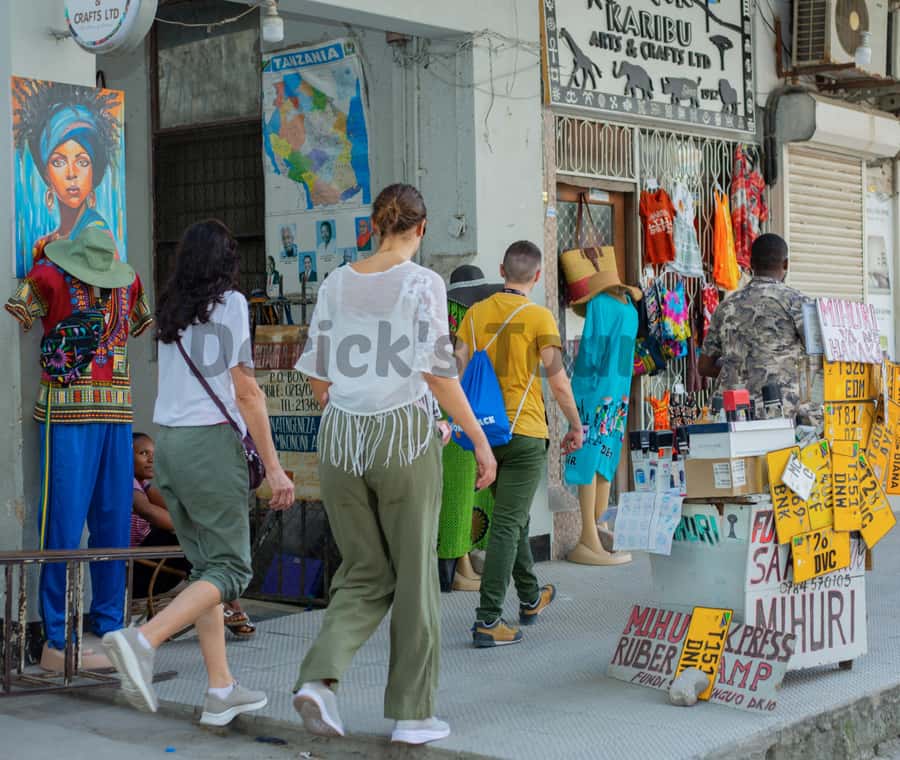
Dar es Salaam reveals itself best on foot, especially around Kivukoni Fish Market, where fishing boats, seafood sellers, nets, and street food bring the city’s coastal life into focus. Guide Derick Lawrence connects that daily scene with the churches, monuments, gardens, and old buildings around the center.
I like the tour’s strong mix of past and present, and I like that Derick can adjust the route. The main thing to consider is pace: two hours is enough for a useful first look, but the itinerary covers many stops, so you may have limited time for photographs.
Key points at a glance
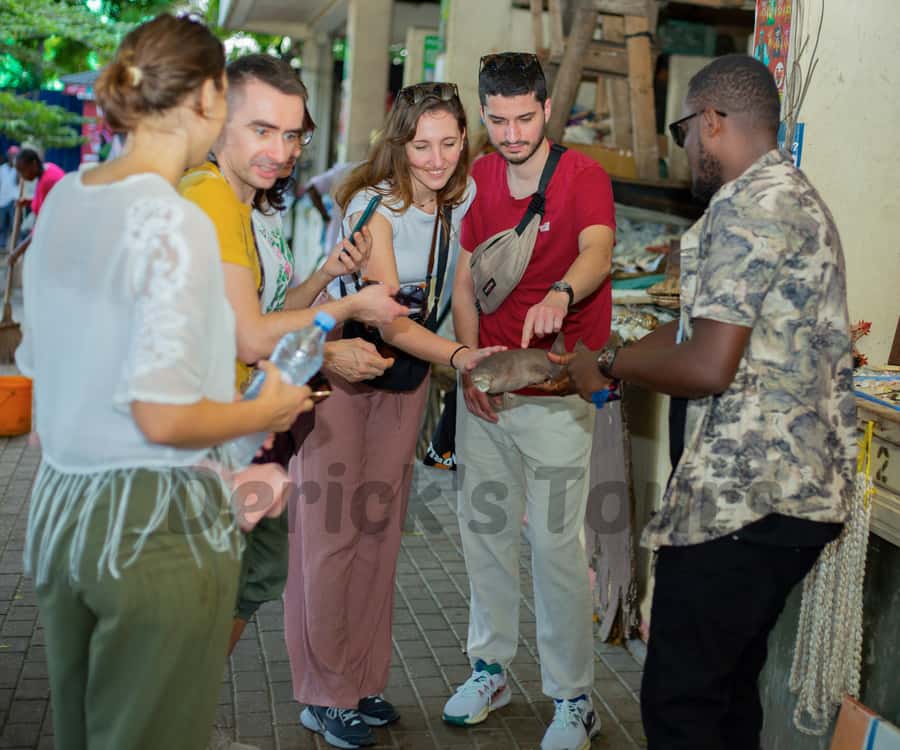
- Kivukoni Fish Market: See seafood trading, fishermen at work, and a more local side of central Dar es Salaam.
- Colonial-era architecture: Visit St. Joseph Cathedral, Azania Front Lutheran Church, and Old Boma.
- A clear city introduction: Derick explains Dar es Salaam’s development from the sultanate period through German and British rule and into modern Tanzania.
- Flexible route: You can ask to replace the fish market with another stop, such as Coco Beach, if the smell or setting is not right for you.
- Small-scale feel: The experience is suited to solo visitors and small groups, with timing and route changes possible in some cases.
- Good value at $30: For two hours with a local guide and several central sights, this is a practical way to get your bearings.
Why this two-hour walk works
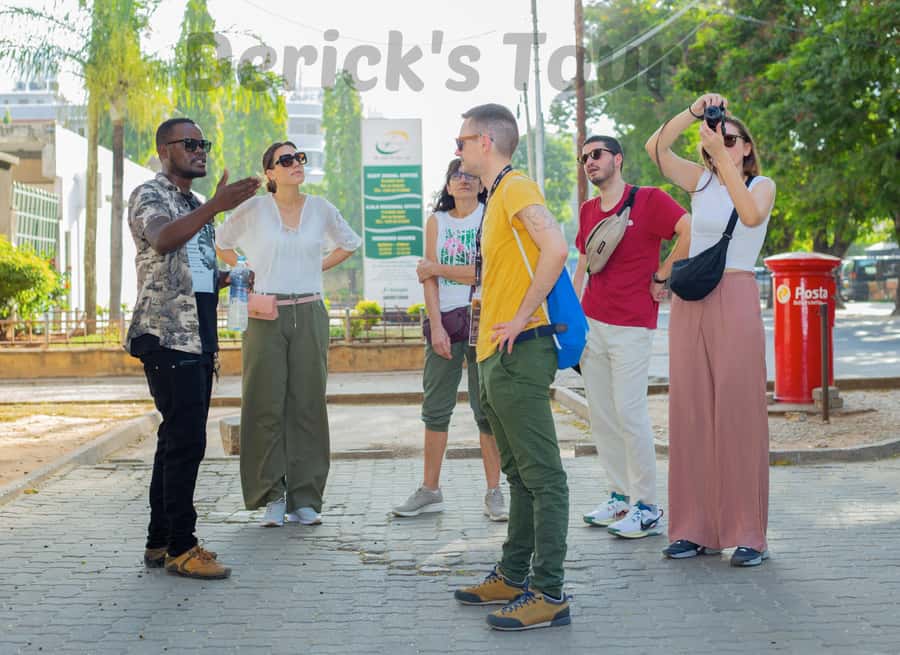
Dar es Salaam can feel sprawling when you first arrive. A short guided walk gives you a framework for the city before you set off on your own, especially if you are staying in the center, arriving by ferry, or using Dar as a stop before heading to Zanzibar or a safari destination.
At $30 per person, the tour is not the cheapest way to see a city, but it offers more than a list of photo stops. You are paying for local interpretation, route planning, and the chance to ask questions as the city unfolds around you. Derick’s strongest quality is his grasp of Dar es Salaam’s story, from early coastal settlements and the sultanate period to German colonial rule, British rule, independence, and modern city life.
The walk is conducted in English and lasts two hours. That is a useful length for a first orientation, but you should think of it as an introduction rather than a full city tour. You will see several important places, yet you will not have long at every one.
Timing matters in Dar es Salaam. One afternoon departure was shifted from 2 p.m. to 5 p.m. so the walk would be cooler, and flexible scheduling has helped other visitors who needed to change days. Ask about the best start time for your plans, particularly if you want to finish at the fish market when activity is still underway.
A few more Dar Es Salaam trips to weigh up
- 3 Days Nyerere NP [Selous GR] Game, Walking and Boat
★ 5.0 · 19 reviews - Dar es Salaam City Walking tour – Explore the Life of the Local People!
★ 4.5 · 17 reviews - 5 Days Selous/Nyerere & Mikumi NP Game drive, Maasai and Walking
★ 5.0 · 13 reviews
St. Joseph Cathedral and the city’s Christian landmarks
The route begins at St. Joseph Cathedral, one of central Dar es Salaam’s most recognizable buildings. Its Gothic design gives the city center a strong European architectural note, while its place in the daily life of the city adds more meaning than a quick exterior photograph can show.
Derick explains the building’s setting and significance as part of Dar es Salaam’s wider development. This is where a guide adds real value. Without context, a church can seem like one more old building. With context, it becomes part of the story of coastal trade, colonial power, religious communities, and the growth of the city.
The walk continues to Azania Front Lutheran Church. Its architecture reflects the German colonial period, and the contrast between the two churches makes this section especially useful for understanding how different institutions shaped the center.
You should not expect a long interior visit or a formal religious tour unless that is specifically arranged. The value here is the comparison of architecture and the explanation of what these buildings mean within the city’s past.
Askari Monument and the cost of empire
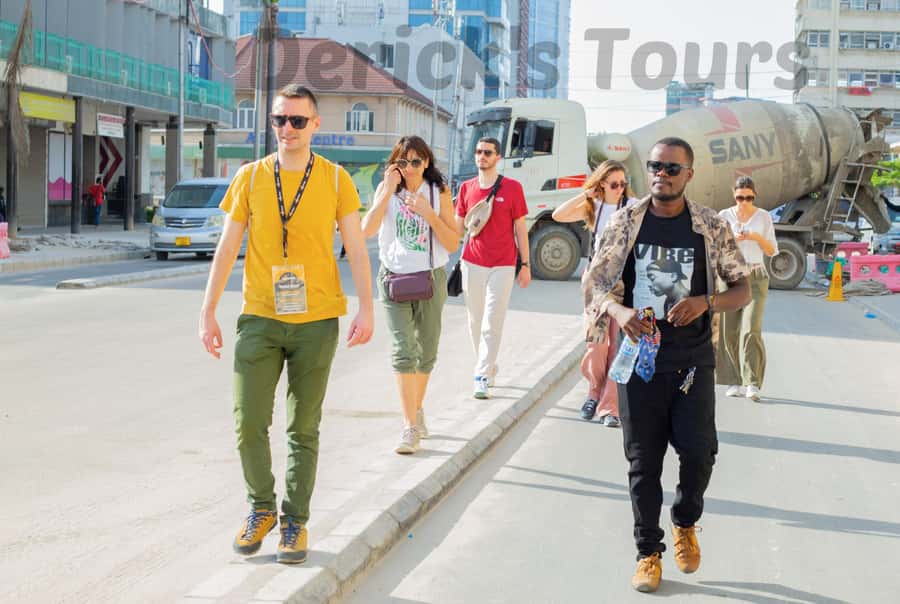
The Askari Monument is a key stop for understanding Tanzania’s connection to the First World War. It honors African soldiers who served during the conflict, and the memorial opens a wider conversation about colonial military service and the role of African troops in European wars.
This is one of the tour’s most important historical pauses. The monument is not simply a landmark in a traffic-filled part of town. It asks you to think about who fought, who controlled the territory, and how colonial history is remembered in public places.
Derick’s approach is described as balanced and nonpartisan. That matters here. The best explanation gives you room to consider the different layers of the past without turning the stop into a simple story of heroes and villains.
The monument also helps you understand the layout of the old center. From here, the tour moves between formal civic spaces, historic buildings, green areas, and working parts of the city. That change of setting keeps the walk from feeling like a series of disconnected monuments.
A quiet pause in the Botanical Garden
The Botanical Garden offers a break from traffic and pavement. It is a green space in the middle of the city, with tropical plants and trees that provide a calmer part of the route.
I like this stop because it changes the rhythm of the walk. Two hours of city streets can feel intense, especially in warm weather. A garden pause gives you time to slow down, listen, and see another side of Dar es Salaam without leaving the center.
Do not expect a large botanical attraction with a long list of formal exhibits. The supplied details present it as a peaceful urban retreat, so its appeal is atmosphere and contrast rather than a major standalone sight.
If you are interested in plants, city planning, or how residents use public spaces, tell Derick in advance. The route can be adjusted around visitor interests, and this is the kind of stop that benefits from extra explanation rather than a rushed pass-through.
Same country, a completely different kind of safari:
- Dar es Salaam: City Tour
★ 4.7 · 159 reviews - Dar es Salaam City Tour – Everyday
★ 5.0 · 64 reviews - MIKUMI NATIONAL PARK – 3 Days
★ 4.5 · 63 reviews - 2 nights 3 days safari to mikumi national park
★ 5.0 · 62 reviews
Old Boma and the oldest part of the city
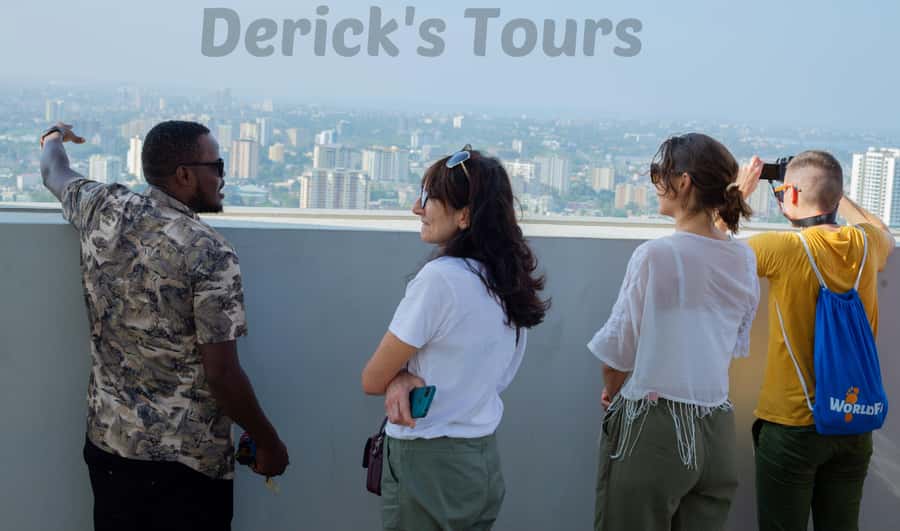
Old Boma is one of Dar es Salaam’s oldest surviving buildings. Its thick walls and historic setting offer a direct link to the city’s architectural past, making it a natural companion to the two churches and the Askari Monument.
This is a good place to ask how Dar es Salaam changed over time. Derick can connect the building to the city’s period under the sultanate, the German administration, the British period, and later national development. You get a better sense of why the central district contains such varied styles and uses.
The Old Boma stop is also useful for visitors who want more than modern city views. Dar es Salaam is often treated as a gateway to other destinations, but its center has its own story. A building like this gives that story a physical anchor.
The trade-off is that historic buildings in a working city may not offer the polished presentation of a museum. The experience depends heavily on the guide’s explanation. That is a strength here, since Derick’s historical background is one of the tour’s most praised features.
Kivukoni Fish Market, the liveliest stop
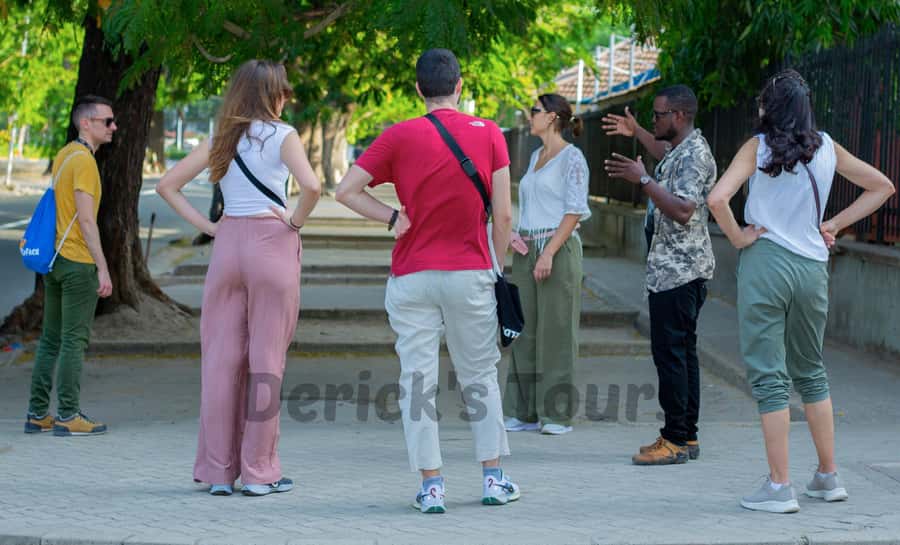
For many visitors, Kivukoni Fish Market is the tour’s highlight. This is where Dar es Salaam feels most immediate. You can watch seafood being sold, see fishermen handling nets, and observe the quick rhythm of buying and selling near the water.
A market visit rewards attention. Look at how the seafood is displayed, notice the movement between sellers and customers, and ask Derick about the role of fishing in local life. This is not a staged cultural performance. It is an active workplace, so your guide helps you observe respectfully and understand what you are seeing.
The market may also be a chance to try street food. One visitor joined Derick for fresh seafood and street food at the end of a 5 p.m. tour. If you are comfortable eating there, ask what is suitable and follow your guide’s advice.
There is a practical warning: the market has a strong smell, and it may not suit everyone. A visitor with an allergy to the smell asked to skip it, and the route was changed to Coco Beach instead. Mention allergies or food sensitivities before the tour, not after you arrive.
The market can also affect the tour’s pace. It is easy to spend longer than planned watching fishermen repair nets or sellers arrange seafood. If you want photographs, say so early. One visitor felt the walk moved too quickly and did not leave enough time for pictures, so you may need to choose between seeing more places and lingering at the market.
Art, city views, and possible route changes
The experience includes a stop at a local art gallery, described as a lively place for discovering local work. The exact gallery is not specified, so ask Derick what is open and included on your date.
This can be a welcome addition for visitors who want to connect the city’s past with its creative life today. Art also gives you a different way to understand Tanzania, especially if you ask about local subjects, materials, and the artists represented.
The route may include other city views or small surprises depending on your interests and timing. One private tour included a view from one of the twin buildings in Dar es Salaam, while another included an unexpected trip up a tower. These are not guaranteed features, so treat them as possible custom additions rather than part of the standard promise.
That flexibility is one of the tour’s better qualities. If you want architecture, markets, food, photography, churches, or a broad overview, message Derick before booking or contact him after reserving. The more clearly you explain your priorities, the easier it is to use the two hours well.
What the guide adds
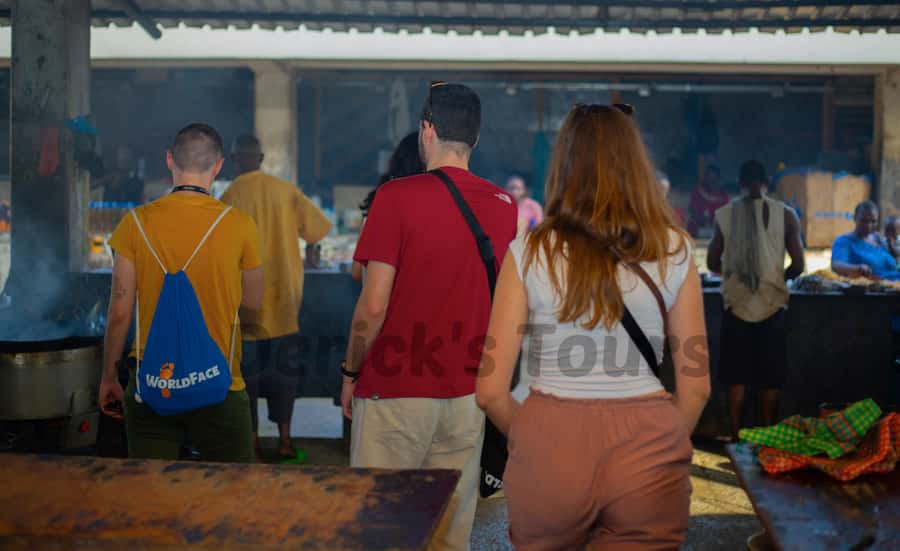
Derick Lawrence is the central reason this experience works. His role is not just to lead you from one landmark to the next. He explains the city’s formation, answers detailed questions, and connects historical periods with buildings and everyday life.
His flexibility also appears useful in practical situations. He has changed start times, rescheduled missed appointments, and adjusted routes when a visitor wanted to avoid the fish market. A solo visitor who was the only person booked for a time slot even continued part of the experience by motorbike, though that should be treated as an individual arrangement, not a standard feature.
Solo visitors have found the walk comfortable, and the small-group format can make it easier to ask questions or request changes. If you are traveling alone, tell the guide what kind of experience you want rather than simply following the standard route.
Derick has also helped visitors with photos and, in one case, returned a guest to a homestay. Do not assume transportation or a drop-off is included, but it is reasonable to ask about practical help when arranging the tour.
Pace, comfort, and what to bring
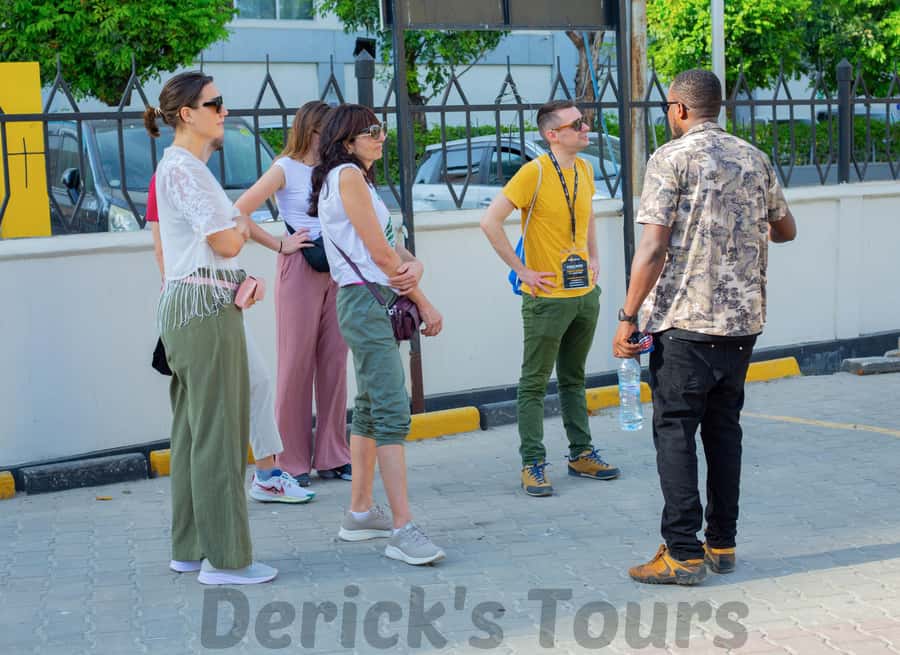
This is a walking tour in a warm coastal city. Wear comfortable shoes and bring water, sun protection, and a phone or camera. The supplied details do not specify distance, terrain, or accessibility arrangements, so ask before booking if you have mobility concerns.
The two-hour duration is long enough to cover a useful group of central sights, but the schedule can feel full. You may spend only a short time at each church, monument, garden, and historic building before moving on to the market or gallery.
A later start can make the heat easier, as one visitor found when moving from 2 p.m. to 5 p.m. Morning or late-afternoon timing may also suit your wider plans, but availability changes, so check the available times when booking.
If photographs matter to you, say so at the start. Derick’s pace has been praised as comfortable by one visitor, while another wanted more time for pictures. The best pace depends on your group, the route, and how much time you want at each stop.
Who should book this walk
I would choose this tour if you want a first look at Dar es Salaam that combines history with ordinary city life. It works particularly well for:
- First-time visitors who need a quick orientation
- Solo visitors who want a flexible local guide
- Short-stay guests with only a few hours in the city
- Cruise or ferry passengers who can arrange a suitable meeting time
- Visitors interested in colonial architecture and Tanzania’s political past
- People who prefer markets and working neighborhoods to a bus-only sightseeing route
It may be less suitable if you want a slow, detailed visit inside every building or a full-day exploration. The route covers a lot in two hours, and the fish market can be intense if you dislike strong smells, crowds, or seafood handling.
The tour is conducted in English, and the listed price includes the guide, guided visits to the mentioned landmarks, and the option to request changes. Cancellation is free up to 24 hours before the start, and you can reserve now and pay later, which helps if your schedule is still moving.
Should you book the Dar es Salaam city walk?
Book it if you want to understand the city quickly and prefer a human guide over a fixed sightseeing loop. The strongest reasons are Derick’s clear knowledge of Dar es Salaam’s past, his willingness to answer questions, and the chance to reach places such as Kivukoni Fish Market that a large vehicle tour may skip.
Before you go, request the time that suits the heat, ask how much time is planned at each stop, and mention any food allergies or market sensitivities. If you want Coco Beach, a gallery, a tower view, or a focus on architecture instead of the fish market, request that in advance.
At $30, this is good value for a two-hour introduction, especially if you are new to Dar es Salaam. Just keep your expectations right: it is a brisk city orientation with room for personal touches, not an exhaustive tour of every major sight.
FAQ
How much does the Dar es Salaam walking tour cost?
The tour costs $30 per person.
How long does the walking tour last?
The experience lasts two hours.
What language is the tour conducted in?
The live tour is conducted in English.
Which sights are included?
The route includes St. Joseph Cathedral, Azania Front Lutheran Church, the Askari Monument, Botanical Garden, Kivukoni Fish Market, Old Boma, and other central city sights. A local art gallery may also be included.
Can the route be customized?
Yes. You can contact Derick Lawrence about adjusting the route to suit your interests. One visitor replaced the fish market with Coco Beach because of sensitivity to the market smell.
Is cancellation allowed?
Yes. You can cancel up to 24 hours in advance for a full refund.
Can I reserve the tour without paying immediately?
Yes. The reserve-now, pay-later option lets you book your place without paying at the time of reservation.
Just added around Dar Es Salaam
- Zanzibar: 3 Days to Mikumi and Chizua Waterfalls★ 3.5 · 5 reviews
- 3 Days Explore Selous Game Reserve + Boat safari + bushman walking★ 5.0 · 5 reviews
- 2 Day Wildlife Experience and Masai Culture Mikumi Park★ 5.0 · 5 reviews
- Explore Dar es Salaam: Full-Day Private City Tour★ 5.0 · 18 reviews
- Sunrise Beach Walk with Picnic Breakfast Activity★ 5.0 · 3 reviews
- 3 Days Safari to Nyerere National Park (Selous Game Reserve)★ 5.0 · 8 reviews
- Mikumi Np Mid Range Tour 3 Days★ 5.0 · 3 reviews
- Saadani National Park Day Tour★ 5.0 · 3 reviews
Walking Tours, compared.


3 Hours Private Stone Town walking Tour with Guide
Read our review →
Stone Town Historical Cultural Walking Guided Tour
Read our review →
Stonetown: Food Markets and Street Food Walking Tour
Read our review →
Arusha Guided Walking City Tour, Culture, Lifestyle & History
Read our review →

Browse the lists this tour appears in