
Reviewed · HISTORICAL TOURS
Bagamoyo Historical Tour – Everyday
Bagamoyo tells Tanzania’s story in layers: Arab trade, the slave and ivory routes, German rule, Christian missions, and the slow quiet of a coastal town. This eight-hour day trip takes you 65 kilometers north of Dar es Salaam, where the traffic eases and the past becomes easier to read.
I like two things here. First, the tour links scattered places into one clear story, from the ancient Kaole Ruins to German colonial buildings. Second, the drive gives you a useful change of pace from Dar es Salaam, especially if you want history without spending several days away from the city.
The main consideration is communication. Most feedback praises the guides, including Michael and Sedic, but one booking reported very weak English from the guide. If detailed spoken explanation matters greatly to you, confirm the guide’s language ability before departure.
Key points to know before booking
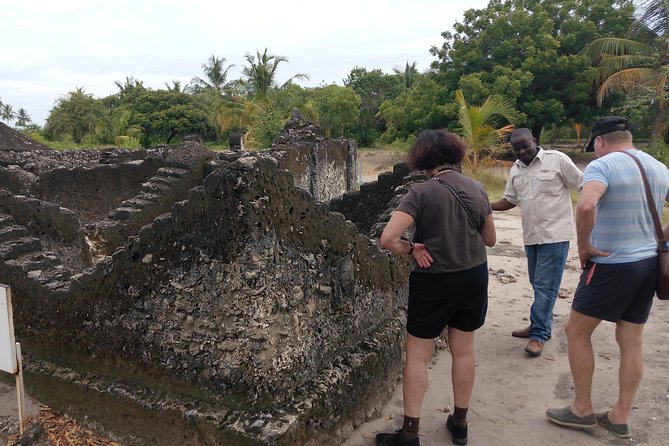
- Kaole Ruins are the oldest-feeling stop: See 30 tombs and what is described as the oldest mosque in East Africa.
- The slave-trade history is difficult but important: The former prison and the meaning of Bwagamoyo give the town’s name a painful human context.
- Michael may handle the road and Sedic the guiding: This pairing received especially warm praise for safe driving and detailed interpretation.
- The tour covers several eras in one day: Arab settlement, Portuguese disruption, German administration, British control, and Christian mission history all appear.
- The $187 price is for a private-feeling full-day service: It includes an air-conditioned vehicle, an English-speaking guide, water, soft drinks, and hotel pickup, but not meals.
- Bagamoyo adds a coastal pause: Beaches and hotels make it possible to slow down after the historical visits, though the listed tour is not a beach holiday.
Why Bagamoyo matters on a day from Dar es Salaam
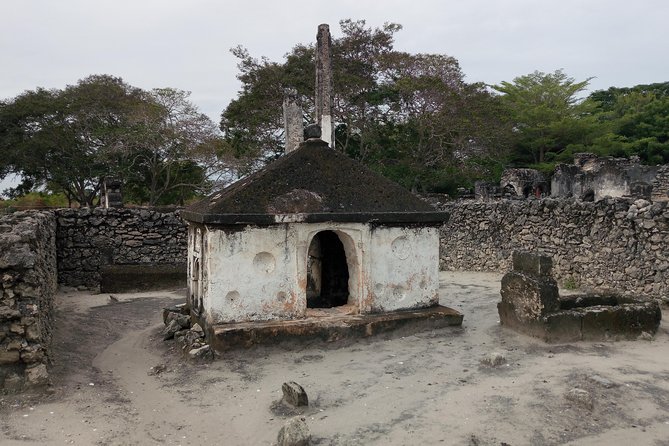
Bagamoyo sits on the coast opposite Zanzibar and about 65 kilometers north of Dar es Salaam. Its position helped make it one of the most important ports along the east-central African coast, linking inland routes with Indian Ocean trade.
The town was also the formal capital of German East Africa. That single fact gives the visit a different shape from a normal beach outing. You are not just looking at old walls. You are tracing how trade, forced migration, colonial power, religion, and transport shaped Tanzania.
The name Bwagamoyo is commonly explained as Here I throw down my heart. On this tour, that phrase is tied to enslaved people who were held in Bagamoyo and sent away, often never to return to Africa. That history can be hard to face, but skipping it would leave out the reason Bagamoyo matters.
I find the tour valuable because the history is tied to real places. A prison, a mosque, tombs, a statehouse, mission buildings, and a cross each give you something solid to connect with the guide’s account.
A few more Dar Es Salaam trips to weigh up
- Dar es Salaam History and Architectural Tours
★ 5.0 · 36 reviews - Bagamoyo Historical Tour – Everyday
★ 5.0 · 13 reviews - Private Tour in Historical Dar es Salaam with Lunch
★ 4.5 · 6 reviews
The road north with Michael
The journey from Dar es Salaam is part of the experience, not dead time. You leave the city and watch the mood change along the road. One detailed account praised Michael for safely handling the drive and for being good company during the journey.
The drive also gives you a sense of scale. Dar es Salaam is a major city, while Bagamoyo offers a slower setting with a smaller-town feel, historic sites, hotels, and beaches. You can use the ride to ask questions about Tanzania, the coast, and the places ahead.
The vehicle is air-conditioned, which matters in coastal Tanzania. Eight hours is a long day, and a cool vehicle makes the transfers more manageable. Water and soft drinks are included, but meals are not, so you should plan for food during the day or ask the operator what meal arrangements are possible.
Hotel pickup is included. The driver is due to wait in your hotel lobby with a sign showing your name. That removes one of the more common worries on an early day trip, though you should still check the starting time when booking because the exact departure time depends on availability.
Kaole Ruins and the older town beneath Bagamoyo
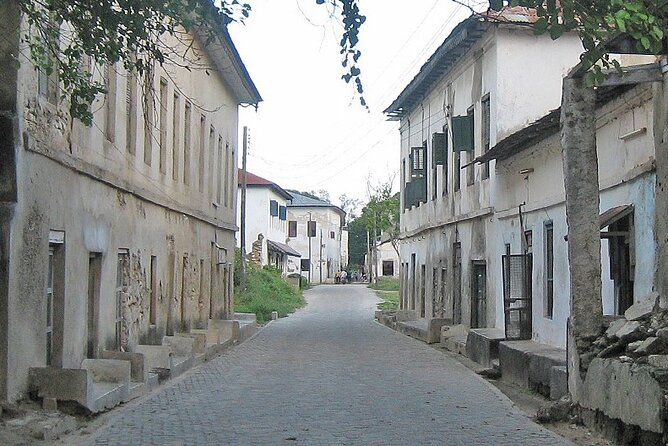
Kaole lies about five kilometers south of Bagamoyo. It is the first major historical stop described for the tour and offers a glimpse of an Arab settlement that predates the colonial period.
The ruins include 30 tombs and a mosque described as the oldest in East Africa. Those remains make Kaole especially useful for understanding that the coast had established links to the wider Indian Ocean world long before German rule.
The guide’s explanation matters here. Broken walls and tombs can be hard to interpret on your own, and the site’s importance is not always obvious at first glance. With context, you can connect the ruins to trade, settlement, religion, and the later decline of the town after the Portuguese arrived in the 15th century.
Do not expect Kaole to feel like a polished museum complex. The appeal is the sense of an archaeological site in place, with fragments that require attention and explanation. Wear sensible shoes and bring water, even though the tour supplies drinking water.
Facing Bagamoyo’s slave-trade past
The former prison is one of the most serious stops. It recalls the period when enslaved people were held in Bagamoyo as part of the slave and ivory trade.
This is not a cheerful sightseeing stop, and it should not be treated as one. The value comes from confronting the system that made Bagamoyo a major port and from hearing how people were confined before being transported away.
The name Bwagamoyo adds an emotional layer to the visit. It is linked to despair and separation, not simply to an old trading town. A good guide can help you understand the scale of the trade without turning suffering into a string of dramatic facts.
The available information does not give the exact amount of time spent at the prison, so expect the day to be guided rather than rigidly timed. If this subject matters to you, ask questions. The guide may be able to connect the prison to the wider story of coastal trade and inland routes.
Same country, a completely different kind of safari:
- Dar es Salaam: City Tour
★ 4.7 · 159 reviews - Dar es Salaam City Center: Walking Tour
★ 4.8 · 102 reviews - Dar es Salaam City Tour – Everyday
★ 5.0 · 64 reviews - MIKUMI NATIONAL PARK – 3 Days
★ 4.5 · 63 reviews
Old Boma and the German period
The Old Boma was built in 1897 as a German statehouse. After the First World War, the British took it over. This stop helps you see how Bagamoyo shifted from an African and Arab trading center into a place shaped by European colonial administration.
A statehouse is more than an old building. It shows where authority was exercised and how foreign governments fixed their presence in the town. The Old Boma also gives the guide a natural point for explaining the transition from German East Africa to British control.
You may find the building more interesting for its political role than for its appearance alone. Colonial structures can look plain from the outside, but their purpose tells you who controlled the town and when.
The tour also includes tombs of German leaders who died during the First World War. These graves bring the colonial period down to individual lives. They are a reminder that Bagamoyo’s story was tied to conflicts far beyond the coast.
The Catholic Museum and Livingstone’s connection
The Catholic Museum traces the early Christian presence in Bagamoyo. It is also described as the former resting place of Dr. David Livingstone, the famous explorer.
Livingstone’s connection gives this stop broad appeal, especially if you already know his role in 19th-century African exploration. Still, the museum is not only about one European figure. It points to the work of French missionaries and the growth of Christianity in the region.
The First Cross, erected in 1867 by French missionaries, adds a physical marker to that story. Seeing the cross after the museum helps connect written history with an object that has remained in the town.
This part of the day may interest you most if you enjoy mission history, exploration, or the meeting of African and European religious traditions. It also balances the earlier stops. Bagamoyo was shaped by more than trade and colonial rule, and the Catholic sites show another force that changed the town.
A guide can make or break the historical stops
The strongest feedback focuses on the people running the trip. One especially positive account praised Michael’s safe driving and Sedic’s quick, wide-ranging narration. The subjects covered included immigration, political leaders, education, art, and the physical setting around Bagamoyo.
Another assessment praised the guide’s strong grasp of the town’s past. That is important because several sites are compact and may not explain themselves. You need someone who can show how Kaole, the prison, Old Boma, the graves, and the Catholic sites fit together.
There is one clear caution. A separate booking rated the English level of the guide poorly. Since this tour depends heavily on spoken history, language clarity is not a minor detail. English is the stated tour language, but guide quality can vary, so I would contact Dove Adventure Tanzania before booking if you need complex historical explanations.
The provider is Dove Adventure Tanzania. The tour includes an English-speaking live guide, and the reviews give Michael and Sedic particular credit, but the information does not guarantee that both will lead every departure.
Beaches, hospitality, and the feel of the town
Bagamoyo is not only a sequence of historic sites. Its beaches and hotels give the day a gentler finish and make the town a possible place to relax during a longer visit to Dar es Salaam.
The listed tour is built around history, not a full beach program. You should think of the coast as part of the setting and a chance to slow down, rather than assume you will have a long swim or resort stay. The schedule must fit several historical stops into eight hours, including the drive.
That said, the change from Dar es Salaam can be welcome. One account described the road north as a moment of relief from the city’s intensity. I can see why: a historical town by the sea offers a quieter way to spend a day than remaining in the capital.
The phrase warm hospitality is part of the tour’s appeal, but the exact beach facilities, hotel arrangements, and free time are not specified. Ask about this before booking if coastal relaxation is more important to you than the historical sites.
Is $187 a fair price?
At $187 per person, this is not a budget day trip. Its value depends on how many people are booking and how much you value a guided, organized day from Dar es Salaam.
The price includes air-conditioned transport, an English-speaking guide, water, soft drinks, and pickup from your hotel. It also combines several historic locations that would be difficult to understand fully if you simply visited Bagamoyo without a guide.
The biggest value is convenience. You do not need to arrange the road transfer, find Kaole, work out the order of stops, or interpret the German and mission-era remains alone. A guide also gives the slave-trade sites the context they require.
Meals and alcohol are excluded. That is a small but practical budget point. Keep money available for food, and ask about the day’s meal plan because no meal is included in the stated price.
I would consider the cost strongest for visitors who want a focused cultural day, are staying in Dar es Salaam, and prefer a private organized experience over piecing together transport and site visits. If you only want a cheap ride to a beach, the price is harder to justify.
Who should book this Bagamoyo day trip?
You should consider it if you enjoy history, geography, architecture, and the way towns change over time. One especially positive assessment singled out those interests, along with the chance to escape Dar es Salaam for a day.
It also suits you if you want a guide to explain difficult subjects rather than just take photographs. The former prison, Kaole Ruins, German graves, and Catholic sites reward attention and questions.
Families and older visitors may appreciate the air-conditioned vehicle and hotel pickup. Wheelchair access is listed, though the information does not describe the exact surfaces or access arrangements at every historical site. If you use a wheelchair, confirm the practical details with the provider before departure.
This may not suit you if you dislike a full day of site visits, want a long beach stay, or need a guaranteed specialist historian. The English-language concern also deserves attention if you are booking mainly for detailed interpretation.
Booking, flexibility, and practical planning
You can cancel up to 24 hours before departure for a full refund, and reserve now while paying later. That is useful when your Dar es Salaam plans may change, though you should still check the available start times before choosing a date.
The tour runs every day and lasts eight hours. Pickup is included from your hotel, with the driver waiting in the lobby under your name. Give the provider your correct hotel details and keep your phone available in case the pickup arrangement needs clarification.
Bring comfortable clothing for a warm coastal day, shoes suitable for historic sites, and a little extra water despite the included supply. Since food is not included, do not leave meals to chance.
Most importantly, set your expectations correctly. This is a history-led outing with a coastal setting. The beaches are a welcome part of Bagamoyo, but the main reason to book is the chance to understand one of Tanzania’s most important port towns.
Should you book the Bagamoyo Historical Tour?
I would book this tour if you are based in Dar es Salaam and want one substantial day of Tanzanian history without arranging the transport yourself. The combination of Kaole’s mosque and tombs, the former slave prison, Old Boma, German war graves, the Catholic Museum, and the First Cross gives you a far fuller picture than a quick walk through town.
The strongest reasons to choose it are the broad subject range, hotel pickup, air-conditioned vehicle, and the positive accounts of Michael’s driving and Sedic’s explanations. The main warning is the uneven report about English clarity. Confirm who will guide your departure if that point could affect your enjoyment.
Book it for history, context, and a quieter coastal change from Dar es Salaam. Choose another outing if your priority is a cheap beach day or a relaxed resort schedule.
FAQ
How long does the Bagamoyo Historical Tour last?
The tour lasts eight hours, including travel from Dar es Salaam and visits to the historical sites around Bagamoyo.
How far is Bagamoyo from Dar es Salaam?
Bagamoyo is about 65 kilometers north of Dar es Salaam, on the coast opposite Zanzibar.
What sites are included on the tour?
The tour includes the Kaole Ruins, the former prison linked to the slave and ivory trade, Old Boma, German First World War tombs, the Catholic Museum, and the First Cross erected in 1867.
Is hotel pickup included?
Yes. The driver waits in your hotel lobby with a sign showing your name.
What is included in the $187 price?
The price includes air-conditioned transportation, an English-speaking guide, water, and soft drinks. Meals and alcohol are not included.
Can I cancel the tour for a refund?
Yes. You can cancel up to 24 hours in advance for a full refund.
Just added around Dar Es Salaam
- Zanzibar: 3 Days to Mikumi and Chizua Waterfalls★ 3.5 · 5 reviews
- 3 Days Explore Selous Game Reserve + Boat safari + bushman walking★ 5.0 · 5 reviews
- 2 Day Wildlife Experience and Masai Culture Mikumi Park★ 5.0 · 5 reviews
- Explore Dar es Salaam: Full-Day Private City Tour★ 5.0 · 18 reviews
- Sunrise Beach Walk with Picnic Breakfast Activity★ 5.0 · 3 reviews
- 3 Days Safari to Nyerere National Park (Selous Game Reserve)★ 5.0 · 8 reviews
- 5 Days Selous/Nyerere & Mikumi NP Game drive, Maasai and Walking★ 5.0 · 13 reviews
- Mikumi Np Mid Range Tour 3 Days★ 5.0 · 3 reviews
Historical Tours, compared.

Stone Town Historical Cultural Walking Guided Tour
Read our review →
Arusha Guided Walking City Tour, Culture, Lifestyle & History
Read our review →
Stone Town’s Hidden History: Private Guided Walking Tour
Read our review →


Zanzibar Stone Town Historical Tour and Spice Farm Tour
Read our review →Browse the lists this tour appears in