
Reviewed · HISTORICAL TOURS
Bagamoyo Historical Tour – Everyday
Bagamoyo’s past is not tidy or easy. It is a place of slave caravans, Arab traders, German rulers, missionaries, and captives facing an unknown future from the coast. This private 8-hour tour gives you a clear route through that story, from the Old Arab Fort and its prison rooms to the old mission buildings and the ruins at Kaole.
I like two things right away: you can set the pace with your own guide, and the air-conditioned vehicle makes a full day from Dar es Salaam far more comfortable. The tour also includes entrance fees, which keeps the day simple. The main drawback is the drive and the weight of the subject matter. This is not a light beach outing, and lunch is not included.
Key points to know
- A full day from Dar es Salaam: Start at 8:00 am and allow about eight hours for the tour.
- Four major historic stops: Visit the Old Arab Fort, Old Boma, Kaole Ruins, and Bagamoyo Museum.
- Private pacing: You can spend more time on the places that hold your attention instead of following a fixed group schedule.
- Serious history: The tour deals directly with slave detention, forced movement, German colonial rule, Arab trade, and Christian missions.
- Practical comfort: Pickup is offered, transport is air-conditioned, and all stated entrance fees and taxes are included.
- Bring lunch money: You can stop to eat, but the meal is not part of the $199 price.
Why Bagamoyo makes a worthwhile day trip
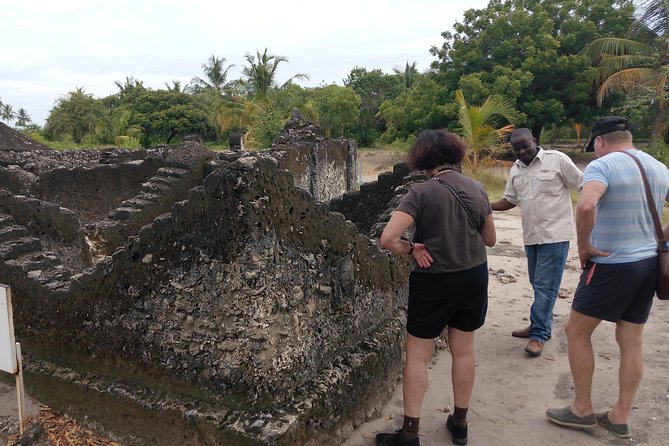
Bagamoyo is more than an old coastal town with a few crumbling buildings. Its past links inland caravan routes with the Indian Ocean, and several different powers left their mark here. That makes it a useful place to understand Tanzania’s past in one day.
The town was once an important trading center and later became the capital of German East Africa for a short period. The capital moved to Mzizima, now Dar es Salaam, partly because Bagamoyo’s harbor was too shallow for the needs of the colonial government.
I find that context helpful before you arrive. You are not simply ticking off four historic buildings. You are following a sequence: people and goods reached the coast through trade, captives were held and moved toward dhows, German officials set up administration, missionaries built a base, and archaeological remains show that Arab settlement in the area began centuries earlier.
The tour also includes the surrounding coastal setting, with references to mangrove forest and beaches. Still, the listed stops are primarily historical. You should book this for its stories and sites, not as a full beach day.
A few more Dar es Salaam trips to weigh up
- Dar es Salaam History and Architectural Tours
★ 5.0 · 36 reviews - Bagamoyo Historical Tour – Everyday
★ 4.4 · 8 reviews - Private Tour in Historical Dar es Salaam with Lunch
★ 4.5 · 6 reviews
The Old Arab Fort and Bagamoyo’s hardest story
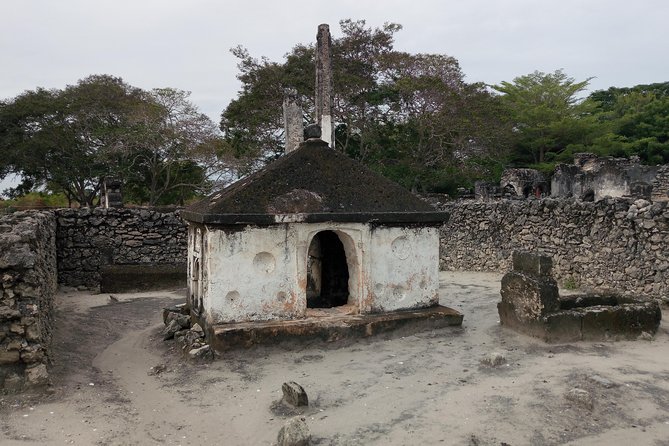
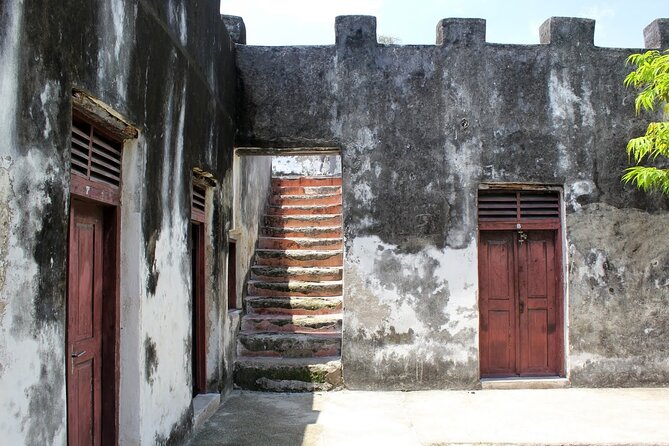
The Old Arab Fort is the emotional center of the day. It was used as a prison where enslaved people were held before being moved through underground tunnels toward dhows at the harbor. From there, many faced a future they could not know.
You get about an hour here, with admission included. That is enough time to examine the fort and let the guide explain how the site fitted into the wider coastal trade. The most valuable part is the human scale of the story. Instead of hearing only about routes and dates, you are asked to think about frightened captives held in a place built to control them.
The tour description refers to the broken-heart captives who arrived in an unknown world. That phrase captures the mood, but the experience is not presented as a theatrical performance. Expect a sober explanation of what happened at this part of the coast.
I would take this stop slowly. Ask your guide to explain the relationship between the fort, the tunnels, and the harbor. A good guide can help you connect the physical remains to the movement of people and the larger trade system.
This site may be difficult for some visitors, especially younger children, because the subject is slavery and forced transport. For adults interested in African history, it is one of the main reasons to make the trip.
Old Boma and the short German chapter
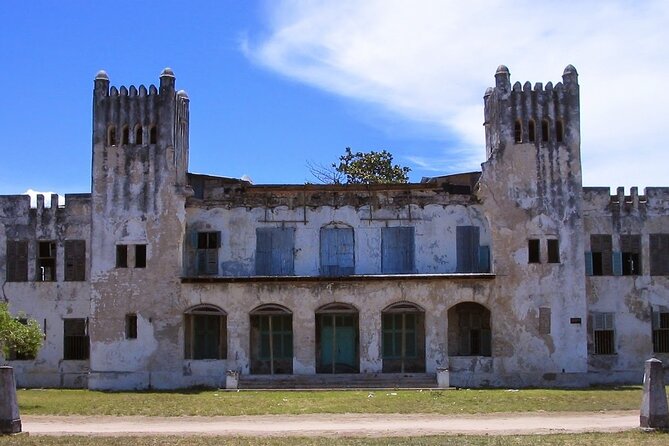
Old Boma gives the day a different focus. Built by the Germans at the end of the 19th century, it served as a state house and residence for German leaders in the area. You spend about 30 minutes here, and admission is included.
This is a shorter visit, but it helps explain why Bagamoyo mattered to German East Africa. The building represents the administrative side of colonial power, after the earlier period of coastal trade and slave transport. Your guide can place the building within the short period when Bagamoyo served as the colonial capital.
The move to Mzizima, now Dar es Salaam, tells you something practical about old port towns. Bagamoyo’s harbor was too shallow, so its political importance did not last. That detail is easy to miss in a standard sightseeing visit, but it explains why the town’s surviving buildings can feel more important than the modern town around them.
Do not expect a long architectural tour at Old Boma. Thirty minutes is enough for an introduction and some explanation, but not for an extended study of every room or feature. I see that as a fair use of time on a day that has several major stops.
Kaole Ruins, mosques, wells, and tombs by the ocean
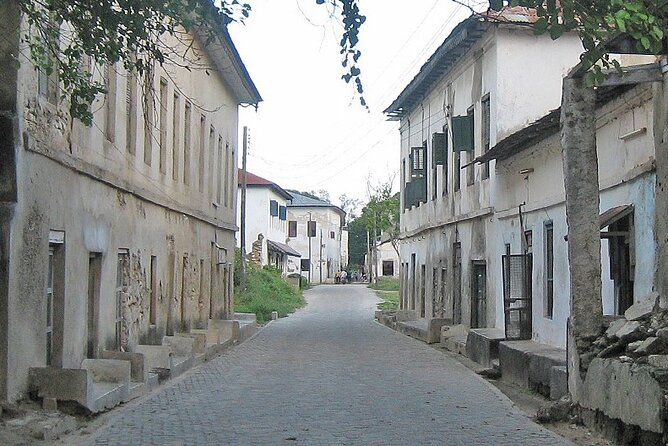
Kaole Ruins shifts the story back before German rule. The site contains remains linked to an early Arab settlement in the Bagamoyo area and served as an archaeological excavation site. The settlement began as a trading town in the 8th century, while the visible stone structures date from between the 13th and 16th centuries.
You spend about an hour here. The remains include two mosques, around 30 tombs, houses, wells, and graves of people who lived and died in the area. The site lies southeast of Bagamoyo town near the Indian Ocean, adding a coastal setting to the archaeological story.
This is the stop where a guide’s explanation matters most. Ruins can look like scattered stones if you do not know what you are seeing. Ask about the mosques, the wells, and the tombs, and you will have a better sense of how this once worked as a small trading settlement.
I also like the way Kaole broadens the day. Bagamoyo’s story did not begin with European colonial rule. Arab traders and settlements were part of the coast’s history long before the Germans arrived, and Kaole gives you physical evidence of that earlier period.
The site may feel less polished than a major museum, and the remains are not presented as a grand monumental complex. That is part of the appeal, but you should come ready to listen and look closely. The value is in the age and meaning of the remains, not in dramatic scale.
Same country, a completely different kind of safari:
- Dar es Salaam: City Tour
★ 4.7 · 159 reviews - Dar es Salaam City Center: Walking Tour
★ 4.8 · 102 reviews - Dar es Salaam City Tour – Everyday
★ 5.0 · 64 reviews - MIKUMI NATIONAL PARK – 3 Days
★ 4.5 · 63 reviews
Bagamoyo Museum and the Holy Ghost Mission
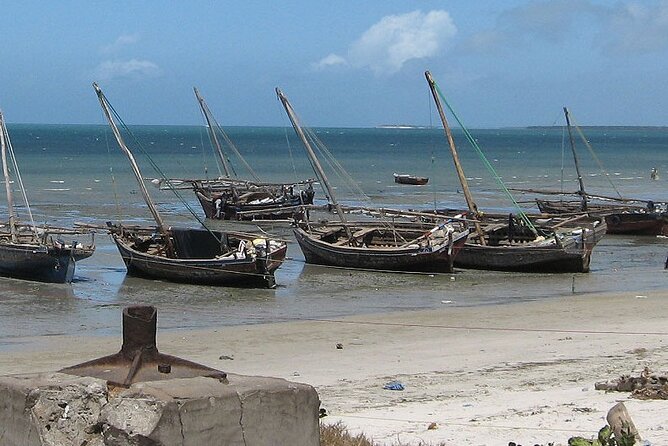
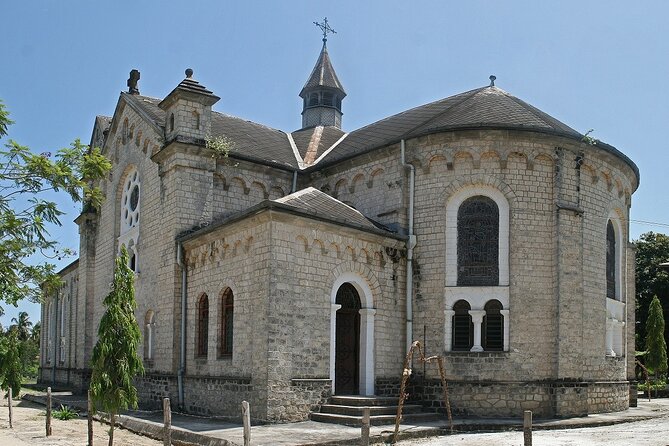
The Bagamoyo Museum is another serious stop, with about an hour set aside. It is connected with the original Holy Ghost Church, built in 1872 and described as the oldest church on mainland East Africa. The church formed part of the Holy Ghost Mission, one of the early Christian missions in East Africa.
The mission also connects to David Livingstone. In 1874, his body was kept overnight at the Holy Ghost Mission, and the Livingstone Tower, part of the original church, carries his name.
The Sisters’ House was built in 1876 and later became the Roman Catholic Mission Museum. Its displays include photographs of enslaved people chained by the neck, along with material on missionary work, conversion to Christianity, books, and booklets.
This stop can feel personal in a way that dates and buildings cannot. The photographs put faces and bodies into a history that can otherwise seem distant. At the same time, it is worth remembering that missionary history is not only a simple story of good works. The museum’s displays deal with conversion and missionary activity alongside the suffering connected with slavery.
You may find this the most emotionally demanding stop after the Old Arab Fort. Give yourself time to look at the exhibits rather than rushing through to the next site. The one-hour visit is useful because it lets the guide explain how the mission, the church, Livingstone, and the wider coastal story fit together.
A private tour changes the pace
The private format is one of the strongest reasons to choose this experience. You are not locked into the same rhythm as a large sightseeing group. If the fort raises questions, you can ask them. If Kaole interests you more than colonial architecture, you can make that clear to your guide.
The advertised tour is private, while the additional information gives a maximum of 100 participants for the activity. For your own booking, confirm the exact vehicle and party arrangement if group size matters to you. The key point is that the experience is sold as a private tour with your own pace.
A driver-guide is listed as part of the experience. One named tour team includes Derrick as driver and Sadiq as guide, with Sadiq providing the historical explanation. Names and assignments can vary by date, so treat that as useful detail rather than a guarantee that both will be assigned to you.
The strongest praise connected with this tour is directed at the smooth driving and the guide’s broad explanation of history and culture. That matters here. Bagamoyo covers several periods, and you need someone who can connect them rather than simply point at buildings.
A private tour also helps with the subject matter. You may want a quiet moment after the fort or museum, or you may have questions about a particular exhibit. The format gives you room to manage the day in a more human way.
What $199 includes, and what it does not
At $199 per person, this is not the cheapest way to spend a day near Dar es Salaam. The price makes more sense if you value private transport, a guide, a full-day route, and several included admissions.
The package includes an air-conditioned vehicle plus all fees and taxes. Pickup is offered, which removes one practical hurdle, though you should confirm the exact pickup details when booking. The start time is 8:00 am.
Lunch is not included. You can stop to eat during the day, so budget separately for that meal. The food cost is a small point, but it is worth remembering because the tour lasts about eight hours.
The value is strongest for couples, families, or small groups who would otherwise need to arrange a car, driver, guide, and separate entry tickets. If you are a solo visitor comparing this with a larger shared excursion, the private format may feel expensive. If two or more people share the booking, the cost becomes easier to justify because the vehicle and guide serve the whole party.
You are paying for interpretation as much as transport. Without a guide, Old Boma is simply an old building, Kaole can be a set of weathered remains, and the mission museum may leave you with more questions than answers. The guide is what turns separate sites into one connected day.
How to prepare for the eight-hour outing
Start with a proper breakfast. The day begins at 8:00 am and includes four substantial historic stops, so you will get more from it if you are ready to listen from the first visit.
Wear practical clothing and shoes suited to walking around old buildings and archaeological remains. The provided vehicle is air-conditioned, but the stops themselves may feel warm. Bring water and money for lunch, since the meal is not included.
This is a good day for questions. Ask your guide to explain the timeline between Kaole’s early settlement, Arab coastal trade, the slave trade, the German period, and the Christian missions. The sites make more sense when you understand how one period followed another.
You should also set your expectations correctly. The tour covers history, culture, and architecture, but it is not described as a specialist archaeological excursion. You will see important places and receive an overview, rather than spend the day on detailed excavation methods or academic debate.
The experience requires good weather. If poor weather forces a cancellation, you are offered another date or a full refund. You can also cancel for a full refund up to 24 hours before the start time. Within 24 hours, the payment is not refunded and changes are not accepted.
Who will enjoy this Bagamoyo tour most
I would choose this tour if you want to understand the coast beyond Dar es Salaam’s modern city life. It suits people who enjoy museums, old buildings, archaeology, and guided explanations of difficult history.
It is also a good match for visitors with only one day available. The route gathers several important sites into one organized outing, and pickup plus air-conditioned transport make the logistics easier.
Families can consider it, but the slavery displays and stories may be upsetting for young children. The private format gives parents more control than a fixed group tour, yet the content remains serious.
Beach-focused visitors should think twice. The tour may include the wider Bagamoyo coastal area, including mangrove forest and beaches, but the listed program centers on historical sites. If you want swimming, long time by the water, or a relaxed coastal lunch, this is not the clearest choice.
History fans should get the most from it, especially if they appreciate connections between African, Arab, German, and Christian pasts. You do not need specialist knowledge before arriving. You do need patience and a willingness to give the guide room to explain.
Should you book the Bagamoyo Historical Tour?
Book it if you want a private, guided history day from Dar es Salaam and you value a connected story more than a low price. The Old Arab Fort and Bagamoyo Museum are the most powerful stops, while Kaole Ruins add a much older chapter and Old Boma explains the German period.
The $199 cost is easier to defend for a small party sharing the vehicle and guide. Solo visitors may find it costly, but the included transport, admissions, and personal pacing still offer clear convenience.
I would skip it if your main goal is a beach day, if you dislike emotionally difficult subjects, or if you want a short excursion. For everyone else, Bagamoyo offers a thoughtful look at coastal Tanzania, and this route gives you enough time to understand why the town matters.
FAQ
How long does the Bagamoyo Historical Tour take?
The tour lasts about eight hours, with a scheduled start time of 8:00 am.
Is pickup offered?
Yes. Pickup is offered as part of the experience.
What sites are included?
The route includes the Old Arab Fort of Bagamoyo, Old Boma, Kaole Ruins, and Bagamoyo Museum. Entrance admission is included for the listed stops.
Is lunch included in the price?
No. You can stop for lunch during the tour, but you pay for the meal separately.
What is included in the $199 price?
The price includes an air-conditioned vehicle, all stated fees and taxes, and admission tickets for the listed sites.
Can I cancel the tour for a refund?
You can cancel at least 24 hours before the start time for a full refund. Cancellations or changes made less than 24 hours before the start time are not accepted for a refund. If bad weather or failure to meet the minimum number of participants cancels the tour, you are offered another date or experience, or a full refund.
Just added around Dar es Salaam
- Zanzibar: 3 Days to Mikumi and Chizua Waterfalls★ 3.5 · 5 reviews
- 3 Days Explore Selous Game Reserve + Boat safari + bushman walking★ 5.0 · 5 reviews
- 2 Day Wildlife Experience and Masai Culture Mikumi Park★ 5.0 · 5 reviews
- Explore Dar es Salaam: Full-Day Private City Tour★ 5.0 · 18 reviews
- Sunrise Beach Walk with Picnic Breakfast Activity★ 5.0 · 3 reviews
- 3 Days Safari to Nyerere National Park (Selous Game Reserve)★ 5.0 · 8 reviews
- Saadani National Park Day Tour★ 5.0 · 3 reviews
- 5 Days Selous/Nyerere & Mikumi NP Game drive, Maasai and Walking★ 5.0 · 13 reviews
Historical Tours, compared.

Stone Town Historical Cultural Walking Guided Tour
Read our review →
Arusha Guided Walking City Tour, Culture, Lifestyle & History
Read our review →
Stone Town’s Hidden History: Private Guided Walking Tour
Read our review →



Zanzibar Stone Town Historical Tour and Spice Farm Tour
Read our review →Browse the lists this tour appears in