
Reviewed · LEMOSHO ROUTE CLIMBS
Kilimanjaro Lemosho Route
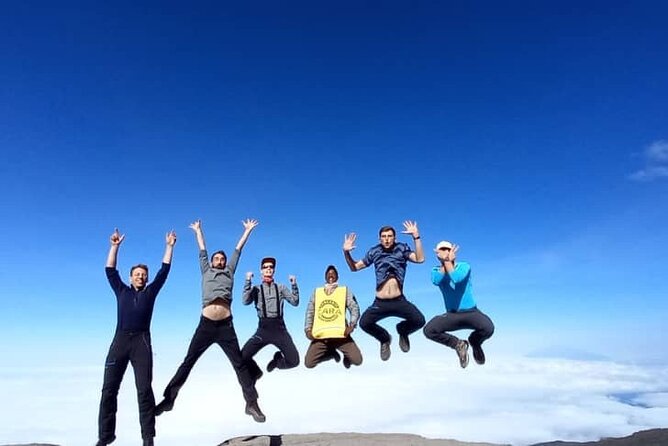
The great appeal of this 8-day Lemosho Route is the steady change in scenery. You begin in forest, cross open moorland with views of Kibo, pass through high volcanic terrain, and finish with a long night climb to Uhuru Peak at 5,895 meters. It feels like a real mountain journey, not a quick walk to a viewpoint.
I like the extra time built in for acclimatization, especially the high climb toward Lava Tower followed by a descent to Barranco. I also like the strong practical support: guides, porters, tents, and a chef handle much of the camp work, while past climbs have been led by guides including Festo, Nechi Teti, John, Saide, and Augustino. The main drawback is simple: this is a hard climb, and summit day lasts 15 hours or more.
Key points to know before booking
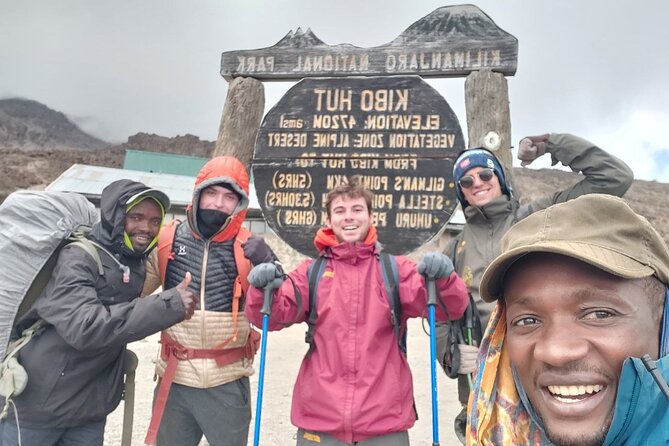
- The summit day is a serious endurance test: You start around 11:30 PM, reach Stella Point after about six hours, continue to Uhuru Peak, then descend to Mweka Camp.
- Lemosho gives you varied scenery: Forest, moorland, Shira high country, semi-desert rock, the Barranco Wall, and the summit zone all appear on the route.
- Acclimatization is built into the schedule: The Lava Tower climb and the return toward Barranco are especially useful for adjusting to altitude.
- The support team is central to the experience: Porters set up tents, and a chef prepares hot meals at camp. You carry only your daypack, according to the practical setup described.
- The published itinerary needs clarification: Day 2 and Day 3 both refer to the Shira camps in ways that overlap, so confirm the exact camp sequence before paying.
- The price works best for a small private group: At $2,890 per group for up to five people, the per-person cost changes sharply depending on group size.
Why the Lemosho Route is worth eight days
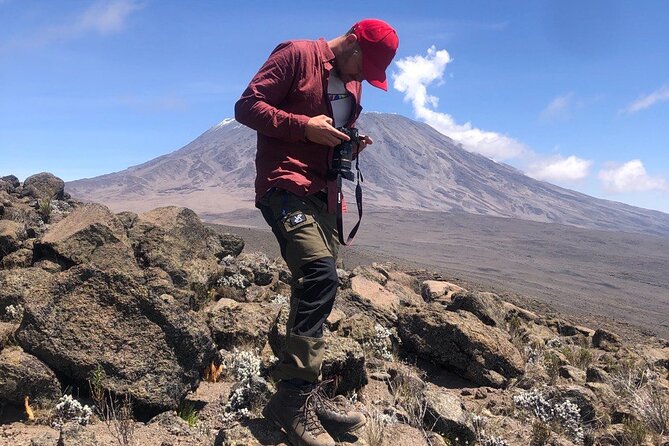
Kilimanjaro is not a technical mountain climb in the usual rock-climbing sense, but altitude makes it demanding. The route rises from about 2,200 meters to nearly 5,900 meters, and your body has to adjust as you go.
That is why I see the eight-day schedule as a sensible choice. A shorter itinerary may cost less or save time, but additional days give you more time to walk slowly, rest, and respond to how you feel. The route also gives you more time in the mountain’s changing ecological zones.
You begin at the western side of Kilimanjaro, rather than walking straight into the busiest high camps. The first days are quieter in feel, with forest trails and wide views opening as you gain height. By the time you reach the summit zone, you have had several days to learn the pace and routine of the mountain.
Zara’s published operation includes guides, porters, tent setup, and a chef preparing meals. That support is not a minor convenience. After a long day at altitude, carrying camping equipment and cooking your own dinner would add a great deal of strain. You still need to carry your personal daypack, but the camp team handles the heavy logistical work.
More Lemosho Route Climbs in Moshi:
- Kilimanjaro climb by Lemosho Route (7-day)
★ 5.0 · 651 reviews - Kilimanjaro Climbing Lemosho Route 8 Days.
★ 5.0 · 186 reviews - Kilimanjaro climb, Lemosho Route (8-day)
★ 5.0 · 148 reviews
Day 1: From Springlands Hotel to Mti Mkubwa Camp
The day begins with breakfast and a guide briefing at Springlands Hotel, followed by a roughly 1.5-hour transfer to the Lemosho Park Gate area. Registration takes place at Londorossi Gate before you start walking.
The first hike covers about 7 kilometers and takes roughly five hours in total, with the camp at around 2,750 to 2,780 meters. The trail runs through forest, which makes this a pleasant introduction to the mountain. You are gaining altitude, but the day is not yet a full test of endurance.
At Mti Mkubwa, the porters set up the tents and the chef prepares lunch. You have time to rest before dinner, then receive a briefing for the next day. I like this rhythm: walk, eat, rest, and get a clear explanation of what comes next.
The practical question is the pickup arrangement. Pickup is offered, but the stated meeting information lists Kilimanjaro Airport and a start time of 12:00 AM, while the day-by-day plan begins at Springlands Hotel after breakfast. Confirm where you will be collected and when your actual trek briefing begins.
Days 2 and 3: Shira high country and an itinerary detail to check
The route then climbs from roughly 2,780 meters toward the Shira camps at about 3,840 meters. Day 2 is described as a 12-kilometer walk taking six to seven hours, with moorland scenery and views of Kibo Volcano.
The plan says you walk for about five hours to Shira Camp 1, stop for a hot lunch, and then continue for another two or three hours to Shira Camp 2. This is a long day, but the open terrain rewards you with broad views and a greater sense of being high on Kilimanjaro.
Day 3 is described separately as a shorter hike from Shira 1 to Shira 2, covering about 5 kilometers in three to four hours. That creates an overlap in the published schedule, since Day 2 already places you at Shira 2.
Do not treat this as a small wording issue. Ask Zara to confirm the exact camps and distances for your departure. The schedule may reflect alternate versions of the route, but you want the final plan in writing so you know how much walking to expect and where you will sleep.
The purpose of these days is not only to cover ground. You are learning how your body handles altitude. The moorland is more exposed than the forest, and the air will feel thinner. Keep your pace slow, drink as instructed by your guide, and save your energy for the higher sections.
Day 4: Lava Tower and the descent to Barranco
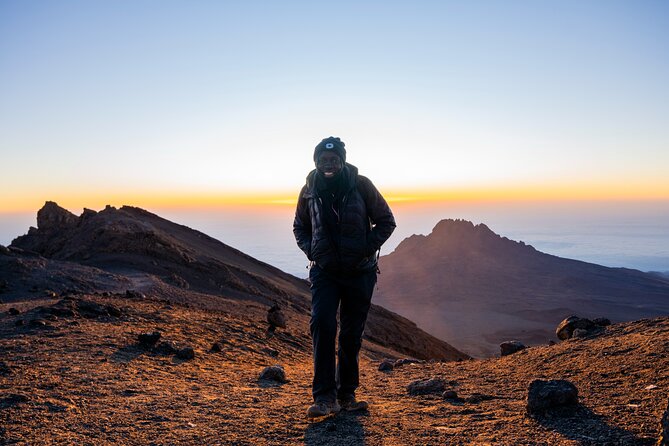
Day 4 is one of the most important days for acclimatization. You climb from the Shira area toward Lava Tower, listed at about 4,630 meters, across semi-desert terrain and rocky ground.
The day covers approximately 11 kilometers and takes seven to eight hours. The climb can feel demanding because you are gaining height, but the route then descends about 680 meters to Barranco Camp at roughly 3,960 meters.
This climb high, sleep lower pattern is valuable. You spend time at a greater altitude, then return to a lower camp for the night. It does not remove the risk of altitude sickness, but it gives your body useful exposure before the summit attempt.
The scenery also changes sharply here. You leave behind the softer forest and moorland and enter a world of rock, open sky, and volcanic forms. The descent toward Barranco offers views of the Western Breach, and the camp is known for memorable evening light.
Do not underestimate the day because you finish lower than Lava Tower. The climb and descent still require about eight hours, and the rocky footing can leave your legs tired. This is a good evening to eat, drink, and sleep rather than chase every photo.
Same country, a completely different kind of safari:
- Safari Serengeti And Ngorongoro
★ 5.0 · 288 reviews - Kilimanjaro climb, Machame Route (7-day)
★ 5.0 · 262 reviews - Climbing Kilimanjaro – Machame Route
★ 5.0 · 170 reviews - Climbing Kilimanjaro through 7 days Machame Route
★ 5.0 · 151 reviews
Day 5: The Barranco Wall and Karanga Valley
The famous Barranco Wall comes early on Day 5. It is steep, but the route is presented as a climb rather than a technical rock section. Your guide will control the pace and show you where to place your feet.
After the wall, you descend into the Karanga Valley, where the surroundings become more sheltered and the vegetation changes again. The day covers around 5 kilometers and takes about five hours, ending at Karanga Camp at approximately 4,035 meters.
The shorter distance does not mean an easy day. The Barranco Wall demands attention, and the altitude remains high. Still, this is one of the route’s memorable sections because the walking feels more varied than a simple uphill path.
After lunch, the schedule includes an acclimatization hike toward Barafu Camp, gaining about 200 meters before returning to Karanga. That extra outing is tiring, but it helps you see the next stage and gives your guide another chance to assess how you are coping.
Day 6: Barafu Camp and preparation for the summit
Day 6 takes you from about 4,035 meters to Barafu Camp at approximately 4,640 meters. The distance is listed as 5 kilometers, with about five hours of walking over rocky sections and gradual slopes.
Barafu means ice in Swahili, and the camp marks the high point of your regular daytime approach. It is a stark place to rest, with little comfort beyond the camp setup and the support of your team. The important task here is to eat, organize your summit clothing, and rest.
The summit briefing covers the route, the likely challenges, safety measures, and the late-night departure. Your summit clothing should be ready before dinner, since you will not want to search through bags in the middle of the night.
The schedule says the summit ascent begins late in the evening, with a wake-up around 11:30 PM. Try to rest even if sleep comes poorly. You will be moving through the coldest part of the climb while most of the mountain is quiet.
Day 7: Stella Point, Uhuru Peak, and a very long descent
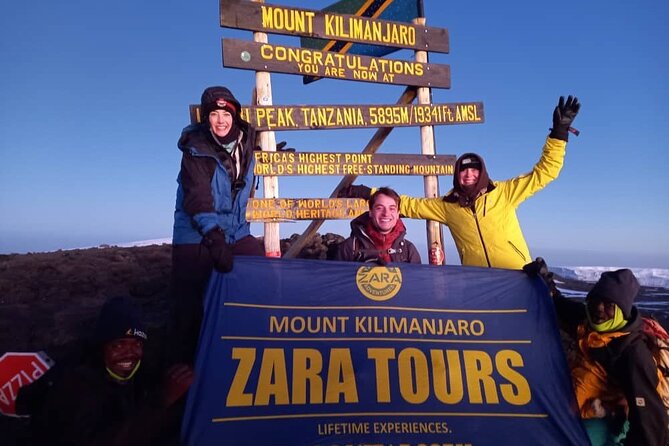
Summit day is the part you must take most seriously. You start after tea and biscuits, then climb northwest through scree toward Stella Point on the crater rim at about 5,685 meters.
The climb to Stella Point takes around six hours. Scree is loose volcanic gravel, and progress can feel slow. Your guide will likely set a deliberately gentle pace, often described by the Swahili phrase pole pole, meaning slowly, slowly. That pace is not a sign of weakness. It is the sensible way to conserve energy at altitude.
At Stella Point, you may see the sunrise if the weather cooperates. From there, the route continues for about two hours over snow-covered ground toward Uhuru Peak, the summit at 5,895 meters.
Your time at Uhuru Peak will be limited by cold, wind, fatigue, and the condition of the group. Take your photographs, enjoy the achievement, and follow your guide’s instructions about moving on. The summit is not the end of the day.
The descent to Barafu takes roughly three hours, where you stop for a short rest. You then continue down to Mweka Camp at about 3,090 meters. The complete day covers around 17 kilometers and lasts 15 hours or more.
This is where the quality of your support team matters most. Zara’s guides have been praised for care, organization, and keeping groups together, with names such as Festo, Nechi Teti, John, Saide, Augustino, and Captain G mentioned in the supplied feedback. That does not make the mountain easy, but a calm and attentive guide can help you make better decisions when you are tired.
Day 8: Mweka Gate and the return to Moshi
After breakfast at Mweka Camp, you descend about 10 kilometers to Mweka Gate. The walk takes four to five hours and brings you from roughly 3,090 meters to about 1,650 meters.
This final trail is a welcome change after the summit push. You are still walking downhill, so tired knees may complain, but the pressure of the summit attempt is behind you. At the gate, you are driven back to Springlands Hotel for a hot lunch and shower.
Tipping the team is encouraged, and envelopes are available at the hotel. Since the guides, porters, and kitchen staff are a major part of the experience, plan this expense before you arrive rather than treating it as an afterthought.
Zara also offers safari planning after the climb, with a coordinator available at the hotel. The information provided does not specify safari prices or itineraries, so consider this an optional follow-up, not part of the Kilimanjaro package.
Guides, porters, food, and the human side of the climb
The strongest feature of this experience is the working team around you. The guides are responsible for pacing, route decisions, briefings, and your general safety. Past groups have singled out Festo, Nechi Teti, John, Saide, Augustino, and other team leaders for clear organization and personal care.
The porters carry equipment and set up camp before you arrive. That work makes the trip possible, but it also deserves respect. You should ask Zara how its porter welfare and tipping practices work, then follow the company’s guidance.
Food is another bright spot. The camp chef prepares fresh meals, including hot lunch after some of the longer morning walks. You should still tell the company about dietary needs before departure, since the supplied information does not explain the menu or special-meal policy.
The camp routine is basic by design. You sleep in tents, eat at camp, and receive an evening briefing. If you need hotel-level comfort every night, this is not the right trip. If you value a well-supported outdoor challenge, the setup makes practical sense.
Is $2,890 good value for a private group?
The listed price is $2,890 per group of up to five people. At five participants, that works out to $578 per person. At two people, it becomes $1,445 each, and a solo booking would carry the full group price if the same rate applies.
That pricing makes the trip much more attractive for a group of friends or family members who can share the cost. It is less compelling for one or two climbers unless the private format and personal attention are worth the difference to you.
The itinerary clearly includes operational support such as camp setup, porters, a chef, and transport back to Springlands Hotel. Still, you should ask what the package price covers before booking. The provided details do not spell out every inclusion, such as park fees, airport transfers, equipment, accommodation before or after the climb, or tips.
The 97 percent recommendation rate and 4.9 rating from 71 supplied ratings point to a well-regarded operation, especially for organization, staff care, food, and summit support. I would treat those numbers as a useful signal, not a promise. Kilimanjaro success also depends on your fitness, acclimatization, weather, and how your body responds to altitude.
Who should book this climb?
I would choose this trip if you want a full Kilimanjaro route with varied scenery and an extra day for adjustment. It suits people with a moderate level of physical fitness who can manage long uphill walks, steep sections, cold conditions, and a 15-hour summit day.
You do not need to be an elite athlete based on the stated requirements, but you do need to prepare seriously. The trip is private, so only your group participates. That gives you more control than a large shared departure, but the cost is best shared among several people.
I would not book it if you are looking for a relaxed sightseeing tour or if you dislike camping. I would also reconsider if you cannot commit to slow pacing, early starts, and listening closely to your guide at altitude.
Final call: a strong route, with one detail to confirm
I would recommend the Zara Lemosho climb for a small group that wants a carefully supported, scenic route to Kilimanjaro’s summit. The extra acclimatization time, strong camp team, fresh food, and repeated praise for guides and organization give it real value.
Before you pay, confirm the Shira Camp sequence, the exact pickup time and location, and the full list of price inclusions. If those details are clear and you are prepared for the summit day, this is a serious but rewarding way to reach Uhuru Peak.
FAQ
How long does the Kilimanjaro Lemosho Route experience last?
The experience lasts approximately eight days, from the transfer to Lemosho Park Gate through the descent to Mweka Gate and return to Springlands Hotel.
Where does the trek begin?
The day-by-day itinerary begins after breakfast and a briefing at Springlands Hotel, followed by a transfer to the Lemosho Park Gate area and registration at Londorossi Gate.
Is pickup available?
Yes. Pickup is offered, and the meeting information lists Kilimanjaro Airport in Tanzania. The stated start time is 12:00 AM, so confirm the exact pickup arrangement with Zara.
How difficult is the trek?
Participants should have a moderate physical fitness level. The route includes steep and rocky sections, high altitude, a summit ascent beginning around 11:30 PM, and a summit day lasting 15 hours or more.
What is the highest point reached?
The climb reaches Uhuru Peak at 5,895 meters. The route also passes Lava Tower at approximately 4,630 meters and Stella Point at about 5,685 meters.
Is this a private tour?
Yes. This is a private activity, and only your group participates. The listed price is for a group of up to five people.
Are meals and camping support provided?
The itinerary describes tents being set up by porters and meals being prepared by a chef at camp, including hot lunches on some days. Ask Zara to confirm the complete list of included meals and services.
Can I cancel for a full refund?
You can cancel at least 24 hours before the experience start time for a full refund. Cancellations or changes made less than 24 hours before the start time are not accepted or refunded, based on the local time in Tanzania.
Just added around Moshi
- Mt Kilimanjaro 6 days Marangu route hike★ 5.0 · 3 reviews
- Wildlife Extravaganza: Manyara, Tarangire & Ngorongoro in 3 Days★ 5.0 · 3 reviews
- Private Cycle to Kilimanjaro Bike Park Safari★ 5.0 · 6 reviews
- 3 Days Private E-Bike Tour in West Kilimanjaro★ 5.0 · 3 reviews
- West Kilimanjaro cycling Adventures★ 4.5 · 8 reviews
- machame route★ 5.0 · 16 reviews
- Kilimanjaro Climb & Safari – Lemosho Route – 13 Day★ 5.0 · 10 reviews
- Kilimanjaro Climbing Umbwe Route★ 5.0 · 3 reviews
Lemosho Route Climbs, compared.


8-Day Small-group Lemosho Kilimanjaro Summit Trekking
Read our review →




Climbing Kilimanjaro through 8 days Lemosho Route
Read our review →
Browse the lists this tour appears in