
Reviewed · SERENGETI SAFARIS
4-Day Tarangire Serengeti, Ngorongoro & Maasai Guided group tour
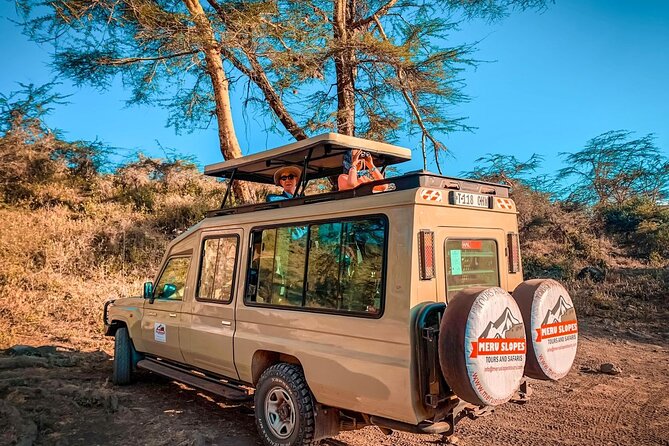
The best thing about this four-day Tanzania safari is its reach. In a short run from Moshi, you visit Tarangire, spend nearly two days around the Serengeti, and finish with a full crater drive in Ngorongoro. I like the mix of wildlife habitats, and I like that meals, airport pickup, camping, and a safari vehicle with Wi-Fi are included. The trade-off is a demanding schedule, with long drives and no spare day if weather or animal sightings slow things down.
I especially like the chance to sleep inside the Serengeti at Seronera and on the Ngorongoro rim at Simba campsite. Guides including Mohamed, Jacob, Abdul, Julius, and Andrew have been praised for careful driving, animal spotting, and clear explanations, while cooks such as Moshi, Rashid, and Yojan are known for making camp meals a real part of the trip. You should still confirm your exact guide, campsite setup, and pickup details before paying.
Key points at a glance
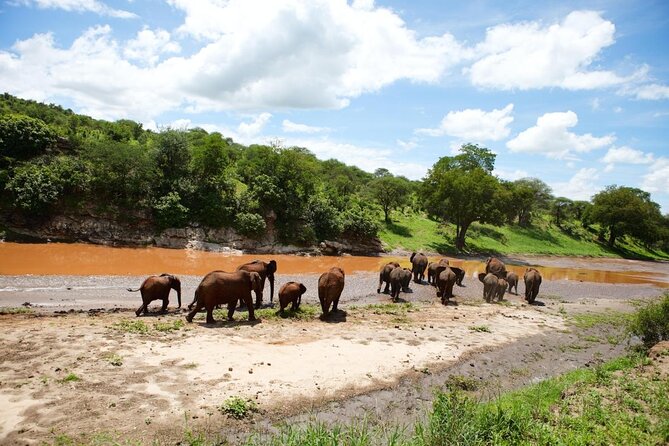
- Three major wildlife areas in four days: See Tarangire’s elephants, the Serengeti’s open plains, and Ngorongoro’s concentrated animal life.
- Nearly two days in the Serengeti: Day two brings you in, followed by an evening drive, while day three begins with another early game drive.
- Two memorable campsites: Spend a night at Seronera inside the Serengeti and a night at Simba campsite on the Ngorongoro rim.
- A full crater day: Drive down into the 610-meter-deep Ngorongoro Crater for one of Tanzania’s strongest wildlife-viewing days.
- Food is part of the value: The price includes three breakfasts, three dinners, and four lunches prepared during the safari.
- A group of up to 18 people: This keeps the cost below a private safari, though the vehicle will not feel intimate if fully booked.
A fast route through Tanzania’s best-known parks
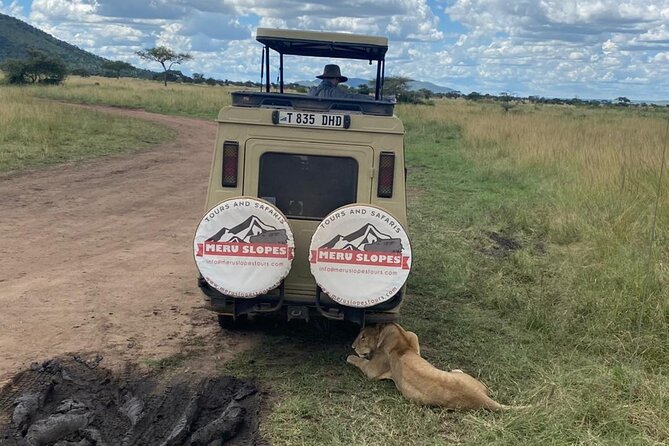
At $1,030 per person, this is not a bargain-basement bus trip, but it covers a great deal in four days. You get three national park and conservation-area experiences, four lunches, three breakfasts, three dinners, a professional guide, airport or departure tax charges, pickup, and Wi-Fi in the safari vehicle.
The price matters because park fees, fuel, staff, food, vehicle costs, and campsite arrangements can quickly add up on a northern Tanzania safari. You are paying for access to famous wildlife areas rather than for a relaxed holiday. This is a compact route designed to give you a strong first look at the region.
The tour begins at 7 a.m. with pickup listed at Kilimanjaro Airport. The meeting information also identifies Moshi as the tour location, so confirm whether your pickup is at the airport, in Moshi, or at another agreed point. That small check can prevent a rough start after an overnight flight.
The group can contain up to 18 people. That is useful for keeping the cost manageable, especially for solo visitors or couples who do not want to pay for a private vehicle. The downside is simple: more people means more opinions about when to stop, how long to watch an animal, and when to move on.
More Ngorongoro Crater Tours in Kilimanjaro
- Safari Serengeti And Ngorongoro
★ 5.0 · 288 reviews - 5 Days Camping Tarangire, Serengeti & Ngorongoro crater & Visiting Maasai
★ 5.0 · 58 reviews - 4 Days Group Joining Camping Safari to Tarangire Serengeti Ngorongoro Crater
★ 5.0 · 50 reviews
Day one: elephants and dry-country wildlife in Tarangire
After breakfast, you drive from Arusha toward Tarangire National Park for a full day of game viewing. The listed time is about seven hours, which includes the park experience and the day’s movement, with a picnic lunch along the way and dinner and overnight at Sun Bright campsite.
Tarangire is a fine first stop because it feels different from the Serengeti. Its wildlife gathers around shrinking water sources in the dry season, and large elephant groups are one of the main attractions. You might also see wildebeest, zebra, buffalo, impala, gazelle, hartebeest, and eland.
The park is also one of the better places in Tanzania to look for dry-country species such as fringe-eared oryx and gerenuk. These are less familiar than lions and elephants, but they give the first day its own character. You are not simply checking off another park. You are seeing animals adapted to a drier setting.
Predators follow the herds and water, so Tarangire can offer more than large herbivores. Sightings are never guaranteed, but the concentration of animals makes a full-day drive worthwhile. The park is also a good place to settle into the rhythm of safari, with long periods of watching, waiting, and moving slowly between sightings.
The practical issue is the early start and the amount of time in the vehicle. You should expect a full day rather than a gentle introduction. The reward is that you do not spend the day rushing through Tarangire for a brief photo stop.
Day two: from the highlands to the Serengeti plains
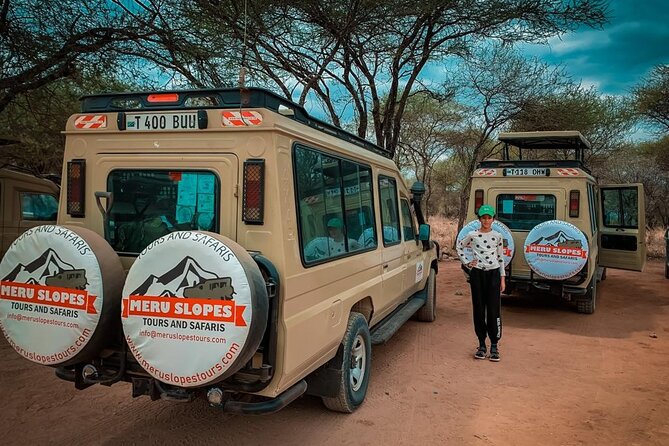
Day two is the longest-feeling transfer of the trip. After breakfast, you pass through fertile highland country where wheat, coffee, and corn are grown by the Iraqw people. You also cross the Ngorongoro Conservation Area, with a view of the huge caldera before continuing toward Serengeti National Park.
The listed duration is about eight hours. That means the day combines scenery, road travel, a major transition between parks, and arrival in the Serengeti by late afternoon or evening. If you prefer a trip with very little time on the road, this route may feel rushed.
The payoff is the first sight of the Serengeti. The name comes from the Maasai word for endless plain, and the open grassland explains why. The park contains several types of habitat, including plains, swamps, lakes, and savanna, so the scenery changes as you go.
The safari plan includes an evening game drive in central Serengeti, with the chance to watch the sunset. You then have dinner and sleep at Seronera campsite inside the park. That location is important. You are not simply visiting the Serengeti during daylight and leaving; you are spending the night in the park and beginning the next morning close to the action.
The Serengeti is best known for its wildebeest migration, when vast herds and the animals that follow them move between areas in response to water and grazing. The route and timing of the herds change, so you should not book this trip expecting one guaranteed migration scene. The park remains worthwhile outside the migration itself, with its open country and year-round wildlife possibilities.
Day three: an early Serengeti drive and the Ngorongoro rim
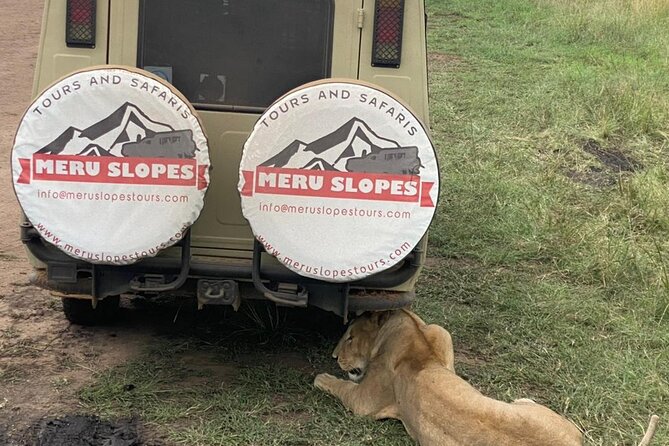
Day three begins with an early coffee and a game drive in the Serengeti. This is one of the strongest design choices in the schedule. Early hours can give you a better chance of seeing animals before the heat of the day, and they let you use your second Serengeti morning rather than treating the park as a single late arrival.
The target list includes the Big Five: lion, elephant, buffalo, rhino, and leopard. Seeing all five is possible, but it is never something a responsible safari can promise. Your guide’s skill matters here, especially when spotting a leopard or tracking animals across open ground.
The guides connected with this operator have received particularly strong praise for their role in the experience. Mohamed and Andrew are noted for careful driving and frequent photo stops. Jacob is described as both funny and well-informed, while Julius is praised for explaining animal behavior in a friendly way. Abdul is singled out for making the safari feel personal through his attention to detail.
Those names are useful, but you should not assume you will receive a particular guide unless the company confirms it. The quality of your trip will depend heavily on the person behind the wheel, since the guide handles timing, animal spotting, park rules, and much of the interpretation.
After the morning drive, you travel toward Ngorongoro. At the crater rim, you get your first broad view of the caldera, with streams and grassland below. The overnight is at Simba campsite, directly on the rim, where the sunset can color the surroundings as evening arrives.
This is a memorable setting, but camping means you need the right expectations. One of the included comments specifically advises preparing for nights in a tent. The food may be excellent, but a campsite is not a lodge, and the comfort level can vary from what you would expect in a hotel.
The cook is an important member of the safari team. Moshi has been praised for polite service and for sharing useful information beyond preparing meals. Rashid and Yojan have also been praised for generous, high-quality cooking. You receive three dinners, three breakfasts, and four lunches, so food is not an afterthought on this trip.
More Serengeti Safaris in Kilimanjaro
- 4 Day Private Tour Throughout Tarangire, Serengeti and Ngorongoro
★ 5.0 · 42 reviews - 7 Days Safari. Serengeti, Tarangire, Lake Manyara & Ngorongoro Crater.
★ 5.0 · 34 reviews - Safari in Tanzania 5 days: Manyara, Ngorongoro, Serengeti
★ 5.0 · 29 reviews - 5-Day Lake Manyara, Serengeti, Ngorongoro Crater and Tarangire
★ 5.0 · 28 reviews
Day four: sunrise above Ngorongoro and the crater floor
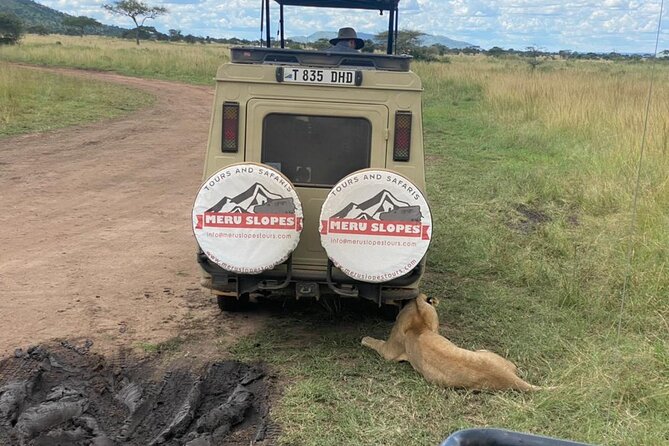
An early start gives you the chance to see sunrise from the crater rim. After breakfast, you take the steep, adventurous track down into the crater for a full-day tour before returning to Arusha. The listed duration is about eight hours.
Ngorongoro Crater is roughly 610 meters deep and covers about 260 square kilometers. Its enclosed setting supports a dense population of animals, which is why it is often one of the best places in Tanzania for a broad range of sightings in a single day.
On the crater floor, you might see wildebeest, zebra, gazelles, elephants, buffalo, lions, and other animals moving between open grassland and water. The crater’s shape gives the day a different feel from the wide-ranging Serengeti. Instead of scanning an enormous open plain, you are watching a concentrated ecosystem surrounded by steep walls.
That concentration is valuable when you have only four days. A crater drive gives you a strong final chance for wildlife without requiring another long transfer between distant parts of Tanzania. It also adds a dramatic visual finish, especially after the sunrise view from above.
The drawback is that day four is not short. You have an early morning, a crater drive, and the journey back to Arusha. If you have a same-day flight, allow plenty of extra time and confirm the expected return schedule before booking. The supplied information identifies the end point as Arusha, but it does not give a precise arrival hour.
Why the guide and cook matter so much
A safari vehicle is your viewing platform, but your guide shapes the whole trip. You need someone who can explain animal behavior, read the road, stop at useful angles for photographs, and manage a tight schedule without making you feel hurried.
The strongest praise for this operation centers on guides who are patient, safe, and engaging. Names associated with good experiences include Mohamed, Lobulu, Julius, Salehe, Andrew, Jacob, Abdul, Robert, Douglas, and Florian. One guide was especially appreciated for reaching animal sightings before other vehicles, while another was praised for stopping often for photographs.
I would treat these examples as a sign of the company’s staffing strengths, not as a promise of a particular person. Ask who will guide your departure if that matters to you. Also ask how many people will share the vehicle, since the maximum group size is 18.
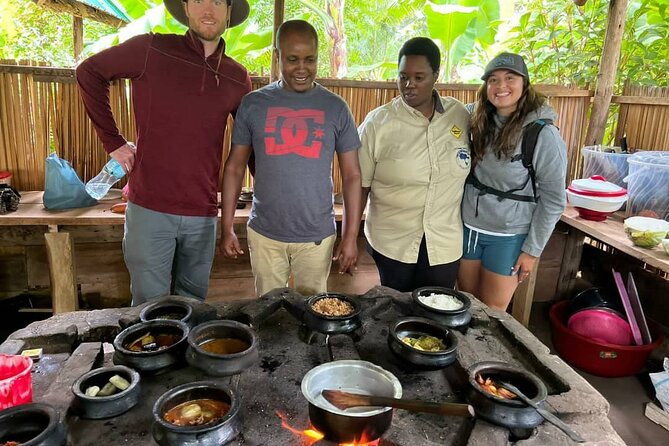
The cook can make or break a camping safari. A warm meal after a dusty game drive changes the mood of the evening, and good organization helps the group keep to early starts. Moshi, Rashid, and Yojan are names linked with especially positive food comments, including generous portions and meals good enough that one person joked about gaining weight.
Free Wi-Fi inside the safari vehicle is a useful extra, but I would treat it as a convenience rather than a reason to choose the tour. Coverage can vary as you move through remote parks, and the main value remains the guide, park access, meals, and transport.
Who will get the best value from this safari?
I would recommend this trip to a first-time safari visitor who wants the classic northern Tanzania route but has only four days. You see elephants in Tarangire, open plains in the Serengeti, and a dense wildlife setting in Ngorongoro. That variety gives you a strong sense of the region without committing to a week or more.
It also suits solo visitors and couples who want a group price. With a maximum of 18 people, the cost is likely easier to manage than a private vehicle, though you give up some freedom over the daily schedule.
This is less suitable if you want luxury accommodation, slow mornings, or a private guide. The itinerary is active, the road transfers are long, and at least some nights are spent in tents. You should also think carefully about luggage, since a compact safari vehicle has limited space, although no specific baggage allowance is provided here.
The title includes a Maasai reference, but the supplied schedule does not list a separate Maasai village visit or cultural activity. You do pass through areas connected with Maasai culture, and the word Serengeti itself comes from Maa, but you should ask the operator directly if a dedicated Maasai experience is part of your booking.
Booking details worth checking before departure
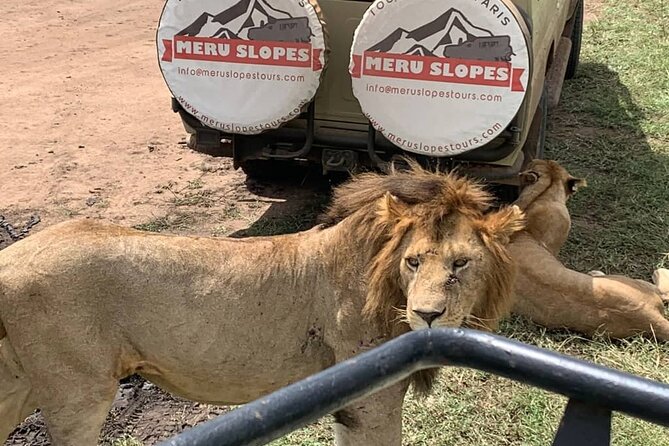
The tour has mobile ticketing and confirmation at the time of booking. Pickup is offered, with the meeting point listed as Kilimanjaro Airport and the start time as 7 a.m. Because the description also places the experience in Moshi, confirm your exact pickup point, especially if you are staying in town.
Most people can participate, and the tour is listed near public transportation. No special accessibility details are provided, so ask directly if you need assistance with vehicle access, campsite facilities, or the steep crater road.
Tips are not included. Set aside cash for your guide, cook, and other safari staff if their service earns it. The cancellation policy allows a full refund when you cancel at least 24 hours before the local start time. Changes or cancellations inside that window are not accepted for a refund.
Should you book the four-day route?
Book it if your priority is maximum wildlife variety in a short time. The route is well chosen, the inclusion list is useful, and the overnight locations inside the Serengeti and on the Ngorongoro rim add more than a quick park visit.
I would be more cautious if you dislike camping or long road days. Before booking, confirm the guide, group size, tent arrangements, pickup point, and return timing to Arusha. If those details suit you, $1,030 buys a serious safari program with strong potential for memorable wildlife viewing, rather than a thin highlights tour.
FAQ
How long is the safari?
The experience lasts approximately four days.
Where does the tour start?
The listed meeting point is Kilimanjaro Airport in Tanzania, with a 7 a.m. start time. The tour location is also identified as Moshi, so confirm the exact pickup arrangement before departure.
Which parks and conservation areas are included?
The route includes Tarangire National Park, Serengeti National Park, Ngorongoro Conservation Area, and a full tour of Ngorongoro Crater.
Is airport pickup included?
Pickup is offered, and airport or departure tax charges are included. The meeting information lists Kilimanjaro Airport as the starting point.
How many people can join the group?
The maximum group size is 18 travelers.
Are meals included?
Yes. The package includes four lunches, three breakfasts, and three dinners.
Can I cancel for a full refund?
Yes, if you cancel at least 24 hours before the experience start time. Cancellations or changes made less than 24 hours before the start are not accepted for a refund.
More Serengeti Safaris in Moshi
- Tanzania Safari – The Great Migration in the North of the Serengeti and Lake Natron
★ 5.0 · 25 reviews - 4 Day Mid-range Serengeti Safari
★ 5.0 · 22 reviews - 4 Days, 3 Nights Group budget Safari, Lake Manyara, Serengeti, Ngorongoro
★ 5.0 · 18 reviews - 5 Days Safari In Serengeti And Ngorongoro
★ 5.0 · 10 reviews
More Tarangire National Park Safaris in Kilimanjaro
- 3-Day Ngorongoro Crater Manyara and Tarangire Safari from Arusha
★ 5.0 · 49 reviews - 6 Days: Classic Camping( Tarangire, Manyara, Serengeti And Ngorongoro).
★ 5.0 · 26 reviews - 4 Days Game drives Safari Tarangire, Serengeti and Ngorongoro Crater
★ 5.0 · 14 reviews - Private Day Trip to Tarangire National Park
★ 5.0 · 12 reviews
Just added around Moshi
- Mt Kilimanjaro 6 days Marangu route hike★ 5.0 · 3 reviews
- Wildlife Extravaganza: Manyara, Tarangire & Ngorongoro in 3 Days★ 5.0 · 3 reviews
- Private Cycle to Kilimanjaro Bike Park Safari★ 5.0 · 6 reviews
- 3 Days Private E-Bike Tour in West Kilimanjaro★ 5.0 · 3 reviews
- West Kilimanjaro cycling Adventures★ 4.5 · 8 reviews
- machame route★ 5.0 · 16 reviews
- Kilimanjaro Climb & Safari – Lemosho Route – 13 Day★ 5.0 · 10 reviews
- Kilimanjaro Climbing Umbwe Route★ 5.0 · 3 reviews
Serengeti Safaris, compared.

Serengeti Balloon Safari and authentic bush breakfast
Read our review →
3 Days Serengeti & Ngorongoro Group Camping Safari
Read our review →
5-Day Highlights mid-Range Crater, Serengeti, Tarangire
Read our review →


Private 6-Day Tarangire Manyara Crater and Serengeti with Mid-Range Lodges
Read our review →
5 Days Camping Tarangire, Serengeti & Ngorongoro crater & Visiting Maasai
Read our review →