
Reviewed · SERENGETI SAFARIS
4 Day Mid-range Serengeti Safari
Tarangire’s giant baobabs and elephant herds make a fine opening act, but the real prize is the contrast that follows: the open Serengeti, then the enclosed world of Ngorongoro Crater. In four days, you get three of northern Tanzania’s great wildlife areas without paying luxury-safari prices.
I like the practical setup: a pop-up-roof 4×4, park fees, meals, water, and accommodation are bundled together. I also like the human side of the operation. Guides including David, Ombeni, Praise, and Abbu have been praised for their animal knowledge, calm driving, and clear explanations. The main drawback is time. You cover a lot of ground, and the long road sections leave little room for a slow, leisurely safari.
Key points
- Three major wildlife areas: Tarangire, Serengeti, and Ngorongoro all appear in one compact itinerary.
- Elephants and baobabs first: Tarangire gives you an immediate introduction to Tanzania’s distinctive scenery and wildlife.
- Central Serengeti focus: The Seronera area offers a strong chance of seeing many of the park’s best-known species.
- Olduvai Gorge stop: The route includes an important archaeological site linked to the Leakeys and human evolution.
- Mid-range comfort: Safari lodges and tented camps provide more comfort than basic camping without luxury pricing.
- Good family potential: The short format, included meals, and emphasis on lions and elephants work well for families with older children.
Three parks, four days, and a lot of road
This is a compact northern Tanzania safari from Moshi, priced at $1,800 per person. The route links Tarangire National Park, Serengeti National Park, and the Ngorongoro Conservation Area. You travel in a 4×4 vehicle with a pop-up roof, accompanied by an English-speaking guide.
The appeal is simple: you do not have to choose between Tarangire’s elephants, the Serengeti’s huge plains, and Ngorongoro’s dense wildlife. You see all three. The tradeoff is equally simple: this is not a slow five or seven-day circuit. Two of your days involve substantial driving, so you should come ready for early starts, bumpy roads, and long hours in the vehicle.
The package includes park fees, four breakfasts, four lunches, three dinners, bottled mineral water, transport, the guide, and overnight stays in safari lodges or tented camps. Alcohol, soft drinks, visa costs, tips, souvenirs, and any Arusha accommodation are separate.
That makes the price easier to assess. A large part of the expensive machinery of a Tanzania safari is already covered, especially park entry fees and transport. You still need to budget for tips and drinks, but the main costs are not waiting for you at the end of the trip.
Day one: Tarangire’s elephants and baobabs
After breakfast, the journey begins with a stop in Arusha for last-minute purchases. This is useful if you need snacks, toiletries, or other small supplies before heading into the parks. It also means you should not leave basic shopping until the final minute at the airport.
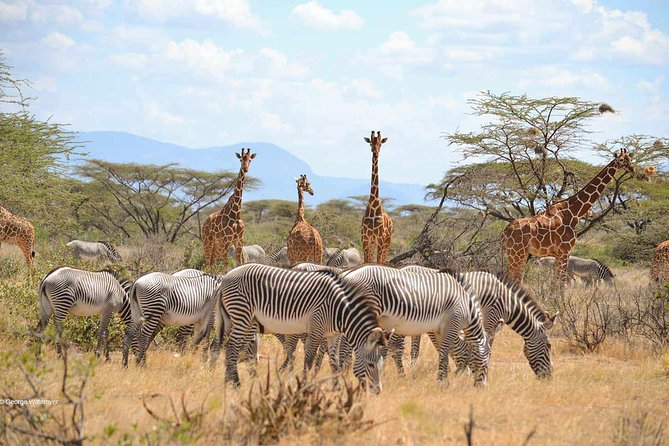
Tarangire is the first major stop. The park is best known for large elephant herds and enormous baobab trees, a pairing that gives the place a character all its own. Its wildlife cycle can include thousands of elephants, along with large numbers of wildebeest and zebra. Those figures describe the wider seasonal movement, not a promise for the day, but they explain why Tarangire belongs on a northern Tanzania route.
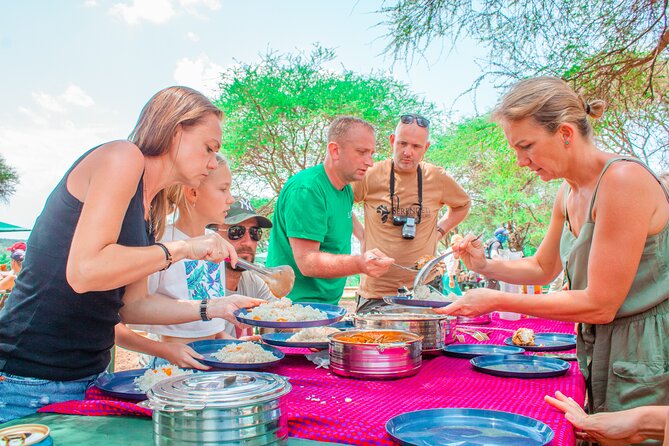
You have a game drive with a picnic lunch inside the park. The picnic arrangement saves time and keeps you in the wildlife area instead of sending you back toward a town for a midday meal. It also makes the day feel like a proper safari from the start.
Tarangire is a good first park because it offers variety without requiring you to wait until the Serengeti for your first major sighting. You might find elephants near water, see zebra or wildebeest moving across the open ground, and spot smaller wildlife among the trees. As always, sightings depend on season, weather, and the guide’s route that day.
Dinner and overnight accommodation are scheduled at Farm Dream Lodge. The itinerary describes the overall lodging as mid-range, with a mix of safari lodges and tented camps. If room style matters to you, confirm the exact accommodation before paying, since the listed plan allows for different types of lodging.
More Serengeti Safaris in Kilimanjaro
- Safari Serengeti And Ngorongoro
★ 5.0 · 288 reviews - 5 Days Camping Tarangire, Serengeti & Ngorongoro crater & Visiting Maasai
★ 5.0 · 58 reviews - 4 Days Group Joining Camping Safari to Tarangire Serengeti Ngorongoro Crater
★ 5.0 · 50 reviews
Day two: Crossing the highlands into Seronera
Day two is the long transition to the Serengeti. You pass through the farmland around Karatu and the Ngorongoro Conservation Area before leaving the higher country and heading toward the central Serengeti.
This change in scenery is one of the most memorable parts of the route. The cultivated highlands give way to broad open plains. The road section takes time, but it also shows how quickly northern Tanzania shifts from settled farmland to wild country.
The destination is the Seronera area, in central Serengeti. The Seronera River provides water, so the area attracts a broad mix of wildlife. That makes it a sensible base for a first Serengeti game drive, especially on a short itinerary where you cannot spend several days searching different parts of the park.
You arrive in time for lunch, followed by an afternoon game drive. The central Serengeti is associated with lions, cheetahs, hyenas, elephants, buffalo, zebra, wildebeest, and many other species. A leopard is possible too, though it can require patience and a sharp-eyed guide.
This is where the guide matters most. The company has used guides such as David, Ombeni, Praise, and Abbu, and the strongest feedback consistently focuses on their ability to identify animals, explain behavior, and answer questions. You should still ask who your guide will be before departure, since the individual guide can shape the whole safari.
Dinner and overnight accommodation are at Domel Wilderness Tented Camp according to the plan. Tented accommodation can be comfortable and atmospheric, but expectations should be clear. This is a mid-range safari, not a private luxury camp with extensive room service and polished hotel facilities.
Day three: A final Serengeti drive and Olduvai Gorge
The third day begins with an early morning game drive in the Serengeti before the route turns toward the Ngorongoro Conservation Area. An early drive is valuable because wildlife activity can be good in the cooler hours, and it gives you one more chance to see the central Serengeti before leaving.
The itinerary then includes Olduvai Gorge, one of the most important archaeological places on the route. Drs. Louis and Mary Leakey discovered significant early human fossils here, including remains associated with Nutcracker Man and Handy Man. The stop adds a human story to a trip otherwise dominated by wildlife.
Olduvai is not just a brief scenery stop. It gives you a reason to think about how long humans and other animals have occupied this part of Africa. If you enjoy archaeology or natural history, it may be one of the most rewarding stops of the four days. If your priority is wildlife alone, you may see it as time taken away from another game drive.
Late afternoon brings a transfer to Ngorongoro Wildlife Lodge for dinner and overnight accommodation. The lodge’s position is an important part of the plan because the next day starts with an early descent into the crater. Staying nearby is more efficient than returning to a distant base.
There is a practical point here: the itinerary’s overnight details deserve confirmation. Day two lists Domel Wilderness Tented Camp, day three lists Ngorongoro Wildlife Lodge, and day one lists Farm Dream Lodge. Accommodation can sometimes change according to availability, so ask for the final lodge and room list before departure.
Day four: Descending into Ngorongoro Crater
After an early breakfast, you descend more than 600 meters into Ngorongoro Crater for a game drive. The crater is a vast natural enclosure with water and grazing areas that support a high concentration of wildlife throughout the year.
You might see wildebeest, zebra, buffalo, eland, warthog, hippopotamus, and African elephants. The crater is also known for predators, including lions, hyenas, jackals, cheetahs, and the elusive leopard. No safari can guarantee a particular animal, but the crater gives you a strong setting for seeing many species in a relatively compact area.
The itinerary includes Lake Magadi, a large, shallow alkaline lake in the crater’s southwest. The lake is one of the crater’s main features and can attract wildlife. Its presence also shows why the crater supports animals even outside the most dramatic seasonal movements.
Ngorongoro is a different kind of safari experience from the Serengeti. The Serengeti feels open and immense, with animals spread across a huge area. The crater feels enclosed and concentrated. You get less of the endless horizon, but often more action in a shorter drive.
The early start is worth noting. You should expect breakfast before most people would call it a civilized hour, followed by a full morning of wildlife viewing. That schedule helps you make the most of the crater, but it will not suit someone looking for lazy mornings and long lodge breakfasts.
More Serengeti Safaris in Moshi:
- 4 Day Private Tour Throughout Tarangire, Serengeti and Ngorongoro
★ 5.0 · 42 reviews - 7 Days Safari. Serengeti, Tarangire, Lake Manyara & Ngorongoro Crater.
★ 5.0 · 34 reviews - Safari in Tanzania 5 days: Manyara, Ngorongoro, Serengeti
★ 5.0 · 29 reviews - 5-Day Lake Manyara, Serengeti, Ngorongoro Crater and Tarangire
★ 5.0 · 28 reviews
What the safari vehicle and guide setup means
The 4×4 pop-up-roof vehicle is central to the experience. The raised roof gives you a better view while standing or sitting inside the vehicle, and it makes photography easier than looking through a side window. You can watch animals from several angles without leaving the vehicle.
The roads can be rough, and the itinerary covers long distances. Pack light, keep water close, and expect dust. The included mineral water is helpful, but you should still bring personal supplies that you know you will want during a full day out.
The maximum group size is listed as 50 people. That is a large possible group, though the information does not specify how many people share each vehicle. Ask this question before booking. A smaller vehicle group usually means more room for photography and easier communication with the guide, while a large group can affect how quickly everyone agrees on stops.
The guide is more than a driver. A good guide helps you read animal behavior, find tracks, understand the parks, and decide when to stay with a sighting. Past guide names connected with this operation include David, Ombeni, Praise, and Abbu. Linah, Lucas, Safina, and Godlisten have also been singled out for trip planning, communication, and safari support.
You should not assume you will receive a particular person unless the company confirms it. Still, asking about guide assignment is sensible, especially if you care about wildlife interpretation or are traveling with children.
Mid-range lodging and included meals
The accommodation plan mixes lodges and tented camps. That is a good fit if you want a bed, prepared meals, and a roof at night without paying for high-end safari properties.
Meals are included throughout the stated plan: breakfast each morning, four lunches, and three dinners. Several past departures have highlighted tasty food and good cooking, including a cook praised for making the safari meals memorable. The exact menu is not specified, so you should tell the operator about dietary needs before setting out.
Drinks are more limited. Mineral water is included, but alcoholic drinks and soft drinks are not. Bring extra money for beverages and personal purchases. Tips are also excluded, so plan for them as part of the true cost of the safari.
Arusha accommodation is not included, although it can be arranged on request. This matters if you arrive the night before or leave after the safari. The listed meeting point is Kilimanjaro Airport, with a start time shown as 12:00 a.m. Because that time may be a system entry rather than a practical pickup hour, confirm the exact pickup time and location directly with the operator.
The strongest reasons to choose this route
I would choose this safari if I wanted the greatest variety in the shortest reasonable time. Tarangire gives you elephants and baobabs, Serengeti gives you vast plains and a wide mix of animals, and Ngorongoro gives you concentrated wildlife and a striking crater setting.
The route also works well for a first safari. You do not need to build a complicated park plan yourself, and major costs are grouped into one price. The company has also shown flexibility in arranging trips and answering a large number of pre-departure questions, which is useful when you are organizing an expensive international holiday.
Families may find the format appealing. One family departure included children who were especially excited by lions and elephants, and the package avoids the daily task of finding meals and transport. Still, four days in a vehicle can be tiring for young children, so consider your family’s tolerance for early mornings and long road stretches.
This safari also suits people who want a mid-range experience rather than basic camping. You get lodges or tented camps, but you should not expect the polished service or private camp setting associated with luxury prices.
The drawbacks you should weigh first
The biggest issue is pace. Day two involves a substantial journey from the highlands to central Serengeti, and the whole route includes several transfers. You will see a lot, but you will not have much spare time.
The itinerary also has some wording that should be clarified before booking. Day three begins with a Serengeti game drive and then moves toward Ngorongoro, while day four covers the crater. The exact timing, lodge names, vehicle group size, and pickup hour are worth confirming in writing.
The listed maximum of 50 people is another point to investigate. It does not tell you how many people will be in your specific vehicle. Ask whether the safari is private, shared, or divided among several vehicles.
Finally, the $1,800 price does not include visas, drinks, tips, souvenirs, or Arusha accommodation. Those are normal exclusions, but they affect your final budget. The cancellation policy allows a full refund if you cancel at least 24 hours before the start time. Inside that window, no refund is offered, and changes are not accepted.
Should you book this four-day safari?
Book it if you want Tarangire, Serengeti, and Ngorongoro in one trip, prefer organized transport, and value a bed and included meals over a bare-bones camping setup. The route offers excellent variety, and the company’s repeated strengths are guide quality, communication, food, and flexible planning.
I would hesitate only if you want long stays in one park, a private vehicle guaranteed for your party, or luxury accommodation. In that case, pay for a longer and more tailored safari.
Before booking, ask four questions: Who is the guide? How many people will share the 4×4? Which exact lodges and tented camps are confirmed? What is the real pickup time from Kilimanjaro Airport? If the answers suit you, this is a strong, efficient introduction to northern Tanzania’s best-known wildlife areas.
FAQ
Where does the safari start?
The meeting point is Kilimanjaro Airport in Tanzania. Pickup is offered, and the listed start time is 12:00 a.m., so confirm the exact pickup hour with the operator.
How long is the safari?
The experience lasts approximately four days.
Which parks and areas are included?
The route includes Tarangire National Park, Serengeti National Park, the Ngorongoro Conservation Area, and a stop at Olduvai Gorge.
What type of vehicle is used?
Transport is provided in a 4×4 safari vehicle with a pop-up roof.
Is a guide included?
Yes. An English-speaking professional guide is included.
Are meals included?
Yes. The plan includes four breakfasts, four lunches, and three dinners.
Is accommodation in Arusha included?
No. Arusha accommodation is not included, but it can be arranged upon request.
What is excluded from the price?
Alcoholic drinks, soft drinks, visa fees, tips, personal spending, and souvenirs are excluded. The listed price is $1,800 per person.
Can I cancel for a full refund?
Yes, if you cancel at least 24 hours before the experience start time. Cancellations within 24 hours are not refundable, and changes within that period are not accepted.
More Safari in Moshi
- Big Five Safari In Tanzania
★ 5.0 · 99 reviews - Unforgettable Tanzania Safari And Zanzibar Beach
★ 5.0 · 97 reviews - 8-Day Essence of Tanzania Safari – Luxury
★ 5.0 · 72 reviews - 6 Days 5 Night Safari
★ 5.0 · 57 reviews
More Mid-Range Safaris in Moshi
- 5 Day Mid range Tanzania Safari
★ 5.0 · 34 reviews - 5-Day Highlights mid-Range Crater, Serengeti, Tarangire
★ 5.0 · 296 reviews - Private 6-Day Tarangire Manyara Crater and Serengeti with Mid-Range Lodges
★ 5.0 · 238 reviews - 5-Day Private midrange Tour in Arusha with Airport Pickup
★ 5.0 · 160 reviews
Just added around Moshi
- Mt Kilimanjaro 6 days Marangu route hike★ 5.0 · 3 reviews
- Wildlife Extravaganza: Manyara, Tarangire & Ngorongoro in 3 Days★ 5.0 · 3 reviews
- Private Cycle to Kilimanjaro Bike Park Safari★ 5.0 · 6 reviews
- machame route★ 5.0 · 16 reviews
- 3 Days Private E-Bike Tour in West Kilimanjaro★ 5.0 · 3 reviews
- West Kilimanjaro cycling Adventures★ 4.5 · 8 reviews
- Kilimanjaro Climb & Safari – Lemosho Route – 13 Day★ 5.0 · 10 reviews
- Kilimanjaro Climbing Umbwe Route★ 5.0 · 3 reviews
Serengeti Safaris, compared.

Serengeti Balloon Safari and authentic bush breakfast
Read our review →
3 Days Serengeti & Ngorongoro Group Camping Safari
Read our review →
5-Day Highlights mid-Range Crater, Serengeti, Tarangire
Read our review →


Private 6-Day Tarangire Manyara Crater and Serengeti with Mid-Range Lodges
Read our review →
5 Days Camping Tarangire, Serengeti & Ngorongoro crater & Visiting Maasai
Read our review →
4 Days Join Group tour Tarangire Serengeti and Ngorongoro crater
Read our review →Browse the lists this tour appears in