
Reviewed · SERENGETI SAFARIS
7 Days Safari. Serengeti, Tarangire, Lake Manyara & Ngorongoro Crater.
The big draw here is variety: in seven days, you move from elephant-filled Tarangire to the open plains of the Serengeti, then down into the wildlife-packed Ngorongoro Crater. The route also includes Lake Manyara, a fine final stop for birds and a chance to spot tree-climbing lions.
I like the three Serengeti game-drive days, which give you more than a quick pass through Tanzania’s most famous park. I also like the practical value: park fees, private transport, hotel pickup, and all listed meals are included. The tradeoff is real: several days involve three to four hours of driving, and the final return to Moshi or the airport takes about four hours.
Key points
- Four major wildlife areas in seven days: Tarangire, Serengeti, Ngorongoro Conservation Area and Lake Manyara.
- Three days focused on the Serengeti: enough time to range beyond camp and search for predators.
- Strong guiding is central to the experience: Michael, Hillary, Steve and Shirima are among the named guides associated with praised safari trips.
- Ngorongoro is a full day, not just a viewpoint: you descend about 600 meters to spend roughly six hours on the crater floor.
- All meals are covered: seven lunches, six breakfasts and six dinners are included.
- Private touring: only your own group takes part, with pickup offered and a mobile ticket.
The route at a glance: four parks, one long wildlife circuit
This safari begins in Moshi and covers a classic northern Tanzania route. You start in Tarangire, continue through the Ngorongoro highlands to the Serengeti, spend two full days among its plains, then return through Ngorongoro and finish at Lake Manyara.
That order gives the trip a clear rhythm. Tarangire provides a gentle opening with elephants and baobabs. The Serengeti receives the most time, as it should. Ngorongoro brings a concentrated wildlife day, while Lake Manyara adds forest, lake scenery and birdlife before your return to Moshi.
The route is also a driving trip. This is not a fly-in safari with short transfers between luxury camps. You will spend long periods in the vehicle, but those road hours connect some of East Africa’s most important wildlife areas and let you see the changing country between them.
The operator describes this as a private activity, so only your group participates. That matters if you want to stop for questions, adjust the pace, or spend longer with an animal sighting without negotiating with strangers.
More Lake Manyara Safaris in Kilimanjaro
- 3-Day Ngorongoro Crater Manyara and Tarangire Safari from Arusha
★ 5.0 · 49 reviews - Safari in Tanzania 5 days: Manyara, Ngorongoro, Serengeti
★ 5.0 · 29 reviews - 5-Day Lake Manyara, Serengeti, Ngorongoro Crater and Tarangire
★ 5.0 · 28 reviews
Day 1: Tarangire’s elephants and baobab country
Your first morning begins around 6:00 a.m. with pickup from your hotel, followed by a three to four-hour drive to Tarangire National Park. The schedule allows about three hours in the park, with a total day of roughly six hours.
Tarangire is an excellent first safari park because its wildlife is easy to appreciate quickly. The Tarangire River draws animals from the surrounding area, and elephants are a major feature. Giraffes are also commonly sought here, while the tall baobab trees give the park a strong sense of place even when animals are not close to the vehicle.
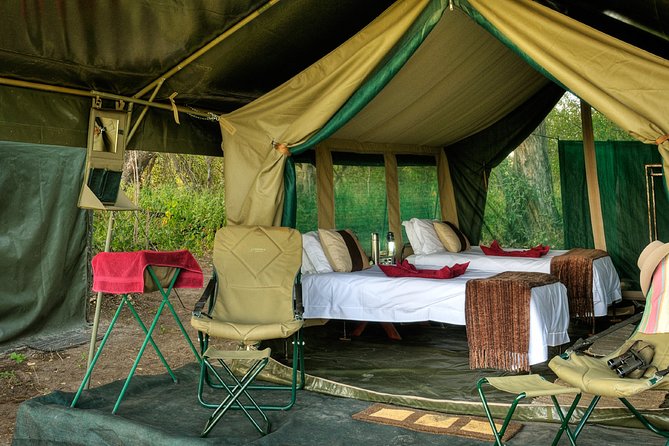
You receive a boxed lunch inside the park, then continue the game drive before settling into a campsite, lodge or tented camp for the night. The exact accommodation category is not specified, so ask for the name and standard of your lodging before you pay if comfort matters to you.
I like this opening day because it does not spend your first hours on a city transfer or a minor reserve. You get a genuine wildlife park at once, with elephants, giraffes, river country and striking trees.
The limitation is time. Three hours in Tarangire can feel short, especially after the drive from Moshi. If Tarangire is a priority for you, ask if the route can be adjusted to allow a longer game drive.
Day 2: Crossing the highlands into the Serengeti
After breakfast, you drive three to four hours toward Serengeti National Park. The road passes through the Ngorongoro Conservation Area highlands, but this is not yet a crater visit. You continue into the Serengeti and begin an afternoon game drive, continuing until evening.
This transition is important. The Serengeti is enormous, and the first day inside it is partly about reaching your camp and partly about starting the search for wildlife. The schedule gives you a chance to see animals before dinner rather than treating the whole day as a transfer.
Your overnight stay is at a campsite, lodge or tented camp inside the Serengeti. Again, confirm the exact property. Camp location affects how much time you spend driving each day, and the phrase campsite, lodge or tented camp covers a wide range of sleeping arrangements.
The Serengeti portion is where a good guide earns his or her keep. Guides such as Michael, Hillary, Steve and Shirima are praised for animal identification, patience, safety and their ability to explain both wildlife and plant life. Ask who will lead your group and whether that person will remain with you for the whole safari.
Days 3 and 4: Two full searches across central Serengeti
Day 3 is a full-day game drive, roughly 10 hours including stops. After breakfast, you travel farther from camp with a packed lunch, pause to eat and rest, then continue exploring into the late afternoon.
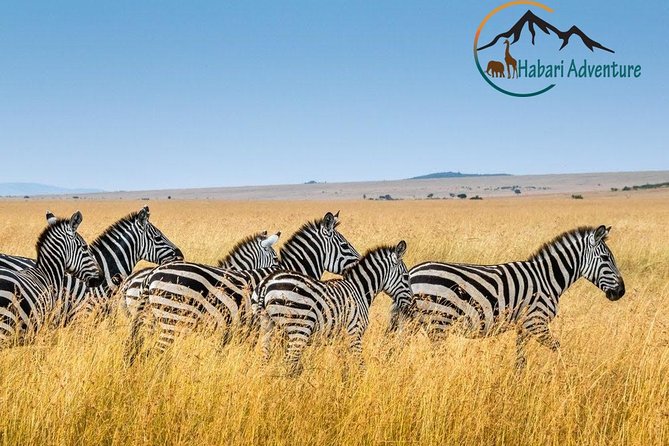
That extra range is one of the best features of the itinerary. A short Serengeti visit can leave you seeing only the areas close to camp. Two full days let your guide respond to recent sightings and spend time looking for lions, leopards, elephants, giraffes and other animals across a wider section of the park.
Day 4 gives you another 10-hour game-drive day in central Serengeti. The morning begins with a predator search, when lions and other hunters may be active. You then have most of the day for further wildlife viewing before returning to the Serengeti accommodation.
Three consecutive Serengeti game-drive days are a major strength. Wildlife sightings are never guaranteed, and a schedule with more search time gives you better odds than a single afternoon visit. It also lets you enjoy the slower parts of safari: watching animal behavior, learning tracks and calls, and waiting without rushing when a sighting becomes interesting.
The cost is energy. Ten hours in a safari vehicle is a long day, especially on rough roads. You will want sun protection, water, comfortable clothing and patience. This is not a sightseeing bus with fixed stops. Much of the pleasure comes from looking carefully and staying alert.
The published details refer to Serengeti Heritage on Days 3 and 4, but they do not explain whether this means a camp, lodge or other overnight property. Clarify the accommodation and its location. Central Serengeti can mean different driving times depending on the camp, and that will shape your daily routine.
More Ngorongoro Crater Tours in Kilimanjaro
- Safari Serengeti And Ngorongoro
★ 5.0 · 288 reviews - 5 Days Camping Tarangire, Serengeti & Ngorongoro crater & Visiting Maasai
★ 5.0 · 58 reviews - 4 Days Group Joining Camping Safari to Tarangire Serengeti Ngorongoro Crater
★ 5.0 · 50 reviews - 4 Day Private Tour Throughout Tarangire, Serengeti and Ngorongoro
★ 5.0 · 42 reviews
Day 5: Leaving the plains for the Ngorongoro highlands
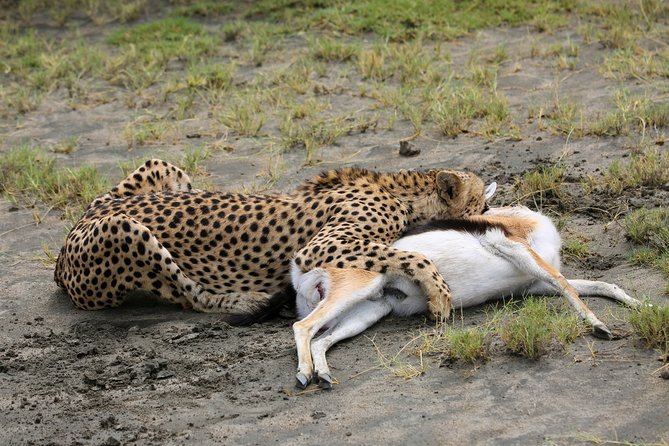
After breakfast, you continue viewing wildlife while leaving the Serengeti and returning toward the Ngorongoro Conservation Area. The stated park time is about four hours, with roughly one hour of driving to the next area.
This day works as a bridge between two very different settings. The Serengeti spreads wildlife over broad open country. Ngorongoro concentrates animals inside a huge volcanic caldera, with the crater rim high above the floor.
The route description points out that overnight stays are not permitted inside the crater. Accommodation is outside it, often near the rim. At about 7,500 feet, or 2,286 meters, the rim can feel cold and windy. Bring a warm layer, a knit cap and light gloves, even if Moshi felt hot when you left.
This is one of the itinerary’s useful warnings. Many people picture a warm African safari from morning to night, but Ngorongoro’s altitude changes the experience. Early starts and open-sided vehicles can make the rim surprisingly chilly.
The day is shorter than the two Serengeti days, but it is still a wildlife day rather than a simple transfer. You may continue searching the plains before reaching your highland accommodation.
Day 6: Descending 600 meters into Ngorongoro Crater
You rise early to descend about 600 meters from the crater rim to the floor. The game drive lasts around six hours, with about an hour of driving time listed for the day, and meals are included.
Ngorongoro Crater is a remarkable place to visit because the setting and wildlife arrive together. The enormous unbroken caldera creates a natural bowl, and the crater floor can hold a dense mix of grazers and carnivores. The itinerary estimates more than 25,000 animals, though exact sightings vary by season and day.
You may be lucky enough to see the endangered rhino. Lions and other predators are also part of the search, while the crater’s compact setting often makes it possible to cover several different habitats in one day.
The six-hour visit is a sensible length. It gives you time on the crater floor without making the day as long as the 10-hour Serengeti drives. You still need an early start, though, and the roads down the crater walls can be demanding.
The overnight stay is specified as Heaven Nature Campsite. Since the crater itself does not allow overnight accommodation, you return outside the crater after the game drive.
I see Ngorongoro as the visual high point of this route, though not necessarily the place where every animal sighting will be best. The crater’s appeal is the combination of scale, geology and concentrated wildlife. The Serengeti offers more space and a stronger sense of wilderness; Ngorongoro offers a more compact, dramatic day.
Day 7: Lake Manyara’s birds, lake and tree-climbing lions
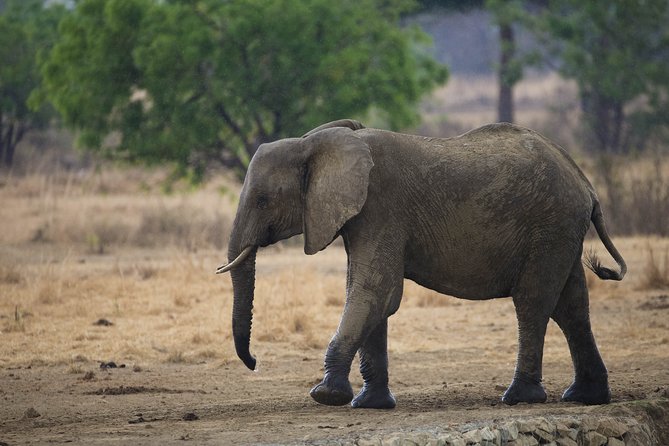
On the final morning, you drive to Lake Manyara National Park. The park visit lasts about four to five hours, followed by an approximately four-hour drive back to Moshi or the airport. Breakfast and lunch are included.
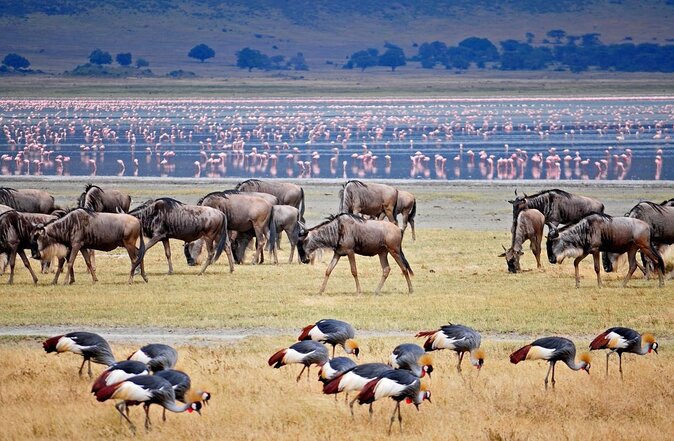
Lake Manyara sits in the Great Rift Valley and gives the safari a different final note. The soda-ash lake attracts flamingos, and the park is especially useful for birdlife, with more than 400 species recorded. Many are waterfowl or migrants, so bring binoculars if birds interest you.
The park is also associated with tree-climbing lions. Sightings are not promised, but the possibility adds a distinct goal to the final game drive. You may also find that Manyara feels more intimate than the Serengeti, with lake and woodland settings replacing wide grass plains.
This final stop is well chosen for variety, though the timing is tight. After four to five hours in the park, you still face about four hours on the road. If you have an evening flight, do not assume the schedule leaves a large buffer. Confirm your drop-off plan and flight timing before booking.
What the $1,850 price includes
At $1,850 per person, the safari offers a useful bundle for a seven-day private trip. Included costs are listed as admission fees, fuel surcharge, parking and gratuities, along with transport in an air-conditioned vehicle with onboard WiFi.
Meals are also covered:
- Seven lunches
- Six breakfasts
- Six dinners
That reduces the small daily costs that can add up on a safari. It also makes the long driving days easier to plan, since lunch is already built into the route.
The best value comes from the time in the Serengeti. Three game-drive days there, plus Tarangire, Ngorongoro and Lake Manyara, give you a broad northern Tanzania program rather than a one-park sampler.
Still, price comparisons need care. The accommodation type is not fixed in the supplied details. A campsite, tented camp and lodge can offer very different levels of comfort, so ask exactly what is included for each night. Flights and an entry visa are not included, and those costs sit outside the advertised price.
The private format may also justify the price for families, couples or small groups that want more control. If you are comfortable sharing a vehicle to reduce the cost, ask for that option. If you value your own schedule and direct access to one guide, the private arrangement has a clear benefit.
Guides, vehicles and the human side of the safari
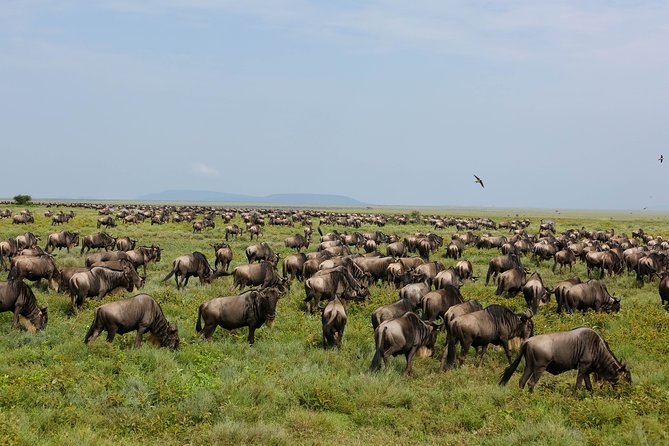
The guide can shape your safari as much as the parks do. The named guides connected with strong experiences include Michael, Hillary, Steve and Shirima. Their praised qualities include a strong grasp of animals and plants, patient explanations, careful driving and attention to safety.
One useful detail is that guides are credited with identifying animals that less experienced eyes might miss. That matters in the Serengeti, where a distant shape, a movement in grass or a bird high in a tree may be the difference between a good sighting and no sighting at all.
A newer, safe safari vehicle is also specifically praised in the available feedback. The vehicle is described as up to date, and the driving is connected with respect for park rules. You should still confirm the vehicle setup, seating arrangement and WiFi details when booking, since the listing does not specify the number of seats or whether the vehicle has a pop-up roof.
The company has also handled family trips, honeymoons and custom programs. Special attention for honeymooners and care with children are recurring themes in the supplied comments. That suggests the operator may be a good fit if you need a personal touch, but you should state your needs clearly before the trip.
What to pack for seven days
Keep your luggage practical. The highlands near Ngorongoro can be cold and windy, while game-drive hours elsewhere may be sunny and warm.
Pack:
- Warm layers, including a hat and light gloves for the crater rim
- Sun protection
- Comfortable clothes for long vehicle days
- Binoculars for birds and distant animals
- A camera with spare batteries or charging equipment
- Any personal medication
- A small day bag for boxed lunches and essentials
Because lunch is often packed for the day, you do not need to plan restaurant stops during the game drives. The more important preparation is physical comfort. Ten-hour days reward loose clothing, water and a good attitude toward slow travel.
Who should book this safari
I would point this trip toward first-time safari visitors who want the classic northern Tanzania highlights in one week. It suits you if elephants, lions, the Serengeti, Ngorongoro and a private guide matter more than staying in one luxury property.
Families may like the private format and the guide attention. Couples and honeymooners may also appreciate the ability to arrange personal touches, as previous trips with the operator included special surprises and unique accommodations.
You should think twice if you dislike long road transfers, early mornings or uncertain wildlife sightings. You should also ask more questions if luxury lodging is essential, since the accommodation descriptions are broad rather than specific.
The route is strongest for animal variety and geographic range. It is less suited to a slow, pampered holiday. You will trade some comfort and spare time for more parks, more game drives and a fuller picture of Tanzania’s northern safari circuit.
Should you book the seven-day Tanzania safari?
I would book this tour if you want a well-filled private safari with three meaningful days in the Serengeti and the major parks included. The itinerary gives you elephants in Tarangire, predator searches in central Serengeti, a possible rhino sighting in Ngorongoro and flamingos or tree-climbing lions at Lake Manyara.
Before paying, confirm the exact pickup point, since the information names Moshi but also lists Kilimanjaro Airport as the start point. Confirm every overnight property, the vehicle style, the guide assigned to your group and the timing of the final airport transfer.
The booking is refundable if you cancel at least 24 hours before the start time. Poor weather may lead to a new date or a full refund. With those practical points settled, the $1,850 price looks attractive for a private seven-day route with meals, park costs and transport included.
FAQ
How long is the safari?
The safari lasts approximately seven days.
Where does the safari start?
The tour is based in Moshi, Tanzania. The meeting information lists Kilimanjaro Airport as the start point with an 8:00 a.m. start, while hotel pickup is also offered. Confirm your exact pickup location when booking.
Which national parks and conservation areas are included?
The route includes Tarangire National Park, Serengeti National Park, the Ngorongoro Conservation Area, Ngorongoro Crater and Lake Manyara National Park.
Are meals included?
Yes. The package includes seven lunches, six breakfasts and six dinners.
Are park entry fees included?
Yes. Admission fees and other listed costs, including fuel surcharge, parking and gratuities, are included.
Is this a private tour?
Yes. Only your own group participates in the activity.
What is not included in the price?
An entry visa and flights are not included.
Can I cancel for a full refund?
You can receive a full refund if you cancel at least 24 hours before the local start time. Cancellations or changes made less than 24 hours before the start time are not accepted for a refund.
More Tarangire National Park Safaris in Kilimanjaro
- 4-Day Tarangire Serengeti, Ngorongoro & Maasai Guided group tour
★ 5.0 · 16 reviews - 4 Days Game drives Safari Tarangire, Serengeti and Ngorongoro Crater
★ 5.0 · 14 reviews - Private Day Trip to Tarangire National Park
★ 5.0 · 12 reviews - #1 Best Tanzania Safari Tarangire Day tour Adventure
★ 5.0 · 9 reviews
More Serengeti Safaris in Kilimanjaro
- 6 Days: Classic Camping( Tarangire, Manyara, Serengeti And Ngorongoro).
★ 5.0 · 26 reviews - Tanzania Safari – The Great Migration in the North of the Serengeti and Lake Natron
★ 5.0 · 25 reviews - 4 Day Mid-range Serengeti Safari
★ 5.0 · 22 reviews - 4 Days, 3 Nights Group budget Safari, Lake Manyara, Serengeti, Ngorongoro
★ 5.0 · 18 reviews
Just added around Moshi
- Mt Kilimanjaro 6 days Marangu route hike★ 5.0 · 3 reviews
- Private Cycle to Kilimanjaro Bike Park Safari★ 5.0 · 6 reviews
- Wildlife Extravaganza: Manyara, Tarangire & Ngorongoro in 3 Days★ 5.0 · 3 reviews
- 3 Days Private E-Bike Tour in West Kilimanjaro★ 5.0 · 3 reviews
- West Kilimanjaro cycling Adventures★ 4.5 · 8 reviews
- machame route★ 5.0 · 16 reviews
- Kilimanjaro Climb & Safari – Lemosho Route – 13 Day★ 5.0 · 10 reviews
- Kilimanjaro Climbing Umbwe Route★ 5.0 · 3 reviews
Serengeti Safaris, compared.

Serengeti Balloon Safari and authentic bush breakfast
Read our review →
3 Days Serengeti & Ngorongoro Group Camping Safari
Read our review →
5-Day Highlights mid-Range Crater, Serengeti, Tarangire
Read our review →


Private 6-Day Tarangire Manyara Crater and Serengeti with Mid-Range Lodges
Read our review →
5 Days Camping Tarangire, Serengeti & Ngorongoro crater & Visiting Maasai
Read our review →