
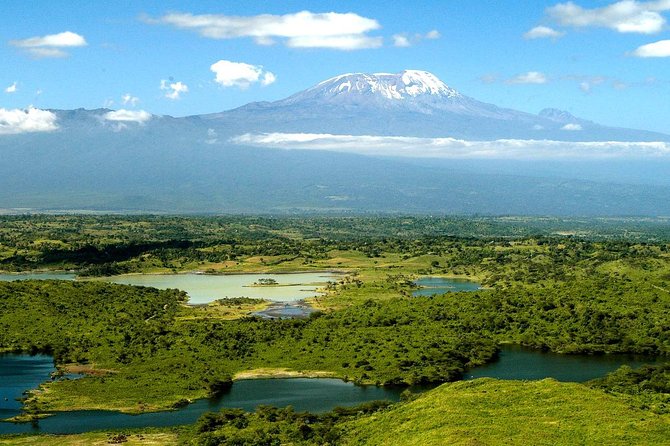
Reviewed · SERENGETI SAFARIS
5 days Safari to Tarangire, Ngorongoro, Serengeti and Lake Manyara
The big draw here is simple: in five days, you visit four of northern Tanzania’s best-known wildlife areas, from elephant country in Tarangire to the predator-filled plains of Serengeti and the enclosed wildlife bowl of Ngorongoro Crater. The private jeep, pop-up roof, park fees, meals, water, and camping equipment make the $3,300 price easier to understand.
I like the chance to spend a night in the heart of Serengeti and another on the crater rim. I also like the personal touch promised by a private guide, especially since Chris has earned particular praise for finding animals and making the safari enjoyable. The tradeoff is the pace: long drives, early starts, picnic lunches, and five full days on rough park roads require real stamina.
Key points to know before booking
- Tarangire’s elephants are the opening act: The Tarangire River draws large elephant groups, along with lions, giraffes, leopards, and possibly tree-climbing pythons.
- Serengeti gets the prime wildlife time: You reach the park after an early 6:00 am departure and spend the next morning on a sunrise drive in western Serengeti.
- Ngorongoro offers concentrated game viewing: The crater floor can bring lions, elephants, buffalo, rhinos, and leopards into a relatively compact area.
- Camping keeps the price in check: Two people share a tent, with camping equipment supplied. A sleeping bag costs an extra $15 to rent.
- The safari uses a private 4×4: The pop-up roof gives you a better standing view for wildlife watching, while the ice chest keeps mineral water cold.
- This is a small-group experience: The maximum is 15 people, though the vehicle arrangement is described as private.
What $3,300 buys you over five days
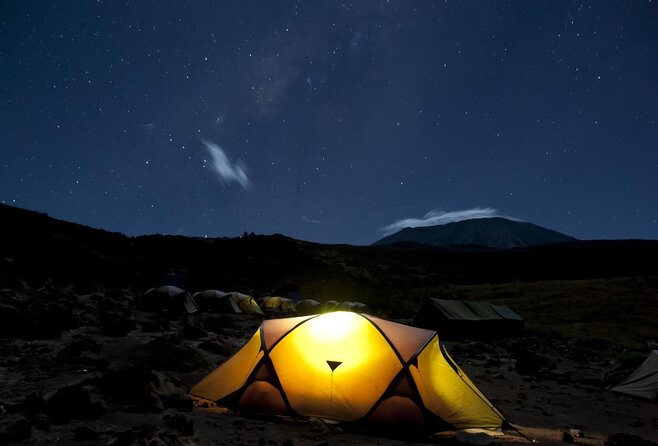
At $3,300 per person, this is not a cheap holiday. It is a serious safari purchase, but the price includes many of the expensive pieces that can catch you by surprise in Tanzania: park fees, crater fees, a private 4×4, a safari guide, camping gear, meals, mineral water, taxes, and service charges connected to included accommodation and meals.
That package matters. Park entry and crater access can make up a large part of a northern Tanzania safari budget, and transport between parks is not a small extra either. You are also not being asked to arrange separate day tours for each reserve. The route is built around the major wildlife areas in one continuous trip.
I would still ask for a precise accommodation breakdown before paying. The plan names Fanaka or Avenneture Camp on some nights, Seronera or Kati Kati Campsite in Serengeti, and Simba Camp near Ngorongoro. Since the wording allows alternatives, confirm which camps are planned, how many people share each tent, and whether the two nights before and after the safari are included in the same booking.
The package includes breakfast on all five days, lunch on all five days, and dinner on four days. Personal spending, drinks other than the supplied water, laundry, phone use, tips, flights, travel insurance, and the $15 sleeping bag rental are extra.
More Lake Manyara Safaris in Kilimanjaro
- 3-Day Ngorongoro Crater Manyara and Tarangire Safari from Arusha
★ 5.0 · 49 reviews - 7 Days Safari. Serengeti, Tarangire, Lake Manyara & Ngorongoro Crater.
★ 5.0 · 34 reviews - Safari in Tanzania 5 days: Manyara, Ngorongoro, Serengeti
★ 5.0 · 29 reviews
Day 1: Tarangire and the elephant river
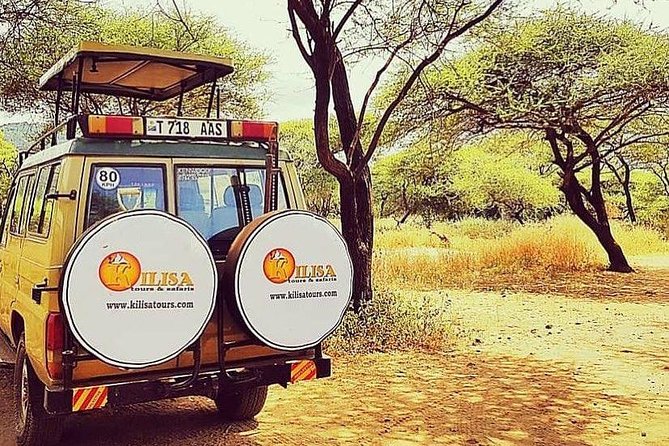
You leave Moshi after breakfast with a picnic lunch and head to Tarangire National Park. The first day goes straight into game viewing, which is a strong choice: you do not spend your opening hours simply driving toward the next camp.
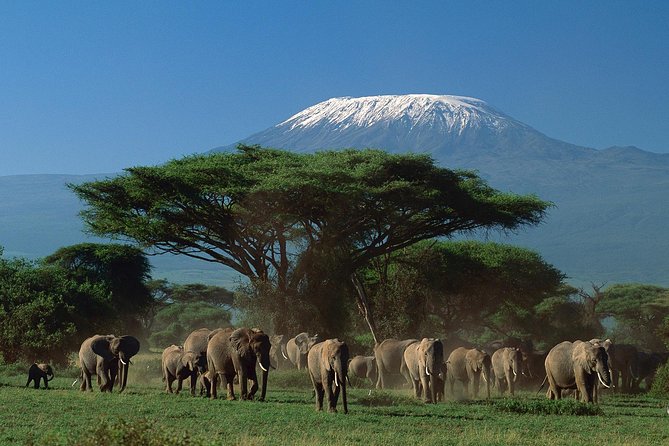
Tarangire is known for its year-round river, and that water source helps explain the park’s appeal. Large elephant groups may gather near the river, giving you a good chance to see them at close range from the safari vehicle. The park is also home to lions, giraffes, leopards, and tree-climbing pythons.
I like this opening because it offers a clear wildlife focus without needing to wait for the Serengeti. Elephants are the headline act, but the possibility of seeing a python in a tree adds a useful bit of unpredictability. You should keep expectations sensible, though. Wildlife sightings are never guaranteed, and a full day in the park can feel long if the roads are rough or the animals are quiet.
Dinner and overnight accommodation are listed at Fanaka or Avenneture Camp. Ask at booking which camp applies to your dates and if the sleeping bag is supplied or rented separately.
Day 2: The long road into Serengeti
Day two begins at 6:00 am, after breakfast. You drive with a picnic lunch toward Serengeti National Park, entering through the Ngorongoro Crater Gate area at Olduvai.
This is the most ambitious transfer day. The reward is that you reach one of Tanzania’s great wildlife parks without losing a separate day to transport. The cost is time in the vehicle, so bring patience and use the pop-up roof whenever conditions allow.
Serengeti is the park most closely linked with Tanzania’s Great Wildebeest Migration. The supplied seasonal note points to July through October as the main period to see the migration, but you should not treat those months as a guarantee of a particular herd location. The route and animal movements change.
The park also gives you a chance to search for lions, hyenas, cheetahs, leopards, crocodiles, hippos, giraffes, antelopes, and gazelles. Crocodiles and hippos are associated with the Grumeti River, so the exact game-viewing area matters.
You spend the night in the heart of Serengeti at Seronera or Kati Kati Campsite. That location is valuable because you are already inside the park for the next morning’s sunrise drive. You avoid starting day three with another long approach from outside the reserve.
Day 3: Sunrise in western Serengeti and Olduvai Gorge
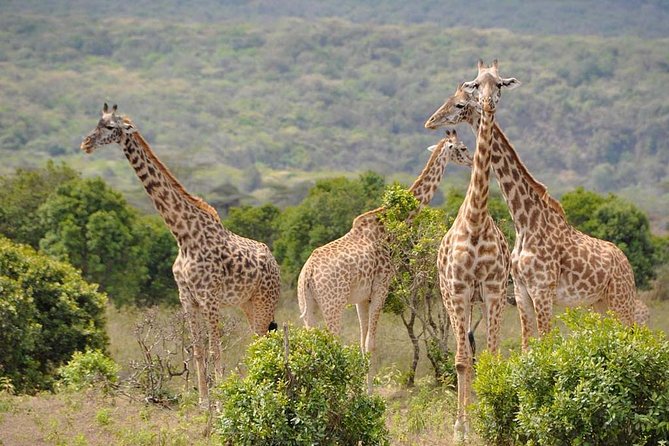
A cup of coffee comes before sunrise game viewing in western Serengeti. This early start is one of the better parts of the schedule, since cooler morning hours can provide a good setting for spotting animals before the heat of the day.
After the morning drive, you return to camp for a hot lunch. Then you continue game viewing on the way toward Ngorongoro Crater, with a stop at Olduvai Gorge.
This day mixes wildlife with a major archaeological stop. Olduvai Gorge gives the route more depth than a simple park-to-park transfer, and it breaks up the long drive toward the crater. The supplied plan does not specify how long you spend there or whether a separate entrance fee applies, so confirm those details if the site matters to you.
By evening, you stay on top of the crater rim at Simba Camp. The position is one of the memorable features of the trip, since the next day begins with a descent toward the crater floor. Temperatures can be cooler on the rim than in the parks below, so pack a warm layer even if Moshi feels hot.
More Ngorongoro Crater Tours in Kilimanjaro
- Safari Serengeti And Ngorongoro
★ 5.0 · 288 reviews - 5 Days Camping Tarangire, Serengeti & Ngorongoro crater & Visiting Maasai
★ 5.0 · 58 reviews - 4 Days Group Joining Camping Safari to Tarangire Serengeti Ngorongoro Crater
★ 5.0 · 50 reviews - 4 Day Private Tour Throughout Tarangire, Serengeti and Ngorongoro
★ 5.0 · 42 reviews
Day 4: Six hours inside Ngorongoro Crater
Breakfast comes at 6:00 am, followed by the crater descent at 6:10 am. The schedule describes a descent of 6:10m, which appears to refer to the listed route detail rather than a normal distance format, so I would ask the operator to clarify the exact descent and departure time before setting off.
The crater floor is the safari’s most concentrated wildlife day. You spend about six hours on a crater tour with a picnic lunch, looking for lions, rhinos, elephants, buffalo, and leopards. The enclosed setting means many major species can be found within shorter distances than on the open plains, though the Big Five in one day is a possibility, not a promise.
Ngorongoro is especially useful for a short safari. You do not need several days in the same reserve to get a sense of its wildlife. A long crater-floor visit gives you time to watch animal behavior instead of racing from one sighting to the next.
Lunch is taken at a picnic site on the crater floor, then you ascend and continue to accommodation at Fanaka or Avenneture Camp. The plan uses the phrase dinner and overnight after the crater day, with the final night at camp before Lake Manyara. Since the overall meal list includes four dinners, confirm exactly where each dinner is served.
The drawback is the early start after several demanding days. You have already spent long hours in a vehicle, and the crater road can make the day tiring. Still, if seeing rhino is high on your list, this is the part of the trip that gives you the strongest stated opportunity.
Day 5: Lake Manyara before returning to Moshi
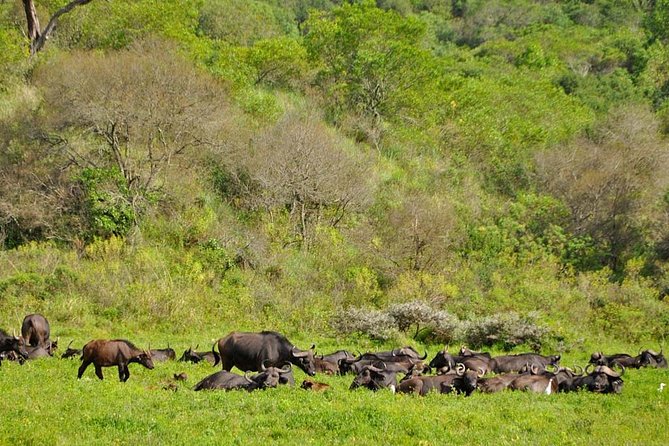
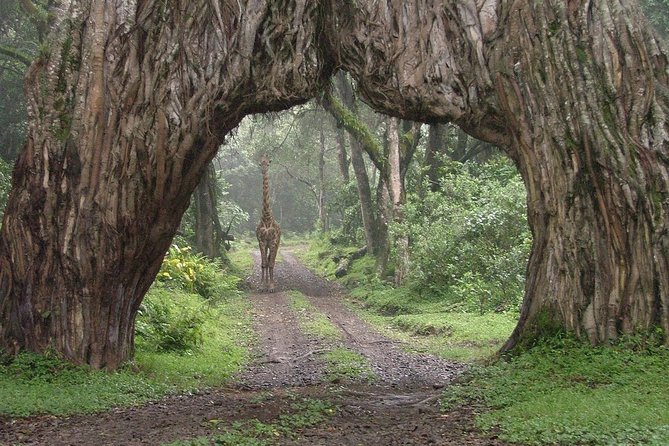
After breakfast, you drive to Lake Manyara National Park for a full day of game viewing. The park is known for green scenery, varied birdlife, hippos, and tree-climbing lions.
Lake Manyara provides a change of mood after the broad plains of Serengeti and the crater floor. Birdlife is a major reason to include it, while hippos give you another large-animal sighting beyond the usual lion and elephant search.
Tree-climbing lions are the park’s most distinctive attraction, but you should see them as a possibility rather than a scheduled event. The same applies to every wildlife sighting on this trip. Your guide can help with timing and location, but nature sets the timetable.
You return to Moshi in the evening for an overnight stay. That makes the five days feel full, but it also means day five is not a gentle finish. You will have a park visit and a long return drive, so do not plan an important late-night connection unless you have confirmed the timing directly.
The private jeep and the guide make a difference
The vehicle is described as a private 4×4 safari jeep with a pop-up roof. That roof matters more than it may sound. It lets you stand for a clearer view and gives you a better angle for photography than watching through a side window.
The vehicle also carries an ice chest with mineral water and a wildlife guidebook. Those are small comforts, but they help on long days when lunch is packed and the nearest café is far away.
Guide quality is central to a safari. Chris is the guide name I would request if available. He has been praised for finding animals, explaining what was happening, and keeping the experience personable. Naick is also associated with prompt answers when arranging mainland activities, so he may be a useful contact during the planning stage. Neither name guarantees who will lead your departure, so ask for confirmation.
The group limit is 15 people, but the description also calls the jeep private. That wording deserves clarification. Ask whether private means a vehicle reserved only for your party, or simply a private safari booking with a maximum group size of 15. The answer changes the value considerably.
Camping, meals, and the real comfort level
Camping is part of the budget appeal. Two people share a tent, and camping equipment is included. This is not the right choice if you want a lodge-based safari with a private room every night, but it can suit you if outdoor nights are part of the attraction.
The included meals are a practical advantage. You receive breakfast, picnic or prepared lunches, and dinners during the safari, rather than having to search for food between park drives. Mineral water is included, but other beverages are personal expenses.
The accommodation names vary by night, so comfort may not be identical throughout. Contact the operator for the exact camp list, bathroom arrangements, bedding, and whether towels are supplied. The only stated sleeping bag cost is $15 for rent, which suggests you should not assume one is included.
Who will get the most from this safari
I would recommend this trip to you if your priority is seeing a lot of northern Tanzania in a short period. It packs Tarangire, Serengeti, Ngorongoro, and Lake Manyara into five days, with the strongest wildlife focus concentrated in Tarangire, Serengeti, and the crater.
It also suits someone who values a guide-led trip rather than handling park permits, vehicle hire, routes, meals, and camps alone. The private 4×4 and included park fees remove much of the planning burden.
You should think twice if you dislike early mornings, rough roads, long transfers, or camping. Day two is a substantial drive, day four starts before sunrise, and day five combines a full park visit with the return to Moshi. This is a wildlife-first schedule, not a slow holiday.
The route may also work well for a first safari because each park offers a different setting and animal mix. You get elephants and the Tarangire River, open Serengeti plains and predators, a compact crater environment, and Lake Manyara’s birds and tree-climbing lion tradition.
Small details that can improve the booking
The tour starts in Moshi at 8:30 am, with pickup offered and arrival or departure meet-and-greet service available at the airport or bus station. Confirm the exact pickup point and the first morning’s departure time, since the daily schedule also says you leave after breakfast.
Bring a warm layer for the crater rim, sun protection for open vehicles, and enough personal funds for drinks, laundry, tips, and small purchases. Travel insurance and flights are not included.
Free cancellation is available if you cancel at least 24 hours before the experience starts. Changes made inside that 24-hour window are not accepted, and bad weather may lead to a different date or a full refund.
Should you book this five-day route?
Book it if you want the biggest possible wildlife circuit from Moshi in a tight five-day window, and if you are comfortable with camping and long drives. The strongest reasons are the private 4×4, the Serengeti overnight, the crater-floor game drive, and the chance to work with a guide such as Chris.
Before paying, settle three points: the exact camps, what private vehicle means for your party, and the timing of the long transfers. If those answers suit you, the price covers enough major costs to make the package a practical way to reach Tanzania’s headline parks without building the trip yourself.
FAQ
Where does the safari start and end?
The safari starts in Moshi, Tanzania, and ends back at the meeting point in Moshi.
How long is the experience?
The experience lasts approximately five days.
What time does the tour start?
The listed start time is 8:30 am. Some safari days have earlier departures, including 6:00 am on day two and day four.
Which national parks are included?
The route includes Tarangire National Park, Serengeti National Park, Ngorongoro Crater, and Lake Manyara National Park.
Is pickup available?
Yes. Pickup is offered, and airport or bus station arrival and departure meet-and-greet service is included.
Is camping equipment included?
Yes. Camping gear is included, with two people sharing a tent. A sleeping bag can be rented for $15.
What meals are included?
Breakfast is included on all five days, lunch is included on all five days, and dinner is included on four days. Mineral water is also supplied.
What is not included in the price?
Personal expenses, laundry, telephone use, beverages other than the supplied water, tips, travel insurance, flights, and the sleeping bag rental are not included.
More Tarangire National Park Safaris in Kilimanjaro
- 4-Day Tarangire Serengeti, Ngorongoro & Maasai Guided group tour
★ 5.0 · 16 reviews - 4 Days Game drives Safari Tarangire, Serengeti and Ngorongoro Crater
★ 5.0 · 14 reviews - Private Day Trip to Tarangire National Park
★ 5.0 · 12 reviews - #1 Best Tanzania Safari Tarangire Day tour Adventure
★ 5.0 · 9 reviews
More Serengeti Safaris in Kilimanjaro
- 5-Day Lake Manyara, Serengeti, Ngorongoro Crater and Tarangire
★ 5.0 · 28 reviews - 6 Days: Classic Camping( Tarangire, Manyara, Serengeti And Ngorongoro).
★ 5.0 · 26 reviews - Tanzania Safari – The Great Migration in the North of the Serengeti and Lake Natron
★ 5.0 · 25 reviews - 4 Day Mid-range Serengeti Safari
★ 5.0 · 22 reviews
Just added around Moshi
- Mt Kilimanjaro 6 days Marangu route hike★ 5.0 · 3 reviews
- Wildlife Extravaganza: Manyara, Tarangire & Ngorongoro in 3 Days★ 5.0 · 3 reviews
- Private Cycle to Kilimanjaro Bike Park Safari★ 5.0 · 6 reviews
- 3 Days Private E-Bike Tour in West Kilimanjaro★ 5.0 · 3 reviews
- West Kilimanjaro cycling Adventures★ 4.5 · 8 reviews
- machame route★ 5.0 · 16 reviews
- Kilimanjaro Climbing Umbwe Route★ 5.0 · 3 reviews
- Kilimanjaro Climb & Safari – Lemosho Route – 13 Day★ 5.0 · 10 reviews
Serengeti Safaris, compared.

Serengeti Balloon Safari and authentic bush breakfast
Read our review →
3 Days Serengeti & Ngorongoro Group Camping Safari
Read our review →
5-Day Highlights mid-Range Crater, Serengeti, Tarangire
Read our review →


Private 6-Day Tarangire Manyara Crater and Serengeti with Mid-Range Lodges
Read our review →
5 Days Camping Tarangire, Serengeti & Ngorongoro crater & Visiting Maasai
Read our review →