
Reviewed · MARANGU ROUTE CLIMBS
#1. Kilimanjaro 5-days hiking Marangu joining tour
Kilimanjaro’s Marangu Route gives you a classic five-day climb with hut accommodation instead of tents. You start under thick rainforest, pass waterfalls and open moorland, then cross the stark alpine desert before the hard night walk to Uhuru Peak, Africa’s highest point.
I like the route’s simple rhythm: Horombo Hut gives you a proper acclimatization stop, and the hut system means less camping gear to manage. I also like the support team, especially the strong personal care described from guide Shedrack and the wider crew. The big caution is cost: the advertised $675 does not include park fees, and one booking account says an additional $750 was required before hiking.
Key points at a glance
- Five days on the Marangu Route: A direct route from Marangu Gate to Mandara, Horombo, and Kibo huts.
- Four major habitat zones: Rainforest, heathland, moorland, alpine desert, and finally an arctic summit zone.
- A real acclimatization day: Horombo Hut is used as a rest point before the high push to Kibo Hut.
- Uhuru Peak requires stamina: Summit day covers about 22 kilometers and can take 11 to 15 hours.
- Strong hands-on support: The guide, waiter, cook, and porters are part of the service, with special praise for Shedrack.
- Check the final price first: National Park fees are excluded, and the stated extra charge should be confirmed before payment.
What the five-day Marangu climb feels like
This is not a casual mountain walk. Kilimanjaro rises to 5,895 meters, and the final day combines altitude, cold, darkness, and a long descent. Still, the route is well organized on paper, with steady daily stages and huts at each overnight stop.
The Marangu route is often chosen because you sleep in huts rather than tents. That makes the nights more straightforward, though it does not make the climb easy. You still need a sleeping bag, warm clothing, sturdy shoes, gloves, a flashlight, and a daypack.
The price is listed at $675 per person. That includes hut accommodation, meals indicated in the schedule, drinking water, a professional English-speaking guide, transportation, a mattress, camping equipment, and transfer from your Moshi hotel to the gate. The wording also lists guided safari tours, although the detailed plan here is for hiking Kilimanjaro, not a separate wildlife safari.
The key financial issue is the park fee. It is clearly excluded, and one customer had to pay an additional $750 before starting. That amount is important enough to confirm in writing, since it can change the real cost from a relatively modest hiking price to a much larger total.
More Marangu Route Climbs in Kilimanjaro
- Kilimanjaro climb, Marangu route (6-day)
★ 5.0 · 72 reviews - Climbing Kilimanjaro – Marangu Route
★ 5.0 · 65 reviews - Kilimanjaro Climbing 5 days Marangu route
★ 5.0 · 22 reviews
Day one: Marangu Gate to Mandara Hut
Your first morning begins with breakfast and a drive from Moshi or Arusha to Marangu Gate. Registration takes place before you start walking, so expect the opening part of the day to include formalities rather than immediate mountain scenery.
The trail climbs from 1,870 meters to 2,720 meters over about 8 kilometers. The stated walking time is four to five hours, which makes this a manageable introduction if you keep a slow pace from the start.
The rainforest is the star of day one. Thick vegetation lines the path, and you might spot monkeys or unusual plant life. Waterfalls appear along the way toward Horombo on the wider route description, adding a welcome sense of movement to a day that otherwise builds gradually.
Mandara Hut sits among the forest. It is more than just a place to sleep: it gives you your first clear sense of mountain routine. You arrive, eat, settle your gear, and prepare for the next stage instead of rushing onward.
If energy and weather allow, the optional walk to Maundi Crater is worth considering. It offers broad views and helps make the first afternoon feel like part of the experience rather than wasted time at camp. Keep it optional, though. Your main job on day one is to walk steadily, drink water, and conserve strength.
Day two: Mandara Hut to Horombo Hut
Day two leaves the rainforest behind and moves into heathland and moorland. The route climbs from 2,720 meters to 3,720 meters over 12 kilometers, with six to seven hours of hiking.
This is where the mountain begins to look less familiar. Trees thin out, open slopes replace forest, and views toward Kibo and Mawenzi become more important than the plants around your feet. You are also gaining altitude quickly, so a slow walking pace matters.
Horombo Hut is one of the most useful stops on the route. It is described as a rest point for acclimatization, and that is a major reason to value the five-day schedule. You need time for your body to adjust before sleeping at Kibo Hut and attempting the summit.
The trade-off is that this itinerary does not provide a full extra acclimatization day at Horombo. You arrive after a six to seven-hour walk, then continue the following day. That can work for strong hikers, but altitude affects people differently. Tell your guide early if you feel unwell rather than trying to hide symptoms.
One customer described receiving practical care after feeling sick at high altitude. The guide and waiter helped with luggage, food, and advice about medicine. That detail matters. On a high mountain, a supportive team is not just pleasant company. It can help you make safer choices when your own judgment is dulled by fatigue or altitude.
Day three: Horombo Hut to Kibo Hut
Day three covers 10 kilometers and takes around six to seven hours. The route climbs from 3,720 meters to 4,703 meters, entering the alpine desert.
This is a sharp visual change. The vegetation becomes sparse, the ground feels more exposed, and Kibo Peak takes over your attention. You pass the Last Water Point, a practical landmark that signals the increasingly dry conditions ahead.
Kibo Hut is the staging point for the summit attempt. The plan is to rest early and begin walking around midnight. That timing lets you climb through the coldest and darkest hours, reach Gilman’s Point near sunrise, and continue along the crater rim toward Uhuru Peak.
Your afternoon at Kibo should be quiet. Eat, organize your headlamp or flashlight, check your warm layers, and sleep if you can. Do not treat the stop as a social evening. The summit day is the hardest part of the trip by a wide margin.
This is also the time to check your water, gloves, jacket, and daypack. The provided packing advice includes a sleeping bag, trekking gear, power bank, flashlight, jacket, gloves, and hiking shoes. Those items are not decorative extras. The summit push is cold and long, and a dead phone or missing light is a needless problem.
Same country, a completely different kind of safari:
- Kilimanjaro climb by Lemosho Route (7-day)
★ 5.0 · 651 reviews - Safari Serengeti And Ngorongoro
★ 5.0 · 288 reviews - Kilimanjaro climb, Machame Route (7-day)
★ 5.0 · 262 reviews - Kilimanjaro Climbing Lemosho Route 8 Days.
★ 5.0 · 186 reviews
Day four: Kibo Hut to Uhuru Peak and back to Horombo
Summit day begins around midnight. You walk under starlight from 4,703 meters toward Gilman’s Point at 5,681 meters. The route is physically demanding, and the 11 to 15-hour estimate includes the summit climb, descent to Kibo Hut, a break, and the continued walk to Horombo Hut.
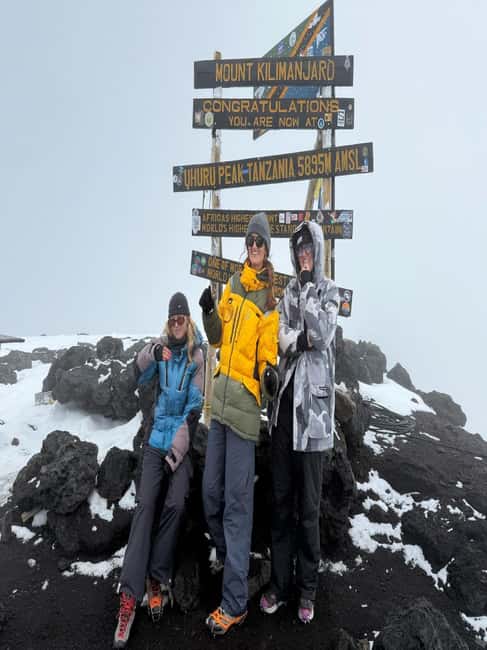
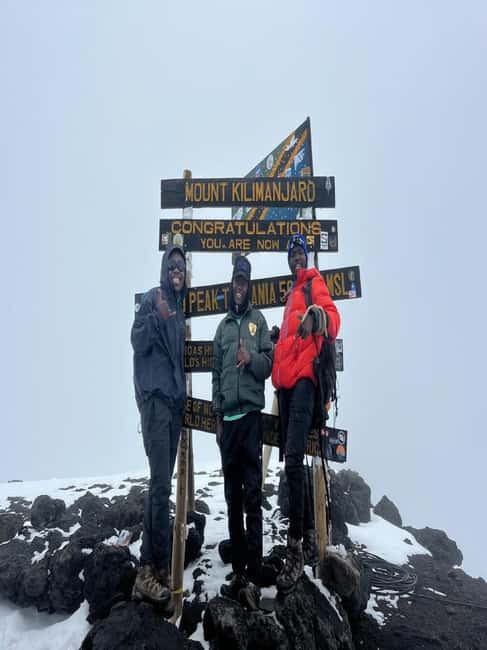
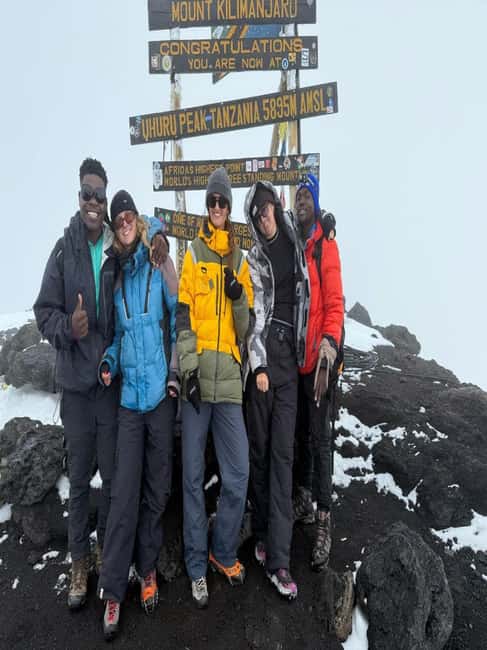
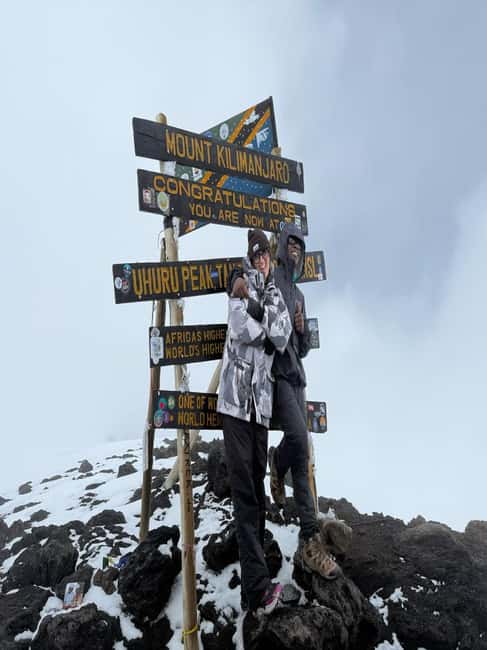
Reaching Gilman’s Point is a major achievement, but it is not yet Uhuru Peak. From there, you continue along the crater rim toward 5,895 meters. If conditions and your health allow, you reach the highest point in Africa and have time to celebrate the achievement before descending.
The sunrise timing is one of the most memorable parts of the schedule. You trade a normal night’s sleep for a slow climb into dawn, with the upper mountain shifting from darkness to light. It is also the point where pacing matters most. Your guide’s job is to keep the group moving safely and steadily, not to turn the climb into a race.
After the summit, you descend to Kibo Hut for lunch and rest. Then you continue down to Horombo Hut, ending a very long day at a much lower elevation. That second descent is easy to underestimate. Your legs may feel tired, and the relief of reaching the summit can make it tempting to rush.
I would think of this day as two separate challenges: reaching Uhuru Peak and then getting safely to Horombo. Keep food and water accessible, follow the guide’s pace, and expect the return walk to feel harder than its downhill direction suggests.
Day five: Horombo Hut to Marangu Gate
The final day descends from 3,720 meters to 1,870 meters. The route covers about 20 kilometers and takes five to seven hours, moving from heathland back into rainforest.
After the severity of summit day, the forest feels like a return to normal life. The air is lower, the vegetation becomes thicker, and the trail offers a gentler visual finish than the alpine desert. You still have a long walk, so do not assume the trip is over until you reach Marangu Gate.
At the gate, you receive a summit certificate before driving back to Moshi or Arusha. That transfer is included, as is the hotel-to-gate transport at the start. The schedule therefore gives you a clean end point, with no need to arrange your own ride from the mountain.
The return to town is likely to feel celebratory, but plan your energy carefully if you have another connection soon. The stated timing can vary with walking speed and group pace, and the final day follows a punishing summit stage.
Guides, porters, cooks, and the human side
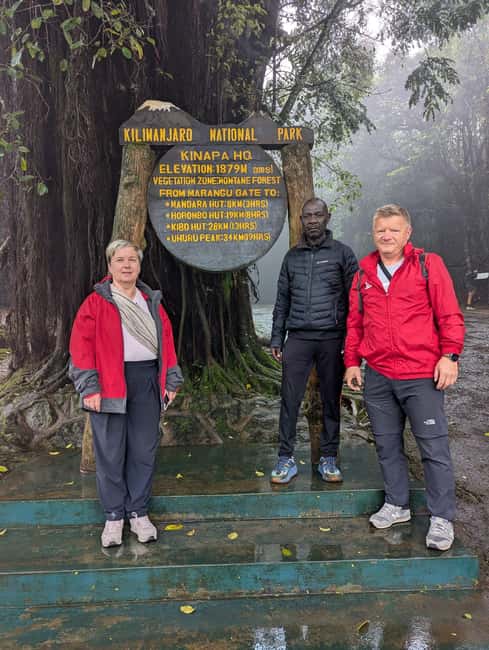
The strongest part of this experience is the level of practical support described by the booking details and customer feedback. The package includes a professional English-speaking guide, meals, water, hut accommodation, a mattress, and the wider mountain crew.
Guide Shedrack receives especially strong praise. If he is assigned to your group, you can expect a guide who is central to the organization and the group’s confidence. Staff support also extends beyond the guide. One account specifically credits the waiter with helping during altitude sickness by carrying luggage, providing food, and offering medicine advice.
That does not mean you should rely on staff to solve every health problem. Bring appropriate personal medication and travel insurance, and tell the guide promptly if you have symptoms. The package does not include travel insurance, and alcoholic drinks are also excluded.
The crew’s support can make the difference between a stressful climb and a manageable one. The service has also been described as extending to airport arrival and round-the-clock assistance. Confirm exactly what airport support is included for your booking, but the broader point is useful: this company aims to handle more than the trail itself.
What the $675 price really means
At $675 per person, the listed price appears attractive for a five-day Kilimanjaro climb with huts, meals, transport, water, equipment, and an English-speaking guide. The value improves if you want a packaged trip rather than arranging each part yourself.
But the headline price is not the final budget. National Park fees are excluded, and one customer reported paying an additional $750 before hiking. That is a major extra, not a footnote.
Before you reserve, ask for a written total covering:
- National Park fees
- Transport between your hotel and Marangu Gate
- Hut accommodation and mattress
- Meals and drinking water
- Guide, cook, waiter, and porter services
- Any airport assistance
- Equipment supplied and equipment you must rent or bring
The stated reserve-now, pay-later option and cancellation up to 24 hours in advance for a full refund add flexibility. Still, flexible booking does not remove the need to confirm the park charge and the exact payment schedule.
Who should book this route
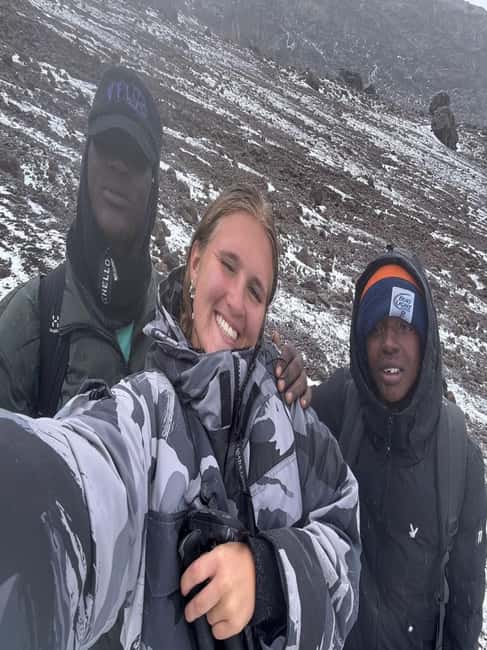
I would recommend this tour to someone who wants a structured Kilimanjaro climb, prefers hut sleeping to a tent-based trip, and values a support team that handles transport, meals, and mountain logistics.
It suits hikers who can manage several consecutive days on foot and one very long summit day. You do not need to be a technical mountaineer based on the information provided, but you do need to prepare for altitude, cold, darkness, and a 22-kilometer summit-day schedule.
The five-day format is efficient, but not generous with acclimatization. If you know you react badly to altitude, ask whether a longer itinerary is available before booking. The Horombo stop helps, yet the schedule still moves from 3,720 meters to Kibo Hut at 4,703 meters on day three.
Bring proper hiking shoes, a jacket, gloves, sleeping bag, flashlight, daypack, trekking gear, and power bank. The company lists camping equipment and a sleeping mattress as included, but you should clarify what that equipment covers, since you are sleeping in huts and still need your own sleeping bag.
Should you book the five-day Marangu Route?
Book it if you want a classic Kilimanjaro route with hut nights, a clear five-day plan, and an attentive team. The rainforest start, Maundi Crater option, Horombo acclimatization stop, and sunrise approach to Uhuru Peak give the trip a strong progression.
I would not book until the park fee is confirmed in writing. At this price, that extra charge can change the value calculation. I would also ask about the guide assigned to your group, what equipment is supplied, and how the company handles altitude illness.
If you are fit, prepared, and comfortable with a demanding summit day, this is a focused way to attempt Kilimanjaro. If you want more time for acclimatization, seek a longer route before choosing this five-day schedule.
FAQ
How much does the five-day Marangu hiking tour cost?
The listed price is $675 per person. National Park fees are not included, and one customer reported an additional $750 charge before the hike, so confirm the complete total before booking.
Where does the hike begin?
The hike begins at Marangu Gate after transport from your hotel in Moshi or Arusha and registration at the gate.
Where do you sleep during the trek?
The itinerary includes hut accommodation at Mandara Hut, Horombo Hut, and Kibo Hut. A sleeping mattress is included, while you are advised to bring your own sleeping bag.
Is an acclimatization stop included?
Yes. Horombo Hut is used as the acclimatization and rest stop before the climb to Kibo Hut and the summit attempt.
How long is the summit day?
The route from Kibo Hut to Uhuru Peak, then back through Kibo Hut to Horombo Hut, covers about 22 kilometers and takes approximately 11 to 15 hours.
What language does the guide speak?
The professional guide speaks English. Guide Shedrack is named in the customer feedback as one particularly well-regarded guide, though you should confirm who will lead your group.
More Hiking & Trekking in Kilimanjaro
- Private Kilimanjaro Hike 7 Day Lemosho Route
★ 5.0 · 60 reviews - Best Kilimanjaro hiking day trip tour with Kilinge Adventures
★ 4.5 · 54 reviews - #1. Best Kilimanjaro Day hike Tour-Machame Route-ISMANI
★ 4.2 · 47 reviews - Best Kilimanjaro Adventure 7 days Machame route Trekking
★ 5.0 · 42 reviews
Just added around Kilimanjaro
- Mt Kilimanjaro 6 days Marangu route hike★ 5.0 · 3 reviews
- Wildlife Extravaganza: Manyara, Tarangire & Ngorongoro in 3 Days★ 5.0 · 3 reviews
- Private Cycle to Kilimanjaro Bike Park Safari★ 5.0 · 6 reviews
- machame route★ 5.0 · 16 reviews
- 3 Days Private E-Bike Tour in West Kilimanjaro★ 5.0 · 3 reviews
- West Kilimanjaro cycling Adventures★ 4.5 · 8 reviews
- Kilimanjaro Climb & Safari – Lemosho Route – 13 Day★ 5.0 · 10 reviews
- Kilimanjaro Climbing Umbwe Route★ 5.0 · 3 reviews
Marangu Route Climbs, compared.



Private Full Day Hiking Experience to Marangu Route
Read our review →
From Arusha/Moshi: Kilimanjaro Hike Marangu Route Day Trip
Read our review →
Mount Kilimanjaro Day Hike Through Marangu Route to Mandara Hut
Read our review →

Best Kilimanjaro Adventures 6 Days Marangu Route Experience
Read our review →
Kilimanjaro Private Climbing in 6 Days Marangu Route
Read our review →Browse the lists this tour appears in