
Reviewed · LEMOSHO ROUTE CLIMBS
Private 7 Days Kilimanjaro Climbing via Lemosho Route
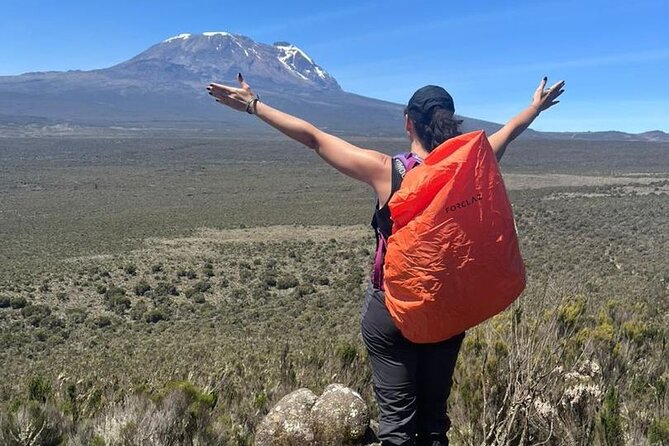
The best feature of this 7-day Lemosho climb is its steady approach to Uhuru Peak. You begin in montane forest, cross the high Shira Plateau, sleep beneath the Barranco Wall, and reach the summit after a careful acclimatization day near Lava Tower. It is a serious trek, but not a technical climbing expedition.
I like the small private group, limited to five people, and the full support package: guide, porters, cook, six breakfasts, six lunches, six dinners, park fees, and transport back to Moshi. The main caution is the schedule. Summit night begins around midnight, and the long ascent to Stella Point and Uhuru Peak is the toughest part of the trip. You need solid fitness and a sensible attitude toward altitude.
Key points to know before booking
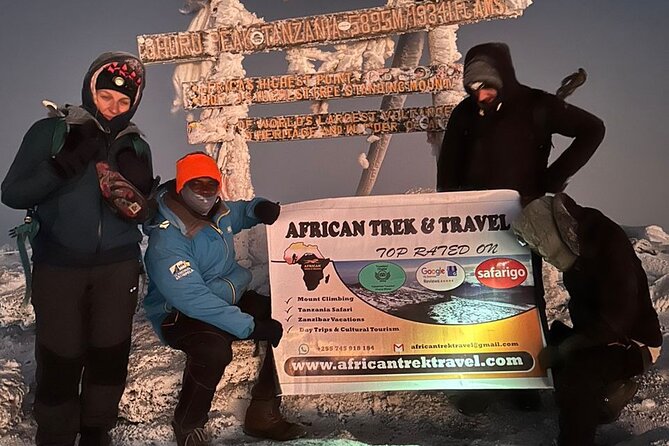
- A scenic western approach: Lemosho begins in forest and crosses the Shira Plateau before joining Kilimanjaro’s southern circuit.
- A useful acclimatization profile: Day 3 climbs to Lava Tower at about 4,650 meters before dropping to Barranco Camp.
- A genuinely small group: The private departure allows a maximum of five people.
- Strong guide support: Guides named in past departures include Sebastian, Paschal, Evans, Kessy, and Valency.
- A full mountain support team: Porters, a cook, meals, park fees, and an oxygen bottle are included.
- A hard summit night: You start between midnight and 2 a.m. and may walk on snow during the final hour to Uhuru Peak.
Why Lemosho is a good seven-day choice
Kilimanjaro is high, not technical. You do not need ropes or rock-climbing skills on this route, but you do need to cope with altitude, cold, steep ground, fatigue, and a very early summit start.
The Lemosho Route gives you a gradual start. That matters because altitude is the main challenge for many people. The itinerary spends time above 3,800 meters before summit day, and Day 3 uses the classic climb-high, sleep-lower pattern. You reach Lava Tower at roughly 4,650 meters, then descend to Barranco Camp at about 4,000 meters.
I like that rhythm. It lets you test how your body reacts before the final push. A seven-day schedule is also less rushed than shorter Kilimanjaro programs, although no seven-day climb removes the risk of altitude sickness.
This is a private experience, but private does not mean luxurious. You sleep at mountain camps, walk for several hours each day, and depend on a support crew for food, camp work, and equipment transport. The reward is a more personal pace and the chance to discuss route decisions directly with your guide.
More Kilimanjaro Climbs in Kilimanjaro
- Kilimanjaro climb by Lemosho Route (7-day)
★ 5.0 · 651 reviews - Kilimanjaro climb, Machame Route (7-day)
★ 5.0 · 262 reviews - Kilimanjaro Climbing Lemosho Route 8 Days.
★ 5.0 · 186 reviews
Day 1: Lemosho Gate to Mti Mkubwa Camp
After breakfast and a briefing, you drive from the Moshi area toward Lemosho Park Gate. The route then uses a forest track that requires a four-wheel-drive vehicle before you reach the Lemosho Glades.
The first walk is short by Kilimanjaro standards: about 6 kilometers, or 4 miles, taking two to three hours. You rise from approximately 1,830 meters to 2,650 meters and spend the night in montane forest at Mti Mkubwa, meaning big tree, Camp.
This is a smart first day. You are not thrown straight into a punishing climb, and the forest gives you a cool, shaded introduction to the mountain. The ground can still feel rough after the drive, so wear proper hiking shoes from the start rather than treating this as a gentle stroll.
Lunch and dinner are included. Since the day is short, use the time to check your sleeping gear, water, headlamp, and rain protection. A good briefing and gear check can prevent small problems from becoming major annoyances later.
Day 2: Shira Ridge and the high moorland
Day 2 is a major step up. The trail steepens as you leave the forest and enter the giant heather moorland zone. You cross several streams, climb over Shira Ridge, pass Shira 1 Camp, and continue to Shira 2 Camp.
The figures tell the story: 16 kilometers, or 10 miles, over seven to eight hours. You rise from about 2,650 meters to 3,850 meters. This is one of the longest walking days, so your pace matters more than speed.
The Shira Plateau gives you broad views and a very different setting from the first day. Heather and open moorland replace thick forest, and the route begins to feel properly high and exposed. The camp sits on moorland meadows beside a stream.
This is where the value of a private group becomes clearer. A guide can keep the walking pace measured rather than letting the strongest person set the tempo. You should walk slowly, drink regularly, and tell the guide early if you develop a headache, nausea, unusual tiredness, or poor balance.
Day 3: Lava Tower, Shark’s Tooth, and Barranco
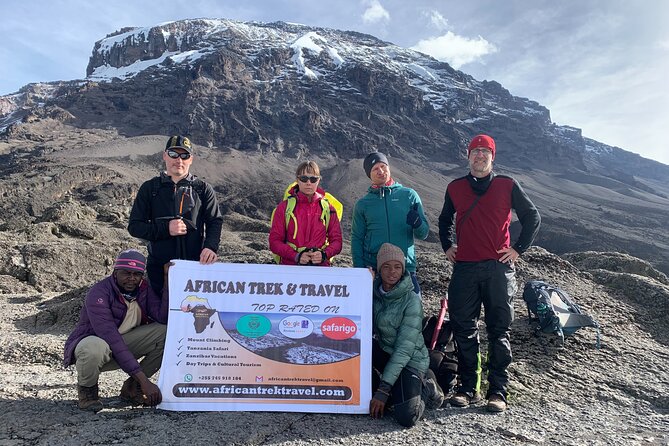
Day 3 is the route’s most useful acclimatization day. From Shira, you continue east along a ridge, passing the junction toward Kibo before turning southeast toward Lava Tower, also called Shark’s Tooth.
Lava Tower reaches about 4,650 meters, or 15,250 feet. After this high point, you descend to Barranco Camp at roughly 4,000 meters. The total distance is about 8 kilometers, with five to six hours of walking through semi-desert terrain.
Do not judge this day only by the small change in sleeping elevation. The climb to Lava Tower gives your body time at a higher altitude, then the descent gives you a lower place to rest. It can feel odd to work hard uphill only to lose elevation, but that is exactly why the day is useful.
Barranco is one of the memorable camps on this route because it sits beneath the Barranco Wall. You will see the steep section waiting for the next morning. The thin air, dry ground, and strong sun can make this day feel harder than the distance suggests. Keep your lunch simple and protect your skin from the sun.
More Kilimanjaro Climbs in Moshi:
- Kilimanjaro climb, Lemosho Route (8-day)
★ 5.0 · 148 reviews - Kilimanjaro climb, Lemosho Route (6-day)
★ 5.0 · 129 reviews - Kilimanjaro climb, Marangu route (6-day)
★ 5.0 · 72 reviews - Private Kilimanjaro Hike 7 Day Lemosho Route
★ 5.0 · 60 reviews
Day 4: Up the Barranco Wall to Karanga Valley
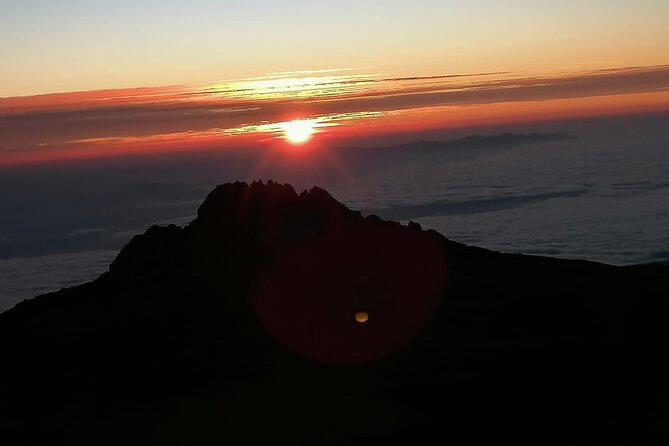
The morning begins with the route’s most recognizable scrambling section: the Barranco Wall. The itinerary describes it as a steep ridge climb, but it is not presented as a technical rock climb.
You cover about 5 kilometers in three to four hours, moving from 4,000 meters to approximately 4,050 meters. The short distance does not mean an easy morning. The Barranco Wall requires care with your footing and may feel demanding in the thin air.
After the wall, you continue toward Karanga Valley and reach the junction connecting with the Mweka Trail. The habitat changes to alpine desert, with sparse vegetation and a stark, high-altitude setting.
I like this short day because it gives you a chance to recover after the longer Shira day and before Barafu. It also gives the guide time to monitor how everyone is coping. At this point, you should not hide symptoms because you want to appear tough. On Kilimanjaro, honest communication is part of good preparation.
Breakfast, lunch, and dinner are included. Keep warm when you stop, even if the climb itself makes you sweat. Once you cool down at altitude, you can become uncomfortable quickly.
Day 5: Karanga to Barafu Camp
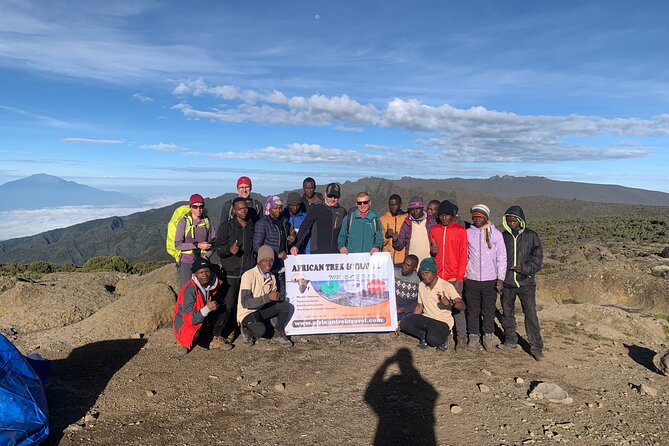
Day 5 takes you to Barafu Camp, the launch point for the summit attempt. The walk is only about 4 kilometers and takes three to four hours, but you climb from roughly 4,050 meters to 4,700 meters.
Barafu means ice in Swahili, and the camp is high, exposed, and focused on preparation rather than sightseeing. The route has completed its South Circuit, giving you views of Kibo and the summit from different directions.
After reaching camp, you eat, rest, and prepare for the night. Dinner is included, but you may have little appetite because of the altitude and the unusual schedule. Eat what you can, organize your clothing, and keep your headlamp, water, gloves, and warm layers easy to reach.
This is not the time to discover that your batteries are flat or that your boots are uncomfortable. The guide and support crew are there to help, but you still need to manage your own personal gear. The short walking day is valuable because the summit attempt begins soon after midnight.
Day 6: The midnight push to Stella Point and Uhuru Peak
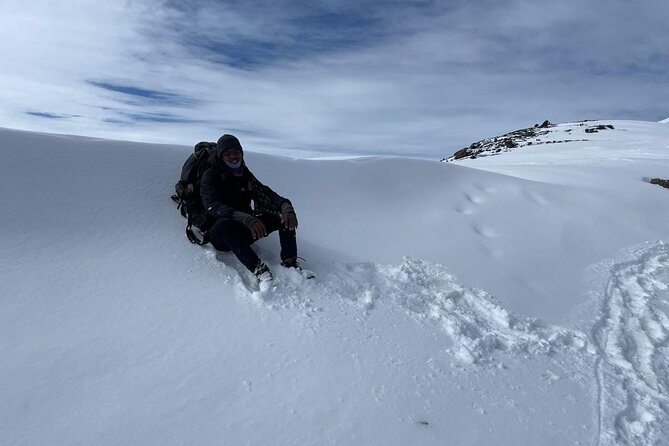
Day 6 is the hardest day by far. You normally begin between midnight and 2 a.m., ascending through heavy scree between the Rebmann and Ratzel glaciers toward Stella Point on the crater rim.
The route description gives about seven hours for the summit section. Your guide will set a slow rhythm because the ground is steep, loose, and dark at first. The effort here is as mental as it is physical. You may feel cold, tired, breathless, or discouraged, even if you were comfortable on the lower sections.
At Stella Point, around the crater rim, you stop briefly. The reward is sunrise, often seen over the surrounding mountain and clouds below. Faster hikers may see sunrise from Uhuru Peak, but there is no need to turn this into a race. Getting safely to the summit matters more than arriving at a particular minute.
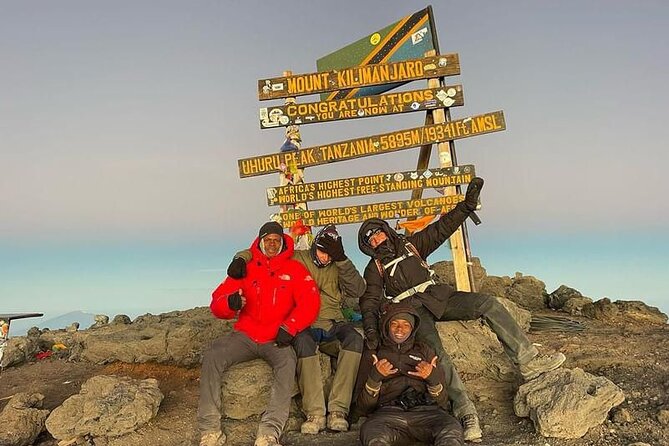
From Stella Point, the final hour to Uhuru Peak may include snow. Uhuru Peak is the highest point on Kilimanjaro and the highest point in Africa. The last stretch can be slow, especially after the long ascent to Stella Point.
An oxygen bottle is included, but that should not be treated as a guarantee against altitude problems or as a substitute for medical judgment. Your guide decides how to respond if someone becomes unwell. The supplied information does not specify the full descent schedule for this day, so ask the operator exactly where you will sleep after the summit and how much descent is planned.
Day 7: Mweka descent and return to Moshi
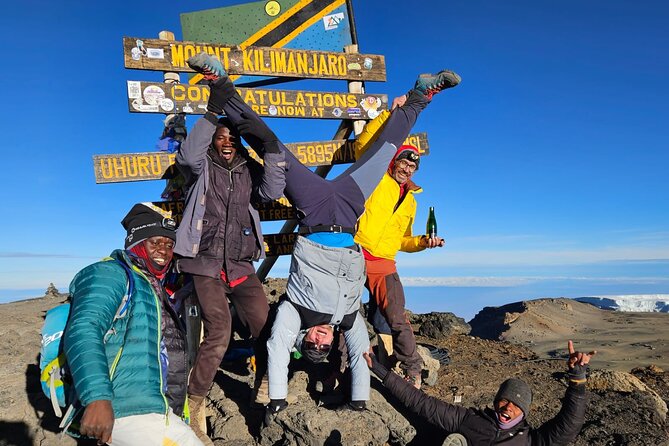
The final day takes you downhill through forest to Mweka Park Gate. The stated route covers about 10 kilometers in three to four hours, descending from around 3,090 meters to 1,680 meters.
At lower elevations, the path may be wet and muddy. Gaiters and trekking poles are useful here, while shorts and a T-shirt may be comfortable once the temperature rises. Still, keep rain gear and a warmer layer within reach because mountain weather can change.
At Mweka Gate, you receive your summit certificates. The African Trek & Travel vehicle then takes you back to your hotel in Moshi, with the drive listed at about 60 minutes.
This descent is easier on the lungs but can be tiring on the knees. Use trekking poles if you have them, shorten your steps, and do not rush simply because the summit is behind you.
What the $2,800 price includes
At $2,800 per person, the cost is substantial, but Kilimanjaro prices include far more than a guide walking beside you. This package includes park fees and taxes, the guide, porters, a cooker, six breakfasts, six lunches, six dinners, and transport back to Moshi.
An oxygen bottle is also listed among the inclusions. The guide service is available in English, Spanish, French, German, Italian, and Simplified Chinese, which can make safety instructions and daily briefings easier to follow.
The private group limit of five is one of the strongest value points. You are not paying for a large departure with an unknown crowd. You get a smaller group, though the support crew may be much larger than the number of people hiking. One past account describes 23 porters supporting seven hikers, a reminder that porter support is central to how these climbs operate.
Tipping is not included. Neither are visas, flights, or laundry. Put tips into your total budget before booking, and confirm the operator’s current tipping guidance. You should also ask what personal equipment is supplied, since the inclusion list does not mention sleeping bags, trekking poles, clothing, or other individual gear.
The guides and support crew
The strongest pattern in the supplied comments is praise for the guide and porter team. Sebastian is repeatedly identified as a central contact and guide, while Paschal, Evans, Kessy, and Valency are also named on different departures.
That does not mean you are guaranteed a particular guide. Ask who will lead your climb and who will be responsible for the final summit decision. You can also ask how the group handles altitude symptoms, weather changes, and a participant who needs to stop.
Past accounts describe careful preparation, including hotel assistance, gear checks, quick answers before departure, and strong support on summit night. Those details matter more than a polished sales pitch. A Kilimanjaro company earns its value through communication, pacing, food, porter treatment, and sound decisions when conditions are difficult.
Who should book this climb?
This trip suits you if you want Kilimanjaro with a private format and enough time for a gradual route. You should have a moderate level of physical fitness and be ready for seven days of walking, including a long summit night.
It is a good choice if you value scenery. The route passes through montane forest, moorland, semi-desert, alpine desert, and possible snow near the top. It also suits people who want multilingual support or who prefer a small group to a large scheduled departure.
It is less suitable if you want a relaxed holiday, dislike basic mountain camps, or have not considered altitude carefully. The first days may feel manageable, but the summit attempt is demanding. You should not book this simply because the price looks competitive.
The start and end point is listed at M84R+V94, Shantytown, Tanzania, with pickup offered. Confirmation is received when you book, and the activity operates daily during the listed period. Service animals are allowed, and the meeting point is near public transportation, but the physical demands remain the main practical issue.
Should you book the 7-day Lemosho Route?
I would choose this tour if you want a small, fully supported Kilimanjaro climb and you are comfortable with a hard summit night. The route gives you varied scenery, a useful acclimatization day at Lava Tower, and a clear seven-day structure.
The strongest reasons to book are the maximum group size of five, included meals and park costs, multilingual guide options, and the repeated emphasis on Sebastian and the wider team’s care and organization. The main things to clarify are your exact guide, personal equipment, post-summit sleeping arrangements, and tipping expectations.
You can cancel for a full refund up to 24 hours before the local start time. Within 24 hours, cancellations and changes are not accepted for a refund. That is helpful flexibility, but it does not replace travel insurance and honest medical preparation.
FAQ
How long is the Kilimanjaro Lemosho climb?
The experience lasts approximately seven days. The itinerary includes six nights of climbing and a return to Moshi after the descent from Mweka Gate.
What is the maximum group size?
The private activity has a maximum of five people.
What languages are available for the live guide?
Guides are listed as available in English, Spanish, French, German, Italian, and Simplified Chinese.
What meals are included?
The package includes six breakfasts, six lunches, and six dinners.
Is transportation included?
Pickup is offered. On the final day, a vehicle waits at Mweka Gate and drives you back to your hotel in Moshi, a journey listed at about 60 minutes.
Is an oxygen bottle included?
Yes. An oxygen bottle is included in the package.
What is not included in the price?
Tipping, visas, flights, and laundry are not included. The supplied details do not list personal climbing equipment, so you should confirm equipment arrangements before departure.
More 7-Day Experiences in Moshi
- Climbing Kilimanjaro through 7 days Machame Route
★ 5.0 · 151 reviews - 7-Day Magical Tanzania Safari -Premium High End Package
★ 5.0 · 53 reviews - 7 Days Machame route – Kilimanjaro
★ 5.0 · 45 reviews - Best Kilimanjaro Adventure 7 days Machame route Trekking
★ 5.0 · 42 reviews
More Lemosho Route Climbs in Moshi
- Kilimanjaro Lemosho Route
★ 5.0 · 71 reviews - Climbing Kilimanjaro through 8 days Lemosho Route
★ 5.0 · 52 reviews - 8 Days Climbing Mt.Kilimanjaro (Lemosho Route)
★ 4.5 · 37 reviews - 7 days Lemosho route Climbing Mt.Kilimanjaro
★ 5.0 · 31 reviews
Just added around Moshi
- Mt Kilimanjaro 6 days Marangu route hike★ 5.0 · 3 reviews
- Wildlife Extravaganza: Manyara, Tarangire & Ngorongoro in 3 Days★ 5.0 · 3 reviews
- Private Cycle to Kilimanjaro Bike Park Safari★ 5.0 · 6 reviews
- 3 Days Private E-Bike Tour in West Kilimanjaro★ 5.0 · 3 reviews
- West Kilimanjaro cycling Adventures★ 4.5 · 8 reviews
- machame route★ 5.0 · 16 reviews
- Kilimanjaro Climbing Umbwe Route★ 5.0 · 3 reviews
- Kilimanjaro Climb & Safari – Lemosho Route – 13 Day★ 5.0 · 10 reviews
Lemosho Route Climbs, compared.


8-Day Small-group Lemosho Kilimanjaro Summit Trekking
Read our review →





Climbing Kilimanjaro through 8 days Lemosho Route
Read our review →Browse the lists this tour appears in