
Reviewed · LEMOSHO ROUTE CLIMBS
Mt.kilimanjaro Lemosho Route
The best part of this 7-day Lemosho Route climb is its careful rhythm. You start on Kilimanjaro’s western side, cross the Shira Plateau, climb high to Lava Tower, then sleep lower at Barranco before the summit push. That climb-high, sleep-lower pattern gives your body a better chance to adjust.
I like the private group format, since the pace can be shaped around your own condition rather than a large crowd. I also like the support system: a mountain crew prepares camp, and each pair of climbers has a personal guide for the night ascent. The possible drawback is clear: this is a serious high-altitude trek, not a long sightseeing walk. The summit day is cold, tiring, and demanding even though the route is not technically difficult.
Key points to know before booking
- A gradual western approach: You enter at Londorossi Gate and cross the Shira Plateau before reaching the busier summit section.
- Strong acclimatization plan: Lava Tower, the Barafu area, and several 200-meter practice hikes help prepare you for altitude.
- Personal help on summit night: Each pair of climbers receives a guide during the ascent to Uhuru Peak.
- A memorable route feature: Barranco Wall looks intimidating but has a straightforward trail and takes about an hour to climb.
- Private and flexible: Only your group participates, with hotel pickup offered in the Moshi area.
- A full summit experience: The itinerary includes Uhuru Peak at 5,895 meters, a return to camp, and a descent through rainforest to Mweka Gate.
Why the Lemosho Route is a good seven-day choice
Kilimanjaro has several routes, but Lemosho earns its place by giving you a long approach before the final climb. The first days are not simply a race uphill. You gain height in stages, spend time at several camps, and complete short acclimatization hikes after reaching camp.
That matters because altitude is the main challenge, not technical climbing. The summit route is described as relatively simple underfoot, but Uhuru Peak rises to 5,895 meters. At that height, a slow pace, good rest, and close attention to how you feel matter more than speed.
You will be part of a private group, which is useful when one person needs a slower pace or an extra rest stop. The guides can adjust the walking speed for the group. That personal feel is one of the strongest reasons to consider this trip.
The listed price is $2,256.42 per person. That is a major expense, but the value comes from the length of the route and the level of mountain support described. Your package includes a guide and support crew, camp setup, meals at key points in the itinerary, summit-night support, permits, search and rescue registration, and transfers connected with the climb.
Still, do not book on price alone. The supplied details do not spell out every inclusion, such as the exact equipment supplied, tips, drinks, or pre- and post-climb lodging. Ask for a full list before paying. On Kilimanjaro, small differences in support can matter a great deal.
More Lemosho Route Climbs in Moshi:
- Kilimanjaro climb by Lemosho Route (7-day)
★ 5.0 · 651 reviews - Kilimanjaro Climbing Lemosho Route 8 Days.
★ 5.0 · 186 reviews - Kilimanjaro climb, Lemosho Route (8-day)
★ 5.0 · 148 reviews
Day 1: Londorossi Gate and the Shira Plateau
Your guide and mountain crew meet you at your hotel in the morning for another briefing. You then drive for roughly three to four hours to Londorossi Gate, at about 2,200 meters.
This first transfer is more than a simple ride to the trailhead. At the gate, the team handles climbing permits and registers with the search and rescue service. Those formal steps take time, so patience helps. Afterward, off-road vehicles carry the group higher, reaching a drop-off point near 3,500 meters.
That high vehicle drop is unusual in feel. You begin the walking section already above much of the lower mountain, with views across the Shira Plateau. The first camp, Shira 1, sits at about 3,505 meters.
The walk to camp has only a small gain in height and should not be especially hard from a physical point of view. Even so, arriving high on the first day means you should take the guide’s pace seriously. Do not treat the relatively easy walking as permission to rush.
The day is listed as lasting up to 12 hours, largely because of the hotel briefing, road transfer, gate formalities, vehicle ride, and trek. Bring patience for the logistics as well as energy for the trail.
Day 2: Shira 1 to Shira 2, with a Lava Tower practice hike
Day two takes you from Shira 1 at 3,505 meters to Shira 2 at 3,900 meters. The walk is described as light, giving you time to look at Kilimanjaro’s unusual plant life and the wide views around the mountain.
Shira 2 is also the best point on this route for views of Mount Meru, Africa’s fifth summit, when the weather cooperates. That qualification is important. Mountain views depend on cloud and weather, so enjoy the chance without treating it as a promise.
After reaching camp, you have lunch and rest for about two hours. Then comes a short acclimatization hike toward Lava Tower Camp, gaining another 200 meters before returning. This is excellent preparation because it lets your body experience a higher point without forcing you to sleep there that night.
The rhythm may seem slow, but that is the point. You are not only covering distance. You are testing how you respond to increasing altitude while the guide can watch your pace and condition.
Day 3: Lava Tower at 4,630 meters and Barranco Wall
Day three is one of the most useful and uncomfortable parts of the route. After breakfast, you leave Shira 2 and climb toward Lava Tower at 4,630 meters.
The path rises and falls several times. You may feel the altitude here, with discomfort and tiredness possible even for a fit person. The plan calls for lunch at Lava Tower and at least one to two hours at this height before descending.
That high point followed by a lower camp is central to the acclimatization plan. You gain height, spend time there, then sleep at Barranco Camp at about 3,960 meters. It is a demanding day, but the descent gives your body some relief.
Barranco Camp brings one of the route’s most recognizable sights: Barranco Wall. It is large and steep, and seeing it from camp can make the next morning look more alarming than it really is. The trail is described as simple, and the climb takes about an hour.
I would treat day three as a day to watch your condition closely. Do not hide a headache, nausea, or unusual weakness to impress the group. Your guides need honest information to set a safe pace.
Same country, a completely different kind of safari:
- Safari Serengeti And Ngorongoro
★ 5.0 · 288 reviews - Kilimanjaro climb, Machame Route (7-day)
★ 5.0 · 262 reviews - Climbing Kilimanjaro – Machame Route
★ 5.0 · 170 reviews - Climbing Kilimanjaro through 7 days Machame Route
★ 5.0 · 151 reviews
Day 4: Barranco Wall and the approach to Karanga
You wake early, eat breakfast, and start up Barranco Wall. An early departure is recommended to avoid crowds from other groups. That is practical advice, not a minor detail. A busy narrow trail can slow everyone down and make the climb feel more hectic.
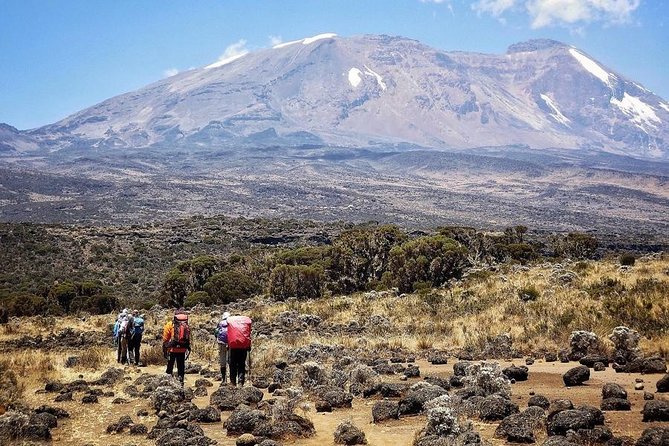
The wall takes about an hour. It is not presented as a technical climb, but you should still use care and follow the guide’s route. Once you reach the top, you can rest and take photographs with Kibo volcano behind you.
The next section to Karanga Camp is harder than the wall because of repeated ascents and descents. It is the kind of walking that can wear down your legs even when no single slope seems extreme.
The guides set the pace for the group, which is valuable here. A pace that feels slow at the start often proves wise later. After arriving at Karanga, you receive a warm lunch and have time to recover.
A second acclimatization walk heads toward Barafu Camp, gaining 200 meters before returning to Karanga. This creates another high point without making you sleep at the higher camp yet. The schedule is full, but the rest periods keep the day from becoming one long push.
Day 5: Barafu Camp and preparation for Uhuru Peak
After breakfast, you walk to Barafu Summit Camp at 4,640 meters. This is the launch point for your night ascent to Uhuru Peak.
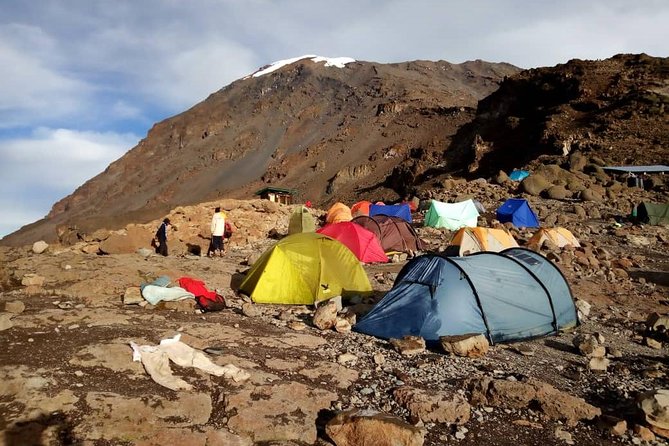
The mountain crew sets up the camp, including tents and sleeping bags, before you arrive. That lets you settle in rather than deal with camp chores when you are already high and tired. You have time to regain strength, then complete another acclimatization hike toward Kosovo Summit Camp at about 4,800 meters.
After returning to Barafu, you eat a hot dinner. The remaining goal is rest and sleep before the night climb. Sleeping can be difficult at this height, and the timetable does not leave room for a leisurely evening. Keep your gear organized before lying down so you do not waste energy searching for essentials later.
This day may look short on a map, but it is psychologically important. You are close to the summit, yet you must resist the temptation to spend your energy celebrating early. Save it for the climb.
Day 6: The night climb to Uhuru Peak
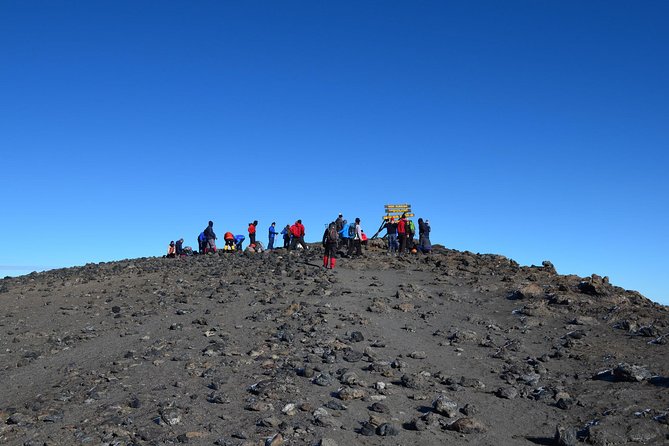
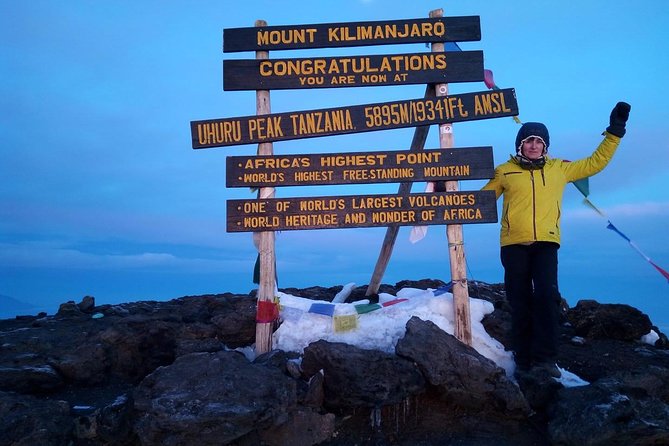
You leave Barafu at night for the summit of Uhuru Peak, the highest point on Kilimanjaro at 5,895 meters. The route is technically simple, but this is the hardest day because of altitude, darkness, cold, and limited rest.
Each pair of climbers receives a personal guide for the ascent. That is a valuable safety feature. Your guide monitors your physical and mental condition, helps maintain a workable pace, and gives you direct support when the climb becomes slow and tiring.
The exact summit timing is not provided, so expect the day to be governed by conditions and group pace rather than a fixed clock. Once you reach Uhuru Peak, you may descend to the nearest glacier if you wish. The option is weather and condition dependent, and you should not feel pressured to add it if you are tired.
You then descend to Barafu Camp and rest for about two hours before continuing to Millennium Camp at 3,820 meters. This second descent makes the day especially demanding. Reaching the summit is not the end of the work, so keep some strength in reserve.
The lower camp should bring a noticeable sense of relief. You have completed the high point, and the air becomes easier as you descend.
Day 7: Rainforest descent and Mweka Gate
Millennium Camp sits in tropical rainforest. After the stark, high camps, the return of thicker vegetation marks a real change in the climb.
You eat a warm breakfast, then continue down to Mweka Gate at 1,650 meters. The descent can feel easy compared with summit night, but tired knees and feet still need care. Take your time and use the guide’s pace.
At the gate, the group gathers to congratulate the climbers. You can share your thoughts in the guestbook, receive commemorative certificates at the company office, and transfer back to your hotel.
This ending is pleasantly personal rather than rushed. The certificates are a small touch, but after seven days of walking they give the trip a clear finish.
The guides are the key part of the package
The company’s own description puts its guides at the center of the experience, and the available feedback supports that emphasis. Ayubu and Qamrish are named as guides who provided steady support on a February climb. Edwin is also credited with helping a group reach the summit through highly variable weather.
Panta, the chef, is remembered for bringing pizza to the mountain. That detail says something useful about morale. Food on a hard climb is not only fuel. A warm, familiar meal can lift the mood when the weather turns rough.
Fred is also named for providing a warm welcome and professional support. You should not assume these exact guides will be assigned to your group, but their names give you a sense of the team’s role in the operation.
The most important thing to ask before booking is not only who the lead guide is. Ask how many climbers each guide supports, how decisions are made if someone feels unwell, and what the support crew handles at camp. The information supplied here confirms personal guiding on summit night, but it does not spell out every staff-to-climber ratio for the full week.
Weather, fitness, and what the route demands
You need a moderate level of physical fitness for this activity. That phrase should be taken seriously. The route includes repeated uphill and downhill sections, several long days, a summit at nearly 5,900 meters, and a descent soon after reaching the top.
The weather can change sharply. One account describes very variable weather, yet the group still reached its goal with help from the guide team. That does not mean poor weather is harmless or that the summit is guaranteed. The operator requires good weather and may cancel for safety, offering another date or a full refund.
You should be ready for the possibility that your body, not your determination, sets the limit. A private group helps because the pace can be adjusted, but it cannot remove altitude sickness or fatigue. The strongest plan is to walk slowly, rest when instructed, and report symptoms early.
Who should book this Kilimanjaro climb?
I would recommend this route to you if you want a structured Kilimanjaro climb with a private group, a long approach, repeated acclimatization hikes, and close summit support. It suits someone who values safety and steady pacing more than a quick, bare-bones ascent.
It is also a good choice if you want a route with varied scenery: the Shira Plateau, high volcanic camps, Barranco Wall, Kibo views, and rainforest on the way down.
I would hesitate to recommend it if you are seeking a relaxed holiday or dislike early starts, long vehicle transfers, basic mountain camps, and sleeping at high altitude. The $2,256.42 price may offer good value for the guide team, support crew, permits, camp preparation, meals listed in the schedule, and transfers, but confirm the full package before comparing it with other operators.
Pickup is offered, mobile tickets are available, and only your group takes part. Confirmation arrives at booking. The activity is near public transportation, though the mountain approach itself relies on the arranged vehicle transfer.
Should you book it?
Book this Lemosho climb if you want a private, carefully paced route and you are prepared for a real physical challenge. The strongest features are the acclimatization pattern, personal summit guide, camp support, and the guide team’s clear role in keeping the group moving through difficult weather and high altitude.
Before committing, ask for the exact inclusions, guide-to-climber ratio, equipment details, and planned hotel arrangements. If those answers suit your needs, this seven-day route offers a sensible balance of mountain scenery, support, and summit preparation.
Free cancellation is available up to 24 hours before the local start time for a full refund. Cancellations or changes made inside that window are not accepted for a refund. If poor weather cancels the climb, you are offered a different date or a full refund.
FAQ
Where does the Kilimanjaro climb start?
The experience begins with a hotel pickup and briefing in the morning, followed by a three to four-hour drive to Londorossi Gate on the western side of Kilimanjaro National Park.
How long is the experience?
The climb lasts approximately seven days. Each itinerary day is listed as up to 12 hours, although that includes walking, transfers, camp activity, and scheduled rest.
What is the highest point reached?
You climb to Uhuru Peak at 5,895 meters, the summit of Kilimanjaro.
Is this a private tour?
Yes. Only your own group participates in the activity.
Is hotel pickup available?
Yes. Pickup is offered, and the guide and mountain crew meet you at your hotel for the initial briefing.
What fitness level is required?
A moderate level of physical fitness is required. The route includes several ascents and descents, high-altitude camps, and a demanding summit day.
Is a guide provided during the summit climb?
Yes. Each pair of climbers receives a personal guide for the ascent to Uhuru Peak.
Does the route include acclimatization hikes?
Yes. Acclimatization hikes are scheduled near Lava Tower, Barafu, and Kosovo Summit Camp, including hikes with a 200-meter gain in altitude.
What happens if the weather is poor?
The experience requires good weather. If it is canceled because of poor weather, you are offered a different date or a full refund.
What is the cancellation policy?
You can cancel at least 24 hours before the local start time for a full refund. Cancellations or changes made less than 24 hours before the start time are not accepted for a refund.
Just added around Moshi
- Mt Kilimanjaro 6 days Marangu route hike★ 5.0 · 3 reviews
- Wildlife Extravaganza: Manyara, Tarangire & Ngorongoro in 3 Days★ 5.0 · 3 reviews
- Private Cycle to Kilimanjaro Bike Park Safari★ 5.0 · 6 reviews
- 3 Days Private E-Bike Tour in West Kilimanjaro★ 5.0 · 3 reviews
- West Kilimanjaro cycling Adventures★ 4.5 · 8 reviews
- machame route★ 5.0 · 16 reviews
- Kilimanjaro Climb & Safari – Lemosho Route – 13 Day★ 5.0 · 10 reviews
- Kilimanjaro Climbing Umbwe Route★ 5.0 · 3 reviews
Lemosho Route Climbs, compared.


8-Day Small-group Lemosho Kilimanjaro Summit Trekking
Read our review →





Climbing Kilimanjaro through 8 days Lemosho Route
Read our review →Browse the lists this tour appears in