
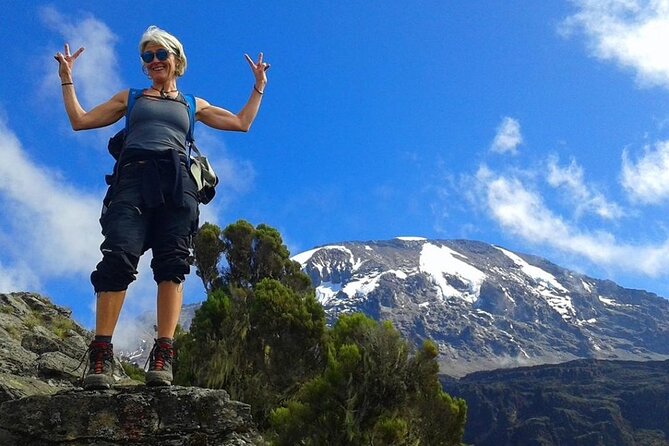
Reviewed · KILIMANJARO CLIMBS
Mount Kilimanjaro Rongai Route
Mount Kilimanjaro’s Rongai Route gives you a quieter approach to Africa’s highest mountain, beginning near the Kenyan border and finishing on the Marangu side. The route is gentle at first, then turns into a serious high-altitude climb, with the best drama saved for the midnight push from Kibo Hut to Uhuru Peak.
I like two things here. First, the extra acclimatization day at Mawenzi Tarn gives you time to adjust before the summit effort. Second, Zara’s mountain operation includes guides, porters, cooks, and dining support, and named guides such as Mndeme, Stanley, Izadini, and Tido have earned especially warm praise for their care and organization.
The main consideration is the summit day: 12 to 15 hours of hiking and descending, with a rise to 5,895 meters. This is not a casual week in the hills. You need moderate fitness, patience, and a willingness to walk slowly for several days.
Key points to know before booking
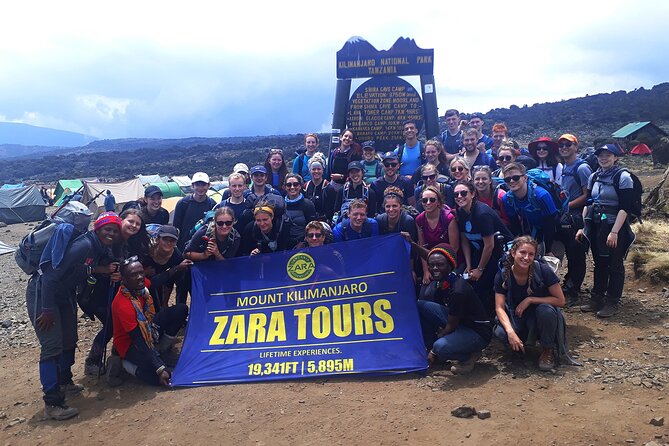
- Rongai offers a quieter northern approach: You begin through farmland and pine forest, then cross open moorland toward Mawenzi and Kibo.
- Mawenzi Tarn gets a full acclimatization day: The extra time at 4,330 meters is one of the route’s most useful features.
- The summit attempt begins around midnight: Expect a steep climb to Gillman’s Point, then a crater-rim walk to Uhuru Peak.
- The support team is a major part of the experience: Guides, porters, cooks, and other crew keep the climb organized and help watch for signs of altitude trouble.
- You finish on a different side of the mountain: The descent goes through Horombo and Marangu Gate, rather than returning by the Rongai approach.
- The $2,700 price covers a private group of up to 15: Its value depends heavily on how many people share the booking and what level of personal support you want.
Why the Rongai Route is a smart Kilimanjaro choice
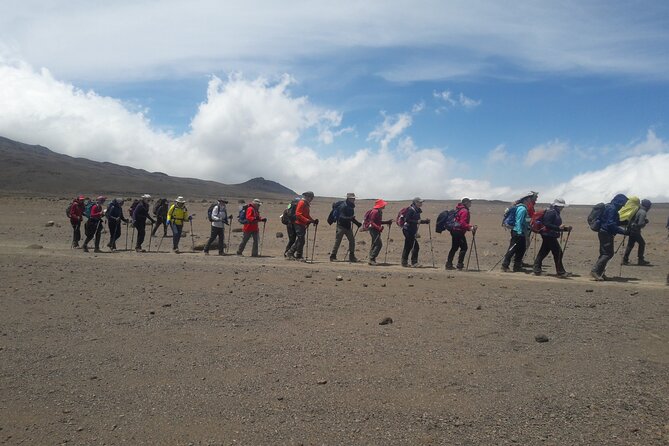
Kilimanjaro is not a technical mountaineering climb on this route, but it is a demanding altitude trek. You walk from about 1,950 meters to 5,895 meters in less than a week, with the air growing thin long before the summit.
The Rongai side feels different from a busy trailhead. Your first hours pass through rural farmland and pine forest, with a gradual climb that lets you settle into the rhythm. You might spot colobus monkeys, though wildlife sightings are not the purpose of this trip.
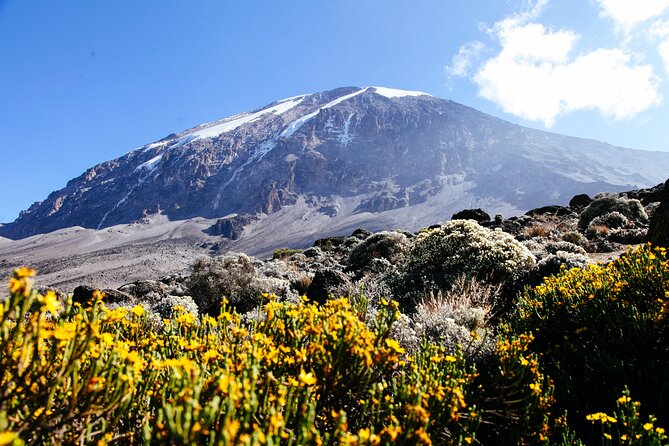
I like the route’s sense of progression. The scenery changes in clear stages: cultivated land, forest, moorland, giant senecios, bare volcanic ground, and finally the high summit zone. The route also lets you see Mawenzi Peak from several angles, which gives the middle days a strong visual focus.
The private format is useful if you want your own group rather than a mixed party. The advertised price is $2,700 per group for up to 15 people, so the per-person value improves sharply with a larger party. For one or two climbers, it is a much bigger spend, but you are paying for a dedicated operation rather than simply a trail permit and a guide.
More Kilimanjaro Climbs in Kilimanjaro
- Kilimanjaro climb by Lemosho Route (7-day)
★ 5.0 · 651 reviews - Kilimanjaro climb, Machame Route (7-day)
★ 5.0 · 262 reviews - Kilimanjaro Climbing Lemosho Route 8 Days.
★ 5.0 · 186 reviews
Day 1: Farmland, pine forest, and Simba Camp
After breakfast at the hotel, you drive for roughly two to three hours toward Rongai Gate. The stated meeting point is Kilimanjaro Airport at 7:00 a.m., and pickup is offered, so confirm the exact pickup arrangement and hotel details before departure.
At Rongai Gate, registration comes first. The hike then begins at around 1,950 meters and climbs to roughly 2,600 meters over about 8 kilometers. The walking time is listed as three to four hours, making this a manageable opening day for most people with moderate fitness.
The first section passes through farmland and pine forest. It is a calm way to start, especially if you have just arrived in Tanzania and are still adjusting to the pace of a multi-day trek. The path rises steadily rather than throwing you straight into a hard climb.
Simba Camp is the night’s destination. You can expect a hot meal and time to settle in. That early comfort matters more than it sounds. The first evening is when you begin learning how much water, clothing, and energy you need for each day.
Day 2: The moorland road toward Mawenzi
Day two covers about 10 kilometers and takes five to six hours, climbing from 2,600 meters to 3,600 meters. You ascend toward Second Cave for lunch, then leave the main route for a smaller path across the moorland.
This is one of the more appealing sections of the Rongai approach. Mawenzi’s jagged peaks begin to dominate the view, while the path feels more isolated than the opening day. The scenery is open, rough, and increasingly high-altitude without yet being barren.
The destination is Kikelewa Camp, set in a sheltered valley near Kikelewa Cave. Giant senecios add a distinctly Kilimanjaro feel to the surroundings. The camp’s position also helps break up the climb before the steeper approach to Mawenzi Tarn.
The challenge here is not only distance. You are gaining about 1,000 meters, so the sensible approach is to walk slowly and avoid treating the early days like a race. The guides’ close attention is valuable at this point, since small signs of fatigue can become more serious higher up.
Day 3: A short, steep climb to Mawenzi Tarn
The third day is shorter at about 6 kilometers, but it is steeper. You climb from 3,600 meters to approximately 4,315 meters in three to four hours, crossing grassy slopes toward Mawenzi Tarn.
Mawenzi Tarn is one of the route’s great settings. The camp sits beneath the cliffs of Mawenzi Peak, with stark views in every direction. After the softer forest and moorland scenery, this feels like a clear shift into the high mountain world.
You receive a hot lunch on arrival, followed by time to rest or take a short acclimatization walk. That combination is sensible. You gain altitude quickly, but you are not forced into a long afternoon march.
In the evening, your guide gives a briefing about the next stage. Pay attention to it. The following days take you across the Saddle and into the summit routine, where pacing, hydration, and rest become central to your chances of reaching the top.
More Kilimanjaro Climbs in Moshi:
- Kilimanjaro climb, Lemosho Route (8-day)
★ 5.0 · 148 reviews - Kilimanjaro climb, Lemosho Route (6-day)
★ 5.0 · 129 reviews - Kilimanjaro climb, Marangu route (6-day)
★ 5.0 · 72 reviews - Private Kilimanjaro Hike 7 Day Lemosho Route
★ 5.0 · 60 reviews
Day 4: The extra Mawenzi Tarn acclimatization day
An entire additional day at Mawenzi Tarn is a strong feature of this itinerary. The camp sits at about 4,330 meters, and the plan is to hike upward toward Mawenzi Peak before returning to camp to rest.
This is not a wasted day. At altitude, a shorter climb followed by a return to the same sleeping elevation can help your body adjust without forcing you to sleep much higher that night. The schedule also gives you time to recover before the long walk to Kibo Hut.
The exact distance and hiking time for this acclimatization walk are not specified, so you should ask Zara for the planned duration. The stated goal is clear: gain useful height, stay hydrated, and conserve strength for the summit attempt.
I especially like this pause because many ambitious itineraries try to compress Kilimanjaro into the fewest possible days. Here, the extra night acknowledges that altitude is the real opponent. It does not guarantee success, but it gives you a better-paced plan.
Day 5: Across the Saddle to Kibo Hut
After breakfast, you cross the Saddle, the broad, barren area between Mawenzi and Kibo. The hike is about 8 kilometers and takes five to six hours, rising from 4,315 meters to around 4,720 meters.
The Saddle is often described as lunar, and that is a fair image. There is little softness to the terrain. Mawenzi falls behind, Kibo grows ahead, and the summit feels close while still requiring a hard night of work.
The trail has a gentle incline, but do not confuse that with easy walking. At this height, even a mild slope can feel slow. The route’s long, steady approach rewards a patient pace and careful energy use.
At Kibo Hut, you rest and eat an early dinner. The summit briefing follows, and the midnight start is not far away. This is the point where the trek becomes less about sightseeing and more about managing your body for one demanding effort.
Day 6: Gillman’s Point, Uhuru Peak, and a long descent
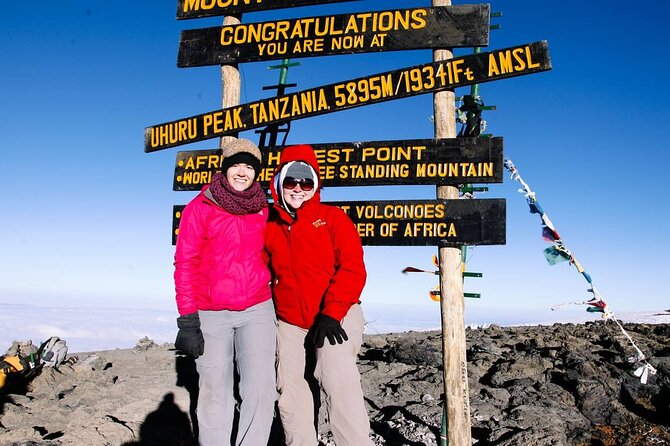
Summit day begins around midnight. You climb from approximately 4,700 meters toward Gillman’s Point at 5,685 meters, usually taking about six hours for this steep section.
This is the hardest physical stretch of the route. The darkness can narrow your focus to the next few steps, while the cold, steep ground, and thin air test your endurance. The guides are expected to stay alert to tiredness and signs of altitude sickness, and this close supervision has been one of Zara’s most praised strengths.
At Gillman’s Point, you reach the crater rim. From there, you continue around the rim toward Uhuru Peak at 5,895 meters, the highest point in Africa. If the weather is favorable, sunrise over the continent becomes the reward for the slow climb.
The route does not finish at the summit. You descend to Kibo Hut for a short rest, then continue to Horombo Hut, ending the day at roughly 3,720 meters. The full hiking and descending time is listed as 12 to 15 hours, and that figure deserves respect.
You may feel elated at Uhuru Peak, then exhausted a few hours later. Plan mentally for both. The summit photograph is only one part of the day, and the descent to Horombo still requires concentration.
Day 7: From Horombo to Marangu Gate
The final day covers about 20 kilometers and takes six to seven hours. You descend from Horombo through moorland and rainforest to Marangu Gate, at about 1,830 meters.
This change in scenery is welcome after the stark summit zone. The air grows thicker, vegetation returns, and the walk becomes a long farewell to the mountain. The route is still substantial, so save enough energy for the final hours.
At Marangu Gate, you receive a summit certificate before returning to Springlands Hotel in Moshi. The planned reward is simple and exactly right: a hot meal, a shower, and a comfortable bed.
Zara can also help arrange a safari or a Zanzibar extension after the climb. That option makes practical sense if you are already in northern Tanzania, though it is an add-on rather than part of this seven-day trek.
Guides, porters, food, and the human side
The strongest part of this experience is the mountain crew. The operation can include professional guides, porters, cooks, and dining staff, and the guide team is described as watching carefully for fatigue and altitude problems.
Several names are worth noting when you speak with Zara. Mndeme received praise for leadership and organization, while Stanley, also called Baba Massive, was singled out for making a summit effort memorable. Izadini and Teodori, known as Tido, were also praised on the Rongai Route.
You should not assume one of these guides will automatically lead your departure. Ask who will be assigned to your group, how many guides will accompany you, and how the team handles a climber who needs to turn back.
Food is another strong point. The operation has been praised for serving substantial meals, including a two-course dinner at around 4,500 meters. That level of cooking support can make a real difference when your appetite and energy are under pressure.
The porters are essential to the setup, carrying equipment and helping the camp function. If you book, ask for a clear explanation of porter welfare, tipping expectations, and what your personal baggage allowance includes. Those details are important for both your budget and responsible tourism.
Is $2,700 good value?
At $2,700 per private group of up to 15, the price is best understood as a group operation rather than a simple per-person excursion. A full group could bring the effective cost down to $180 per person, while a very small group would pay far more per climber.
The price’s real value lies in the logistics. You receive a seven-day route plan, gate transfers, camp arrangements, meals, guide support, porters, a summit attempt, and transport back to Moshi. The exact inclusions should still be confirmed before you pay, especially accommodation, park fees, equipment, tips, and airport transfers.
I would compare this tour on staffing and safety support, not just headline price. A cheaper climb may look attractive until you discover fewer guides, less flexibility, or a tighter acclimatization schedule.
Who should book this climb?
This route suits you if you want a private Kilimanjaro challenge with a gradual opening and a dedicated acclimatization day. It is also a good match if you value strong camp support and prefer a route that begins away from the busiest approach.
You need moderate physical fitness, but the greater requirement is steady effort over several days. You should be comfortable hiking for up to seven hours on regular days and facing a 12 to 15-hour summit day.
This is not the right choice if you want a relaxed mountain holiday, dislike early starts, or have only limited time for altitude adjustment. The route is challenging, and the schedule does not remove the risks or discomfort of high altitude.
At booking, confirm the pickup point, the guide team, group size, inclusions, and the plan for the extra Mawenzi Tarn day. Free cancellation is available if you cancel at least 24 hours before the local start time. Changes or cancellations inside that window are not accepted for a refund.
Should you book the Rongai Route?
I would choose this climb if you want a carefully paced seven-day route, a private group format, and substantial support from a large mountain crew. The Mawenzi Tarn rest day is a real advantage, and the Rongai to Marangu traverse gives you varied scenery rather than a simple out-and-back walk.
Book with clear expectations. The summit day is long, the price is most attractive for a larger group, and success still depends on how your body responds to altitude. If you are fit enough to walk steadily, willing to follow your guides’ pace, and ready for one very hard night, this is a serious and rewarding way to attempt Kilimanjaro.
FAQ
Where does the Mount Kilimanjaro Rongai Route tour take place?
The tour takes place on Mount Kilimanjaro in Tanzania. It starts on the Rongai side and finishes at Marangu Gate before returning to Moshi.
How long is the Rongai Route experience?
The planned duration is seven days, including the summit attempt and descent to Marangu Gate.
What time does the tour start?
The listed start time is 7:00 a.m. The meeting point is Kilimanjaro Airport, Kilimanjaro National Park, Tanzania.
Is pickup available?
Yes, pickup is offered. Confirm the exact pickup location and timing with Zara Tanzania Adventures before departure.
How large can the private group be?
The advertised price is for a private group of up to 15 people. Only your group participates in the activity.
What level of fitness is needed?
You should have a moderate level of physical fitness. The route includes several hiking days and a summit day lasting about 12 to 15 hours.
How high is Uhuru Peak?
Uhuru Peak reaches 5,895 meters, or 19,341 feet. The summit route passes through Gillman’s Point at 5,685 meters.
Is there an acclimatization day?
Yes. Day four is an additional acclimatization day at Mawenzi Tarn, around 4,330 meters, with a hike toward Mawenzi Peak and a return to camp.
Where does the trek finish?
The trek finishes at Marangu Gate. From there, you are driven back to Springlands Hotel in Moshi.
Can I cancel for a full refund?
Yes, if you cancel at least 24 hours before the experience start time. Cancellations or changes made less than 24 hours before the local start time are not eligible for a refund.
Just added around Moshi
- Mt Kilimanjaro 6 days Marangu route hike★ 5.0 · 3 reviews
- Wildlife Extravaganza: Manyara, Tarangire & Ngorongoro in 3 Days★ 5.0 · 3 reviews
- Private Cycle to Kilimanjaro Bike Park Safari★ 5.0 · 6 reviews
- 3 Days Private E-Bike Tour in West Kilimanjaro★ 5.0 · 3 reviews
- West Kilimanjaro cycling Adventures★ 4.5 · 8 reviews
- machame route★ 5.0 · 16 reviews
- Kilimanjaro Climb & Safari – Lemosho Route – 13 Day★ 5.0 · 10 reviews
- Kilimanjaro Climbing Umbwe Route★ 5.0 · 3 reviews
Kilimanjaro Climbs, compared.



8-Day Small-group Lemosho Kilimanjaro Summit Trekking
Read our review →



7-Day Machame Kilimanjaro Summit Tour from Arusha
Read our review →
Browse the lists this tour appears in