
Reviewed · LEMOSHO ROUTE CLIMBS
Mount Kilimanjaro – Lemosho Route
Kilimanjaro’s Lemosho Route gives you a full mountain story in seven days: rainforest at the start, heath and moorland next, then high alpine desert and an icy summit at 5,895 meters. You begin at Londorossi Gate and finish at Mweka Gate, with the route passing through Shira, Lava Tower, Barranco, Karanga, and Barafu.
I like two things right away. First, the steady change in habitat makes each day feel different rather than like one long uphill walk. Second, the support package is strong: private transport, a guide team, cook, porters, meals, washing water, oxygen, an oximeter, and first-aid supplies are included. The main caution is simple: seven days is demanding, and summit day can mean 10 to 14 hours of hiking.
Key points to know before booking
- Lemosho begins in the rainforest, where the first day is short and relatively gentle before the altitude builds.
- The route reaches Lava Tower before Barranco, giving you a high-altitude day followed by a lower camp that helps break up the climb.
- Summit day runs from Barafu Camp to Uhuru Peak and down to Mweka Hut, so the hardest work comes at the end.
- Moana Tanzania limits the group to 15 people, with private transportation offered from the Moshi meeting point.
- The $2,900 price includes the working mountain team and meals, but not Moshi hotels, insurance, flights, gear, laundry, or tips.
- The company has received a 5 rating from 10 published ratings, with repeated praise for food, encouragement, safety attention, and organization.
What the seven-day Lemosho route feels like
This is not a sightseeing walk with a mountain in the background. You spend seven days gaining altitude, sleeping at camps, and adjusting to thinner air while carrying only your personal essentials. The route is carefully staged, but the summit remains a serious physical test.
The Lemosho path is appealing because it starts at 2,400 meters and does not rush straight toward the upper mountain. You move from forest to moorland, then to alpine desert, with several camps between the trailhead and the summit. That gradual pattern is useful for your body, though it does not remove the risk of altitude sickness or fatigue.
Moana Tanzania supplies a guide team, cook, and porters. The food has been a strong part of the experience, with fresh meals and vegetarian options available according to the published feedback. You also receive drinking water and hot water for washing, small comforts that matter after a long day outside.
Safety support includes portable oxygen tanks, an oximeter, and a portable first-aid kit. These items are reassuring, but they should not make you treat the trip casually. You need a strong physical fitness level, and your own travel insurance remains your responsibility.
More Kilimanjaro Climbs in Kilimanjaro
- Kilimanjaro climb by Lemosho Route (7-day)
★ 5.0 · 651 reviews - Kilimanjaro climb, Machame Route (7-day)
★ 5.0 · 262 reviews - Kilimanjaro Climbing Lemosho Route 8 Days.
★ 5.0 · 186 reviews
Day 1: Londorossi Gate to Mti Mkubwa
The trek starts at Londorossi Gate, at about 2,400 meters. From there, you walk 6 kilometers through rainforest to Mti Mkubwa, gaining roughly 400 meters over three to four hours.
This opening day is one of the friendlier sections of the route. The trail is short compared with later stages, and the forest gives you shade and a strong sense of entering a wild mountain zone. Keep your eyes open for wildlife, as the route passes through a living forest rather than a bare access road.
The practical value of this day is that it lets you settle into the group, meet the guides and porters, and learn how the camp routine works. Do not use the relatively easy start as an excuse to race. Save energy, drink regularly, and organize your clothing before the colder sections arrive.
You spend the night at Mti Mkubwa. Accommodation in Moshi before and after the trek is not included, so plan that separately.
Day 2: Shira Ridge and the move into moorland
Day two covers about 14 kilometers, rising from 2,800 to 3,750 meters. The walk takes seven to eight hours as the forest gives way to heath and moorland, ending at Shira 2 Camp.
This is a much longer day than the first. The change in vegetation is the reward: dense forest fades, the air feels more open, and the mountain begins to reveal its higher character. You cross Shira Ridge before continuing to camp, so the day has both distance and altitude working against you.
Shira 2 is an important point in the trek because you are now sleeping well above the starting elevation. Expect the cold and thinner air to become more noticeable. A good guide team should keep the pace controlled, and the support of the crew matters here. Moana’s published trip information places guides, cook, and porters at the center of the operation, while the feedback repeatedly praises their encouragement and care.
Your lunch, breakfast, and dinner are covered within the trip package, as is drinking water. The seven-day schedule includes seven lunches, six breakfasts, and six dinners, which matches a first-day start and final-day finish.
Day 3: Lava Tower, Arrow Glacier, and Barranco
Day three is one of the most useful and memorable parts of the route. You walk 10 kilometers from 3,750 to 3,950 meters, taking six to eight hours through alpine desert. The route heads toward Kibo Peak, reaches Lava Tower, also called Sharkstooth, passes the Arrow Glacier, and continues to Barranco Camp.
The unusual feature is the high point of the day. You climb to about 4,700 meters at Lava Tower before descending to Barranco Camp at 3,950 meters. That means a tough high-altitude push, followed by a lower sleeping point. It makes for a long day, but it also breaks up the climb toward the summit.
The surroundings become stark here, with much less plant life and a more exposed mountain feel. The route is no longer a forest hike. You are dealing with altitude, rock, cold, and a steady effort over several hours.
Barranco is also where the trip begins to feel properly alpine. Rest well, eat even if your appetite drops, and ask the guide team for help if you feel unwell. Portable oxygen and an oximeter are carried as safety tools, but early communication is more useful than trying to hide symptoms.
More Kilimanjaro Climbs in Moshi:
- Kilimanjaro climb, Lemosho Route (8-day)
★ 5.0 · 148 reviews - Kilimanjaro climb, Lemosho Route (6-day)
★ 5.0 · 129 reviews - Kilimanjaro climb, Marangu route (6-day)
★ 5.0 · 72 reviews - Private Kilimanjaro Hike 7 Day Lemosho Route
★ 5.0 · 60 reviews
Day 4: The Barranco Wall to Karanga Valley
Day four covers only 5 kilometers, but it should not be dismissed as an easy stroll. You rise from 3,950 to 4,040 meters over four to five hours, passing the Barranco Wall before reaching Karanga Camp.
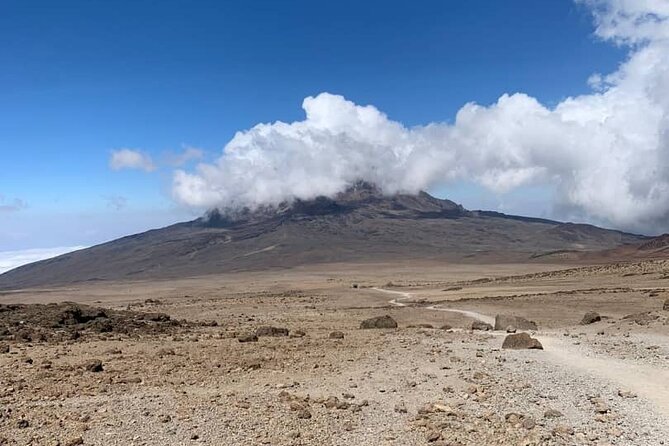
The shorter distance allows you to concentrate on the route rather than simply counting kilometers. The Barranco Wall is the day’s main feature, and the trail then continues toward Karanga Valley. The itinerary describes this section as alpine desert, so expect a dry, high mountain setting rather than shade and thick vegetation.
A shorter stage is valuable after the long day through Lava Tower and before the summit preparation. It gives you time to move carefully, eat, sort equipment, and rest at camp. You should still expect the altitude to make ordinary movements feel slower.
The published information does not promise private tents, heated facilities, or showers, so pack for basic mountain camping. Hot water for washing is included, which is useful, but it is not the same as full hotel comfort.
Day 5: Karanga Camp to Barafu Hut
On day five, you climb from 4,040 to 4,700 meters. The distance is just 4 kilometers, with four to five hours of hiking. You pass the junction connecting with the Mweka Trail and continue to Barafu Hut.
This short, steep stage has one job: putting you at the summit camp. At Barafu, you have completed the southern circuit and begin resting for the final push to Uhuru Peak. The camp’s altitude is a clear warning that the easy portion of the trip is finished.
Your time at Barafu is likely to feel less like a normal afternoon and more like a pause before a major effort. The supplied schedule gives a summit start on day six, so you need to eat, drink, check clothing, and follow the guides’ instructions. Keep your summit gear within easy reach rather than buried in a duffel.
This is also where the value of a full crew becomes clear. You are not arranging transport, cooking meals, or hauling camp equipment. The porter and cook system lets you focus on the climb, although tips for the guides, cook, and porters are not included in the $2,900 price.
Day 6: Barafu to Uhuru Peak and down to Mweka Hut
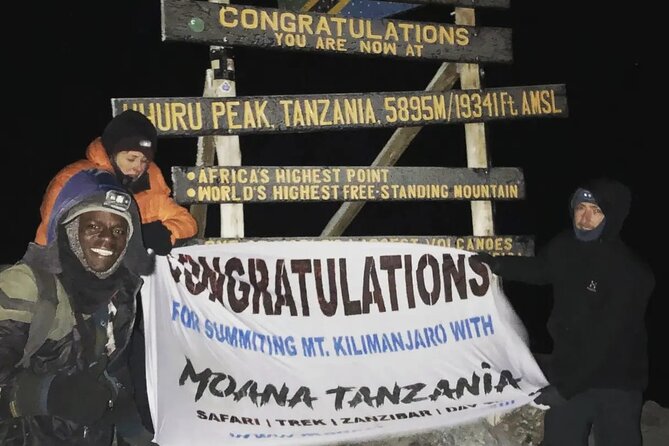
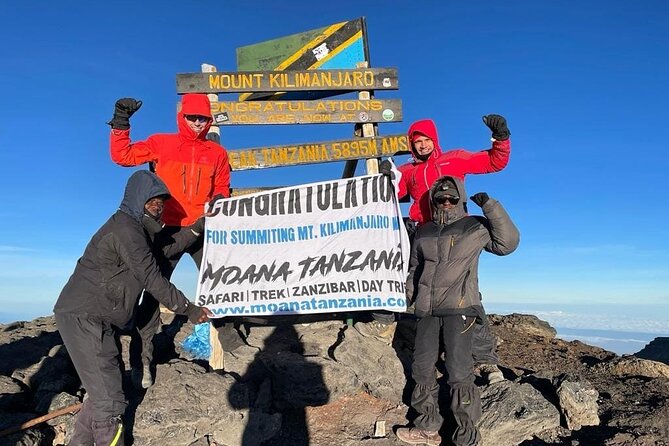
Summit day is the reason to book this trip and the reason to prepare seriously. You climb from 4,700 meters to Uhuru Peak at 5,895 meters, then descend all the way to Mweka Hut at about 3,100 meters.
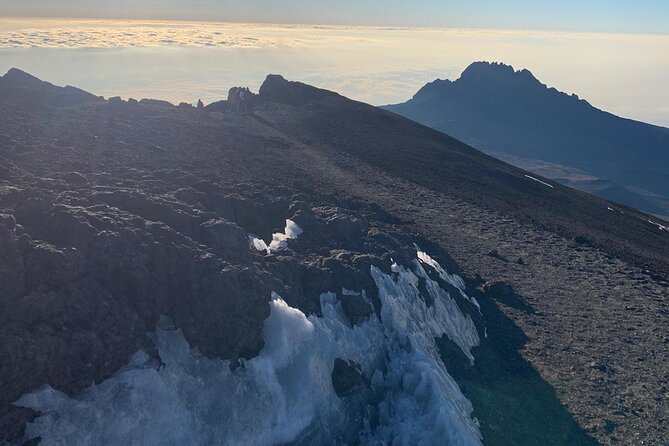
The uphill section is listed at five to seven hours, followed by another five to seven hours down. In real terms, this is a full day of effort at high altitude. You begin between the Rebmann and Ratzel glaciers, make your way to Stella Point, and then continue to Uhuru Peak.
At the summit, you have time to celebrate and take pictures. That moment can be brief, especially in cold or poor conditions, so bring a camera you can manage with gloves and do not count on lingering for a long time.
The descent is not an afterthought. Going down to Mweka Hut removes more than 2,700 meters of elevation and can be hard on tired knees and feet. Trekking poles may help, but personal mountain gear is not included, so you need to bring or arrange your own equipment.
This is the point where the guide team’s encouragement and safety focus matter most. The company’s published feedback gives special credit to its guides for keeping groups supported and focused on reaching the summit. That personal attention is an important part of the price, not just a pleasant extra.
Day 7: Mweka Hut to Mweka Gate
The final day is a 3 to 4 hour descent from about 3,100 meters to 1,650 meters at Mweka Gate. The trail returns to forest, which gives you a sharp change from the icy summit zone of the day before.
This last walk is physically easier than summit day, but tired legs can make a modest distance feel long. Keep your pace steady and enjoy the return to warmer air and thicker vegetation.
The trek ends at Mweka Gate, and the activity returns to the Moshi meeting point. Pickup is offered, and the stated meeting point is Moshi, Tanzania. The operating hours are listed as 7:00 AM to 11:00 AM daily, with the activity available during the stated operating period through June 18, 2026.
What the $2,900 price really covers
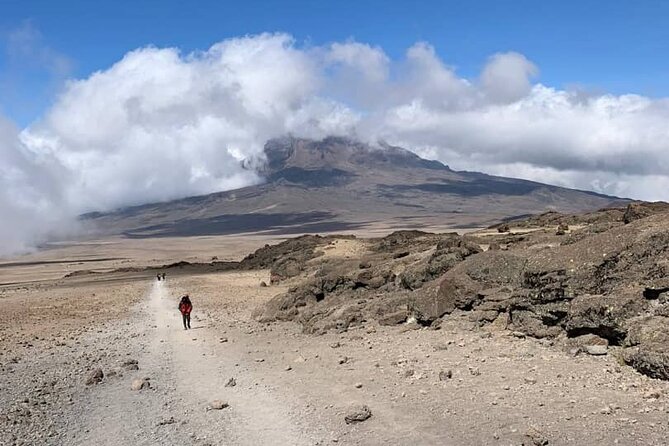
At $2,900 per person, this is a major trip expense. Its value depends on how much support you want and how much preparation you would otherwise have to arrange yourself.
The price includes private transportation, all fees and taxes, guides, a cook, porters, drinking water, hot washing water, a portable oxygen supply, an oximeter, a first-aid kit, and meals throughout the climb. Those inclusions cover the central working parts of a guided Kilimanjaro expedition.
You still need to budget for:
- Accommodation in Moshi before and after the trek
- Flights and travel insurance
- Personal toiletries and mountain-climbing gear
- Laundry
- Tips for guides, cook, and porters
The food deserves attention. The cook, David, is specifically named in the company’s material, and the food is described as fresh, plentiful, and adaptable to vegetarian needs. Food quality is not a luxury on a climb like this. It helps you keep eating when fatigue and altitude reduce your appetite.
The group maximum is 15 people. That is not a private climb, but it is small enough to give the guide team a manageable group. Ask before booking how many people are in your specific departure, since the maximum is not the same as a guaranteed group size.
The crew and the human side of the climb
The strongest part of Moana Tanzania’s operation is its people. The company is run by Gea, and the named team also includes David, Gasper, Robson, Salim, Herbert, and Gewa. The available information does not assign each person to a specific role on every departure, so you should confirm who your lead guides will be.
The crew is described as professional, friendly, flexible, encouraging, and attentive to safety. That combination matters on Kilimanjaro. A cheerful guide can help when the trail feels long, but careful pacing and honest health checks matter even more.
You should also think about the porters as part of the trip’s human cost. Tips are excluded, so ask Moana Tanzania for current tipping guidance before you go. Carrying cash in suitable amounts is a small preparation step that avoids an awkward scramble at the end.
Who should book this Lemosho climb
I would point this trip toward a fit first-time high-altitude climber who wants a guided experience and appreciates having the practical work handled by a local team. The route offers varied scenery, a gradual seven-day structure, and clear stages that make the climb easier to understand.
It also suits someone who values food and personal support. Vegetarian meals can be arranged, and hot washing water, drinking water, oxygen, and first-aid supplies are included.
I would hesitate to recommend it to anyone looking for a relaxed holiday, a short mountain walk, or a low-cost trip. The summit day is long, the altitude is serious, and the company explicitly requires strong physical fitness. You also need to buy or arrange personal gear, insurance, flights, and Moshi accommodation.
Confirmation is normally issued at booking, though bookings made within one day of departure are subject to availability. You can cancel at least six full days before the start for a full refund. A cancellation two to six full days before departure receives a 50 percent refund, while cancellation less than two full days before departure is nonrefundable. Poor weather may lead to a new date or a full refund.
Should you book Moana Tanzania?
I would book this Lemosho trip if you want a well-supported seven-day climb with meals, porters, transport, and safety equipment included in one price. The route gives you a strong progression from rainforest to summit, and the crew’s attention to food, encouragement, and safety is a real advantage.
I would first ask for the exact packing list, the current tipping guidance, the Moshi hotel options, and the expected group size. If you are fit, prepared for a demanding summit night, and comfortable with basic mountain conditions, this is a serious and well-structured way to attempt Kilimanjaro.
FAQ
Where does the Kilimanjaro trek start and finish?
The trek starts at Londorossi Gate and ends at Mweka Gate. Transportation returns you to the meeting point in Moshi, Tanzania.
How long is the Lemosho Route experience?
The experience lasts approximately seven days. The itinerary includes six nights on the mountain, with the final day descending to Mweka Gate.
What is included in the $2,900 price?
The price includes private transportation, fees and taxes, guides, a cook, porters, drinking water, hot water for washing, portable oxygen tanks, an oximeter, a first-aid kit, and breakfast, lunch, and dinner during the trek.
Are flights and Moshi accommodation included?
No. Flights, travel insurance, and accommodation in Moshi before and after the trek are not included.
How large can the group be?
The maximum group size is 15 people.
What happens if bad weather cancels the trek?
If poor weather causes cancellation, you will be offered a different date or a full refund.
More Lemosho Route Climbs in Moshi
- Kilimanjaro Lemosho Route
★ 5.0 · 71 reviews - Climbing Kilimanjaro through 8 days Lemosho Route
★ 5.0 · 52 reviews - 8 Days Climbing Mt.Kilimanjaro (Lemosho Route)
★ 4.5 · 37 reviews - 7 days Lemosho route Climbing Mt.Kilimanjaro
★ 5.0 · 31 reviews
Just added around Moshi
- Mt Kilimanjaro 6 days Marangu route hike★ 5.0 · 3 reviews
- Wildlife Extravaganza: Manyara, Tarangire & Ngorongoro in 3 Days★ 5.0 · 3 reviews
- Private Cycle to Kilimanjaro Bike Park Safari★ 5.0 · 6 reviews
- machame route★ 5.0 · 16 reviews
- 3 Days Private E-Bike Tour in West Kilimanjaro★ 5.0 · 3 reviews
- West Kilimanjaro cycling Adventures★ 4.5 · 8 reviews
- Kilimanjaro Climb & Safari – Lemosho Route – 13 Day★ 5.0 · 10 reviews
- Kilimanjaro Climbing Umbwe Route★ 5.0 · 3 reviews
Lemosho Route Climbs, compared.


8-Day Small-group Lemosho Kilimanjaro Summit Trekking
Read our review →





Climbing Kilimanjaro through 8 days Lemosho Route
Read our review →Browse the lists this tour appears in