
Reviewed · 1-DAY TOURS
Moshi town 1 day tour
Moshi reveals itself best at street level, and this tour takes you there. You move from the bus stand and food markets to banana plots, rice fields, coffee stops, and the old railway station, with local life providing the main attraction.
I like the small group of up to 10 and the chance to spend time with Thomas, an experienced former Kilimanjaro guide who knows people across town. I also like the mix of markets and farms, which gives you more than a quick town drive. The main drawback is the $1,000 price per person, especially since only transport, guide service, pickup, and drop-off are listed as included.
Key points to know before booking
- Moshi’s everyday life comes first: Expect markets, bus transport, local food, farms, and neighborhood streets rather than a checklist of grand monuments.
- Thomas has a personal connection to town: Recent departures led by Thomas included introductions to local people, explanations of customs, and visits to places many visitors would miss without a guide.
- The old railway station adds historical context: You hear how Moshi’s name connects with Old Moshi village and the railway’s role in the town.
- Farm visits give the day a rural turn: Banana cultivation and rice irrigation at Mabogini help explain how food is grown near Moshi.
- Plan for walking: Several stops involve walking through markets and on dusty roads, so sturdy shoes and modest clothing are sensible.
- The price deserves a careful check: Pickup, drop-off, and the guide are included, but meals, tasting costs, and other entry charges are not listed.
Why this Moshi day tour works as a spare day
Moshi is often treated as a launch pad for Kilimanjaro or a stop between safari and Zanzibar. That is a shame. The town has its own rhythm, and a guided walk through markets and working neighborhoods can tell you more about daily life than another afternoon beside a hotel pool.
This is especially useful if you have one free day before a climb or after returning from the mountain. You do not need to organize several short visits yourself, work out local transport, or guess which markets are worth your time. The tour gathers those pieces into a seven-hour outing, starting with pickup at your hotel and ending there.
The experience is led in English and limited to 10 people. That matters in a market, where a large group can block aisles and make conversation awkward. A small group also gives you a better chance to ask about food, farming, transport, religion, family life, or anything else that catches your attention.
Recent departures have been guided by Thomas, a former Kilimanjaro guide who now shows visitors around his home town. He is known for making introductions as you go, and for explaining local life in clear English. His familiarity with Moshi is a major part of the experience, so I would confirm that he is scheduled if his guiding style is one of the reasons you want to book.
A few more Moshi trips to weigh up
- 1-Day Moshi Villages bike tour
★ 5.0 · 59 reviews - Best Kilimanjaro hiking day trip tour with Kilinge Adventures
★ 4.5 · 54 reviews - Chagga Villages in Mount Kilimanjaro Cycling Day Trip
★ 5.0 · 42 reviews
Starting at the bus stand and railway station
The day begins at about 8:00 AM with hotel pickup. The stated meeting point is the hotel, and Keys Hotel is given as the starting and ending location. From there, you head toward Moshi Bus Stand, usually arriving around 8:30 AM.
The bus stand is a practical first stop. You see the different forms of transport moving people into and out of Moshi, and your guide explains how the town connects with nearby places. This is not a polished transport museum. It is a working public space, which means traffic, noise, and movement are part of the setting.
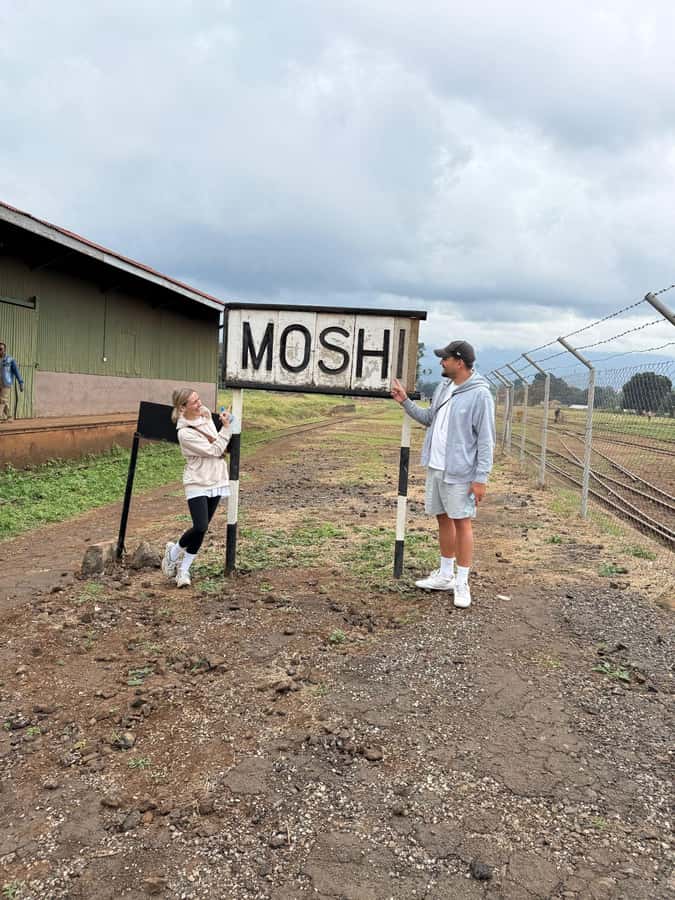
Afterward, the route includes Moshi station, where you have time for photographs, sightseeing, and a guided visit. The old railway station is one of the day’s more meaningful stops. Here, the focus turns from present-day movement to the story of Moshi and its connection with a village called Old Moshi.
The railway stop is not presented as a grand restored attraction. Its value lies in the story and the setting. With Thomas explaining the link between the town’s name and Old Moshi, a simple station becomes a way to understand how the area developed.
Reading Moshi through its markets
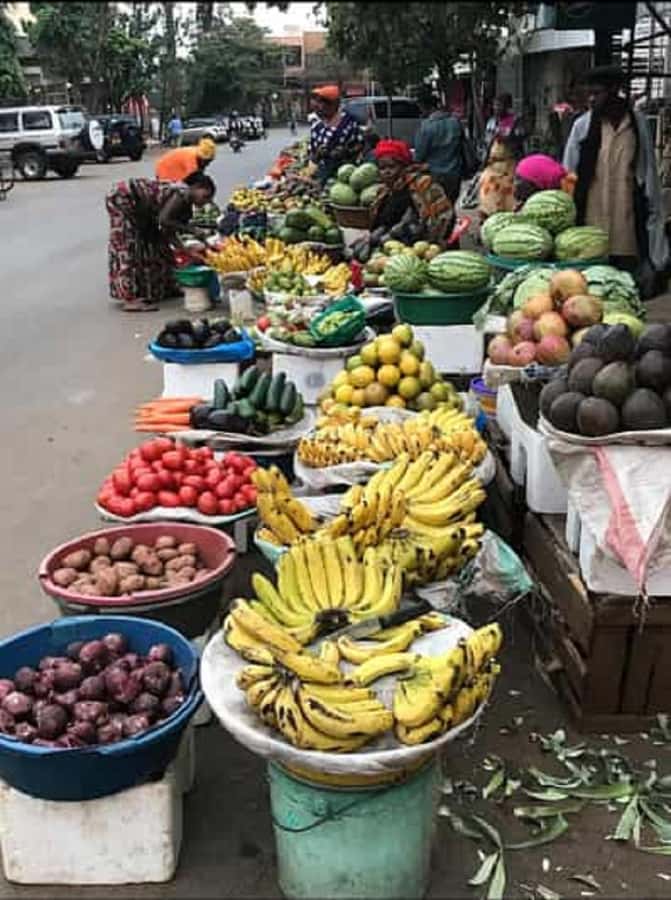
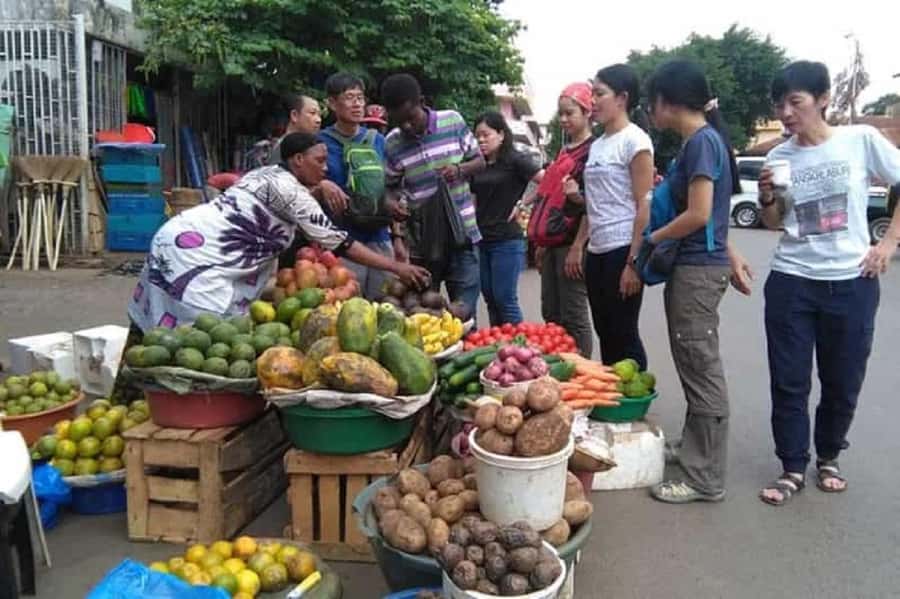
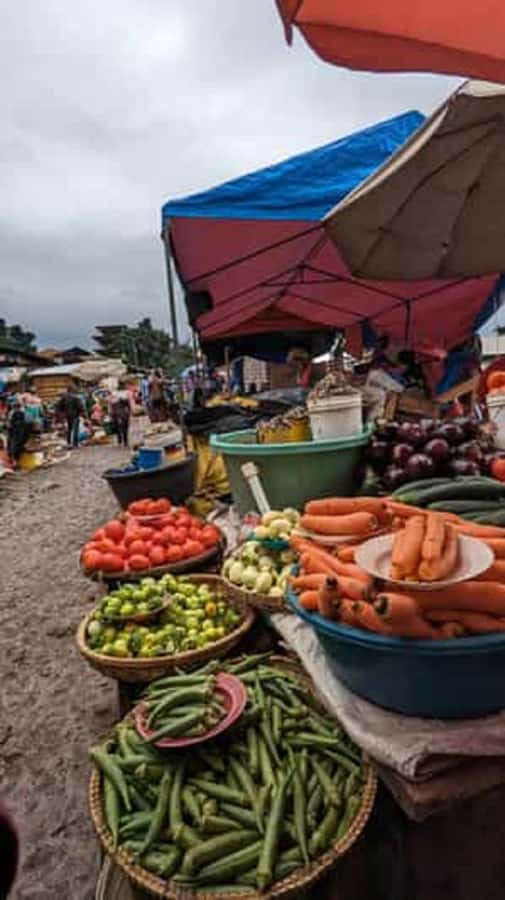
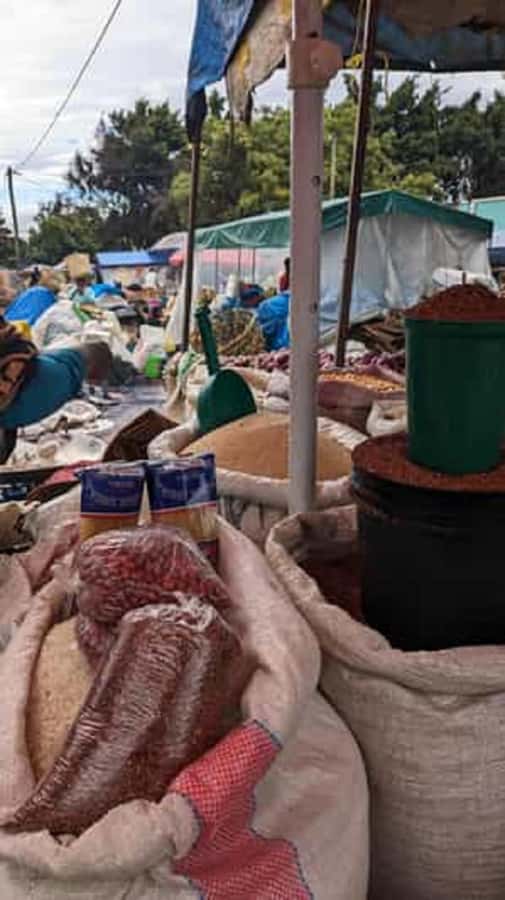
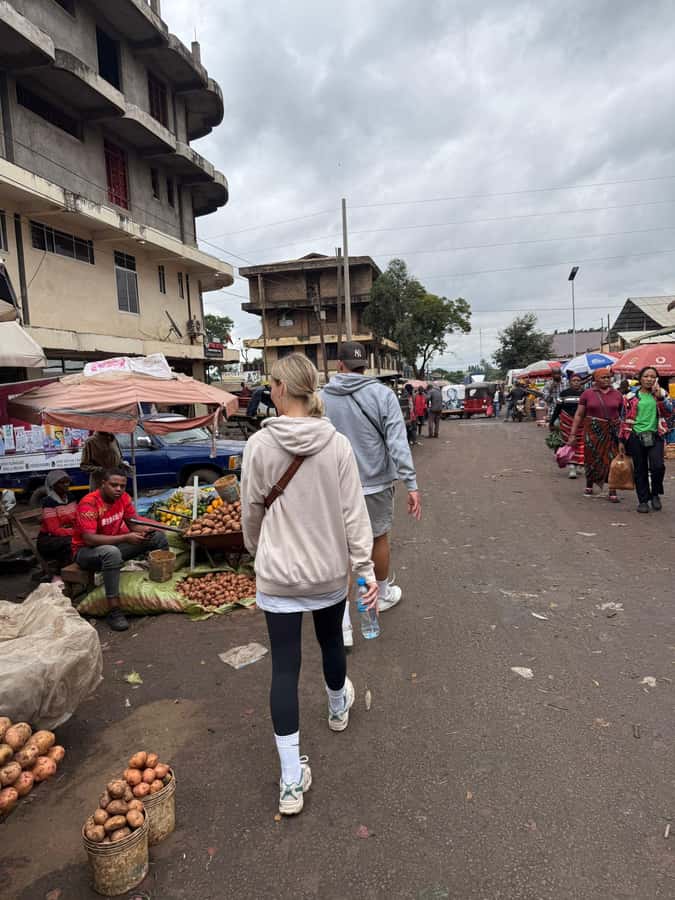
The central market is scheduled for about 9:30 AM. This is where you see vegetables, cereal crops, and other goods sold by local people. Your guide can help you understand what you are looking at, how goods are used, and how market customs work.
This is also one of the best places to let the day slow down. You may see piles of produce, people bargaining, and shoppers handling the ordinary business of feeding a household. The point is not to rush through with a camera. Look, ask questions, and follow your guide’s advice before taking photographs.
Mbuyuni Market follows at about 10:30 AM. It is described as another farmers market, with women selling tomatoes and other produce directly from the ground. That detail is important because it shows a different side of buying and selling than a formal shop or souvenir stall.
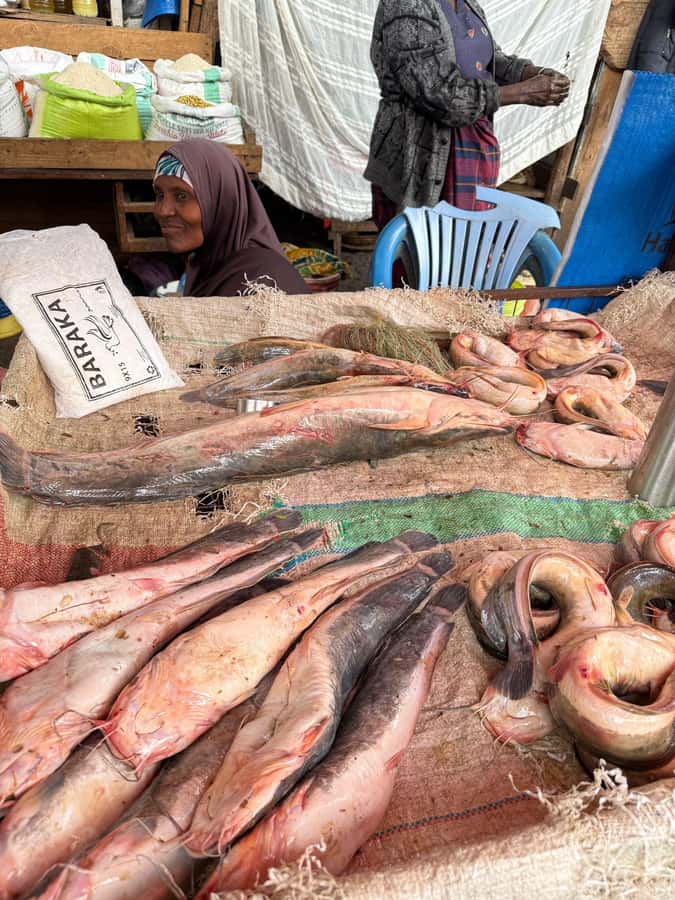
The itinerary also includes Manyema fish market at about 11:30 AM. You hear a short explanation of the name Manyema and see local fish being sold. For you, this stop adds another layer to the market visits: produce, grains, and fish each show a different part of the local food system.
Food is part of the appeal here. The tour information notes local dishes and market sampling, and previous departures included tasting a variety of local foods with explanations of customs. Exact tastings are not specified, so do not assume a full meal is included. Ask your guide what is available on the day, and carry water for the walking between stops.
Coffee Union Cafe and the taste of Moshi
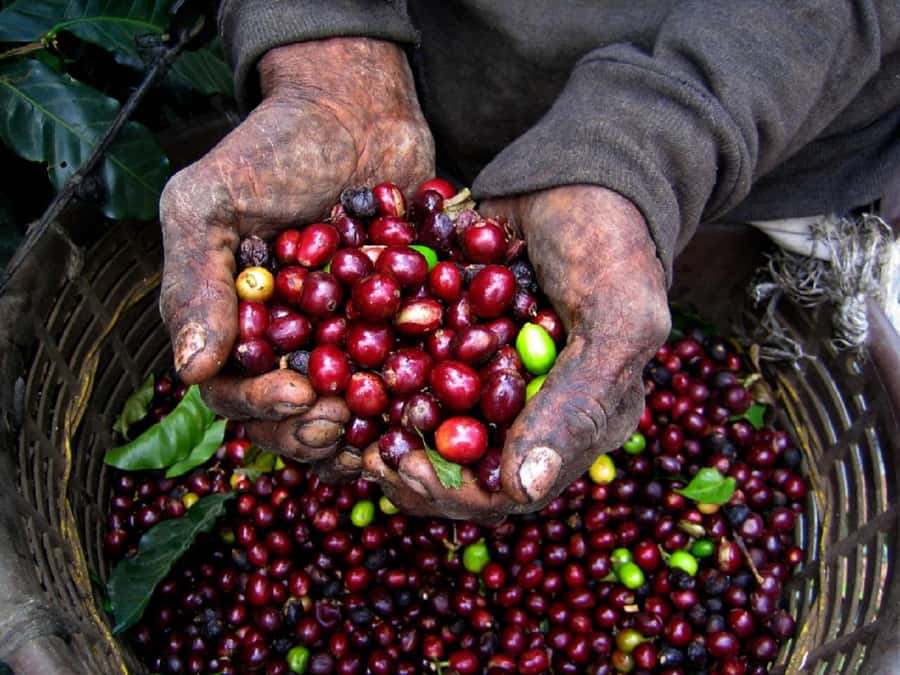
Coffee Union Cafe appears in the route as a half-hour visit. The stop gives the market-heavy morning a place to pause, and it connects naturally with the coffee-growing side of the Moshi area.
The tour does not promise a formal coffee plantation visit or a detailed tasting session. Instead, think of this as a chance to see a local cafe and learn more about coffee in the region. If coffee interests you, ask questions about how it is grown, processed, and sold, but do not expect details that are not part of the stated program.
This stop can also be useful if you need a break from the dust and movement of the markets. The schedule is active, with several 30-minute visits, so a seated pause helps keep the day comfortable.
Same country, a completely different kind of safari:
- Kilimanjaro climb by Lemosho Route (7-day)
★ 5.0 · 651 reviews - Safari Serengeti And Ngorongoro
★ 5.0 · 288 reviews - Kilimanjaro climb, Machame Route (7-day)
★ 5.0 · 262 reviews - Kilimanjaro Climbing Lemosho Route 8 Days.
★ 5.0 · 186 reviews
Banana plants and the farm connection

Around 1:30 PM, the route turns toward a banana plant farm. Here, you learn about the history of bananas and how they are cultivated.
This is a useful contrast with the market stops. At the market, you see food as a product for sale. At the farm, you see part of the work behind it. A guide can explain how cultivation fits into local life, though the supplied details do not specify the farm’s size, ownership, or whether you will meet farmers directly.
You should expect a simple agricultural visit rather than a landscaped attraction. Wear shoes that can handle uneven or dusty ground, and avoid clothing that you would not want marked by farm paths. The rural setting also gives you a change of pace after the crowded public spaces.
Rice fields at Mabogini
The route reaches rice farms in Mabogini at about 2:00 PM. You learn how rice is cultivated and irrigated, with time for photographs and a guided walk.
This may be the most useful stop for understanding how water shapes farming near Moshi. Rice requires careful irrigation, and seeing the fields gives you a clear picture of the labor and planning behind a staple food. You are not simply looking at crops. You are learning how land, water, and farming work together.
The schedule places the end of the tour around this time, even though the experience is also described as lasting seven hours. Times can shift because markets, traffic, walking, and conversations do not always fit neatly into a timetable. The practical plan is to keep the rest of your afternoon flexible.
What makes Thomas important to the experience
A town tour like this rises or falls with the guide. Moshi’s markets and streets are interesting, but without context you may see only a series of stalls and roads. Thomas’s value is his connection with local people and his ability to explain what is happening around you.
He has guided on Kilimanjaro, so he understands the needs of people who have just climbed or who are preparing for a trek. At the same time, his town guiding is personal. He has introduced people to locals, explained everyday customs, and shared stories connected to his own life in Moshi.
Previous departures with him included visits or introductions involving a local clinic or hospital, schools, churches, and poorer neighborhoods. These places are not listed as guaranteed stops in the scheduled route, so treat them as possible additions rather than promises. The important point is that the day can feel flexible and personal instead of being limited to fixed photo stops.
One particularly human detail is that Thomas’s children were encountered near a church during one outing. That kind of moment cannot be planned, but it shows how closely the experience can connect with the guide’s own community.
Walking, comfort, and cultural manners
The tour includes walking through markets, neighborhoods, and farm areas. One account describes plenty of walking on dusty roads, so I would not book this expecting a vehicle-based sightseeing loop.
Wear comfortable closed shoes, light clothing, and something that covers your shoulders and knees for visits to community or religious spaces. Bring drinking water, sun protection, and a small amount of cash if you want to buy food or small items, since the guide fee does not list meals or purchases as included.
A camera can be useful, but ask before photographing people, children, market sellers, clinics, or religious places. Your guide can help with local manners. The strongest part of this outing is the human contact, and a little care goes a long way.
Safety is another reason to use a local guide. Moshi’s traffic and busy markets require attention, and Thomas has helped people move safely through the town. A solo woman on one departure felt comfortable with his guidance, but you should still use normal city awareness and follow his instructions around roads and crowded areas.
Is $1,000 per person good value?
At $1,000 per person, this is an expensive seven-hour town tour. The listed inclusions are pickup, drop-off, and guide service. No meal, admission fee, or tasting allowance is specified.
The price may make sense for someone who values private-feeling guiding, hotel transport, and personal introductions, especially if the fee covers a private arrangement despite the small-group wording. But the supplied details do not confirm that. I would ask Kuhetours whether the price is for a private booking, a shared group, or a minimum booking amount.
For a solo visitor, the cost is a serious consideration. The tour’s strongest feature is not a ticketed sight. It is the guide’s time, local connections, and explanations. If that is exactly what you want, you may find the day worthwhile. If you mainly want to see Moshi station and a market, the price is hard to justify.
The booking terms are flexible: you can cancel up to 24 hours before departure for a full refund, and reserve now while paying later. That helps with a changing Kilimanjaro or safari schedule, but it does not reduce the need to clarify what the $1,000 covers.
Who should book this Moshi experience?
I would recommend it most strongly to you if:
- You have one spare day before or after Kilimanjaro.
- You want daily life, markets, farming, and local food rather than a standard sightseeing circuit.
- You prefer a small group and an English-speaking guide.
- You are traveling alone and want help with transport, markets, and cultural manners.
- You enjoy asking questions and walking at a steady pace.
- You want to understand where food comes from, not just photograph it.
It may be less suitable if you want a relaxed hotel day, dislike dust and market crowds, or need a tightly timed program. The itinerary includes several short stops, and the actual pace may change when conversations or local conditions take longer.
Should you book the Moshi town tour?
Book it if your main aim is to meet Moshi through its people, markets, farms, and ordinary routines. The combination of the bus stand, central market, Mbuyuni, Manyema fish market, Coffee Union Cafe, the old railway station, banana cultivation, and Mabogini rice farming gives you a broad look at the town and its surroundings.
I would contact Kuhetours before paying to confirm the price, group size, exact stops, and whether Thomas will guide your departure. If those details work for you, this can turn an otherwise empty recovery day into a useful and personal introduction to Tanzania.
FAQ
Where does the Moshi town tour start and end?
Pickup and drop-off are provided at your hotel. Keys Hotel is listed as the starting and ending location.
How long does the tour last?
The activity is described as lasting seven hours. The schedule begins around 8:00 AM and ends around 2:00 PM, though the listed times may not add up exactly.
What language is the tour conducted in?
The live guide speaks English, and English is the listed tour language.
What places are included in the route?
The route includes Moshi station, Moshi Bus Stand, Mbuyuni Market, Mabogini, Manyema Market, Coffee Union Cafe, and Old Moshi Cultural Tourism Enterprise. The program also describes a central market, banana farm, rice farms, and the old railway station.
What is included in the price?
Pickup, drop-off, and the guide fee are included. Meals, market purchases, and other costs are not listed as included.
How large is the group?
The activity is offered as a small group limited to 10 participants.
Just added around Moshi
- Mt Kilimanjaro 6 days Marangu route hike★ 5.0 · 3 reviews
- Wildlife Extravaganza: Manyara, Tarangire & Ngorongoro in 3 Days★ 5.0 · 3 reviews
- Private Cycle to Kilimanjaro Bike Park Safari★ 5.0 · 6 reviews
- machame route★ 5.0 · 16 reviews
- 3 Days Private E-Bike Tour in West Kilimanjaro★ 5.0 · 3 reviews
- West Kilimanjaro cycling Adventures★ 4.5 · 8 reviews
- Kilimanjaro Climb & Safari – Lemosho Route – 13 Day★ 5.0 · 10 reviews
- Kilimanjaro Climbing Umbwe Route★ 5.0 · 3 reviews
1-Day Tours, compared.

Mikumi Safari Day Trip with Flights and Meal
Read our review →
Materuni Waterfalls & Chemka Hotsprings Day Trip
Read our review →
Materuni waterfalls coffee tour & Chemka hot springs Day trip
Read our review →
Mikumi Safari Tour: Day Trip Return Flight From Zanzibar
Read our review →

Browse the lists this tour appears in