
Reviewed · LEMOSHO ROUTE CLIMBS
Lemosho Route 8 Days Kilimanjaro Climbing Tour
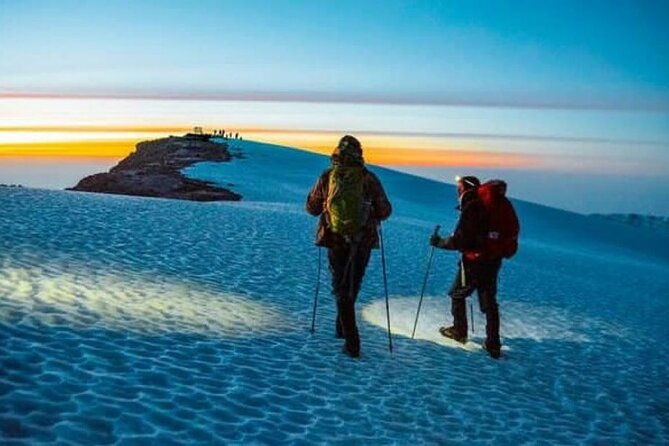
Mount Kilimanjaro changes dramatically beneath your boots. This eight-day Lemosho Route climb begins in rainforest, crosses the Shira Plateau, passes the alpine desert and Barranco Wall, then reaches Uhuru Peak at 5,895 metres. It is a serious physical challenge, but the gradual route gives you useful time to adjust to altitude.
I like two things right away: the wide range of scenery and the practical support built into the price. You have guides, porters, a cook, tents, meals, purified water, transfers, rescue fees, and an emergency oxygen cylinder. Guides including Victor and Edwin are specifically named in the experience information, and the support team is a major part of making the climb manageable.
The main caution is simple: this is not an easy holiday. You need moderate physical fitness, suitable mountain clothing, good boots, and personal travel insurance. Also, the published hiking times contain at least one obvious error, with Day 5 listed as four minutes, so ask Macpace Tours for a final day-by-day timing sheet before you go.
Key points at a glance
- Rainforest to Africa’s highest point: You pass through several plant and climate zones on the way to Uhuru Peak.
- Eight days for altitude adjustment: The schedule is longer than many shorter Kilimanjaro programs, giving you more time on the mountain.
- A full camp operation: Porters, a cook, mess tent, sleeping tents, mattress, meals, and purified water are included.
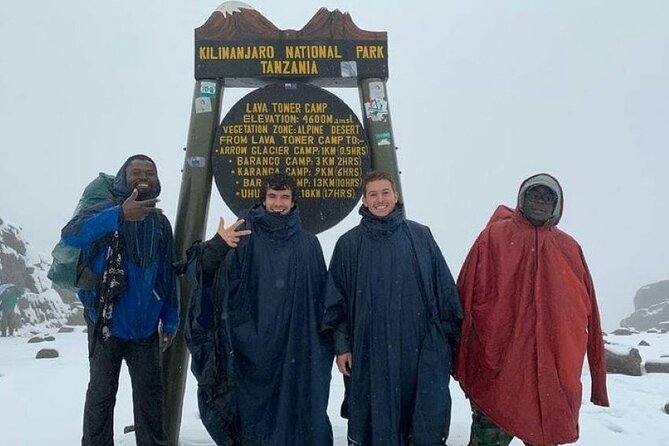
- A demanding summit night: You leave Barafu Camp around midnight, reach Stella Point and Uhuru Peak, then descend to Mweka Camp.
- Strong practical value at $2,600: Park, camping, rescue, conservation, VAT, transfers, and mountain staff are covered.
- Private group format: Only your own group participates, which may make the pace and support feel more personal.
Why the Lemosho Route suits an eight-day climb
Lemosho is a good choice if you want scenery as well as a summit attempt. The route begins on the western side of Kilimanjaro and gives you a long transition from thick forest to open high-altitude terrain.
The eight-day schedule matters because altitude is the chief difficulty on Kilimanjaro. You are not simply walking uphill for a week. Your body is adjusting to thinner air, colder nights, and longer days. More time on the mountain can make the experience less rushed, although it cannot remove the risk of altitude sickness.
This is a private tour, so your group is the only group taking part in the activity. The information provided does not state the maximum number of people, so ask about group size before paying. Group size affects the pace, tent arrangements, guide support, and the amount of time you spend waiting at meals or on the trail.
More Kilimanjaro Climbs in Kilimanjaro
- Kilimanjaro climb by Lemosho Route (7-day)
★ 5.0 · 651 reviews - Kilimanjaro climb, Machame Route (7-day)
★ 5.0 · 262 reviews - Kilimanjaro Climbing Lemosho Route 8 Days.
★ 5.0 · 186 reviews
Day 1: Lemosho Gate to Mti Mkubwa Camp
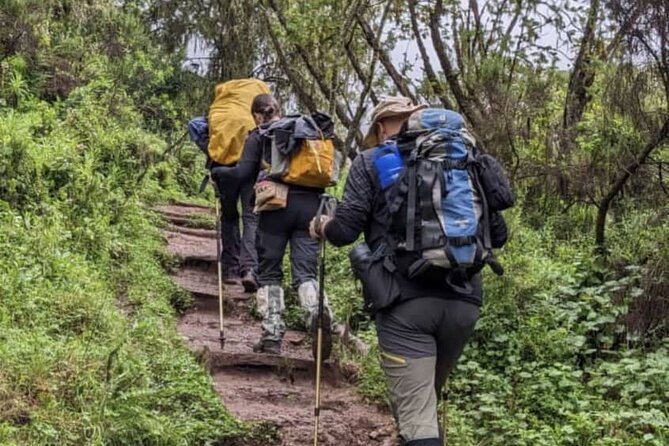
Your climb begins at Lemosho Gate, after transfers from the airport and your Moshi hotel. Guides and porters help organize the mountain start, then you walk through rainforest to Mti Mkubwa Camp.
The first day takes about four hours. That is a sensible introduction: you begin at a lower elevation, walk through rich forest, and get used to the daily rhythm of hiking, eating, resting, and sleeping in camp.
The forest is one of the most enjoyable parts of this opening section. You get shade, thick vegetation, and a strong sense that the mountain is changing around you. It is also the day when your packing choices begin to matter. Keep rainwear, water, and a warm layer close at hand rather than buried in a large bag.
Your accommodation is in a waterproof, four-season mountain tent shared by two people. A sleeping mattress is included, along with a mess tent containing tables and chairs. Those details may sound basic before departure, but a dry place to eat and a proper mattress become very welcome after several hours on foot.
Day 2: Shira Ridge and the open Shira Plateau
On Day 2, you climb toward Shira I Camp, with about six hours of walking. The rainforest gives way to heath and moorland, and the views open as you cross the Shira Ridge.
This is one of the route’s visual rewards. The change is not just a change in scenery. The air feels different, the trail becomes more exposed, and the plants become shorter and less dense. You begin to see why Lemosho is often chosen for its varied route rather than for a single dramatic viewpoint.
The night at Shira I Camp places you on the Shira Plateau. You should expect cooler conditions than on the first night and less shelter from wind. Pack your warm clothing in a dry bag, and keep gloves and a hat accessible.
Breakfast, lunch, and dinner are included during the climb, with seven breakfasts, eight lunches, and seven dinners listed in the package. Bottled drinks, beer, liquor, and other personal beverages are not included. Purified drinking water is provided, which reduces the need to carry a large supply from the start.
Day 3: Shira II and the Lent Hills
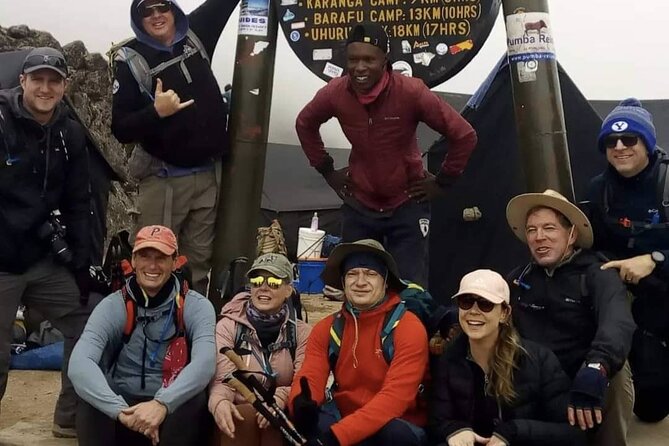
The third day continues through moorland toward the Lent Hills and Shira II Camp. The walking time is listed as about five hours, though the exact pace will depend on your group and conditions.
The route becomes rougher and more open here. You can expect broader views across the Shira Plateau and a stronger feeling of being above the forest. The trail also becomes more demanding as you gain height, so this is a day to follow the guide’s pace rather than race ahead.
The value of this day is its steady rhythm. You gain elevation without making a huge single-day jump, then sleep at camp before the alpine desert section. If you are new to high-altitude trekking, that gradual pattern is one of the best reasons to choose eight days instead of trying to compress the climb.
At camp, pay attention to small warning signs such as headache, unusual tiredness, or nausea. The tour includes an emergency oxygen cylinder and rescue fees as part of the park charges, but those provisions are safety support, not a substitute for reporting symptoms early.
More Kilimanjaro Climbs in Moshi:
- Kilimanjaro climb, Lemosho Route (8-day)
★ 5.0 · 148 reviews - Kilimanjaro climb, Lemosho Route (6-day)
★ 5.0 · 129 reviews - Kilimanjaro climb, Marangu route (6-day)
★ 5.0 · 72 reviews - Private Kilimanjaro Hike 7 Day Lemosho Route
★ 5.0 · 60 reviews
Day 4: Alpine desert, Lava Tower, and Barranco Camp
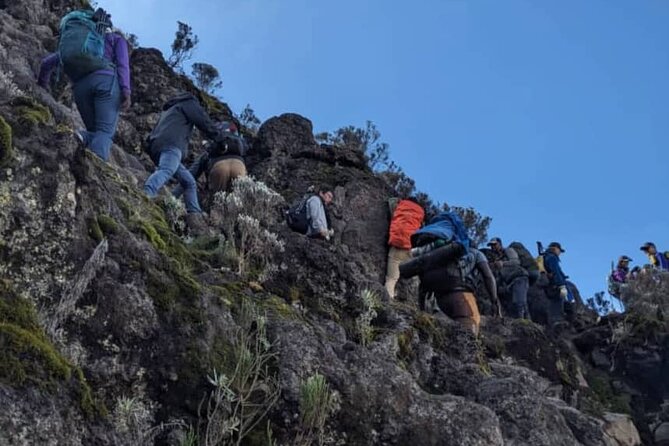
Day 4 is one of the longest and most striking parts of the climb. The stated walking time is about seven hours, and the route crosses alpine desert toward Barranco Camp.
Vegetation becomes sparse. Rock formations replace the softer forest and moorland scenery, and you get views toward the Western Breach and Lava Tower. The surroundings can feel stark and almost otherworldly, with little plant cover and plenty of exposed ground.
You finish at Barranco Camp, where you rest before the Barranco Wall. This day may feel especially tiring because of the combination of distance, height, and thinner air. The reward is the location of the camp and the anticipation of the next morning’s climb.
Bring a headlamp, though the supplied equipment list does not specifically confirm one. Personal trekking equipment is not included, and items such as sleeping bags, hiking boots, and clothing are your responsibility. Gear can be rented, but confirm rental prices and availability with Macpace Tours in advance.
Day 5: The Barranco Wall and Karanga Camp
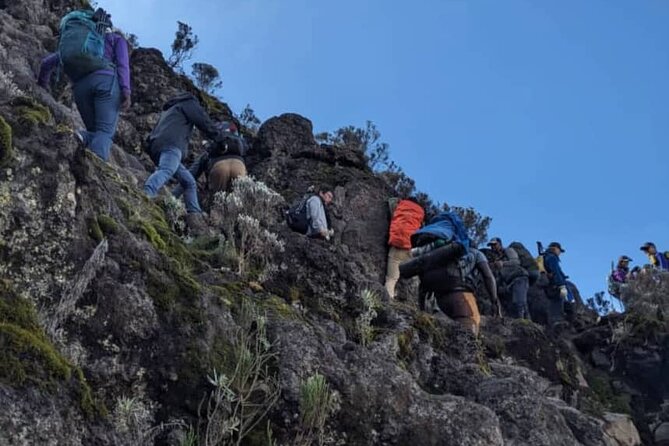
The Barranco Wall is the day’s headline feature. It is steep and requires a scramble, but the route is described as rewarding you with impressive views. You then continue through valleys and ridges to Karanga Camp.
The listed walking time is about four to six hours. The itinerary displays four minutes in one place, which is clearly not a useful planning figure for a mountain day. Treat the four to six-hour estimate as the relevant guide, and ask the operator to clarify the schedule before departure.
The wall can sound intimidating, but the key point is that this is a trekking scramble, not a technical climbing pitch as described in the tour information. You should still expect steep ground, uneven rock, and the need to use your hands at points. Good boots and a calm pace matter more than speed.
Karanga Camp sits above a scenic valley and brings you closer to the summit zone. At this point, the trip becomes less about seeing what comes next and more about managing energy for the final push.
Day 6: Karanga to Barafu Camp
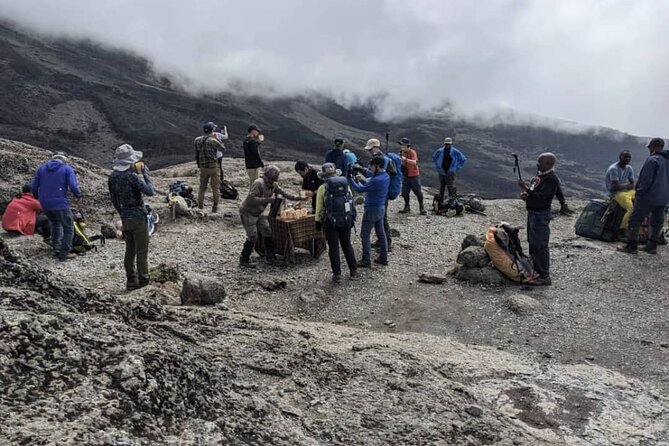
Day 6 takes about three hours and leads to Barafu Camp, the base for summit night. The trail climbs through alpine desert, with the ground becoming steeper and the air colder.
This is a shorter walking day, but do not assume it is an easy one. You are reaching high altitude, and every task can feel slower. Use the time to eat, drink, check your clothing, and rest.
Barafu Camp is where the climb changes character. You will rest during the day before starting the final ascent in the middle of the night. Your sleeping tent, mattress, meals, and mess tent are included, but the quality of your rest will also depend on how well you manage your own clothing, sleeping bag, hydration, and personal comfort.
A summit attempt is never guaranteed. The tour provides guides and an emergency oxygen cylinder, but the mountain decides the final result. You should book this with the aim of reaching Uhuru Peak while accepting that safety comes first.
Day 7: Stella Point, Uhuru Peak, and Mweka Camp
Day 7 is the hardest and most rewarding day. You start around midnight and climb toward Stella Point before continuing to Uhuru Peak at 5,895 metres, the highest point in Africa.
The supplied schedule lists four hours for this day, but that figure does not describe the whole summit-day effort, which also includes the descent to Mweka Camp. Ask for a clearer estimate before booking flights or other activities immediately after the climb.
The summit section is cold, dark, and physically demanding. Your progress is likely to feel slow, and the route requires patience. The high point is not simply reaching the sign at Uhuru Peak. It is managing the climb one small section at a time, then turning around and descending safely.
After celebrating at the summit, you descend to Mweka Camp for the night. That descent is welcome, but it is not effortless. Tired legs and loose ground can make the return trip feel surprisingly long.
Day 8: Mweka Gate and the return to Moshi
The final day takes about four hours through rainforest to Mweka Gate. You pass back through changing vegetation and finish at the park gate.
At the gate, you receive a Kilimanjaro summit certificate. The certificate is a small physical reminder of a large effort, and it also gives the journey a clear ending before your transfer back to your Moshi hotel.
Airport pickup and drop-off are included, as are transfers to the mountain and back to your Moshi hotel. The package also includes hotels, though the supplied details do not say how many nights or identify the properties. Confirm the hotel plan if you are arranging flights around the trip.
What the $2,600 price really covers
At $2,600 per person, this is not a bare trail permit with a guide. The price includes conservation, camping or hut, and rescue fees, as well as 18 percent government VAT.
You also get professional guides, porters, a cook, their salaries, mountain transfers, airport transfers, tents, a mattress, a mess tent, meals, purified water, emergency oxygen, and a summit certificate. Those inclusions explain much of the cost and reduce the number of separate expenses you need to organize.
I consider the package good value if you want a supported climb rather than a self-arranged expedition. The important question is not just the headline price. Ask how many porters support your group, what the hotel nights include, whether a private toilet is available, and what gear rental costs. One account specifically describes a private toilet as part of the setup, but the main inclusions do not clearly promise one, so get that detail in writing.
Tips are not included. You should also budget for a Tanzania visa, flights, personal insurance, laundry, telephone use, and drinks. Travel insurance is particularly important for a high-altitude trip because rescue and medical terms vary between policies.
Food, tents, and the human side of the climb
A mountain cook prepares the included meals, and the mess tent provides a shared place to eat. That arrangement gives your days a useful routine and lets you eat away from the sleeping tent.
Porters carry the camp equipment and supplies, while guides lead the group and help manage the route. The strong praise for the guides, porters, and cook is one of the clearest positive patterns in the supplied comments. Names including Victor and Edwin are associated with especially attentive guiding.
Treat the crew well. Tips are excluded from the price, and you should ask Macpace Tours for its current tipping guidance before departure. Clear expectations help you budget fairly and avoid awkwardness at the end.
Who should book this Kilimanjaro climb?
I would point this tour toward someone who wants a serious mountain challenge with organized support and a varied route. It suits people who can walk for several hours on consecutive days and who are willing to prepare properly for cold, rain, altitude, and basic camping.
It is also a sensible option for first-time Kilimanjaro climbers who prefer eight days on the route. The itinerary gives you a slower build than shorter programs, though you still need a moderate fitness level and a good attitude when the summit night becomes difficult.
I would not choose it if you want a relaxed sightseeing holiday, hotel comfort every night, or a fully specified schedule with no timing questions. The unclear Day 5 and Day 7 durations should be fixed before booking.
Should you book the 8-day Lemosho Route?
Book this climb if you value varied scenery, a longer acclimatization schedule, and a full support team. The route offers rainforest, Shira Plateau views, alpine desert, Barranco Wall, and the final approach to Uhuru Peak in one demanding journey.
The $2,600 package covers many costly essentials, and the 5 out of 5 rating from 19 posted ratings, with 100 percent recommending it, gives Macpace Tours a strong record in the supplied information. Still, confirm group size, hotel details, summit-day timings, private toilet arrangements, gear rental, and tipping guidance before you commit.
You can cancel for a full refund up to 24 hours before the local start time. Cancellations within 24 hours are not refunded, and late changes are not accepted. That is useful flexibility, but it does not replace travel insurance.
FAQ
How long is the Lemosho Route Kilimanjaro tour?
The tour lasts approximately eight days, beginning at Lemosho Gate and ending at Mweka Gate.
What is the price per person?
The listed price is $2,600 per person.
Is airport pickup included?
Yes. Airport pickup and drop-off are included, along with transfers to the mountain and back to your Moshi hotel.
Are meals included during the climb?
Yes. The package lists eight lunches, seven breakfasts, and seven dinners.
Is camping equipment included?
Yes. Waterproof four-season mountain sleeping tents, shared on a twin basis, sleeping mattresses, and a quality mess tent with tables and chairs are included.
Do I need to bring my own trekking equipment?
Yes. Personal equipment such as sleeping bags, hiking boots, and clothing is not included. These items are available for rent.
Is this a private tour?
Yes. Only your own group participates in the activity. The supplied information does not state the maximum group size.
What happens if I cancel?
You receive a full refund if you cancel at least 24 hours before the experience start time. Cancellations or changes made within 24 hours are not accepted or refunded.
More Lemosho Route Climbs in Moshi
- Kilimanjaro Lemosho Route
★ 5.0 · 71 reviews - Climbing Kilimanjaro through 8 days Lemosho Route
★ 5.0 · 52 reviews - 8 Days Climbing Mt.Kilimanjaro (Lemosho Route)
★ 4.5 · 37 reviews - 7 days Lemosho route Climbing Mt.Kilimanjaro
★ 5.0 · 31 reviews
Just added around Moshi
- Mt Kilimanjaro 6 days Marangu route hike★ 5.0 · 3 reviews
- Wildlife Extravaganza: Manyara, Tarangire & Ngorongoro in 3 Days★ 5.0 · 3 reviews
- Private Cycle to Kilimanjaro Bike Park Safari★ 5.0 · 6 reviews
- 3 Days Private E-Bike Tour in West Kilimanjaro★ 5.0 · 3 reviews
- West Kilimanjaro cycling Adventures★ 4.5 · 8 reviews
- machame route★ 5.0 · 16 reviews
- Kilimanjaro Climb & Safari – Lemosho Route – 13 Day★ 5.0 · 10 reviews
- Kilimanjaro Climbing Umbwe Route★ 5.0 · 3 reviews
Lemosho Route Climbs, compared.


8-Day Small-group Lemosho Kilimanjaro Summit Trekking
Read our review →





Climbing Kilimanjaro through 8 days Lemosho Route
Read our review →Browse the lists this tour appears in