
Reviewed · LEMOSHO ROUTE CLIMBS
Lemosho Route 8 Days 7 Nights/Kilimanjaro Climb
The clever part of this 8-day Lemosho schedule is not simply the extra day. It breaks the hard walk from Barranco to Barafu into two stages, leaving you with a shorter day before the midnight summit attempt. That matters, since summit day is the mountain’s toughest test and begins when most people would rather be asleep.
I like the route’s gradual altitude gain and its changing scenery, from wet rainforest to open moorland, high plateau, volcanic rock, and glacier views. I also like that the package covers park fees, rescue fees, camping equipment, meals, crew wages, and transport, so the $2,600 price is easier to judge. The main caution is physical: this is still a demanding climb, with a 13-hour summit day and a final ascent to 19,340 feet.
Key points to know before booking
- The extra day helps before the summit: You spend the night at Karanga before moving to Barafu, rather than making the entire Barranco to Barafu section in one long push.
- The scenery changes constantly: Expect rainforest on day one, the Shira Plateau on days two and three, Lava Tower and Barranco on day four, then high alpine ground near Barafu.
- Summit morning starts around midnight to 2 a.m.: You ascend by switchbacks toward Stella Point, continue around the crater rim, and then reach Uhuru Peak at 19,340 feet.
- The crew is a central part of the trip: Guides associated with this operator include Zacariah, Epa, Eric, and Nicholas, while Amos handles arrangements in several accounts.
- The price covers the costly basics: Park and crew fees, tents, rescue coverage, water, meals, certificates, and mountain transport are included.
- You need solid fitness and the right kit: Gaiters and trekking poles are strongly advised for muddy forest trails and the wet descent to Mweka Gate.
Why the eight-day Lemosho plan makes sense
Kilimanjaro is not a technical climb in the mountaineering sense, but altitude makes it serious. You walk for days, sleep at increasing heights, and then ask your body to climb through the night after limited rest. The route’s pacing is therefore more important than the raw distance.
The 8-day version gives you a useful rhythm. You climb from Shira to Lava Tower, descend to Barranco, cross the Barranco Wall, stop at Karanga, and only then reach Barafu. That is the classic climb-high, sleep-lower pattern in practical form. Day four reaches about 15,250 feet at Lava Tower before dropping to Barranco at around 13,000 feet.
The advantage is not comfort. You still sleep in tents and spend long hours walking. The advantage is having a shorter day immediately before summit night. For many climbers, that is worth more than saving a day or choosing a cheaper itinerary.
More Kilimanjaro Climbs in Kilimanjaro
- Kilimanjaro climb by Lemosho Route (7-day)
★ 5.0 · 651 reviews - Kilimanjaro climb, Machame Route (7-day)
★ 5.0 · 262 reviews - Kilimanjaro Climbing Lemosho Route 8 Days.
★ 5.0 · 186 reviews
Day one: Moshi to the rainforest at 9,500 feet
The trip begins with pickup from Moshi and a drive of about 45 minutes to Kilimanjaro National Park. The listed start time is 9 a.m., though you should confirm the exact pickup details when booking.
At the gate, permits must be issued before the walking begins. This is a working park entrance, so you may spend time watching guides, porters, and cooks prepare for their own climbs. It is not wasted time. It gives you a first look at the scale of the operation and a chance to check your own gear before the trail gets steeper.
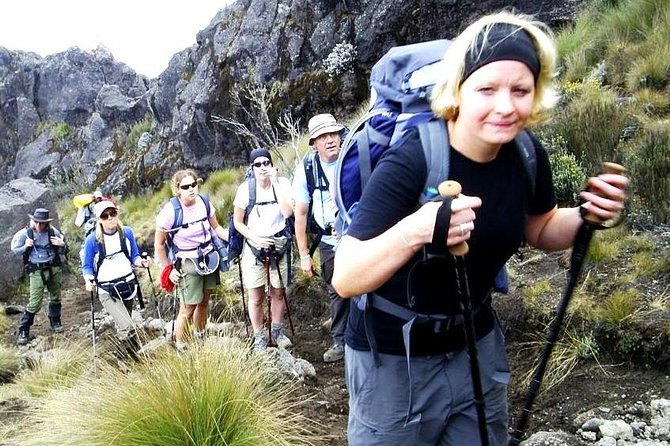
The walk rises from about 7,800 feet to 9,500 feet and takes roughly four hours. You begin in rainforest, with thick vegetation, damp air, and a trail that can turn muddy and slippery. The guide explains local plants, animals, and the mountain environment as you walk.
Pack your rain protection where you can reach it quickly. Gaiters will help keep mud out of your boots, and trekking poles are useful on slick ground. The day is not the hardest physically, but wet conditions can make it slower and more tiring than the distance suggests.
Day two: Leaving the trees for Shira Plateau
After breakfast, the route continues upward from about 9,500 feet to 11,500 feet. In roughly six hours, you leave the forest behind and reach the rim of the Shira Plateau.
This change is one of Lemosho’s pleasures. The enclosed feel of the rainforest gives way to wider views and cooler air. The trail climbs steadily rather than attacking the mountain all at once, which gives you time to settle into the slow walking pace needed at altitude.
You should not treat the easier-looking path as permission to hurry. A steady pace helps you conserve energy for the later days, and the guide’s job is to keep the group moving at a sensible speed. Temperatures drop as you gain height, so warm layers should be stored near the top of your pack rather than buried under spare clothes.
Day three: A full acclimatization day on Shira
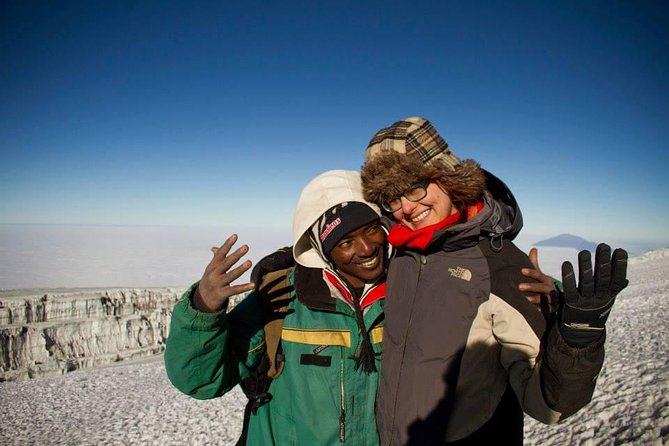
Day three is one of the strongest reasons to choose this route. You spend about seven hours exploring the Shira Plateau, moving from roughly 11,500 feet to the Moir Hut area at around 13,800 feet.
The walk heads east toward Kibo, Kilimanjaro’s main summit cone, crossing moorland meadows and passing Shira 2 Camp. You then continue toward Moir Hut at the base of Lent Hills. Walks on Lent Hills provide options for gaining height during the day before returning to camp.
This is a high plateau, and the open setting can make the mountain feel much bigger than it did in the forest. You may find the air noticeably thinner, even though the walking itself is not especially technical. Keep drinking the supplied water, eat properly, and tell your guide early if you develop a headache, nausea, unusual fatigue, or breathing problems.
The day is also a reminder that acclimatization is not just about resting. Gentle movement at altitude helps you prepare, while the return to camp gives your body time to recover before the trail climbs again.
More Kilimanjaro Climbs in Moshi:
- Kilimanjaro climb, Lemosho Route (8-day)
★ 5.0 · 148 reviews - Kilimanjaro climb, Lemosho Route (6-day)
★ 5.0 · 129 reviews - Kilimanjaro climb, Marangu route (6-day)
★ 5.0 · 72 reviews - Private Kilimanjaro Hike 7 Day Lemosho Route
★ 5.0 · 60 reviews
Day four: Lava Tower, then the descent to Barranco
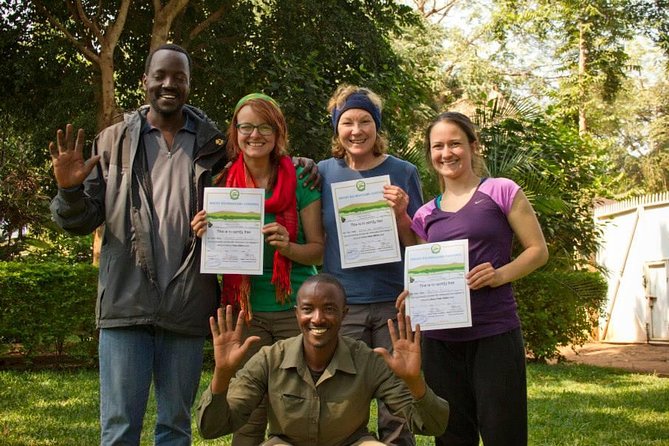
From Shira, you continue east along a ridge, passing the junction toward Kibo before turning southeast to Lava Tower. The tower, also called the Shark’s Tooth, reaches about 15,250 feet. The day takes around five hours and ends lower, at Barranco Camp near 13,000 feet.
This is an important day because you gain height during the walk, then sleep lower. The route also brings some of the mountain’s most striking volcanic scenery. The trail passes the junction for Arrow Glacier before descending toward Barranco.
Do not be surprised if you feel the altitude at Lava Tower. That discomfort is part of the acclimatization test, and the descent to Barranco is welcome. The route description lists park admission as included, which is useful here because this entire section remains inside the national park.
Barranco Camp is a dramatic place to spend the night, surrounded by steep volcanic walls and high mountain terrain. It also puts you directly below the Barranco Wall, the next day’s main challenge.
Day five: Up the Barranco Wall to Karanga
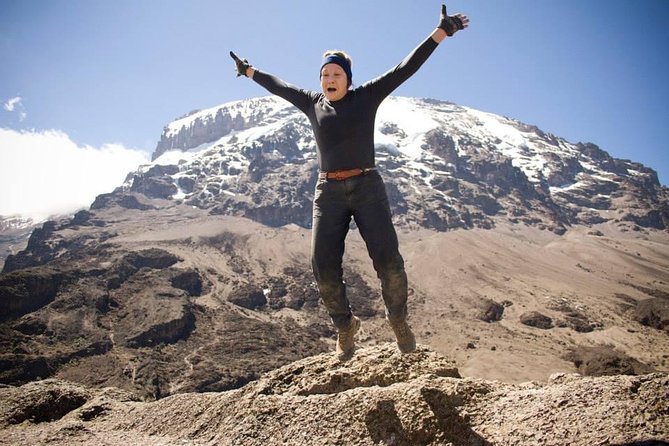
After breakfast, you climb the Barranco Wall and continue to Karanga Valley. The walking time is listed as about four hours, with the camp at roughly 13,250 feet, only slightly higher than Barranco.
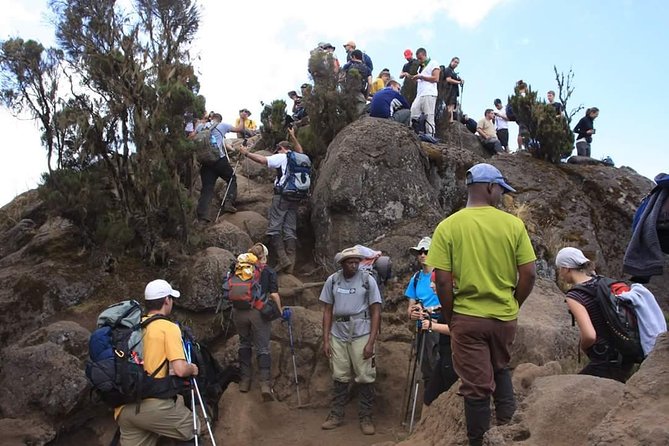
The short distance does not mean an effortless day. The Barranco Wall is steep and requires careful footwork. It is not described as a technical climbing section, but you should expect hands-on movement in places and a slower pace as the group works upward.
This is one part of the trek where the crew’s experience matters. Guides and porters may move over the wall quickly, but you should not copy their pace. Keep three points of contact when needed, follow the guide’s instructions, and take your time.
Karanga is a useful overnight stop because it separates the wall from the long climb to Barafu. It also keeps the day before the summit attempt relatively short. That is a small logistical choice with a large practical benefit.
Day six: Barafu Camp and the wait for summit night
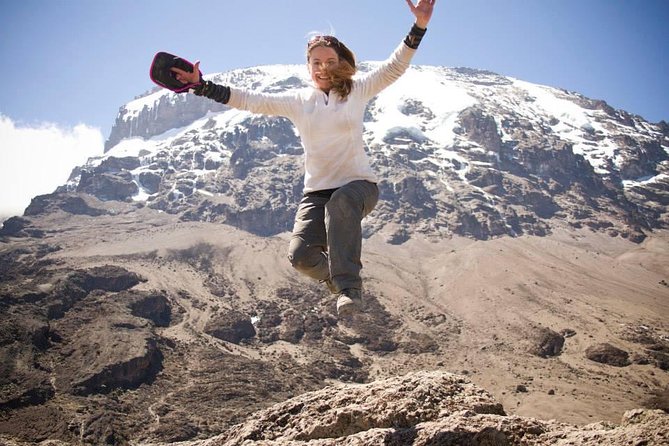
The route climbs from about 13,250 feet to Barafu Camp at approximately 15,350 feet. The walk takes around five hours. Reaching Barafu completes the southern circuit, giving you views of the summit from different sides before the climb’s final stage.
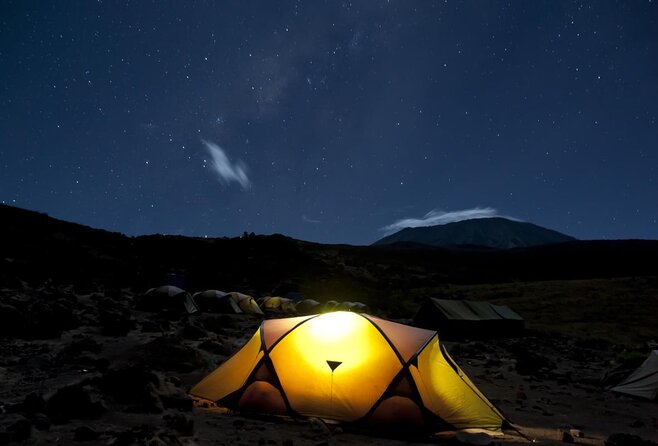
You arrive with enough time to settle in, organize your headlamp and warm layers, eat an early dinner, and rest. The camp is high, cold, and functional rather than cozy. You should expect the afternoon to feel like a preparation period, not a normal trekking evening.
The summit push begins between midnight and 2 a.m. That means sleep may be brief or broken. Keep the equipment you need for the ascent ready before dinner. A warm hat, gloves, water, snacks, headlamp, and extra layers should not be scattered through your duffel.
This is where the eight-day schedule earns its keep. You have not made the full Barranco to Barafu journey in one day, and you have had a shorter Karanga day to recover before reaching Barafu.
Day seven: Stella Point, Uhuru Peak, and the long descent
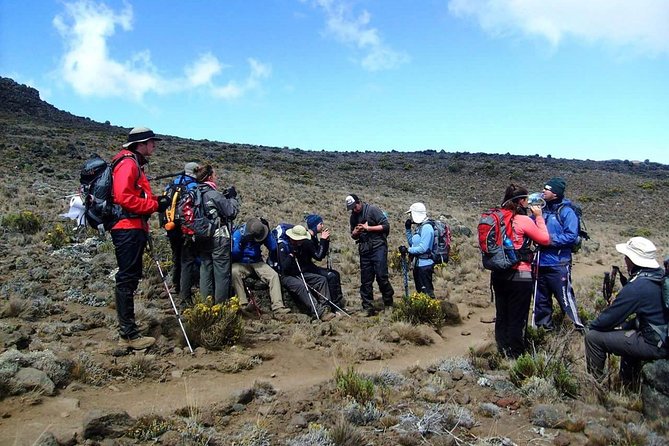
Summit day is listed at about 13 hours. You climb from Barafu at 15,350 feet to Uhuru Peak at 19,340 feet, then descend all the way to around 10,150 feet.
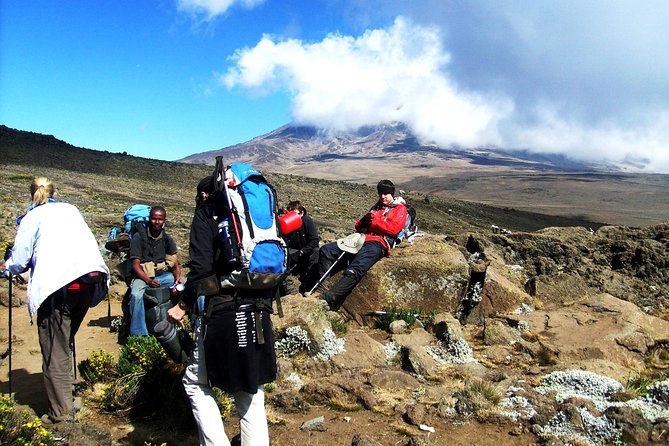
The first section heads between the Rebmann and Ratzel Glaciers. You climb slowly through heavy scree by a series of switchbacks toward Stella Point on the crater rim. The ground can shift under your boots, and the cold, darkness, altitude, and lack of sleep combine to make this the hardest part of the trip.
At Stella Point, you can rest briefly and watch the sunrise. Faster climbers may reach the crater rim in time for sunrise, but the exact timing depends on pace and conditions. From Stella Point, the route continues around the crater rim to Uhuru Peak, the highest point on Kilimanjaro.
Reaching the summit is only half of this day. After photos and a short celebration, you descend to Barafu and then continue toward the lower camp at about 10,150 feet. Knees and feet often take a beating on the descent, so trekking poles are especially useful.
Eat and drink even if your appetite is poor. The guide should monitor your condition throughout the ascent and descent. If you cannot continue safely, follow the crew’s advice. A summit certificate is included, but getting down in good shape matters more than the paper.
Day eight: Mweka Gate and back to Moshi
After breakfast, you have an appreciation ceremony and time for team bonding with the mountain crew. Then you descend from about 10,150 feet to Mweka Park Gate at roughly 5,500 feet.
The descent takes about four hours, but do not mistake it for a gentle stroll. The trail is described as wet, muddy, and steep, and the warmer lower altitude can make the air feel heavy after the cold summit zone. Gaiters and poles are again worth having.
At Mweka Gate, you receive your summit certificate. A vehicle then takes you from Mweka village back to your Moshi hotel, a drive of about 30 minutes. The included transfer means you do not need to arrange a separate ride after the mountain, and a hot shower, dinner, and proper bed will feel well earned.
What the $2,600 price covers
At $2,600 per person, this is not a budget walk, but Kilimanjaro costs are driven by park charges, crew wages, food, camping equipment, and transport. The package includes:
- Park fees and crew park fees
- Camping equipment
- Rescue fees
- Water
- Guide, cook, and porter salaries
- Transport to and from the mountain for you and the crew
- Eight lunches
- Seven breakfasts
- Eight dinners
- Summit certificates
- Two-way airport transfers
That list gives the price real value, particularly because crew pay and park charges are not minor extras. You should still budget for tips. The suggested amounts are $15 to $20 per guide per day, $10 to $15 per cook per day, and $8 to $10 per porter per day, shared by the group.
International flights, visas, travel insurance, and extra personal equipment are not included. You will need to handle those separately, and insurance is especially important for a high-altitude climb.
The people who shape the climb
A Kilimanjaro itinerary can look tidy on paper, but the crew determines how it feels day to day. Names connected with this operator include Zacariah, Epa, Eric, and Nicholas among the guiding team, with Amos involved in arranging several climbs.
The strongest accounts describe patient encouragement, careful organization, and strong support from guides, cooks, and porters. That fits the practical needs of this route. You want a guide who controls the pace, explains the trail, watches for altitude problems, and keeps the group focused when the summit morning becomes difficult.
The crew also handles much of the camp work, but that does not mean you should treat porters as invisible labor. Pack responsibly, bring only what you need, and use the suggested tip structure as part of your trip budget. The ceremony on the final morning gives you a formal chance to thank the team.
One point deserves confirmation before you pay. The current details list a maximum of two participants, while past climbing accounts describe solo climbers joining small groups and one larger group of teachers. Ask exactly how your departure will be organized, who your assigned guide will be, and how many people will be on your climb.
What to pack and how to prepare
You need moderate physical fitness, but the wording should not make this sound easy. Training for long uphill walks, steep descents, and consecutive days on your feet will help. The summit day is the key target: you should be ready for 13 hours of walking, much of it in darkness and cold.
Prioritize the items that match the conditions named in the route plan:
- Gaiters for mud, wet ground, and loose scree
- Trekking poles for slippery trails and the long descent
- Warm layers for Shira, Lava Tower, Barafu, and summit morning
- A headlamp for the midnight start
- Comfortable, well-used boots
- Water and personal snacks
- Rain protection for the rainforest and lower trail
The operator supplies camping equipment and water, but additional personal equipment is your responsibility. Ask for the exact equipment list before departure so you know what is supplied and what you must bring.
Who should book this climb?
I would choose this itinerary if you want the Lemosho route’s varied scenery and prefer a more measured schedule before the summit. It suits a fit first-time climber who values support, included logistics, and a shorter pre-summit day more than the lowest possible price.
It is also a sensible choice for a solo climber who wants a small organized departure, though you should confirm the group arrangement because the stated maximum is two people. The route can suit couples or two friends particularly well if the operator assigns a private guide team as advertised.
I would hesitate if you dislike camping, struggle with long walks, or are looking for a relaxed sightseeing holiday. This is a demanding mountain expedition, not a series of easy day walks. The scenic route and strong crew support help, but they do not remove the altitude, cold, mud, poor sleep, or summit-night effort.
Free cancellation is available if you cancel at least 24 hours before the local start time. Changes or cancellations inside that window are not accepted for a refund, so check your dates and insurance before the deadline.
Should you book the 8-day Lemosho Route?
Book it if you want a scenic Kilimanjaro route with extra acclimatization time and a smart rest day before the summit push. The Barranco Wall, Shira Plateau, Lava Tower, and sunrise near Stella Point give the climb real variety, while included meals, transport, camping gear, park charges, and crew wages make the $2,600 easier to justify.
Before booking, confirm the exact group size, assigned guide, equipment list, airport transfer details, and tipping plan. If you are fit, prepared for a very long summit day, and willing to accept basic mountain camping, this is one of the more thoughtfully paced ways to attempt Uhuru Peak.
FAQ
Where does the Kilimanjaro climb begin?
The experience begins in Moshi, Tanzania. Pickup is offered, and the drive to Kilimanjaro National Park Gate takes about 45 minutes.
What time does the experience start?
The listed start time is 9 a.m. Confirm the pickup time and location with the operator before the climb.
How long is the Lemosho climb?
The scheduled duration is eight days and seven nights.
Is the summit reached during the climb?
Yes. Day seven goes from Barafu Camp at about 15,350 feet to Uhuru Peak at 19,340 feet, followed by a descent to around 10,150 feet.
What is included in the price?
The price includes park fees, crew park fees, camping equipment, rescue fees, water, guide, cook and porter salaries, mountain transport, certificates, two-way airport transfers, eight lunches, seven breakfasts, and eight dinners.
What fitness level is required?
You should have a moderate level of physical fitness. The summit day takes about 13 hours and begins between midnight and 2 a.m., so preparation for long uphill and downhill walks is important.
More Lemosho Route Climbs in Moshi
- Kilimanjaro Lemosho Route
★ 5.0 · 71 reviews - Climbing Kilimanjaro through 8 days Lemosho Route
★ 5.0 · 52 reviews - 8 Days Climbing Mt.Kilimanjaro (Lemosho Route)
★ 4.5 · 37 reviews - 7 days Lemosho route Climbing Mt.Kilimanjaro
★ 5.0 · 31 reviews
Just added around Moshi
- Mt Kilimanjaro 6 days Marangu route hike★ 5.0 · 3 reviews
- Wildlife Extravaganza: Manyara, Tarangire & Ngorongoro in 3 Days★ 5.0 · 3 reviews
- Private Cycle to Kilimanjaro Bike Park Safari★ 5.0 · 6 reviews
- 3 Days Private E-Bike Tour in West Kilimanjaro★ 5.0 · 3 reviews
- West Kilimanjaro cycling Adventures★ 4.5 · 8 reviews
- machame route★ 5.0 · 16 reviews
- Kilimanjaro Climb & Safari – Lemosho Route – 13 Day★ 5.0 · 10 reviews
- Kilimanjaro Climbing Umbwe Route★ 5.0 · 3 reviews
Lemosho Route Climbs, compared.


8-Day Small-group Lemosho Kilimanjaro Summit Trekking
Read our review →





Climbing Kilimanjaro through 8 days Lemosho Route
Read our review →Browse the lists this tour appears in