
Reviewed · COOKING CLASSES
Arusha: Traditional Tanzania Cooking Class & Food Market Tour
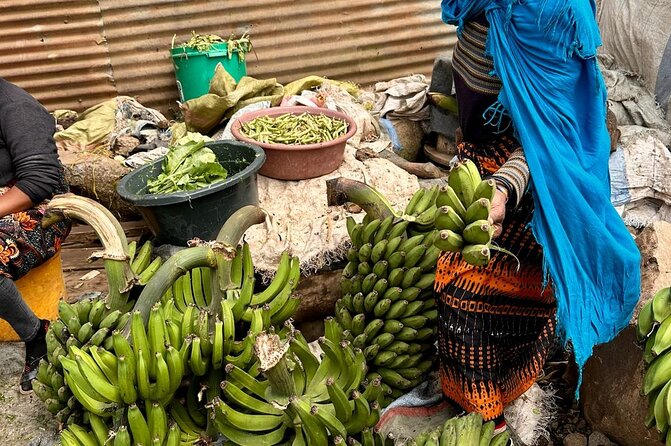
Arusha’s best food lesson starts before the cooking. You begin in the central market, where your guide explains unfamiliar produce, fresh meat, and local cooking customs, then helps you choose two dishes to prepare. I like that the tour connects the market to the meal, rather than dropping you into a polished kitchen with no sense of where the ingredients came from.
I also like the local transport ride to Sanawari and the chance to eat what you cook for lunch or dinner. The main thing to consider is the setting: this is a working local kitchen with charcoal burners, a gas burner, low tables, tubs, and basic tools. If you expect a spotless studio kitchen, this may feel rough around the edges. If you want daily Tanzanian cooking as it is really done, that is the point.
Key points to know before booking
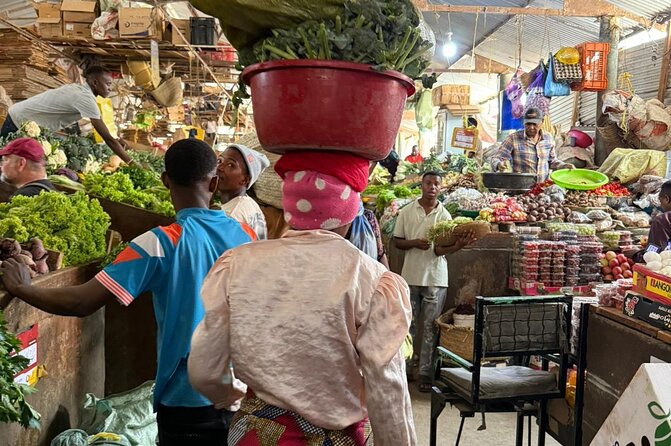
- Market first, cooking second: You spend about 30 minutes in Arusha’s central food market before buying ingredients and heading to class.
- You choose two dishes: Your guide explains the available local foods, then helps you select two for the cooking lesson.
- Sanawari adds a local touch: The class takes place in a simple local kitchen, reached by ordinary public transport from the market.
- The meal is included: You eat the food you prepare, with the option to take some away afterward.
- Pickup is practical: Hotel pickup and return are included for hotels near Arusha city center.
- $42 buys more than a meal: The price covers the guide, market visit, transport, ingredients, class, and the finished lunch or dinner.
Why this Arusha food tour feels different
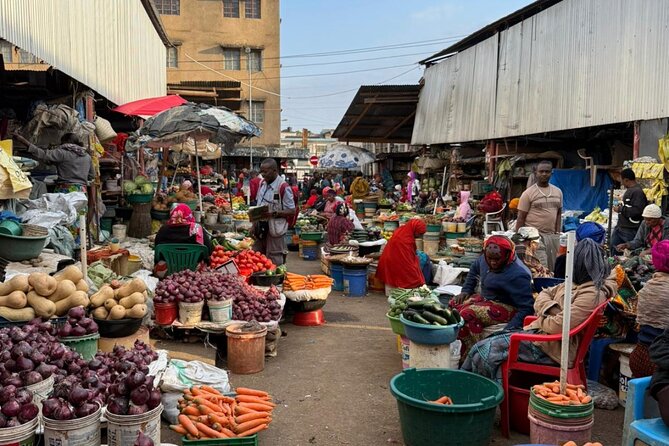
Many cooking classes begin with a prepared counter, measured ingredients, and a recipe card. This one begins with buying food in a real market. That small change matters. You see the produce before it reaches the pot, ask what it is used for, and get a better sense of how food fits into everyday life in Tanzania.
Your guide meets you at your hotel in Arusha city, then takes you to the central food market. The exact guide can vary, but the team has included Israel, James, Jack, Lameck, Magret, and Bariki. Guides such as Israel are described as warm and energetic, while Magret has been praised for holding the group’s attention during the market and class.
The tour is not built around fancy presentation. It is built around contact with ordinary food and ordinary routines. You may see locally grown products alongside a small amount of imported food, and your guide can explain how different ingredients are used in Tanzanian homes.
That makes this a good first or second-day activity in Arusha. You get a gentle introduction to local customs, food names, market habits, and public transport before heading into more demanding safari or mountain plans.
A few more Arusha trips to weigh up
- NGO Lifted Strong – Traditional Tanzanian Cooking Class
★ 5.0 · 39 reviews - Cooking and Sewing & Jewelry Workshops in Arusha
★ 5.0 · 14 reviews - Arusha: Traditional Tanzania Cooking class& Food Market Tour
★ 4.9 · 12 reviews
Inside Arusha’s central food market
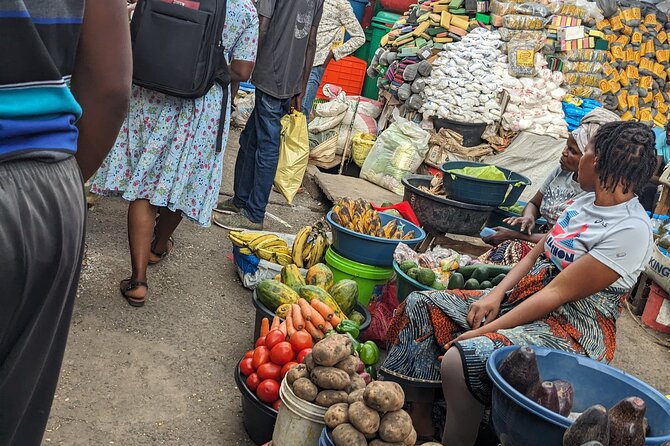
The market visit lasts roughly 30 minutes, though some descriptions place it closer to 45 minutes. It is a short stop, but it gives the tour its character. You walk through two sides of the central food market with a guide who points out local produce, meat, and other foods sold for daily cooking.
I would not treat this as a quiet photo stop. A food market is a working place, and the experience depends on moving through a real trading environment. Sellers and local shoppers are part of the scene, so you should follow your guide, stay aware of your belongings, and ask before taking close-up photos.
The useful part is the explanation. Foods that look familiar may be used in ways you do not expect, while unfamiliar items may turn out to be common kitchen staples. Your guide explains traditional uses and helps you understand which ingredients are suitable for the class.
You also get to choose what you will cook. The selection depends on what is available and what the group prefers that day. The tour promises a choice of two local dishes from the foods explained in the market, rather than one fixed menu.
That flexibility is a plus, but it also means you should not book expecting a guaranteed list of dishes. Ugali and ndizi have appeared in the experience, and other local dishes may be available. The final choice is made on the day.
Choosing ingredients and heading to Sanawari
After the market visit, you buy the ingredients needed for the selected dishes. The cost of this shopping is included, so you are not asked to pay separately for the food used in the class. Spices from the market are not included, however, and drinks are also extra.
The next stage takes you to Sanawari, an area farther from the central market. The trip uses normal local transport, including a popular public transport option from the market. This is not just a transfer designed to get you there quickly. It gives you a small look at how people move around Arusha.
For some people, this will be one of the most memorable details. You are not sealed inside a private vehicle for every minute of the outing. For others, public transport may feel less comfortable or predictable than a private ride. The tour description presents it as part of the local experience, so I would book with that expectation.
Pickup and drop-off are offered at hotels near the city center. If your hotel is outside that area, confirm the arrangement before booking. The total experience lasts about four hours, but the published stop times account for only about two hours. The remaining time allows for hotel transfers, market shopping, transport, cooking, and the meal.
Cooking in a real local kitchen
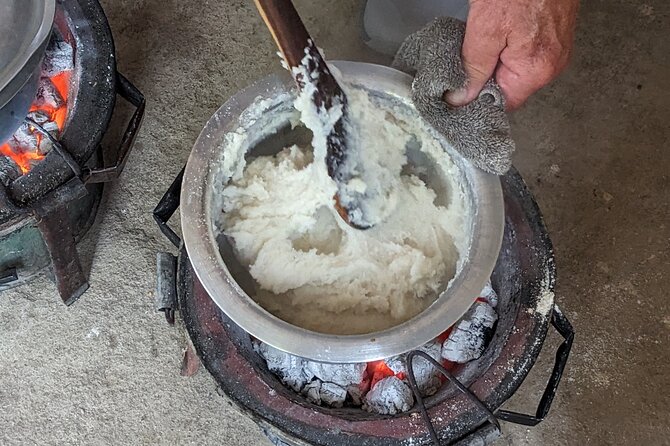
At Sanawari, you meet the local chef and begin the hands-on lesson. The setting is deliberately simple. Previous descriptions of the class include a low table, two charcoal burners, one gas burner, large tubs, and basic cooking tools rather than high counters, sinks, or modern appliances.
This is the part I would explain most carefully to anyone booking. The phrase cooking class can suggest a Western-style teaching kitchen. Here, you learn in a local setup that reflects how food may be prepared day to day. You may work close to the floor or around a low surface, and the equipment will not match what you use at home.
That arrangement can make the class more interesting because the technique is tied to the setting. Heat control, preparation, and timing mean something different when charcoal burners are involved. It also means the lesson may feel less polished and less physically convenient.
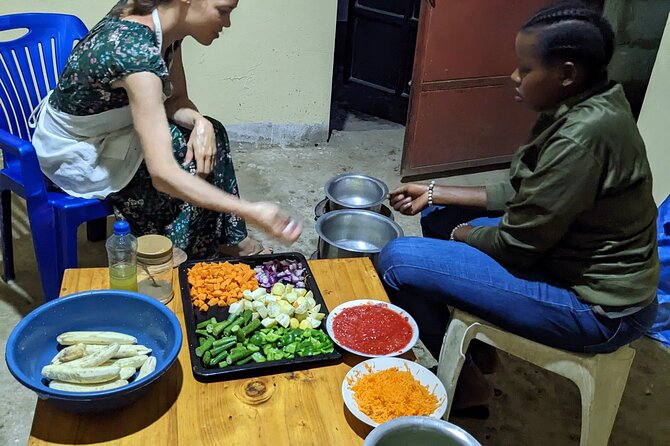
The guide and chef help you prepare the two selected dishes. The class is described as interactive, so you should expect to take part rather than simply watch a demonstration. The exact recipe, pace, and division of tasks depend on the dishes chosen and the size of the group.
The experience can also introduce you to the people behind the food. The class is presented as a chance to connect with a local family and learn about daily life, not simply to collect a recipe. That personal contact is a major reason to choose this over a restaurant meal.
Same country, a completely different kind of safari:
- Balloon Safari & Bush Breakfast in Serengeti – Miracle Experience
★ 5.0 · 1,646 reviews - Tanzania Classic – 7 Days
★ 5.0 · 1,151 reviews - 4 Days Group Camping Safari
★ 5.0 · 1,101 reviews - 5 Days Group Camping Safari
★ 5.0 · 730 reviews
Eating what you have prepared
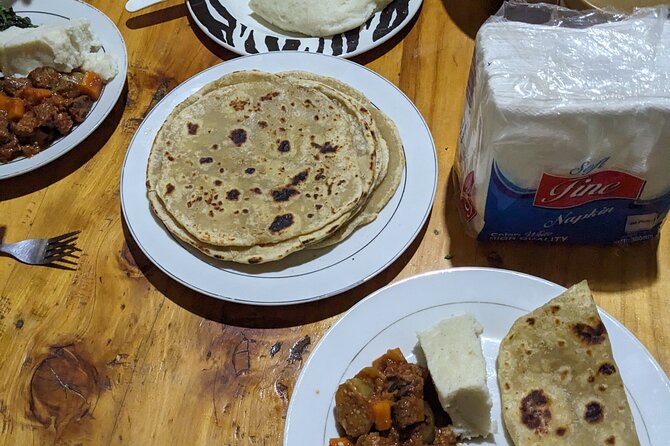
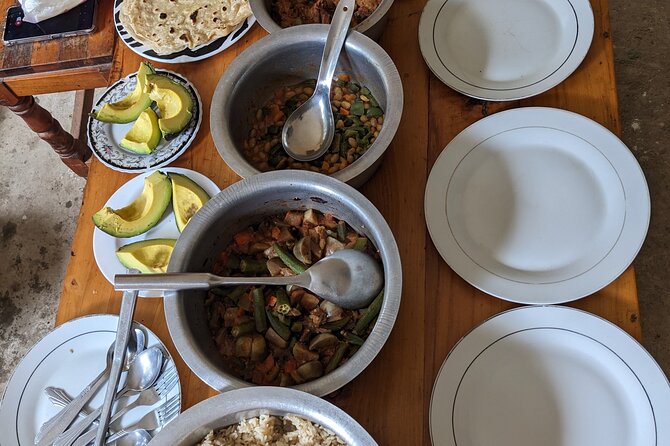
When the cooking is finished, you eat the meal you helped make. This can be arranged as lunch or dinner, depending on the tour time. The meal is included for the people taking part in the activity.
The food may be simple, filling, and home-style rather than restaurant-style. That is useful context. You are not paying for a tasting menu with small portions and decorative plates. You are paying to shop, prepare, and sit down with the result.
Several named dishes have been associated with the class, including ugali and ndizi. Ugali is a firm maize-based staple commonly eaten with other foods, while ndizi refers to plantain or banana-based preparations. The menu is not fixed, so you should ask your guide what is available before making your two choices.
You can also ask about taking food away after the meal. The experience includes an option for takeaway food, which is helpful if you are full or want to save part of the meal for later. Bring that up before the final serving rather than assuming every dish will automatically be packed.
Drinks are not included. You can buy water, soda, or beer along the way, but you should budget for those separately. I would carry enough Tanzanian shillings for small purchases, although the supplied details do not specify payment methods or drink prices.
What $42 really covers
At $42 per person, this is a solid-value half-day activity if you want several elements in one booking. The price includes central hotel pickup and drop-off, a guided market tour, local transport, ingredient shopping, the cooking lesson, and the meal afterward.
A cooking class alone might give you more time at the stove, while a market tour alone might provide more time with vendors. This experience combines both, then adds transport and a full meal. The tradeoff is that each part is fairly compact.
The 30-minute market visit is enough to orient you, but not enough for a long study of Arusha’s food trade. The cooking portion is listed at about one hour and 30 minutes, which should allow for preparation, instruction, cooking, and eating, though the pace can change with the group.
The maximum group size is listed as 200 people. That is a very large possible limit for an activity marketed as local and hands-on. The actual group may be smaller, but you should ask about the expected number when booking if personal instruction matters to you. A smaller group would make it easier to help with preparation and ask detailed questions.
The tour is booked on average about 23 days ahead, which suggests you should not leave it until the last minute if your Arusha schedule is tight. Confirmation is sent at booking, with contact available through WhatsApp or email.
Who will enjoy this most
I would recommend this to you if food is one of your main ways of understanding a place. It suits curious first-time visitors to Arusha, couples, families, and small groups who want an activity with conversation and participation rather than passive sightseeing.
It is also a good choice if you have a free afternoon or evening before or after a safari. The short market walk and cooking session provide a useful change from sitting in a vehicle. You finish with a proper meal, not just a snack.
People interested in local transport and household cooking will get the most from it. The public ride to Sanawari and the simple cooking setup are not distractions from the activity. They are central to it.
I would be more cautious if you need a fully accessible or highly polished environment. The experience is listed as suitable for most people and near public transportation, but there are no specific details about wheelchair access, kitchen layout, dietary restrictions, or allergy procedures. Ask before paying if any of those affect your decision.
I would also ask about dietary needs before the day of the tour. The ingredients are selected at the market, and the menu is chosen on the day, but no special dietary arrangements are promised in the information provided.
Small details that can make the day easier
Wear clothes and shoes you do not mind using around a market and a charcoal cooking area. No special dress code is provided, but practical clothing will make it easier to move around and participate.
Plan to buy your own drinks. Water, soda, and beer are excluded, and you may prefer to have water with you while moving between the market and Sanawari.
Keep some room in your schedule. The advertised duration is about four hours, and the market stop, local transport, cooking, and meal may not move at exactly the same pace every day.
If you want spices to take home, budget separately. Spices are specifically excluded from the price, even though the ingredients used for the class are covered.
Tipping is optional. It is not required, but you can tip according to your satisfaction.
The activity requires good weather. If poor weather causes cancellation, you are offered another date or a full refund. For your own cancellation, you must cancel at least 24 hours before the start time to receive a full refund. Changes or cancellations inside that period are not refunded.
Should you book the Arusha cooking class?
Book it if you want a practical taste of everyday Tanzania, not a formal culinary performance. The central market, local transport, Sanawari setting, and simple cooking equipment create a clear sense of place. The included meal and hotel transfers make $42 a fair price for a four-hour outing.
Skip it if you want a modern kitchen, a fixed menu, private instruction, or a tightly timed professional demonstration. The experience works best when you accept a little uncertainty and let the market determine what goes into the pot.
For most food-focused visitors with a free half-day in Arusha, I would book it. Ask about the expected group size, available dishes, pickup location, and any dietary needs before confirming. That quick check will help you get the local, hands-on experience this tour is designed to provide.
FAQ
How long does the cooking class and market tour last?
The full activity lasts approximately four hours. The central market visit takes about 30 minutes, and the cooking lesson in Sanawari is listed at about one hour and 30 minutes, with the remaining time used for transfers, shopping, cooking, and the meal.
Where does the experience take place?
The tour begins at Arusha’s central food market and continues in Sanawari, where the cooking lesson takes place in a local kitchen.
Is hotel pickup included?
Yes. Pickup and drop-off are included for hotels near Arusha city center.
How many dishes will I cook?
You choose two local dishes from the options explained by the guide on the day of the tour.
Is the meal included?
Yes. You eat the food prepared during the class, and it can be arranged as lunch or dinner.
Are drinks included?
No. Water, soda, and beer are not included, but you can buy them during the outing.
Is public transport part of the experience?
Yes. The tour uses normal local transport from the central market to Sanawari as part of the local experience.
Can I cancel for a full refund?
Yes, if you cancel at least 24 hours before the experience start time. Cancellations or changes made less than 24 hours in advance are not refunded. If poor weather causes the operator to cancel, you are offered a different date or a full refund.
More Markets in Arusha
- 24 Hours in Arusha—Arusha Museum, Cultural Heritage, Maasai Market, Shanga
★ 5.0 · 4 reviews - Stone Town Guided Tour: Culture, Slave Market & Spice Market
★ 4.8 · 44 reviews - Stone Town Private Tour with Slave Market Tickets
★ 5.0 · 13 reviews - Private Market Tour and Tanzanian Cooking Class in Moshi
★ 5.0 · 7 reviews
More Food in Arusha
- Organic Coffee Tour and Local Food Experience in Arusha
★ 5.0 · 29 reviews - Street Food and Community Walking Tour
★ 5.0 · 12 reviews - Waterfalls, Coffee, Hotsprings, Food Cuisine, & Serval Wildlife
★ 5.0 · 6 reviews - Mama Aziz Food Court
★ 5.0 · 3 reviews
Just added around Arusha
- 8 Days Serengeti Migration safari★ 5.0 · 11 reviews
- tarangire, ngorongoro & lake manyara park 3 days private tour★ 5.0 · 11 reviews
- tarangire & ngorongoro 2 days tour★ 5.0 · 14 reviews
- Mt. Kilimanjaro: Shira plateau to Cathedral point 3872m Day hike★ 5.0 · 7 reviews
- serengeti, ngorongoro & tarangire 4 days private tour★ 5.0 · 18 reviews
- serengeti & ngorongoro 3 days private tour★ 5.0 · 15 reviews
- 2 Days Tanzania Midrange Group Join Safari★ 5.0 · 7 reviews
- climb the KILIMANJARO via Lemosho route★ 5.0 · 4 reviews
Cooking Classes, compared.
Half-Day Kuza Cave Swimming Adventure and Cooking Class
Read our review →
NGO Lifted Strong – Traditional Tanzanian Cooking Class
Read our review →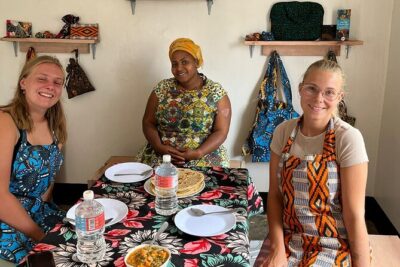
Cooking and Sewing & Jewelry Workshops in Arusha
Read our review →
Mnemba Dolphin Tour, Clear Kayak, Cooking Class, Horse Riding
Read our review →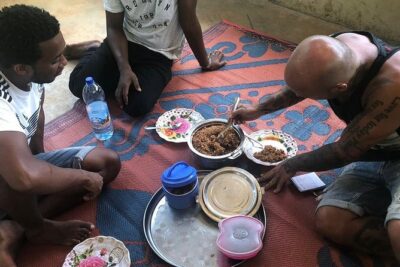
Traditional Zanzibar Cooking Class including Spice Tour
Read our review →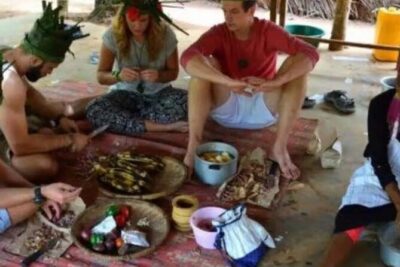
A private half day spice farm with a cooking lesson
Read our review →Browse the lists this tour appears in