
Reviewed · WALKING TOURS
Street Food and Community Walking Tour
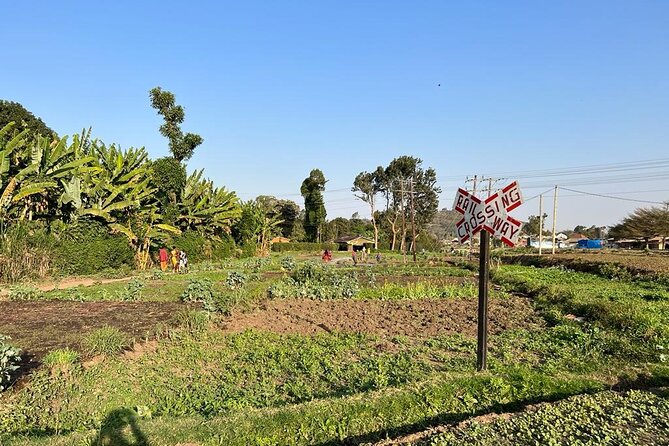
Arusha’s Sinoni district gives you something a standard city tour cannot: a close look at ordinary community life, served with local food along the way. You walk from Kajo Art Gallery near the Maasai Market toward Sinoni, stopping to see urban farming, maize milling, carpentry, recycling, mud houses, and churches.
I like two things right away: the small group limit of 10 keeps the walk personal, and the $25 price includes the guide, food tastings, fees, and taxes. The tour also sends all profits to Jamii Imarika Foundation, which supports education, women’s empowerment, and basic needs for disadvantaged children. The main consideration is that this is a real neighborhood walk, not a polished attraction, and the route depends on good weather.
Key points to know before booking
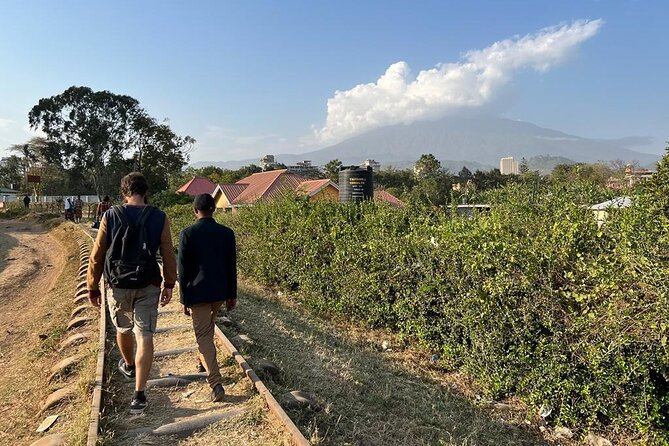
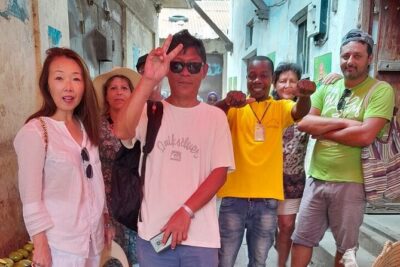
- Walk through Sinoni with local guides: Jackson and Given have been praised for being friendly, helpful, and generous with local information.
- Taste sweet and salty foods: Food comes from different local vendors during the walk.
- See working community life: Stops may include urban farming, recycling, maize milling, carpentry, mud houses, and churches.
- Support a local cause: All profits go to Jamii Imarika Foundation’s community programs.
- Plan for about two and a half hours: The walk starts near the Maasai Market and ends in Sinoni.
- Keep the logistics simple: Mobile tickets are accepted, public transportation is nearby, and the guide helps you get back to your hotel afterward.
Why Sinoni makes a better food walk than a restaurant meal
A restaurant can introduce you to Tanzanian dishes, but it cannot show you how food fits into daily life. In Sinoni, the tasting stops are tied to the streets, workshops, homes, and small businesses around you. You do not simply sit down for a meal. You walk, look, ask questions, and eat as the neighborhood unfolds.
That makes the experience especially useful early in an Arusha stay. You get a local frame of reference for the city before heading out on a safari or climbing trip. You also have room to ask about food, customs, work, family life, and the practical rhythms of living in Arusha.
The tour is offered by Jamii Imarika Foundation, a local nonprofit working with disadvantaged children, women, and young people. Since all profits go to the organization, your $25 does more than cover a guide and a few bites. It helps fund the group’s broader work. That gives the tour a clear social purpose without requiring you to treat it as a donation-only activity.
A few more Arusha trips to weigh up
- Arusha: Traditional Tanzania Cooking Class & Food Market Tour
★ 5.0 · 34 reviews - Organic Coffee Tour and Local Food Experience in Arusha
★ 5.0 · 29 reviews - Arusha: Traditional Tanzania Cooking class& Food Market Tour
★ 4.9 · 12 reviews
Starting near Kajo Art Gallery and the Maasai Market
The meeting point is Kajo Art Gallery at the Maasai Market on Tanesco Road. This is a useful starting place because it is near a known shopping and art area rather than at an obscure address far outside town. You receive a mobile ticket at booking, so keep the confirmation available on your phone.
From the meeting point, the walk heads toward Sinoni, south of Arusha’s city center. Private transportation is not included, so you need to arrange your own way to Kajo Art Gallery. The tour ends in Sinoni, not back at the starting point, but the guide helps you return to your hotel afterward.
That one-way route is worth noting. It lets you move from a familiar central meeting point into a community district instead of repeating the same streets. It also means you should avoid scheduling a tight appointment immediately after the walk. Allow extra time for the end of the tour and your return journey.
The Sinoni walk: food beside everyday work
The heart of the experience is the walk through Sinoni. The guide explains daily life as you move through the area, and you can ask questions as things catch your eye. This format works better for curious people than for anyone who wants a fixed lecture delivered at a series of formal sights.
The route includes several examples of local work and community activity:
- Urban farming
- Recycling
- Maize milling
- Carpentry
- Mud houses
- Churches
These are not just items to photograph. Together, they help explain how a neighborhood functions. Urban farming points to the ways people produce food close to home. A maize mill connects a familiar staple to the work needed before it reaches the cooking pot. Carpentry and recycling show small-scale trades and practical ways people earn and build.
Mud houses offer a chance to see local construction methods in context. Churches add another layer to the community, showing how places of worship fit into the daily setting. The value is in seeing these things together, with a guide who can explain what you are looking at rather than presenting each stop as an isolated curiosity.
You should also set your expectations correctly. Sinoni is a lived-in neighborhood, not a staged cultural village. Conditions may be simple, and the walk may feel more open-ended than a museum visit. That is precisely the point, but it calls for respectful behavior and a willingness to observe rather than demand a performance from the people around you.
What you eat along the way
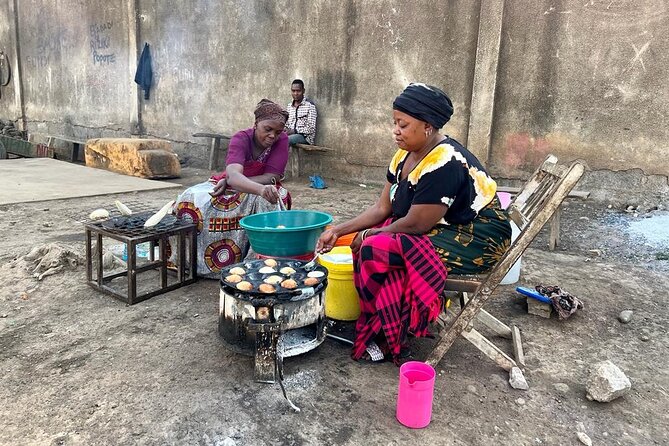
Food is included, with sweet and salty items purchased from different vendors. The supplied details do not name every dish, so you should not book expecting a fixed menu or a particular famous snack. Think of the food as a series of local tastes woven into the walk.
That variety is one of the tour’s strongest features. Instead of one large meal, you get several small opportunities to try what is available along the route. A sweet bite can be followed by a salty one, and the guide can connect what you are eating to local habits and everyday life.
If food is your main reason for booking, ask the operator ahead of time about ingredients and dietary needs. The tour description confirms that tastings are included, but it does not promise vegetarian, vegan, halal, allergy-free, or gluten-free options. Do not assume that a street-food stop can adjust every dish.
The food also gives you a natural way to interact. Asking what something is, how it is prepared, or when it is normally eaten can lead to a useful exchange with the guide and vendors. You are not just checking dishes off a list. You are using food as a doorway into the neighborhood.
Same country, a completely different kind of safari:
- Balloon Safari & Bush Breakfast in Serengeti – Miracle Experience
★ 5.0 · 1,646 reviews - Tanzania Classic – 7 Days
★ 5.0 · 1,151 reviews - 4 Days Group Camping Safari
★ 5.0 · 1,101 reviews - 5 Days Group Camping Safari
★ 5.0 · 730 reviews
Jackson, Given, and the human side of the tour
Jackson and Given are named as guides associated with the experience. Their role is more than pointing out buildings. They explain local culture and everyday life, answer questions, and help you engage with people in the area.
The strongest praise attached to the tour centers on the guides’ friendly and helpful approach. That matters on a neighborhood walk, where the quality of the experience depends heavily on how clearly and respectfully the guide handles local encounters. A good guide helps you notice more without turning the community into a show.
You should still remember that guide availability can vary. The information identifies Jackson and Given, but it does not guarantee that both will lead every departure. If meeting one of them matters to you, confirm that before booking.
The group limit is 10 people. That is small enough for questions to be heard and for the guide to manage the group on foot. It also reduces the chance that the walk feels like a large procession through residential streets. If you prefer private guiding, no private option is specified, so ask the operator directly rather than assuming one is available.
What the $25 price really covers
At $25 per person, this is a modestly priced half-day activity. You receive roughly two to three hours of guiding, several food tastings, all fees and taxes, and the added benefit of supporting Jamii Imarika Foundation.
The value is strongest if you want context rather than only food. A food-focused tour with a larger menu might offer more dishes, but this walk adds access to community life, local trades, and conversations. The charitable purpose also gives the fee a wider use.
The price does not include private transportation or a tip. Since the route begins near central Arusha and ends in Sinoni, you need to think about getting to the meeting point and returning from the finish. The guide helps with the return to your hotel, but the transport cost itself is not included.
Tipping is optional. If Jackson, Given, or another guide gives you a thoughtful and engaging morning, a tip is a sensible way to show appreciation, especially since it goes directly beyond the listed tour price.
Timing, walking effort, and group comfort
The advertised duration is about two to three hours, with the main walk described as lasting around two and a half hours. That is long enough to feel substantial but short enough to fit around other Arusha plans.
The experience is on foot, and the details do not specify the exact distance, surface, elevation, or number of food stops. Wear comfortable walking shoes and bring water. A light day bag is more practical than bulky luggage, especially when moving through working streets.
Most people can participate, and service animals are allowed. The tour is near public transportation, which helps with reaching the start. Still, the provider does not give a detailed accessibility description, so anyone needing step-free access, a particular pace, or seating breaks should confirm those points before booking.
Weather can affect the departure. If poor weather causes cancellation, you are offered another date or a full refund. The tour also requires a minimum number of participants. If that minimum is not met, you receive the choice of a different date or experience, or a full refund.
Who will get the most from this experience
I would choose this tour if you want to see Arusha beyond the main center and are comfortable with a simple walking format. It suits people who ask questions, enjoy trying unfamiliar foods, and want their spending to support a local organization.
It is also a good fit for a first visit. The guide can help you understand what you are seeing before you encounter similar foods, businesses, and community patterns elsewhere in Tanzania. Families may appreciate the educational side, though parents should decide if their children are comfortable with a two-and-a-half-hour neighborhood walk and unfamiliar food.
This is less suitable if you want a polished culinary class, a guaranteed dish list, air-conditioned transport, or a return to the exact starting point. It may also disappoint anyone who expects a sightseeing route built around major monuments. Sinoni’s appeal is its everyday setting.
Booking advice and cancellation terms
The tour is often reserved well ahead of time, with an average booking lead of 42 days. That does not guarantee that every date sells out, but it is a useful warning for anyone planning a Tanzania trip months ahead. Book early if the timing fits your itinerary.
You can cancel for a full refund up to 24 hours before the local start time. Cancellations or changes made within 24 hours are not refunded or accepted. Because weather and minimum group size can affect departure, keep some flexibility in your Arusha schedule.
The rating is 4.8 from 12 published ratings, with 100 percent recommending it. That is a strong signal, though the sample is still small. The clearest practical takeaway is that the guides and personal neighborhood contact are central to the experience.
Should you book the Sinoni community walk?
Book it if you want a small-group, low-cost introduction to local Arusha life and you like the idea of tasting food in the places where daily work happens. The nonprofit model adds real value, and the combination of Jackson or Given, food vendors, local trades, and community stories makes this more than a basic snack stop.
Skip it if you need a fixed menu, private transport, a fully accessible route, or a formal attraction with predictable conditions. For the right person, though, $25 buys a personal look at Sinoni and helps fund useful local programs. I would place it early in an Arusha visit, leave a little time after the finish, and arrive ready to walk and ask questions.
FAQ
Where does the tour start?
The tour starts at Kajo Art Gallery near the Maasai Market on Tanesco Road in Arusha, Tanzania.
Where does the tour end?
The walking tour ends in Sinoni at the listed location JM7M+65W, Arusha. The guide helps you return to your hotel afterward.
How long does the tour last?
The experience lasts about two to three hours, with the main walk scheduled for approximately two hours and 30 minutes.
What food is included?
Sweet and salty food from different local vendors is included. Specific dishes are not listed.
Is transportation included?
Private transportation is not included. The starting point is near public transportation, and the guide helps you get back to your hotel after the walk.
How many people can join?
The tour has a maximum of 10 participants.
What happens if I cancel?
You receive a full refund if you cancel at least 24 hours before the local start time. Cancellations or changes within 24 hours are not refunded or accepted. If poor weather or an insufficient number of participants cancels the tour, you are offered another date or experience, or a full refund.
More Walking Tours in Arusha
- Arusha Guided Walking City Tour, Culture, Lifestyle & History
★ 5.0 · 150 reviews - 4 Days lodge safari Tarangire , Ngorongoro crater & Walking
★ 5.0 · 39 reviews - Tanzania – Arusha NP – Private Guided 4×4 Safari – Game Drive & Walking
★ 5.0 · 30 reviews - Private Walking Tour with Giraffes
★ 5.0 · 18 reviews
Just added around Arusha
- 8 Days Serengeti Migration safari★ 5.0 · 11 reviews
- tarangire, ngorongoro & lake manyara park 3 days private tour★ 5.0 · 11 reviews
- tarangire & ngorongoro 2 days tour★ 5.0 · 14 reviews
- Mt. Kilimanjaro: Shira plateau to Cathedral point 3872m Day hike★ 5.0 · 7 reviews
- serengeti, ngorongoro & tarangire 4 days private tour★ 5.0 · 18 reviews
- serengeti & ngorongoro 3 days private tour★ 5.0 · 15 reviews
- 2 Days Tanzania Midrange Group Join Safari★ 5.0 · 7 reviews
- climb the KILIMANJARO via Lemosho route★ 5.0 · 4 reviews
Walking Tours, compared.


3 Hours Private Stone Town walking Tour with Guide
Read our review →
Stone Town Historical Cultural Walking Guided Tour
Read our review →
Stonetown: Food Markets and Street Food Walking Tour
Read our review →
Arusha Guided Walking City Tour, Culture, Lifestyle & History
Read our review →

Browse the lists this tour appears in