
Reviewed · WALKING TOURS
Private Walking Tour with Giraffes
Walking beside a giraffe is the memorable part here, but the bigger surprise is the lesson behind it. At the Arusha Giraffe Centre, you do not simply watch animals from a platform. You learn how giraffe protection, farming, soil health, and local communities fit together, then walk out to see the animals at close range.
I like two things right away: the private format, which gives you room to ask questions, and the center’s focus on practical conservation rather than animal photos alone. Guides such as Jerome, Nic, and Nick have experience in wildlife, teaching, and agriculture, so the talk can reach well beyond giraffe facts.
The main drawback is the short visit. The activity lasts about 1 hour 20 minutes, with the guided center visit listed at about 1 hour 15 minutes, so this is a focused stop rather than a full safari day. You also need to make your own way to the center outside Arusha.
Key points to know before you book
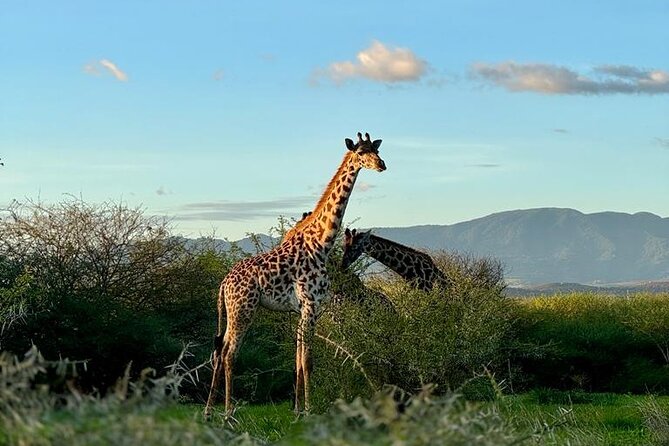
- Giraffes on foot: You can walk through the sanctuary and get remarkably close to the giraffes, sometimes within about five feet.
- Conservation with a wider purpose: The education session covers wildlife, the environment, and local communities, including the center’s Eco-Ag approach.
- Private attention: Only your group takes part, making it easier to ask detailed questions and set the pace.
- Morning or afternoon choice: You can fit the visit around other plans near Arusha.
- Good for families: The close encounter and clear educational focus can work well with children.
- Weather matters: Poor weather can lead to a new date or a full refund.
Walking with giraffes outside Arusha
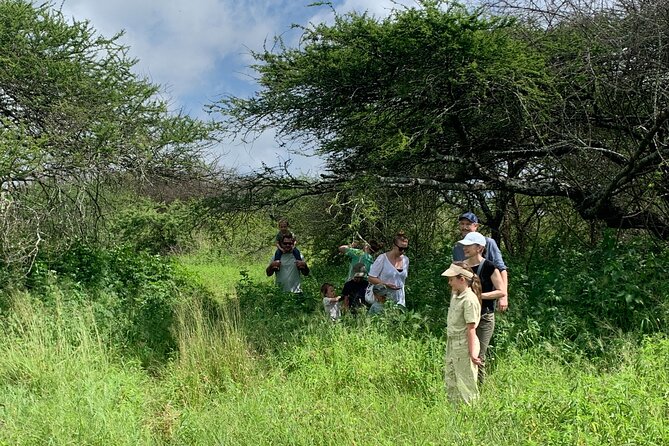
This experience gives you a different kind of wildlife encounter. You are not sitting in a vehicle waiting for an animal to appear across a wide plain. You walk through the Arusha Giraffe Centre with a guide and approach giraffes in a controlled sanctuary setting.
That difference matters. A vehicle safari offers a wider range of animals and a much larger setting. This visit concentrates on one remarkable species and the work needed to protect it. You get time to notice the giraffes’ size, movement, and calm behavior instead of treating the sighting as one quick stop on a long game drive.
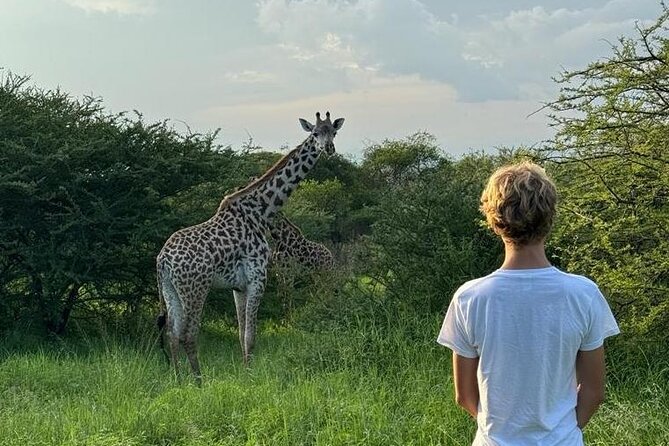
The close distance is the emotional high point. One account describes walking to within about five feet of the giraffes, and other accounts describe literally walking with them. The exact distance will depend on the animals and the guide’s judgment, so do not expect to touch or feed them. The value comes from being near them while respecting their space.
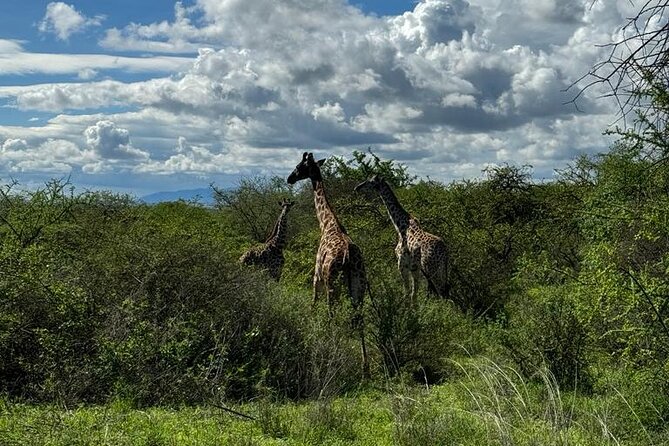
You may see the giraffes moving through the center’s natural setting rather than standing in a bare enclosure. During the rainy season, the area can look especially green. That can make the walk more pleasant, though the experience requires good weather and may be rescheduled if conditions are poor.
A few more Arusha trips to weigh up
- Arusha Guided Walking City Tour, Culture, Lifestyle & History
★ 5.0 · 150 reviews - 4 Days lodge safari Tarangire , Ngorongoro crater & Walking
★ 5.0 · 39 reviews - Tanzania – Arusha NP – Private Guided 4×4 Safari – Game Drive & Walking
★ 5.0 · 30 reviews
The education center comes first
The visit begins with a guided session at the education center. This is not filler before the animal encounter. It explains the center’s view that wildlife, the environment, and the community must be considered together.
That is a useful starting point for understanding conservation in Tanzania. Protecting giraffes is not only about keeping animals in a safe place. It also involves the condition of the land and the way people use it. The center presents Eco-Ag, its approach to agriculture and land regeneration, as part of that solution.
You will hear about the pressure facing giraffe populations and the link between farming methods and habitat loss. The center also places strong emphasis on local children and education. That point gives the visit a forward-looking purpose: the people who grow up near wildlife will play a major role in deciding how that wildlife survives.
I find this part especially valuable for anyone who wants more than a photograph. You leave with a clearer idea of why a small conservation project might work with farmers, schools, and communities instead of focusing on animals alone.
The quality of the discussion can vary with your guide, but the experience has included guides with backgrounds in teaching and wildlife studies. Jerome has been praised for his grasp of giraffes, other animals, and land regeneration. Nic has been described as explaining the work with enthusiasm, while Nick has led detailed talks about agriculture and the center’s purpose.
The giraffe walk and what makes it special
After the education session, you head into the center’s outdoor area for the walking portion. The tour description calls this a walk around a sanctuary, and the close contact is the reason most people add it to an Arusha stay.
Giraffes can seem almost unreal when seen from far away. At close range, their height becomes the main event. You notice the long legs, the patterned coat, and the slow, careful way they move. A guide can help you understand their behavior and point out details you might miss if you were simply taking pictures.
The setting also changes with the season. In rainy months, the grounds may be lush and green. In drier conditions, you may find a more open and dusty feel. The center’s purpose is not to recreate a major national park, so you should keep your expectations in the right place. This is a small, focused conservation visit, not a substitute for the Serengeti, Ngorongoro, or Tarangire.
That limitation is also its strength. You do not spend hours driving between distant sightings. You spend a concentrated period with giraffes and a guide who can answer your questions. For a family, a first-time safari visitor, or someone with only a spare morning or afternoon, that can be a smart use of time.
Why the private format earns its place
The $55 price is easier to judge once you understand what it includes. You are paying for admission, a guided education visit, and a private walking experience for your own group. You are not joining a large shared activity where the guide must divide attention among strangers.
A private tour is useful here because questions are part of the experience. You might want to ask about giraffe conservation, breeding, rewilding, farming, or the center’s work with children. The private setting lets you stop and ask without worrying that you are holding up a busload of people.
It can also help families. Children may ask direct questions or need a slower pace. The close encounter gives them something concrete to connect with, while the education session explains why the animals need protection. The tour is open to anyone, but a moderate level of physical fitness is required, so you should be comfortable walking for the duration.
At the same time, $55 is not a bargain if you want a long safari or several species. This is a short specialist experience. You are paying for access to a conservation center, personal guiding, and a carefully framed giraffe encounter. If those are your priorities, the price is reasonable. If you want a full day in the bush, put the money toward a longer safari instead.
The activity is often booked well ahead, with an average booking lead time of about 53 days. That suggests you should not leave it until the last moment, especially if your Arusha schedule has only one open morning or afternoon.
Same country, a completely different kind of safari:
- Balloon Safari & Bush Breakfast in Serengeti – Miracle Experience
★ 5.0 · 1,646 reviews - Tanzania Classic – 7 Days
★ 5.0 · 1,151 reviews - 4 Days Group Camping Safari
★ 5.0 · 1,101 reviews - 5 Days Group Camping Safari
★ 5.0 · 730 reviews
Getting there and planning your time
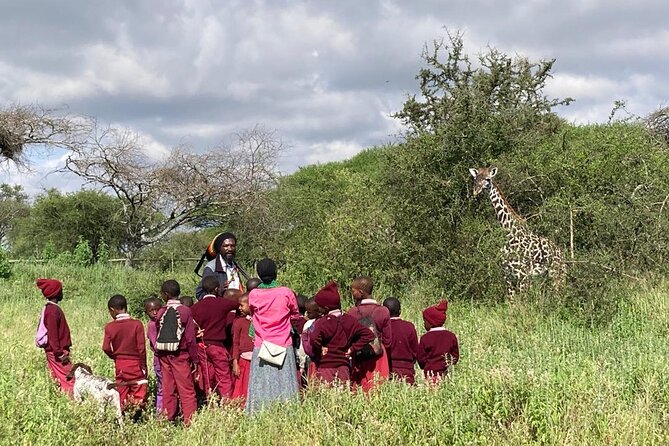
The meeting point is the Arusha Giraffe Centre at 21 Giraffe Centre Road in Moita, Tanzania. The activity ends back at that same point.
No pickup or transport from an Arusha hotel is specified, so plan your route before booking. The approach road may feel rough or surprising, and one description calls it all-terrain. Treat the journey as part of the practical planning: allow enough time, confirm directions, and do not assume a city-center meeting point.
The tour offers morning and afternoon departures. Morning is a good choice if you want to continue with other sightseeing later. Afternoon may work better after a relaxed start or alongside another nearby activity. One possible pairing is a visit to the Cultural Centre for a fuller day close to Arusha, though you will need to arrange the timing and transport yourself.
The duration is listed as approximately 1 hour 20 minutes. The center portion is described as about 1 hour 15 minutes, so allow a little flexibility for arrival, introductions, and the transition from the education talk to the walk.
Bring practical outdoor clothing and shoes suitable for walking. The supplied details do not specify a dress code or equipment list, so avoid assuming that food, drinks, transport, or special safari gear are included. A mobile ticket is provided, and confirmation arrives when you book.
Conservation, breeding, and rewilding
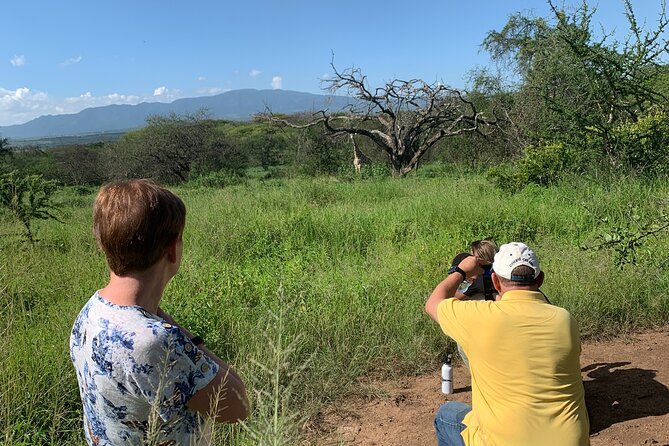
The center’s conservation message gives the visit more substance. Its work includes giraffe care and efforts to prepare animals for life outside the farm or center. The focus on rewilding means the animals are presented as part of a longer effort, not simply as permanent display animals.
You will also hear about regeneration of the land. The Eco-Ag idea connects farming with the health of the soil and surrounding habitat. That is important because wildlife protection cannot succeed if nearby land use continues to remove the food and space animals need.
The center has been developed over many years by people who have dedicated themselves to the project. Nat and Nick are associated with the operation, and visitors can sometimes meet the people directly involved in its growth. That personal element helps explain why the education session feels tied to a working project rather than a generic wildlife talk.
Keep the claims in proportion. A short visit cannot explain every conservation challenge facing giraffes in Tanzania. It can, however, show you one local response and help you see how farming, education, and animal protection connect.
How this compares with a standard safari stop
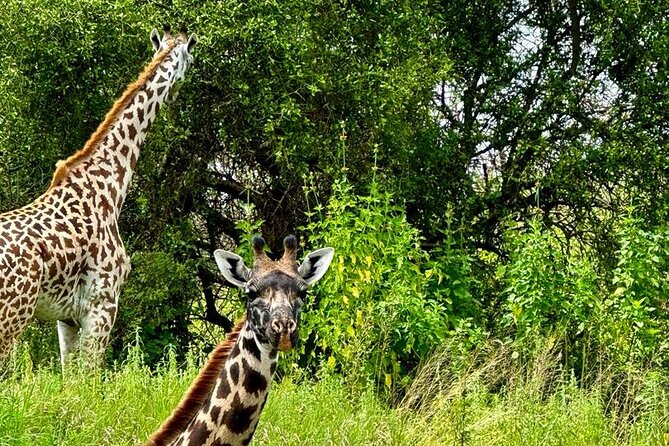
If this is your only wildlife activity in Tanzania, you should know what you are choosing. The Arusha Giraffe Centre offers closeness and education. A national park safari offers scale, unpredictability, and a wider mix of species.
Here, the giraffes are the clear focus, and the center provides a controlled setting for a walking encounter. You are much more likely to spend meaningful time near giraffes than you would during a general game drive, where sightings depend on the day and the animals’ movements.
You also get more direct contact with the guide. A private visit encourages questions, and the education center gives you a framework for understanding what you see. The tradeoff is that you will not receive a broad safari experience with lions, elephants, zebras, or other animals unless they are part of another activity.
For many people, the best plan is to treat this as a complement to a safari, not a replacement. It makes a particularly good short outing before or after a longer wildlife trip.
Who will enjoy this most
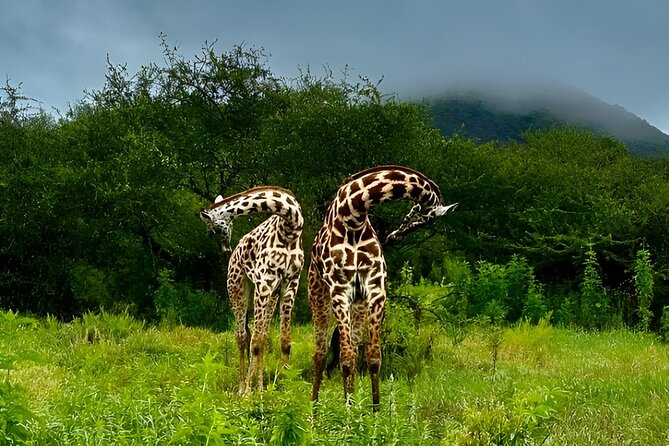
I would choose this tour for you if you want a close giraffe encounter but also care about the reason the center exists. It suits people who enjoy asking questions, learning about local projects, and seeing conservation at a human scale.
Families are a strong match. The giraffes provide instant excitement, while the education talk gives children a simple way to understand habitat protection and responsible farming. The private format also avoids the pressure of keeping up with a large group.
It should appeal to photographers who value close animal portraits, but photography is not the sole purpose. You will get the most from the visit if you pay attention to the guide’s explanation and observe the animals calmly.
You may want to skip it if your time in Arusha is extremely tight, your mobility makes walking difficult, or your main goal is a full safari with many species. The center requires moderate physical fitness, and the weather can affect the schedule.
Small details that affect the experience
The activity is suitable for anyone, but the physical requirement should not be ignored. This is a walking visit, not a seated viewing session, and the grounds may feel more demanding after rain or in rough conditions.
The good-weather rule is practical rather than alarming. If conditions force cancellation, you can choose another date or receive a full refund. If you cancel yourself, you must do so at least 24 hours before the start time for a full refund. Changes made within 24 hours are not accepted, and late cancellations are not refunded.
The private arrangement is confirmed at booking, and only your group participates. That makes this a better fit for couples, families, or small parties who want a quieter experience and the freedom to guide the conversation.
Should you book the Arusha Giraffe Centre walk?
Book it if you want to stand close to giraffes, have a private guide, and understand the conservation work behind the encounter. The strongest part is the combination of a real animal experience with clear discussion of land regeneration, farming, education, and community needs.
I would not book it as your only safari in Tanzania, and I would not expect a long half-day outing from the 80-minute schedule. But as a focused addition to time in Arusha, it offers something distinctive for $55 per person.
Choose a morning or afternoon slot, plan your own transport to Moita, wear shoes for walking, and leave room for the weather. If those details suit your plans, this is a thoughtful and memorable way to meet Tanzania’s giraffes.
FAQ
Where does the private giraffe walking tour start?
It starts at the Arusha Giraffe Centre, 21 Giraffe Centre Road, Moita, Tanzania.
Where does the activity end?
The tour ends back at the Arusha Giraffe Centre meeting point.
How long does the experience last?
The activity lasts approximately 1 hour 20 minutes. The guided education-center portion is listed as about 1 hour 15 minutes.
Is this a private tour?
Yes. Only your group participates in the activity.
Can I choose a morning or afternoon time?
Yes. The experience offers morning and afternoon tour options.
What does the visit include?
It includes admission and a guided visit through the education center, followed by a walking giraffe safari around the sanctuary.
How close can I get to the giraffes?
The experience allows close viewing on foot. An account describes walking within about five feet of the giraffes, but the exact distance depends on the animals and the guide.
What happens if the weather is poor?
The experience requires good weather. If it is canceled because of poor weather, you can receive a full refund or choose a different date.
Just added around Arusha
- 8 Days Serengeti Migration safari★ 5.0 · 11 reviews
- tarangire, ngorongoro & lake manyara park 3 days private tour★ 5.0 · 11 reviews
- tarangire & ngorongoro 2 days tour★ 5.0 · 14 reviews
- Mt. Kilimanjaro: Shira plateau to Cathedral point 3872m Day hike★ 5.0 · 7 reviews
- serengeti, ngorongoro & tarangire 4 days private tour★ 5.0 · 18 reviews
- serengeti & ngorongoro 3 days private tour★ 5.0 · 15 reviews
- 2 Days Tanzania Midrange Group Join Safari★ 5.0 · 7 reviews
- climb the KILIMANJARO via Lemosho route★ 5.0 · 4 reviews
Walking Tours, compared.


3 Hours Private Stone Town walking Tour with Guide
Read our review →
Stone Town Historical Cultural Walking Guided Tour
Read our review →
Stonetown: Food Markets and Street Food Walking Tour
Read our review →
Arusha Guided Walking City Tour, Culture, Lifestyle & History
Read our review →


Browse the lists this tour appears in