
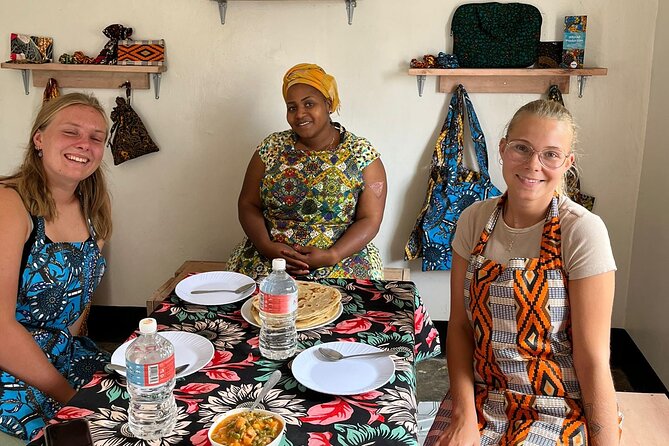
Reviewed · COOKING CLASSES
Cooking and Sewing & Jewelry Workshops in Arusha
The best part of this Arusha workshop is the direct connection with the women of WEHAF, an organization that supports widows, children, and people affected by HIV/AIDS. You are not just watching a demonstration. You are learning beside local women at their mama center, daycare, or kitchen.
I like the choice between making chapati or pilau and creating jewelry while a mama sews an item for you. I also like the private format, since your group takes part on its own rather than joining a large crowd. The main point to check before booking is the pricing detail: the experience is listed at $33, but the workshop itself is marked as not included.
Key points to know
- Choose your craft: Pick the cooking workshop or the sewing and jewelry option.
- Meet Glory: An English-speaking guide introduces you to the center and explains the activities.
- Cook with local mamas: Learn the spices and steps behind Tanzanian chapati or pilau, then eat lunch together.
- Make a Maasai jewelry piece: The sewing and jewelry option includes hands-on jewelry work with a local Maasai mama.
- Support practical skills: Your visit connects with WEHAF’s work in training women and caring for children.
- Allow about three hours: The activity begins and ends at the meeting point, with free cancellation up to 24 hours ahead.
A community workshop with a useful purpose
WEHAF means Widows Encouragement & HIV/AIDS Foundation. Its work focuses on health, social justice, and economic empowerment for widows, children, and people affected by HIV/AIDS.
That mission gives the workshop more weight than a simple souvenir stop. You see the mama center, learn how women are building practical skills, and visit the daycare where their children learn and play. The setting helps you understand the social purpose behind the products and classes.
I like experiences that let you meet people through an ordinary activity. Cooking, sewing, and jewelry making create an easy reason to sit down together. You do not need specialist skills, and you do not need to know much about Tanzanian food or Maasai beadwork before arriving.
The activity lasts about three hours. That is long enough for a proper lesson and conversation, but short enough to fit around other plans in Arusha. It works well as a half-day outing rather than a major day trip.
A few more Arusha trips to weigh up
- NGO Lifted Strong – Traditional Tanzanian Cooking Class
★ 5.0 · 39 reviews - Arusha: Traditional Tanzania Cooking Class & Food Market Tour
★ 5.0 · 34 reviews - Arusha: Traditional Tanzania Cooking class& Food Market Tour
★ 4.9 · 12 reviews
Finding the meeting point in Arusha
The stated meeting point is Larry V Garden on Olkereyan Bypass Road in Arusha. The welcome section also says the group meets at Pillars Bar & Lounge, close to the WEHAF organization, before walking or continuing to the center.
Because two meeting locations are named, I would confirm the exact starting spot when you book. The activity ends back at the meeting point, so you are not left arranging a second pickup point.
The tour offers a mobile ticket, which is handy if you are carrying your booking on your phone. It is also near public transportation, and service animals are allowed. Since this is a private activity, only your own group takes part, which should make the workshop more relaxed and easier to follow.
The experience provider is the Wehaf Organization. Confirmation is provided at booking, so keep the confirmation details available on the day.
Your welcome with Glory and the WEHAF mamas
At the start, Glory, the English-speaking guide, introduces you to WEHAF and shows you the mama center. This first look matters because it puts the workshop in context.
The women at the center teach sewing and cooking as ways to build income and practical independence. You also see the daycare connected with the organization, where the children of the women can learn and play while their mothers work or train.
This is not presented as a formal museum visit. It is a working community space, and the people you meet are part of its daily activity. You may find the pace more personal and less polished than a commercial cooking school or craft studio. That is part of the appeal, but it also means you should arrive ready for a hands-on local setting rather than a highly staged production.
After the introduction, you choose one of two workshop paths. The choices are different enough that it is worth deciding what you want before you arrive.
Cooking Tanzanian chapati or pilau
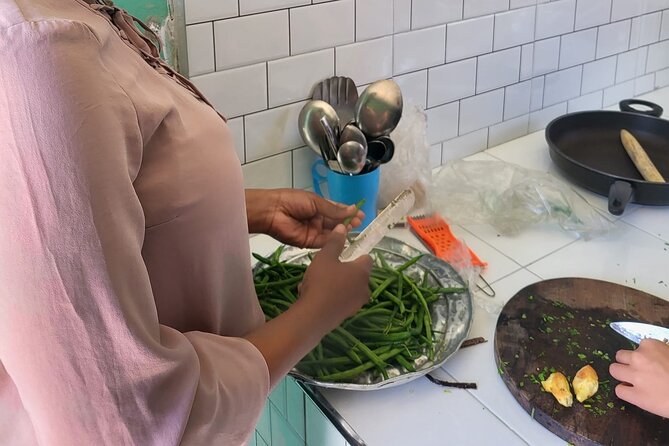
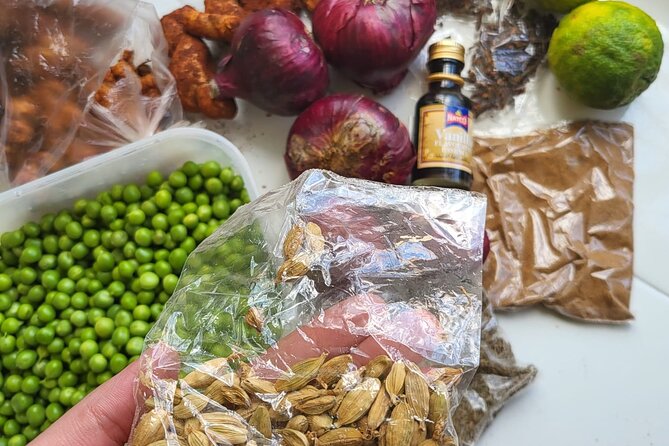
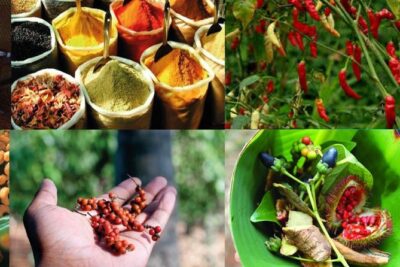
The cooking option takes you to the kitchen at the daycare. Glory explains the spices used in Tanzanian dishes before the mamas begin the lesson.
You then learn, step by step, how to make either chapati or pilau. Chapati is a flatbread, while pilau is a spiced rice dish. The description does not specify which ingredients or spices will be used on your particular day, but the focus is clearly on the local seasoning and preparation methods.
The strength of this option is participation. You are not simply handed a finished plate. You follow the process with the women who know the dishes, then sit down for a local lunch together.
That shared meal is an important part of the experience. Food gives you time to talk, compare techniques, and ask questions in a natural way. If you enjoy cooking at home, you will likely get more from this choice than from a quick tasting.
There is also a surprise at the end of the cooking session. No details are given, so it is best to treat it as an extra rather than a promised highlight.
The cooking class is a good choice if you want a clear activity with an edible result. It may also suit families or mixed-age groups, although the available information does not give a minimum age or specific child arrangements. Ask the provider if those details matter to your plans.
Same country, a completely different kind of safari:
- Balloon Safari & Bush Breakfast in Serengeti – Miracle Experience
★ 5.0 · 1,646 reviews - Tanzania Classic – 7 Days
★ 5.0 · 1,151 reviews - 4 Days Group Camping Safari
★ 5.0 · 1,101 reviews - 5 Days Group Camping Safari
★ 5.0 · 730 reviews
Sewing and jewelry with local makers
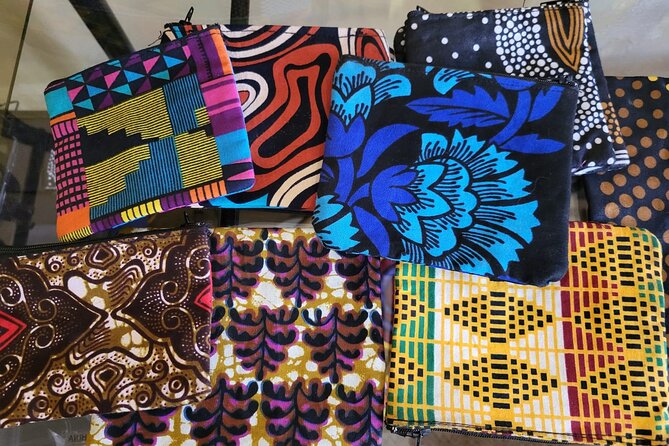
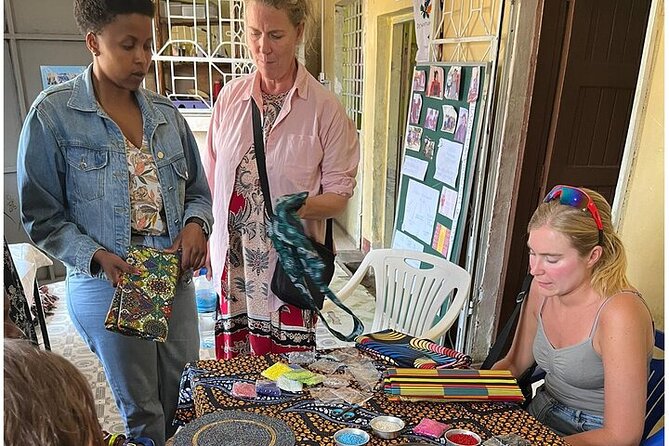
The second choice combines sewing and jewelry making. You return to the mama center with Glory and look at items from the collection.
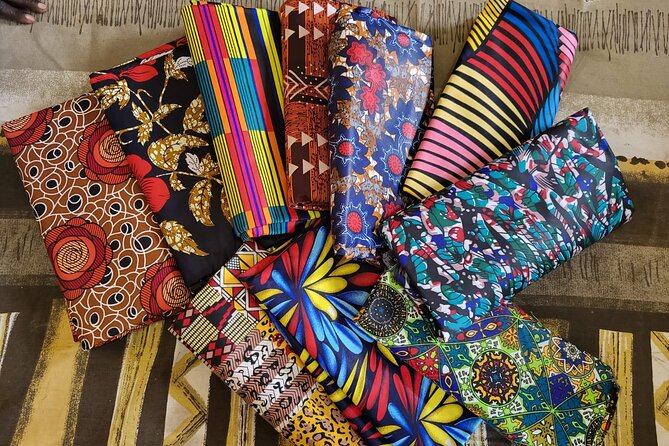
The mamas can sew an item for you. You choose the item and fabric, then one of the women begins sewing it. The supplied details do not promise that you will operate the sewing machine or complete the garment yourself, so think of this as a custom-made souvenir paired with a hands-on jewelry lesson.
While your chosen item is being sewn, you learn to make your own piece of jewelry from a local Maasai mama. This gives the option two distinct parts: a made-to-order textile item and a craft you work on directly.
The jewelry activity may appeal most if you want something small, personal, and easy to pack. The sewing element is useful if you like fabric and want a practical item rather than a standard shop purchase.
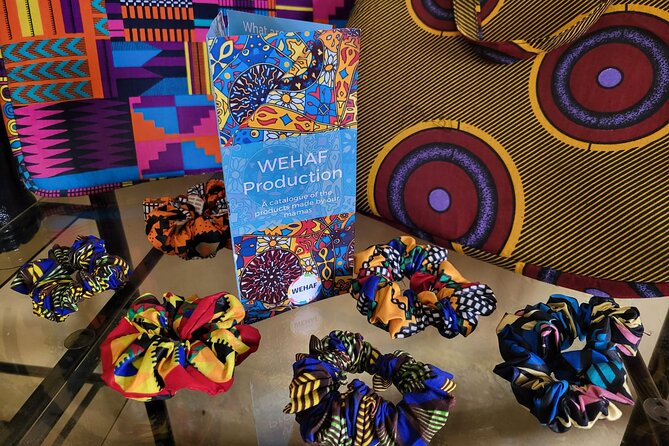
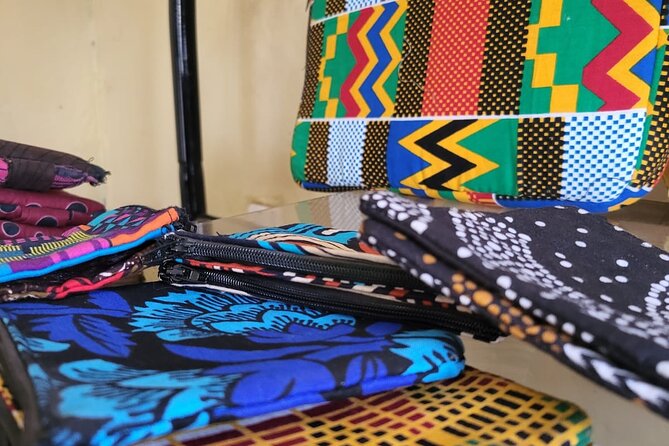
The collection includes tote bags, and one particularly appealing detail is that you may receive beautiful tote bags made by the mamas who are learning to sew. Do not assume a particular bag or finished item is included for every booking, though. The experience information says you choose an item and fabric, so ask what the current collection and costs are before settling on your selection.
What makes the handmade souvenirs worthwhile
A souvenir carries more meaning when you know who made it and how. At WEHAF, you can connect the finished item with a specific workshop, a particular fabric choice, and the women’s training program.
That does not mean every product will be perfectly finished. A learning center may have uneven results, and the sewing timetable may depend on the item you select. I would view this as part of buying directly from a community program, not as a replacement for a high-end tailor.
The jewelry lesson also gives you a skill to take home. Even if the final piece is simple, you made it with guidance from a local Maasai mama rather than choosing it from a display shelf.
This option is especially suitable if you prefer crafts to cooking, want a keepsake that lasts, or are looking for a quieter activity. The cooking class ends with a shared lunch, while the sewing and jewelry session centers more on making and selecting items.
The price and what you should confirm
The listed price is $33 per person. For a three-hour private workshop, that can be a fair price if the fee covers the instruction and materials involved in your chosen activity.
However, the information also lists coffee or tea and a snack as included, while stating that either the cooking or sewing and jewelry workshop is not included. That is an important ambiguity. Before paying, confirm whether $33 covers the visit and refreshments only, or whether the workshop has an additional charge.
Ask about the cost of ingredients for cooking, the fabric and sewing item, and the materials for the jewelry piece. Also ask if the lunch made during the cooking option is part of the workshop price. These questions will help you compare the real cost with other activities in Arusha.
The private format adds value. You are not paying for a large group tour with a fixed script. You have more room to ask Glory questions and spend time with the mamas. The strongest value, though, is the direct support for a local organization working in training, childcare, and economic empowerment.
Who will enjoy this Arusha activity
I would recommend the workshop to you if you want a community-based activity that feels different from a standard city tour. It suits people who like meeting local makers, trying a practical skill, and taking home something connected to the place.
The cooking option is best for:
- People interested in Tanzanian food and spices
- Visitors who enjoy a shared meal
- Couples, families, or small private groups wanting an easy activity
- Home cooks who want to learn chapati or pilau
The sewing and jewelry option is best for:
- Anyone who prefers crafts to food preparation
- Shoppers who want a handmade local souvenir
- People interested in textiles, fabric, and Maasai jewelry
- Visitors who want a small item they can make themselves
You may want to skip it if you only want sightseeing or if you need a tightly timed itinerary. Craft work can take its own pace, and the final item, fabric choices, and workshop costs should be confirmed ahead of time.
The activity is also not a substitute for a wider introduction to Arusha. It focuses on WEHAF and its community work, not on major city sights, wildlife, or Tanzanian history.
Timing, transport, and booking advice
Plan for roughly three hours from start to finish. The experience begins and ends at the meeting point, and it is near public transportation. The information does not state that hotel pickup is provided, so do not assume transport from your accommodation is included.
The activity is often booked about 34 days ahead. That suggests you should reserve early if your Arusha schedule is fixed, especially because private activities have less flexibility than large group departures.
You can cancel for a full refund if you do so at least 24 hours before the start time. Changes or cancellations inside that 24-hour window are not accepted for a refund. The cut-off follows Arusha local time, so check the local clock if your booking is made from another country.
Bring a charged phone for the mobile ticket. Wear something comfortable for sitting, handling food, or working with craft materials. The available information does not give a dress code or equipment list, so confirm whether any special clothing or materials are needed.
Should you book the WEHAF workshop?
Book this experience if you want a small, personal encounter with local women and a practical activity in Arusha. The warm welcome, English-speaking guidance from Glory, cooking lesson, sewing work, and Maasai jewelry session offer more contact than a quick market visit.
The clearest choice is simple. Pick cooking if you want spices, chapati or pilau, and lunch. Pick sewing and jewelry if you want a handmade item and a craft you can take home.
I would not book until you clarify the workshop fee, because the $33 price and the note about the workshop not being included do not fully match. Once that is settled, this is a thoughtful three-hour option for supporting WEHAF while doing something useful, social, and distinctly local.
With a 4.9 rating from 14 reviews and a 100 percent recommendation rate, the experience has made a strong impression so far. The praise centers on the fun of creating jewelry, the handmade tote bags, and the warm welcome. Those are good reasons to choose it, as long as you value community contact over polished tourist production.
FAQ
Where does the workshop start?
The stated meeting point is Larry V Garden on Olkereyan Bypass Road in Arusha. The welcome information also refers to Pillars Bar & Lounge near the WEHAF organization, so confirm the exact start location when booking.
How long does the experience last?
The workshop lasts approximately three hours and ends back at the meeting point.
Is the activity private?
Yes. Only your group participates in the activity.
Who leads the workshop?
Glory is the English-speaking guide who introduces you to WEHAF and accompanies you through the activity. The women of WEHAF lead the cooking and sewing instruction, and a local Maasai mama teaches the jewelry making.
What are the workshop choices?
You can choose the cooking workshop, which covers chapati or pilau, or the sewing and jewelry workshop, which includes selecting an item and fabric, having a mama sew it, and making your own jewelry piece.
Is food included?
Coffee or tea and a snack are listed as included. The cooking option includes a local lunch after making chapati or pilau, but the pricing information says the cooking or sewing and jewelry workshop is not included. Confirm exactly what your payment covers before booking.
Can I cancel for a full refund?
Yes. You can cancel at least 24 hours before the local start time for a full refund. Cancellations or changes made less than 24 hours before the start time are not refunded.
Just added around Arusha
- 8 Days Serengeti Migration safari★ 5.0 · 11 reviews
- tarangire, ngorongoro & lake manyara park 3 days private tour★ 5.0 · 11 reviews
- tarangire & ngorongoro 2 days tour★ 5.0 · 14 reviews
- serengeti, ngorongoro & tarangire 4 days private tour★ 5.0 · 18 reviews
- serengeti & ngorongoro 3 days private tour★ 5.0 · 15 reviews
- Mt. Kilimanjaro: Shira plateau to Cathedral point 3872m Day hike★ 5.0 · 7 reviews
- 2 Days Tanzania Midrange Group Join Safari★ 5.0 · 7 reviews
- climb the KILIMANJARO via Lemosho route★ 5.0 · 4 reviews
Cooking Classes, compared.
Half-Day Kuza Cave Swimming Adventure and Cooking Class
Read our review →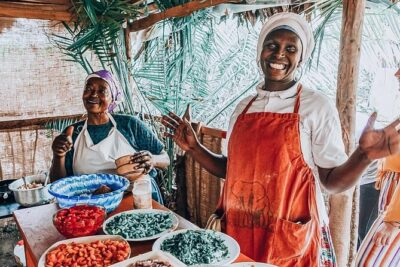
NGO Lifted Strong – Traditional Tanzanian Cooking Class
Read our review →
Traditional Tanzania Cooking Class & Food Market Tour
Read our review →
Mnemba Dolphin Tour, Clear Kayak, Cooking Class, Horse Riding
Read our review →
Traditional Zanzibar Cooking Class including Spice Tour
Read our review →
A private half day spice farm with a cooking lesson
Read our review →Browse the lists this tour appears in