
Reviewed · LEMOSHO ROUTE CLIMBS
A Definitive Guide For the 7-day Kilimanjaro’s Lemosho Route 2025
The best reason to choose this 7-day Lemosho Route is its gradual climb. You get more time to adjust to altitude than on shorter itineraries, while crossing five distinct mountain zones on the way to Kilimanjaro’s 19,345-foot summit. The western approach also gives you broad views across the Shira Plateau before the route joins busier trails.
I like the longer profile and the practical package. The extra acclimatization day can matter on a mountain where altitude sickness is a real concern, and camping gear, meals, guides, porters, and Moshi transfers are included. I also like the human side of the operation: guides including Edwin and Moodie have been praised for steady pacing, local knowledge, encouragement, and help on summit day.
The catch is price clarity. The listed cost is $1,250 per person, but Kilimanjaro park fees are not included. You must also budget for tips, personal hiking gear, airport transfers, and hotels before and after the climb. The final summit day is demanding, and seven days is helpful for acclimatization but no guarantee of reaching the top.
Key points to know before booking
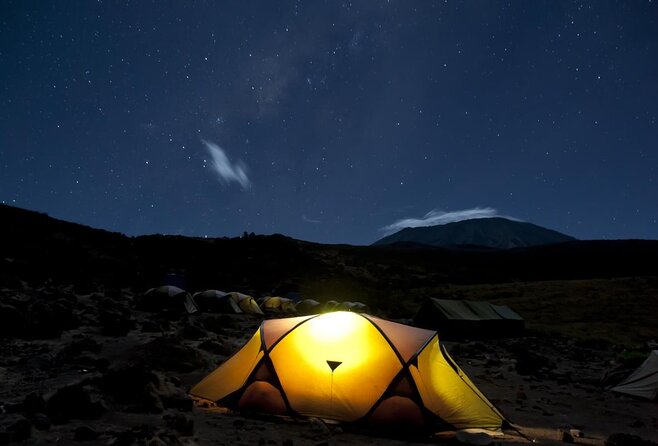
- The route begins in rainforest and ends in Arctic conditions, with five major habitat zones along the climb.
- The 7-day schedule gives your body more adjustment time than shorter Kilimanjaro programs.
- Summit day includes a 5-kilometer ascent and 12-kilometer descent, followed by a further descent to Mweka Camp.
- Camping equipment, food, guides, porters, and Moshi transfers are included, but park fees are extra.
- The Lemosho trail is scenic and relatively gradual early on, though it becomes tough above 13,000 feet.
- The best suggested trekking seasons are mid-December to March and mid-June to October, when conditions are generally more favorable.
Why the 7-day Lemosho Route makes sense
Kilimanjaro is not a technical climbing mountain on this itinerary, but it is a serious high-altitude trek. The challenge comes from thin air, long walking days, cold temperatures, and the need to keep moving when your body would rather stop.
Lemosho is a sensible choice if you want a gentler start. The route begins at Londorossi Gate on the western side of the mountain and works upward through the forest before reaching the open Shira Plateau. You do not rush straight toward the summit. Instead, the route gives you several stages in which to gain height.
That matters because altitude affects people differently. A strong hiker can still struggle, while someone with less mountain experience may adjust well. The extra day does not remove the risk, but it gives you a better setup than a compressed climb.
I also like the scenery. You move from thick rainforest to moorland, then to stark semi-desert and alpine desert before reaching the Arctic summit zone. This is not just a long walk uphill. The surroundings change sharply from day to day.
The itinerary lists a maximum group size of 50 people. That is a substantial possible group, so you should ask how many people will be in your specific hiking party and how guides are assigned. A large organized operation can offer support and backup, but it may feel less personal than a small private trek.
More Lemosho Route Climbs in Moshi:
- Kilimanjaro climb by Lemosho Route (7-day)
★ 5.0 · 651 reviews - Kilimanjaro Climbing Lemosho Route 8 Days.
★ 5.0 · 186 reviews - Kilimanjaro climb, Lemosho Route (8-day)
★ 5.0 · 148 reviews
Day 1: Londorossi Gate to Forest Camp
The first day covers about 6 kilometers, with three to four hours of hiking. You start around 7,800 feet and finish at Forest Camp near 9,500 feet, still within the rainforest zone.
This is a useful opening day because it lets you settle into the rhythm of the trek without an extreme distance. You will be walking under forest cover, and the change from town to mountain begins quickly after the transfer from Moshi to Londorossi Gate.
The included pickup from your Moshi hotel is a practical touch. At the gate, expect the start of the formal trek and a briefing before heading into the forest. Camping equipment includes tents and sleeping mattresses, while breakfast, lunch, and dinner are provided throughout the mountain portion.
The drawback is that you need to arrive prepared. Personal hiking gear is not included, and neither are hotel nights in Moshi. Confirm exactly where you will meet the company at its Mkwawa Avenue office or arrange the stated hotel pickup in advance.
Day 2: Forest Camp to Shira Camp
The second day climbs from roughly 9,500 to 11,500 feet over 8 kilometers. Walking time is listed at five to six hours, and the forest gives way to moorland.
This is where the Lemosho route starts to feel open and spacious. The trees thin out, the air becomes cooler, and you gain wider views across the mountain. The route is longer than some alternatives, but that length is part of its appeal. You are not thrown immediately into the hardest altitude.
Take the pace seriously. A guide’s job here is not to make you walk quickly. It is to help you reach the next camp with energy left. One past trip specifically praised Edwin for keeping a demanding but manageable pace and for explaining the area’s vegetation and animals. That kind of guidance is valuable early in the trek, when excitement can tempt you to walk too fast.
Day 3: Shira 1, Shira 2, and Moir Hut
The schedule identifies this as Day 3, although the supplied itinerary repeats Day 2 in its heading. The actual stage runs from Shira Camp 1 through Shira 2 to Moir Hut, covering about 14 kilometers in five to seven hours.
You climb from approximately 11,500 to 13,800 feet through moorland. This is a long day, but it also gives you valuable time at altitude. The route crosses the Shira Plateau, a broad high area that makes Lemosho especially appealing for scenery.
The distance deserves respect. Fourteen kilometers at altitude can feel much harder than the same distance at sea level. You should keep your daypack light, drink as directed by your guide, and resist racing ahead during easier sections.
Moir Hut is not a luxury hotel stop. Think of it as a high mountain camp and a place to rest before the route turns toward Lava Tower and Barranco. The surroundings become more exposed, and you will notice that the mountain is changing from moorland to a much barer environment.
A few more Moshi trips to weigh up
- Kilimanjaro climb, Machame Route (7-day)
★ 5.0 · 262 reviews - Climbing Kilimanjaro through 7 days Machame Route
★ 5.0 · 151 reviews - Private Kilimanjaro Hike 7 Day Lemosho Route
★ 5.0 · 60 reviews - 7-Day Magical Tanzania Safari -Premium High End Package
★ 5.0 · 53 reviews
Day 4: Moir Hut to Lava Tower and Barranco Camp
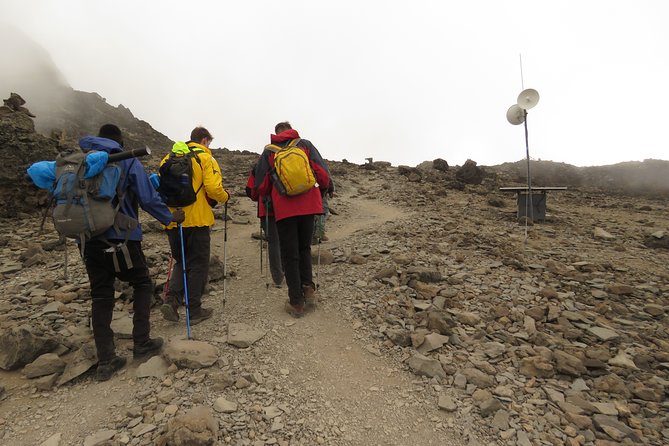
Day 4 covers about 7 kilometers and takes four to six hours. You climb toward Lava Tower at approximately 15,000 feet, then descend to Barranco Camp around 13,000 feet. The habitat is listed as semi-desert.
This high point followed by a descent is one of the most useful parts of the itinerary. You gain height during the day, spend time in thinner air, and then sleep lower than Lava Tower. That pattern supports acclimatization and explains why a route can climb higher than its overnight camp.
Do not mistake the shorter distance for an easy day. The altitude is now serious, and the air may feel thin even while walking slowly. Your guide will set the pace, and the steady, supportive approach described for guides such as Moodie is exactly what you want at this point.
Barranco is also an important staging point for the next day. You may feel the route becoming more physical, with less shade and more exposed ground. The supplied information does not promise showers or private facilities, so prepare for basic mountain camping rather than resort comforts.
Day 5: Barranco to Karanga and Barafu Camp
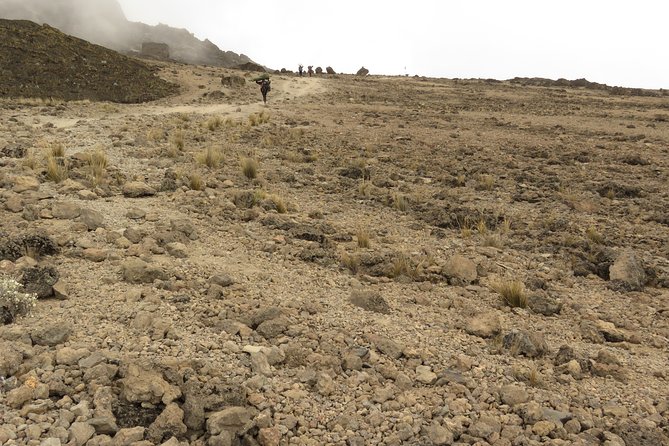
This is one of the hardest regular trekking days. You cover about 9 kilometers in eight to ten hours, climbing from roughly 13,000 feet to Barafu Camp at about 15,000 feet. The setting is alpine desert.
The long walking time reflects the terrain and altitude, not just distance. The route passes through Karanga Camp before continuing to Barafu, giving you a sense of steady progression toward the summit zone.
This day tests your patience. You may feel tired before reaching Barafu, but the goal is to arrive with enough strength for the summit attempt. Eat the meals provided, follow the guide’s pace, and organize your personal gear before resting.
The cook and support crew matter here. Food is included, and past trips have singled out the mountain cooking and the kindness of the wider team as major parts of the experience. That is not a small detail. On a long trek, regular meals and a dependable camp routine can shape how well you manage each day.
Day 6: Barafu Camp to the summit and Mweka Hut
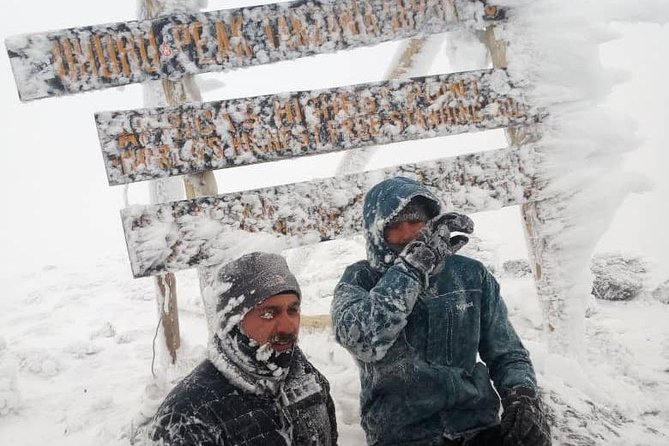
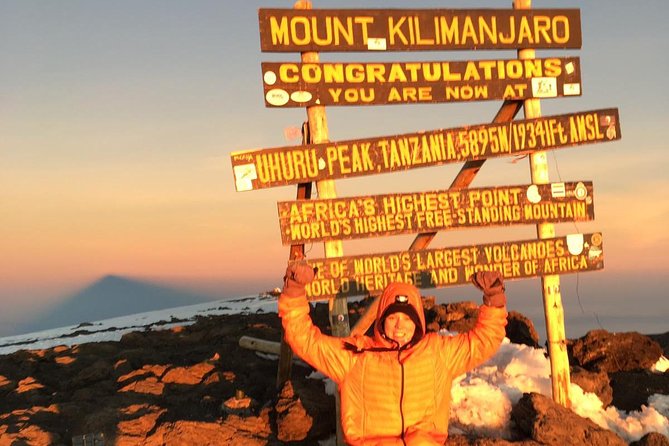
Summit day is the main event and the toughest section by far. The itinerary lists a 5-kilometer ascent from about 15,300 feet to the summit at 19,345 feet, followed by a 12-kilometer descent. The ascent takes seven to eight hours, and the descent takes another four to six hours.
The supplied overview also refers to Kilimanjaro as roughly 19,000 feet, or 5,900 meters. The exact figures differ slightly, but the practical point is unchanged: you are going very high, and conditions can be cold and severe.
The summit zone is classified as Arctic. You should expect the sharpest physical challenge of the trek here, with the cold and altitude making every step count. The schedule then takes you down to Mweka Hut, listed around 10,000 feet. That descent is welcome for altitude, but it comes after an already exhausting day.
This is where an experienced guide earns his or her keep. Moodie has been specifically praised for helping a climber reach the summit, while Edwin was credited with useful local information and support on the route. The company has also been praised for a positive and motivating crew. Those qualities matter more than grand promises when you are tired, cold, and still far from camp.
A summit certificate is included. It is a nice record of the effort, but the more important measure is whether the company handles the day with care and responds properly if someone becomes unwell. Ask before booking how the team manages altitude problems and what happens if you need to turn back.
Day 7: Mweka Camp to Moshi
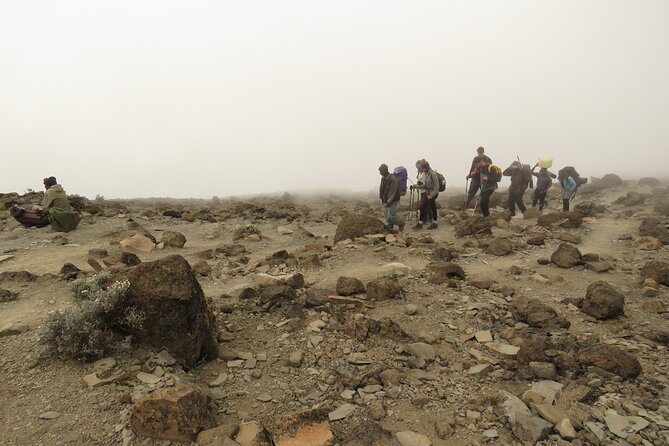
The final day descends about 10 kilometers from approximately 10,000 feet to 5,400 feet. Walking time is three to four hours, and you return to rainforest.
After the stark upper mountain, the forest will feel warmer and fuller. This is a straightforward descent on paper, but tired legs can make it slippery and uncomfortable. Use trekking poles if you bring them, and do not treat the final morning as a race.
The company includes transport from Mweka Gate back to your Moshi hotel. That closes the loop neatly, though your hotel itself is not part of the package. Airport transfers are also excluded, so keep your post-trek travel plans separate from the included Mweka to Moshi transfer.
What the $1,250 price really covers
At $1,250 per person, the price includes several major operating costs: quality tents, sleeping mattresses, three meals a day on the trek, a professional Kilimanjaro guide, the briefing, a trekking certificate, pickup from your Moshi hotel to Londorossi Gate, and return transport from Mweka Gate.
That makes the package more useful than a bare guiding fee. You do not have to arrange the mountain transport, food, or basic camping setup separately.
Still, the headline price is not the final trip budget. Kilimanjaro park fees are excluded and can be paid directly to the park or through the tour operator. You also need to add crew tips, personal hiking gear, airport transfers, and accommodation in Moshi before and after the trek.
I would ask for a written total before paying. Confirm the park fees, the number of people in your group, the sleeping arrangement, and exactly what camping equipment is supplied. The listing says quality tents and mattresses, but it does not provide tent occupancy or sleeping bag details.
Guides, food, and support on the mountain
The strongest praise attached to this experience concerns the crew. Edwin has been described as a guide who knows the area’s plants and animals and keeps a firm but manageable pace. Moodie has been praised for summit support, while the porters and cook have been credited with making the climb more pleasant.
Godfrey is also identified in the company responses as someone involved in arranging trips and handling guest communication. One past climber noted that airport pickup and questions were handled through WhatsApp, but airport pickup is not listed as an included service here. Treat that as a point to confirm, not as part of the standard package.
Meals are included three times daily. You should still bring personal snacks if you have preferred foods, though the supplied information does not specify a menu or dietary arrangements. Ask about food requirements before departure.
Best seasons and practical limits
The recommended periods are mid-December through March and mid-June through October. These are the suggested dry-season windows, when weather is generally more favorable for trekking.
Mountain weather can still change quickly. The activity requires good weather, and if conditions force cancellation, you are offered another date or a full refund. You can also cancel for a full refund if you do so at least 24 hours before the start time. Changes or cancellations inside that window are not accepted.
You need a moderate level of physical fitness. That phrase should not be read as casual. The route includes an eight to ten-hour day and a summit day that can last up to 14 hours when ascent and descent are combined.
Who should book this climb?
I would choose this route if you want Kilimanjaro’s scenic western approach and prefer a longer schedule over the fastest possible ascent. It suits people who can walk for several hours a day, accept basic camping, and understand that altitude is the main obstacle.
It may not suit you if you want a small, private group, a soft bed each night, or a fully inclusive price with park fees and hotels already covered. The possible group size of 50 is worth discussing before you commit.
I would also avoid treating the seven-day schedule as a guarantee. It improves the structure of the climb and gives you more acclimatization time, but your guide may still advise you to stop if symptoms become dangerous.
Should you book the 7-day Lemosho Route?
Book it if you want a scenic, gradual Kilimanjaro route with meals, camping equipment, guides, porters, and Moshi transfers handled in one package. The crew’s reported strengths, especially steady pacing, summit encouragement, cooking, and helpful communication, are meaningful advantages.
Before booking, get the full cost in writing, including park fees and crew tips. Ask about your exact guide, group size, gear, and altitude-safety procedures. If those answers are clear and you are comfortable with long days in basic camps, this 7-day Lemosho itinerary offers a strong route choice for a major mountain goal.
FAQ
How long is the Kilimanjaro Lemosho trek?
The trek lasts approximately seven days, beginning at Londorossi Gate and ending with transport from Mweka Gate back to Moshi.
What is included in the tour price?
The price includes camping equipment, quality tents, sleeping mattresses, Moshi hotel pickup to Londorossi Gate, return transport from Mweka Gate to your Moshi hotel, a briefing, a trekking certificate, a professional Kilimanjaro guide, and breakfast, lunch, and dinner during the trek.
Are Kilimanjaro park fees included?
No. All Mount Kilimanjaro park fees are excluded from the listed price and may be paid directly to the park or through the tour operator.
What physical fitness level is required?
You should have a moderate level of physical fitness. The itinerary includes hiking days of up to eight to ten hours and a summit day with seven to eight hours of ascent followed by four to six hours of descent.
When is the best time to climb?
The suggested periods are mid-December to March and mid-June to October, when weather conditions are generally more favorable.
Can I cancel the booking for a refund?
Yes. You can cancel at least 24 hours before the experience begins for a full refund. Cancellations or changes made less than 24 hours before the start time are not accepted, and poor-weather cancellations offer either another date or a full refund.
Just added around Moshi
- Mt Kilimanjaro 6 days Marangu route hike★ 5.0 · 3 reviews
- Private Cycle to Kilimanjaro Bike Park Safari★ 5.0 · 6 reviews
- Wildlife Extravaganza: Manyara, Tarangire & Ngorongoro in 3 Days★ 5.0 · 3 reviews
- 3 Days Private E-Bike Tour in West Kilimanjaro★ 5.0 · 3 reviews
- West Kilimanjaro cycling Adventures★ 4.5 · 8 reviews
- machame route★ 5.0 · 16 reviews
- Kilimanjaro Climb & Safari – Lemosho Route – 13 Day★ 5.0 · 10 reviews
- Kilimanjaro Climbing Umbwe Route★ 5.0 · 3 reviews
Lemosho Route Climbs, compared.


8-Day Small-group Lemosho Kilimanjaro Summit Trekking
Read our review →





Climbing Kilimanjaro through 8 days Lemosho Route
Read our review →Browse the lists this tour appears in