
Reviewed · KILIMANJARO CLIMBS
Kilimanjaro Climbing Umbwe Route
The Umbwe Route gives you one of Kilimanjaro’s most direct and demanding approaches. In six days, you move from banana plantations and thick rainforest to the Barranco Wall, high alpine desert, and a sunrise push for Uhuru Peak at 5,895 meters. This is not a gentle introduction to mountain trekking, but it offers a strong sense of progress and quieter trail time.
I like the route’s dramatic scenery, especially the changing forest, the huge Barranco Wall, and the views toward Mawenzi. I also like the small maximum group size of eight and the local guiding team, with guides trained in safety and first aid. The main concern is simple: six days on Umbwe leaves less time for acclimatization than longer Kilimanjaro routes, so you need strong fitness and a serious attitude toward altitude.
Key points at a glance
- A steep start from Umbwe Gate: The first day climbs through rainforest and along a narrow ridge between the Lonzo and Umbwe Rivers.
- Barranco Wall is the visual highlight: The route reaches the wall on day two, then takes you over it on day three.
- The summit day lasts about 15 hours: You begin around midnight, reach Stella Point near sunrise, continue to Uhuru Peak, then descend to Mweka Camp.
- Small groups matter: The stated maximum is eight people, allowing the guide team to work closely with you.
- The $2,750 price covers the core trek meals: Six breakfasts and lunches, five dinners, park admission, and transport back to Moshi are included, while flights and visas are not.
- Your best preparation is honest self-assessment: You need a strong fitness level, and the short schedule makes acclimatization especially important.
Why the Umbwe Route feels different
Kilimanjaro routes vary greatly in character. Umbwe is known here as a direct route, and the first two days make that clear. You gain height through forest and then along rocky ridges rather than spending a long time on broad, gradual paths.
That directness gives the trek its appeal. You feel the mountain change quickly, and each day brings a new setting. It also brings the chief drawback: your body has less time to adjust to increasing altitude before the summit attempt.
I would choose this route only if you are comfortable with long uphill walking and have prepared properly. The tour information calls for a strong physical fitness level, and that advice deserves attention. This is not the place to discover that your boots pinch, your legs tire quickly, or steep paths make you uneasy.
The local guide team is a major part of the experience. Habari Adventure says its guides come from Kilimanjaro and other parts of Tanzania, with training in first aid and safety. Their stated areas of expertise include plants, animals, geography, history, archaeology, anthropology, and astronomy, so the walk can be more than a physical test. You can ask questions and connect the trail to the wider region.
The company director named in the experience material is Stanley, also called Stan in one account. He handled planning by email for one customer and arranged a special price for a solo Umbwe climb. That suggests some flexibility may be possible, but I would ask about any price adjustment before booking rather than count on it.
More Kilimanjaro Climbs in Kilimanjaro
- Kilimanjaro climb by Lemosho Route (7-day)
★ 5.0 · 651 reviews - Kilimanjaro climb, Machame Route (7-day)
★ 5.0 · 262 reviews - Kilimanjaro Climbing Lemosho Route 8 Days.
★ 5.0 · 186 reviews
Day 1: Umbwe Gate and the rainforest ridge
After breakfast at your hotel in Moshi, you drive to Umbwe Gate, listed at about 1,800 meters. The approach passes banana plantations, giving you a first look at the farming communities around the mountain before you enter Kilimanjaro National Park.
Park registration comes first. Then the trail follows a forestry track through natural rainforest. The path winds upward, with large trees and thick undergrowth creating a shaded beginning to the climb.
The route later narrows and becomes steeper as it follows the ridge between the Lonzo and Umbwe Rivers. This is where Umbwe begins to show its character. You are not simply strolling through a forest. You are gaining height on a more concentrated climb, with the ridge and surrounding trees keeping your attention on every step.
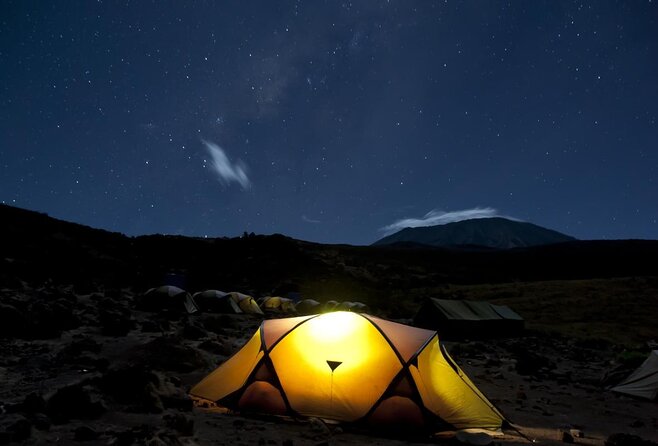
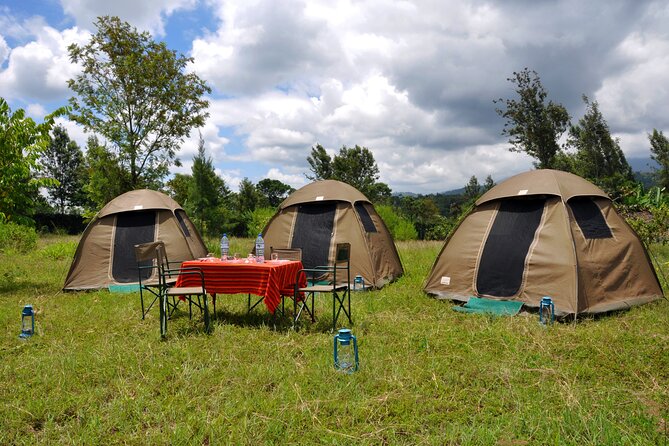
The first day takes about six hours. Camp is set among large trees and dense undergrowth, which gives you a forest setting rather than an open high-altitude camp. I like this first day because the change from Moshi’s cultivated foothills to mountain forest happens quickly.
Still, six hours on a steep opening day can be tiring. You should walk at a measured pace and listen closely to your guide. The aim is not to prove how fast you can climb. It is to arrive with enough energy for the days ahead.
Day 2: Leaving the forest for Barranco Valley
The second morning begins in montane forest. Soon the trees thin out, the ground becomes rockier, and the vegetation looks more exposed. Moss-covered trees and sparse undergrowth replace the thick forest of day one.
The trail continues along a spectacular ridge. As you gain altitude, you may catch views of Kilimanjaro rising ahead, often set against a blue sky. These glimpses matter because the mountain can feel hidden during the forest section. Here, you begin to see the scale of the climb.
After about five hours, the route approaches Barranco Valley. The path becomes flatter as you reach camp below the Breach and the great Barranco Wall. Dinner is prepared at camp, with sunset providing one of the day’s best moments.
Barranco Valley is an important emotional point in the trek. You can look up and see the wall you will climb the next day. It is imposing, but the clear view also gives you a better sense of the route.
This day is shorter than the first, yet altitude changes the effort. Five hours at higher ground can feel harder than a longer walk at low elevation. I would treat the afternoon and evening as recovery time, not as a chance to spend all your energy exploring around camp.
Day 3: Climbing the Barranco Wall
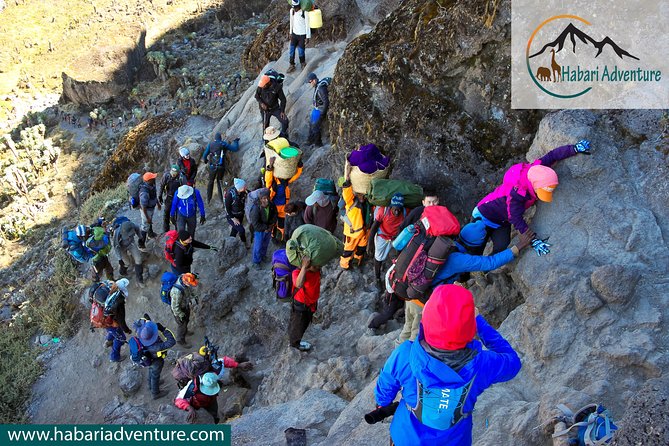
Day three brings the route’s most famous obstacle. After breakfast, you climb toward the great Barranco Wall, then work your way up it. The wall looks intimidating from below, but the itinerary notes that it is easier than it first appears.
That does not mean effortless. You should expect a steep section that demands careful footwork and steady pacing. Your guide’s role is especially useful here, both for choosing the best line and for keeping the group moving safely.
At the top, the views open up. Kibo’s glaciers rise above you, and the scale of Kilimanjaro becomes clearer. You then descend into the green Karanga Valley, where the camp faces east toward the jagged peaks of Mawenzi.
The walking time is about four hours, making this a short day by design. After a hot lunch at camp, you have the afternoon to rest or explore nearby. This pause is not wasted time. It gives your body a chance to recover before the summit sequence begins.
I consider day three one of the best-balanced parts of the trip. You get a memorable climb, striking views, and a shorter schedule afterward. The catch is that the short day does not erase the altitude. Rest still matters.
More Kilimanjaro Climbs in Moshi:
- Kilimanjaro climb, Lemosho Route (8-day)
★ 5.0 · 148 reviews - Kilimanjaro climb, Lemosho Route (6-day)
★ 5.0 · 129 reviews - Kilimanjaro climb, Marangu route (6-day)
★ 5.0 · 72 reviews - Private Kilimanjaro Hike 7 Day Lemosho Route
★ 5.0 · 60 reviews
Day 4: Karanga to Barafu Camp
The next half-day takes you to Barafu Camp, the launch point for the summit attempt. You have lunch at camp, then time to rest before the night climb.
The surroundings become more severe here. Alpine desert replaces the forest and valleys, and strong winds can sweep across the camp. In the evening, views of Mawenzi add a sharp contrast to the bare surroundings.
Barafu is not presented as a sightseeing stop. It is a staging point. You eat an early dinner, then rest before waking around midnight. If you have never followed a midnight summit schedule, the timing can feel strange. Your day effectively splits into two parts: a short ascent to camp, then a long night and morning on the mountain.
This is also where the value of the shorter day becomes obvious. You need the time to eat, organize yourself, and sleep if possible. I would not plan anything beyond the stated rest period. Save your attention and strength for the summit.
The four-hour walk sounds manageable, but the altitude and wind can make it demanding. Barafu is high, exposed, and far removed from the warm, wooded start near Umbwe Gate.
Day 5: Stella Point, Uhuru Peak, and the long descent
Summit day is the physical center of the trip. You wake around midnight, with light tea and cookies provided before departure. The climb begins on scree, and the uphill section to the crater rim takes about four to five hours.
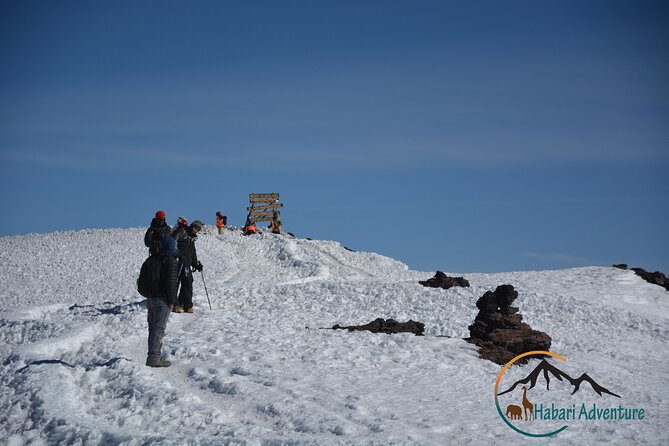
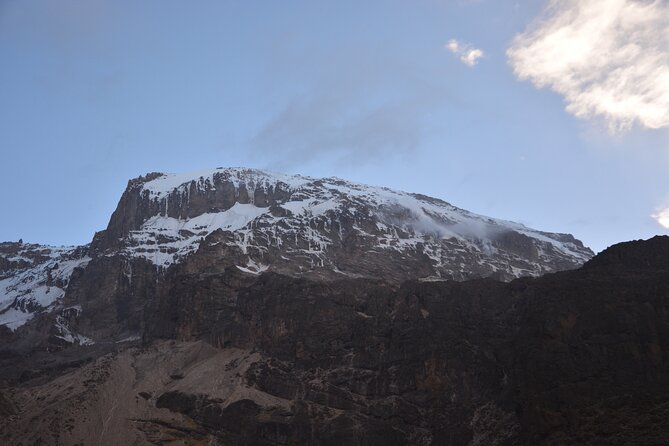
The goal is Stella Point at 5,756 meters, reached around sunrise if the schedule goes as planned. Sunrise at the crater rim is one of the strongest moments of the route, but the conditions can be cold, windy, and exhausting. The schedule is demanding even before you add the final climb.
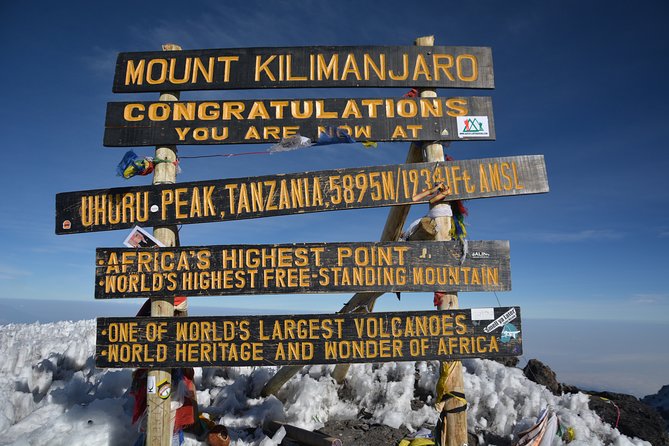
From Stella Point, you continue along the rim to Uhuru Peak, the summit at 5,895 meters. The plan allows a few minutes for photographs before you begin descending. Keeping the summit stop brief is sensible. At this height, your body needs you to move down.
You return to Barafu Camp for rest and lunch, then continue to Mweka Camp for dinner and the night. The full day is listed at about 15 hours. That figure is the detail I would take most seriously before booking.
The summit morning is only half the challenge. After reaching Uhuru Peak, you still have a long descent. Tired legs, loose scree, and altitude can make the return feel slow. Good preparation and a patient pace will help more than enthusiasm alone.
This is also the point where the guide’s safety training matters most. The tour provider says all guides are trained in safety and first aid. I would ask during your pre-trip planning how the team handles altitude symptoms and what the communication plan is if someone cannot continue. The provided information does not spell out those procedures, so it is worth clarifying.
Day 6: Mweka Forest and the return to Moshi
The final walking section descends through Mweka’s montane forest to Mweka Gate, taking about three hours. After the alpine desert and summit effort, the return to trees should feel like a major change.
At the gate, you complete park formalities and receive certificates. A vehicle then takes you back to your hotel in Moshi for a warm shower and a proper celebration.
The last day is shorter, but it follows the longest day of the trip. Your legs may still be tired, so do not judge the day only by its three-hour estimate. The reward is the clear finish: certificates, transport, and a return to town rather than another night on the mountain.
What the $2,750 price covers
The listed price is $2,750 per person. That is a substantial fee, but a Kilimanjaro trek is not just a walk with a meeting point. The cost includes the guided mountain experience, park admission, meals, and return transport to Moshi.
The included meals are listed as six breakfasts, six lunches, and five dinners. That matches a six-day trip with the final dinner presumably taken after returning, though the meal count is worth confirming before departure. Tea and cookies are specifically provided before the summit attempt.
Flights and visas are not included. You should also confirm any other personal costs directly with Habari Adventure before paying, since the supplied details do not list items such as equipment rental or tips.
I see the price as better suited to people who value a supported, local-led climb and a small group. The maximum group size is eight, which can make practical coordination easier than a large departure. If you are comparing prices, check exactly what each operator includes, especially park fees, meals, transfers, guide support, and any pre- or post-climb arrangements.
Pickup is offered, and the listed meeting point is Kilimanjaro Airport in Tanzania with a start time of 4:00 a.m. That information does not perfectly match the day-one plan, which begins with breakfast at a Moshi hotel and a drive to Umbwe Gate. I would confirm the exact pickup point and start time in writing. It may be airport pickup, hotel pickup, or a general meeting-time entry, and the difference matters after a flight.
Who should book the Umbwe Route
I would recommend this route to a fit hiker who wants a direct, scenic climb and understands that six days is a compact schedule. It suits someone who enjoys steep terrain, accepts basic mountain conditions, and prefers a small team.
The route may also suit a solo climber who wants individual attention. One account describes a solo Umbwe arrangement with Stan, including planning by email and a special price. That does not guarantee the same arrangement for every booking, but it gives you a useful question to ask if you are traveling alone.
I would be more cautious if this is your first serious high-altitude trek. The short itinerary leaves less room for acclimatization, and the summit day is very long. A longer Kilimanjaro route may be a better choice if your priority is giving your body more time to adjust, though that option is not part of this package.
The experience is also a good fit if you care about local interpretation. Habari Adventure’s guides are from Tanzania and are described as trained in subjects ranging from flora and fauna to astronomy. Ask questions as you walk. The mountain is more interesting when you understand the plants, rock, weather, and stars around you.
Booking details worth checking first
Confirmation is provided at booking, and the experience includes a mobile ticket. Free cancellation is available if you cancel at least 24 hours before the local start time. A cancellation inside that window is not refundable, and late changes are not accepted.
The company says poor weather can lead to a cancellation, in which case you are offered another date or a full refund. That policy is useful for a mountain trip, where conditions can affect safety and timing.
Before booking, I would confirm five practical points:
- The precise pickup location, since the information names both Moshi hotels and Kilimanjaro Airport.
- What personal equipment or extra costs are not included.
- The guide-to-climber setup for your group.
- How altitude problems are handled.
- The exact meal arrangements, especially the sixth breakfast and the five included dinners.
These questions do not diminish the adventure. They help you arrive ready and avoid confusion on a trip where energy is precious.
Should you book this six-day climb?
Book it if you want the direct Umbwe approach, dramatic scenery, a small group, and a local guiding team, and if you are genuinely prepared for steep walking and a 15-hour summit day.
Think twice if you need a slower altitude schedule or if your fitness is uncertain. At $2,750, the trip offers meaningful value through guiding, park access, meals, and transport, but the price is worthwhile only if the demanding route matches your ability.
My practical call: choose this climb for challenge and scenery, not for ease. Confirm the pickup details and included costs with Habari Adventure, then train for long uphill days. If you do that, the progression from rainforest to Uhuru Peak gives you a powerful six-day mountain story.
FAQ
Where does the Kilimanjaro Umbwe Route trip start?
The experience is based in Moshi, Tanzania. The meeting information lists Kilimanjaro Airport in Kilimanjaro National Park, Tanzania, with a 4:00 a.m. start time, while the first day describes breakfast at a Moshi hotel followed by a drive to Umbwe Gate. Confirm the exact pickup arrangement before departure.
How long does the climb take?
The trip lasts approximately six days. Walking times range from about three hours on the final descent to around 15 hours on summit day.
Is the tour suitable for all fitness levels?
No. The tour information says participants should have a strong physical fitness level. The Umbwe Route includes steep sections, high altitude, and a long summit day.
What is the highest point reached?
You continue from Stella Point at 5,756 meters to Uhuru Peak at 5,895 meters.
What meals are included?
The package lists six breakfasts, six lunches, and five dinners. Light tea and cookies are also prepared before the midnight summit climb.
What happens if poor weather cancels the climb?
If the experience is canceled because of poor weather, you are offered a different date or a full refund. Free cancellation is also available when you cancel at least 24 hours before the start time.
Just added around Moshi
- Mt Kilimanjaro 6 days Marangu route hike★ 5.0 · 3 reviews
- Wildlife Extravaganza: Manyara, Tarangire & Ngorongoro in 3 Days★ 5.0 · 3 reviews
- Private Cycle to Kilimanjaro Bike Park Safari★ 5.0 · 6 reviews
- 3 Days Private E-Bike Tour in West Kilimanjaro★ 5.0 · 3 reviews
- West Kilimanjaro cycling Adventures★ 4.5 · 8 reviews
- machame route★ 5.0 · 16 reviews
- Kilimanjaro Climb & Safari – Lemosho Route – 13 Day★ 5.0 · 10 reviews
- 6-Day Kilimanjaro Umbwe Route–Steep,Adventurous, Challenging Path★ 5.0 · 6 reviews
Kilimanjaro Climbs, compared.



8-Day Small-group Lemosho Kilimanjaro Summit Trekking
Read our review →



7-Day Machame Kilimanjaro Summit Tour from Arusha
Read our review →
Browse the lists this tour appears in