
Reviewed · HIKING & TREKKING
Kilimanjaro 7 Day Private Trekking Experience
The big draw here is the Machame Route, a seven-day climb that gives you time to adjust to altitude while moving through rainforest, moorland, high desert, glaciers, and the summit ice fields. It is a private trip, so your group sets the pace within the guide’s safety limits.
I like the careful climb-high, sleep-low day at Lava Tower, and I like that food, tents, porters, cooks, transfers, and pre and post climb lodging are built into the $3,120 price. The main drawback is simple: this is a hard mountain trip, not a scenic walk, and the midnight summit push can test even fit hikers.
Key points to know before you book
- Seven days on the Machame Route: You climb through several distinct mountain zones before descending by Mweka.
- Private group format: Only your party takes part, giving the trip a more personal feel than a large shared climb.
- Strong acclimatization plan: Day three reaches Lava Tower at 4,600 meters before dropping to Barranco Camp.
- A serious summit day: You leave around midnight, climb to Uhuru Peak, then descend a long way to 3,100 meters.
- Full mountain support: Guides, porters, cooks, tents, meals, transfers, and hotel stays before and after the climb are included.
- A service-focused local team: Oscar is the main contact named in customer accounts, with Saul, Jonas, Mvungi, Jackie, Emmanuel, and others praised for friendly support on different trips.
Why the Machame Route works well in seven days
Kilimanjaro is often sold as an easy way to reach Africa’s highest point. That is misleading. You do not need technical climbing skills for this route, but you do need stamina, patience, and a good response to altitude.
The seven-day schedule gives you a sensible rhythm. The first day begins at about 1,800 meters and ends near 3,000 meters. From there, you gain height gradually, spend a day visiting 4,600 meters, and then sleep lower at Barranco. That pattern matters more than speed.
I also like the change of scenery. The mountain does not look the same from one camp to the next. You begin under tall rainforest, walk through open moorland, cross a stark semi-desert, and finish among stone, ice, and glaciers.
Because this is private, you are not tied to the needs of a large mixed group. That can help if one person needs a slower pace or a longer rest. It does not remove the physical challenge, though. Your guide still has to make sensible decisions about altitude, weather, and fatigue.
The listed price is $3,120 per person. That is a serious sum, but it covers a large package: mountain crew wages, food, tents, specified transfers, and accommodation before and after the climb. It also includes seven lunches, six dinners, and six breakfasts, which reduces the number of costly details you must arrange yourself.
You still need to budget for personal climbing gear, gratuities for guides and porters, travel and baggage insurance, telephone charges, and laundry. Equipment can be hired locally if needed, but you should confirm what is available and what condition it is in before relying on rental gear.
A few more Moshi trips to weigh up
- Private Kilimanjaro Hike 7 Day Lemosho Route
★ 5.0 · 60 reviews - Best Kilimanjaro hiking day trip tour with Kilinge Adventures
★ 4.5 · 54 reviews - #1. Best Kilimanjaro Day hike Tour-Machame Route-ISMANI
★ 4.2 · 47 reviews
Day one, from Machame Gate to the rainforest
The first morning begins around 9am, when the guides and porters meet you for a final check of equipment and supplies. Anything you do not want on the mountain can remain in a locked hotel facility.
A vehicle then takes you to Machame Gate. Park registration comes first, followed by the start of the climb. You receive a packed lunch and walk uphill through rainforest for roughly 11 kilometers, gaining from 1,800 to 3,000 meters in about six hours.
This is a full first day, but the forest makes it a pleasant opening. The air is greener and more humid than what comes later, and the path gives you time to settle into a steady walking pace.
Your lunch break comes around the middle of the route. At Machame Camp, the crew sets up your tent and serves dinner. The schedule says you arrive in the late afternoon, so do not expect a lazy stroll followed by an early hotel shower. You are sleeping outdoors from this point forward.
The first night is also your first test of camp routine. You wake early, eat, pack, and walk. A private trip helps here because your guide can explain the daily pattern directly rather than leaving you to work it out in a crowd.
Day two, leaving the trees for Shira Camp
You receive coffee, tea, or hot chocolate in your tent at about 6:30am, followed by breakfast. The trail leaves the rainforest and crosses into open moorland, where shrubs replace the thicker vegetation.
The day covers about nine kilometers, rising from 3,000 to 3,850 meters. It takes roughly six hours. The route crosses a small valley, climbs toward a rocky ridge, and then follows a river gorge toward the Shira Plateau.
Shira is one of the first places where Kilimanjaro feels broad and exposed. The trees are gone, the air is thinner, and the views open toward the Western Breach and its glaciers. This is a good day for photos, but keep your camera handy without letting it distract you from your pace.
At camp, the cook provides boiled drinking water and hot washing water. That detail may sound small now, but it matters after a dusty mountain day. You will not have normal hotel comforts, so a warm wash and a hot meal become part of the reward.
The altitude gain is noticeable. Take the guide’s advice seriously, walk slowly, and drink regularly. A seven-day route gives you time, but it cannot make altitude symptoms disappear.
Day three, Lava Tower and the best acclimatization lesson
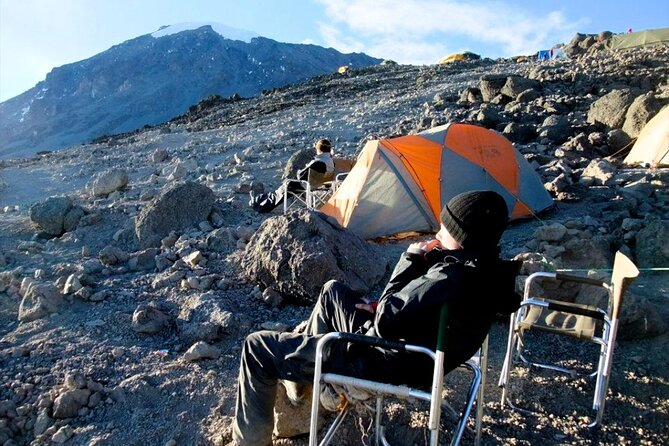
Day three is the key training day. You leave Shira Camp at 3,850 meters and climb to Lava Tower at 4,600 meters, covering about 12 kilometers in around seven hours.
The trail enters a semi-desert zone. Plant life becomes sparse, and the mountain feels harsher. Lava Tower is both a striking volcanic landmark and a useful altitude checkpoint.
You stop there for lunch and a short rest before descending about 650 meters to Barranco Camp. This is the classic climb-high, sleep-low method. Your body spends time at a higher altitude, then recovers at a lower camp.
The route to Lava Tower is described as the toughest so far, but it also offers some of the finest photo chances. You should expect a slow, deliberate day rather than a race to camp.
The drop to Barranco is not just a relief for your lungs. It introduces another change in scenery, with the valley opening around the camp and the mountain walls becoming more dramatic. You finish lower than Lava Tower, but you have done important preparation for the summit.
This is where the value of seven days becomes clear. A shorter climb may cost less or fit a tighter schedule, but it usually gives you less time to adjust. No schedule guarantees a summit, yet this day uses the available time intelligently.
Same country, a completely different kind of safari:
- Kilimanjaro climb by Lemosho Route (7-day)
★ 5.0 · 651 reviews - Safari Serengeti And Ngorongoro
★ 5.0 · 288 reviews - Kilimanjaro climb, Machame Route (7-day)
★ 5.0 · 262 reviews - Kilimanjaro Climbing Lemosho Route 8 Days.
★ 5.0 · 186 reviews
Day four, the Barranco Wall scramble
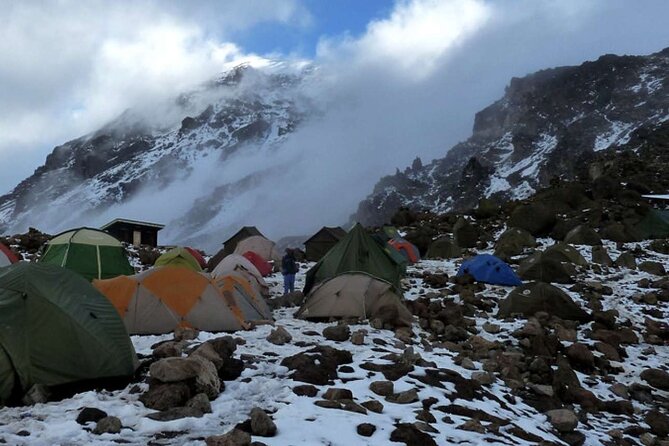
After breakfast, you leave Barranco for Karanga Valley. The distance is about seven kilometers, with an elevation gain of roughly 250 meters.
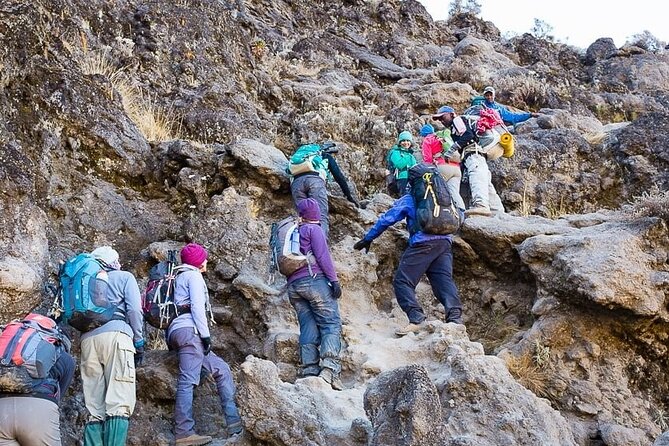
The hard work comes early. The Barranco Wall takes about 1.5 hours and includes sections where you use your hands to pull yourself upward. It is a scramble, not a technical rock climb, but it can feel intimidating if you dislike exposed or steep ground.
Your guide and crew are important here. Move carefully, keep three points of contact when useful, and do not rush because someone behind you is waiting. The wall is often described as the hardest part of this day, but the reward is a short descent into the greener Karanga Valley.
The camp is generally placed on the ridge above the valley. That position gives you another chance to acclimatize before the higher camps. The day is shorter than day three in distance, but the wall makes it physically demanding.
I would regard this as a good day for private trekking. If you need a little extra time on the scramble, your group does not have to match a large party’s pace. Still, tell the company in advance if you have concerns about steep scrambling or heights.
Day five, the South Circuit and Barafu Camp
The hike to Barafu Camp covers about six kilometers and gains around 400 meters. By now, the mountain is mostly stone, ridges, and high open ground.
The trail gives views of several Kibo glaciers and passes the junction where the Mweka descent connects with the Machame approach. You also move through Karanga Valley and across intervening ridges before joining the route used for the descent.
This completes the South Circuit, which is valuable because you see the summit area from several angles. Kilimanjaro is not simply a cone viewed from one side. The changing approach helps you understand its scale.
Barafu Camp sits below the summit zone. The air is thin, the surroundings are stark, and the next morning begins well before sunrise. You should use this afternoon for eating, drinking, checking clothing, and resting, not for wandering around camp.
The details of the summit schedule make day five especially important. You are expected to wake at 11:30pm and leave at midnight, so your normal sleep pattern is about to be interrupted. Pack your summit items where you can reach them quickly and follow the guide’s instructions about layers and water.
Day six, Uhuru Peak and the long descent
Summit day starts in darkness. The ascent from around 4,600 meters toward Uhuru Peak takes six to eight hours, with headlamps and guides leading over steep stone and winding paths near the Ratzel and Rebmann glaciers.
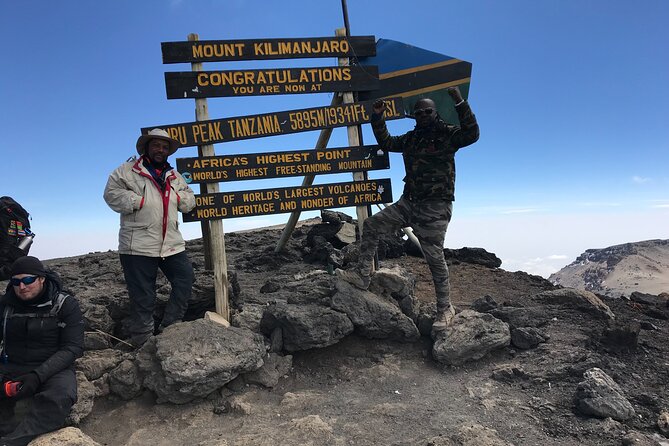
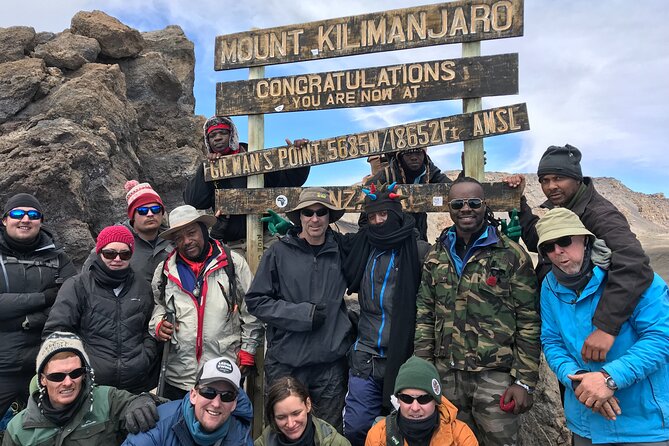
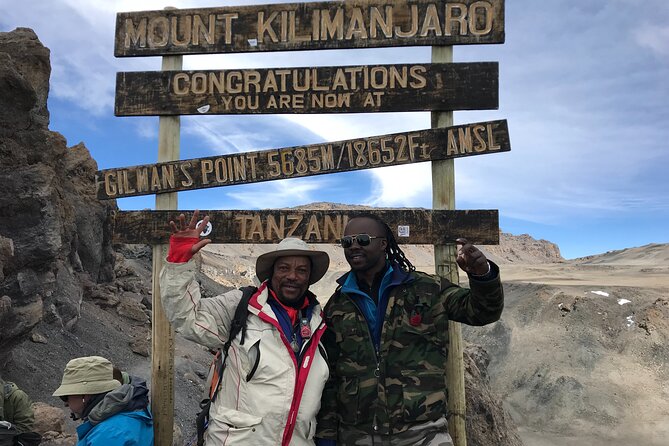
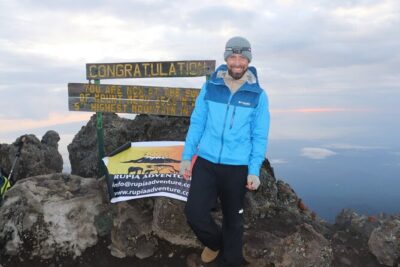
The route reaches Stella Point before continuing to Uhuru Peak, listed at 5,895 meters. The combination of cold, darkness, thin air, and a long uphill grind makes this the hardest part of the climb for most people.
The sunrise from the summit area is the great prize. You may have only a short time to take photographs and absorb the view before the cold and altitude demand that you move on. Keep your summit stop practical, even if the moment feels emotional.
The stated ascent distance is about seven kilometers. The descent is far longer, about 23 kilometers, and continues down to roughly 3,100 meters. The total day is described as six to eight hours up and seven to eight hours down, so this is an exceptionally demanding day.
That descent deserves as much respect as the climb. Tired legs, loose stone, and poor concentration can cause trouble. Use trekking poles if you have them, eat even when you are not hungry, and tell the guide promptly if you feel unwell.
The route finishes at the lower camp after the summit effort. Do not plan anything demanding for the evening. Your body will have earned a quiet meal and sleep.
Day seven, Mweka Gate and the return to Moshi
The final morning begins with a celebratory breakfast and thanks between you and the crew. Tipping is not included, so prepare cash for guide and porter gratuities, or ask the company about its preferred method of distributing tips among the team.
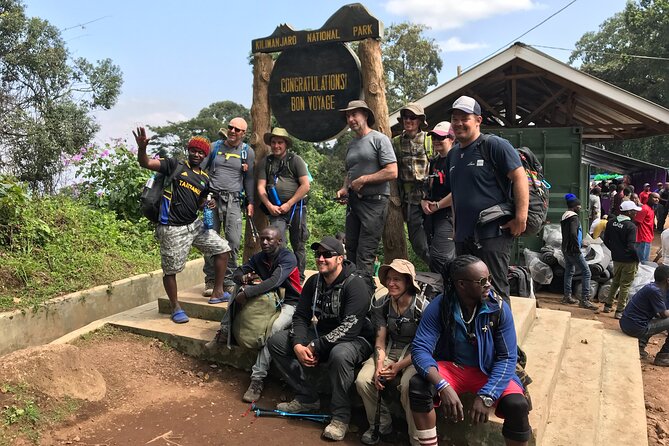
You then descend about 10 kilometers from 3,100 to 1,800 meters. The walk takes three to four hours and returns to rainforest before reaching Mweka Gate.
At the gate, you have time for a celebratory beer or champagne while equipment is loaded into the vehicle. The drive continues to Kilimanjaro Wonders Hotel in Moshi for a hot shower and lunch, followed by dinner and a certificate of achievement.
That hotel return is more than a nice extra. After several nights in tents and a full summit day, clean clothes, hot water, and a proper bed change the whole mood of the trip.
Guides, porters, and the human side of the climb
The strongest praise attached to this company focuses on the crew. Oscar is repeatedly described as quick to answer questions and helpful with wider Tanzania plans, including safari and Kikuletwa Hot Springs arrangements.
Saul is named several times as a friendly, experienced guide, while Jonas is praised for organization. Mvungi, Jackie, Emmanuel, and other crew members are also singled out for kindness, humor, and support on different trips.
Names and assignments can change, so you should not assume a particular guide is guaranteed. Ask who will lead your climb and how many people will be on the support team.
Porters carry supplies and help make the camp system work, while the cook handles the meals that keep you moving. Since gratuities are excluded, treat tipping as part of the true cost of the climb rather than an optional afterthought.
Food, equipment, and what the $3,120 covers
The package includes food, tents, mountain crew salaries, specified transfers, and accommodation before and after the climb. Breakfast, lunch, and dinner are supplied on the stated schedule.
The cook also provides boiled drinking water and hot washing water at camp. That is useful, but you should still ask exactly how personal drinking water is handled each day and what bottles, packs, or treatment systems you need to bring.
Personal climbing gear is not included. You can hire equipment locally, but make a proper gear check before departure. Your warm layers, rain protection, sleeping arrangements, footwear, and headlamp matter far more than small comforts.
Insurance is also your responsibility. The package excludes personal travel and baggage insurance, telephone bills, laundry, and guide and porter tips.
Who should book this private Kilimanjaro trek?
This trip suits fit adults who want a supported mountain challenge and prefer their own group rather than a shared departure. It is also a good match for people who value a local crew, supplied meals, tent logistics, airport or hotel support, and a hotel recovery night after the descent.
You need a strong level of physical fitness. Children under 15 require special arrangements before trekking Kilimanjaro, so families should contact the operator before booking.
I would not choose this trip if you want flexible cancellation. The booking is non-refundable and cannot be changed for any reason. Poor weather is the exception: if the company cancels for weather, you are offered another date or a full refund.
The tour requires good weather and runs with pickup offered. Confirmation is provided when you book, and the stated operating hours cover every day of the week.
Should you book it?
Book this seven-day climb if you want a private Machame experience with a serious acclimatization day, a full support crew, and a built-in Moshi recovery stay. The price is high, but it includes the major services that make a supported Kilimanjaro climb workable.
Before paying, confirm the guide team, equipment rental options, tipping expectations, insurance needs, and exactly what the pre and post climb lodging includes. If you are fit, accept the fixed booking terms, and understand that summit day is a long night and an even longer descent, this is a well-structured route with strong personal support.
FAQ
How long is the Kilimanjaro trekking experience?
The experience lasts approximately seven days, including the climb, summit attempt, descent to Mweka Gate, and return to Moshi.
Is this a private tour?
Yes. Only your group participates in the activity.
What meals are included?
The package includes seven lunches, six dinners, and six breakfasts, along with the listed food service during the climb.
Are tents included?
Yes. Tents are included, along with the mountain crew and camping support.
Are personal climbing clothes and equipment included?
No. Personal climbing gear is excluded, though equipment can be hired locally if required.
What happens if bad weather cancels the climb?
The experience requires good weather. If it is canceled because of poor weather, you are offered a different date or a full refund.
Just added around Moshi
- Mt Kilimanjaro 6 days Marangu route hike★ 5.0 · 3 reviews
- Private Cycle to Kilimanjaro Bike Park Safari★ 5.0 · 6 reviews
- Wildlife Extravaganza: Manyara, Tarangire & Ngorongoro in 3 Days★ 5.0 · 3 reviews
- 3 Days Private E-Bike Tour in West Kilimanjaro★ 5.0 · 3 reviews
- West Kilimanjaro cycling Adventures★ 4.5 · 8 reviews
- machame route★ 5.0 · 16 reviews
- Kilimanjaro Climb & Safari – Lemosho Route – 13 Day★ 5.0 · 10 reviews
- Kilimanjaro Climbing Umbwe Route★ 5.0 · 3 reviews
Hiking & Trekking, compared.

8-Day Small-group Lemosho Kilimanjaro Summit Trekking
Read our review →

Private Full Day Hiking Experience to Marangu Route
Read our review →

From Arusha/Moshi: Kilimanjaro Hike Marangu Route Day Trip
Read our review →
4 days Best experience Kilimanjaro Hike, Serengeti &Ngorongoro
Read our review →
Best Kilimanjaro hiking day trip tour with Kilinge Adventures
Read our review →Browse the lists this tour appears in