
Reviewed · KILIMANJARO CLIMBS
Kilimanjaro Climbing Rongai Route
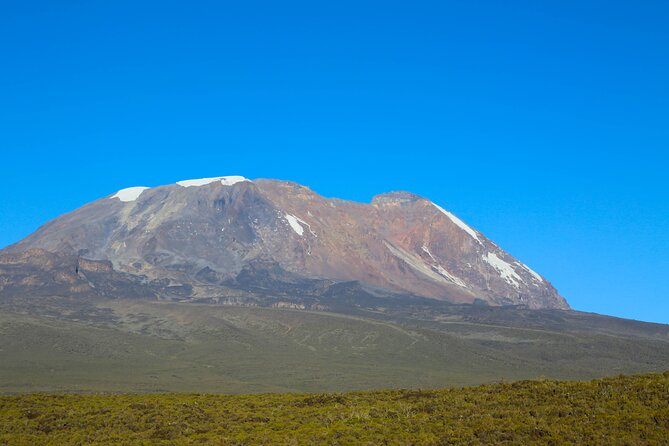
Rongai is Kilimanjaro’s quieter approach, beginning near the Kenyan border and crossing forest, moorland, high alpine desert, and the steep upper slopes of Kibo before reaching Uhuru Peak at 5,895 meters. You get seven days to adjust, with the summit attempt starting around midnight.
I like the gradual first days, which give you time to settle into the altitude, and I like the route’s changing scenery, especially the jagged Mawenzi peaks and the lunar saddle between Mawenzi and Kibo. Habari Adventure also puts strong emphasis on local guides, safety, first aid, and natural and cultural knowledge. Guides named in past experiences include Emmanuel, Innocent, and Leon.
The main caution is the summit day. It lasts about 15 hours and includes the steepest walking of the trip, followed by a long descent. You need moderate fitness, patience, and a willingness to walk slowly when the guide sets the pace.
Key points to know before you book
- Rongai begins near the Kenyan border: You drive from Moshi to Nalemoru Gate before entering the mountain route.
- The route uses seven days: This gives you several gradual walking days before the hard summit push.
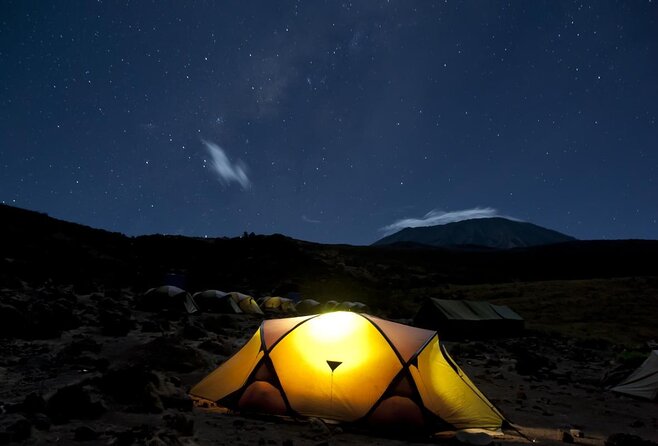
- Mawenzi is a major highlight: Camps near Kikelelwa and Mawenzi Tan Hut bring close views of its sharp volcanic spires.
- Summit night starts at midnight: Expect a steep climb to Gilman’s Point, then about another hour to Uhuru Peak.
- The group can include up to 15 people: That is small enough for a personal feel, though not a private trek.
- The price is $2,840.39 per person: Its value depends on how much guiding, park access, transport, camp support, meals, and safety help are included in your booking details.
Why the Rongai Route feels different
Kilimanjaro has several walking routes, but Rongai approaches from the northeastern side near Kenya. That gives the opening days a more remote feel and lets you experience the mountain through several distinct plant zones rather than rushing upward.
Your day begins with pickup after breakfast in Moshi, then a drive to Nalemoru Gate. The stated meeting information also refers to Kilimanjaro Airport and Kilimanjaro National Park, with an 8:00 am start, so confirm your exact pickup point before arrival. The drive itself matters because the trek does not start in central Moshi.
Habari Adventure’s guide program is a major part of the experience. Its guides are local to Kilimanjaro or elsewhere in Tanzania, and their training covers safety and first aid. The company also highlights skills in plants, animals, geography, history, archaeology, anthropology, and astronomy. That can turn a long walk into a better lesson in how the mountain works.
Past trips with the company have included solo climbers and people with limited hiking experience. The strongest praise centers on patient, friendly support and good organization. Emmanuel, Innocent, and Leon are names worth noting if you want to ask about guide availability, though the actual guide assignment can vary.
More Kilimanjaro Climbs in Kilimanjaro
- Kilimanjaro climb by Lemosho Route (7-day)
★ 5.0 · 651 reviews - Kilimanjaro climb, Machame Route (7-day)
★ 5.0 · 262 reviews - Kilimanjaro Climbing Lemosho Route 8 Days.
★ 5.0 · 186 reviews
Day 1: Nalemoru Gate and the first forest climb
After breakfast, you leave Moshi and drive to Nalemoru Gate. The first walk lasts about three hours and rises gradually through the rainforest.
This is a sensible beginning. You are moving uphill, but the pace is not yet punishing, and the forest gives you a cool, sheltered setting for your first hours on foot. Depending on conditions and luck, you might see zebras, elephants, buffalo, or monkeys. The information does not promise wildlife sightings, so treat these as possible bonuses rather than part of the core plan.
The first day is also when you learn how the group moves. Pay attention to the guide’s pace, ask questions early, and take the chance to check your clothing, water, and daypack before the higher camps. Three hours sounds easy compared with summit day, but it is useful time for finding a comfortable walking rhythm.
Day 2: Moorland views at 3,450 meters
The route continues toward the second camp in the moorland zone. The walk lasts about four hours, and the camp sits at 2nd Cave Camp, at roughly 3,450 meters.
This is where Kilimanjaro begins to feel less like a forest hike and more like a high mountain trip. You can expect clearer views of Kibo and the eastern ice fields along the crater rim. The open ground also makes the weather more noticeable, so the steady, unhurried pace matters.
The elevation is the point of the day. You are not simply covering distance. You are spending another night higher up before the summit attempt, giving your body time to respond. Drink according to your guide’s instructions, keep warm after stopping, and use the afternoon for rest rather than trying to turn camp into an expedition of its own.
Day 3: Across moorland toward Mawenzi
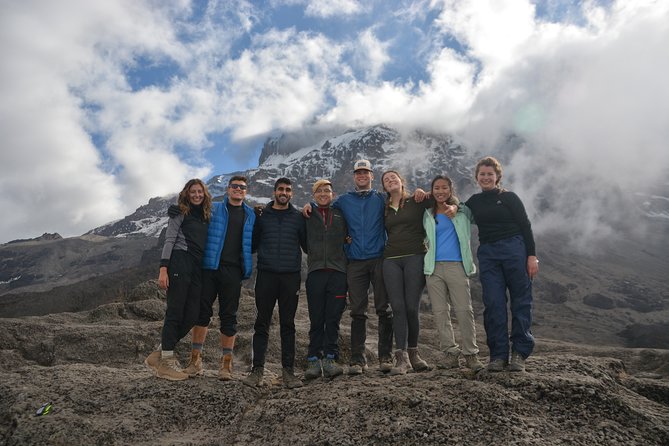
Day three takes about five hours. You cross the moorland on a smaller path, pass more views of Kibo’s eastern ice, and head toward the jagged peaks of Mawenzi, which rise to about 5,140 meters.
Lunch and the overnight stop are at Kikelelwa. The route’s character changes here. Kibo is broad and massive, while Mawenzi has sharp, broken-looking spires. Seeing both volcanic forms helps explain why Kilimanjaro feels like a group of mountains rather than one simple cone.
The smaller path may appeal to you if you want a quieter route, but it also means the walking can feel less like a straightforward trail. Five hours is not extreme on paper, yet the altitude can make an ordinary uphill stretch feel slow. This is a good day to let the guide set the pace and avoid judging your progress by distance alone.
More Kilimanjaro Climbs in Moshi:
- Kilimanjaro climb, Lemosho Route (8-day)
★ 5.0 · 148 reviews - Kilimanjaro climb, Lemosho Route (6-day)
★ 5.0 · 129 reviews - Kilimanjaro climb, Marangu route (6-day)
★ 5.0 · 72 reviews - Private Kilimanjaro Hike 7 Day Lemosho Route
★ 5.0 · 60 reviews
Day 4: Mawenzi Tan Hut and a useful rest period
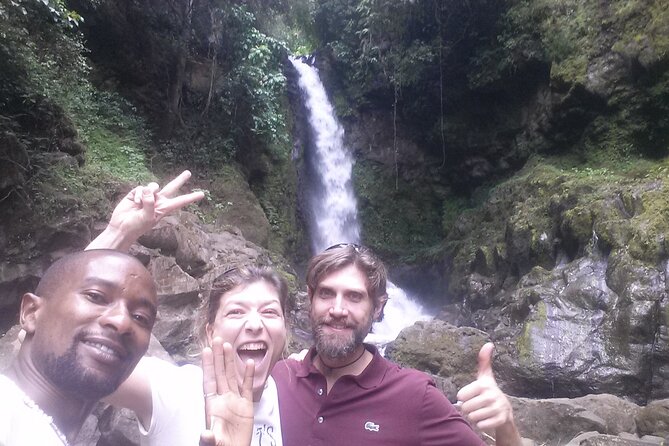
The fourth day is shorter at about four hours, but the climb is steep. You move up grassy slopes to Mawenzi Tan Hut at approximately 4,330 meters, where the camp sits in a cirque beneath Mawenzi’s tall spires.
This is one of the most striking camp locations on the route. The mountain walls give you a strong sense of height and isolation, and the open position provides wide views in several directions. The setting is dramatic without requiring a full day of walking.
You have free time in the afternoon. Use it carefully. Rest is the obvious choice, but a short exploration around camp can also help you adjust, provided your guide agrees and you are feeling well. At this height, even a small extra outing can cost more energy than expected. The best plan is to enjoy the view, eat, drink, and save strength for the summit night.
Day 5: The lunar saddle to Kibo Hut
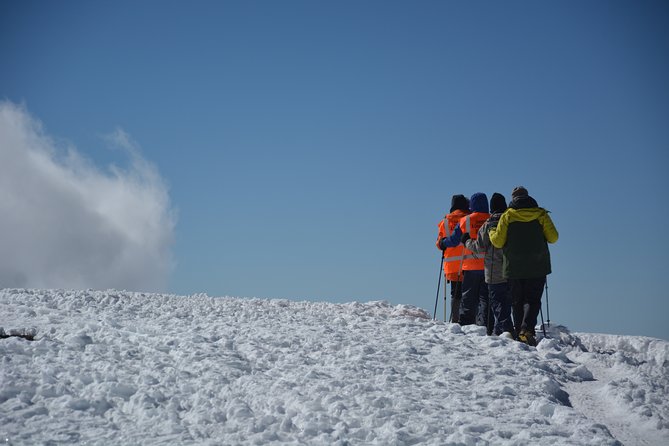
Day five crosses the saddle between Mawenzi and Kibo. This is a high, open stretch described as a lunar desert, and it takes about five hours to reach Kibo Hut.
The saddle is valuable because it shows the scale of the mountain. There is little cover, and the route feels exposed and stark compared with the forest below. Kibo rises ahead, and the summit attempt becomes an immediate concern rather than a distant idea.
Once you reach Kibo, the schedule becomes deliberately quiet. You have lunch and rest during the afternoon while waiting for the climb to begin around midnight. This split schedule can be difficult. You may not sleep well before setting out, and you must treat the afternoon as real recovery time, not wasted time.
Keep your summit clothing and essential items ready before resting. The provided details do not specify an equipment list, so ask Habari Adventure exactly what you must bring, what the crew supplies, and what is carried for you. That question is more useful than relying on a generic Kilimanjaro packing list.
Day 6: Gilman’s Point, Uhuru Peak, and the long descent
Summit day starts around midnight and lasts about 15 hours. It is the toughest part of the trip by a wide margin.
In darkness, you climb slowly toward Gilman’s Point at 5,685 meters. The guide sets a very measured pace, described as walking slowly, because conserving energy is critical. The slope is steep, and the combination of darkness, cold, altitude, and fatigue makes this a mental challenge as much as a physical one.
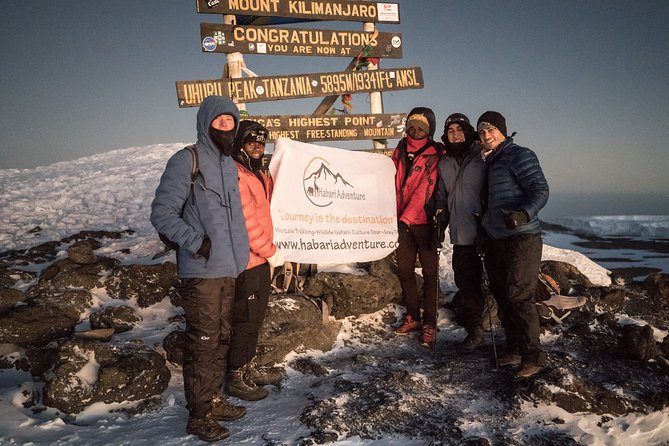
At Gilman’s Point, you have a short rest and tea while watching sunrise over Mawenzi. That view is one of the route’s strongest rewards. Afterward, you continue for almost another hour to Uhuru Peak, the highest point in Africa at 5,895 meters.
Near the summit, you pass close to glaciers and ice cliffs that still occupy much of the summit area. The wording matters here: the ice is present, but conditions can change, so do not expect a fixed view or a particular glacier scene. Take your summit photos, follow the guide’s directions, and do not linger longer than your condition allows.
After Uhuru Peak, you descend to Kibo Hut for a short rest and hot lunch. Then you continue to Horombo Hut at around 3,700 meters, where you spend the night. The descent is welcome, but it is still demanding after the summit climb. Knees and feet often feel the cost of the day, so trekking poles, careful footing, and a controlled pace are useful if you bring them.
This day is where the company’s support matters most. A guide who watches your condition, keeps the pace steady, and offers calm encouragement can make the difference between a safe summit attempt and a poor decision. The company’s strongest praise has focused on guides being patient, supportive, and reassuring, especially for solo climbers and less experienced hikers.
Day 7: Forest descent, certificates, and Moshi
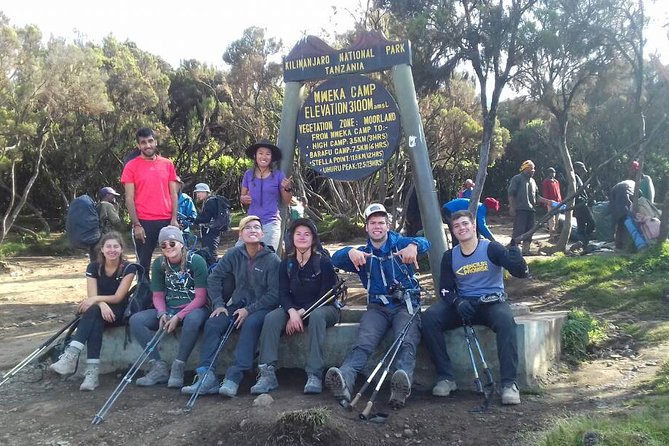
The final day takes about seven hours. You pass through heath and moorland to Mandara Hut at 2,700 meters, stop for a hot lunch, and then continue down through tropical rainforest to the Kilimanjaro National Park Gate.
At the gate, you complete park formalities and collect your certificates. A vehicle then takes you back to your Moshi hotel, where a warm shower and a celebration await.
The final descent is not a throwaway day. Seven hours on tired legs can feel long, and the change from high open ground to forest is gradual. Still, it is satisfying to retrace the mountain’s zones in reverse and finish with a clear endpoint rather than ending at a remote camp.
Guide support, group size, and the human side
The maximum group size is 15 people. That is not a private trek, but it is still small enough for guides and crew to keep track of the group more easily than on a large departure.
The company puts local leadership at the center of the trip. Its guides are trained in first aid and safety, and the stated subject areas include wildlife, plants, geography, history, archaeology, anthropology, and astronomy. If you enjoy asking questions, you should have plenty to talk about during the slower walking days.
The personal side has received particularly strong praise. Solo women have felt safe and well supported, and solo off-season climbers have sometimes ended up as the only person in their climbing group. That can create a very personal experience, though group size depends on the departure date and cannot be assumed.
Food is another point worth asking about. The trip has been praised for its organization and food, but the supplied details do not list menus or dietary arrangements. If you have allergies or dietary needs, tell the company before booking and ask for a clear answer.
Is $2,840.39 a fair price?
The listed cost is $2,840.39 per person. That is a serious sum, but a seven-day Kilimanjaro climb is not a simple walking tour. You are paying for a guided mountain operation with park access, transport from the Moshi area to the trailhead and back, a support crew, camps, meals, route planning, and safety oversight, depending on the exact inclusions in your booking.
I would not judge the price against a normal seven-day holiday. Compare it with other Kilimanjaro operators offering the same route and duration, then check what each quote includes. Ask about airport or hotel pickup, park fees, crew arrangements, meals, sleeping equipment, transfers, and any extra night before or after the climb.
The value is strongest if you want a supported ascent and do not want to organize mountain logistics yourself. The price is less attractive if you expect a private group, luxury camp facilities, or a detailed gear package that has not been confirmed. Group size, guide assignment, and inclusions should be clear before you pay.
Who should choose this climb?
This trip suits you if you have moderate physical fitness, can handle long walking days, and want a structured route with strong guide involvement. It is also a good match if you value local knowledge and prefer several gradual acclimatization days before the summit.
You should think twice if you dislike early starts, basic mountain conditions, steep climbs, or long descents. The summit day is not a gentle hike. Even fit people can find 15 hours on the mountain exhausting.
The route may also suit solo climbers. The company has experience supporting people who travel alone, and an off-season departure may have very few participants. That can feel personal and supportive, but it also means you should confirm the expected group size before booking.
Free cancellation is available if you cancel at least 24 hours before the start time. Cancellations inside that window are not refunded, and poor weather may lead to a new date or a full refund. Since weather affects a mountain climb, read the final terms carefully.
Should you book the seven-day Rongai Route?
I would choose this trip if you want a quieter Kilimanjaro approach, dramatic Mawenzi views, and a full seven-day schedule that gives you time to adjust before the summit. The strongest reasons to book are the local guide focus, patient support, small maximum group, and well-paced route structure.
I would not book without first confirming the exact pickup point, what the $2,840.39 includes, the equipment provided, dietary arrangements, and the guide assigned to your departure. If those answers are clear and you are ready for a steep midnight climb followed by a 15-hour summit day, Habari Adventure’s Rongai Route offers a serious, well-supported attempt at Africa’s highest peak.
FAQ
Where does the Kilimanjaro Rongai Route experience take place?
The climb takes place on Mount Kilimanjaro in Tanzania. The route begins at Nalemoru Gate near the Kenyan border, and the tour is associated with Moshi.
How long is the climb?
The experience lasts approximately seven days.
What time does the experience start?
The stated start time is 8:00 am. Pickup is offered, and the meeting information refers to Kilimanjaro Airport and Kilimanjaro National Park in Tanzania. Confirm the exact meeting point before departure.
What is the price?
The listed price is $2,840.39 per person.
What level of fitness do I need?
You should have a moderate level of physical fitness. The summit day is the most demanding, lasting about 15 hours and including a steep climb.
How many people can join the group?
The maximum group size is 15 people.
When does the summit climb begin?
The final ascent starts around midnight on day six.
How high is Uhuru Peak?
Uhuru Peak is approximately 5,895 meters above sea level.
Can I cancel for a full refund?
You can cancel for a full refund if you do so at least 24 hours before the experience start time. Cancellations made less than 24 hours before the start are not refunded. If poor weather causes the operator to cancel, you are offered another date or a full refund.
Just added around Moshi
- Mt Kilimanjaro 6 days Marangu route hike★ 5.0 · 3 reviews
- Wildlife Extravaganza: Manyara, Tarangire & Ngorongoro in 3 Days★ 5.0 · 3 reviews
- Private Cycle to Kilimanjaro Bike Park Safari★ 5.0 · 6 reviews
- machame route★ 5.0 · 16 reviews
- 3 Days Private E-Bike Tour in West Kilimanjaro★ 5.0 · 3 reviews
- West Kilimanjaro cycling Adventures★ 4.5 · 8 reviews
- Kilimanjaro Climb & Safari – Lemosho Route – 13 Day★ 5.0 · 10 reviews
- Kilimanjaro Climbing Umbwe Route★ 5.0 · 3 reviews
Kilimanjaro Climbs, compared.



8-Day Small-group Lemosho Kilimanjaro Summit Trekking
Read our review →



7-Day Machame Kilimanjaro Summit Tour from Arusha
Read our review →
Browse the lists this tour appears in