
Reviewed · KILIMANJARO CLIMBS
Rongai Route 6 Days 5 Nights/Kilimanjaro climb
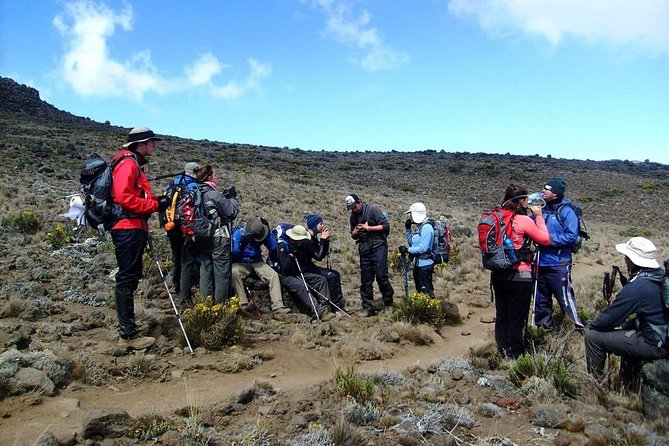
The Rongai Route gives you a different view of Kilimanjaro. You approach from the northern side near Nale Moru, close to the Kenyan border, then cross the mountain toward Kibo and descend through the Marangu side. The scenery changes quickly, from farm fields and pine forest to open moorland, volcanic desert, and the summit crater rim.
I like two things right away: the northern approach usually feels less busy than the best-known southern trails, and the route includes a useful acclimatization walk near Mawenzi Tarn. The price of $1,850 per person also covers park fees, crew wages, meals, camping equipment, accommodation, and transfers, which makes it easier to understand what you are paying for.
The main caution is the summit schedule. Day five can last 10 to 16 hours, with a midnight-style start, a summit ascent, a long descent to Kibo, and then more walking toward Horombo. Six days is workable, but it leaves less time for your body to adjust than a longer Kilimanjaro itinerary.
Key points about this six-day climb
- Northern-side approach: You start near Nale Moru, not on the original Rongai trail marked on some older maps.
- Quiet, open scenery: Expect Kenyan plain views, pine forest, moorland, Mawenzi, and the high saddle between Kilimanjaro’s main peaks.
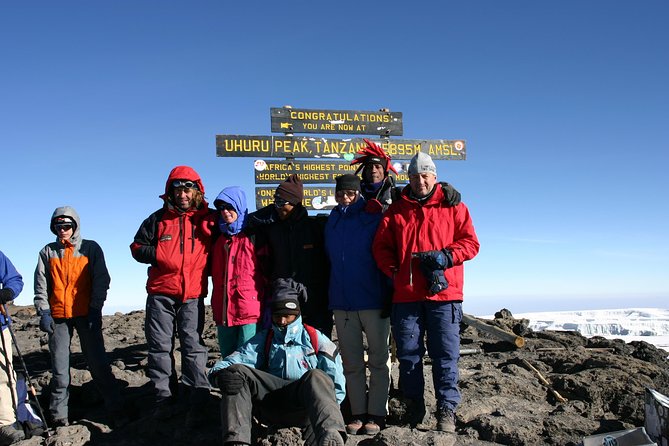
- Serious summit day: The climb to Gilman’s Point and Uhuru Peak is followed by a long descent, with up to 16 hours of walking.
- Acclimatization built in: Day three includes an afternoon walk to about 4,500 meters before sleeping at Mawenzi Tarn Hut.
- Small group size: The maximum is 15 people, large enough for company but still manageable on a mountain trail.
- Strong guide support: Names connected with the guiding team include Amos, Vitalis, Eric, Size Mrema, and Nicholas Wiso, although the exact guide assignment can vary.
Why the Rongai side of Kilimanjaro is appealing
Most people picture Kilimanjaro as a single trail leading uphill. It is not. Several routes reach the summit, and the northern approach gives you a quieter start and a gradual change in scenery.
Your day begins with a drive from Moshi or your hotel area toward Kilimanjaro National Park. After registration, the vehicle continues toward Nale Moru at about 1,950 meters. This is the modern trail used by climbers approaching from the north, even though many maps and tour descriptions still call it the Rongai Route.
The naming can be confusing. The original Rongai Route began at a border village called Rongai and was closed by authorities several years ago. The current path is also called the Loitokitok Route or the Nalemuru Route, with spelling variations including Nalemoru. For booking purposes, the important point is simple: you are taking the northern approach, not the closed historical trail.
I like the way this route starts gently. You walk through fields of maize and potatoes before reaching pine forest, rather than beginning immediately on a harsh, rocky slope. That first day gives you time to settle into the walking rhythm and check that your boots, layers, and daypack are working properly.
You should not mistake the gentle opening for an easy climb. Kilimanjaro’s altitude becomes the real challenge later, and the route rises to nearly 5,900 meters in only six days.
More Kilimanjaro Climbs in Kilimanjaro
- Kilimanjaro climb by Lemosho Route (7-day)
★ 5.0 · 651 reviews - Kilimanjaro climb, Machame Route (7-day)
★ 5.0 · 262 reviews - Kilimanjaro Climbing Lemosho Route 8 Days.
★ 5.0 · 186 reviews
Day one: fields, pine forest, and Kenyan views
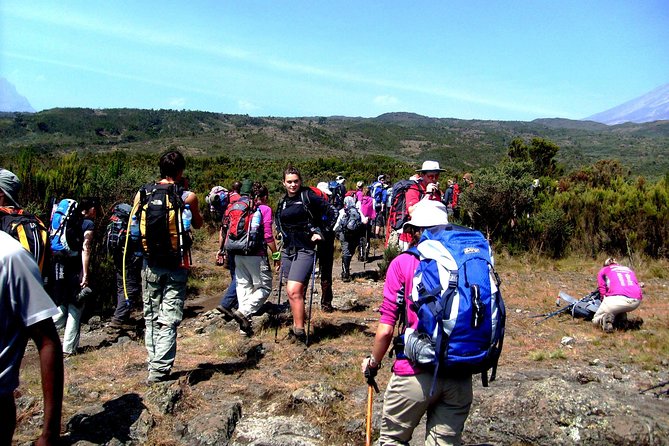
The first walk takes about three to four hours. From Nale Moru, a narrow path winds through cultivated land and then enters pine forest.
The forest gradually gives way to the moorland zone. This is a pleasant introduction to the mountain because the route feels remote without demanding a huge amount of effort on the first afternoon. Extensive views toward the Kenyan plains are the day’s main reward.
Rain is possible in the forest. Keep waterproof clothing in your daypack rather than burying it inside your main luggage. Even a short wet spell can make the first walking day uncomfortable if your rain jacket is packed away with the porter-carried gear.
Dinner and overnight arrangements begin here. Camping equipment is included, as are meals and crew wages. The supplied plan lists breakfast, lunch, and dinner coverage for the climb, but it is still sensible to confirm the exact meal arrangements and sleeping setup before departure.
Day two: Second Cave and the first serious altitude gain
Day two is longer and more demanding. You walk roughly 9 kilometers, with six to seven hours on the trail, and climb from the first campsite toward Second Cave at about 3,450 meters before continuing toward Kikelelwa Caves.
The altitude gain is listed at about 950 meters. That is a substantial increase, so your pace matters. Walk slowly, drink regularly, and tell your guide early if you develop a headache, nausea, unusual tiredness, or trouble walking steadily.
The reward is a fine view of Kibo, Kilimanjaro’s main summit cone, along with the eastern ice fields on the crater rim, if the weather cooperates. These views help you understand the mountain’s shape. You are not simply walking up one broad hill. You are moving toward a volcanic massif with separate high points and a wide saddle between them.
The night is spent near Kikelelwa Caves at about 3,800 meters. This is where the route begins to feel properly high. Sleep may be less comfortable than it was on the first night, and that is normal at altitude, but any serious symptoms should be reported rather than ignored.
Day three: Mawenzi Tarn and a useful acclimatization walk
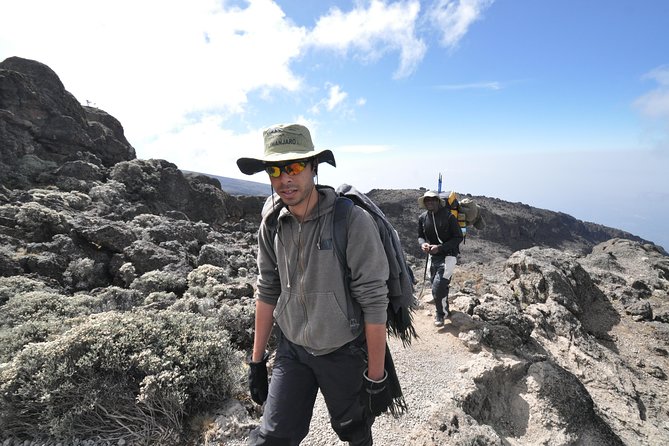
The third day is shorter, at about three to four hours, but it includes steeper sections. You leave camp on a short, sharp climb up grassy slopes, and the effort brings broad views and a stronger feeling of isolation.
By this stage, the lower vegetation zone is behind you. The surroundings become more open and spare, with fewer signs of ordinary farm life. You finish near Mawenzi Tarn Hut at approximately 4,330 meters.
The afternoon acclimatization walk reaches about 4,500 meters. This is one of the most useful parts of the plan because you gain a little more height without sleeping at that highest point. You then return to camp to spend the night lower than your afternoon high point.
That pattern matters on Kilimanjaro. Your legs get used to walking uphill, while your body receives another chance to adjust before the summit attempt. Still, the six-day schedule does not offer as much adjustment time as a seven or eight-day plan, so your fitness and response to altitude will matter.
More Kilimanjaro Climbs in Moshi:
- Kilimanjaro climb, Lemosho Route (8-day)
★ 5.0 · 148 reviews - Kilimanjaro climb, Lemosho Route (6-day)
★ 5.0 · 129 reviews - Kilimanjaro climb, Marangu route (6-day)
★ 5.0 · 72 reviews - Private Kilimanjaro Hike 7 Day Lemosho Route
★ 5.0 · 60 reviews
Day four: crossing the lunar saddle to Kibo Hut
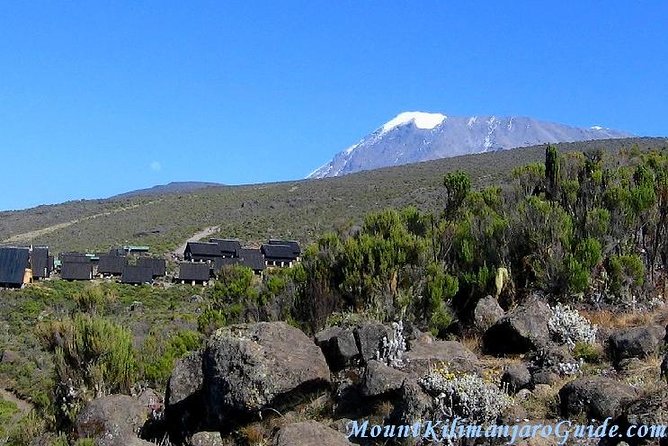
Day four takes you across the high saddle between Mawenzi and Kibo, Kilimanjaro’s two highest peaks. The walk is about 9 kilometers and takes four to five hours, with a listed altitude gain of 370 meters.
The word lunar fits the setting. The vegetation becomes sparse, and the saddle feels broad, dry, and exposed. This is not a day for rushing. The distance is moderate, but the altitude makes ordinary walking feel slower and more tiring.
You sleep at Kibo Hut at about 4,700 meters. The plan calls for an early dinner, followed by an early attempt to sleep before the summit wake-up around 1 a.m. Do not expect a normal night. Your goal is to rest as much as possible, organize your summit clothing, and keep your headlamp or torch easy to reach.
This is a good time to prepare every layer you own. The summit attempt begins in darkness and cold, and you will not want to search through your bag while the group is preparing to leave.
Day five: Gilman’s Point, Uhuru Peak, and the long descent
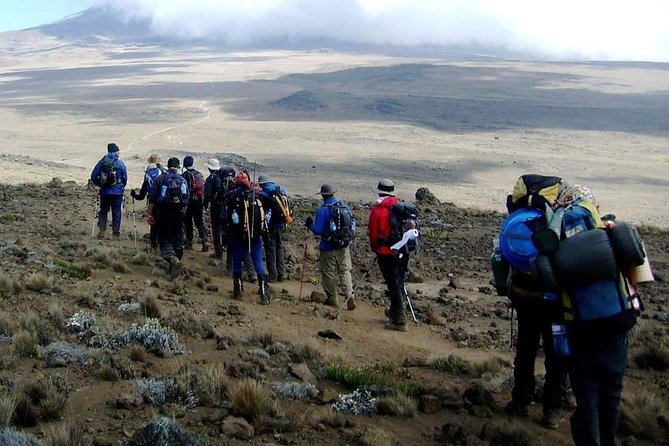
Summit day is the heart of the experience and the part you should take most seriously. You wake around 1 a.m. for a hot drink and snack, then start very slowly by torchlight.
The climb to Gilman’s Point reaches the crater rim at 5,685 meters. The route is steep and tiring, but the sunrise over Mawenzi Peak can make the effort feel worthwhile. You stop briefly at Gilman’s Point before continuing toward Uhuru Peak.
Uhuru Peak is 5,895 meters, the highest point in Africa. The final section along the crater rim adds height and distance after you have already spent hours climbing. You need patience here. The summit is not the only goal. Getting there safely and returning safely are equally important.
The listed summit ascent is about 5 kilometers, followed by around 15 kilometers of descent. You return to Kibo Hut at 4,700 meters for brunch and a rest, then continue down toward Horombo Hut at approximately 3,720 meters.
The total walking time can range from 10 to 16 hours. That wide range is important. Weather, pace, group condition, and time spent at the summit all affect the schedule. You should treat this as an endurance day, not simply a morning climb.
The descent can feel deceptively hard. Your knees and feet have already worked for hours, and loose volcanic ground can make every step awkward. Trekking poles may be useful, though the provided details do not specify equipment beyond the included camping gear.
Day six: forest descent and the return to Moshi or Arusha
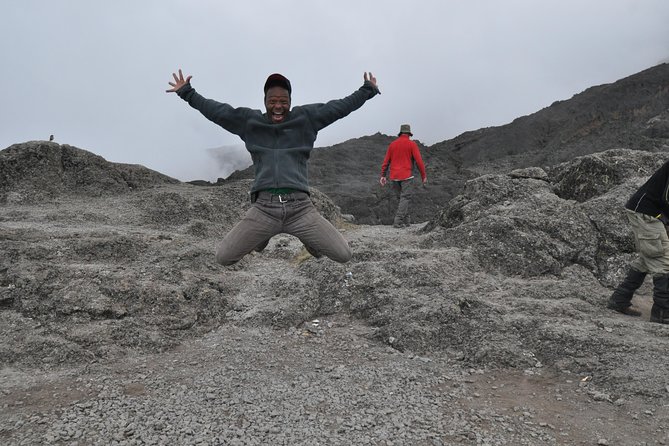
The final day is a long descent of about 20 kilometers, taking roughly five to seven hours. You leave the high mountain behind and follow good paths through lush forest toward Marangu Park Gate at about 1,700 meters.
At the gate, you sign out of the park. A driver then transfers you to your hotel in Moshi or Arusha.
After the summit day, this descent may feel straightforward, but do not underestimate it. Your muscles will be tired, and a long downhill walk can be harder than expected. Comfortable socks, well-tested boots, and a light daypack will make this final stretch easier.
The route’s north-to-south crossing is a practical advantage. You do not simply retrace your steps, so the descent offers a different setting from the opening days.
What the $1,850 price covers
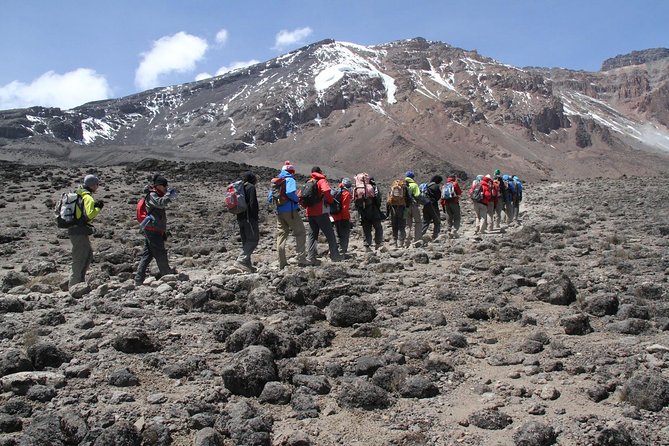
At $1,850 per person, this is not a budget walk, but the price includes several major costs that can otherwise add up quickly.
You receive:
- Camping equipment
- Kilimanjaro National Park fees
- Crew salaries
- Accommodation
- Airport transfers
- Six lunches
- Five dinners
- Five breakfasts
Park fees are a major part of any Kilimanjaro climb. Their inclusion means you are not handling one of the largest unavoidable expenses separately. Crew wages are also clearly included, which makes the listed price easier to assess.
The meal count fits a six-day schedule with five breakfasts, five dinners, and six lunches. You should still confirm what happens around arrival and departure nights, especially if your hotel stay or flight schedule adds extra days.
International flights, visas, alcohol, and soft drinks are not included. You should budget separately for those items. The price also does not state that personal gear, tips, medical evacuation cover, or additional hotel nights are included, so ask the operator to clarify those points before you pay.
Migration Venture Africa Ltd handles the experience. Pickup is offered, mobile ticketing is available, and the stated start time is 9 a.m. on the first day. Confirmation is provided at booking.
The guiding team and group size
The maximum group size is 15 people. That is not a private climb, but it is small enough for a guide team to monitor the group more closely than on a large departure.
Names connected with the mountain operation include Amos, Vitalis, Eric, Size Mrema, and Nicholas Wiso. Amos is also described as the director who handled permits, transfers, and trip logistics for some climbers. Vitalis and Eric were specifically associated with Rongai climbs, while Size Mrema and Nicholas Wiso were praised for their work on other Kilimanjaro routes.
You should confirm your assigned guide names before departure. The useful point is that the operation has an identifiable guiding structure, rather than being presented as an anonymous transfer and campsite service.
The strongest praise attached to this company focuses on practical support, organization, and encouragement during the climb. That matters on Kilimanjaro, where a good guide does more than point toward the summit. You need someone who can control the pace, watch for altitude problems, and keep the day organized when everyone is tired.
Who should choose this route
This climb suits you if you want a northern approach, quieter surroundings, and a complete summit attempt in six days. It also suits people who prefer a small organized group rather than arranging permits, transfers, crew, and meals independently.
You should have a moderate level of physical fitness. The itinerary includes several long days, repeated altitude gains, and a summit day that can last most of a full day and night. You do not need to be an experienced mountain climber, but you do need to prepare for sustained walking and cold, high-altitude conditions.
Children must be accompanied by an adult. The supplied information does not give a minimum age, so families should ask the provider before booking.
This route may not suit you if you want the most relaxed possible acclimatization schedule. A longer Kilimanjaro itinerary would generally give you more time on the mountain, but that additional time is not part of this six-day plan.
Practical preparation for the six days
Keep waterproofs, warm layers, personal medicine, snacks, and important small items in your daypack. The first day can be wet in the forest, while the summit morning requires warm clothing and a torch.
Break in your walking footwear before arrival. The route includes forest paths, steeper grassy slopes, high desert, and a long downhill finish. New boots on summit week are a poor gamble.
Use the acclimatization walk on day three as a test. Pay attention to how you feel at 4,500 meters, and speak plainly with your guide if something feels wrong. Do not try to hide symptoms because you want to keep pace with the group.
The transfer arrangements add value for people arriving through Tanzania. Pickup is offered, and the final drive goes to Moshi or Arusha. If you are coming from Amboseli in Kenya, as some past itineraries have done, confirm the border and transfer plan directly because those arrangements are not detailed here.
Free cancellation is available up to 24 hours before the local start time for a full refund. Cancellations or changes within 24 hours are not accepted for a refund.
Should you book the Rongai Route climb?
Book this experience if you want Kilimanjaro’s northern side, a route that crosses varied terrain, and an organized package with park fees, crew wages, meals, equipment, and transfers included. The Kenyan plain views, Mawenzi Tarn acclimatization walk, and different descent route give the six days a clear sense of progression.
Think carefully before booking if you are unsure about the summit schedule. The 10 to 16-hour day five is the deciding factor. You should be comfortable with a very early start, high altitude, and a long descent after reaching Uhuru Peak.
For a fit, prepared climber who values a less crowded approach and wants a clear package price, the $1,850 cost can be good value. Before confirming, ask for the final packing list, exact accommodation details, assigned guides, tipping guidance, and clarification on any medical or rescue coverage. That small check will make the booking decision much easier.
FAQ
Where does the Rongai Route climb begin?
The current northern approach begins near Nale Moru at about 1,950 meters. The original Rongai Route from the border village of Rongai was closed several years ago.
How long is the Kilimanjaro climb?
The experience lasts six days and five nights.
What time does the experience start?
The stated start time is 9 a.m. on the first day, after breakfast at your hotel.
How high is Uhuru Peak?
Uhuru Peak is 5,895 meters above sea level.
How long is the summit day?
The summit day can take between 10 and 16 hours in total. It includes the ascent to Gilman’s Point and Uhuru Peak, the descent to Kibo Hut, and the continuation toward Horombo Hut.
Is food included?
Yes. The package includes six lunches, five dinners, and five breakfasts.
What is not included in the price?
International flights, visas, alcohol, and soft drinks are not included.
More 6-Day Experiences in Moshi
- 6 Days 5 Night Safari
★ 5.0 · 57 reviews - The Best of Machame Route in 6 Days: Your World’s Summit Guide
★ 5.0 · 44 reviews - 6 Days Machame Route Kilimanjaro Climbing
★ 5.0 · 42 reviews - 6 Days Private Mount Climbing in Kilimanjaro Machame Route
★ 5.0 · 38 reviews
Just added around Moshi
- Mt Kilimanjaro 6 days Marangu route hike★ 5.0 · 3 reviews
- Wildlife Extravaganza: Manyara, Tarangire & Ngorongoro in 3 Days★ 5.0 · 3 reviews
- Private Cycle to Kilimanjaro Bike Park Safari★ 5.0 · 6 reviews
- 3 Days Private E-Bike Tour in West Kilimanjaro★ 5.0 · 3 reviews
- West Kilimanjaro cycling Adventures★ 4.5 · 8 reviews
- machame route★ 5.0 · 16 reviews
- Kilimanjaro Climb & Safari – Lemosho Route – 13 Day★ 5.0 · 10 reviews
- Kilimanjaro Climbing Umbwe Route★ 5.0 · 3 reviews
Kilimanjaro Climbs, compared.



8-Day Small-group Lemosho Kilimanjaro Summit Trekking
Read our review →



7-Day Machame Kilimanjaro Summit Tour from Arusha
Read our review →
Browse the lists this tour appears in