
Reviewed · KILIMANJARO CLIMBS
Kilimanjaro Climb by Rongai Route 6 days
Kilimanjaro’s Rongai Route gives you a different face of Africa’s highest mountain: a quieter northern approach, wide views toward Kenya, and a true wilderness feel in the first days. It is also one of the better choices during the rainy season because the north side generally receives less rain than the southern routes. The remote start is the main draw, especially if you want more space than the popular Marangu Route.
I like the steady acclimatization plan, which includes a full afternoon near Mawenzi Tarn, and I like the strong support system: licensed guides, porters, cooks, medical kits, oxygen, and oximeters. Guides including Hilary, Emmanuel, and Felix are associated with Hilbas climbs, and the team’s calm encouragement and careful assistance have been especially valued. The main drawback is the summit day: 15 hours, a midnight start, steep scree, and a long descent. This is serious mountain walking, not a casual holiday hike.
Key points to know before booking
- The Rongai Route approaches from the north, close to the Kenyan border, and begins with a quieter forest walk.
- The six mountain days are part of an eight-day trip, with one hotel night before the climb and one after.
- Mawenzi Tarn gives you a useful acclimatization afternoon at about 4,300 meters.
- Summit day lasts about 15 hours, beginning around midnight and reaching Uhuru Peak at 5,895 meters.
- The $2,282 price includes major mountain costs, such as park fees, camping, guides, porters, meals, transfers, and two hotel nights.
- The group can include up to 15 people, so ask about the expected group size before you pay.
Why Rongai is a smart route choice
The Rongai Route is Kilimanjaro’s only approach from the north. You begin near Nalemuru, close to the Kenyan border, instead of starting on the busy southern side. The early trail crosses small farm plots, then enters pine forest, giving you a more gradual and rural introduction to the mountain.
I like this route most for two kinds of climbers. First, it suits anyone who wants a quieter start and a more remote feel. Second, it makes practical sense during wetter months, when the northern side often gets less rain than routes approaching from the south.
The route later joins the southern descent near the Marangu Gate. That means you get a different ascent and descent rather than retracing the same trail. It also gives you a good mix of settings: farmland, forest, moorland, high desert, volcanic scree, glacier views, and the crater rim.
The route is not automatically easy. The gentler first days help, but altitude decides how the climb feels. You should be prepared to walk slowly, follow the guide’s pace, and accept that the summit attempt will be physically demanding.
More Kilimanjaro Climbs in Kilimanjaro
- Kilimanjaro climb by Lemosho Route (7-day)
★ 5.0 · 651 reviews - Kilimanjaro climb, Machame Route (7-day)
★ 5.0 · 262 reviews - Kilimanjaro Climbing Lemosho Route 8 Days.
★ 5.0 · 186 reviews
Day 1: A practical start in Moshi
You arrive at Kilimanjaro International Airport and meet a Hilbas representative for the transfer to your hotel. The first night is useful rather than decorative. You get a hot shower, a proper bed, a briefing, and a gear check before heading up the mountain.
The company can arrange rental equipment if you are missing something. Personal clothing, footwear, and a sleeping bag are not included in the price, so use this evening to sort out any gaps. The pre-climb check is particularly important because a small equipment problem becomes a much larger one at altitude.
The package includes airport pickup and two hotel nights, with two people sharing a room unless you pay extra for single accommodation. Check the hotel details and room arrangements before booking if privacy matters to you.
Day 2: From Nalemuru village into pine forest
The first mountain day involves some transport logistics. You are picked up at the hotel and taken to Marangu Gate for registration while the guides and porters prepare the equipment. From there, the vehicle continues to Rongai Gate, also called Nalemuru, a drive of about three hours.
Lunch is served on the way or at the gate before walking begins. The trail starts through fields of maize, beans, and potatoes. This is a useful reminder that Kilimanjaro is not an isolated rock in the middle of nowhere. People farm around its lower slopes, and the climb begins in a lived-in part of Tanzania.
The route then enters pine forest and climbs gently toward the first camp. The stated distance is 8 kilometers, with about six hours of walking, from 1,900 meters to 2,626 meters. You may find the wildlife interest limited and unpredictable, but the forest can offer the chance to spot black-and-white colobus monkeys.
This is a good opening day because the ascent is gradual. Still, the long transfer and registration process can make the day feel longer than the distance suggests. Keep water and a small snack handy during the drive and wait patiently while the crew handles the permits and gear.
Day 3: Moorland and the Mawenzi viewpoint
After breakfast, you continue through moorland toward the second cave. Lunch is planned there, followed by a slow walk across a series of small ups and downs. The path turns southeast toward Mawenzi Peak, Kilimanjaro’s jagged second summit.
The day covers about 12 kilometers and takes around seven hours. You climb from 2,626 meters to 3,600 meters, then descend slightly to a sheltered valley camp at about 3,450 meters. That small descent is part of the route’s acclimatization pattern, giving you some time higher up before sleeping a little lower.
The scenery changes quickly. The thick lower forest gives way to open slopes and low vegetation, with broad views and less shelter from wind or sun. The Mawenzi setting is one of the route’s best features. Its sharp volcanic ridges provide a dramatic contrast to Kibo, the rounded summit cone you will attempt later.
Walk slowly here. The itinerary repeatedly stresses a very gentle pace, and that is good mountain practice. You may feel strong at this point, but altitude symptoms can appear after the walking stops, not only during the climb.
More Kilimanjaro Climbs in Moshi:
- Kilimanjaro climb, Lemosho Route (8-day)
★ 5.0 · 148 reviews - Kilimanjaro climb, Lemosho Route (6-day)
★ 5.0 · 129 reviews - Kilimanjaro climb, Marangu route (6-day)
★ 5.0 · 72 reviews - Private Kilimanjaro Hike 7 Day Lemosho Route
★ 5.0 · 60 reviews
Day 4: A high camp at Mawenzi Tarn
This is a short but steep day. You walk only about 5 kilometers, yet the climb takes roughly six hours as the trail rises from 3,600 meters to 4,300 meters. Grassy slopes give way to the alpine desert zone, with less plant cover and a more exposed feel.
The reward is Mawenzi Tarn Hut and the open views around it. You arrive in time for lunch, then have the afternoon to explore nearby and rest. I consider this one of the most valuable parts of the itinerary because you spend meaningful time at altitude without also covering a huge distance.
The afternoon should be treated as acclimatization, not an opportunity to prove your fitness. A slow walk near camp can help you adjust, but conserve energy. Drink the beverages offered, eat even if your appetite is weak, and tell the guide if you develop a headache, nausea, dizziness, or unusual fatigue.
The camp at 4,300 meters can also be cold and uncomfortable. The route may be quieter than Marangu, but quiet does not mean easy. Your tent, sleeping bag, clothing, and sleeping habits matter more each night.
Day 5: Crossing the Saddle to Kibo Hut
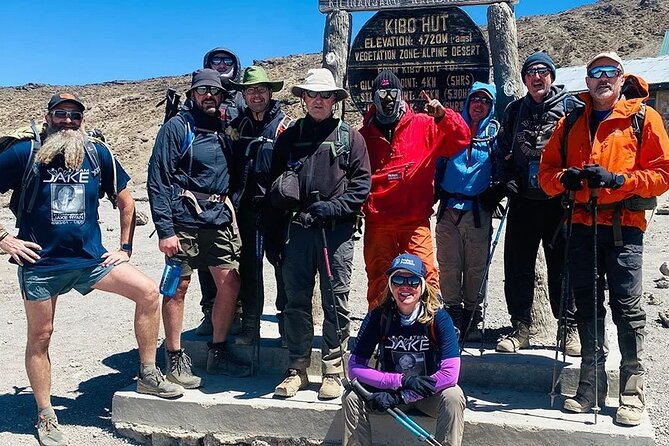
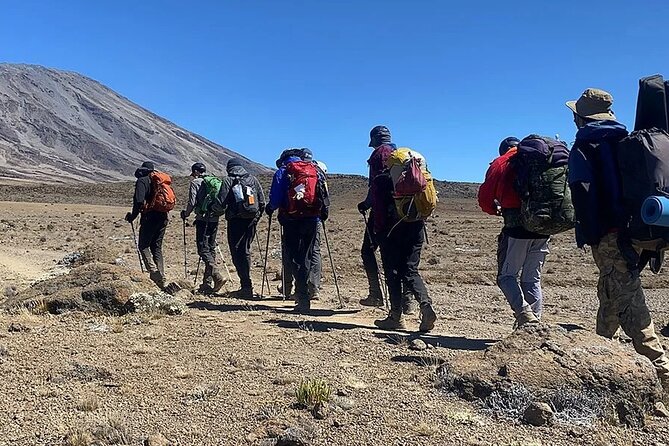
You leave Mawenzi Tarn and cross the Saddle, the high desert between Mawenzi and Kibo. The route heads west across dry, open ground to Kibo Hut at approximately 4,720 meters.
The distance is about 10 kilometers, and the walking time is listed as six hours. The terrain is not described as technically difficult, but the altitude makes every step more demanding. There is little vegetation and a lot of open volcanic ground. The views of the two major peaks are the day’s main reward.
Lunch may be packed along the way or served hot at Kibo Hut, depending on your pace. That flexibility is useful because the group may spread out as people adjust to the altitude. At camp, you receive an early dinner and go to bed for a short rest before the summit attempt.
This evening is not a normal night. You will be woken around 11:00 p.m. for tea and biscuits, then begin the climb around midnight. Try to organize your summit clothing and daypack before sleeping so you do not waste energy later.
Day 6: The midnight climb to Uhuru Peak
Summit day is the physical center of the trip and the part you need to understand clearly before booking. The total walking distance is about 21 kilometers, with approximately 15 hours on the trail. You climb from 4,720 meters to Uhuru Peak at 5,895 meters, then descend all the way to about 3,720 meters.
The midnight start is designed to put you on the crater rim around sunrise, though exact timing depends on your pace and conditions. The route climbs volcanic scree by switchback, passing William Point at about 5,000 meters and Hans Meyer Cave at about 5,200 meters. Hans Meyer Cave serves as a useful rest point before the steepest sections.
The approach to Gillman’s Point, at about 5,681 meters, is steep and covered with loose stone. This is where physical effort and mental focus matter most. From Gillman’s Point, the trail follows the crater rim toward Uhuru Peak, the highest point on Kilimanjaro.
The final section takes you past the crater and toward the summit. The reward is not only the summit sign. You also get the high volcanic setting, views across the crater, and the knowledge that you have climbed from cultivated foothills through several vegetation zones to the Arctic zone.
After reaching the summit, you descend to Kibo Hut for a short break before continuing toward the lower camp. The descent is long and can be harder than expected because your legs are tired and the loose scree works against you. Eat and drink during the day, and follow the guide’s instructions even if you are focused only on reaching the top.
Hilbas provides oxygen cylinders, oximeters, medical kits, and guides with Wilderness First Aid certification. Those provisions are valuable, but they do not remove altitude risk. The guides decide how to respond if someone becomes unwell, and you need to report symptoms honestly rather than trying to hide them.
Day 7: Through moorland and rainforest to Marangu Gate
After breakfast, the descent continues from about 3,720 meters to 2,720 meters. The day covers around 19 kilometers and takes roughly eight hours, so you still have a full walk after summit day.
The trail passes through moorland and then rainforest. The change is welcome. Tall trees, flowers, and birds return as you lose altitude, and the air gradually feels easier. After the stark upper mountain, the forest can seem full of life.
The route finishes at Marangu Gate, where you sign out and receive your completion certificate. A vehicle then takes you back to the hotel. Along the way, you pass coffee and banana farms around the Marangu villages, adding a final glimpse of the agricultural communities around Kilimanjaro.
This is a tired day. Your knees and feet may be sore, and the 19-kilometer descent is not a minor add-on. Use trekking poles if you normally rely on them, and save clean clothes for the hotel rather than carrying more than you need on the mountain.
Day 8: Airport transfer and departure
After an early breakfast, you are transferred to Kilimanjaro International Airport for your flight home. The airport transfer is included, which makes the final morning simpler.
The schedule is described as an eight-day trip, despite the product title calling it a six-day climb. The difference is the two hotel and transfer days: one before the mountain and one after it. When comparing prices, count the full eight-day arrangement rather than only the six days of hiking.
What the $2,282 price covers
At $2,282 per person, the price includes the costly and essential parts of a Kilimanjaro climb. Park entry, camping, vehicle, and rescue fees are covered. You also receive airport and hotel transfers, two hotel nights, a shared tent, group camping equipment, guides, porters, cooks, and camp staff.
Three meals a day are provided on the mountain, along with drinks such as coffee, tea, Milo tea, and water. Vegetarian, vegan, lactose-free, gluten-free, halal, and other meal plans are available. The package lists seven breakfasts, five lunches, and five dinners, so check the final meal schedule against your flights and hotel nights.
The price does not include international flights, a Tanzania visa, travel insurance, personal mountain gear, laundry, phone costs, souvenirs, or crew tips. Single hotel and tent arrangements cost extra.
The value is strongest if you need transfers, equipment support, meals, and a full mountain crew arranged in one booking. It is less attractive if you already have local transport, camping gear, or a separate hotel plan. Ask for a current list of rental prices and the recommended tipping arrangement before you commit.
Food, tents, porters, and daily support
You share a tent with another climber unless you pay for a single arrangement. The crew also carries mountain equipment and sets up the group dining system, including a dining tent, tables, chairs, and crockery.
The cook is an important part of this trip. The food plan is designed to provide breakfast, lunch, and dinner at altitude, and the available dietary choices make the package workable for many eating preferences. Tell the company about your needs before arrival, not at the first camp.
The support crew includes assistant guides, camp masters, porters, and cooks. The professional team has been praised for calm encouragement, careful assistance, and strong cooking. Hilary has been singled out for steady support, while Emmanuel and Felix are also names to ask about when discussing the guide team.
A maximum group size of 15 is stated. That is small enough for personal attention but large enough that walking speeds may differ. Ask how many climbers are expected on your departure and how the guide-to-climber ratio will work.
Who should book this Kilimanjaro climb?
I would choose this route if you want a quieter northern approach, prefer camping to a hut-based route, and value having transport, food, porters, and safety equipment organized together. It also makes sense if you are considering a climb during the rainy season and want the generally drier side of the mountain.
You should have a moderate level of physical fitness, but fitness alone is not a guarantee of success. The key demands are long walking days, sleeping at altitude, cold conditions, and the ability to keep moving slowly for many hours.
This is not the best choice if you want a short sightseeing activity, dislike camping, or cannot commit to a 15-hour summit day. You should also avoid treating the included oxygen and medical kit as a substitute for travel insurance. Insurance is not included and should cover mountain rescue and high-altitude trekking.
Book at least six full days before the local start time if you want the stated full-refund option. Cancellation two to six full days before departure gives a 50 percent refund, while cancellation within two days is nonrefundable.
Should you book the Rongai Route?
Book this climb if the quieter northern trail, Mawenzi views, strong crew support, and all-in mountain logistics match what you want. The itinerary offers a sensible altitude schedule, a useful acclimatization afternoon, and a rewarding descent through rainforest and coffee country.
Think carefully if you are underestimating summit day. The 21-kilometer distance and 15-hour schedule are the real test, not the easier first morning. If you accept that challenge, Hilbas Tours provides a well-supported route with a clear structure and a price that covers most of the major costs.
FAQ
How long is the Kilimanjaro climb?
The mountain portion lasts six hiking days, but the complete arrangement lasts about eight days. The extra time covers one hotel night before the climb, one hotel night after it, airport transfers, and the departure transfer.
Where does the Rongai Route begin?
The route begins near Nalemuru village at Rongai Gate on Kilimanjaro’s northern side, close to the Kenyan border. Transport to the gate takes about three hours after registration at Marangu Gate.
What is the highest point reached?
The summit is Uhuru Peak, at 5,895 meters or 19,341 feet. The summit attempt begins around midnight from Kibo Hut.
How long is summit day?
Summit day takes about 15 hours and covers approximately 21 kilometers. It includes the climb to Uhuru Peak and the descent to the lower camp.
Are airport transfers included?
Yes. Pickup from Kilimanjaro International Airport and the transfer back to the airport are included. Transfers between the hotel and Kilimanjaro National Park are also included.
Are meals included?
Three standard meals per day are provided on the mountain. The package also includes drinks such as coffee, tea, Milo tea, and water. Dietary plans including vegetarian, vegan, lactose-free, gluten-free, and halal meals are available.
Is mountain equipment included?
Group camping equipment is included, along with tents, a dining tent, tables, chairs, and crockery. Personal gear such as hiking clothes, footwear, and sleeping bags is not included, but rental equipment is available.
What is the cancellation policy?
Cancellation at least six full days before the start time qualifies for a full refund. Cancellation two to six full days before the start time qualifies for a 50 percent refund. Cancellation within two days is nonrefundable.
More 6-Day Experiences in Moshi
- 6 Days 5 Night Safari
★ 5.0 · 57 reviews - The Best of Machame Route in 6 Days: Your World’s Summit Guide
★ 5.0 · 44 reviews - 6 Days Machame Route Kilimanjaro Climbing
★ 5.0 · 42 reviews - 6 Days Private Mount Climbing in Kilimanjaro Machame Route
★ 5.0 · 38 reviews
Just added around Moshi
- Mt Kilimanjaro 6 days Marangu route hike★ 5.0 · 3 reviews
- Wildlife Extravaganza: Manyara, Tarangire & Ngorongoro in 3 Days★ 5.0 · 3 reviews
- Private Cycle to Kilimanjaro Bike Park Safari★ 5.0 · 6 reviews
- 3 Days Private E-Bike Tour in West Kilimanjaro★ 5.0 · 3 reviews
- West Kilimanjaro cycling Adventures★ 4.5 · 8 reviews
- machame route★ 5.0 · 16 reviews
- Kilimanjaro Climbing Umbwe Route★ 5.0 · 3 reviews
- Kilimanjaro Climb & Safari – Lemosho Route – 13 Day★ 5.0 · 10 reviews
Kilimanjaro Climbs, compared.



8-Day Small-group Lemosho Kilimanjaro Summit Trekking
Read our review →



7-Day Machame Kilimanjaro Summit Tour from Arusha
Read our review →
Browse the lists this tour appears in