
Reviewed · KILIMANJARO CLIMBS
Kilimanjaro climb, Rongai Route (7-day)
Rongai gives you a quieter way up Mount Kilimanjaro, approaching Africa’s highest mountain from the Kenyan side before crossing toward the southern descent. You’ll move from conifer forest to open heath, volcanic rock, and the cold Arctic desert near Uhuru Peak, with tents, cooks, porters, and guides handling the camp work.
I like the route’s gradual altitude gain, especially the built-in acclimatization walks on Days 3 and 5. I also like the practical support: hotel nights, airport transfers, three hot meals a day, oxygen, medical checks, and guides trained as Wilderness First Responders. The main caution is simple: 7 mountain days does not make this easy. Summit night is long, cold, and physically demanding, and altitude can stop even a fit person.
Key points to know before booking
- Rongai is one of Kilimanjaro’s quieter routes: The northern approach usually offers a calmer feel than the more heavily used trails, though conditions and camp activity can vary.
- The route includes useful acclimatization walks: You gain height during the day, then return to sleep lower, a sensible pattern for adjusting to altitude.
- The summit is 5,895 meters high: The final climb tests your breathing and circulation more than your leg strength, so a slow pace matters.
- Your camp runs like a small mountain kitchen: Cooks prepare three meals daily, with vegetarian, gluten-free, halal, and other meal requests available.
- Safety support is built into the price: Certified Wilderness First Responder guides, oximeters, oxygen tanks, medical kits, and regular health checks are included.
- The descent uses the Marangu side: You climb through Rongai and finish through Marangu Gate, giving you two different sides of Kilimanjaro.
What the $3,507 price covers
At $3,507 per person, this is not a budget walk in the park. The fee includes major costs that can add up quickly on Kilimanjaro: national park fees, airport transfers, ground transport, two hotel nights, mountain tents, sleeping pads, dining equipment, porters, camp staff, cooks, guides, meals, drinks, and medical equipment.
That package makes the price easier to understand. You are paying for a full mountain operation, not just someone to show you a trail. The porters carry the shared equipment, camp masters set up camp, cooks prepare food, and guides monitor your health. You still need to budget for your flight, visa, insurance, personal gear, hotel meals, and tips for the crew.
Single accommodation at the hotel and in a tent costs extra. Standard arrangements put two people in a hotel room and two hikers in a North Face VE-25 tent. Solo climbs have different arrangements, so check the supplement before booking.
I consider the included support a strong part of the value, especially for a first Kilimanjaro climb. The price also covers airport pickup and drop-off, which removes a layer of airport negotiation after a long international flight. It is worth confirming exactly what your quote includes, particularly if you want a private room or need to hire boots, a sleeping bag, or other equipment.
More Kilimanjaro Climbs in Kilimanjaro
- Kilimanjaro climb by Lemosho Route (7-day)
★ 5.0 · 651 reviews - Kilimanjaro climb, Machame Route (7-day)
★ 5.0 · 262 reviews - Kilimanjaro Climbing Lemosho Route 8 Days.
★ 5.0 · 186 reviews
Arrival in Moshi and the first briefing
Your trip begins at Kilimanjaro International Airport, where an Altezza Travel representative meets you and takes you to Aishi Machame Hotel. Check-in begins at 2:00 PM. The hotel includes hot water, Internet access, a swimming pool, and staff to help you settle in before the climb.
The evening briefing is more important than it sounds. Use it to check your clothing, boots, daypack, water system, and sleeping arrangements. Ask about the expected pace and the summit-night plan. If you are missing personal equipment, gear hire is available for an additional fee.
You should arrive with enough time to rest. The mountain begins the next morning, and the first day is not the place to discover that your boots rub or your warm layers are inadequate.
Day 2: Nalemuru Gate to Simba Camp
The mountain section starts at Nalemuru Gate, at about 2,020 meters. Your head guide handles park permits and search-and-rescue registration while the crew prepares for the first walking day.
The trail rises through conifer forest to Simba Camp at 2,625 meters. The trek takes around five hours and is described as moderate. That does not mean you should race it. Your best strategy is a steady, comfortable rhythm from the first hour, since saving energy early helps later.
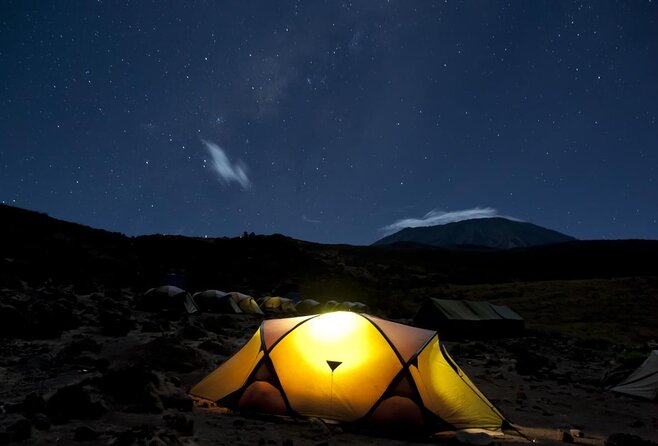
At camp, the crew pitches the tents and prepares dinner. This is one of the practical pleasures of a supported climb. You can focus on eating, drinking, and resting instead of putting up shelter after a day on the trail.
The forest is a pleasant opening to the route, but it can also be wet, particularly in rainy periods. One recent departure took place during peak rainy season, and the crew helped the climbers manage the conditions. Bring rain protection for yourself and your daypack, even if the forecast looks friendly.
Day 3: Second Cave and the first acclimatization walk
From Simba Camp, you walk to Second Cave Camp at 3,480 meters. The main section takes around three hours, leaving useful time to rest after lunch.
The important feature is the afternoon acclimatization walk toward Kikilewa Camp. You gain about 100 meters, then return to sleep at Second Cave. This is the classic climb-high, sleep-lower pattern, and it gives the guides a chance to see how your body responds before the route gets harder.
Do not treat the short walking time as permission to overdo the afternoon. The goal is adjustment, not an extra workout. Eat even if your appetite fades, drink regularly, and tell your guide about headaches, nausea, dizziness, unusual tiredness, or breathing trouble.
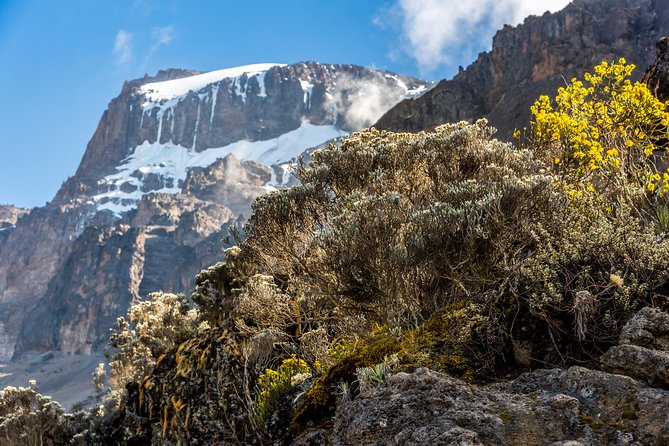
The camp’s setting becomes more open as the forest thins. You may have time to look around, but do not count on clear views. Clouds can cover Kibo and Mawenzi, and mountain weather can change fast.
More Kilimanjaro Climbs in Moshi:
- Kilimanjaro climb, Lemosho Route (8-day)
★ 5.0 · 148 reviews - Kilimanjaro climb, Lemosho Route (6-day)
★ 5.0 · 129 reviews - Kilimanjaro climb, Marangu route (6-day)
★ 5.0 · 72 reviews - Private Kilimanjaro Hike 7 Day Lemosho Route
★ 5.0 · 60 reviews
Day 4: Kikilewa Camp and a useful rest window
After breakfast, you continue to Kikilewa Camp at 3,630 meters. The day takes around eight hours, though the walking is arranged as a relief day with time to rest after lunch.
Kikilewa is a good place to pause because Kibo Volcano can appear at its most impressive from here when the weather is clear. That view gives you a direct sense of the climb ahead. It also reminds you that the mountain is a long physical effort, not one dramatic push.
The evening health check is a key part of the program. Your guide assesses how each person is doing and explains the next day’s plan. Be honest during this check. A guide can adjust pace and support, but cannot help with a problem you hide.
This is one of the better days to wash, organize your sleeping bag, refill bottles, and prepare the layers you will need. Small chores become harder when you are tired and higher up.
Day 5: Mawenzi Tarn and the second altitude walk
You leave Kikilewa for Mawenzi Tarn Camp, located near Mawenzi Volcano, Kilimanjaro’s second major summit. The walking day takes about seven hours, followed by lunch and a two-hour rest.
The afternoon acclimatization hike gains about 200 meters toward Mawenzi before returning to camp. It adds time at altitude without forcing you to sleep at the higher point. That gradual exposure is one reason the seven-day version is a sensible choice for people who want more adjustment time.
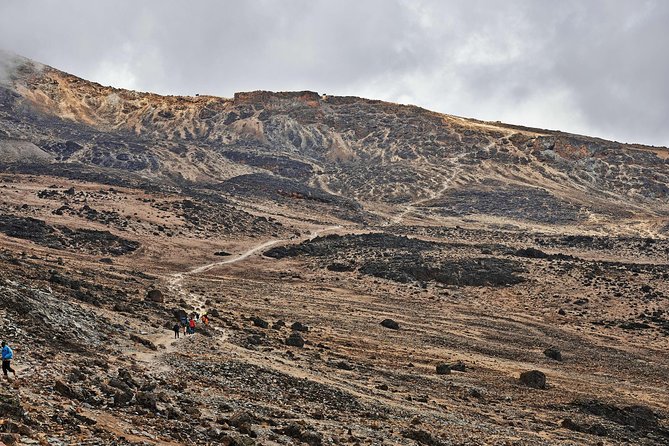
Mawenzi gives this camp a different character from the earlier forest and heath sections. The route is becoming rockier, more exposed, and less forgiving of poor clothing choices. Pack gloves, warm layers, sun protection, and a hat where you can reach them quickly.
You should also prepare mentally for the next two days. From here, the schedule becomes more serious. The purpose of the afternoon rest is not optional comfort. It stores energy for the high camp and the summit attempt.
Day 6: Kibo Camp and the cold volcanic desert
The route now heads toward Kibo Summit Camp, around 4,700 meters. Some trip details also refer to School Hut Camp at about 4,715 meters, so confirm the exact sleeping camp during your briefing. Either way, this is your high camp before the summit.
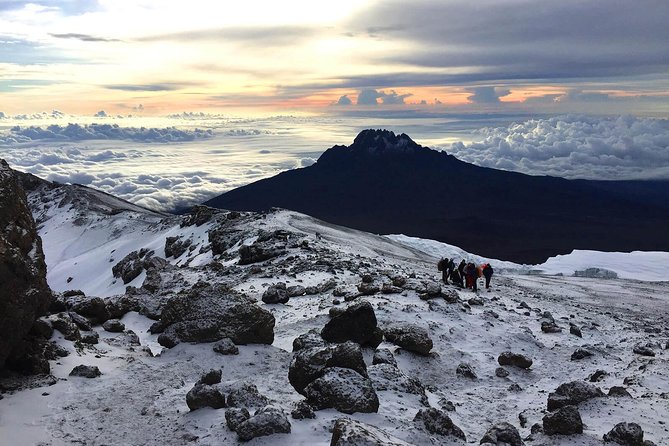
The scenery changes to a rocky semidesert. Plant life becomes scarce, the air feels thin, and the mountain can seem much larger than it did below. The walk itself may feel manageable, but that can be misleading. Altitude often makes ordinary tasks feel slow and surprisingly tiring.
The day is listed at around 14 hours, reflecting the long schedule around high camp and the night ascent that follows. Once you arrive, eat, drink, arrange your summit clothing, and sleep if you can. Avoid strenuous activity. Your guide will tell you when to wake for the summit push.
This is the point where a good daypack matters. Keep water, snacks, headlamp, warm clothing, gloves, and personal medication within easy reach. You do not want to unpack your whole bag in a cold tent.
Day 7: Midnight push to Uhuru Peak
The summit attempt begins at night from high camp. The climb to Uhuru Peak, at 5,895 meters, is not mainly a test of muscle. The thin air places more strain on your cardiovascular system, and the moderate slope can still feel punishing.
The best advice is to go slowly and listen to your guide. During this section, one guide is assigned to every two climbers, with fitness checked throughout the ascent. That close attention is especially useful if one person in your group is moving more slowly or showing signs of altitude trouble.
At the top, the reward is the roof of Africa, along with views that may stretch across glaciers and surrounding volcanic terrain when the weather cooperates. A walk on the nearest glacier may be possible, but it depends on conditions and your guide’s judgment. Do not let a photograph tempt you into pushing beyond your safe limits.
The descent is not an afterthought. You continue down to Horombo Camp at 3,720 meters, with a two-hour rest stop at Kibo Camp. Your legs may feel relieved to be going downhill, but fatigue and loose ground can cause mistakes. The safest pace is controlled, with careful foot placement.
The listed day takes around 12 hours. That is a very long day, and you should expect to be tired, dusty, and ready for a proper meal and sleep at Horombo.
Day 8: Marangu Gate and the return to the hotel
After breakfast, you make the final descent to Marangu Gate at approximately 1,860 meters. The route gives you time to let the achievement sink in, though your knees may have their own opinion.
At the gate, you can exchange memories with the support crew before returning to the company offices. Certificates are presented there, followed by transport back to Aishi Machame Hotel.
This final hotel night is valuable. You get a shower, a real bed, and a chance to organize your belongings before the airport transfer. The mountain days are demanding enough that I would not plan an immediate long connection unless your flight schedule leaves plenty of room.
Day 9: Hotel rest and airport transfer
The final day is mainly for rest and transportation. Hotel checkout is at 11:00 AM. If your flight leaves later, a late checkout can be arranged for an extra fee.
Airport pickup and drop-off are included, as is the ground transportation connected with the climb. Lunch and dinner at the hotel are not included, so plan for those costs. The exact transfer time depends on your departure schedule, but keeping the day light is sensible after the summit descent.
Meals, tents, and the human support team
Three meals a day are included on the mountain, with tea, coffee, juices, soda, and other drinks. Vegetarian, gluten-free, halal, and other meal requests can be arranged. Tell the operator about dietary needs before arrival, not at the first camp.
The dining tent includes tables, chairs, crockery, and cutlery. That setup matters in cold or wet weather. Sitting down to eat properly is easier than trying to balance food on your lap inside a sleeping tent.
The crew includes certified Wilderness First Responder guides, porters, camp masters, cooks, medical kits, oxygen tanks, and oximeters. Health checks take place during the climb. Names praised for their care and organization include guides Jackson, Joseph, Frank, Athumani, Amos, Elia, and Solomon, along with support staff such as Ivan, Leonard, and Evance. Staff assignments can change, so treat these as examples rather than guaranteed members of your team.
The personal human touch can be memorable. One family received a birthday cake at the first camp, and another account praised the cooks for cakes served with chai. Those details are not the reason to book a mountain climb, but they show how much morale can matter when the weather turns or summit night feels endless.
Who should choose the Rongai Route
This route suits you if you want a quieter approach, a full seven mountain days, and a structured support team. It also works well for first-time high-altitude hikers who value a gradual schedule rather than the shortest possible route.
You still need moderate physical fitness. You should be comfortable walking for several hours, carrying a daypack, and managing a very long summit day. Gym fitness alone is not enough, since the climb also asks for patience, cold-weather tolerance, and careful pacing.
Families and solo climbers can use the trip, but the same altitude risks apply to everyone. A 12-year-old successfully completed a climb with strong guide support, but that does not mean the route is suitable for every child. Discuss age, health, and fitness with the operator before booking.
You should also buy insurance covering trekking up to 6,000 meters and helicopter evacuation. It is not included, and ordinary travel insurance may not cover this altitude or activity.
Booking, cancellation, and final decision
Pickup begins from Kilimanjaro International Airport, and confirmation is provided at booking. This is a private activity for your own group, not an open group departure, and group discounts may be available.
Free cancellation applies when you cancel at least 24 hours before the local start time. Cancellations or changes inside that window are not refunded or accepted.
I would book this climb if you want a well-supported, slower route with hotel nights, full park administration, meals, porters, and close health monitoring already arranged. I would hesitate only if you want a cheap trek, dislike camping, or have not prepared for the physical and medical demands of 5,895 meters.
The Rongai Route offers fine scenery, less crowded walking, and a thoughtful altitude schedule. Its real value comes from the complete mountain operation around you. Pack carefully, train for long walking days, insure the trip properly, and treat the summit as a bonus rather than a guarantee.
FAQ
How long does the full Kilimanjaro experience last?
The full experience lasts approximately nine days, including arrival, two hotel nights, seven mountain days, the descent, and airport transfer.
What is the price per person?
The listed price is $3,507 per person.
Where does the climb begin?
The climb begins at Nalemuru Gate, the northern entrance to Kilimanjaro National Park, at about 2,020 meters.
How high is Uhuru Peak?
Uhuru Peak is 5,895 meters above sea level.
Are airport transfers included?
Yes. Pickup and drop-off at Kilimanjaro International Airport are included, along with ground transportation.
Are hotel nights included?
Yes. Two nights at Aishi Machame Hotel are included, with two people per room under the standard arrangement.
What food is provided on the mountain?
Three meals a day are provided, along with drinks such as tea, coffee, juices, and soda. Vegetarian, gluten-free, halal, and other meal options are available.
Is personal hiking equipment included?
No. You must provide or hire personal clothing, boots, a sleeping bag, and other personal gear. Equipment hire is available for an extra fee.
Is travel insurance included?
No. Insurance covering trekking up to 6,000 meters and helicopter evacuation is not included but is highly recommended.
More 7-Day Experiences in Moshi
- Climbing Kilimanjaro through 7 days Machame Route
★ 5.0 · 151 reviews - 7-Day Magical Tanzania Safari -Premium High End Package
★ 5.0 · 53 reviews - 7 Days Machame route – Kilimanjaro
★ 5.0 · 45 reviews - Best Kilimanjaro Adventure 7 days Machame route Trekking
★ 5.0 · 42 reviews
Just added around Moshi
- Mt Kilimanjaro 6 days Marangu route hike★ 5.0 · 3 reviews
- Wildlife Extravaganza: Manyara, Tarangire & Ngorongoro in 3 Days★ 5.0 · 3 reviews
- Private Cycle to Kilimanjaro Bike Park Safari★ 5.0 · 6 reviews
- 3 Days Private E-Bike Tour in West Kilimanjaro★ 5.0 · 3 reviews
- West Kilimanjaro cycling Adventures★ 4.5 · 8 reviews
- machame route★ 5.0 · 16 reviews
- Kilimanjaro Climb & Safari – Lemosho Route – 13 Day★ 5.0 · 10 reviews
- Kilimanjaro Climbing Umbwe Route★ 5.0 · 3 reviews
Kilimanjaro Climbs, compared.



8-Day Small-group Lemosho Kilimanjaro Summit Trekking
Read our review →



7-Day Machame Kilimanjaro Summit Tour from Arusha
Read our review →
Browse the lists this tour appears in