
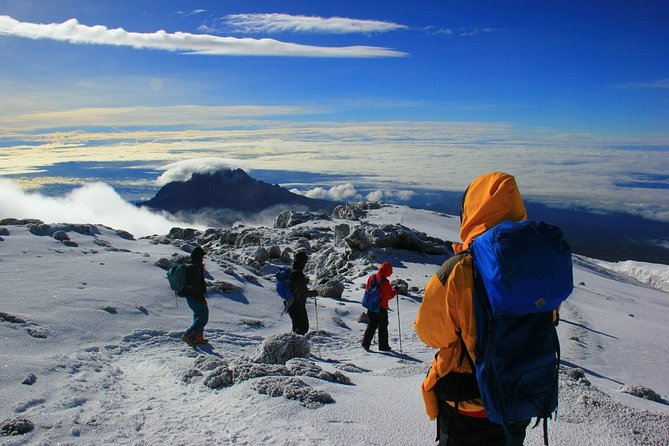
Reviewed · KILIMANJARO CLIMBS
Kilimanjaro climb, Rongai Route (6-day)
The most appealing part of this 6-day Rongai Route climb is its quieter northern approach to Kilimanjaro. You begin near Nalemuru Gate, walk through coniferous forest and high desert, then finish at Uhuru Peak, 5,895 meters above sea level. The route is less traveled than several southern approaches, which gives the mountain a more remote feel.
I like the practical all-in-one setup: airport transfers, two hotel nights, park fees, tents, cooks, porters, meals, medical checks, and certified Wilderness First Responder guides are covered. I also like the careful acclimatization plan, especially the extra walk near Mawenzi Tarn Camp. The catch is simple: six climbing days is a short schedule, so this route suits fit regular hikers and people with prior high-altitude experience better than first-time mountain walkers.
Key points to know before you book
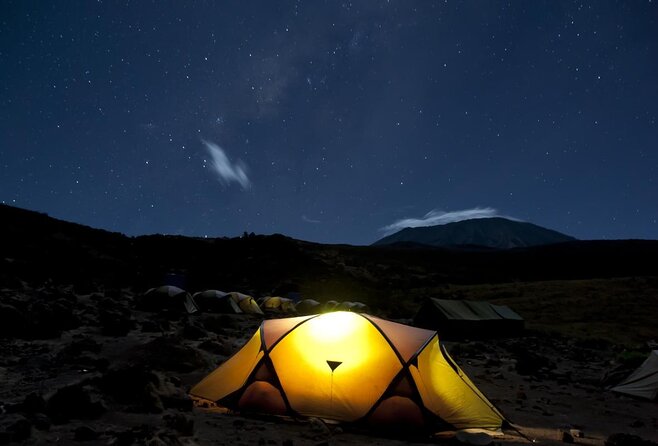
- The summit is reached from School Hut Camp at 4,715 meters, with a night departure and a long descent afterward.
- Rongai is one of Kilimanjaro’s quieter routes, approaching from the northern side and descending by the Marangu route.
- The Mawenzi Tarn acclimatization walk adds about 200 meters, an important short hike before the summit push.
- Two hotel nights at Aishi Machame Hotel are included, one before and one after the mountain.
- Medical support is built into the trip, including oximeters, oxygen tanks, medical kits, and routine checks.
- The $3,064 price covers the major mountain costs, but flights, visa, personal gear, insurance, and crew tips remain your responsibility.
Why the Rongai Route feels different
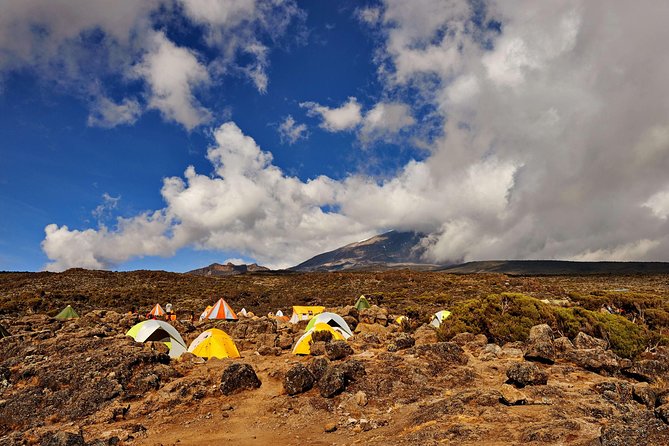
Kilimanjaro is not a technical climbing trip in the usual mountaineering sense, but altitude makes it serious. The Rongai Route offers a gradual walk through several climate zones, with the added appeal of approaching Africa’s highest mountain from the northern side.
This route is known for lighter foot traffic. That does not mean you will have the mountain to yourself, and the summit night can still feel busy, but the early walking days should feel less crowded than some better-known routes. You also get a useful change of scenery because the ascent and descent use different sides of the mountain.
The tradeoff is acclimatization time. Six days on the mountain is efficient, not leisurely. I would consider it for someone who hikes regularly, follows a steady pace, and understands how their body responds to altitude. If you have never slept high, a longer Kilimanjaro route may give you more time to adjust.
More Kilimanjaro Climbs in Kilimanjaro
- Kilimanjaro climb by Lemosho Route (7-day)
★ 5.0 · 651 reviews - Kilimanjaro climb, Machame Route (7-day)
★ 5.0 · 262 reviews - Kilimanjaro Climbing Lemosho Route 8 Days.
★ 5.0 · 186 reviews
Day 1: Aishi Machame Hotel and the pre-climb briefing
Your trip begins with pickup at Kilimanjaro International Airport. An Altezza Travel representative meets you at JRO and takes you to the hotel in the foothills of the mountain.
The included hotel night gives you a soft landing after an international flight. Rooms have hot water, internet access, polite staff, and a swimming pool. Breakfast is included, while lunch and dinner are extra, with an average listed cost of about $15 per person for either meal.
The evening briefing matters. Managers check that you are ready, explain the climb, and help identify missing equipment before you leave for the mountain. Check-in begins at 2:00 PM, so a very early arrival may involve waiting before your room is ready.
This is also the right time to confirm your personal kit. You need your own hiking clothing, boots, sleeping bag, and other personal gear, though equipment hire is available. Do not treat the included tents and sleeping pads as a substitute for a proper sleeping bag.
Day 2: Nalemuru Gate to Simba Camp
The mountain portion starts with a morning drive to Nalemuru Gate, at 2,020 meters. Here, the crew handles permits, registration, and the search and rescue paperwork before you start walking.
The first trail section rises through coniferous forest to Simba Camp at 2,625 meters. The day is described as moderate, but the important instruction is to walk slowly. Your guide sets the pace, and you should resist the natural urge to move quickly at the start while your legs still feel fresh.
At camp, the support crew sets up the sleeping and dining areas. The North Face VE-25 tents sleep two hikers per tent, except on solo departures. You also have a dining tent, sleeping pads, tables, chairs, crockery, and cutlery. That setup makes a real difference after a wet or tiring afternoon.
Meals are one of the trip’s stronger practical features. You receive breakfast, lunch, and dinner on the mountain, plus drinks such as tea, coffee, juices, and soda. Vegetarian, vegan, lactose-free, gluten-free, halal, and other meal plans can be arranged. Tell the operator your needs before departure, not at the first camp.
Day 3: Simba Camp to Kikilewa Camp
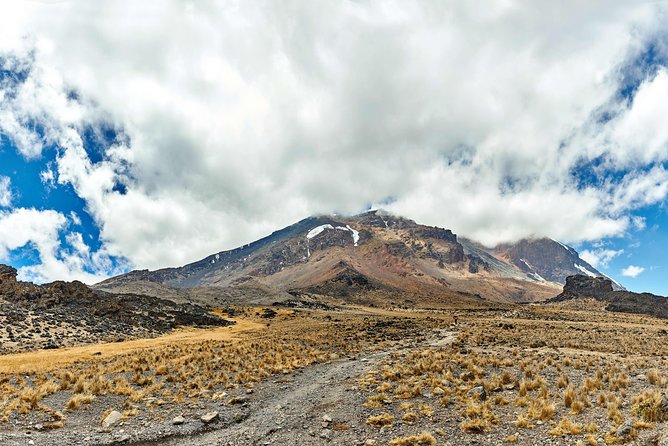
The trail climbs from Simba Camp toward Kikilewa Camp at 3,630 meters. This is a more demanding day, both because of the distance and because your body is beginning to notice the altitude.
The reward is the view toward Kibo, Kilimanjaro’s main volcanic cone. Weather can hide it, so keep expectations flexible. Mountain views often depend on cloud and timing, not effort.
Once you reach camp, rest is the main activity. This is not the day to prove your fitness by wandering around. Eat, drink, check your feet, and protect your energy for the days ahead.
The operator’s medical routine is useful here. Guides carry medical kits, oxygen tanks, and oximeters, and medical checks are part of the program. Oxygen is an emergency aid, not a way to force a summit attempt when your body is not coping. A good guide’s first job is to keep you safe, even if that means turning back.
More Kilimanjaro Climbs in Moshi:
- Kilimanjaro climb, Lemosho Route (8-day)
★ 5.0 · 148 reviews - Kilimanjaro climb, Lemosho Route (6-day)
★ 5.0 · 129 reviews - Kilimanjaro climb, Marangu route (6-day)
★ 5.0 · 72 reviews - Private Kilimanjaro Hike 7 Day Lemosho Route
★ 5.0 · 60 reviews
Day 4: Mawenzi Tarn and the 200-meter acclimatization walk
Day four brings you to Mawenzi Tarn Camp, at the foot of Mawenzi, Kilimanjaro’s jagged second summit. This is one of the most memorable camp settings on the route, with the stark volcanic terrain becoming more pronounced around you.
After lunch, you rest for about two hours. Then you take an acclimatization walk that gains roughly 200 meters before returning to camp for dinner.
I like this feature because it gives your body a controlled test at higher altitude without adding a full extra day to the schedule. The walk is described as easy, but do not dismiss it. The point is not exercise. The point is to go higher, return to sleep lower, and help your body adjust.
This camp can also be a mental checkpoint. You are high enough for the climb to feel real, yet the summit is still ahead. Keep your routine simple: drink regularly, eat even if your appetite is low, and report headaches, nausea, unusual tiredness, or breathing problems to your guide.
Day 5: School Hut Camp at 4,715 meters
The next stage leads to School Hut Camp, at 4,715 meters. The vegetation gives way to rocky semi-desert, and the surroundings become rougher and more exposed.
The walking itself is not presented as especially technical. The challenge is preserving strength. You should move slowly, take short breaks, and avoid spending energy on unnecessary activity. The goal is to arrive ready for the summit night, not to arrive first.
At camp, sleep and hydration become your priorities. The night departure usually means your rest period is short, and altitude can make sleep difficult. Follow the guide’s instructions and keep your summit clothing organized before lying down. Cold-weather layers, gloves, headlamp, water, and snacks should be easy to reach.
This is where the six-day design becomes demanding. There is no spare day built into the listed schedule. If weather, altitude, or fatigue affects your progress, the plan has less flexibility than a seven- or eight-day climb.
Day 6: Uhuru Peak and the long descent
The summit attempt begins at night from School Hut. Physically, the route is not described as technical, but altitude is the major obstacle. At 5,895 meters, even a simple uphill step can feel hard.
Each pair of climbers is accompanied by its own guide during the summit push. That is a valuable arrangement because the guide can watch your stamina, mood, and pace closely. The named guide teams in past departures have included people such as Professor Gerald and DJ Adam, as well as Peter, Richard, Stanford, Innocent, Shabane, Kelvin, and Emmanuel. Your assigned crew may be different, so treat those names as examples rather than a guarantee.
After Uhuru Peak, you may descend toward the nearest glacier if conditions and timing allow. Then you return to Kibo Camp for about two hours of rest before continuing down to Horombo Camp at 3,720 meters.
This is an extremely full day. The summit is only half the work. The descent can be rough on tired knees, and the combination of cold, darkness, altitude, and fatigue is why you should take every safety instruction seriously. Do not wander away from the group, and do not hide symptoms because you want a certificate.
Day 7: Horombo Camp to Marangu Gate
After breakfast, you descend to Marangu Gate at 1,860 meters. The route change gives you a different view of Kilimanjaro and completes the point-to-point character of the climb.
At the gate, the group gathers for congratulations and you can record your thoughts in the guestbook. Commemorative certificates are presented at the operator’s office, followed by a transfer back to the hotel.
The five-hour descent may feel easy compared with summit day, but tired feet can make it feel longer. Bring patience for this final stretch. It is also a good moment to appreciate the porters, cooks, camp staff, and guides who made the organized camp system possible.
Day 8: Hotel recovery and airport transfer
The final day is for rest at Aishi Machame Hotel, followed by airport transfer. Hotel checkout is at 11:00 AM.
If your flight is later in the day, late checkout is available for an extra fee. Confirm that cost before you leave the mountain. Airport pickup and drop-off are included, as is the ground transportation used during the trip.
The stated duration is approximately eight days, with six days on the mountain and two hotel nights. Check your flight times carefully. A delayed international arrival can affect the first hotel night, while an early departure may leave little time for recovery.
What $3,064 covers, and what it does not
At $3,064 per person, this is not a budget walk. It is also not simply a park entry fee plus a guide. The price includes national park charges, airport transfers, ground transport, two hotel nights, mountain tents, dining equipment, sleeping pads, three meals a day on the mountain, drinks, guides, porters, cooks, camp staff, medical supplies, oxygen, and oximeters.
That package has real value because Kilimanjaro logistics are complicated. A large support crew must move food, shelter, cookware, and safety equipment up and down the mountain. The included hotel nights also reduce the need to arrange separate transfers and lodging.
Still, your true budget will be higher. You pay for flights to Tanzania, your visa, personal gear, mountain insurance, hotel lunches and dinners, and crew tips. Visa costs are listed as $50 for most nationalities and $100 for US passport holders. Insurance covering trekking up to 6,000 meters is strongly recommended, and ordinary travel insurance may not cover this climb.
Single accommodation in the hotel and tent costs extra. Group discounts are offered, and this is a private activity, so only your group participates. Ask how the final price changes for your party size and for single occupancy.
Food, tents, and the human side of the climb
The camp arrangement is more comfortable than carrying your own shelter and cooking kit. Two hikers share a tent, while the dining tent gives you a proper place to eat and meet the group.
The kitchen crew serves energy-rich meals with choices at each meal. Past departures have included particularly memorable cooking, including a birthday cake carried up the mountain. That is a small detail, but morale matters on a hard climb.
The porters do the heavy carrying, while guides lead and monitor the group. You should still pack light and carry only what you need during the day. Crew tips are optional and based on your satisfaction, but plan for them as part of the social and financial reality of a supported Kilimanjaro climb.
The strongest praise attached to this operator centers on organization, safety, communication, and the crew’s effort. That matches what matters most here. A good meal is welcome, but careful pacing, medical checks, and a guide who will make a hard safety call matter more.
Who should choose this climb
I would choose this trip if you want a quieter route, prefer a private departure, and have a firm schedule. It is also a sensible fit if you already hike regularly or have prior experience at high altitude.
You should think twice if you are new to long mountain days, unsure how you handle altitude, or hoping for a relaxed holiday with a summit added on. Six climbing days leaves less room for slow adjustment.
Pack for changing conditions, bring proper boots and a sleeping bag, and arrange high-altitude insurance. At the pre-climb briefing, ask about your day-by-day pace, medical checks, tent arrangements, meal needs, gear hire, and the plan if you cannot continue.
Free cancellation is available up to 24 hours before the local start time. After that point, refunds are not available, and late changes are not accepted.
Should you book the 6-day Rongai Route?
Book it if the northern approach, quieter trail, private format, and complete support package appeal to you, and if you are genuinely prepared for a compressed acclimatization schedule. The combination of experienced guides, a substantial mountain crew, included medical equipment, and hotel transfers removes much of the logistical strain.
I would not book it simply because it is shorter. A shorter Kilimanjaro climb is not an easier Kilimanjaro climb. For a fit hiker with high-altitude experience, this can be an efficient and memorable route to Uhuru Peak. For a first-time high-altitude climber, I would compare it with a longer itinerary before paying the $3,064.
FAQ
How long does the full Kilimanjaro trip last?
The full experience lasts approximately eight days. Six days are spent climbing, with one hotel night before the mountain and one hotel night afterward.
What route does the climb use?
You ascend Kilimanjaro by the Rongai Route, beginning at Nalemuru Gate on the northern side. You descend through the Marangu route and exit at Marangu Gate.
What is the summit elevation?
Uhuru Peak is 5,895 meters above sea level.
Is airport transportation included?
Yes. Pickup and drop-off at Kilimanjaro International Airport are included, along with ground transportation during the program.
Where do you sleep?
You sleep in walk-in North Face VE-25 tents on the mountain, with two hikers per tent unless you book a solo climb. The two included hotel nights are at Aishi Machame Hotel, with two people per room unless you arrange single accommodation.
Are meals included?
Breakfast, lunch, and dinner are included on the mountain. The package includes seven breakfasts, five lunches, and five dinners. Hotel breakfast is included, but hotel lunch and dinner cost extra.
Can special diets be accommodated?
Yes. Vegetarian, vegan, lactose-free, gluten-free, halal, and other meal plans are available.
What equipment do I need to bring?
You are responsible for personal equipment such as hiking clothing, boots, and a sleeping bag. Equipment hire is available. Group camping equipment, sleeping pads, dining equipment, and tents are included.
Is travel insurance required?
Mountaineering insurance covering trekking up to 6,000 meters is highly recommended. It is not included in the tour price.
More 6-Day Experiences in Moshi
- 6 Days 5 Night Safari
★ 5.0 · 57 reviews - The Best of Machame Route in 6 Days: Your World’s Summit Guide
★ 5.0 · 44 reviews - 6 Days Machame Route Kilimanjaro Climbing
★ 5.0 · 42 reviews - 6 Days Private Mount Climbing in Kilimanjaro Machame Route
★ 5.0 · 38 reviews
Just added around Moshi
- Mt Kilimanjaro 6 days Marangu route hike★ 5.0 · 3 reviews
- Wildlife Extravaganza: Manyara, Tarangire & Ngorongoro in 3 Days★ 5.0 · 3 reviews
- Private Cycle to Kilimanjaro Bike Park Safari★ 5.0 · 6 reviews
- 3 Days Private E-Bike Tour in West Kilimanjaro★ 5.0 · 3 reviews
- West Kilimanjaro cycling Adventures★ 4.5 · 8 reviews
- machame route★ 5.0 · 16 reviews
- Kilimanjaro Climb & Safari – Lemosho Route – 13 Day★ 5.0 · 10 reviews
- Kilimanjaro Climbing Umbwe Route★ 5.0 · 3 reviews
Kilimanjaro Climbs, compared.



8-Day Small-group Lemosho Kilimanjaro Summit Trekking
Read our review →



7-Day Machame Kilimanjaro Summit Tour from Arusha
Read our review →
Browse the lists this tour appears in