
Reviewed · KILIMANJARO CLIMBS
Kilimanjaro climb, Kilimanjaro Crater route (10-day)
The unusual appeal here is clear: you reach Kilimanjaro by the quiet Northern Circuit, then aim for Uhuru Peak at 5,895 meters. The route crosses the Shira Plateau, skirts the northern slopes near Kenya, and includes the chance to sleep inside the crater, far above the usual mountain camps.
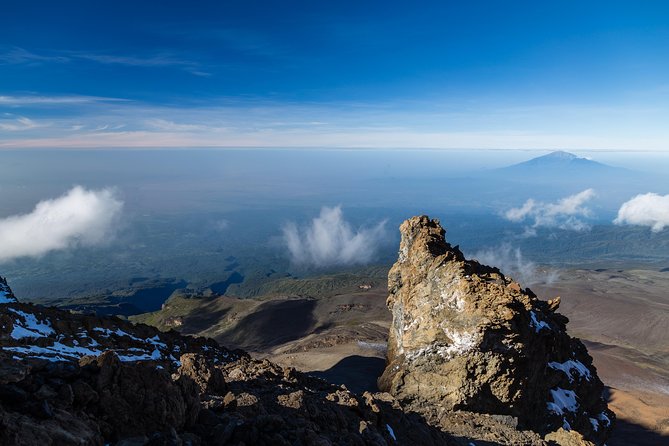
I like the slow altitude gain and the strong support system. You get several acclimatization walks, three meals a day, daily medical checks, certified Wilderness First Responder guides, and a guide assigned to every two climbers for the summit push. The views toward Mount Meru, Tsavo, and Amboseli add plenty between camps.
The main caution is the altitude. Crater camping brings extra risk, and the published schedule needs clarification because the day-by-day plan does not clearly show a separate crater overnight. At $6,466 per person, you should confirm exactly where you sleep and what is included before paying.
Key points to know before you book
- Ten days gives your body time to adjust: The route moves gradually through Shira, Lava Tower, Moir Valley, and the northern slopes before the summit attempt.
- The Northern Circuit is the quiet choice: You see remote parts of Kilimanjaro and meet the traditional Rongai route only near 3rd Cave Camp.
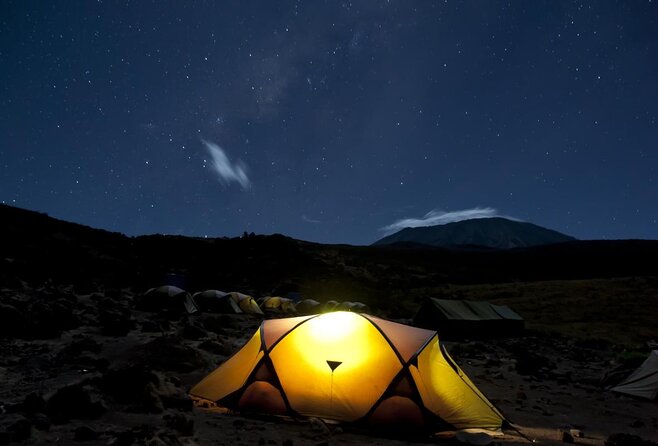
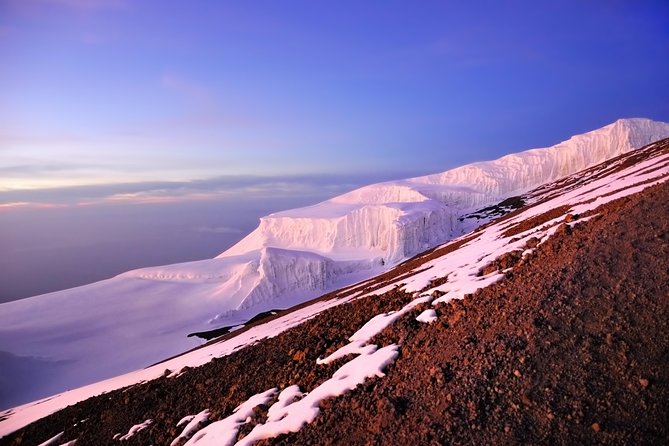
- Crater camping is the special feature: Sleeping at extreme altitude beside shrinking glaciers is rare, but it adds real medical and weather concerns.
- Summit safety is taken seriously: One guide is assigned for every two climbers during the push to Uhuru Peak, with oxygen, oximeters, and medical kits available.
- The price covers most major climbing costs: Park fees, transport, hotel nights, tents, meals, drinks, porters, cooks, and camp equipment are included.
- You need proper insurance and personal gear: High-altitude trekking insurance and helicopter evacuation cover are not included, and boots, clothing, and a sleeping bag are your responsibility.
Why the Northern Circuit is worth the extra days
Many Kilimanjaro routes are built around getting up and down as quickly as possible. This one takes ten days, using the western approach and then circling around the northern side of the mountain before turning toward the summit.
That extra time matters. You spend several nights around 3,500 to 4,000 meters before the final climb, which gives your body more chances to adjust. No itinerary can remove the danger of altitude sickness, but a slower route is generally more comfortable than a rushed ascent.
I also like the sense of distance. The Northern Circuit sees far fewer people than the better-known southern routes, according to the description of the trail. The route reaches the traditional Rongai path only at 3rd Cave Camp, so most of your climb takes place away from the busiest trekking lines.
The views change as you go. You begin with the Shira Plateau, pass high volcanic terrain near Lava Tower, and later look north toward Kenya and the Tsavo and Amboseli valleys. If the air is clear, Mount Meru can appear across the lower country.
There is a catch. The Northern Circuit is long, and several days have seven or eight hours of walking. You do not need technical climbing skills, but you do need steady fitness, patience, and the ability to keep moving when the scenery is dramatic but the air is thin.
More Kilimanjaro Climbs in Kilimanjaro
- Kilimanjaro climb by Lemosho Route (7-day)
★ 5.0 · 651 reviews - Kilimanjaro climb, Machame Route (7-day)
★ 5.0 · 262 reviews - Kilimanjaro Climbing Lemosho Route 8 Days.
★ 5.0 · 186 reviews
Day 1: Aishi Machame Hotel and the first briefing
Your arrival at Kilimanjaro International Airport includes pickup by an Altezza Travel representative. You then transfer to Aishi Machame Hotel, where two people share a room unless you have booked a solo climb or paid for single accommodation.
The hotel stay is meant to give you a calm start. The listed facilities include hot water, Internet access, a swimming pool, and staff assistance. Check-in begins at 2:00 PM, so an early arrival may mean waiting before your room is ready.
An evening briefing follows. This is when the team checks that you have the personal clothing and equipment needed for the mountain. I would use this meeting to ask direct questions about the crater portion, the likely camp locations, the summit schedule, and how the crew handles a climber who is not acclimatizing well.
Day 2: Londorossi Gate and the Shira Plateau
The mountain crew meets you at the hotel in the morning. The drive to Londorossi Gate takes roughly three to four hours, followed by park registration, climbing permits, and search and rescue registration.
The vehicle continues higher by off-road track, reaching a drop-off point around 3,500 meters. That is a large first jump from Moshi, so you should not treat this as an easy travel day simply because the walking is short.
From the drop-off point, you walk to Shira 1 Camp. The climb is modest, and the route is described as manageable rather than punishing. Your first reward is a view across the Shira Plateau, one of the broadest and most open sections of the mountain.
This is a useful opening day because you begin sleeping high without immediately facing a hard ascent. Still, drink steadily and keep your pace relaxed. The best early habit on Kilimanjaro is to walk slowly before you feel the need to.
Day 3: Shira 2, Lava Tower, and a useful acclimatization walk
The morning walk from Shira 1 to Shira 2 adds about 300 meters of altitude. The physical effort is fairly light, leaving time to notice the mountain plants and, in good weather, look for Mount Meru.
After lunch and a two-hour rest, you take an acclimatization walk toward Lava Tower. You gain another 300 meters, then return to camp. This pattern, climb higher during the day and sleep lower, helps you get used to the thin air without spending the night at the highest point reached.
The schedule runs about six hours, but that includes the acclimatization portion. I like this design because it treats altitude as the central challenge rather than an inconvenience squeezed between scenic stops.
More Kilimanjaro Climbs in Moshi:
- Kilimanjaro climb, Lemosho Route (8-day)
★ 5.0 · 148 reviews - Kilimanjaro climb, Lemosho Route (6-day)
★ 5.0 · 129 reviews - Kilimanjaro climb, Marangu route (6-day)
★ 5.0 · 72 reviews - Private Kilimanjaro Hike 7 Day Lemosho Route
★ 5.0 · 60 reviews
Day 4: Lava Tower at 4,630 meters and Moir Hut
This is one of the more important acclimatization days. From Shira Camp at about 3,900 meters, you work your way toward Lava Tower at 4,630 meters. The path rises and falls, so the distance can feel harder than the numbers suggest.
You stop for lunch at Lava Tower and remain at that height for one or two hours. That exposure is useful preparation for the summit, but it can also bring headache, nausea, poor sleep, or unusual fatigue. Tell your guide how you feel instead of trying to hide symptoms.
The route then climbs slightly before descending to Moir Hut Camp. If someone in the group is not adjusting well, the guide may bypass Lava Tower and use a porter trail, limiting the highest point to about 4,400 meters.
That flexibility is a good safety measure. It also means your actual experience may differ from the printed route. The day lasts about eight hours, with several changes in elevation, so you should expect tired legs even if the final camp is lower than Lava Tower.
Days 5 and 6: Around the northern slopes to 3rd Cave Camp
Day 5 begins with a short, steep exit from Moir Valley, then settles into a long walk around the northern side of Kilimanjaro. The trail continues through repeated rises and drops rather than one giant climb.
You pass close to the Kenyan border and gain views toward Tsavo and Amboseli. This is the kind of day I would value most if I wanted quiet scenery instead of a constant procession of people. The route takes about seven hours, and the walking is described as long but not especially steep.
On Day 6, you finish crossing the northern slope and spend the night at 3rd Cave Camp. This is where the Northern Circuit meets the traditional Rongai route. The day is shorter than the one before, and the schedule says your body should now be better adjusted to roughly 4,000 meters.
One odd detail deserves attention: the supplied timing lists this day as 14 hours even though the description calls the trek shorter. Ask the operator to explain whether that figure includes transfers, rest periods, or an itinerary error. Clear timing matters when you are planning food, sleep, and summit preparation.
Day 7: School Hut Summit Camp
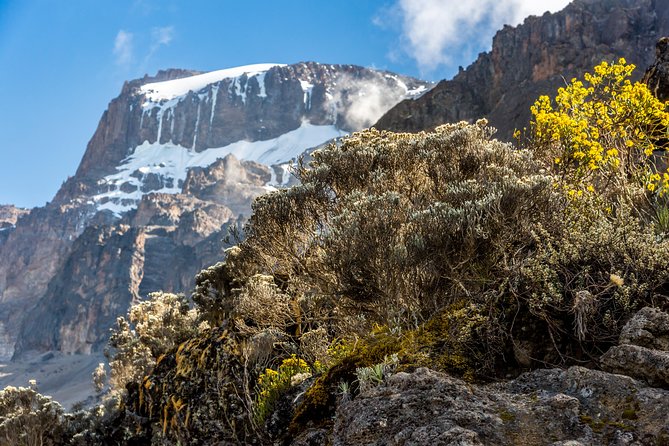
The route now heads to School Hut Summit Camp at 4,750 meters. The walking itself is not presented as technically difficult, but this is where altitude becomes more noticeable and every spare bit of energy matters.
The plan is to arrive, sleep, avoid strenuous activity, and drink plenty of fluids. You then begin the summit attempt around midnight. That makes this day less about covering distance and more about protecting your energy for the hardest part.
School Hut is higher than most camps on Kilimanjaro. If you have trouble sleeping, do not assume that poor rest means you cannot summit, but report symptoms to the guide. The team conducts medical checks at least twice daily, and that information should guide the decision to continue.
Day 8: Uhuru Peak, Barafu, and Millennium Camp
The summit push begins around midnight from 4,750 meters. Technically, the route is described as relatively easy, but the altitude makes it a serious physical test. You climb toward Uhuru Peak at 5,895 meters, usually moving slowly and stopping as needed.
For this section, one guide is assigned to every two climbers. The guide’s job includes watching your health, not simply showing you the way. Oxygen tanks, oximeters, and medical kits are available, but equipment is not a substitute for turning around when your body is in trouble.
After a successful summit, you may have the option to walk on the nearest glacier. This is a memorable extra, but glaciers on Kilimanjaro are shrinking, and the area remains high, cold, and exposed. Treat the option as a bonus, not an obligation.
You then descend to Barafu Camp for a two-hour lunch and rest before continuing to Millennium Camp at about 3,820 meters. Descent is not a victory lap. Loose footing, tired muscles, and damaged toes can create problems after the summit, so use trekking poles if you have them and watch every step.
The schedule lists about five hours, but the midnight start, summit climb, descent, and camp move make this a demanding day. Confirm how the operator counts the hours, since the full effort will be much longer than five walking hours for most people.
Day 9: Forest descent and the end of the climb
Millennium Camp sits in tropical rainforest, and the lower altitude should feel welcome after the summit night. A hot breakfast comes before the final descent to Mweka Gate at about 1,650 meters.
At the gate, you can look back on the climb with the support crew. The itinerary includes a transfer to Altezza’s offices to receive accomplishment certificates, followed by a drive back to the hotel for rest.
This is a sensible finish. A long summit night followed immediately by an airport transfer would be a poor idea, so having a hotel night before departure gives you time to eat, shower, sleep, and recover.
Day 10: Rest, checkout, and airport transfer
The final day is deliberately light. You rest at the hotel and transfer to the airport. Checkout is at 11:00 AM, with late checkout available for an additional fee if your flight leaves in the evening.
The package includes airport pickup and drop-off, but you should still provide flight details early and allow plenty of time for the drive. The day is listed as only 30 minutes, which appears to describe the transfer portion rather than the full time you may spend resting at the hotel.
What $6,466 includes, and what it does not
At $6,466 per person, this is a major purchase. The value depends on how much you want arranged for you and how much importance you place on a long route, a private group, and a large mountain support team.
The price includes:
- Airport transfers and ground transportation
- Two hotel nights at Aishi Machame Hotel
- Two-person tent sharing on the mountain
- Three meals daily on the trek
- Tea, coffee, juices, soda, and other drinks on Kilimanjaro
- National Park fees
- North Face VE-25 tents and camp equipment
- Sleeping pads, mess tent, tables, chairs, crockery, and cutlery
- Guides, porters, camp staff, and cooks
- Medical checks at least twice daily
- Oxygen tanks, oximeters, and medical kits
- Nine breakfasts, seven lunches, and eight dinners as listed
Vegetarian, gluten-free, halal, and other meal plans are available. That is useful on a ten-day climb, when familiar food and enough calories can affect your energy and mood.
Tips for the mountain crew are not included. Neither are international flights, Tanzanian visa fees, personal hiking gear, hotel meals outside the listed package, or single accommodation. Equipment rental is available, but the specific rental prices are not provided.
You also need insurance covering trekking up to 6,000 meters and helicopter evacuation. Do not treat this as a minor add-on. At nearly 5,900 meters, medical evacuation cover is one of the most important costs in your trip budget.
Safety, fitness, and the crater question
The listed support is one of the strongest parts of the package. Certified Wilderness First Responder guides with at least seven years of professional experience lead the climb, and medical checks happen at least twice daily. The summit team ratio of one guide for every two climbers gives the guides a better chance to notice trouble early.
The itinerary also allows a route adjustment on Day 4 if someone is not acclimatizing properly. That is exactly the kind of decision you want a guide to make without pressure to follow the schedule.
Still, the phrase crater route needs careful checking. The overview promises an overnight stay in the Kilimanjaro crater, but the daily schedule names Shira 1, Shira 2, Moir Hut, 3rd Cave, School Hut, Barafu, and Millennium Camp. It does not clearly identify a crater camp or show a night inside the crater.
Before booking, ask for the exact crater-camping plan in writing. Confirm the altitude, tent location, food and toilet arrangements, weather procedure, and what happens if the guide decides that crater camping is unsafe. This matters because sleeping inside the crater is the experience that helps justify the premium price, while it also carries greater altitude risk.
The stated fitness requirement is moderate, but I would read that as a minimum. You should be comfortable walking for several hours, handling repeated uphill and downhill sections, and remaining calm when sleep and appetite are affected by altitude. The tour is private, so only your group participates, but the group still needs to move at a pace the guides consider safe.
How the booking experience appears to work
The planning process can be adjusted to your needs. One party of five arranged a private climb and later added a six-day safari, while another group combined a Kilimanjaro climb with a safari after selecting Altezza for a private trip.
Those details show the practical advantage of booking a private program: your dates and add-ons may be easier to shape than with a fixed public departure. The experience is also available with group discounts, though the exact discount is not stated.
The published cancellation rule allows a full refund if you cancel at least 24 hours before the local start time. Changes or cancellations made inside that window are not accepted for a refund. For a trip this expensive, I would still read the final booking terms carefully, especially the rules for medical withdrawal and summit failure.
Who should choose this climb
I would recommend it to you if you want a less crowded Kilimanjaro route, prefer a slow acclimatization schedule, and value having transport, meals, camping equipment, and a professional support crew arranged in advance.
It also suits a private group that wants to plan a larger Tanzania holiday around the climb. The airport transfers, hotel nights, certificates, and possible safari planning make the program feel like a full service trip rather than only a mountain permit and a guide.
I would hesitate if you are choosing it mainly because the crater sounds dramatic. You need to confirm that the crater overnight is actually part of your dates and package. I would also hesitate if you have no high-altitude experience, poor fitness, or limited insurance budget. The route is gradual, but Kilimanjaro remains a high and demanding mountain.
FAQ
Where does the Kilimanjaro climb begin?
The experience begins with pickup at Kilimanjaro International Airport, followed by transfer to Aishi Machame Hotel in Moshi. The mountain approach begins the next day with a drive to Londorossi Gate.
How long is the experience?
The program lasts approximately ten days. It includes two hotel nights, the mountain trek, airport transfers, and a final rest day before departure.
Is the climb private?
Yes. Only your group participates in the activity. Group discounts are available, although the exact discount is not specified.
What is the highest point reached?
The summit is Uhuru Peak at 5,895 meters. School Hut Summit Camp is listed at 4,750 meters before the midnight summit attempt.
Does the trip include crater camping?
The program description says that an overnight stay in the Kilimanjaro crater is included, but the day-by-day schedule does not clearly name the crater camp. Confirm the exact crater-camping arrangements with Altezza Travel before booking.
Are meals included?
Three meals a day are included on the mountain. Vegetarian, gluten-free, halal, and other meal plans are available. Hotel lunches and dinners are not included.
Is airport transportation included?
Yes. Pickup and drop-off at Kilimanjaro International Airport are included, along with other ground transportation during the program.
Is climbing equipment included?
Mountain camping equipment such as tents, sleeping pads, a mess tent, tables, chairs, and dining equipment is included. Personal items such as hiking clothing, boots, and a sleeping bag are not included, though gear hire is available.
What insurance do I need?
You need insurance covering trekking up to 6,000 meters and helicopter evacuation. This insurance is highly recommended and is not included in the tour price.
Should you book it?
Book this climb if the quiet Northern Circuit, slow acclimatization, private-group format, and full support package matter more to you than keeping the price low. The route gives you a broad Kilimanjaro experience, from Shira Plateau views to the northern slopes and the final climb to Uhuru Peak.
Before you commit $6,466, get one point settled: the exact crater overnight. If that rare high-altitude camp is central to your decision, ask for its location and safety plan in writing. With that detail confirmed, this is a strong choice for a well-prepared climber who wants a carefully supported, less crowded route rather than the fastest way up and down the mountain.
Just added around Moshi
- Mt Kilimanjaro 6 days Marangu route hike★ 5.0 · 3 reviews
- Wildlife Extravaganza: Manyara, Tarangire & Ngorongoro in 3 Days★ 5.0 · 3 reviews
- Private Cycle to Kilimanjaro Bike Park Safari★ 5.0 · 6 reviews
- 3 Days Private E-Bike Tour in West Kilimanjaro★ 5.0 · 3 reviews
- West Kilimanjaro cycling Adventures★ 4.5 · 8 reviews
- machame route★ 5.0 · 16 reviews
- Kilimanjaro Climb & Safari – Lemosho Route – 13 Day★ 5.0 · 10 reviews
- Kilimanjaro Climbing Umbwe Route★ 5.0 · 3 reviews
Kilimanjaro Climbs, compared.



8-Day Small-group Lemosho Kilimanjaro Summit Trekking
Read our review →



7-Day Machame Kilimanjaro Summit Tour from Arusha
Read our review →
Browse the lists this tour appears in