
Reviewed · CAMPING SAFARIS
Mt Kilimanjaro 360° Trek with Once-in-a-Lifetime Crater Camping
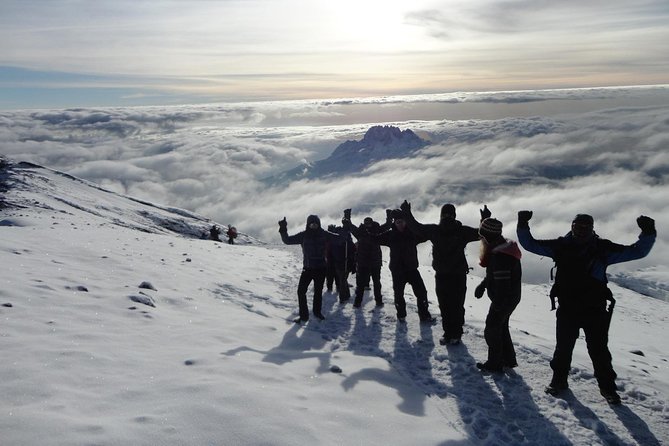
Kilimanjaro’s rarest sleepover is the main event here: after reaching Uhuru Peak at 5,895 meters, you descend into the crater for a night beneath the mountain’s glaciers. I like the quieter Northern Circuit route and its slow altitude gains, which give you time to adjust while showing you nearly every major habitat on the mountain.
I also like the practical support: airport transfers, a hotel night after the climb, porters, a cook, camping gear, hot wash water, and emergency oxygen. The catch is serious: this is not simply a long walk. The summit night, high-altitude crater camp, cold, and nine days of mountain travel demand strong preparation.
Key points worth knowing
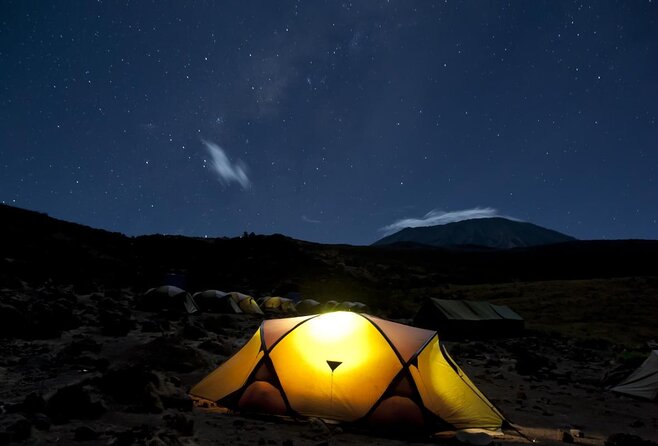
- Crater camping is the rare highlight: Spend a night inside Kilimanjaro’s crater, then visit the Ash Pit the next morning.
- The Northern Circuit is quiet: You’ll approach from the north and encounter less trail traffic than on busier routes.
- The schedule favors acclimatization: The Lava Tower day gains little net height but reaches 4,650 meters before descending.
- Support is extensive: Guides, assistant guides, porters, a cook, tents, meals, transfers, and a post-climb hotel night are included.
- The summit day is demanding: You climb from School Hut before midnight, reach Uhuru Peak, then continue toward Crater Camp.
- Plan for extra costs: Flights, visas, insurance, personal gear, medicine, snacks, drinks, and a portable toilet are not included.
Why the Northern Circuit earns its 10 days
At $4,211.27 per person, this is a major purchase. You are paying for more than a summit photograph. The price covers a private 9 or 10-day climb, a large support crew, park fees, food, camping equipment, airport transfers, and a hotel night afterward.
The route also takes the long way around Kilimanjaro. That matters because the mountain is not won by speed. You gain altitude gradually, spend time on the Shira Plateau, cross the northern slopes, and approach the summit after several nights above 3,900 meters.
The advertised difficulty is medium, but I would treat that label carefully. The walking itself is manageable for a fit person, yet altitude can affect anyone. The final push is especially tough, with a pre-dawn summit climb followed by crater camping. You should prepare for a strenuous high-altitude expedition, not a moderate day hike repeated for nine days.
This is a private activity, so only your group takes part. That gives you more control over walking pace, rest stops, and daily conversations with the guide. Pinnacle’s guiding team has included experienced names such as JT, Jobeth, Jacob, and Kennedy on different climbs. Your booking should confirm who will lead your group.
More Camping Safaris in Kilimanjaro
- 5 Days Camping Tarangire, Serengeti & Ngorongoro crater & Visiting Maasai
★ 5.0 · 58 reviews - 4 Days Group Joining Camping Safari to Tarangire Serengeti Ngorongoro Crater
★ 5.0 · 50 reviews - 4 days adventure camping safari
★ 5.0 · 44 reviews
Day 1: Mti Mkubwa Camp and the wet rainforest
Your day begins with a 45-minute drive from Moshi to Kilimanjaro National Park Gate. Permit processing can take time, but it is part of the mountain’s working rhythm. Crews organize food and equipment while climbers wait for the official start.
From the gate, you walk through rainforest to Mti Mkubwa Camp. The elevation rises from 2,389 to 2,785 meters, with about four hours on the trail. The forest is lush, shaded, and often wet. Lower sections can be muddy and slippery, so gaiters and trekking poles are useful rather than decorative.
This first day is short by mountain standards, but it gives you a sensible start. You are learning how your boots feel, how your pack sits, and how your body reacts to climbing. Keep your rain gear easy to reach. Do not bury it at the bottom of your bag.
Day 2: Leaving the trees for Shira One
The second day climbs from Mti Mkubwa to Shira Camp One, at 3,504 meters. Expect around six hours of walking as the forest thins and the route opens onto the Shira Plateau.
The change in scenery is one of the route’s rewards. You leave behind dense vegetation and begin walking through a more exposed, cooler world with broad mountain views. The trail continues upward, but the pace should remain controlled.
This is also the first point where cold becomes a real concern. Temperatures drop as you gain height, and the open plateau offers little shelter from wind. Keep your warm layer and gloves close, even if Moshi felt hot that morning.
Day 3: Shira Two and the Western Breach
From Shira One, you cross the plateau to Shira Camp Two at 3,895 meters. The walk takes about four hours, leaving time to explore a little around camp if you still feel strong.
The Shira Plateau is one of Kilimanjaro’s defining places. It feels broad and exposed, with the mountain rising above it and the plains stretching away below. A short walk higher from camp can give you views across the valley and toward the Western Breach.
Do not mistake the short distance for an easy night. Temperatures can fall below freezing, and the plateau is exposed. You need a proper sleeping bag, warm layers, and a way to keep water from becoming uncomfortably cold. Camping chairs, tables, tents, and a sleeping mattress are supplied, but your personal cold-weather clothing is your responsibility.
More Camping Safaris in Moshi:
- 6 Days Tanzania Budget Camping Safari with Migration
★ 5.0 · 31 reviews - 5 days Tanzania Camping Safari
★ 5.0 · 29 reviews - 6 Days: Classic Camping( Tarangire, Manyara, Serengeti And Ngorongoro).
★ 5.0 · 26 reviews - 3 Days Camping Safari Tarangire, Lake Manyara and Ngorongoro Crater
★ 4.5 · 6 reviews
Day 4: Lava Tower, the Shark’s Tooth, and Barranco
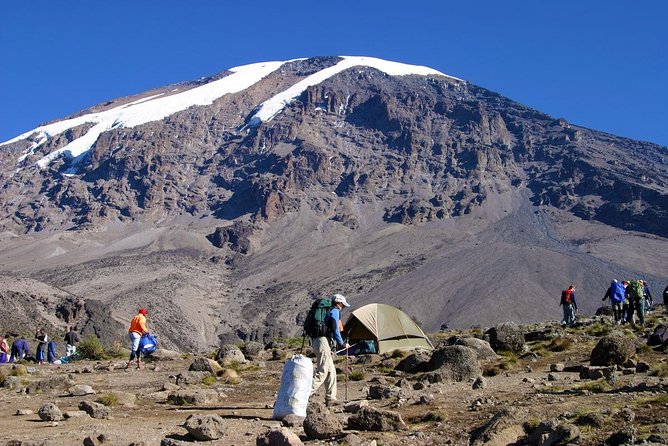
Day four is one of the most useful days in the entire plan. You begin at about 3,895 meters, climb toward Lava Tower at 4,650 meters, then descend to Barranco Camp at approximately 3,986 meters.
The net gain is small, but the route takes your body higher before bringing it down to sleep. That pattern is valuable for adjustment to altitude. You pass the junction toward Kibo and later the turnoff for the Arrow Glacier before continuing to Barranco.
The seven-hour day has a clear physical rhythm: climb, reach a high point, then descend. Lava Tower, also called the Shark’s Tooth, is a stark volcanic feature and a good place to understand the scale of the upper mountain.
You may feel a headache, fatigue, or shortness of breath here. Tell your guide early. Emergency oxygen is carried for emergencies only, not as a way to push through summit problems. That distinction matters.
Day 5: Moir Valley and the northern slopes
The itinerary lists a start near Moir Valley at 4,155 meters and a finish at Buffalo Camp around 4,033 meters. You climb out of the valley, with an optional detour to Little Lent Hill at 4,375 meters, before continuing along the northern side of Kibo.
This is a long seven-hour day of repeated inclines and declines. You do not simply walk uphill all day, which can be a welcome change for tired legs, but the rolling route still requires effort.
The views north toward the plains and the Kenya-Tanzania border are a major payoff. The Northern Circuit feels different from the more crowded southern approaches because it shows you the mountain’s drier, more open side.
If you take the Little Lent Hill detour, ask your guide how it fits your energy level. Optional high points are not automatically good ideas when you are already feeling the altitude.
Day 6: Buffalo Ridge to Third Cave
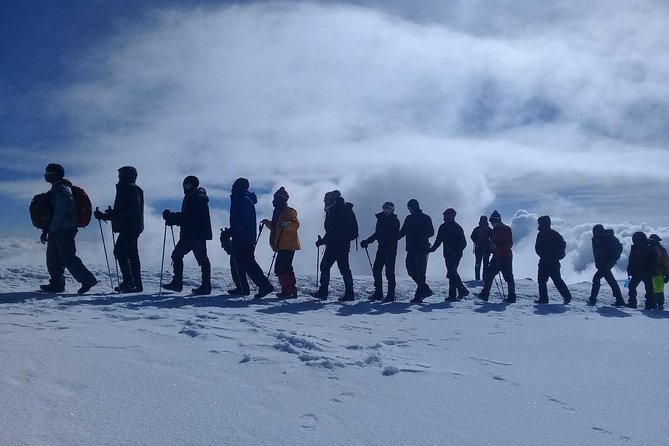
Day six begins with a climb over Buffalo Ridge, followed by a descent into Pofu Camp for lunch. You then continue east toward Rongai Third Cave, reaching camp in the middle of the afternoon after roughly seven hours.
This day is shorter in character than the previous one, even though the stated trail time is similar. You should have had several nights to adjust by now, but do not assume acclimatization is complete. Altitude symptoms can appear late.
The northern route is at its quietest here. You get broad views, dry ground, and a sense of distance from the main traffic on Kilimanjaro. It is a good day to walk steadily, drink regularly, and avoid wasting energy on a race to camp.
Day 7: The Saddle and School Hut
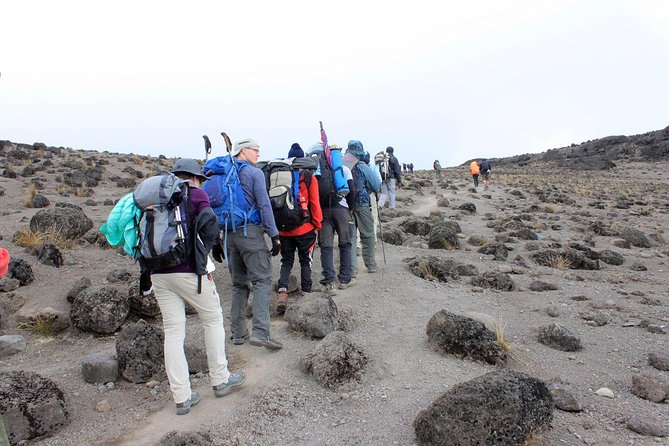
You climb from about 3,936 meters to School Hut at 4,717 meters, gaining roughly 781 meters. The route crosses the Saddle, the broad high area between Kibo and Mawenzi Peak, and takes about seven hours.
The scenery becomes more severe as vegetation disappears. You are now in the alpine desert, where wind, dust, rock, and cold dominate. The Saddle can feel exposed, and the remaining ascent to School Hut may seem longer than its map distance suggests.
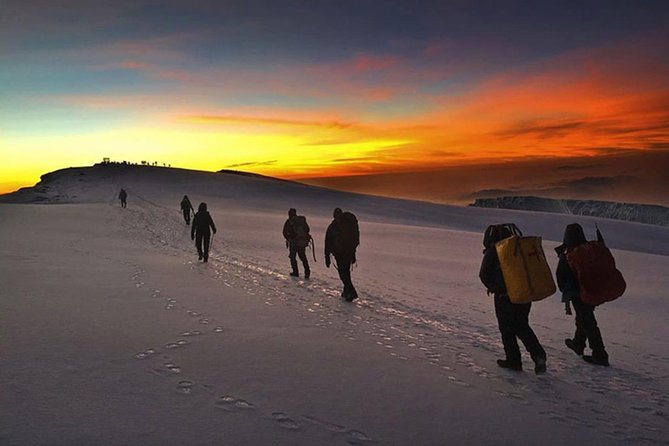
At School Hut, you have an early dinner and rest before beginning the summit attempt just before midnight. This is the point where organization pays off. Before sleeping, lay out warm clothing, insulated water bottles, snacks, a headlamp, and your camera.
The split between walking and sleeping is awkward. You may spend only a short time in bed before rising for the summit. Keep your evening calm, eat what you can, and follow the guide’s instructions about timing.
Day 8: Uhuru Peak and a night in the crater
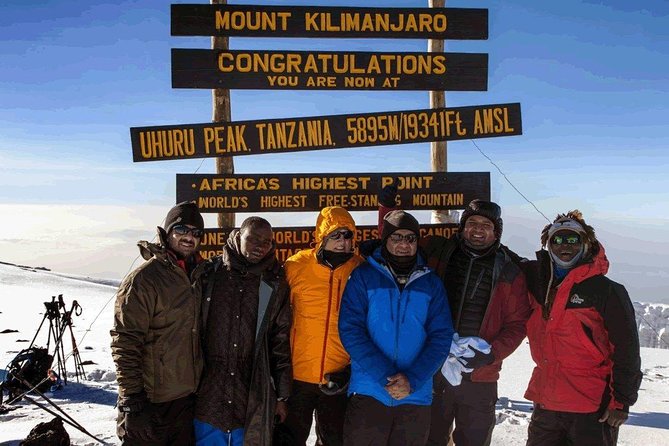
The summit attempt begins before dawn. You climb from School Hut toward Uhuru Peak, Africa’s highest point, at 5,895 meters. The summit section is listed at seven to nine hours, but the clock matters less than the altitude, cold, slope, and your own condition.
Reaching Uhuru Peak is a major achievement. The final section can be slow and demanding, so conserve energy and stay close to the guide. You then descend into Kilimanjaro’s crater for the experience that sets this route apart.
Crater Camp is positioned beneath the glaciers, making this one of the mountain’s most unusual overnight stays. It is also a demanding place to sleep. You are high, cold, and tired after the summit, so this portion should be treated with respect rather than as a casual bonus night.
The plan’s wording places the summit and crater camp on the same day. Ask the operator to confirm the exact overnight arrangements, porter movements, and safety procedures before departure. The crater is the heart of the trip, but it is also where careful judgment matters most.
Day 9: Ash Pit and Millennium Camp
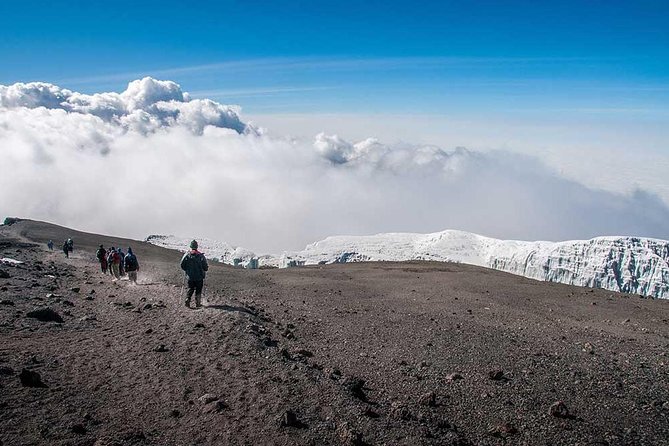
The morning begins with an exploration of the Ash Pit inside the crater. This gives you time to see more of Kilimanjaro’s volcanic interior before descending toward Millennium Camp.
After the summit and crater night, the five to six-hour descent may feel welcome, though downhill walking can punish tired knees. Trekking poles are helpful here. Take the morning slowly and pay attention to your footing.
Millennium Camp provides a lower overnight stop and a chance to rest after the hardest part of the climb. The scenery changes again as you leave the stark upper mountain behind.
Day 10: Rainforest descent and Mweka Gate
The final descent takes about four to five hours through rainforest to Mweka Gate. After checking out, you receive a certificate of achievement and drive back to Moshi.
This last walk is easier than summit day, but your legs may be tired and your feet tender. The return to trees and warmer air can feel almost luxurious after the cold upper camps.
A hotel night with breakfast is included after the climb. That is a useful detail, not a throwaway extra. You can shower, sleep in a real bed, sort your luggage, and recover before your onward plans. Return airport transfers to and from Kilimanjaro Airport are included as well.
Food, camp support, and what you still need
The support package is strong. A qualified mountain guide, assistant guides, porters, and a cook accompany the group. Breakfast and dinner are included for nine days, along with ten lunches, fresh drinking water, and hot water for washing each day.
Camping equipment includes tents, chairs, tables, and a sleeping mattress. A basic first aid kit and emergency oxygen are also provided. This reduces the amount of shared equipment you need to arrange yourself.
You still need personal hiking gear. The operator says rental is available from equipment stores in Moshi, but confirm prices and stock before you rely on that option. You also need personal medicine, water-purifying tablets, snacks, and any drinks not specified in the package.
A portable toilet is optional but highly recommended. It costs extra, yet many people will consider the privacy and comfort worth paying for, especially during cold nights and the crater stay.
Flights, visas, travel insurance, and health insurance are not included. Yellow fever vaccination is listed as compulsory. Check the current entry and health rules before booking, since those requirements can change.
The people behind the climb
The practical strength of this trip is its mountain crew. Past Pinnacle climbs have used guides including JT, Jobeth, Jacob, and Kennedy, with the guiding team handling route decisions, pace, camp routines, and summit support.
The porters are central to the experience. They carry camping equipment and supplies, while the cook prepares meals and the support team sets up camp. One past account specifically praised the crew’s effort and their ability to bring fresh fruit and vegetables during the climb.
That level of care has value, but you should also ask how porter welfare is handled. The package says wages follow standard KINAPA arrangements. Before departure, clarify luggage limits, tipping expectations, and what the support crew carries.
Who should book this route?
I would choose this trek if you want a quieter route, excellent scenery, and enough days for a gradual climb. It suits a private group that values personal attention and does not mind paying more for a large support package and the crater night.
It is less suitable if you want the cheapest Kilimanjaro climb or a simple summit itinerary. The cost is high, and the crater camping adds exposure after an already difficult summit day.
You need moderate fitness at a minimum, but I would train beyond that standard. Long uphill walks, stair sessions, and back-to-back hiking days will help. The biggest challenge is not only strength. It is staying patient, warm, hydrated, and alert when the air gets thin.
The cancellation rule is straightforward: cancel at least three full days before the local start time for a full refund. Inside that window, no refund is provided, and late changes are not accepted.
Should you book this Kilimanjaro trek?
Book it if crater camping is your priority and you want a slower, quieter route with substantial support. The Northern Circuit gives you rainforest, plateau, volcanic rock, northern plains, alpine desert, and glacier country in one long crossing.
Before paying, confirm the exact 9 or 10-day schedule, the guide assigned to your group, the crater safety plan, equipment rental costs, porter limits, tipping, and portable toilet price. If those details fit your budget and fitness level, this is a strong choice for a once-in-a-lifetime Kilimanjaro attempt.
FAQ
How long does the Kilimanjaro trek take?
The activity is described as lasting 9 or 10 days, while the detailed schedule covers 10 days from Moshi to Mweka Gate and back to Moshi.
What route does the trek use?
It uses the Northern Circuit, beginning through rainforest, crossing the Shira Plateau, continuing around Kilimanjaro’s northern slopes, and approaching Uhuru Peak from the high Saddle.
Is crater camping included?
Yes. After reaching Uhuru Peak, the itinerary includes a night camping in Kilimanjaro’s crater below the glaciers.
What meals are included?
The package includes nine breakfasts, nine dinners, and ten lunches, along with fresh drinking water and hot water for a daily wash.
Are airport transfers included?
Yes. Return transfers between Kilimanjaro Airport and Moshi are included.
Is personal hiking equipment included?
No. Personal trekking gear is not included, although the operator says you can rent equipment from stores in Moshi.
What happens if I cancel?
You receive a full refund if you cancel at least three full days before the local start time. Cancellations within three days are not refunded, and late changes are not accepted.
More Hiking & Trekking in Moshi
- Private Kilimanjaro Hike 7 Day Lemosho Route
★ 5.0 · 60 reviews - Best Kilimanjaro hiking day trip tour with Kilinge Adventures
★ 4.5 · 54 reviews - #1. Best Kilimanjaro Day hike Tour-Machame Route-ISMANI
★ 4.2 · 47 reviews - Best Kilimanjaro Adventure 7 days Machame route Trekking
★ 5.0 · 42 reviews
Just added around Moshi
- Mt Kilimanjaro 6 days Marangu route hike★ 5.0 · 3 reviews
- Private Cycle to Kilimanjaro Bike Park Safari★ 5.0 · 6 reviews
- Wildlife Extravaganza: Manyara, Tarangire & Ngorongoro in 3 Days★ 5.0 · 3 reviews
- 3 Days Private E-Bike Tour in West Kilimanjaro★ 5.0 · 3 reviews
- West Kilimanjaro cycling Adventures★ 4.5 · 8 reviews
- machame route★ 5.0 · 16 reviews
- Kilimanjaro Climb & Safari – Lemosho Route – 13 Day★ 5.0 · 10 reviews
- Kilimanjaro Climbing Umbwe Route★ 5.0 · 3 reviews
Camping Safaris, compared.



3 Days Serengeti & Ngorongoro Group Camping Safari
Read our review →
5 Days Camping Tarangire, Serengeti & Ngorongoro crater & Visiting Maasai
Read our review →
2 Days Tarangire and Ngorongoro Group Camping Safari
Read our review →

3 Days Tarangire, Ngorongoro & Lake Manyara Group Camping Safari
Read our review →
5-Day private Camping Safari Tour in Tanzania
Read our review →Browse the lists this tour appears in