
Reviewed · LEMOSHO ROUTE CLIMBS
8 Days Climbing Mt.Kilimanjaro (Lemosho Route)
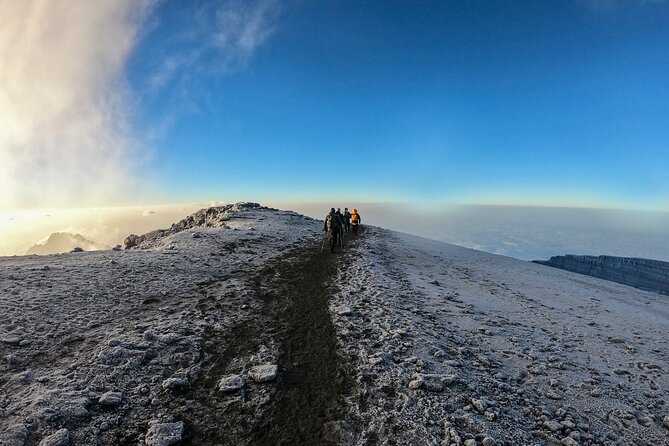
Kilimanjaro’s Lemosho Route gives you the mountain’s full dramatic entrance: forest trails, giant heather, the broad Shira Plateau, volcanic rock, glaciers, and a sunrise finish at Uhuru Peak. This eight-day climb moves slowly enough to give your body a useful chance to adjust to altitude, though summit day remains a serious physical and mental test.
I like the small private-group format, which lets you set a steady pace rather than march behind a large crowd. I also like the practical support: guides, porters, cooks, tents, sleeping mattresses, meals, boiled water, first-aid equipment, and pulse oximeters are included. The main caution is value and clarity. At $2,300 per person, tips, personal gear, emergency oxygen, some meals and drinks, and two hotel nights are extra, and the operator has received both warm praise and serious complaints about communication and delivery.
Key points to know before booking
- Eight days gives you a gentler route plan: The schedule includes several gradual altitude gains and a high-point acclimatization day near Lava Tower.
- The scenery changes constantly: You move from montane forest to moorland, semi-desert, alpine desert, and back to forest.
- Summit day is long and cold: You start between midnight and 2 a.m., reach Stella Point, continue to Uhuru Peak, and then descend to Mweka Camp.
- A full mountain support team is included: Guides, porters, a cook, waiter, tents, dining equipment, meals, park fees, rescue fees, and first aid are part of the package.
- Gear rental help is available: The operator says it will take you to a local hiking store and help you find rental equipment at good prices.
- The company record is mixed: Many comments praise Edward and guides including Haji, Mariki, Tulzia, Musa, and Jonathan, while some raise concerns about unclear communication, hotel standards, and money handling.
Why Lemosho is a strong eight-day choice
Lemosho is a good pick if you want more than a quick mountain shortcut. The route begins in the forest on Kilimanjaro’s western side, then crosses the Shira Plateau before joining the southern circuit toward Barranco, Karanga, and Barafu. You get a broad sample of the mountain rather than a single repeated view.
The eight-day schedule matters. Altitude is the main reason people turn back on Kilimanjaro, not simply lack of fitness. This plan spreads the climb over several days, includes a night at Shira 2, and takes you high to Lava Tower before sleeping lower at Barranco. That high-then-low pattern is useful preparation for the summit.
You will still need to walk slowly and listen to your guide. The route reaches 4,700 meters at Barafu Camp before summit night, and Uhuru Peak rises to 5,895 meters. The numbers look tidy on paper, but the thin air, cold, scree, darkness, and long descent make the final day demanding.
The private format is another plus. The activity is designed for your group alone, rather than a large shared party. That can make it easier to stop for water, ask questions, or adjust the pace. It also means the quality of your specific guide matters greatly, so ask for the guide names and the exact crew arrangements before you pay.
More Lemosho Route Climbs in Moshi:
- Kilimanjaro climb by Lemosho Route (7-day)
★ 5.0 · 651 reviews - Kilimanjaro Climbing Lemosho Route 8 Days.
★ 5.0 · 186 reviews - Kilimanjaro climb, Lemosho Route (8-day)
★ 5.0 · 148 reviews
Day 1: forest trails from Lemosho Gate to Mti Mkubwa
After breakfast and a briefing, you drive to Lemosho Park Gate. The final approach uses a forest track that requires a four-wheel-drive vehicle, taking you to Lemosho Glades before you begin walking.
The first hike is short by Kilimanjaro standards: about 6 kilometers and two to three hours. You rise from roughly 1,830 meters to 2,650 meters and sleep at Mti Mkubwa, which means big tree. The montane forest is a pleasant opening, with thick vegetation and a softer trail underfoot than the volcanic ground higher up.
Lunch and dinner are included on this first day. The practical advantage is that you do not need to arrange food during the climb, but you should still carry personal snacks and any preferred drinks because food and drinks outside the stated meals are not included.
This is also the day to inspect your rented equipment. The operator offers help at a local hiking shop, which is useful if you arrive without every item. Do not wait until summit night to discover that your gloves, boots, or waterproof layers are wrong.
Day 2: crossing into the heather zone at Shira 1
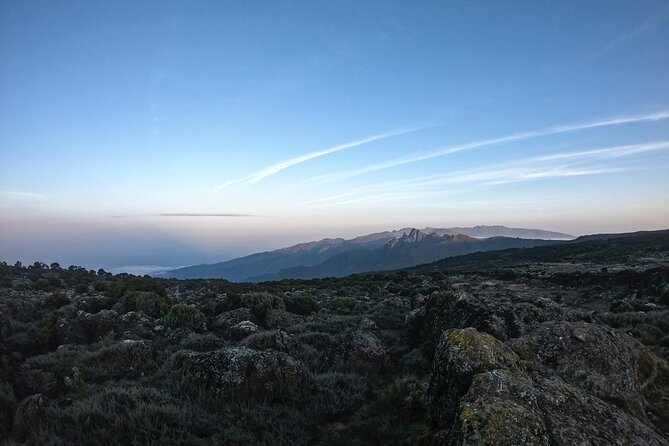
The trail steepens after breakfast as the forest gives way to giant heather and moorland. You cross several streams, climb over Shira Ridge, and then descend gently toward Shira 1 Camp beside a stream on the plateau.
The day covers about 8 kilometers in four to five hours. You gain around 850 meters, ending near 3,500 meters. The change in plant life is one of the pleasures of Lemosho. The forest feels enclosed and humid, while the moorland opens the view and makes the mountain feel much larger.
This is a manageable day, but do not race it. The purpose is not to arrive early and prove a point. A slow pace helps conserve energy and gives the guides time to watch how you handle the altitude.
Day 3: a useful acclimatization day at Shira 2
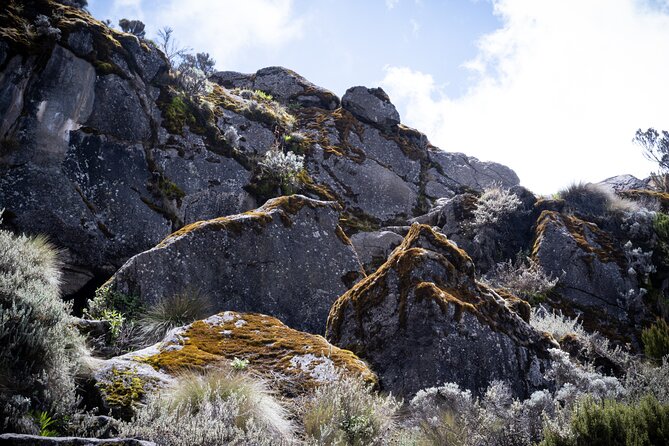
From Shira 1, you walk gently across the plateau to Shira 2 Camp. The distance is again about 8 kilometers, with four to five hours of walking. You end at approximately 3,850 meters, beside a stream in open moorland meadows.
The schedule allows extra hikes on the Shira Plateau. That flexibility is valuable because you can use the day for a modest outing instead of spending the entire afternoon in camp. The important point is to keep the effort controlled. You are preparing for higher ground, not trying to drain your legs.
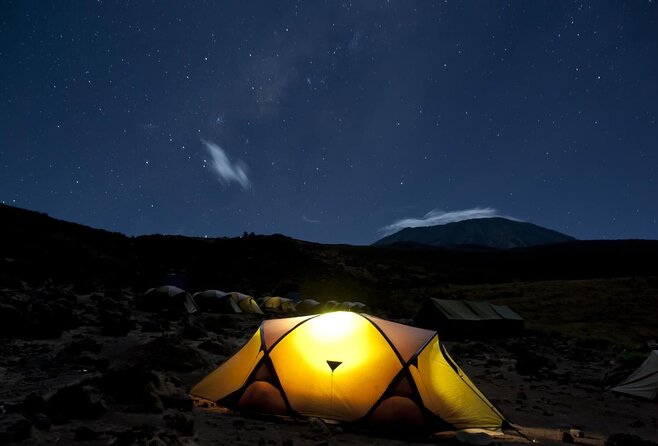
Shira Plateau is one of the scenic highlights of the climb. You have space, sky, and mountain views rather than a narrow forest corridor. Camps can feel exposed here, so warm clothing, a good sleeping bag, and a dry change of clothes are not luxuries.
Same country, a completely different kind of safari:
- Safari Serengeti And Ngorongoro
★ 5.0 · 288 reviews - Kilimanjaro climb, Machame Route (7-day)
★ 5.0 · 262 reviews - Climbing Kilimanjaro – Machame Route
★ 5.0 · 170 reviews - Climbing Kilimanjaro through 7 days Machame Route
★ 5.0 · 151 reviews
Day 4: Lava Tower, then down to Barranco
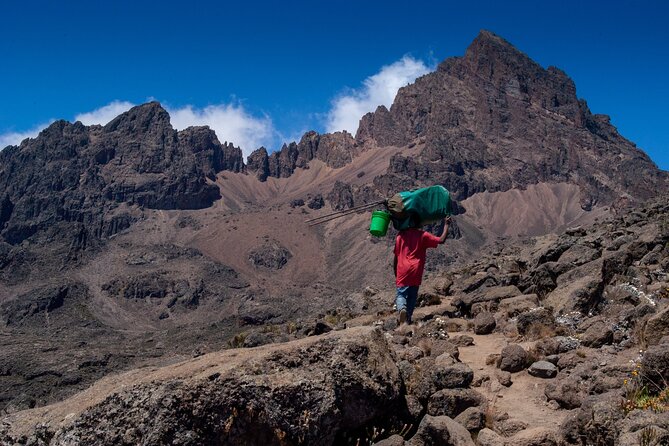
This is one of the most useful days in the whole plan. You leave the plateau and head east along a ridge, passing the junction toward Kibo. The route then turns southeast toward Lava Tower, also called the Shark’s Tooth, at about 4,650 meters.
After passing the junction for Arrow Glacier, you descend to Barranco Camp at about 4,000 meters. The total distance is around 8 kilometers, taking five to six hours. You gain height during the day but finish close to your starting sleeping elevation. That is precisely why the day helps acclimatization.
The habitat shifts into semi-desert, with volcanic rock and much less plant cover. The route may feel tougher than the distance suggests because you spend time at high elevation. Keep your pace easy, drink the boiled water supplied by the crew, and tell your guide if you develop headache, nausea, unusual tiredness, or breathing trouble.
Barranco is a memorable camp because it sits below the Barranco Wall. You can see part of the next morning’s challenge before dinner. That view is inspiring, though it may also make you wonder what you have signed up for.
Day 5: the Barranco Wall and Karanga Valley
The fifth day is short, about 5 kilometers and three to four hours, but it includes the most hands-on section before the summit. You climb the Barranco Wall, continue into Karanga Valley, and reach Karanga Camp at about 4,050 meters.
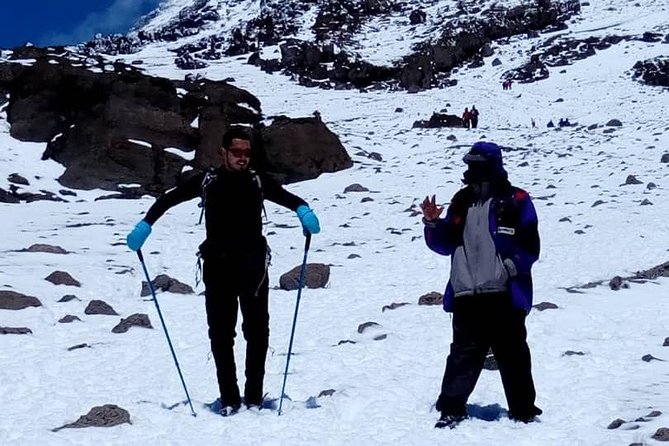
The route is described as alpine desert, and the plant life becomes sparse. This is not a technical climbing day with ropes listed in the package, but you should expect a steep, rocky section where careful footwork matters. Trekking poles can help, especially on the later descent and on muddy ground lower down.
The short distance gives you time to rest, eat, and prepare for Barafu. It also exposes one limitation of the schedule: short walking days do not mean easy days. At this altitude, a few hours can feel like much longer.
Day 6: completing the South Circuit at Barafu
You climb 4 kilometers over three to four hours from Karanga to Barafu Camp. The camp sits at approximately 4,700 meters in alpine desert, and the views of the summit change as you finish the South Circuit.
This is a preparation day, not a sightseeing stroll. You eat dinner, organize your summit clothing, check your headlamp if you have one, and try to sleep before the midnight to 2 a.m. start. The included tents, mattresses, dining tent, chairs, tables, and camp crew make this high camp more workable than carrying and arranging everything yourself.
You should pack your summit-day bag before dinner. Keep warm layers, water, snacks, gloves, a hat, head protection, and rain gear close at hand. The exact gear list is not specified in the package, so obtain one from the operator before arrival.
Day 7: Stella Point, Uhuru Peak, and the long descent
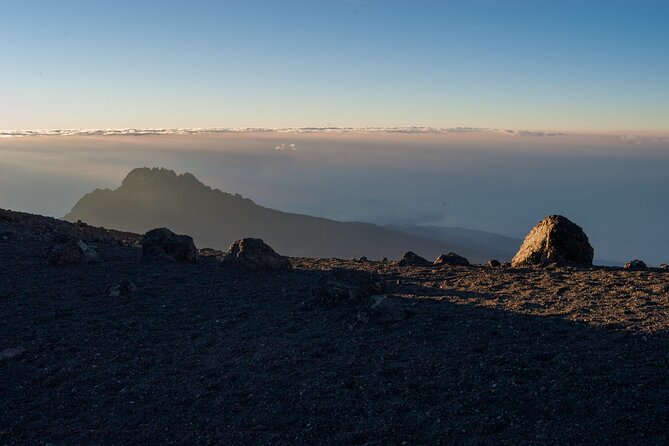
This is the day that defines the climb. You leave Barafu between midnight and 2 a.m. and ascend through heavy scree toward Stella Point on the crater rim, traveling between the Rebmann and Ratzel glaciers.
The first section is slow, dark, and physically draining. The route is steep, and the air is thin. At Stella Point, around 5,739 meters, you can rest briefly and watch the sunrise if timing and weather cooperate. Faster climbers may see sunrise from Uhuru Peak itself, but you should not chase the clock. Reaching the summit safely matters more than arriving at a particular minute.
From Stella Point, the final ascent to Uhuru Peak takes about an hour and may include snow. The summit is at 5,895 meters, the highest point in Africa. The supplied schedule is truncated in the available details, but it clearly combines the summit push with a descent to Mweka Camp. Plan for a very long day, much longer than the six-hour figure shown for the upper portion.
You then descend to Mweka Camp at about 3,090 meters. Descending quickly can be hard on knees and feet, especially after the summit. Eat even if your appetite is poor, drink regularly, and keep a warm layer available. This is the point where a supportive guide and well-organized crew make a real difference.
Several people specifically praise guides such as Haji, Mariki, Musa, Jonathan, Tulzia, Geoffrey, Fabian, Moses, Kaniki, Seif, and Adam. The strongest praise centers on calm support, medical awareness, route guidance, and attention to safety. Those qualities are more important than a polished sales pitch when you are tired at altitude.
Day 8: returning through wet forest to Mweka Gate
After breakfast, you descend from Mweka Camp to Mweka Gate, covering around 10 kilometers in three to four hours. The elevation drops from about 3,090 meters to 1,680 meters, and the habitat returns to forest.
The lower trail can be wet and muddy. Gaiters and trekking poles are specifically useful here, and you should keep rain gear and warmer clothing accessible even though shorts and a T-shirt may be comfortable at the lowest elevations.
At Mweka Gate, you receive your summit certificate. The company vehicle then takes you back to your hotel in Moshi, a drive of about 60 minutes. The package says the activity ends back at the meeting point, but the provided details list the start as Machame while describing hotel pickup and a return to Moshi. Confirm the exact pickup point before the climb.
What the $2,300 price really covers
At $2,300 per person, this is not simply a walking guide with a tent. The price includes national park entry fees, rescue fees, tents, sleeping mattresses, a mess tent, mini camping chairs, tables, candles, meals, boiled water, cutlery, first aid, pulse oximeters, and the salaries of guides, porters, cook, and waiter.
That is a substantial bundle. You are paying for a working mountain camp, not just transport and trail advice. The eight-day route also carries a higher operational cost than a very short climb because the crew remains on the mountain longer.
Still, budget carefully. Tips for guides, porters, cooks, and waiters are excluded. Gear for the climb is also extra, although rental-shop assistance is offered. Personal expenses, unspecified meals and drinks, visas, emergency oxygen, and two hotel nights are not included. The hotel arrangement is described as $50 for a full-body option at Kili Base Hotel, so ask exactly what that covers and whether the amount is per night or for the stated two-night stay.
The mixed customer feedback means you should get every important promise in writing. Confirm the hotel, airport or hotel transfers, rental costs, crew size, toilet arrangements, food plan, and refund terms. Most importantly, pay through a method that gives you a clear record.
Food, camp life, and crew support
You receive breakfast, lunch, and dinner on the mountain, with a cook and waiter included. The dining tent, tables, chairs, cutlery, and candles provide a shared place to eat and organize yourself after walking.
The crew also boils water on the mountain. You should bring a personal water bottle or hydration system, but the package does not leave you to find drinking water on your own. A first-aid kit and pulse oximeters are included, though emergency oxygen is not.
Camp toilets are worth asking about. One otherwise favorable account specifically suggests improving the toilet facilities, so comfort in this area may be basic. That is normal for a high mountain camp, but it is still a fair question to raise before booking.
The most warmly described part of the service is the human support. Edward is frequently singled out for planning and communication before the trip, while guides including Haji and Mariki receive praise for being supportive and safety-minded. At the same time, some customers report inconsistent communication, disorganization, poor delivery of promised services, and serious accusations involving advance payments. Those are not small matters. Ask for a written contract, a detailed payment schedule, and a clear contact person.
Who should choose this climb
I would consider this route if you want a private climb with a slower eight-day schedule, broad scenery, and a full support crew. It suits people who prefer a local operator and want help renting gear in Moshi.
It is less suitable if you want hotel comfort on the mountain, a guaranteed luxury camp setup, or a short and easy walk. The summit day is hard, the camp facilities are basic, and the package excludes several costs that can add up.
Most hikers can participate according to the supplied information, but this is still a high-altitude expedition. You should be honest about your fitness, tell the guide about medical concerns, and accept that weather can affect the schedule.
The activity offers free cancellation up to 24 hours before the start time. Inside that window, changes are not accepted and payment is not refunded. If poor weather forces cancellation, you are offered another date or a full refund.
Should you book the Lemosho climb?
I would book this eight-day Lemosho climb only after confirming the practical details directly with Kilimanjaro Wonders Expedition Safari. The route plan is attractive, the included services are extensive, and the strongest accounts give real credit to the guides and wider crew for helping people reach the summit.
The decision turns on your tolerance for basic camping and your willingness to check the paperwork. Ask who will lead your group, how many porters and guides are assigned, what the hotel nights include, how tips are handled, and what happens if the promised arrangements change.
If those answers are clear and the payment terms feel secure, this can offer good value for a private, fully supported route with excellent scenery. If the answers remain vague, choose another operator. Kilimanjaro is too expensive and too demanding for preventable confusion.
FAQ
How long is the Kilimanjaro climb?
The experience lasts approximately eight days, including the approach through the Lemosho Route, the summit attempt, the descent to Mweka Gate, and the return to Moshi.
What is the price per person?
The listed price is $2,300 per person.
What is included in the package?
The package includes qualified guides, porters, a cook and waiter, national park and rescue fees, tents, sleeping mattresses, a dining tent, chairs, tables, candles, cutlery, meals, boiled water, first-aid supplies, and pulse oximeters.
Are hotel nights included?
Two nights of accommodation before and after trekking are not included. The supplied information refers to a $50 full-body option at Kili Base Hotel, so confirm the exact hotel cost and arrangement before booking.
Is climbing gear included?
No. Personal climbing gear is not included. The operator offers to take you to a local hiking store to help arrange rental equipment.
Where does the climb start and finish?
The meeting information gives Machame, Tanzania, as the start and says the activity ends back at the meeting point. The route description also refers to hotel pickup and a return to Moshi, so confirm your exact pickup and drop-off details.
What is the cancellation policy?
You can cancel at least 24 hours before the experience start time for a full refund. Cancellations or changes made within 24 hours are not accepted for a refund. If poor weather cancels the climb, you are offered a different date or a full refund.
Just added around Moshi
- Mt Kilimanjaro 6 days Marangu route hike★ 5.0 · 3 reviews
- Wildlife Extravaganza: Manyara, Tarangire & Ngorongoro in 3 Days★ 5.0 · 3 reviews
- Private Cycle to Kilimanjaro Bike Park Safari★ 5.0 · 6 reviews
- 3 Days Private E-Bike Tour in West Kilimanjaro★ 5.0 · 3 reviews
- West Kilimanjaro cycling Adventures★ 4.5 · 8 reviews
- machame route★ 5.0 · 16 reviews
- Kilimanjaro Climb & Safari – Lemosho Route – 13 Day★ 5.0 · 10 reviews
- Kilimanjaro Climbing Umbwe Route★ 5.0 · 3 reviews
Lemosho Route Climbs, compared.


8-Day Small-group Lemosho Kilimanjaro Summit Trekking
Read our review →





Climbing Kilimanjaro through 8 days Lemosho Route
Read our review →Browse the lists this tour appears in