
Reviewed · LEMOSHO ROUTE CLIMBS
8 days Lemosho route Climbing Mt. Kilimanjaro
The best part of this climb is the way the Lemosho Route builds slowly toward Kilimanjaro. You begin in quiet rainforest, cross the broad Shira Plateau, pass Lava Tower and the Barranco Wall, then make the final push to Uhuru Peak at 5,895 meters. I like the gradual route design and the added acclimatization day at Moir Hut. I also like that the price includes transport, park fees, meals, tents, treated water, rescue cover, and an experienced support crew.
The main consideration is the summit day. You will wake around 11:30 p.m., hike for roughly eight hours to Uhuru Peak, then descend for another seven or eight hours to Mweka Camp. The route is well planned, but eight days is still a serious physical challenge, and you need good fitness, suitable clothing, and a sensible attitude toward altitude.
Key points to know before booking
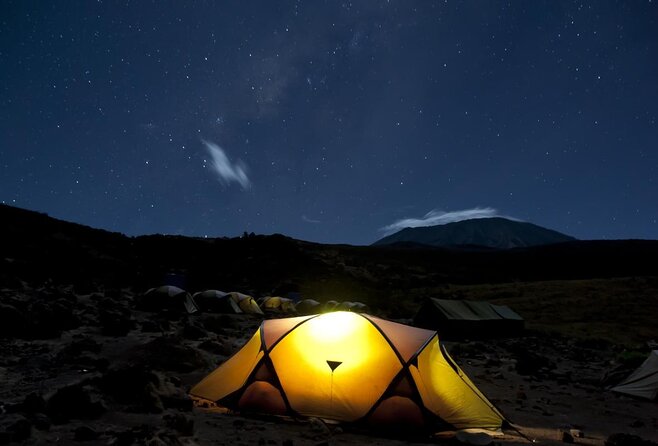
- Lemosho gives you a gradual start: The first days move through rainforest, moorland, and the Shira Plateau before the route becomes harsher and more exposed.
- Moir Hut is useful for acclimatization: The longer third day includes optional walks around Lent Hills, helping prepare you for higher camps.
- The Barranco Wall is hands-on but not technical climbing: It is a Class 2 hiking section that may look more alarming than it feels.
- Summit night is long and cold: You climb by headlamp to Stella Point, watch sunrise near the crater rim, then continue to Uhuru Peak.
- The support package is substantial: Porters, a cook, guides, tents, hot meals, filtered water, oxygen, an oximeter, and first-aid equipment are included.
- The operator has a local base in Moshi: Naick handled planning for several groups, while guides such as Goodluck and Abraham led one successful eight-day climb.
Starting in Moshi and entering Kilimanjaro National Park
This eight-day trip begins in Moshi, with a listed start time of 8:30 a.m. Kilisa Tours & Safaris includes private transport between Kilimanjaro International Airport and your Moshi accommodation, two nights of accommodation in Moshi, and transport to and from the park gates.
That arrangement matters. You do not need to organize a separate airport transfer or find your own way to the trailhead. The extra time in Moshi also gives you a chance to rest before the climb, though the exact hotel is not specified in the tour details.
On the first morning, you eat breakfast at your hotel and receive a briefing from your guide. The drive to Londorossi Park Gate takes you from town toward the mountain, where entry formalities are completed. From there, expect another drive of about an hour to the Lemosho trailhead.
The first walking section covers about 6 kilometers in three to four hours. You hike through undisturbed rainforest, with the route shaded and comparatively cool. This is a sensible opening day because it lets your body begin working at altitude without an immediate marathon.
Your first camp is in the forest zone. Lunch, dinner, breakfast, and drinking water are provided on the mountain, and hot water is available for washing. Do not expect hotel-style comfort. Camping is part of the deal, and you should be ready for basic washing, shared camp routines, and a night outdoors.
More Lemosho Route Climbs in Moshi:
- Kilimanjaro climb by Lemosho Route (7-day)
★ 5.0 · 651 reviews - Kilimanjaro Climbing Lemosho Route 8 Days.
★ 5.0 · 186 reviews - Kilimanjaro climb, Lemosho Route (8-day)
★ 5.0 · 148 reviews
Day 2: From rainforest to Shira 1
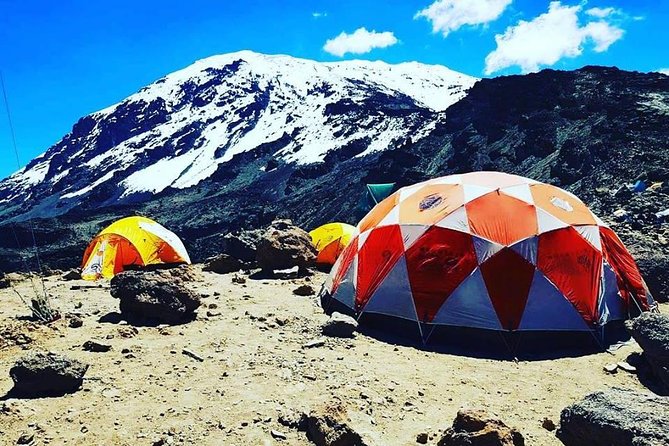
Day two covers about 8 kilometers in roughly five and a half hours. The trail leaves the forest and enters the moorland zone, where tall grasses, heather, volcanic rock, and lichen replace the dense trees.
The route climbs across rolling ground and crosses several streams before reaching Shira Ridge. You then descend gently to Shira 1 Camp. This change in scenery is one of the pleasures of Lemosho. The mountain does not reveal itself all at once. You watch the vegetation thin as the air grows cooler and the slopes open up.
Kibo, Kilimanjaro’s highest cone, comes into view across the Shira Plateau. The sight is a useful reminder that the real work is still ahead. At this stage, you may feel strong and energetic, but it is wise to keep your pace slow. The local hiking approach is usually pole pole, meaning slowly, and this is not the place to race ahead.
Day 3: Shira Plateau and the Moir Hut acclimatization day
The third day is the longest regular walking day before the summit push. The route covers approximately 15 kilometers and takes five to seven hours. It begins with a gentle walk east toward Kibo, crossing the high Shira Plateau to Shira 2 Camp.
From there, the route continues to Moir Hut, a less-used camp at the base of Lent Hills. The setting is moorland meadows near a stream, and the surrounding open ground gives you broad views toward the upper mountain.
The length of this day may sound demanding, but it serves a useful purpose. The itinerary includes optional walks around Lent Hills, making Moir Hut an important acclimatization stop. You gain altitude during the day, then have time to adjust before climbing higher.
This is where the eight-day schedule earns its price over a rushed itinerary. Kilimanjaro success is not only about leg strength. Your body needs time to respond to thinner air, and a carefully placed acclimatization day can be more valuable than a shorter, cheaper schedule.
Day 4: Lava Tower, Arrow Glacier junction, and Barranco Camp
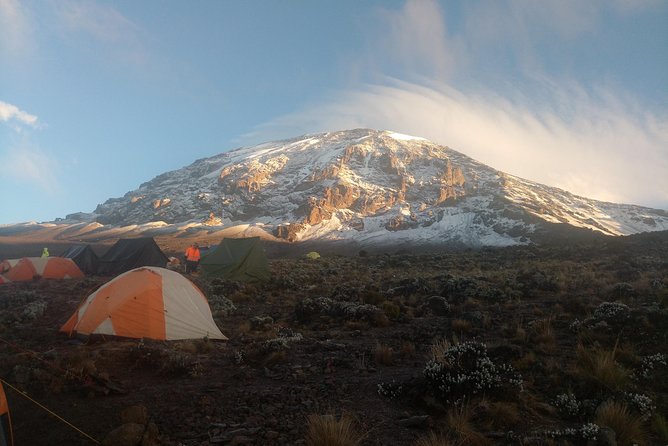
Day four covers only about 7 kilometers, but it is one of the most important days for altitude adjustment. You hike for around seven hours through semi-desert terrain, climbing from Moir Hut toward Lava Tower, also called the Shark’s Tooth.
The route first follows a ridge and passes the junction toward Kibo. It then turns southeast toward Lava Tower at approximately 4,600 meters. A second junction leads toward the Arrow Glacier at about 16,000 feet, or roughly 4,875 meters.
After reaching the high point, you descend to Barranco Hut at about 13,000 feet, or approximately 3,960 meters. You finish the day at nearly the same elevation at which you began, but your body has spent valuable time higher up. This is the classic climb-high, sleep-lower pattern that makes the day useful.
The terrain is now more exposed, and weather can feel sharper. Your warm layers should be easy to reach in your daypack. At camp, dinner is served and you spend the night in tents. The route description presents this as an acclimatization day, not a race to cover distance, so let your guide control the pace.
Same country, a completely different kind of safari:
- Safari Serengeti And Ngorongoro
★ 5.0 · 288 reviews - Kilimanjaro climb, Machame Route (7-day)
★ 5.0 · 262 reviews - Climbing Kilimanjaro – Machame Route
★ 5.0 · 170 reviews - Climbing Kilimanjaro through 7 days Machame Route
★ 5.0 · 151 reviews
Day 5: Climbing the Barranco Wall to Karanga
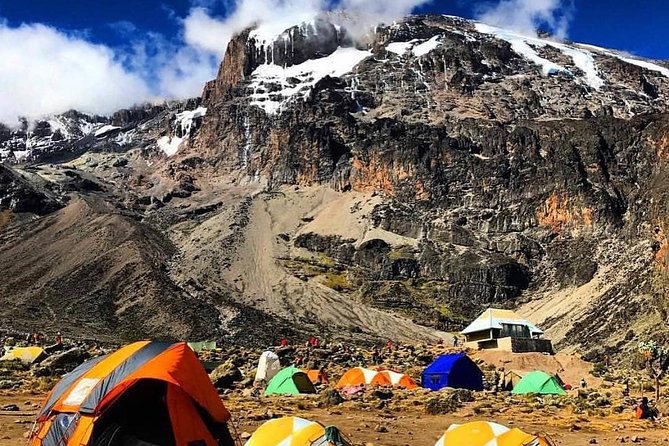
After breakfast, you face the Barranco Wall. It can look intimidating from below, but the route is described as a Class 2 hiking section rather than a technical climb. You will use your hands in places, but this is not rock climbing with ropes and equipment.
The walking distance is approximately 5 kilometers, with four to five hours of hiking. At the top, you can see Heim Glacier and look out above the clouds. The reward comes quickly after the effort.
The trail then rises and falls through the Karanga Valley before reaching Karanga Camp at 3,950 meters. I like this short day because it gives you a physical challenge without adding a huge mileage burden. It also leaves room for your guide to watch how you are handling the height.
The camp facilities remain basic. Dinner and washing water are provided, but you should think of washing as a practical mountain routine, not a shower. A small pack of wet wipes, hand sanitizer, and a quick-drying towel can make camp life easier.
Day 6: Barafu Camp and preparing for summit night
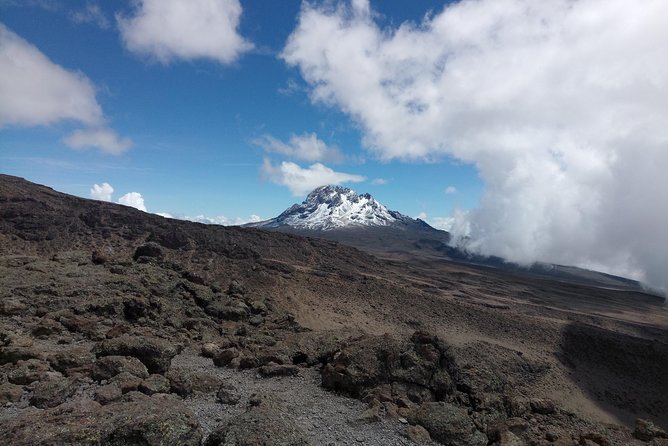
Day six is short by distance, only about 4 kilometers in three to four hours, but the altitude makes it meaningful. You climb toward Barafu Hut, passing the point where the Mweka Route joins the trail. Mweka will be your descent route after the summit.
Barafu Camp sits at about 4,550 meters on a rocky, exposed ridge. The name means ice in Swahili, and the camp can feel stark. There is no accessible water at Barafu, so this is the last water stop for porters. The operator provides treated and filtered drinking water throughout the trek, but your crew must carry supplies to this high camp.
The tents are exposed to wind and rock, and you are advised to learn the layout before darkness arrives. Dinner is served early, and the guide gives a briefing on the summit attempt. The plan is to sleep around 7 p.m., then wake at approximately 11:30 p.m. for tea and biscuits.
This is not a normal night’s sleep. You may rest poorly because of the cold, altitude, nerves, or all three. Keep your summit clothes organized before dinner. Put your headlamp, gloves, water, snacks, and warm layers where you can reach them without unpacking your whole bag.
Day 7: Stella Point, Uhuru Peak, and the long descent
Summit day is the heart of the experience and the part you must take seriously. You begin around midnight, climbing northwest over stone scree. The ascent to Stella Point at 5,685 meters takes about six hours according to the schedule.
The surface is loose and tiring, and the darkness hides much of the slope. This section is often mentally harder than the earlier days because progress feels slow. Your guide and fellow climbers set a steady pace, but no itinerary can remove the strain of altitude.
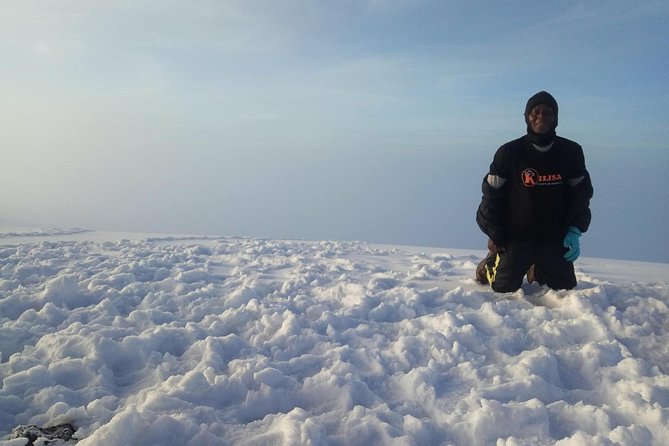
At Stella Point, you reach the crater rim and can watch the sunrise. From there, the route continues for about two hours along a snow-covered trail to Uhuru Peak at 5,895 meters. The summit is the highest point in Africa and the formal goal of the climb.
The published schedule gives about eight hours to reach Uhuru Peak, followed by seven or eight hours descending to Mweka. The total distance is approximately 7 kilometers uphill and 23 kilometers downhill. That is a huge day, so do not judge your ability by how comfortable you felt on day two or three.
After time at the summit, you descend toward Mweka Camp. The descent can be hard on knees and thighs, especially after the night climb. Trekking poles are useful, and you should protect your feet from blisters from the beginning of the trip.
The supplied itinerary does not fully spell out every camp detail after the summit, but it clearly places the long descent on day seven and the final walk out on day eight. Follow the guide’s instructions if weather, health, or trail conditions require a change.
Day 8: Mweka Gate, certificates, and a hot lunch
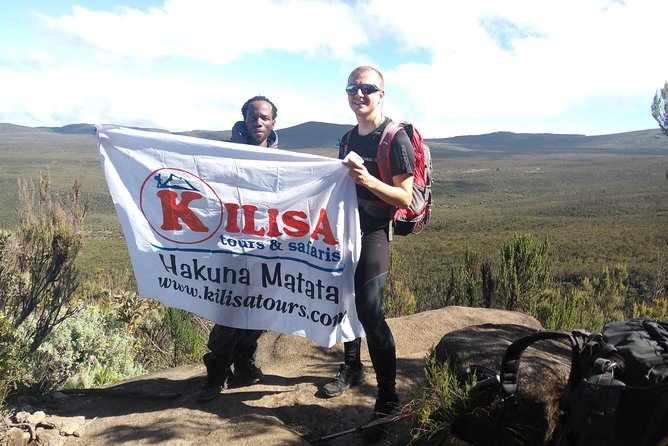
The final day covers about 15 kilometers in around three hours through forest. After breakfast, the crew holds a celebration with dancing and singing. This is also when you present tips to the guides, assistant guides, cook, and porters.
Tipping is not included in the $3,100 price. It is not compulsory, but it is deeply expected in the local mountain industry, so plan for it before you arrive. Ask the operator for current guidance on dividing tips fairly among the whole crew. One past booking account described an uncomfortable tipping moment, which is a useful warning to clarify the process in advance.
At Mweka Gate, you sign your name to receive a completion certificate. Reaching Stella Point earns a green certificate, while reaching Uhuru Peak earns a gold certificate. You then descend for about one hour, or 3 kilometers, to Mweka village, where a hot lunch is served before the drive back to Moshi.
The return to town is more than a transfer. It marks the shift from cold camps and early nights to showers, clean clothes, and a proper bed. The package includes two nights in Moshi, although the day-by-day details do not specify exactly how those nights are divided around the climb.
What the $3,100 price covers
At $3,100 per person, this is not a budget walk. It is also not simply an eight-day hotel bill. The cost includes major park and operating expenses:
- Private airport transfers and transport to and from Kilimanjaro National Park
- Two nights of Moshi accommodation
- Park entry, camping, government taxes, VAT, and rescue fees
- Guides, assistant guides, porters, and a cook
- Three hot meals each day on the mountain
- Treated and filtered drinking water
- Hot water for washing
- Four-season mountain tents and sleeping mats
- Portable oxygen, an oximeter, and an emergency first-aid kit
That is a strong package for a supported Kilimanjaro climb. You still pay separately for flights, travel insurance, and tips. Travel insurance is especially important because rescue fees in the package do not replace comprehensive personal cover.
The value also depends on group size. The maximum is 15 people, which is large enough to share costs but small enough for the guide team to manage. Ask how many people are expected in your specific departure, since a 15-person group will feel different from a private climb for two or three.
Food, water, safety, and the role of the crew
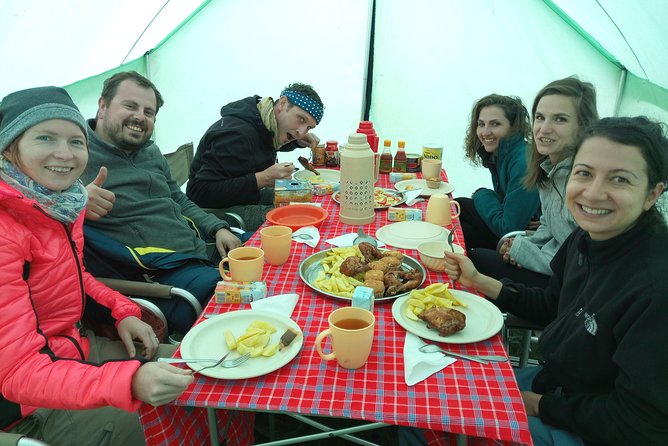
Three hot meals a day are included, along with water treated and filtered by the mountain team. That is a major help because carrying enough food and water for eight days would add weight and complicate the climb.
Kilisa also lists oxygen tanks, an oximeter, and a first-aid kit. These are useful safety tools, but they do not make altitude sickness harmless. You should tell your guide immediately about headache, nausea, unusual tiredness, dizziness, confusion, or breathing trouble.
The strongest theme in the available feedback is the support crew. Guides named in accounts include Goodluck and Abraham, and the company owner, Naick, handled planning and changes for several groups. The crew includes porters and a cook, not just a guide, so the climb is a team effort from the first meal to the final celebration.
You should still ask practical questions before paying. Confirm the hotel name, expected group size, daily packing list, tip guidance, and what happens if you need to descend early. Clear answers before departure are worth more than a polished sales page.
Who should choose this Lemosho climb?
I would choose this route if you want a scenic approach, a slower schedule, and a full support package. It suits fit hikers who can handle long walking days, cold camps, uneven volcanic ground, and one very long summit day.
It is also a good option if you value local support and direct planning from a Tanzania-based company. The positive feedback highlights careful airport pickup, flexible help with delayed or canceled flights, strong communication from Naick, and friendly guides, cooks, and porters.
I would think twice if you dislike camping, struggle with long descents, or want a relaxed sightseeing holiday. The route is not a technical mountaineering expedition, but it is physically demanding. A medical check and a realistic fitness plan are sensible before booking.
The activity requires a strong physical fitness level. The group may include up to 15 people, and the starting point is in Moshi. Pickup is offered, and a mobile ticket is available, which makes the arrival process simpler.
Should you book the eight-day Lemosho Route?
Book it if you want the added acclimatization time of Lemosho and are ready for a demanding but carefully staged climb. The route moves through several climate zones, includes the Barranco Wall, gives you a sunrise attempt at Stella Point, and provides a serious chance to reach Uhuru Peak without rushing every stage.
The best reason to choose this package is the combination of route quality and included support. The main warning is the summit schedule and the extra costs for insurance and tips. If you prepare well, confirm the practical details, and accept that altitude may change the plan, this is a strong choice for a first Kilimanjaro climb.
FAQ
Where does the climb start and finish?
The climb starts in Moshi, Tanzania. The activity ends back at the meeting point after transport from Mweka village to Moshi.
How long is the Kilimanjaro climb?
The experience lasts approximately eight days.
What time does the activity start?
The listed start time is 8:30 a.m.
What route does the climb use?
The itinerary follows the Lemosho Route up Kilimanjaro and descends through the Mweka Route.
How high is Uhuru Peak?
Uhuru Peak is listed at 5,895 meters.
Is airport pickup included?
Yes. Private transport between Kilimanjaro International Airport and your Moshi accommodation is included.
Are meals included?
Yes. Breakfast, lunch, and dinner are included while you are on the mountain. The package lists eight breakfasts, seven lunches, and seven dinners.
Are park fees and camping fees included?
Yes. Park entry fees, camping fees, rescue fees, government taxes, and 18% VAT on tour services are included.
What is not included in the price?
Flights, travel insurance, and tips for the guides, porters, and cook are not included.
Just added around Moshi
- Mt Kilimanjaro 6 days Marangu route hike★ 5.0 · 3 reviews
- Wildlife Extravaganza: Manyara, Tarangire & Ngorongoro in 3 Days★ 5.0 · 3 reviews
- Private Cycle to Kilimanjaro Bike Park Safari★ 5.0 · 6 reviews
- 3 Days Private E-Bike Tour in West Kilimanjaro★ 5.0 · 3 reviews
- West Kilimanjaro cycling Adventures★ 4.5 · 8 reviews
- machame route★ 5.0 · 16 reviews
- Kilimanjaro Climb & Safari – Lemosho Route – 13 Day★ 5.0 · 10 reviews
- Kilimanjaro Climbing Umbwe Route★ 5.0 · 3 reviews
Lemosho Route Climbs, compared.


8-Day Small-group Lemosho Kilimanjaro Summit Trekking
Read our review →





Climbing Kilimanjaro through 8 days Lemosho Route
Read our review →Browse the lists this tour appears in