
Reviewed · LEMOSHO ROUTE CLIMBS
8 Days Kilimanjaro Climbing Lemosho Route
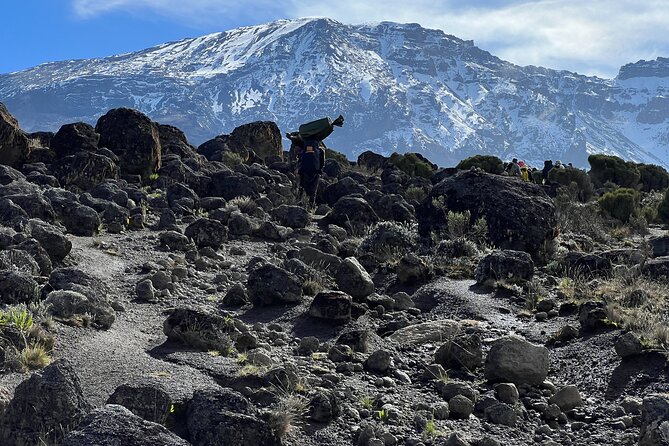
The Lemosho Route gives you Kilimanjaro at its most scenic and measured. You start in the western forest, cross the broad Shira Plateau, then join the busier Machame path near Lava Tower. The extra day helps your body adjust before the long summit night.
I like the quiet first days and the careful climb-high, sleep-lower rhythm. I also like that the $2,300 price includes airport transfers, park fees, porters, a cook, tents, meals, drinking water, rescue fees, and oxygen equipment. The catch is the summit day: 12 to 17 hours on foot, often beginning around midnight, so this is a serious physical challenge rather than a simple guided walk.
Key points to know before booking
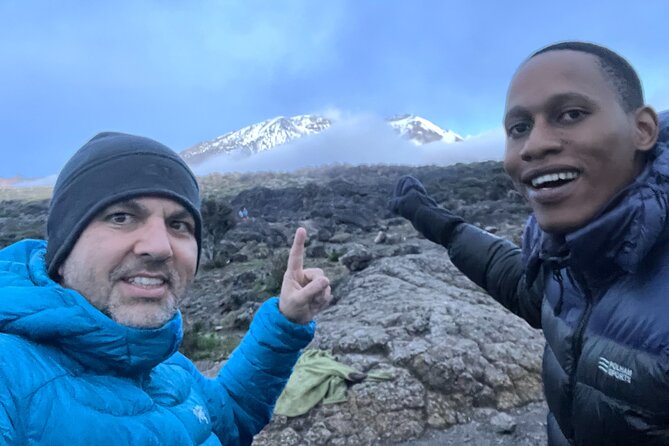
- Cross the Shira Plateau: The route travels from west to east through open heath and volcanic terrain before joining the Machame corridor.
- Eight days helps with altitude: You spend an additional night on the mountain compared with shorter Lemosho plans.
- Barranco Wall is a hands-on day: The climb is not technical mountaineering, but you will use your hands in places and face steep, uneven ground.
- Summit night is the test: Expect a midnight start, headlamp walking, cold conditions, and a long descent after Uhuru Peak.
- The package covers the main costs: Guides, porters, cook, meals, tents, water, park charges, transfers, and rescue cover are included.
- Private group format: Only your own group takes part, with airport pickup and a Moshi orientation before the climb.
Why the Lemosho Route earns its reputation
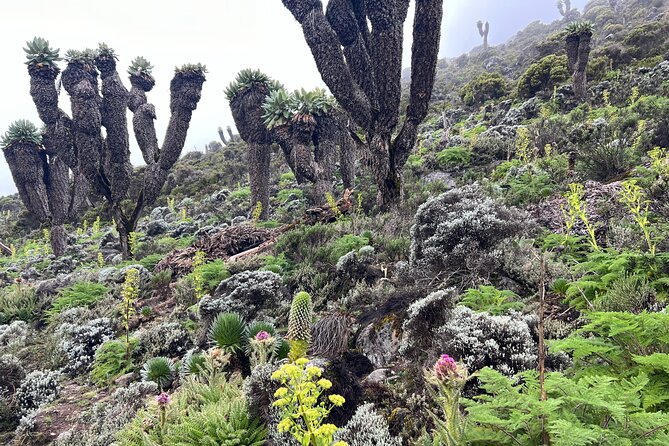
Kilimanjaro is not one continuous uphill trail. The mountain rises through several plant zones, and the Lemosho Route lets you see those changes at a sensible pace.
Your trip begins in the montane forest, where moss, flowers, bird calls, and the chance of black-and-white colobus monkeys make the first day feel like a forest trek. Higher up, the trees thin into the Hagenia zone, then give way to heath, alpine terrain, and volcanic rock.
The route crosses the Shira Plateau from west to east. That broad crossing is one of its pleasures. The walking is often less steep than the summit approach, and the open views give you your first clear look at Kibo, Kilimanjaro’s highest cone.
Crowds are usually lighter on the early Lemosho section. Once you reach Lava Tower and later Barranco, you join trails used by other climbing groups. That means the route starts quietly but does not remain isolated all the way to the top.
More Kilimanjaro Climbs in Kilimanjaro
- Kilimanjaro climb by Lemosho Route (7-day)
★ 5.0 · 651 reviews - Kilimanjaro climb, Machame Route (7-day)
★ 5.0 · 262 reviews - Kilimanjaro Climbing Lemosho Route 8 Days.
★ 5.0 · 186 reviews
What your $2,300 covers
At $2,300 per person, this is not a bare-bones mountain package. The price includes the costly parts of a supported Kilimanjaro climb:
- All national park fees
- Professional mountain guides
- Porters and cook salaries
- Airport transfers
- Waterproof, four-season private mountain tents
- Purified drinking water
- Breakfast for eight days
- Lunch for eight days
- Dinner for seven days
- Rescue fees
- An oximeter
- All meals while you are on the mountain
That list matters. Park fees and crew wages make up a large share of any Kilimanjaro climb, and carrying your own shelter, food, and water would change the trip completely.
You still need money for tips, alcohol, soft drinks, souvenirs, and personal expenses. The package includes tents rather than hotel rooms on the mountain, so you should expect basic camp life, early nights, and limited comfort.
The private format is another useful feature. Your group is not merged with strangers for the climb. That can make pacing and daily decisions easier, though the listing does not specify the maximum number of people in a private group.
Airport pickup and the Moshi orientation
The experience begins with pickup at Kilimanjaro Airport. You are taken to a lodge in Moshi, where the guides explain the climb and check your trekking gear before you head uphill.
That gear check is worth taking seriously. A small issue with boots, waterproof layers, sleeping equipment, or headlamps becomes much more annoying at altitude. The summit instructions specifically call for extra lithium batteries because they perform better in cold, dark conditions.
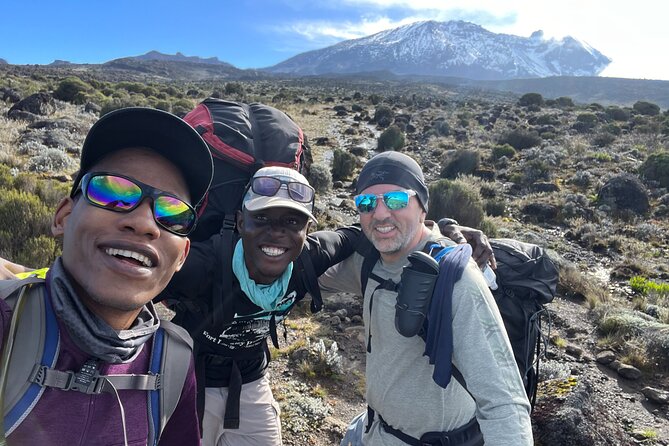
Names connected with the operation include Godfrey, involved in planning, and Guiwa, a mountain guide. If you have a preferred contact or want to clarify who will lead your group, ask before departure. The crew is a major part of the experience, and the strongest praise for this climb centers on planning, guiding, food, and the way the staff supports people toward the summit.
Day 1: Londorossi Gate to Forest Camp
The first mountain day starts with a drive from your lodge to Londorossi Gate on Kilimanjaro’s western side. The drive takes a few hours from Arusha, and the true trailhead can require extra walking in wet or muddy conditions if vehicles cannot reach it.
After a picnic lunch, you hike for about three to four hours through montane forest to Forest Camp. The overnight altitude is about 9,498 feet.
This is a gentle introduction to the mountain, but do not dismiss it. You are already moving at altitude, and the forest can be damp underfoot. Moss and flowers brighten the path, while bird calls and possible colobus monkey sightings add a natural touch that you miss on a faster, more crowded approach.
The first camp also gives you a chance to settle into tent life. Keep your evening routine simple: eat, drink, organize your sleeping bag and clothing, then rest.
More Kilimanjaro Climbs in Moshi:
- Kilimanjaro climb, Lemosho Route (8-day)
★ 5.0 · 148 reviews - Kilimanjaro climb, Lemosho Route (6-day)
★ 5.0 · 129 reviews - Kilimanjaro climb, Marangu route (6-day)
★ 5.0 · 72 reviews - Private Kilimanjaro Hike 7 Day Lemosho Route
★ 5.0 · 60 reviews
Day 2: Forest Camp to Shira 1 Camp
You leave the forest and enter the Hagenia zone, where the trees thin and views open toward Kibo. The day includes several ridges, a high point around 11,500 feet, and a descent to Shira 1 Camp.
The hiking time is listed as six to nine hours. That wide range tells you something useful: pace, weather, trail conditions, and group fitness will affect the day.
This is an important acclimatization day because you climb higher, then sleep lower than the day’s highest point. The up-and-down pattern may feel less dramatic than a straight ascent, but it trains your body for the altitude ahead.
Shira 1 is your first truly open camp. Expect wider views and more exposure to wind and weather. Keep warm layers close rather than buried in your duffel.
Day 3: Across the Shira Plateau to Moir Camp
Day three traverses the heath zone of the Shira Plateau and begins the climb toward the western side of the Kibo Massif. You stop for a picnic lunch at Scott Fisher Memorial Camp, named for the Mount Everest guide.
The route continues into the upper heath zone and finishes at Moir Camp, around 13,650 feet. Hiking takes about five to six hours, with a possible late-afternoon acclimatization walk if weather allows.
This is one of the route’s most appealing days. The walking is not simply a race uphill. You cross a broad, high area with volcanic ground, long views, and changing light. The open setting can also make the altitude feel more obvious, since there are fewer trees and less shelter.
Moir Camp is high, so you may feel the effects of altitude more clearly here. Move slowly, drink the purified water provided, and tell your guide about symptoms rather than trying to hide them.
Day 4: Lava Camp and the Barranco Valley
You leave the heath zone and enter the alpine zone. The trail passes Lava Camp and climbs to roughly 14,300 feet before dropping into the Barranco Valley, where you camp at about 13,044 feet.
The day takes four to six hours. It is a classic high-altitude acclimatization pattern: climb high during the day, then sleep somewhat lower.
The volcanic setting becomes more severe here. Vegetation is sparse, the ground is rougher, and Kibo’s ice fields may appear above the route. Barranco Valley is a dramatic place to camp, enclosed by steep volcanic walls.
The drawback is that the terrain no longer feels like an ordinary hike. You will cross uneven ground at altitude, and weather can change quickly. The shorter walking time helps, but you still need energy for the next morning’s climb over Barranco Wall.
Day 5: Barranco Wall to Karanga Camp
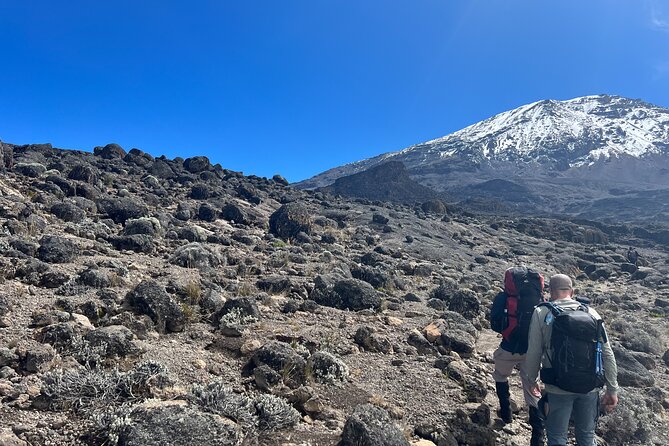
The day begins with the climb up the Great Barranco Wall. You will use your hands in places, but this is described as a trekking route rather than a technical climbing route requiring ropes.
The wall looks imposing from camp. Once you are on it, the path rises in a series of ledges and turns. The reward is a close view of Kilimanjaro’s ice fields and a strong sense of progress.
After the wall, the trail crosses several small valleys on the way to Karanga Camp. Hiking takes about three to five hours, and the camp sits around 13,106 feet.
The short day is helpful because the summit push is close. You should not treat it as a rest day, though. The repeated ups and downs can be tiring, and the altitude remains high even when the mileage is modest.
Day 6: Karanga to Barafu Camp
You continue for about three to five hours to Barafu Camp, crossing more small valleys before reaching the high camp at about 15,100 feet.
Barafu is a staging point, not a place for a leisurely afternoon. Once you arrive, the crew demonstrates safety equipment, including a Gamow bag and oxygen. You eat an early supper, organize your summit clothing, and rest before the wake-up call around 11 p.m. or midnight.
This is where careful preparation pays off. Put your headlamp, spare lithium batteries, warm layers, gloves, water, and snacks where you can reach them quickly. The provided information does not list a personal equipment rental service, so confirm before arrival what you must bring yourself.
You may not sleep much at Barafu. That is normal for the schedule, but it also makes the summit day demanding. Keep your evening calm and conserve energy.
Day 7: Uhuru Peak and the long descent
Summit day begins around 11 p.m. or midnight. You climb by headlamp for six to seven hours to Stella Point, then continue for another one to two hours to Uhuru Peak at 19,341 feet, or 5,896 meters.
The goal is often sunrise, but the schedule is not a race. People move at different speeds, and altitude acclimatization varies greatly. Your guide should set a steady pace, and you should focus on controlled breathing, small steps, and clear communication.
At Uhuru Peak, you have time for a summit celebration and photographs before descending to Barafu for lunch. Then you continue to Mweka Camp, where you sleep at about 10,448 feet.
The stated walking time is 12 to 17 hours, though the day’s schedule lists the summit portion separately. Either way, this is the hardest day by a wide margin. The climb is cold and dark at first, followed by a punishing descent on tired legs.
The return to Mweka is a major reason the eight-day schedule feels full rather than relaxed. You reach the summit, descend to eat, and then keep going. If you are deciding between routes, give more weight to this day than to the attractive photos.
Day 8: Mweka Camp to the trailhead
The final descent takes about three to five hours. At the trailhead, you have lunch and say goodbye to the mountain crew before returning to town.
Arrival at your lodge is usually between 3 and 5 p.m. Airport transfers are included, but the information does not specify a same-day airport drop-off schedule. If you fly out that evening, confirm the timing before booking your flight.
This last day is easier than summit day, but your knees may feel the descent. Walking poles can be useful, though they are not listed among the included items.
Food, tents, water, and crew support
Meals are included throughout the mountain portion, with eight breakfasts, eight lunches, and seven dinners. Food drew repeated praise, which matters on a climb where appetite can fade and calories help you keep moving.
You sleep in private, waterproof, four-season mountain tents. The wording indicates quality camping gear, but it does not specify whether tents are single or shared occupancy, so ask if that matters to you.
Clean, purified drinking water is provided. Alcohol and soft drinks cost extra, and personal spending money is not included.
The crew structure includes professional mountain guides, porters, and a cook. The strongest positive feedback centers on the guides’ support, the good food, careful organization, and the entire team helping climbers reach Uhuru Peak. Tips are not included, so budget for them separately and ask the operator for current guidance.
Who should book this climb
I would look closely at this trip if you want the scenic Lemosho approach, a private group, and a full eight-day schedule with an extra acclimatization night. It suits people who prefer a gradual route and want the main logistical work handled for them.
It is also a good fit if you value a staffed climb. Your guides lead the route, porters carry supplies, and a cook handles mountain meals. The included rescue fees and the presence of an oximeter add useful safety support, though they do not remove the risks of high altitude.
This is not a casual vacation. The summit day can last up to 17 hours, and the route reaches 19,341 feet. Most participants can take part according to the supplied information, but you still need to be ready for long walking, cold, steep ground, and very little sleep before the summit.
Booking, cancellation, and practical checks
Confirmation is received at booking, and pickup is offered from Kilimanjaro Airport. The experience is listed as available from February 17, 2024 through December 31, 2029, with operating hours shown as 7 a.m. to 9 p.m. on Monday and Tuesday.
You can cancel for a full refund up to 24 hours before the start time. Cancellations or changes inside 24 hours are not accepted for a refund, with cut-off times based on local time.
Before paying, I would confirm the exact lodge in Moshi, the airport return plan, tent occupancy, required personal gear, crew tipping advice, and the final group size. These details can affect comfort and your total budget even though the main package is clearly priced.
Should you book the 8-day Lemosho Route?
Book it if you want Kilimanjaro’s scenic western approach, strong route pacing, and a private, fully supported climb at $2,300 per person. The quiet Shira Plateau, extra acclimatization day, included rescue cover, and praised food and crew support make the package good value for a serious mountain trip.
Think twice if you dislike camping, long summit nights, or steep descents. The Barranco Wall and the 12 to 17-hour summit day are not minor details.
For the best chance of enjoying it, arrive with your gear ready, carry spare lithium batteries, pace yourself from day one, and speak honestly with the guides about how you feel. If Godfrey and Guiwa are available for your planning and mountain team, ask for them by name. This route rewards patience more than bravado.
FAQ
How long is the Kilimanjaro Lemosho climb?
The climb lasts approximately eight days, including the final descent from the mountain.
Where does the experience begin?
Pickup is offered from Kilimanjaro Airport. You then go to a lodge in Moshi for a trek orientation and gear check.
What route is used for the ascent?
The ascent uses the Lemosho Route, beginning at Londorossi Gate on the western side of Mount Kilimanjaro.
Which route is used for the descent?
The descent uses the Mweka Route.
Is this a private tour?
Yes. Only your own group participates in the activity.
Are park fees included?
Yes. All park fees are included in the listed price.
Are meals included?
Yes. The package includes eight breakfasts, eight lunches, and seven dinners, along with all meals while you are on the mountain.
Is drinking water provided?
Yes. Clean, purified drinking water is provided during the mountain portion.
How long is summit day?
The summit day typically involves 12 to 17 hours of hiking, with the ascent beginning around 11 p.m. or midnight.
What happens if I need to cancel?
You receive a full refund if you cancel at least 24 hours before the experience starts. Cancellations or changes made less than 24 hours before the start time are not accepted for a refund.
More Lemosho Route Climbs in Moshi
- Kilimanjaro Lemosho Route
★ 5.0 · 71 reviews - Climbing Kilimanjaro through 8 days Lemosho Route
★ 5.0 · 52 reviews - 8 Days Climbing Mt.Kilimanjaro (Lemosho Route)
★ 4.5 · 37 reviews - 7 days Lemosho route Climbing Mt.Kilimanjaro
★ 5.0 · 31 reviews
Just added around Moshi
- Mt Kilimanjaro 6 days Marangu route hike★ 5.0 · 3 reviews
- Wildlife Extravaganza: Manyara, Tarangire & Ngorongoro in 3 Days★ 5.0 · 3 reviews
- Private Cycle to Kilimanjaro Bike Park Safari★ 5.0 · 6 reviews
- 3 Days Private E-Bike Tour in West Kilimanjaro★ 5.0 · 3 reviews
- West Kilimanjaro cycling Adventures★ 4.5 · 8 reviews
- machame route★ 5.0 · 16 reviews
- Kilimanjaro Climbing Umbwe Route★ 5.0 · 3 reviews
- Kilimanjaro Climb & Safari – Lemosho Route – 13 Day★ 5.0 · 10 reviews
Lemosho Route Climbs, compared.


8-Day Small-group Lemosho Kilimanjaro Summit Trekking
Read our review →





Climbing Kilimanjaro through 8 days Lemosho Route
Read our review →Browse the lists this tour appears in